Usermemos
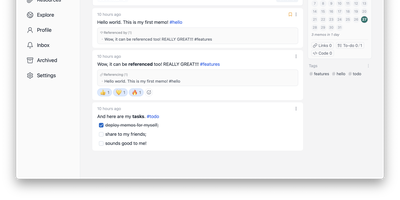
Memos, the lightweight open-source note service from the usememos project, packaged as a containerized deployment for multi-architecture Docker hosts (x86-64 and arm64): that is Usermemos. The model is frictionless capture: no folders or titles, just a chronological stream of Markdown notes with code blocks, task lists, tables, and file attachments, organized by #hashtags pulled automatically from the text. Per-memo visibility - private, protected for logged-in users, or public - lets a single instance serve as a personal journal, a shared team log, or a public microblog simultaneously. Multi-user support with authentication makes it workable for small teams, and full REST and gRPC APIs open capture and retrieval to CLIs, bots, and automation tools. The runtime is a single Go binary with a React frontend that idles around 50 MB of memory and stores content as plain Markdown in SQLite by default, with MySQL and PostgreSQL available for heavier deployments. Configuration happens through environment variables, access works over HTTP or HTTPS behind a reverse proxy, and there is no telemetry - notes stay on your server in a portable format.
iDURAR
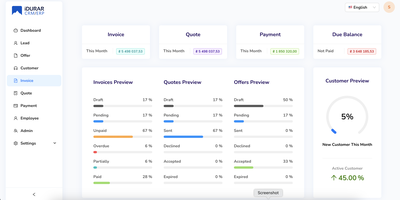
Quote to cash in one web application - create quotes, convert them to invoices, record payments, track customers: iDURAR is an open-source ERP and CRM platform for small and medium-sized businesses. Built on the MERN stack (MongoDB, Express, React, Node.js) with Ant Design components and Redux state management, it presents a clean SaaS-style interface that needs little onboarding. Core modules cover invoice management with PDF generation and email delivery, payment recording against invoices, quote and proforma handling, customer records, and accounting views over the resulting data. Multi-currency support and localization make it usable for internationally operating teams. Because the whole stack is JavaScript with an API-first backend, extending it - custom fields, new modules, integrations - is approachable for any Node/React developer rather than requiring a specialist ERP skill set. Deployment is straightforward via Docker with a MongoDB instance. Licensed under AGPL-3.0 with free commercial use; a hosted enterprise version exists but the self-hosted edition is fully functional.
OctoPrint
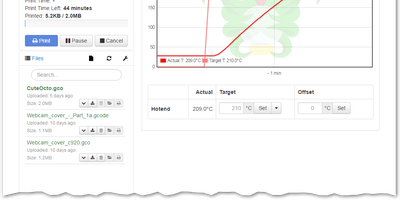
Over a million active instances make OctoPrint the standard web interface for consumer 3D printers - Gina Häußge's Python application, the center of the printing world since 2012. It talks to your printer over USB serial and turns every browser into a control panel: upload, organize, and start G-code prints; watch hotend and bed temperature graphs in real time; drive the print head manually; adjust feed rate, flow, and fan speed mid-print; and hit an emergency stop if things go wrong. The G-code visualizer renders the current layer in sync with the job, and a connected webcam adds a live feed plus automatic timelapse recording of every build. What keeps OctoPrint ahead is its plugin ecosystem - 300+ community plugins installable from the built-in manager. Highlights include Obico's AI spaghetti detection that pauses failed prints automatically, OctoEverywhere for tunnel-based remote access, Bed Level Visualizer's 3D mesh of your bed surface, PrintTimeGenius for accurate time estimates, Exclude Region to abandon one failed object mid-print while others continue, and Firmware Updater to flash Marlin or Klipper without SD-card shuffling. Event hooks fire notifications when prints finish or fail, and a full REST API supports slicer integration and custom automation. AGPL-licensed.
dbx
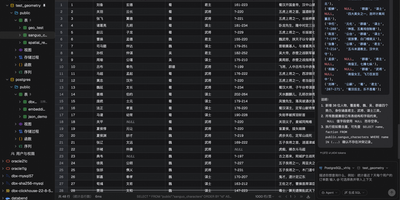
Universal database administration across modern enterprise infrastructure is simplified through dbx, a lightweight web client and SQL studio supporting over ninety database engines. Database administrators connect to MySQL, PostgreSQL, SQLite, Redis, MongoDB, ClickHouse, DuckDB, Oracle, and Microsoft SQL Server through authenticated network connections and encrypted SSH tunnels. The interactive query editor provides real-time multi-schema autocomplete, syntax linting, execution plan analysis, and natural language SQL query synthesis powered by configurable large language model backends. Teams visualize complex relational database architectures using interactive entity-relationship diagrams that map table foreign key constraints, primary indexes, and table partition layouts automatically. Operators inspect live Redis memory usage breakdowns, monitor real-time server command throughput, and manage key expirations without opening raw terminal sessions. The editable data grid supports multi-row modifications, foreign key reference lookups, CSV and JSON exports, and binary blob data inspection directly inside the browser viewport. Software developers expose connected databases directly to external AI coding assistants through native Model Context Protocol server endpoints. Running on a dedicated VPS on RepoCloud with guaranteed CPU, RAM, and SSD, full root SSH access, and a browser serial console. Apache-2.0 licensed.
OpenStatus
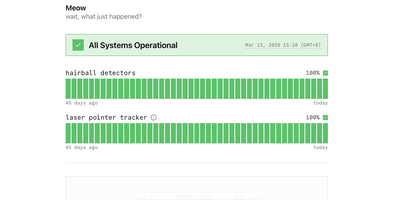
Trusted by Cal.com, WhiteBIT, and Documenso and backed by 8,800+ GitHub stars, OpenStatus delivers the open-source status page and uptime monitoring platform that replaces Atlassian Statuspage, Better Stack, and Instatus with a single self-hosted deployment. The monitoring engine runs Go-based probes across 28 global regions on three cloud providers checking HTTP, TCP, and DNS endpoints in parallel with configurable intervals and multi-region consensus to eliminate false-positive alerts. Status pages ship with custom domain support, password and email-domain access controls, maintenance windows, grouped monitor components, and subscriber notifications via email and RSS. Incident management provides structured status reports with investigating, identified, monitoring, and resolved timeline phases that publish automatically to affected status pages. The monitoring-as-code workflow supports YAML configuration synced through the CLI, a GitHub Actions integration for CI/CD pipelines, and a Terraform provider for infrastructure-as-code deployments. The typed ConnectRPC JSON-over-HTTP API exposes a published OpenAPI specification with a Node SDK for programmatic access, while an MCP server connects AI assistants like Claude, ChatGPT, and Cursor directly to workspace data. The tech stack combines Next.js with shadcn/ui for the dashboard, Hono for the API server, Drizzle ORM over Turso for application data, and Tinybird for analytics. Private monitoring locations deploy as a single 8.5MB Docker image behind firewalls to check internal services. Running on a dedicated VPS on RepoCloud with guaranteed CPU, RAM, and SSD, full root SSH access, and a browser serial console. AGPL-3.0 licensed.
Papermark
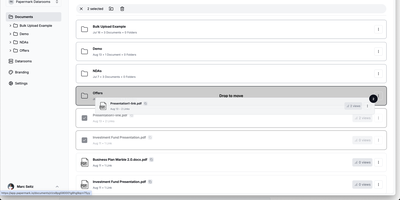
With nearly 9,000 GitHub stars and adoption by over 60,000 companies across 100 countries, Papermark is the open-source DocSend alternative that turns document sharing into a data-rich conversation between you and your viewers. Every shared document generates page-by-page analytics showing exactly which pages capture attention, how long viewers spend on each section, where they drop off, and whether they return for a second look, with real-time notifications the moment a document is opened. Virtual data rooms support unlimited folders with drag-and-drop organization, bulk uploads, granular per-viewer permissions, dynamic watermarking that stamps each page with the viewer's identity, and NDA gating that requires agreement before access. Custom branding applies your logo, colors, and custom domain to every shared link and download page, while email verification and password protection add authentication layers. The AI Data Room Copilot lets viewers chat with uploaded documents, ask questions, and receive contextual summaries directly within the data room interface. The developer platform exposes 43 REST API operations covering data rooms, documents, folders, links, visitors, and analytics, with an MCP server for AI agent integration and a CLI for automation. Built on Next.js with TypeScript, Prisma ORM, PostgreSQL, NextAuth.js authentication, and shadcn/ui components. Running on a dedicated VPS on RepoCloud with guaranteed CPU, RAM, and SSD, full root SSH access, and a browser serial console. AGPLv3 licensed.
Sentry
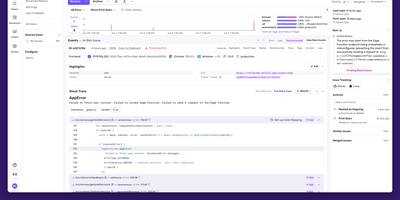
Backed by 44,000 GitHub stars and trusted by over four million developers, Sentry is the debugging platform that captures errors, traces, replays, profiles, and metrics from your applications and connects them all through distributed tracing. The error tracking engine captures full stack traces with source context, breadcrumbs, and automatic demangling for native crashes, while intelligent grouping consolidates duplicate events into actionable issues with regression detection and automatic assignment. Performance monitoring instruments your frameworks automatically, capturing every database query, API call, cache hit, and queue operation as spans within distributed traces that flow across frontend, backend, and mobile boundaries. Session Replay produces video-like recordings of real user sessions showing DOM interactions, network requests, console messages, and errors on a synchronized timeline, with AI-powered summaries that describe what happened without watching the full replay. Continuous profiling captures CPU execution data at the function and line level for Node.js, Python, iOS, and Android, linking slow spans directly to the exact code responsible. Cron monitoring tracks scheduled jobs for failures, missed runs, and duration anomalies. The alerting engine fires notifications through Slack, PagerDuty, Opsgenie, and webhooks on new issues, regressions, error spikes, or when latency and crash-free session rate thresholds are crossed. Self-hosted deployment runs as a Docker Compose stack with PostgreSQL, ClickHouse, Kafka, Redis, and Relay. Running on a dedicated VPS on RepoCloud with guaranteed CPU, RAM, and SSD, full root SSH access, and a browser serial console. FSL licensed.
Wallabag
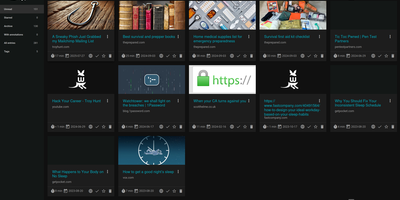
With 12,800+ GitHub stars and over a decade of active development since 2013, wallabag is the most established open-source read-it-later application — built for readers who want complete ownership of their article archive without depending on services that shut down (RIP Pocket). The Symfony-based PHP application extracts clean article content using Graby and php-readability, stripping advertisements, pop-ups, and tracking scripts to deliver a distraction-free reading experience optimized for both desktop and mobile screens. Save articles via Chrome, Firefox, or Safari browser extensions, Android and iOS native apps, REST API, or the built-in bookmarklet — all syncing to your self-hosted instance. Organize your library with tags, automated tagging rules that classify articles by content patterns, starred favorites, and archived collections. The annotation system enables highlighting extracts and attaching notes directly within articles for research and reference workflows. Import your existing reading lists from Pocket, Omnivore, Instapaper, Pinboard, Readability, and browser bookmarks. Export articles in PDF, ePUB, MOBI, JSON, CSV, TXT, or HTML for offline reading on Kindle, Kobo, and other e-readers. Full-text search with filters by reading time, domain, language, and creation date makes retrieval instant across thousands of saved articles. RSS feed output integrates with feed readers and automation services. Docker deployment with SQLite, MySQL, or PostgreSQL persistence backends takes under five minutes. Running on a dedicated VPS on RepoCloud with guaranteed CPU, RAM, and SSD, full root SSH access, and a browser serial console. MIT licensed.
Prefect
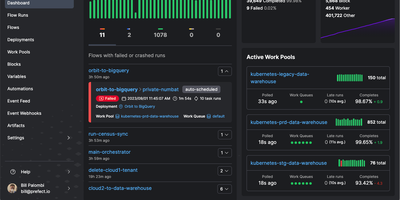
With 23,600 GitHub stars, 13 million monthly PyPI downloads, and 425+ contributors automating over 200 million data tasks monthly for Fortune 50 companies like Progressive Insurance and disruptors like Cash App, Prefect is the most widely deployed open-source workflow orchestration framework for Python — turning any script into a resilient production pipeline with a single @flow decorator while eliminating rigid DAG structures entirely. The durable execution engine persists task results and automatically resumes from failures without replaying expensive upstream work, guaranteeing exactly-once execution for any Python function. Event-driven automation triggers workflows from webhooks, cloud events, or state changes through a real-time event bus that detects what happens or fails to happen across your entire data platform. Work pools decouple workflow code from infrastructure, enabling seamless switching between Docker, Kubernetes, AWS ECS, Azure Container Instances, GCP Cloud Run, and serverless environments without modifying pipeline logic. Native Ray and Dask task runners extend execution across clusters for compute-intensive workloads. The self-hosted server provides a monitoring dashboard with flow run timelines, task state visualization, scheduling, and automation configuration. The third-generation engine reduces overhead by over 90 percent compared to Prefect 2, supporting batch, event-driven, interactive, and background task workflows. Deploy via Docker Compose with PostgreSQL, Redis, server, background services, and worker containers, or use official Helm charts for production Kubernetes. Running on a dedicated VPS on RepoCloud with guaranteed CPU, RAM, and SSD, full root SSH access, and a browser serial console. Apache-2.0 licensed.
Cerbos
Cerbos decouples authorization logic from application code entirely, evaluating human-readable YAML policies in under one millisecond through a stateless Policy Decision Point that requires no application state synchronization or cross-network fan-out. Its custom decision engine benchmarks up to 17x faster than OPA-based alternatives. Access control policies use conditions expressed in Google's Common Expression Language, supporting role-based, attribute-based, and policy-based access control patterns including derived roles, scoped policies, and permissions-aware data filtering that pushes authorization predicates directly into database queries. The PDP exposes both gRPC and HTTP APIs with SDKs for JavaScript, Python, Go, Java, .NET, Rust, PHP, and Ruby, making integration a single function call regardless of tech stack. GitOps-native workflows treat policies as code with Git versioning, CI validation through GitHub Actions, coverage reports, breaking-change detection, and audit logs of every authorization decision for ISO27001, SOC2, and HIPAA compliance. Deployment flexibility spans Kubernetes sidecars, standalone services, systemd daemons, AWS Lambda functions, and WebAssembly-embedded PDPs that run authorization logic directly in browsers, serverless architectures, and edge devices. The Admin API manages policy lifecycle operations programmatically, while the built-in Playground and REPL provide interactive testing environments for policy authoring and debugging. Running on a dedicated VPS on RepoCloud with guaranteed CPU, RAM, and SSD, full root SSH access, and a browser serial console. Apache 2.0 licensed.
LobeHub
With over 82,000 GitHub stars and 700,000+ downloads, LobeHub has evolved from its origins as LobeChat into a comprehensive multi-agent AI collaboration platform where humans and autonomous agent teams co-evolve. The platform's Agent Harness architecture functions as an operating system between AI models and applications, handling prompt presets, tool orchestration, lifecycle hooks, planning, filesystem access, and sub-agent management across 25+ model providers including OpenAI, Anthropic Claude, Google Gemini, DeepSeek, Mistral, Groq, AWS Bedrock, Azure OpenAI, and local models through Ollama. Agent Groups enable sophisticated collaboration with sequential, parallel, iterative, and debate orchestration modes, allowing multiple specialized agents to tackle complex workflows simultaneously. The Agent Builder creates production-ready agents from natural language descriptions with auto-configuration, drawing from a marketplace of 505+ pre-built agents and 10,000+ MCP-compatible skills and plugins. Pages provide collaborative document editing with multi-agent co-authoring, while Schedules automate agent runs around the clock without human supervision. The knowledge base leverages PostgreSQL with pgvector for RAG-powered retrieval, and Personal Memory gives agents transparent, editable context that evolves through continual learning. The full self-hosted stack deploys via Docker Compose with PostgreSQL, Redis, RustFS for S3-compatible storage, and SearXNG for private web search, all configurable through environment variables. Running on a dedicated VPS on RepoCloud with guaranteed CPU, RAM, and SSD, full root SSH access, and a browser serial console. LobeHub Community licensed.
Gorse
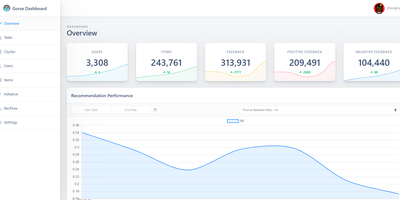
Gorse generates personalized recommendations from your application's user interaction data through automatically trained models, requiring no machine learning expertise to deploy or operate. Over 10,000 GitHub stars and production deployments processing millions of interactions validate a multi-source architecture that merges candidates from latest-item, user-to-user, item-to-item, and collaborative filtering recommenders, then ranks them using factorization machines or LLM-based rerankers with configurable query and document templates. Multimodal content support processes text, images, and video metadata via embedding vectors stored in BF16 format, with optional Qdrant, Weaviate, or Milvus integration for distributed similarity search. The visual RecFlow editor provides a drag-and-drop interface for designing recommendation pipelines, connecting data sources to recommenders and rankers without writing configuration files. A distributed cluster separates concerns across master nodes for model training and dashboard hosting, worker nodes for offline recommendation generation, and server nodes for real-time API endpoints, all scaling horizontally behind load balancers. Online evaluation analyzes recommendation quality from recent user feedback with configurable cache sizes and expiration intervals. RESTful APIs expose CRUD endpoints for users, items, and feedback alongside recommendation retrieval with category filters and API key authentication. Stores data in MySQL, PostgreSQL, MongoDB, or ClickHouse with Redis caching. Running on a dedicated VPS on RepoCloud with guaranteed CPU, RAM, and SSD, full root SSH access, and a browser serial console. Apache 2.0 licensed.
Zabbix
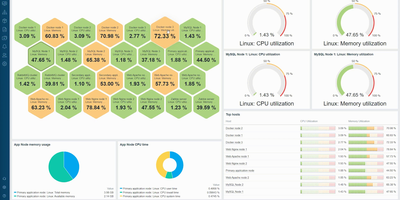
Monitoring everything from network switches to Kubernetes clusters since 2001 with over 6,200 GitHub stars and deployments exceeding 100,000 devices per installation, Zabbix has established itself as one of the most mature and feature-rich open-source monitoring platforms available, trusted by organizations including Dell, Salesforce, ICANN, and T-Mobile. The platform collects metrics from virtually any source using Zabbix Agent written in C, Zabbix Agent 2 written in Go with native plugin support, SNMP v1/v2c/v3 polling and trapping, IPMI for hardware health, JMX for Java applications, SSH and Telnet checks, HTTP/HTTPS polling, and ODBC database queries. Version 7.0 LTS introduced synthetic browser monitoring that executes user-defined JavaScript via WebDriver to simulate multi-step user interactions on websites, proxy load balancing with automatic host redistribution across proxy groups for high availability, in-memory proxy data buffering delivering up to 100x performance improvement, native multi-factor authentication with TOTP and Duo support, and just-in-time user provisioning from SAML and LDAP. Low-level discovery automatically detects file systems, network interfaces, SNMP OIDs, VMware resources, and Kubernetes pods, creating monitoring items and triggers dynamically. The alerting engine correlates events with configurable escalation chains, sending notifications through Slack, Microsoft Teams, PagerDuty, Jira, email, and SMS with customizable message templates. Over 1,000 official templates provide instant monitoring for Linux, Windows, VMware, AWS, Azure, Docker, PostgreSQL, MySQL, Apache, Nginx, and hundreds more. Running on a dedicated VPS on RepoCloud with guaranteed CPU, RAM, and SSD, full root SSH access, and a browser serial console. AGPL-3.0 licensed.

Flagsmith
With over 6,400 GitHub stars, 130 contributors, and 512 releases, Flagsmith is the open-source feature flag and remote configuration platform that gives development teams granular control over feature releases, remote configuration values, user segmentation, and A/B testing from a single self-hosted dashboard. Feature flags support boolean toggles and remote config values simultaneously — every flag carries both an enabled state and a configurable value, letting teams deploy functional and visual changes without code modifications or app store approvals. User segments target audiences by attributes, percentage rollouts, and custom rules, enabling beta testing, canary releases, and gradual feature rollouts with real-time toggle control. Multivariate flags split traffic across multiple variations with configurable percentage weights for A/B and multivariate testing with analytics integration. The flag evaluation engine runs server-side with local evaluation mode in SDKs for sub-millisecond performance without network calls, supporting 15+ languages including TypeScript, Python, Java, C#/.NET, Go, Ruby, PHP, Swift, Kotlin, Flutter, React, and Next.js. The REST API and webhooks enable integration with CI/CD pipelines, and pre-built connectors exist for Datadog, New Relic, Amplitude, Mixpanel, Segment, Heap, Rudderstack, and Slack. Built on Django with a React frontend, self-hosting deploys via Docker Compose with PostgreSQL, or via Helm charts and the OpenShift Operator for Kubernetes environments. Change history provides a complete audit trail of flag modifications. Running on a dedicated VPS on RepoCloud with guaranteed CPU, RAM, and SSD, full root SSH access, and a browser serial console. BSD-3-Clause licensed.
Haven
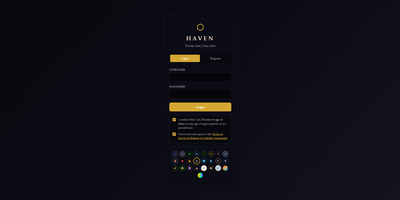
Haven gives your community a private chat server with voice calls, screen sharing, and end-to-end encrypted direct messages where friends join via invite link in their browser without installing apps or creating third-party accounts. Real-time messaging supports image uploads via paste and drag-drop, emoji reactions, replies, threads, typing indicators, @mentions with autocomplete, and inline GIF search through Tenor or GIPHY. Peer-to-peer WebRTC voice chat includes per-user volume sliders, mute and deafen controls, talking indicators, and screen sharing with picture-in-picture mode. Direct messages use ECDH P-256 key exchange with AES-256-GCM symmetric encryption where private keys never leave the browser, ensuring not even the server operator can read them. Twenty-plus visual themes with stackable effects including CRT scanlines, Matrix Rain, Cyberpunk Text Scramble, Snowfall, and Campfire Embers let users personalize the experience with configurable intensity sliders. Rich Presence integration shows what members are playing or listening to via Last.fm, Steam, and Spotify. A built-in bot API supports webhooks and custom slash commands, while Discord history import preserves channels, threads, forums, reactions, pins, and avatars. The Node.js server deploys via Docker Compose or a single batch file that auto-handles dependencies, SSL certificates, and configuration. Running on a dedicated VPS on RepoCloud with guaranteed CPU, RAM, and SSD, full root SSH access, and a browser serial console. AGPL-3.0 licensed.
Doccano
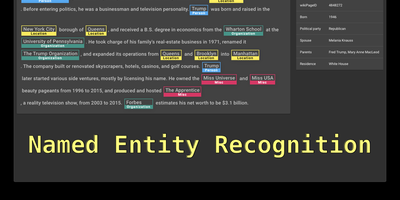
Doccano is a text annotation platforms for building machine learning training datasets. The web-based interface supports text classification for sentiment analysis and document categorization, sequence labeling for named entity recognition with overlapping entity support and relation extraction between labeled spans, and sequence-to-sequence annotation for text summarization and machine translation pairs. Collaborative annotation enables multiple annotators to work on the same project simultaneously with per-user progress tracking, annotation guidelines, example assignment to specific members, and filtering by assignee. Auto-labeling integrates with external machine learning model APIs through configurable request and response mapping templates, allowing pre-annotation that annotators can review and correct. Data import accepts plain text, JSONL, CoNLL, and Excel formats, while export produces JSONL and CoNLL datasets compatible with spaCy, Hugging Face Transformers, PaddleNLP, and other training frameworks through the doccano-transformer library. The Django backend with Django REST Framework exposes a complete RESTful API for programmatic project creation, dataset management, and annotation retrieval via the official doccano-client Python library. Celery handles background tasks including dataset import and export processing with Flower providing task monitoring. One-click deployment supports AWS CloudFormation and Heroku alongside Docker Compose for self-hosted environments. Running on a dedicated VPS on RepoCloud with guaranteed CPU, RAM, and SSD, full root SSH access, and a browser serial console. MIT licensed.
It Tools
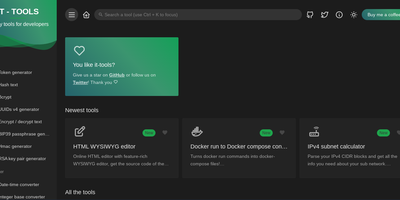
The utilities engineers otherwise scatter across a dozen ad-laden websites - 80+ of them - live together in IT-Tools, one fast, polished web app. Crypto covers JWT decoding, MD5 through SHA-512 hashing, HMAC and bcrypt generation, RSA key pairs, and password strength analysis. Converters handle JSON to CSV, YAML, and TOML, Base64 files, URL encoding, HTML entities, color formats, and Docker run commands to Compose files. Generators produce UUIDv4, ULID, BIP39 mnemonics, QR codes (including Wi-Fi QR), and tokens; text tools include a regex tester, diff viewer, slug and case converters; web utilities parse URLs and user agents, look up HTTP status codes and MIME types, and inspect Open Graph metadata; plus a cron parser, chmod calculator, and more. The privacy argument is the point: JWTs contain user IDs, hashes derive from passwords, JSON dumps hold PII - exactly the inputs you least want a third-party utility site to log. IT-Tools is a frontend-only static bundle (Vue/TypeScript, GPL-3.0, 39k+ GitHub stars) served by Nginx in one container, so everything runs client-side on your infrastructure with nothing transmitted anywhere. New tools ship roughly monthly, and a scaffolding script makes adding custom ones straightforward.
Sencho
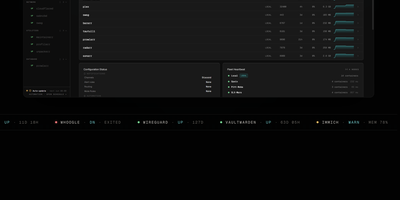
With over 430 GitHub stars and designed for DevOps engineers, platform teams, and homelab operators, Sencho is the self-hosted Docker Compose control plane that gives you a real operational cockpit without abandoning file-on-disk compose workflows. The web dashboard provides live CPU, memory, and disk sparklines per container, one-click start/stop/restart controls, and a Monaco-powered YAML editor with syntax highlighting, inline diff, and one-click rollback. Compose files remain the source of truth on the host filesystem. Multi-node management connects remote Sencho instances via authenticated HTTP and WebSocket proxy using long-lived API tokens, with no SSH access or exposed Docker sockets required. The Pilot Agent establishes an outbound-only WebSocket tunnel for nodes behind NAT, CGNAT, or strict firewalls. Blueprints define compose intent once and deploy it across label-targeted nodes, with drift detection keeping the fleet aligned. Fleet Federation provides cordon and pin controls for maintenance windows, while Fleet Actions execute bulk deploy, stop, and restart operations by stack label across the entire infrastructure. The security suite includes Trivy vulnerability scanning, deploy enforcement policies, SARIF and SBOM export, and Fleet Sync to replicate scan policies across replicas. Additional capabilities include 199+ one-click app templates, Git source integration, atomic deploys with auto-rollback, auto-heal, scheduled operations, webhooks, and custom S3 off-site backups to MinIO, R2, B2, or AWS. Running on a dedicated VPS on RepoCloud with guaranteed CPU, RAM, and SSD, full root SSH access, and a browser serial console. AGPL-3.0 licensed.