TG Vault
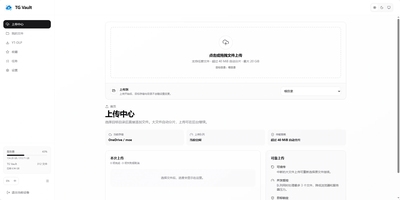
TG Vault turns Telegram into the front door of your private archive, pulling files out of channels and groups into storage you control and managing them from a proper web file manager. Batch-download channel and group media by date range or tag, subscribe to sources so new posts sync automatically, and upload, search, organize into folders, and preview media from the browser. Every transfer runs as a managed task with live progress, failure details, and pause, resume, and retry controls, whether it was started from the web console or the Telegram bot. Point the vault at local disk, OneDrive, Google Drive, Amazon S3, Aliyun OSS, WebDAV, or an OpenList instance, and let the optional qBittorrent extension forward finished downloads into the same storage, cleaning up sources or keeping them seeding. Access stays locked down with an administrator password, a bot user allowlist, and TOTP two-factor authentication, while one install script deploys and upgrades the whole Compose stack. Running on a dedicated VPS on RepoCloud with guaranteed CPU, RAM, and SSD, full root SSH access, and a browser serial console. MIT licensed.
FileBrowser Quantum
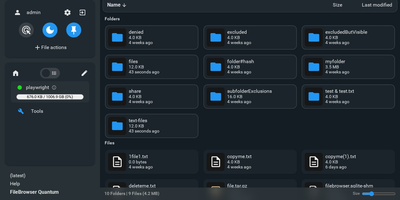
FileBrowser Quantum is an open-source, self-hosted web file manager that transforms any directory tree or mounted storage volume into a fast, searchable cloud drive accessible from any browser. You can mount multiple independent filesystem sources at once and apply custom include or exclude rules to keep sensitive system folders hidden from everyday browsing. A background indexing engine powers instant as-you-type search across millions of files, letting you filter results by file size, folder size, media type, or modification date in milliseconds. Rich media thumbnails render automatically for videos, office documents, audio album artwork, and interactive 3D models, while integrated OnlyOffice support lets you edit spreadsheets and word processing documents directly inside your browser tab. Built-in WebDAV server support allows desktop operating systems and mobile file apps to mount your remote directories as native network drives. Sharing files with external collaborators takes seconds through customizable public or private links with expiration timers, download limits, password protection, anonymous upload permissions, and custom branding themes. Administrators can authenticate users via OpenID Connect, LDAP, JSON Web Tokens, proxy headers, or local passwords with two-factor authentication, then enforce path-level read, write, and delete rules per user or group. Developers and automation engineers can generate long-lived API tokens and explore the interactive Swagger endpoint to script file transfers and directory provisioning. Running on a dedicated VPS on RepoCloud with guaranteed CPU, RAM, and SSD, full root SSH access, and a browser serial console. Apache-2.0 licensed.
MakersVault
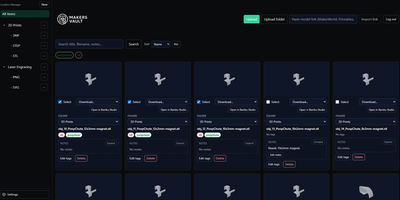
MakersVault gives your scattered 3D print files and creative artwork one searchable home, so you stop loading models into a slicer just to remember what they are. You create folders and subfolders for projects, then drag and drop single files, batches, or whole folders straight into the library from your browser. Every model tile carries a rendered preview, and double-clicking opens an interactive 3D view you can rotate and inspect before downloading anything. Tags attach to any file, batch tagging covers many selected models at once, and tag tabs plus sorting by name, size, type, or folder keep large collections browsable. Notes on individual files record print settings, filament choices, or assembly reminders right beside the model they describe. Imports pull models directly from MakerWorld, Thingiverse, and Printables links, and zip archives prompt you to keep only the files you actually want. Supporting documents ride along with each model and travel inside its ZIP downloads, and prepared print data surfaces printer, material, nozzle, and time estimates on the card. The Open in Slicer button hands a model to your configured slicer through the desktop bridge, and themes from light and dark to neon accents restyle the whole workspace. Running on a dedicated VPS on RepoCloud with guaranteed CPU, RAM, and SSD, full root SSH access, and a browser serial console. MIT licensed.
PrintStash
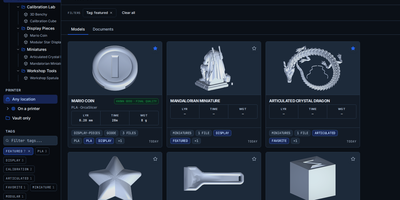
Every printing household eventually drowns in files named final_v3_REAL.gcode, and PrintStash is the library that brings order to your models, G-code, and print history. Upload STL, 3MF, OBJ, STEP, and other formats directly, or point it at a folder or NAS share and let it index everything in place without overwriting originals. Each model page pairs a 3D preview with its recommended G-code, the slicer settings behind it, and one-click actions to open files in your slicer. Revisions carry needs-test and known-good labels, so the version that printed beautifully is never confused with the experiment that delaminated. Connected printers report live temperatures and progress, accept sent G-code, and take queued copies across printer groups, with material or nozzle mismatches blocking automatic routing before they waste filament. Print outcomes feed time and cost tracking per model, and an optional Spoolman integration keeps filament inventory honest. Collections, tags, filters, favorites, and saved views keep a growing vault browsable, and optional AI search with local models finds models by description. Verified backups, file audits, trash recovery, user permissions, API keys, and OIDC single sign-on round out the administration side. Running on a dedicated VPS on RepoCloud with guaranteed CPU, RAM, and SSD, full root SSH access, and a browser serial console. AGPL-3.0 licensed.
ArozOS
ArozOS turns a small server or single-board computer into a private cloud desktop you open in any browser, with windows, a start menu, and a taskbar instead of a pile of separate admin panels. You sign in at your server address and land on a desktop with a file manager for uploading, downloading, dragging, sharing, and tracking copy progress, plus built-in apps for music, photos, video, notes, recording, timers, a web editor, and a code studio, and you can add more from an index of third-party web applications. Behind the desktop, storage pools combine local disks and remote WebDAV, SMB, and SFTP mounts into one virtual file system with per-group permissions, isolated or shared folders, disk quotas, SMART status, and space analysis, and built-in WebDAV, SFTP, FTP, and legacy directory servers expose those files to other devices on your network. Accounts can sign in through OAuth or LDAP, IP allow and block lists and exponential login delays guard the front door, and system settings cover networking, port forwarding, performance monitoring, appearance, and updates. The system runs on as little as 512 MB of memory, installs from a script or precompiled binary, serves a mobile interface and installable progressive web app for phones and touch screens, and accepts Go and Python modules through a sub-service reverse proxy for teams extending it. Running on a dedicated VPS on RepoCloud with guaranteed CPU, RAM, and SSD, full root SSH access, and a browser serial console. GPL-3.0 licensed.
LogicalDOC
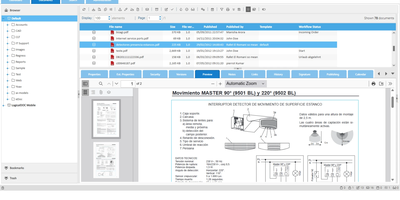
LogicalDOC is a document management system that gives a company one controlled home for its files instead of letting contracts, invoices, and procedures scatter across drives and inboxes. Staff store any kind of document in a repository organized on multiple levels, then find it again through advanced search that reaches inside document content, not just filenames. Colleagues collaborate on the same documents and projects while version control keeps the history straight, so nobody works from last quarter's draft by accident. Administrators define roles for different users, set access control and user quotas, and choose the security level for each area, with detailed activity logs showing who opened, changed, or shared what. Automations handle the routine flow of documents through the business, and the web services API lets an ERP or other systems integrate document management into existing processes. Information can be collected from any digital source, knowledge gets reused instead of recreated, and mobile apps for phones and tablets keep the repository reachable away from the desk. The official Docker image and Tomcat bundles make the Community Edition straightforward to run on your own infrastructure. Running on a dedicated VPS on RepoCloud with guaranteed CPU, RAM, and SSD, full root SSH access, and a browser serial console. LGPL-3.0 licensed.
MediaServer
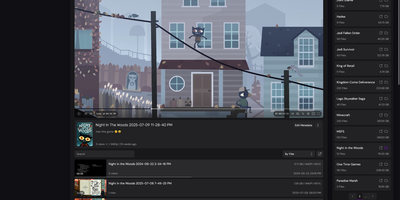
Your folders are the library with MediaServer, a self-hosted player that scans the directories you already keep and serves their video and audio through a tidy web interface. Browsing feels like a personal YouTube: folders open as shelves of content, and the custom player keeps the video going as you explore what to watch next. Keyboard shortcuts drive playback, speed controls and player statistics sit a click away, and an ambient background glows behind the video. Every view is remembered: full watch history with timestamps, re-watch counts, per-user totals, and playback heatmaps replace the single watched tick other servers stop at. Metadata belongs to you: edit titles, thumbnails, tags, seasons, and release dates for videos, folders, and albums, and the edits survive files being moved or renamed. Music gets its own treatment with embedded cover art, a lyrics viewer and editor fed by LrcLib, and auto-scrolling lines that follow the song. Subtitles extract themselves from embedded and external files, folders and single videos share as readable links, and each share renders a rich preview card for Discord or chat. Behind the scenes, a dashboard manages libraries, scanning jobs, users, and server performance. Running on a dedicated VPS on RepoCloud with guaranteed CPU, RAM, and SSD, full root SSH access, and a browser serial console. AGPL-3.0 licensed.
SimpleDMS
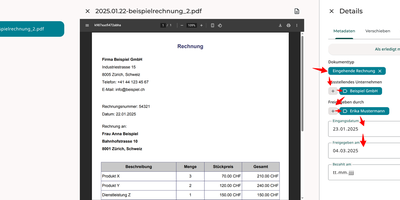
Small businesses file every invoice, contract, and letter by what it is instead of by folder with SimpleDMS, a document management system built around types, tags, and searchable metadata. Upload a document to the inbox, pick its type, and the sidebar offers exactly the tags and fields that type needs, so an incoming invoice asks for the issuing company and receipt date instead of a blank properties page. Name-giving attributes label each file automatically from its own metadata, and the Browse view finds it again by company, date, or approver in seconds. Spaces act as workspaces with their own document types, tags, and permissions, so the team shares project files in one space, exchanges papers with an accountant or customers in another, and keeps private records apart. Tag groups such as companies and employees stay consistent across thousands of documents, date and text fields capture the facts you search by later, and values can be corrected at any time when a document was filed in haste. Dark mode is built in, the interface runs comfortably on a tablet at the scanner, and no analytics or tracking watch how your office works. Running on a dedicated VPS on RepoCloud with guaranteed CPU, RAM, and SSD, full root SSH access, and a browser serial console. AGPL-3.0 licensed.
Simon
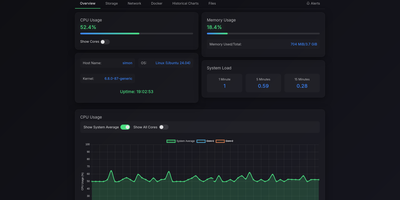
Simon is a lightweight self-hosted system monitor that shows live CPU, memory, disk, and network metrics for your server and its Docker containers in one web dashboard, with threshold alerts and a built-in file browser. Open the dashboard to watch real-time gauges alongside historical charts, so a slow memory leak becomes visible hours before it takes a service down. Every running container appears with its own CPU and memory stats, and its logs open in a searchable viewer, so routine diagnosis never needs a terminal session on the host. The file browser lets you navigate the directories you choose to expose, preview file contents, upload with drag and drop, create folders, and move or delete items. Downloads support range requests, which means large files resume cleanly after a dropped connection and media files stream instead of failing halfway. Alert rules fire when CPU, memory, disk, or network activity crosses thresholds you set, and notifications arrive through Telegram, ntfy, Gotify, Pushover, Pushbullet, Matrix, or any custom webhook. Prebuilt notification templates get common setups running in minutes, and password authentication keeps the dashboard private on a public server. Resource-constrained machines benefit most: the monitor runs comfortably on single-board computers and small instances where heavier monitoring stacks would consume the very memory they exist to watch. Running on a dedicated VPS on RepoCloud with guaranteed CPU, RAM, and SSD, full root SSH access, and a browser serial console. MIT licensed.
Nzbget
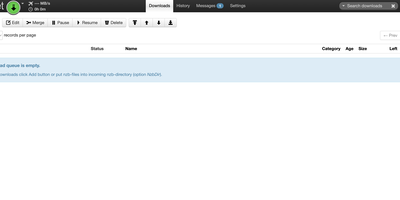
Written in optimized C++ where competitors use Python or Java, NZBGet saturates fast connections while idling on CPU and RAM - which is why the performance-obsessed Usenet downloader has long been the client of choice for NAS boxes, Raspberry Pis, and routers as much as full servers. The engineering shows in the recovery pipeline. Instead of shelling out to par2cmdline, NZBGet integrates the par2 source directly and exploits its knowledge of exactly which articles failed - quick par-verification checks only what needs checking, and its own multicore repair implementation runs 2-3x faster than the external tool on the same hardware. Fast par-rename deobfuscates scrambled filenames in seconds without a full verification pass, and rar-rename recovers names for multivolume archives even when no par2 files exist. DirectWrite assembles articles straight into sparse destination files, skipping temporary-file churn entirely, with an article cache and queue-pausing options to eliminate disk contention. Automation is complete: a remote web interface, full JSON-RPC API, RSS feeds with duplicate detection, scheduling and prioritization, and an extension manager for Python and Bash scripts triggered by download events. Sonarr, Radarr, and every major indexer integrate natively.