ScreenTinker
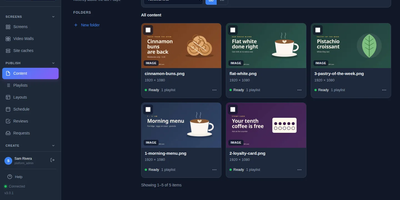
Run every TV, menu board, kiosk, and video wall from one browser dashboard with ScreenTinker, a digital signage CMS you host yourself, with no per-screen license fees. Players cover Android TV, Fire TV, Samsung Tizen, LG webOS, Amazon Vega OS, Roku, Raspberry Pi, Windows, ChromeOS, and any web browser. Upload images and video, turn each PDF page into a slide, or design animated decks in the slide editor with templates, optional voiceover, a music bed, and an optional AI designer that works from a prompt using your own model endpoint. Widgets add clocks, weather, RSS tickers, moderated social walls, live IPTV streams, and iCal or JSON data bound straight into a slide. A weekly calendar handles recurring schedules, priorities, and time zones, and Preview at shows what a given screen will play at any chosen moment. Group screens to push playlists and bulk commands, split displays into zones, or join several panels into a video wall with bezel compensation. Live remote control, CSV proof-of-play reports, and offline email alerts keep a fleet in check, while web and Android players cache content and keep playing through outages. Workspaces, six role levels, optional approval before publishing, OIDC single sign-on, white-label branding on your own domain, and a scoped REST API serve agencies and larger teams. Running on a dedicated VPS on RepoCloud with guaranteed CPU, RAM, and SSD, full root SSH access, and a browser serial console. MIT licensed.
PicPeak
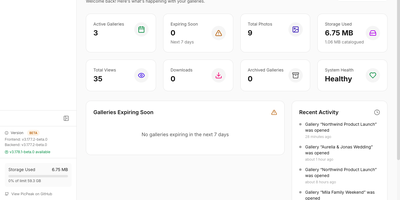
PicPeak is a self-hosted gallery platform where photographers deliver event photos to clients through private, branded links that expire on their own schedule. Every gallery gets a share link, an optional password, and a QR code that exports as PNG, SVG, an A6 table card, or an A4 poster, so a reception can put the gallery on every table. Guests browse in one of seven layouts, from grid and masonry to carousel and timeline, and react with likes, favorites, star ratings, comments, emoji reactions, or color labels. For a party, open the gallery to guest uploads, hold the finished edit back with Reveal Mode until a scheduled moment, and put the optional Live Slideshow link on a projector so new photos appear as they arrive. Theme presets, custom colors, logos, fonts, CSS, and CMS pages keep the studio's brand in front, while bulk ZIP downloads, capped download sizes, watermarking, and right-click blocking control what guests take home. An analytics dashboard tracks views, unique visitors, and downloads. Beta modules add face grouping that runs in a separate container on your own server, plus quotes, contracts, invoices, and customer accounts for studios. Media sits on local disk or any S3-compatible bucket, OIDC single sign-on lets a team log in through an identity provider, and API tokens and webhooks connect PicPeak to automations. Running on a dedicated VPS on RepoCloud with guaranteed CPU, RAM, and SSD, full root SSH access, and a browser serial console. MIT licensed.
Monoscope
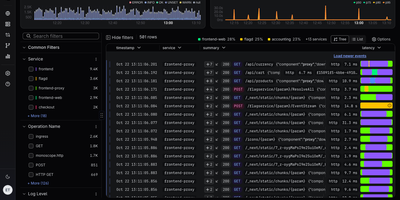
Across logs, traces, and metrics, Monoscope gives engineering teams one self-hosted workspace for finding what broke, asking questions in plain English, and hearing about problems before users do. Start in the Explorer: search events with KQL or an Ask AI prompt, flip between log rows, bar and line charts, log patterns, and sessions, and narrow results with facets for service, level, and HTTP status. Open any span to read its attributes, then follow the full trace across services in a waterfall, timeline, or map view. Live Tail streams new events as they arrive, and the Service Map draws every dependency with its error rate, latency, and requests per second. Build dashboards from widgets with copyable KQL and SQL, then set scheduled monitors with warn and alert thresholds, cron monitors, and uptime checks. An Issues inbox gathers API changes, errors, and log patterns so each one can be acknowledged, archived, or marked as spam, while Reports send scheduled summaries by email. Telemetry arrives over OTLP gRPC on port 4317 from OpenTelemetry SDKs and collectors. The monoscope CLI emits JSON for scripts, and an MCP server at /api/v1/mcp lets Claude, Cursor, and Cline search events and triage issues. Natural-language search uses the OpenAI-compatible model you configure. Running on a dedicated VPS on RepoCloud with guaranteed CPU, RAM, and SSD, full root SSH access, and a browser serial console. AGPL-3.0 licensed.
Doca
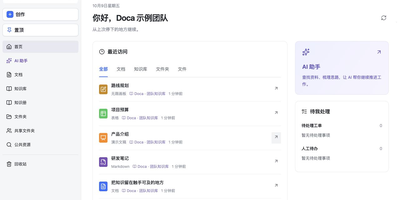
Doca puts rich text, Markdown, spreadsheets, slides, and an infinite canvas under one login and one permission model, giving individuals and small teams a self-hosted workspace for writing together. Every format supports real-time co-editing with presence, comments, saved history, and manual snapshots, and rich text and Markdown documents can be restored to an earlier version. Documents live in knowledge libraries with tree navigation, invitations, inherited permissions, share links, and trash, while personal files and shared folders sit on local disk or S3-compatible storage. Knowledge books go further: they subscribe to sources, run an editable workflow, keep source evidence, and route results through human review. A personal AI assistant, powered by whichever model you configure, searches authorized documents, reads PDF and Office attachments, edits images, and prepares browser drafts. MCP services let external AI clients such as Codex use those tools under your permissions. Sign in with a password, OIDC, Google, GitHub, WeChat, or QQ, review registrations before they go live, and send webhooks to other systems. A plugin SDK and marketplace add business modules, and a browser extension clips pages into documents. The interface ships in Chinese and English. Running on a dedicated VPS on RepoCloud with guaranteed CPU, RAM, and SSD, full root SSH access, and a browser serial console. MIT licensed.
OpenConstructionERP
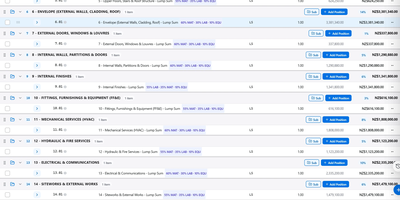
Estimators, planners, and site teams work from one project record in OpenConstructionERP, a self-hosted construction workspace that carries a job from priced bill of quantities through tender, schedule, and site diary. The BOQ editor organizes sections, positions, and reusable assemblies with overhead, profit, VAT, and contingency markups, validates against DIN 276, NRM, and MasterFormat, and exports to PDF, Excel, CSV, or GAEB XML. Pricing draws on 120,000+ cost items across nine cost bases and a 7,000+ resource catalog, with regional price adjustment and semantic search. Quantities come from PDF plans measured on screen or from RVT, IFC, DWG, and DGN models; a 3D viewer filters elements and links them to BOQ positions, clash detection checks federated models, and an AI estimator drafts positions from text, photos, or drawings via the LLM you connect. Gantt schedules show dependencies and critical path, while earned value and S-curves track budget against actual. Tender comparison lines up subcontractor bids, and contracts, variations, and interim payment claims stay tied to the contract sum. On site, daily diaries with health and safety tracking, punch lists, and a carbon module totaling embodied emissions from the BOQ keep field work in the same system. The interface speaks 44 languages with right-to-left support, 293 guided cases teach real workflows on a demo project, and a REST API, webhooks, and module builder extend it. Running on a dedicated VPS on RepoCloud with guaranteed CPU, RAM, and SSD, full root SSH access, and a browser serial console. AGPL-3.0 licensed.
GEOFlow
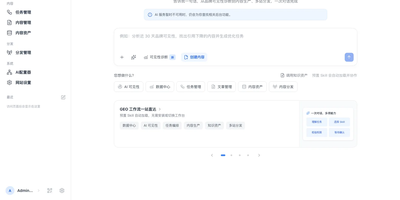
Built for brands that want AI search engines to quote them, GEOFlow is an open-source admin system that turns approved knowledge into reviewed articles and publishes them across every site you run. Load documents or import trusted web pages into knowledge bases that are chunked into evidence units, with optional semantic planning and vector retrieval. Combine them with title libraries (AI can draft up to 100,000 titles), keywords, images, authors, and prompts, then set a task's generation limits, cadence, and publishing scope. Chat and embedding models connect through OpenAI-compatible endpoints or native Gemini, with automatic fallback to the next model when a call fails. Each draft passes an AI quality gate that checks evidence, citations, advertising rules, and publishing context, records scores with source locations and revision advice, and holds risky articles for a human reviewer. Approved articles appear on the built-in site with SEO metadata, Open Graph, Schema, sitemaps, and llms.txt, or travel to hosted subdomain sites, GEOFlow Agent packages, WordPress through its REST API, or any HTTP endpoint. A manual publishing workbench and Chrome assistant cover platforms that need a person, while analytics track traffic, AI crawlers, and brand visibility in generative engines. An API, command-line tool, and agent skill support automation. Running on a dedicated VPS on RepoCloud with guaranteed CPU, RAM, and SSD, full root SSH access, and a browser serial console. AGPL-3.0 licensed.
Open Kritt
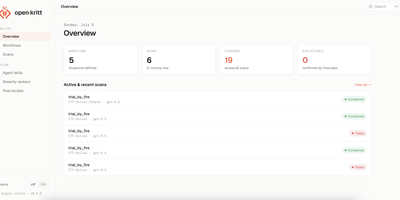
Big repositories, small questions: Open Kritt is a self-hosted platform that splits vulnerability research into focused tasks for AI agents and returns ranked, de-duplicated findings. Build a workflow as a tree of prompt steps, where each step declares the structured output it must produce and the next level launches one fresh agent per result. Scan remote or local repositories along with their dependencies, using Codex, Claude Code, or Grok Build as the harness. Every workflow ends in one fixed finding schema covering file, line, vulnerability type, trigger flow, and a malicious input example. Post-scripts then validate each finding, build a proof of concept, or write the report. Markdown severity rankers tell the model how to prioritize for your bounty program, and repeated findings collapse automatically. Model access comes from a Codex login or OpenAI, Anthropic, DeepSeek, OpenRouter, or xAI keys, with an Active switch to choose which accounts take new work. A dashboard tracks blueprints, scans, and findings, a headless command-line tool imports workflows and launches scans on servers without a browser, and finished scans export as one ZIP with a share-safe manifest. Built-in workflows, including an entry-point-driven hunt, give you a starting point. Running on a dedicated VPS on RepoCloud with guaranteed CPU, RAM, and SSD, full root SSH access, and a browser serial console. AGPL-3.0 licensed.
OnGrid
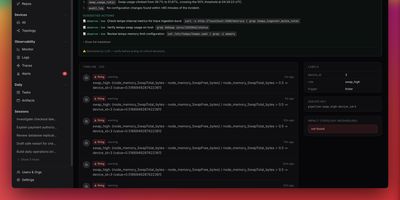
When an alert fires, OnGrid investigates it for you: an AI operations agent that correlates metrics, logs, traces, and topology, then names the root cause in plain language. A coordinator agent hands each question to specialist SRE, network, or database sub-agents, and the incident investigator walks the service graph for blast radius, queries Prometheus, Loki, and Tempo, and pins the cause to a line of source code before posting its report back to chat. Lightweight edge agents on every host dial out over a single tunnel, so no inbound ports are opened, and operators can reach any machine through an audited browser shell. The agent works through more than 26 read-only inspection tools in a sandbox, while anything that changes production waits behind an approval gate. Ask questions or receive reports in Slack, Telegram, Larksuite, DingTalk, or WeCom, and run it on Anthropic, OpenAI, GLM, DeepSeek, Gemini, Kimi, or any OpenAI-compatible endpoint. A workflow builder turns triggers, agents, tools, and notifications into repeatable automations, and a knowledge vault indexes runbooks, incident history, and repositories for search. Enroll Kubernetes clusters to inspect workloads and manage upgrades, or discover network neighbors, verify them over SNMP, and map them into the topology. Role-based access separates admins, users, and viewers. Running on a dedicated VPS on RepoCloud with guaranteed CPU, RAM, and SSD, full root SSH access, and a browser serial console. AGPL-3.0 licensed.
Filestash
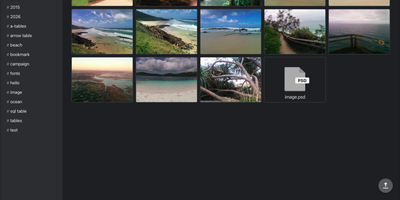
Filestash puts a Dropbox-style web interface in front of the SFTP servers, S3 buckets, SMB shares, and WebDAV storage you already run, so no file has to move. Administrators enable each connector, including FTP, NFS, Git, Dropbox, Google Drive, Storj, IPFS, and Backblaze B2, from one admin console. Colleagues browse, rename, move, and upload in a single folder view, with resumable uploads for big transfers. Thumbnails cover JPEG, PNG, WebP, TIFF, HEIF, and RAW photos. Images open with an EXIF info panel, and PDFs, audio, video, and EPUB ebooks open right in the browser. A CodeMirror editor handles text and code, and HLS transcoding streams video on demand. Outside guests get a shared link instead of credentials, with an optional password, an expiry date, and read, write, or upload-only rights. Limit a link to one email address or a whole domain, or mount it as a network drive. A workflow engine chains emails and HTTP calls after file events, webhooks, or schedules. Flip one admin setting and Claude, ChatGPT, and Mistral Le Chat can use the connected storage as MCP tools. Downloadable file apps add Office documents, 3D models, and GIS maps. Runtime plugins are zip files dropped into the plugins folder. Running on a dedicated VPS on RepoCloud with guaranteed CPU, RAM, and SSD, full root SSH access, and a browser serial console. AGPL-3.0 licensed.
LibreBooking
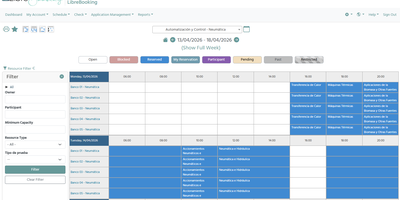
Conference rooms, equipment, boats, and even people can be reserved through LibreBooking, a self-hosted scheduler that keeps double bookings off the calendar. Schedules define bookable time slots with custom layouts and seasonal availability, while each resource carries its own minimum and maximum duration, buffer time, lead time, capacity, and optional approval step. Check-in and check-out can release unclaimed slots automatically, and blackout times close resources for maintenance. Quotas stack limits by hours or reservation count, credits meter peak and off-peak usage, and users can buy credits through Stripe or PayPal. Accessories such as projectors or chairs ride along with a booking under their own quantity limits. Groups carry application, group, resource, and schedule administrator roles, and custom attributes extend reservations, resources, and users with text, dropdown, date, or checkbox fields. Reports can be charted, exported to CSV, printed, or emailed, and public resources publish RSS and iCalendar feeds for Outlook and Thunderbird plus an embeddable calendar snippet. A tablet view beside a door shows live availability for on-the-spot booking, a monitor view fills lobby screens, and a Slack command starts a reservation. Sign-in options include LDAP, Active Directory, OAuth2, and SAML, and the REST JSON API automates bookings. Users can join waitlists, request reminder emails, and accept terms of service before booking, while six color themes restyle the interface. Running on a dedicated VPS on RepoCloud with guaranteed CPU, RAM, and SSD, full root SSH access, and a browser serial console. GPL-3.0 licensed.
Vvveb
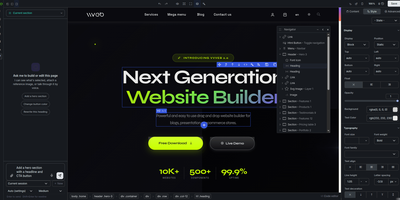
Vvveb, an open-source CMS with a drag-and-drop page builder and a built-in store, runs a blog, a portfolio, and a webshop from one dashboard, with every page edited visually on a true WYSIWYG canvas. Reusable blocks, page revisions, a code editor, and an optional AI assistant plugin sit alongside media management, custom fields, custom posts, and custom products that shape content well beyond plain pages. The store handles one-page checkout, subscriptions, digital downloads, vouchers, coupons, product options, attributes, variants, reviews, and Q&A across multiple payment methods and currencies. Content can be published in several languages, the admin interface switches with language packs, many sites or subdomains share one installation, and action-level permissions are assigned to each user role. A bundled SEO plugin generates sitemaps, robots.txt, Open Graph tags, hreflang links, and schema markup, and hybrid headless mode serves the same content to any frontend through GraphQL and REST endpoints. A randomized admin login URL, two-factor authentication, brute-force defenses, and a built-in integrity check guard the dashboard, and manual or automatic backups plus import and export tools cover recovery and migration. Any HTML template converts into a theme in minutes, a demo importer loads sample content for a fast start, and plugins and themes install with one click from the admin dashboard. Running on a dedicated VPS on RepoCloud with guaranteed CPU, RAM, and SSD, full root SSH access, and a browser serial console. AGPL-3.0 licensed.
Opik
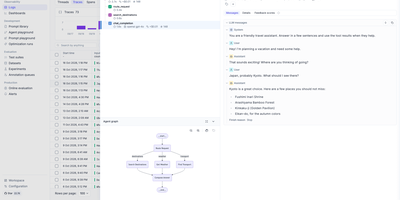
When an AI agent goes wrong at step seven of twelve, Opik, an open-source LLM observability platform, shows the exact trace, tool call, and prompt behind it, then scores your fix against test datasets. Full trace trees capture every LLM call, retrieval step, and tool execution, and you can annotate traces and spans with feedback scores in the UI or through the SDK. Native integrations for OpenAI, Anthropic, LangChain, LlamaIndex, CrewAI, Google ADK, and DSPy, plus OpenTelemetry for any language with an OpenTelemetry SDK, feed traces in, or add the @track decorator to your own functions. Datasets and experiments compare prompt and model versions, scored by LLM-as-a-judge metrics for hallucination, moderation, and RAG relevance, with a PyTest integration to run evaluations in CI. A Prompt Playground tests prompts across models, and the Agent Optimizer SDK helps improve prompts and agents. Production dashboards track feedback scores, trace counts, and token usage, online evaluation rules score live traces, and optional guardrails add safety checks. An MCP server lets Claude Code, Cursor, VS Code Copilot, Codex, or opencode read traces and run evaluations from chat. Run it yourself with the ./opik.sh script on Docker Compose, or a Helm chart on Kubernetes, so trace data stays in your infrastructure. Running on a dedicated VPS on RepoCloud with guaranteed CPU, RAM, and SSD, full root SSH access, and a browser serial console. Apache-2.0 licensed.
sandboxd
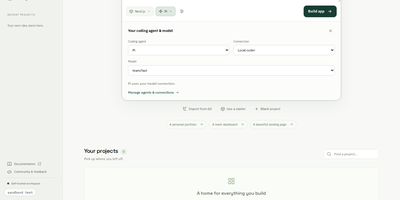
Describe an app in one sentence and sandboxd, a self-hosted AI app builder, has a coding agent build it in an isolated sandbox and hand back a live preview URL. Start from a blank prompt, a React, Next.js, Express, or FastAPI starter, or an imported public Git repo. Refine it in one persistent chat beside Preview, Code, Terminal, and Git tabs. Pick OpenCode, Pi, or Claude Code. Point OpenCode or Pi at local or remote OpenAI-compatible and Anthropic-compatible endpoints, LiteLLM gateways included. A proxy injects provider keys on the wire, so nothing secret lands in a sandbox. Did the agent get it wrong? Every task is checkpointed first, so one click reverts the turn. Snapshots, forks, and named versions keep known-good points to branch from. Edit files in the browser, review file-by-file diffs, commit, and push. Secrets are write-only and encrypted per app. Idle sandboxes sleep and wake on the next request. One modest server can host per-user previews, coding playgrounds, or an agent platform. The app library installs 80+ curated open-source apps, such as Ghost, n8n, Gitea, and Grafana, each in its own sandbox. Every console action is also a /v1 HTTP call with an OpenAPI spec. Upgrades back up the database, health-check the new version, and roll back on failure. Running on a dedicated VPS on RepoCloud with guaranteed CPU, RAM, and SSD, full root SSH access, and a browser serial console. MIT licensed.
Mirobody
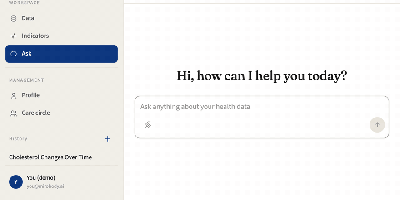
Three lab PDFs, a phone photo of a printed slip, and a spreadsheet become one cholesterol trend in Mirobody, a health data engine you host yourself, with the source file behind every number. Upload reports in 23 file types, import an Apple Health export, or connect Garmin, Oura, and Whoop, and every reading keeps a link to the page it was read from. Test names in English, Chinese, Japanese, and other languages resolve offline to LOINC codes and UCUM units, so HbA1c and Glycated Hemoglobin land on one series, and a name it cannot place stays unresolved instead of guessed. Ask questions in plain language and the agent shows each step as it works, charts the trend, and opens the reading and file behind every figure. A health journal turns one typed sentence into coded symptoms, blood pressure readings, and a medication entry, and a denied symptom like no fever is never logged. Genetic exports from 23andMe, AncestryDNA, and WeGene, or a VCF, can be queried by rsID, gene, or region. A care circle lets relatives share their own records on their own terms, and Claude Code, Codex, and Cursor can read your record through the built-in MCP endpoint. Choose OpenRouter, OpenAI, Gemini, Anthropic, or DeepSeek for answers, or keep every model on your own machine. Running on a dedicated VPS on RepoCloud with guaranteed CPU, RAM, and SSD, full root SSH access, and a browser serial console. Apache-2.0 licensed.
Tesserae
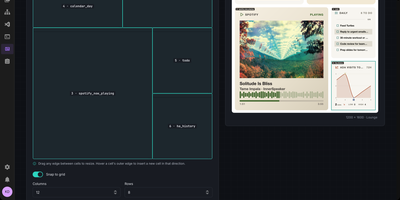
Built for e-ink screens, Tesserae composes calm wall dashboards from your calendar, weather, and Home Assistant data in a browser, then renders each frame at the panel's exact resolution. Lay out pages as a grid of cells or on a free canvas of widgets, text, and shapes, with a live preview. What you see is what paints. Dozens of bundled widgets cover weather, calendars, clocks, news, to-do lists, and photos, and a community catalog adds more widgets, themes, and templates. Frames are dithered to each panel's measured palette, so photos and gradients stay clean on Spectra 6 color, mono, and grayscale screens. One server drives a whole fleet. Each panel keeps its own dashboards, schedules, and rotations, and smart sync renders just before a battery panel wakes while quiet hours let it sleep overnight. Seeed reTerminal and XIAO panels flash from the browser, and Pimoroni Inky, Waveshare, M5Stack, TRMNL-compatible devices, and KOReader Kindles and Kobos work too. Inside Home Assistant it runs as a sidebar App. Home Assistant widgets show entities, history, energy, and cameras, and MQTT discovery turns each panel into a device with its frame, battery level, and signal. No account is needed, and update checks stay off unless you opt in. Ask Claude or any MCP client to lay out a dashboard, check a preview, and push it. Running on a dedicated VPS on RepoCloud with guaranteed CPU, RAM, and SSD, full root SSH access, and a browser serial console. AGPL-3.0 licensed.
Kept
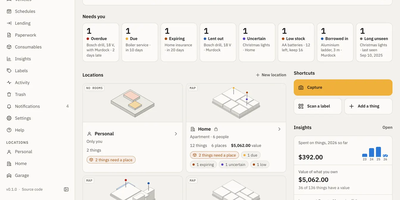
Kept is a self-hosted home inventory that answers where things are, what they are, and what is due. Locations, rooms, shelves, and boxes nest inside each other, so moving a box moves everything in it, and each location can be viewed as a list, a grid, or a 3D map with pins for low stock, loans, and due items. Every thing gets a short ID and a QR code for label sheets or roll printers, and scanning a label opens the box. Capture a thing, receipt, or whole room from the installable phone web app, offline too; an AI provider you choose, including Ollama, then suggests details for you to confirm. Receipts, manuals, and warranties attach to items, reminders arrive in the app, by email, by push, or in a calendar feed, and an insurance report exports photos, serials, and receipts. Lending tracking, vehicle readings and services, moving-house box lists, and stocktakes cover the rest of the household, with shared locations and roles for everyone you live with. An assistant answers questions like where the HDMI cable is, and an MCP endpoint lets Claude or other AI agents add and move things, with changes waiting for your approval. Nightly backups and imports from Homebox and CSV round it out. Running on a dedicated VPS on RepoCloud with guaranteed CPU, RAM, and SSD, full root SSH access, and a browser serial console. AGPL-3.0 licensed.
DroppedNeedle
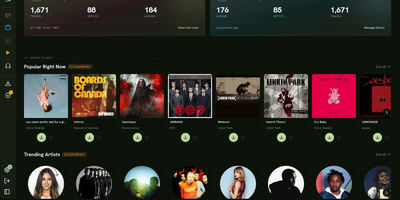
Self-hosted music requests, no Lidarr install needed: DroppedNeedle searches MusicBrainz, drives your own slskd or Usenet setup, and files only verified, tagged tracks in your library. Request a whole album or a single track, then retry or cancel from a dedicated requests page. The engine queries slskd, or SABnzbd with Newznab indexers or Prowlarr, and scores every candidate before anything downloads. Files must pass checks for readable tags, a sane duration, and an optional AcoustID fingerprint match. Close calls park for admin review. Failed requests are searched again until a verified copy arrives. Quality floors per format and storage caps keep the library tidy, and better copies replace old ones. The built-in player queues Jellyfin, Navidrome, Plex, local files, and YouTube previews with shuffle, a 10-band equalizer, and embedded lyrics. Prefer your own app? Symfonium, Finamp, Feishin, and other Subsonic or Jellyfin clients connect with revocable app passwords. Discovery rows draw on ListenBrainz and Last.fm history and global charts, and a weekly mix can queue up to five missing albums. Follow artists for new-release alerts, or add Ticketmaster or Skiddle keys for gig listings in cities you choose. Import Spotify playlists, or drag in a zip of music you bought. Admin, Trusted, and User roles decide whether a request starts at once or waits for approval. Running on a dedicated VPS on RepoCloud with guaranteed CPU, RAM, and SSD, full root SSH access, and a browser serial console. AGPL-3.0 licensed.
TypeType
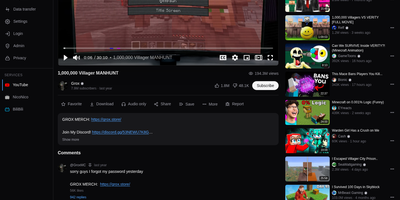
On your own server, TypeType runs a private video platform for YouTube, NicoNico, and BiliBili, keeping subscriptions, history, and playlists out of someone else's recommendation engine. Pick a service and search it. Browse channels, Shorts, podcasts, and a home feed. Speed and quality control. Cinema mode. Native picture-in-picture. Subtitles, alternate audio tracks, and frame-by-frame stepping. SponsorBlock segments get skipped, or just marked, by category. Subscriptions, playlists, watch later, favorites, and resume positions fill the library. Import a Google Takeout export or a PipePipe backup and a new instance never starts empty. Download video or audio to local or S3-compatible storage and collect it in the browser when it is ready. Sign in locally or through OIDC. An admin console runs the instance. Block a channel and it disappears from feeds, search, and related videos. Hide Shorts. Hide personalized recommendations. Hide the suggestions column. A native Android client for phones and tablets syncs with the same instance. An optional experimental recommender can build a personalized home feed, and each user chooses whether to turn it on. Running on a dedicated VPS on RepoCloud with guaranteed CPU, RAM, and SSD, full root SSH access, and a browser serial console. MIT licensed.