Categories
Self-Hosted Knowledge Base RAG SEO GEO AI Content Generation Content Automation Multi-Site PublishingStars
Forks
Watchers
Developer links
GEOFlow
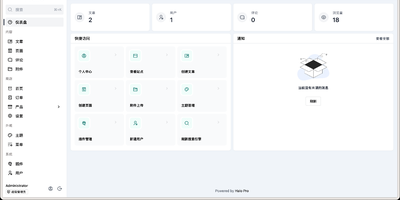
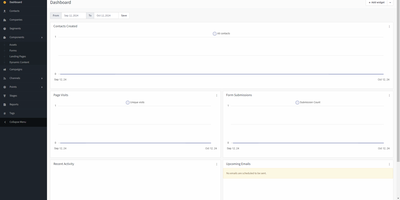
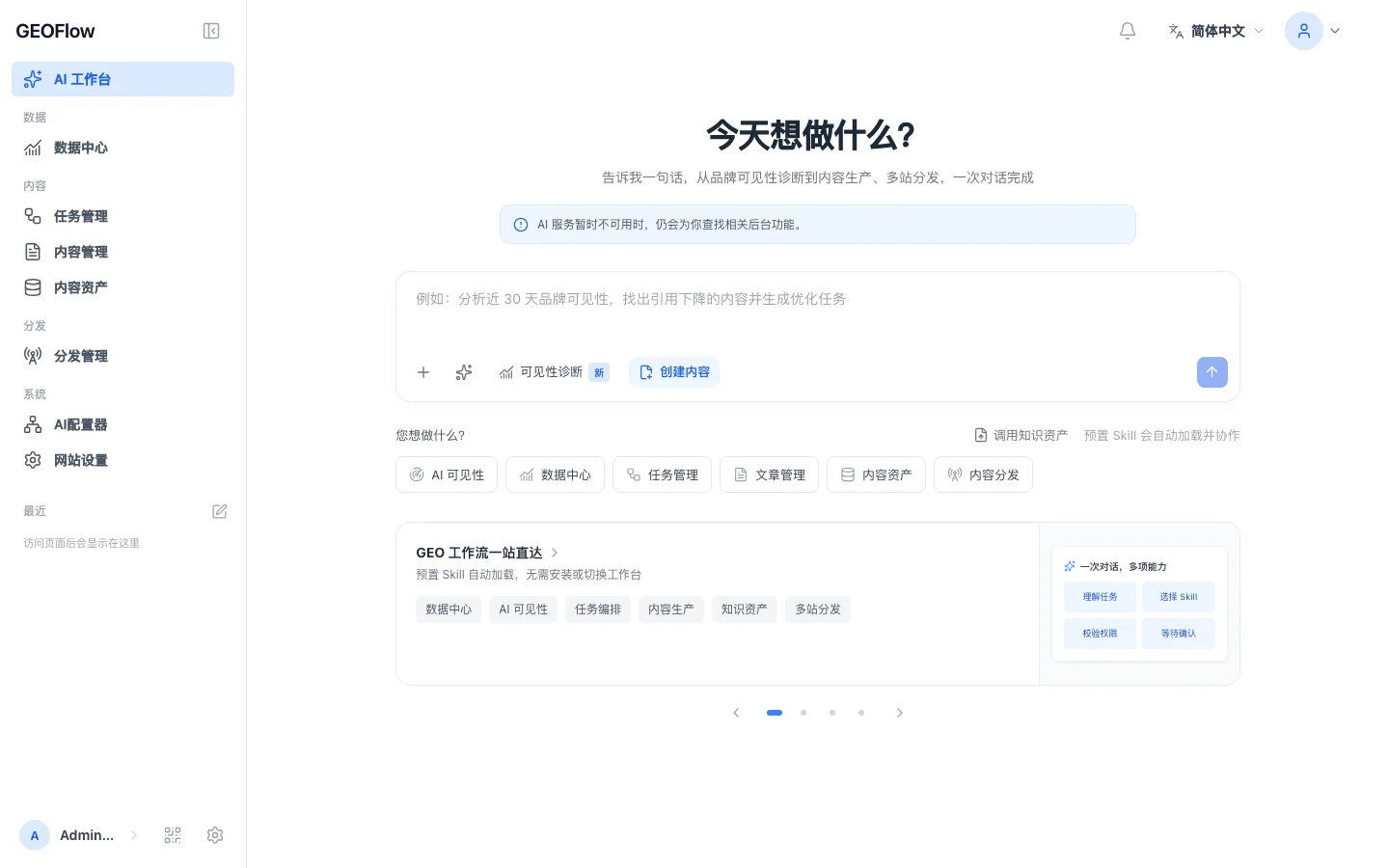
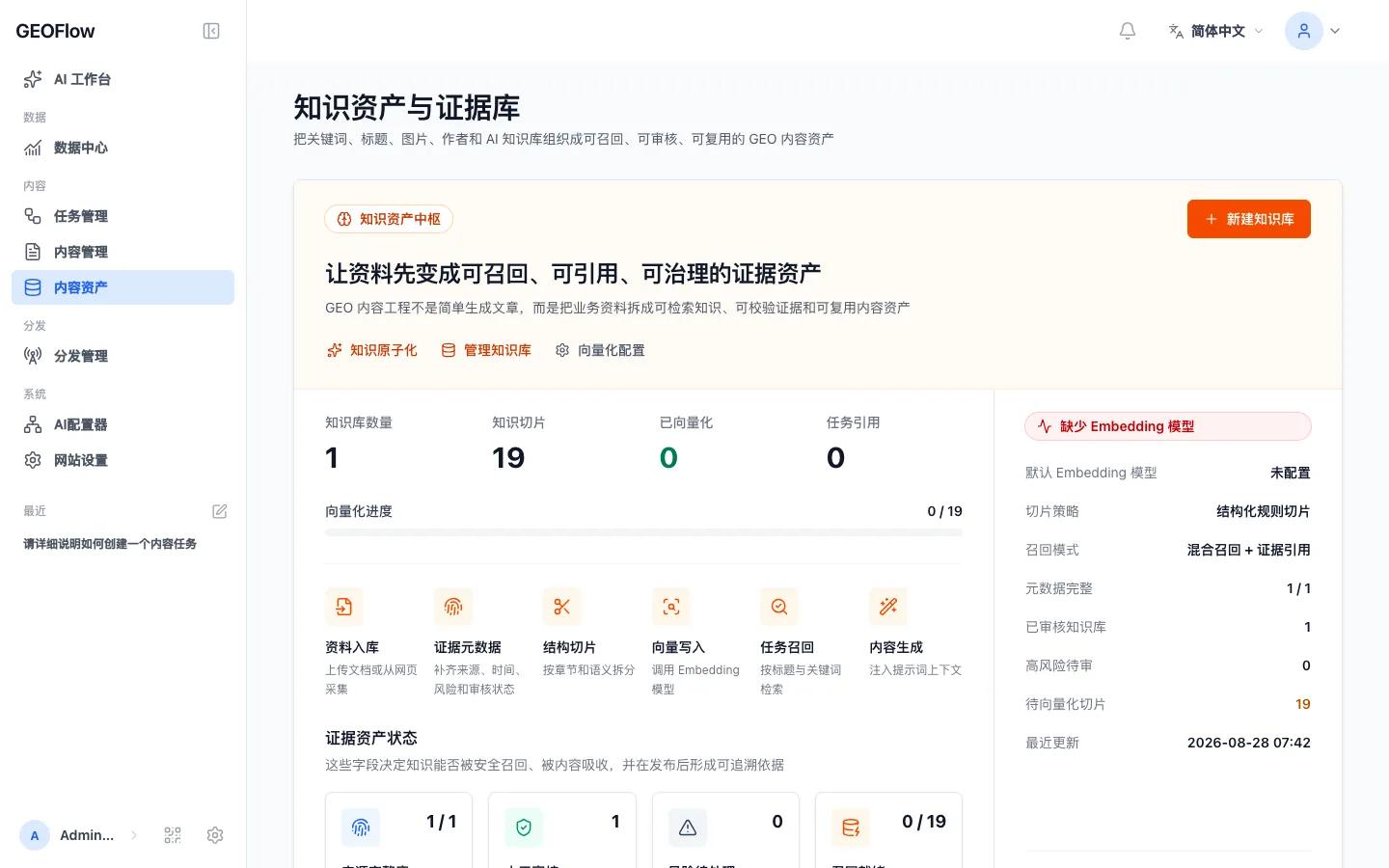
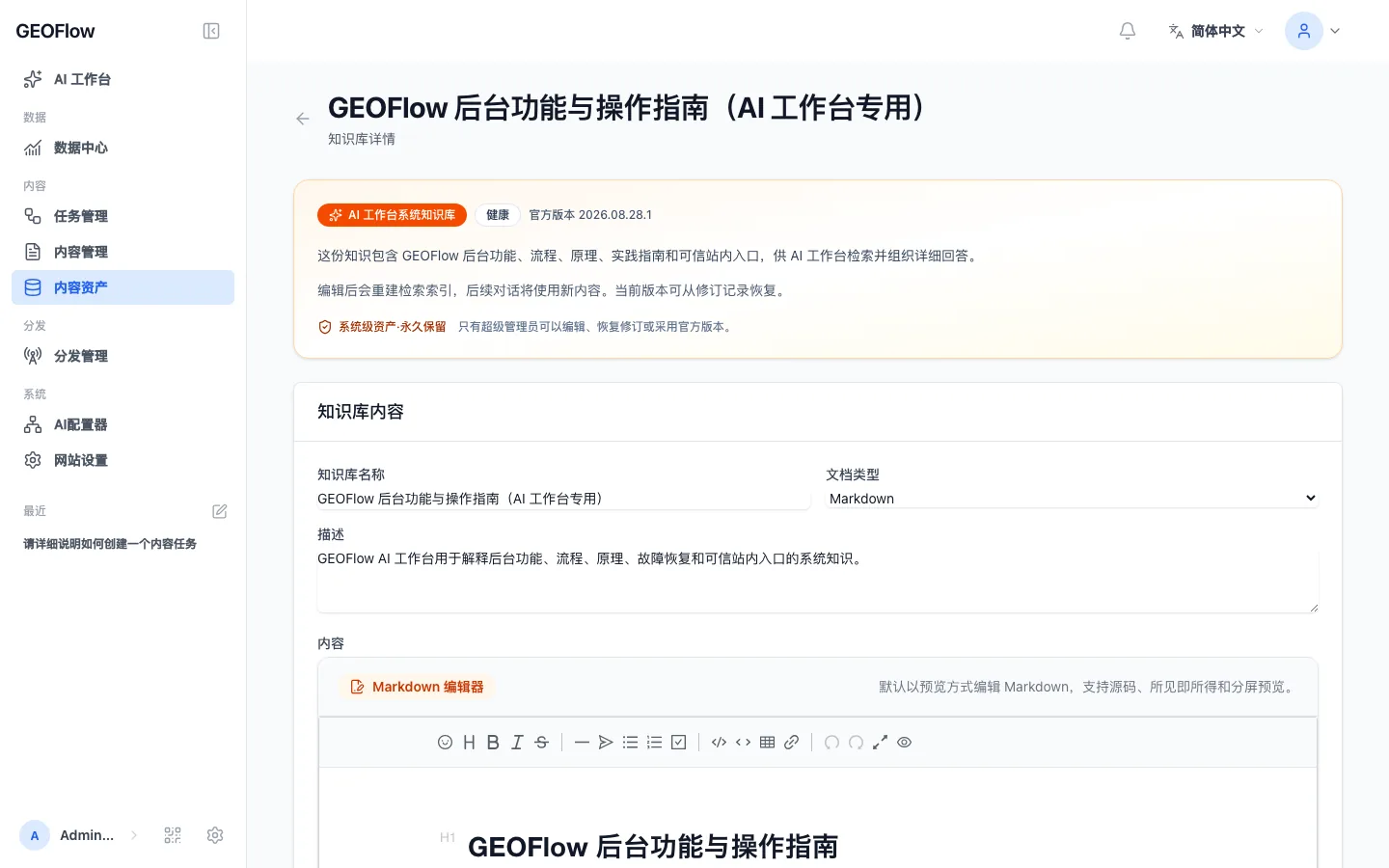
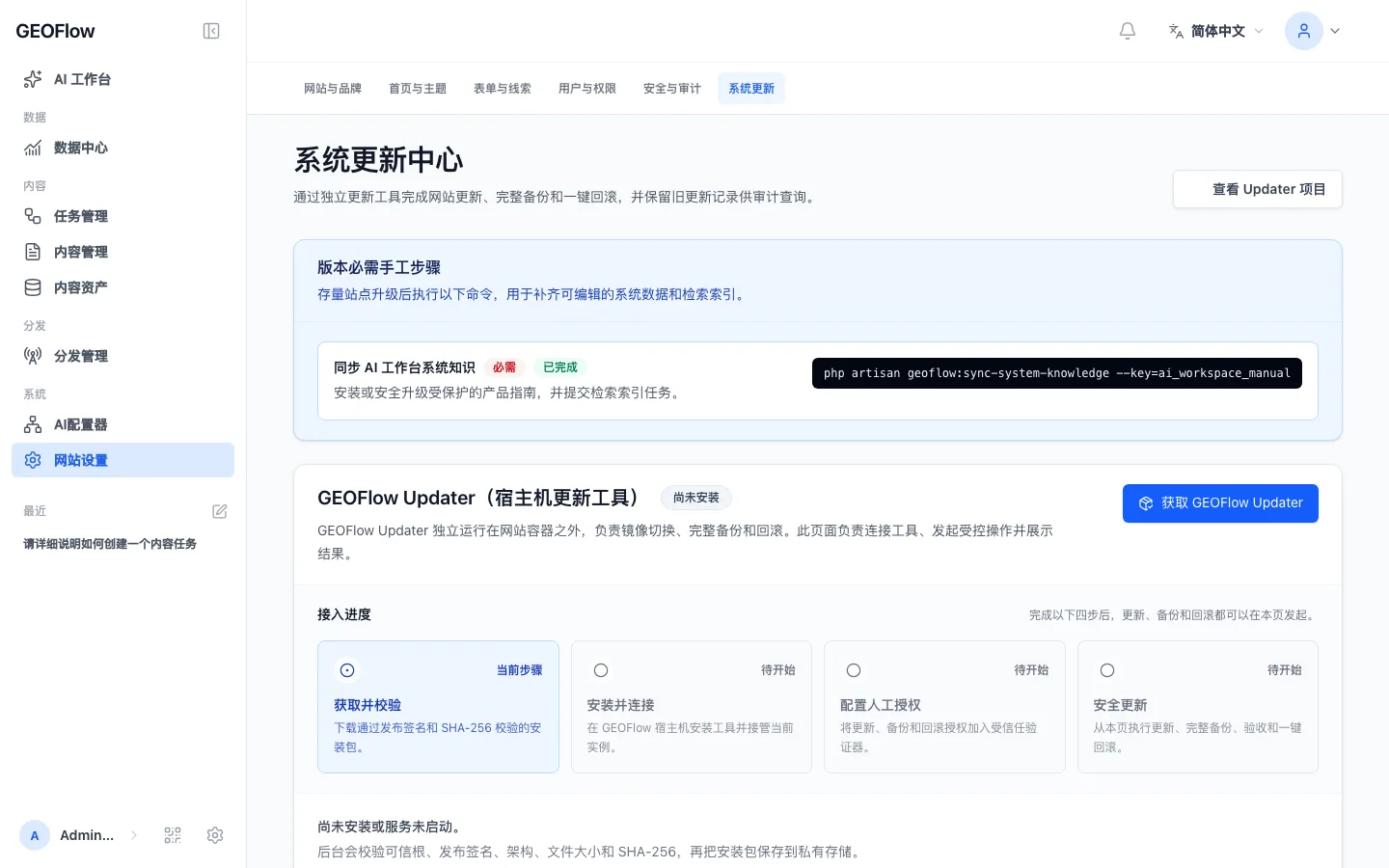
Built for brands that want AI search engines to quote them, GEOFlow is an open-source admin system that turns approved knowledge into reviewed articles and publishes them across every site you run. Load documents or import trusted web pages into knowledge bases that are chunked into evidence units, with optional semantic planning and vector retrieval. Combine them with title libraries (AI can draft up to 100,000 titles), keywords, images, authors, and prompts, then set a task's generation limits, cadence, and publishing scope. Chat and embedding models connect through OpenAI-compatible endpoints or native Gemini, with automatic fallback to the next model when a call fails. Each draft passes an AI quality gate that checks evidence, citations, advertising rules, and publishing context, records scores with source locations and revision advice, and holds risky articles for a human reviewer. Approved articles appear on the built-in site with SEO metadata, Open Graph, Schema, sitemaps, and llms.txt, or travel to hosted subdomain sites, GEOFlow Agent packages, WordPress through its REST API, or any HTTP endpoint. A manual publishing workbench and Chrome assistant cover platforms that need a person, while analytics track traffic, AI crawlers, and brand visibility in generative engines. An API, command-line tool, and agent skill support automation. Running on a dedicated VPS on RepoCloud with guaranteed CPU, RAM, and SSD, full root SSH access, and a browser serial console. AGPL-3.0 licensed.
Benefits
- Evidence-backed articles, not guesswork
- Knowledge bases are chunked, optionally vectorized, and retrieved during generation, so articles draw on your own verified material, while the quality gate stores scores, source locations, and revision advice for every check.
- Human review before anything publishes
- Articles that need review, are blocked, fail inspection, or carry stale quality results stay in drafts, and manual overrides and policy changes remain auditable.
- Output generative engines can read
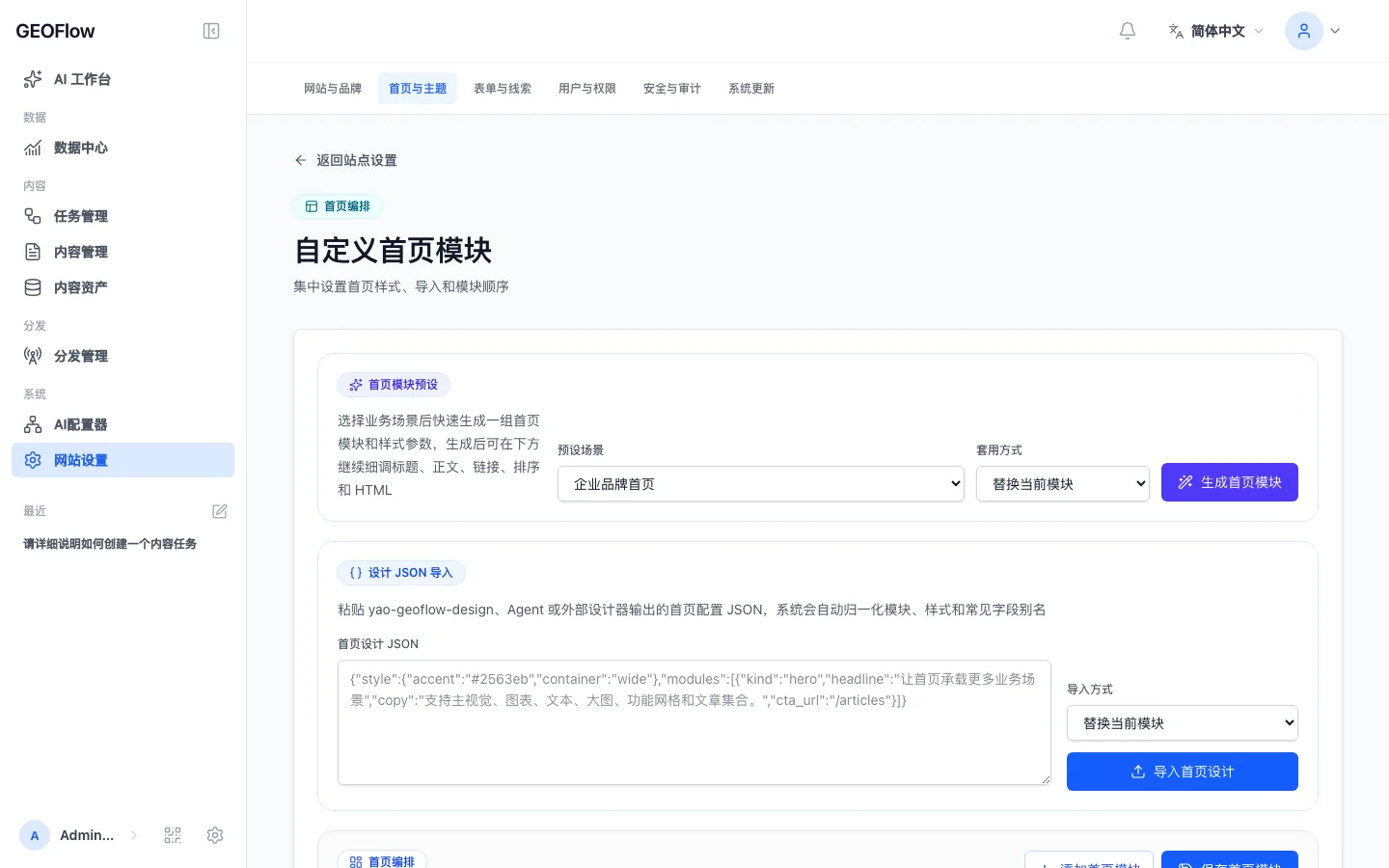
- The built-in frontend ships SEO metadata, Open Graph, Schema, a sitemap, and llms.txt, making published articles easy for search crawlers and AI assistants to parse, index, and cite.
- Control stays on your own server
- Runs from your own Docker Compose stack with PostgreSQL and Redis; knowledge, drafts, and analytics stay in your database, telemetry is off by default, and model calls go only to providers you choose.
Features
- Knowledge base RAG
- Structured rule chunking with optional LLM semantic planning, pgvector similarity retrieval, and a stable fallback to lightweight retrieval when no embedding model or vector extension is available.
- AI quality gates
- Checks knowledge evidence, citations, advertising rules, and publishing context, then stores category scores, source locations, regulatory references, and revision advice with full history for each article.
- Multi-site distribution
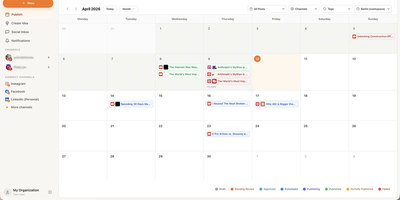
- Hosted sites get subdomain allocation, publishing quotas, and failure cooldowns; Agent channels build preconfigured PHP packages with sitemap, Schema, and llms.txt; WordPress REST syncs posts, media, categories, and tags.
- Chrome publishing assistant
- A Chrome extension uses device pairing and a least-privilege token to claim manual publishing tasks, fill drafts for review, and return execution evidence; an operator confirms final publication.
- AI visibility analytics
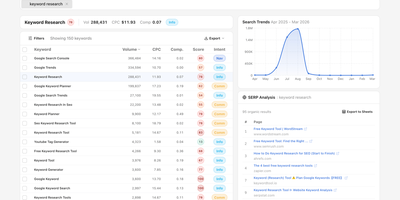
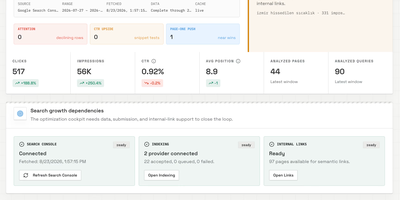
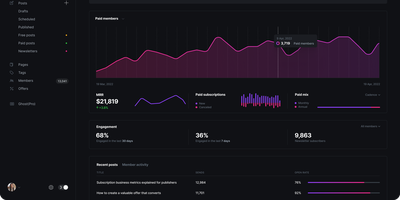
- Track brand visibility, ranking, and sentiment by keyword and provider once a search API is set, with bulk keyword collection, competitor detection, mention analysis, and AI crawler data.
- API and CLI automation
- API v1, the bundled bin/geoflow command-line tool, and a repository Agent Skill manage catalogs, tasks, runs, materials, and articles for automation and extension work.