MIND
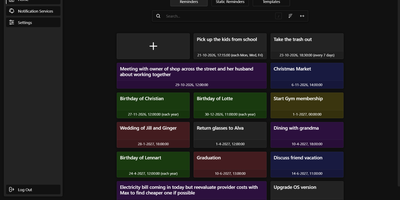
Unlike a calendar alert that rings on one phone, a MIND reminder reaches any of 100+ services, including email, Pushbullet, BlueSky, Cisco Webex Teams, and SMS gateways, from a self-hosted reminder app that you control. Normal reminders fire with second precision once or repeat every few days, once a year, on chosen weekdays, or on a custom cron schedule, while static reminders wait for a button press, so a single tap can tell the family that you are running late. Templates store colour, title, services, and text for fast creation, and the colour-coded library can be searched and sorted, with each reminder enabled, disabled, or tested on demand. Time zone changes, including daylight saving shifts, are accounted for, and sends that fail on a connection error are retried every two minutes until they succeed. Several users can share one instance: the admin panel handles accounts and registration, login lifetime, reverse-proxy URL prefix, debug logs, and scheduled database backups that can be exported and imported, and sign-in supports two-factor authentication. A documented REST API covers reminders, templates, notification services, and static triggers, and the web interface adapts to phone screens. Running on a dedicated VPS on RepoCloud with guaranteed CPU, RAM, and SSD, full root SSH access, and a browser serial console. GPL-3.0 licensed.
Monetr
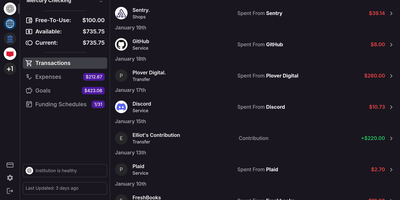
After the bills are covered, how much is actually safe to spend? monetr organizes an entire budgeting application around that one question. Inspired by the defunct Simple bank, it budgets paycheck by paycheck rather than month by month. Funding schedules encode when you get paid - including multiple schedules per account and a weekend-exclusion option for deposits that land early - and every expense or savings goal is tied to one. monetr then calculates how much of each recurring obligation (rent, car payment, subscriptions, on any repeat interval) to set aside from each paycheck, so a large bill never has to come out of a single check. What remains after allocations is surfaced as Free-To-Use, and a forecasting timeline projects contributions, due dates, and leftover funds forward so low-balance periods are visible before they happen. Transactions arrive either as OFX uploads from your bank or automatically through a Plaid connection using your own API credentials, keeping balances and transactions synced without manual entry. The app is mobile-friendly and installable as a PWA on desktop or phone. Self-hosting via Docker Compose is completely free, with all source code public and your financial data on your own hardware.
Open Report
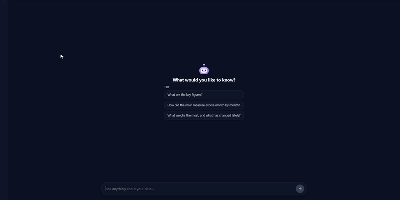
Open source reporting where an AI answers questions in plain words, builds whole dashboards page by page, and shows where a number comes from, while the data stays in your own databases. Ask what weighs the most and what has changed lately, in any language, and the answer arrives with its chart, a table view, and a button that adds it to a report. Describe the report you need and the assistant asks which pages you want, then builds the visuals, measures, data model, and look, ready to fine-tune on the canvas. Bring a local model through Ollama or LM Studio, any OpenAI-compatible API, Anthropic, or your Claude subscription, and decide how much of your data it may read: the schema only, cached aggregates, or query results. Connect Snowflake, BigQuery, Databricks, ClickHouse, Oracle, SQL Server, and MySQL, or load CSV, Excel, Parquet, and JSON files, then define joins with cardinality, dimensions, measures, and row-level security once for every report. The free canvas offers more than fifteen visual types, custom visuals, multi-page layouts, themes, cross-filtering, drill-down, and scheduled cache refreshes. Workspaces with viewer, editor, and admin roles, public links, PDF, PNG, and Excel export, and scoped API tokens cover sharing and automation, while OpenMetadata lineage maps a figure back through its bronze, silver, and gold tables. Running on a dedicated VPS on RepoCloud with guaranteed CPU, RAM, and SSD, full root SSH access, and a browser serial console. AGPL-3.0 licensed.
Subarr
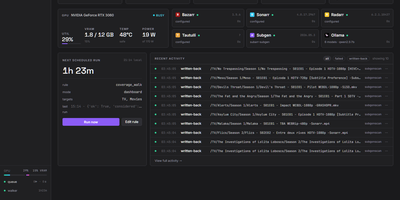
Subarr is the coordination, measurement, and quality layer for Whisper subtitle generation, sitting between Bazarr, Sonarr, Radarr, and subgen to decide what gets transcribed, in what order, and whether the result is any good. Its Coverage walk scans your whole library and scores every subtitle gap with a reason: no track, embedded-only, Bazarr-wanted, audio mislabeled, or low quality. Queue a file, a folder, or an entire series from the Library tab and watch it move through probing, transcribing, and write-back on the dashboard. The Review queue plays you the actual dialogue, picked out by voice-activity detection, so you can verify a subtitle really matches the audio language before it lands. It flags files whose default audio track is not the original language and swaps tracks in place, heading off the double-translation trap. A provider leaderboard records which subtitle sources actually deliver for your library, and the Tuning Lab lets you tune Whisper recipes against your own media. Rules and scheduled walks keep the work flowing, with Tautulli now-playing signals boosting whatever you are about to watch. Finished subtitles are written next to your media, and your Plex or Jellyfin library refreshes the moment one lands. Running on a dedicated VPS on RepoCloud with guaranteed CPU, RAM, and SSD, full root SSH access, and a browser serial console. MIT licensed.
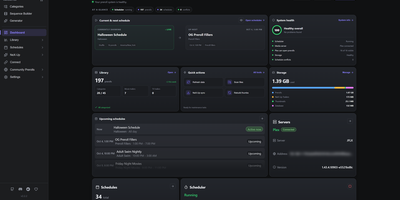
NeXroll
Give movie night a proper cinema preshow: NeXroll plays intros, trailers, and custom welcome screens before the feature on Plex, Jellyfin, and Emby. Build sequences in a list or a visual Flow view, with branches that pick a fallback when no trailer is available and rules for time of day, age rating, genre, or audio format. Schedules rotate the lineup automatically, with holiday themes, special event dates, priorities, and filler between them, all visible in month, week, and day calendars. Import your own videos, preview them, tag them, and sort them into categories, then pull in more from a community collection filtered by creator or platform. NeX-Up fetches upcoming movie and TV trailers through Radarr and Sonarr, and Library Trailers replays trailers for films you already own. Generator Studio makes welcome videos, announcements, QR code screens, and Coming Soon clips from your own text, logo, backdrop, and soundtrack, with a live preview. Connect several media servers to one install, switch among eight themes, back up and restore settings, and automate with the External API. Running on a dedicated VPS on RepoCloud with guaranteed CPU, RAM, and SSD, full root SSH access, and a browser serial console. MIT licensed.
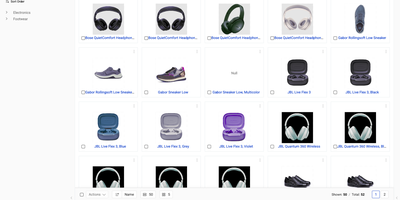
AtroPIM
Manufacturers and distributors can model messy product data exactly as it is in AtroPIM, an open-source product information management system configured through its interface instead of code. Configurable attributes come in twenty-plus data types and are grouped by classifications that give each product class a consistent field set, with automatic unit conversion and per-language values. Variants nest across several levels and inherit values from their parents until overridden; multiple category trees and bidirectional associations such as upsell, cross-sell, and accessories organize the catalog per market. Channel-specific values let one record feed several shops, marketplaces, and catalogs, and product listings gather curated collections for a given purpose. A digital asset library with folders and thumbnail types keeps images and documents attached to the products they describe. Import and export feeds exchange data through files or HTTP requests on a schedule, background workers run the jobs, and dashboard widgets surface failed runs. Roles and teams control who edits what, action history records every change, product statuses such as Draft, Reviewed, and Ready track readiness, and configurable actions run from buttons or on a schedule. Every entity, including custom ones, gets its own REST API for shops, ERP systems, and partner portals. Running on a dedicated VPS on RepoCloud with guaranteed CPU, RAM, and SSD, full root SSH access, and a browser serial console. GPL-3.0 licensed.
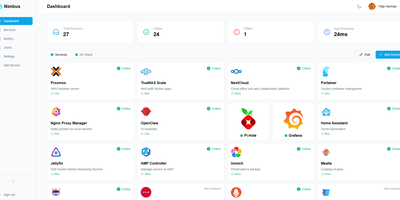
Nimbus
Nimbus is a self-hosted homelab dashboard that turns your scattered pile of services into a polished, organized command center with real-time health monitoring for every endpoint you care about. The dashboard displays live status cards for each registered service, tracking response times down to the millisecond and graphing uptime history so you can spot degradation before it becomes an outage. Health checks run on configurable intervals with smart self-signed certificate handling, meaning your internal services with self-issued TLS do not trigger false alarms. Multi-user support comes standard: local accounts authenticate via JWT, while OAuth2 integration with Google, GitHub, and Discord lets team members sign in with existing credentials. Role-based access control and a built-in admin panel give you granular authority over who sees what. Each user personalizes their view with custom backgrounds, light or dark mode, accent color themes, and drag-and-drop service tile arrangement. Services group into named categories and cards resize to fit your preferred layout, with both grid and list view modes available. Prometheus metrics export feeds your existing Grafana stack, and webhook notifications alert you instantly when a service goes offline. Custom service icons upload directly or auto-fetch from the Dashboard Icons collection. Zero-config Docker deployment gets you running in under 30 seconds with a single docker-compose command. Running on a dedicated VPS on RepoCloud with guaranteed CPU, RAM, and SSD, full root SSH access, and a browser serial console. AGPL-3.0 licensed.
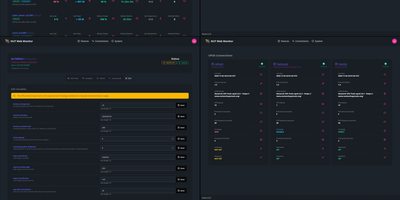
NUT WebGUI
When the power blinks at 3 a.m., NUT WebGUI is the page that tells you whether the UPS in the closet is coasting or dying, without a serial cable in sight. Point it at one or several Network UPS Tools servers and it polls charge, load, input voltage, and estimated runtime, refreshing critical status every couple of seconds while background variables update on a calmer thirty-second cadence. The dashboard renders device cards, gauges, sparklines, and a topology view of how units chain together, and it stays readable on a phone when you are standing in front of a humming rack. Authorized users can issue instant commands, set variables, or trigger a forced shutdown from the browser, while everyone else gets a strictly read-only view. A JSON API under /api serves device lists, variables, and instant commands to your own scripts, health and readiness probes fit container orchestrators, and OpenMetrics output feeds Prometheus without extra exporters. The whole thing is a single small binary that runs happily on a Raspberry Pi, an old ARM board, or a RISC-V box, reads one TOML file, and supports multi-user sign-in with scoped API keys when you share it with a team. Running on a dedicated VPS on RepoCloud with guaranteed CPU, RAM, and SSD, full root SSH access, and a browser serial console. Apache-2.0 licensed.
ScribeWizard
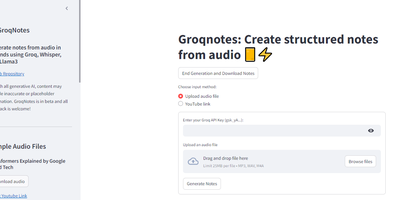
Audio lectures become structured, Markdown-formatted notes in about a minute with ScribeWizard (also known as GroqNotes). Upload an MP3, WAV, or M4A file - or paste a YouTube link - and the app runs a three-stage pipeline on Groq's LPU inference hardware: Whisper Large v3 transcribes the audio, a larger Llama model drafts a comprehensive outline of the material, and a faster Llama model fills each section with detailed content. This scaffolded prompting strategy is the core idea: the strong model handles structure where quality matters most, the fast model handles volume, and Groq's 1200+ tokens-per-second inference keeps the whole process near real time. Output renders as clean Markdown with support for tables and code blocks, and finished notes download as text or PDF. Model selection is configurable - swap in other Groq-hosted open models like Mixtral or Gemma to trade speed against quality or work around rate limits. Built as a single Streamlit app by Benjamin Klieger at Groq, it needs only a Groq API key to run, making it one of the simplest self-hosted AI tools to operate.
Houndarr
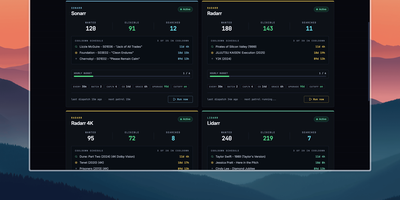
Radarr, Sonarr, and their sibling apps watch RSS feeds for new releases but never go back for what your library is still missing, and Houndarr fills that gap by asking them to search in small, polite batches. It reads the wanted lists of every connected Radarr, Sonarr, Lidarr, Readarr, and Whisparr instance and sends a few search commands per cycle, so a big backlog drains over days instead of arriving as one Search All Missing burst. Each instance has its own batch size, sleep interval, hourly cap, per-item cooldown, and post-release grace period, plus an optional download-queue limit, allowed search windows such as 09:00-23:00, and tag filters that include or exclude items. Three independent passes run per instance: missing items, cutoff-unmet items below your quality profile, and upgrades for files that already meet cutoff, with the last two off until you enable them. Sonarr, Lidarr, and Readarr can search by season, artist, or author, and search order is random or oldest-first. The dashboard shows library health, recent hunts, hourly budgets, and a cooldown schedule per instance, with Run Now buttons for on-demand cycles. The Logs page records every search and skip with its reason in a filterable audit trail that copies as TSV. A key-gated widget endpoint feeds Homepage dashboards, and built-in login or reverse-proxy authentication protects the interface. Running on a dedicated VPS on RepoCloud with guaranteed CPU, RAM, and SSD, full root SSH access, and a browser serial console. AGPL-3.0 licensed.
Qeli
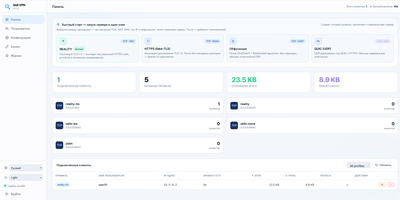
Qeli is a self-hosted VPN built for networks where ordinary VPN protocols get recognized and blocked, disguising its traffic as ordinary web traffic while keeping the classic full-tunnel experience. Where WireGuard, OpenVPN, and IKEv2 carry fingerprints that deep packet inspection has learned to spot, Qeli answers with five wire modes: plain, TLS mimicry, ChaCha20 obfuscation behind WebSocket fronting, REALITY, and a flagship mode that carries the private stream inside a genuine HTTP/2 request within a real TLS 1.3 exchange. A probe without a valid token never learns the difference, because the server bridges it to the configured public target site. The handshake is hybrid post-quantum, X25519 plus ML-KEM-768, with a ChaCha20-Poly1305 data plane, and the tunnel itself behaves like the VPNs people already know: full-tunnel or split routing, OS-level DNS, and per-app include or exclude rules on Windows, macOS, and Android. A one-command installer on a clean Debian or Ubuntu server asks for a profile and a port, writes the NAT configuration, creates the first users, and prints ready-to-paste connection links. The web panel then issues qeli:// links and QR codes per person behind an Argon2id login, so onboarding a phone is a camera scan instead of a config file. Clients cover Linux, Windows, macOS, Android, and Keenetic and OpenWrt routers, and published lab benchmarks average around 1220 Mbit/s across all twelve profiles. Running on a dedicated VPS on RepoCloud with guaranteed CPU, RAM, and SSD, full root SSH access, and a browser serial console. AGPL-3.0 licensed.
ADHDev
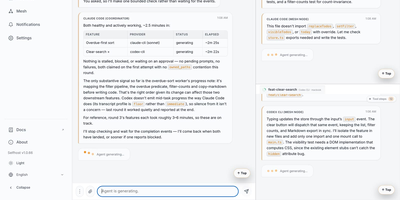
Your laptop, a desktop, and a build box each have a coding agent installed, and until now nothing has coordinated them. ADHDev is a self-hosted control plane that puts Claude Code, Codex, Kimi, Cursor CLI, Antigravity CLI, Grok CLI, and OpenCode behind one shared task queue and one web and mobile dashboard. Machines pair directly with an address and a one-time code on your own network, and a mesh binds to a single repository. Idle nodes claim tasks themselves. Dependencies order the queue, retries absorb failures, and missions group the work that belongs together. Every task gets an isolated git worktree the moment it starts. Agents build in parallel without touching each other's files, and the coordinator's prompt is rendered from live mesh state at launch, with events pushed in as they happen. Difficulty tags route easy work to cheap models and hard work to strong ones. The dashboard also reads how much of each subscription window remains, skips plans that are nearly empty, and shows the routing forecast before anything runs. Finished work enters the Refinery. Your repository's gates decide, the branch is rebased onto main, and the merge happens only when main has not moved, followed by automatic worktree cleanup. Running on a dedicated VPS on RepoCloud with guaranteed CPU, RAM, and SSD, full root SSH access, and a browser serial console. AGPL-3.0 licensed.
Senlo
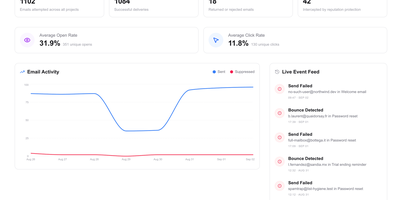
Product teams get a visual home for the transactional and lifecycle emails their application sends with Senlo, which sits on top of the delivery provider they already use instead of replacing it. A drag-and-drop editor builds responsive templates without hand-written HTML, exports to MJML or plain HTML when needed, and keeps templates versioned so edits can be reviewed and rolled back safely. Event-triggered automations turn product activity into onboarding sequences, trial reminders, and win-back flows: your app feeds contact events through the API, and Senlo decides which message goes out next. The transactional API sends a rendered template in one call, so receipts, password resets, and alerts stop living as scattered strings in your codebase. Delivery stops being a black box, with sends, deliveries, bounces, and engagement tracked per workspace, a live feed of failures, and suppressions that block bad addresses before they damage sender reputation. Because sending stays with Resend, Postmark, SES, Mailgun, or your own SMTP server, switching providers never means rebuilding a template. Running on a dedicated VPS on RepoCloud with guaranteed CPU, RAM, and SSD, full root SSH access, and a browser serial console. AGPL-3.0 licensed.
Synapse AI
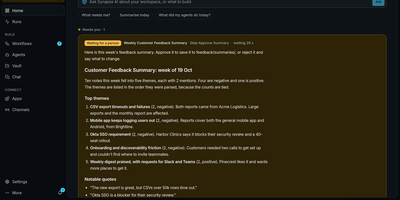
Hand a repeating job to Synapse AI and it drafts readable steps, runs them the same way every time, and stops to ask before anything goes out. Each workflow is a graph of steps that can call agents, tools, scripts, and different language models from over a dozen providers, local or cloud. An AI builder drafts the graph from a description, and a visual editor handles hand adjustments. Human approval steps pause a run until someone says yes, in the web interface or from Slack, Discord, Telegram, Teams, or WhatsApp. Cron and interval schedules start jobs automatically, and a run viewer shows the path, timing, tokens, and cost of every step. Any REST endpoint, Python script, webhook, or MCP server becomes a tool agents can call, and a shared vault stores files between runs. A template gallery offers ready-made workflows for research, reporting, and content, and an embeddable chat widget puts a knowledge-grounded assistant on your own site. A versioned REST API enqueues, streams, and cancels runs from your products. Running on a dedicated VPS on RepoCloud with guaranteed CPU, RAM, and SSD, full root SSH access, and a browser serial console. AGPL-3.0 licensed.
Thunderbird Appointment
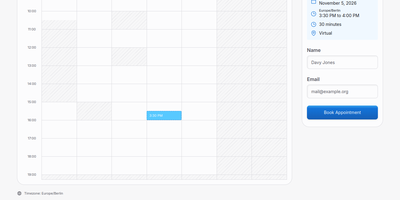
One link replaces the scheduling dance: Thunderbird Appointment publishes your availability as a booking page where visitors choose a slot and the meeting lands on your calendar. You connect the calendars you already keep, Google Calendar or any CalDAV server, and the service reads your busy times and writes new bookings back as real events. Weekly schedules define the days and hours on offer, the length of each slot, and how far ahead or how last-minute a booking may be. Each booking page carries its own title, agenda, and location, from a street address to a Zoom link created for the meeting automatically. Visitors see open times in their own timezone, pick one, and leave their name and email; no account is required on their side. Requests can land as confirmed bookings right away or wait for your approval first, and every booking appears in your bookings list with attendee details. Your own calendar view gathers every connected calendar in one place, so personal and work commitments stop colliding. The interface speaks several languages, honors light and dark themes, and lets each user set the week start and 12 or 24 hour clocks. Self-hosters sign in with a password, and larger deployments can plug in an OIDC provider for single sign-on. Running on a dedicated VPS on RepoCloud with guaranteed CPU, RAM, and SSD, full root SSH access, and a browser serial console. MPL-2.0 licensed.
Betterlytics
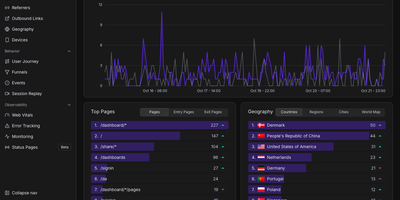
Page views, funnels, session replays, error reports, Core Web Vitals, and uptime checks share one cookieless dashboard in Betterlytics, so teams stop stitching several tools together. The overview charts visitors, page views, bounce rate, and visit duration against the previous period, and annotations mark launches or campaigns right on the timeline. Breakdowns cover referrers, channels, UTM campaigns, browsers, devices, and operating systems, with visitor locations on a world map once an optional MaxMind key is added. Custom events, global properties such as plan or app version, and outbound link tracking show what visitors actually do, while user journey diagrams and funnels reveal where they drift away. Session replay is opt-in per tracking script, masks text and form inputs by default, and can keep recordings in your own S3-compatible bucket. Error tracking groups JavaScript errors with stack traces, a session trail, and a link to the matching replay. Uptime and SSL monitors alert through Slack, Discord, Teams, or webhooks and feed public status pages on your own domain. Teammates join by invitation, two-factor login is available, and a built-in MCP server lets Claude, Cursor, or Codex answer traffic questions. A script of about 3.5 KB or a WordPress plugin handles installation. Running on a dedicated VPS on RepoCloud with guaranteed CPU, RAM, and SSD, full root SSH access, and a browser serial console. AGPL-3.0 licensed.
ProductFlow
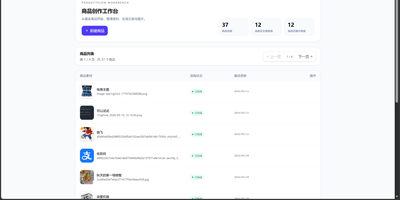
ProductFlow turns a product photo and a few facts into finished selling material, giving solo merchants and small teams one workspace for copy, posters, and repeatable image generation. You start by creating a product record, attaching original and reference images, then arranging product data, copy nodes, and image nodes on a zoomable canvas with drag, pan, multi-select, and connections. Copy nodes generate editable structured text that you can review, confirm, and keep in history before downstream image nodes read it. Poster generation runs in template mode with local rendering or generated mode through an image provider, and completed results can be downloaded, saved as product references, or promoted to the main product image slot. A separate image session view supports text-to-image and image-to-image runs with base image selection, candidate comparison, queue position, progress, cancel, and retry. Every finished image can move into the gallery with its source session, linked product, prompt, size, and model recorded for later reuse. Runtime settings cover provider profiles, model bindings, image tool parameters, prompt templates, upload limits, and concurrency, guarded by a separate settings token. The built-in help pages document the canvas, gallery, image sessions, and configuration in searchable sections. Running on a dedicated VPS on RepoCloud with guaranteed CPU, RAM, and SSD, full root SSH access, and a browser serial console. MIT licensed.
XianScan
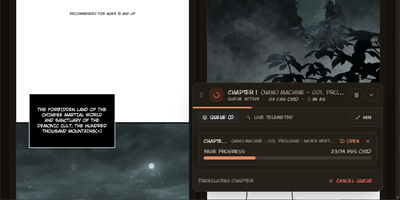
Reading a new manhwa chapter on release day usually means waiting for a scanlation group, or pasting panels into three tools yourself. XianScan collapses that whole relay into one server: point its browser extension at a chapter on a reader site and it captures every page, or drop raw pages into the studio and let the pipeline run. Speech bubbles, captions and sound effects are detected automatically, the text inside them is read by OCR supporting ten languages in vertical and horizontal layouts, and tall webtoon strips are resliced along natural panel gutters so no bubble is ever cut in half. Translation keeps a sliding memory of previous pages so speakers, pronouns and story topics stay consistent, while terminology glossaries lock character names and cultivation terms across an entire series. The original lettering is then removed by neural inpainting that rebuilds the artwork underneath, and the translation is typeset back into the bubbles with computed font sizes, line breaks and per-script fonts, including right-to-left scripts and accent fonts for attack names. Inspect OCR boxes and confidence scores, fix text before saving, then read in the web studio or stream chapters to the Mihon app on your phone. Local models through Ollama or LM Studio keep everything offline, or plug in Gemini, OpenAI, Groq or OpenRouter keys when you prefer the cloud. Running on a dedicated VPS on RepoCloud with guaranteed CPU, RAM, and SSD, full root SSH access, and a browser serial console. MIT licensed.