Animockup
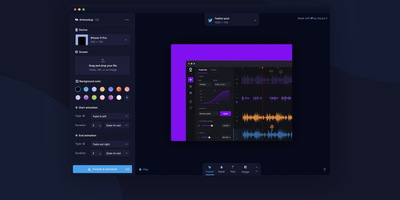
Product Hunt's Maker of the Year: Animockup delivers an alternative to expensive motion graphics tools for creating animated product teaser videos entirely in the browser. The FabricJS canvas engine provides a fully interactive editing surface where you import product videos or screenshots, place them inside device mockups ranging from iPhones and MacBooks to browser windows and smartwatches, and customize everything from background gradients to overlay text positioning. Anime.js powers the animation system with configurable start and end transitions, easing curves, and duration controls that produce smooth entrance and exit effects without timeline editors or keyframe knowledge. The built-in FFMPEG.wasm pipeline handles all video processing client-side — no server-side rendering required — exporting finished teasers to WebM, MP4, or GIF at custom framerates and resolutions up to 4K. The crop and reposition tool lets you precisely fit product footage into any device screen regardless of aspect ratio differences. Twenty-plus device frames cover phones, tablets, laptops, desktops, watches, and generic browser windows for maximum versatility. Firebase authentication handles user sessions while the optional Paddle integration manages subscriptions — or remove both for a fully free deployment. Self-hosting requires only a static web server with optional PHP for the payment webhook endpoint. Running on a dedicated VPS on RepoCloud with guaranteed CPU, RAM, and SSD, full root SSH access, and a browser serial console. MIT licensed.
PeerTube
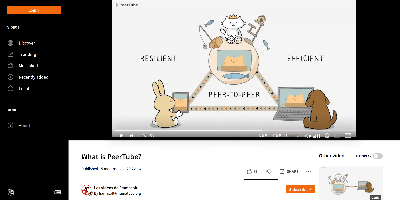
The fediverse's answer to YouTube comes from French non-profit Framasoft: PeerTube is a TypeScript/Angular video platform where hundreds of independently operated instances federate over ActivityPub into one network. Videos you publish are discoverable across the whole video fediverse, and viewers can follow your channels from Mastodon or any ActivityPub platform - or plain RSS - without needing an account on your instance. The namesake innovation attacks video hosting's core cost problem: alongside HLS delivery, an optional WebRTC-based P2P layer lets concurrent viewers' browsers share video segments with each other, so a video going viral distributes its own bandwidth demand instead of crushing your server; instance redundancy extends this by letting friendly instances cache each other's videos. Livestreaming is first-class - stream via OBS or any RTMP software, host permanent streams, enable replays, and interact through live chat. Creators get channels, playlists, analytics, built-in video editing (trim, watermark), and an embeddable player for any website. There are no ads, no data mining, and no recommendation algorithm engineered for watch-time - the project's explicit design stance. Admins control federation policy, P2P settings, and theming; a plugin system extends the rest. AGPL-licensed, 300+ contributors, in active development since 2015.
ComfyUI
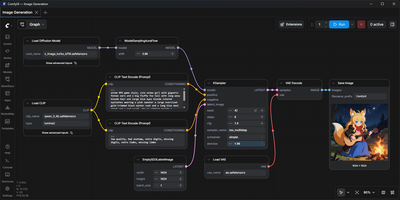
With over 126,000 GitHub stars and adoption across professional studios, research labs, and independent creators, ComfyUI has become the most widely used node-based interface for generative AI workflows — supporting image, video, audio, and 3D content creation through a single visual canvas. The graph editor natively supports Stable Diffusion 1.5, SDXL, SD3.5, Flux.1, Flux.2, HunyuanDiT, Lumina Image 2.0, HiDream, Qwen Image, and Pixart for image generation, plus Wan 2.1 and 2.2, LTX-Video, HunyuanVideo 1.5, CogVideoX, and Mochi for video, ACE-Step and Stable Audio for audio, and Hunyuan3D 2.0 for 3D models. Built-in tools handle inpainting, outpainting, ControlNet conditioning, LoRA and Hypernetwork loading, ESRGAN upscaling, area composition, model merging, and GLIGEN spatial control without writing code. The execution engine implements asynchronous queue processing with partial graph re-execution, running only changed nodes between iterations, and smart VRAM management that offloads models on GPUs with as little as 1 GB of memory. API nodes optionally connect to closed-source models through Comfy API while the core runs fully offline. Reusable subgraphs and App Mode expose complex workflows as simplified interfaces for non-technical users. The V3 custom node schema enables stateless execution with async support and process isolation. The TypeScript and Vue frontend ships as a PyPI package with stable releases every two weeks. Workflows save as JSON and embed in generated PNG, WebP, and FLAC files for reproducibility. Running on a dedicated VPS on RepoCloud with guaranteed CPU, RAM, and SSD, full root SSH access, and a browser serial console. GPL v3.0 licensed.
OpenMontage
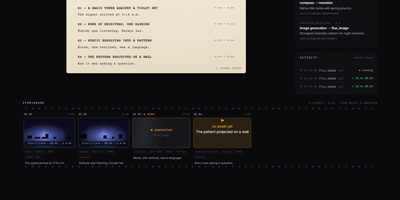
Reaching #1 on GitHub Trending with over 48,000 stars, OpenMontage is the first open-source agentic video production system — transforming AI coding assistants like Claude Code, Cursor, Copilot, Windsurf, and Codex into complete video studios that handle research, scripting, scene planning, asset generation, editing, and final rendering through natural language prompts. Twelve production pipelines cover animated explainers, cinematic trailers, documentary montages, talking heads, screen demos, podcast repurposing, character animation, localization and dubbing, avatar spokesperson videos, hybrid productions, clip factory batch processing, and animation workflows. Over 100 registered Python tools connect to 60+ providers including Kling, Runway Gen-4, Google Veo 3.1, FLUX, Google Imagen 4, ElevenLabs, and Suno AI for cloud generation, plus Piper TTS, WAN 2.1, Hunyuan, and CogVideo for fully local GPU rendering — while free footage from Archive.org, NASA, Wikimedia Commons, Pexels, and Unsplash powers the documentary montage pipeline's CLIP-indexed retrieval system for real-motion video without paid generation APIs. Two composition engines — Remotion for React-based programmatic video and HyperFrames for HTML/GSAP motion graphics — render final output with spring animations, word-level captions, kinetic typography, and SVG character rigs. A seven-dimension scored provider selector, pre-compose validation gates, post-render ffprobe self-review, slideshow risk scoring, configurable budget caps with per-action approval thresholds, and the Backlot live web dashboard for visual production monitoring enforce production-grade quality at every stage. Running on a dedicated VPS on RepoCloud with guaranteed CPU, RAM, and SSD, full root SSH access, and a browser serial console. AGPL-3.0 licensed.
Fireshare
The moment after ShadowPlay saves a great clip is what Fireshare was built for: your friends see it now, not after a YouTube upload, processing queue, and platform terms review. Drop videos into a watched folder and this Flask/React application generates a unique shareable URL for each one, complete with Open Graph metadata - so pasting the link into Discord, Twitter, or Slack produces a proper embed with title, description, and video thumbnail instead of a raw URL. Viewers need no account and no app. Visibility is per-file: public (browseable on your feed), private (unlisted, reachable only by direct link), or password protected. For game clips specifically, Fireshare organizes automatically - clips sort by game with cover art pulled from SteamGridDB, no manual tagging - while tags and full-library search cover everything else. Optional transcoding (CPU or GPU) creates lower-quality renditions so viewers on weak connections get automatic quality adaptation, and video cropping trims clips in place. The extras round out a genuinely finished tool: view counters, timestamped share links, a shuffle button, restrictable uploads, Discord notifications for new videos, an RSS feed of the public feed, mobile support, and LDAP for multi-user setups. No storage limits, no watermarks, no platform deciding what stays up. GPL-licensed.
LiveKit
With over 20,000 GitHub stars and adoption by companies building everything from telehealth platforms to AI voice agents, LiveKit is the most widely deployed open-source real-time communication server available. The Go-based Selective Forwarding Unit handles hundreds of concurrent participants per node with adaptive bitrate streaming, simulcast layers, SVC codec support for VP9 and AV1, and end-to-end encryption. Client SDKs span JavaScript, Swift, Kotlin, Flutter, React Native, Rust, Python, Unity, and ESP32 embedded devices, while server-side APIs cover Node.js, Go, Ruby, Java, Python, Rust, PHP, and .NET. The Agents framework enables building AI-powered voice and video applications — real-time speech-to-text, LLM-driven conversations, and computer vision pipelines — running as server-side participants in any room. Egress records sessions to S3-compatible storage or streams to RTMP endpoints, while Ingress pulls external feeds from OBS via RTMP, WHIP, or SRT into LiveKit rooms. The SIP bridge connects traditional telephony to WebRTC rooms for hybrid conferencing. JWT-based authentication, webhook notifications, room-level moderation APIs, and selective subscription give operators granular control. Deploy as a single binary for development, Docker Compose for production single-node, or Kubernetes with the official Helm chart for distributed multi-region clusters using Redis for state coordination. Running on a dedicated VPS on RepoCloud with guaranteed CPU, RAM, and SSD, full root SSH access, and a browser serial console. Apache 2.0 licensed.
Owncast
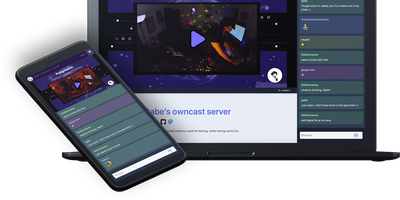
Twitch and YouTube Live, replaced by infrastructure you control: Owncast is a self-hosted live streaming and chat server. Point OBS, Streamlabs, or any RTMP-capable broadcaster at the server's ingest port, and Owncast transcodes the feed with FFmpeg into HLS with multiple quality variants, playing it in a built-in web page with a real-time chat beside it. Chat supports anonymous participation, custom emotes, and moderation tools - message removal, user bans and suspensions - with optional authentication via IndieAuth or a Fediverse account. ActivityPub integration puts the stream on the Fediverse: viewers on Mastodon and compatible services can follow a channel and get notified the moment it goes live. Video delivery can come straight off the server or offload HLS segments to S3-compatible object storage so a modest VPS handles thousands of concurrent viewers while only managing ingest and chat. The backend is a single Go binary with a React frontend - no accounts platform, no database server, no dependency stack - and the player embeds in any website. MIT-licensed, with roughly 9k GitHub stars, zero platform fees, and no algorithm or takedown policy between you and your audience.
Tailchat
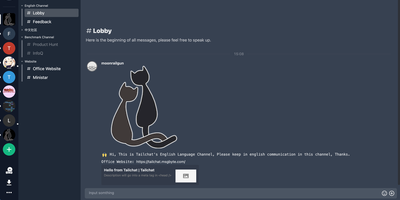
Think of it as a team messaging platform where every feature beyond core chat is a plugin you can install or remove, inspired by VS Code's extension model but applied to real-time communication. The Moleculer microservice backend scales horizontally across nodes while Socket.io delivers instant message synchronization with text, images, files, mentions, reactions, and rich Markdown formatting. Available plugins provide LiveKit video conferencing, collaborative drawing boards, task management panels, end-to-end encryption, custom themes, and third-party push notification reception without touching core code. Groups use a two-level space system with customizable panel layouts arranged through drag-and-drop, while role-based access control enforces fine-grained permissions across the organization. The Open Platform exposes OAuth for single sign-on across connected applications and a Bot API enabling bidirectional message processing between Tailchat and external services via HTTP requests. Multi-platform clients cover web, Electron desktop with screenshot capabilities, and mobile apps with native push. Docker Compose deployment bundles MongoDB for persistence, Redis for caching and transport, and MinIO for S3-compatible file storage. Deploy on RepoCloud with a dedicated VPS for persistent team infrastructure under the Apache 2.0 license.
Restreamer
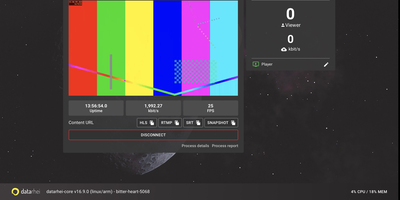
Point OBS or a hardware encoder at Restreamer's built-in RTMP or SRT ingest and it serves your website while rebroadcasting to YouTube Live, Twitch, Facebook, Vimeo, TikTok, LinkedIn, PeerTube, and anything else that accepts RTMP, SRT, or HLS - a complete self-hosted live-streaming server from datarhei. That multistreaming normally costs a monthly Restream.io subscription; here it's one FFmpeg process per destination on your own hardware. The web UI is genuinely approachable, with a wizard that walks beginners through camera setup, while professionals get the full surface: multiple audio/video inputs (USB, RTSP network cameras, virtual devices), codec and processing settings, separate audio muxing, and hardware acceleration via Nvidia CUDA, Intel VAAPI, or Raspberry Pi. Serving your own audience is first-class - a built-in Video.js player embeds in your site, a ready-made publication website streams without any embedding work, HLS chunk sizes are tunable, and automatic Let's Encrypt handles HTTPS. Viewer and bandwidth monitoring with limits keeps traffic costs predictable, and it's GDPR-friendly: no third-party provider, no audience data stored. A fully Swagger-documented REST API drives automation. SRT support keeps latency under a second.
Jitsi Meet
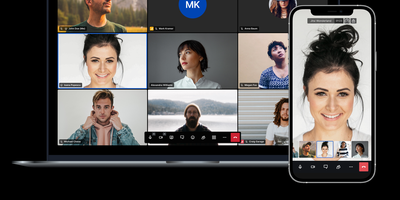
Backed by nearly 30,000 GitHub stars and powering millions of meetings through meet.jit.si, Jitsi Meet is the open-source video conferencing platform that runs entirely in the browser with no plugins or downloads required. The WebRTC-based architecture delivers HD audio and video through the Jitsi Videobridge selective forwarding unit, while Prosody handles XMPP signaling and Jicofo manages conference focus and orechestration. End-to-end encryption uses AES-GCM 128-bit keys exchanged via the Olm protocol, protecting audio, video, and screen sharing through the Insertable Streams API in Chromium-based browsers. Moderators can split participants into breakout rooms with individual password protection, enable lobby waiting rooms for admission control, set meeting passwords, and track speaker statistics with per-participant talk time metrics. Virtual backgrounds leverage TensorFlow.js body segmentation with WebGPU and WebGL acceleration, automatically adapting quality through device tier detection. Server-side recording and YouTube live streaming run through Jibri, while Jigasi provides a SIP gateway for PSTN dial-in and speech-to-text transcription. The platform includes in-meeting chat with private conversations, polls, raise-hand functionality, emoji reactions, and tile and speaker view layouts. Mobile applications for iOS and Android complement the web client, and both web and native SDKs enable embedding video conferences into custom applications. Running on a dedicated VPS on RepoCloud with guaranteed CPU, RAM, and SSD, full root SSH access, and a browser serial console. Apache-2.0 licensed.
Pixelle Video
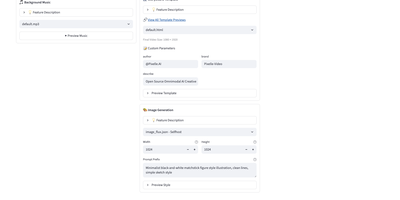
Backed by Alibaba's AIDC team and carrying over 27,700 GitHub stars, Pixelle-Video turns a single text prompt into a publish-ready short video in approximately three minutes — handling scriptwriting, image generation, voice narration, music selection, subtitle overlay, and final MP4 export in one automated pipeline. The engine supports multiple LLM backends for script generation including GPT-4, Qwen, DeepSeek, and local Ollama deployments, while image and video creation routes through either self-hosted ComfyUI workflows, cloud-based RunningHub pipelines, or direct API connections to DashScope Wan, OpenAI, Seedream, Seedance, and Kling AI. Text-to-speech synthesis uses Edge-TTS, Index-TTS, and other mainstream engines with multi-language voice profiles. Five distinct pipelines cover Quick Create, Standard, Digital Human Avatar broadcasting, Image-to-Video transformation, and Motion Transfer from reference video. The Streamlit web UI on port 8501 provides a visual workflow builder with template selection across portrait (1080x1920), landscape (1920x1080), and square formats, while the FastAPI server on port 8000 exposes a REST API with endpoints for async video generation, task polling, content scripting, TTS and image generation, template listing, and health checks. History persistence tracks all completed generations. HTML-based visual templates support static, image-overlay, and AI-video styles with customizable prompt prefixes. The modular architecture lets operators swap any atomic capability — image model, video model, TTS engine, or VLM — by editing a workflow JSON file without touching Python code. Running on a dedicated VPS on RepoCloud with guaranteed CPU, RAM, and SSD, full root SSH access, and a browser serial console. Apache 2.0 licensed.
BigBlueButton
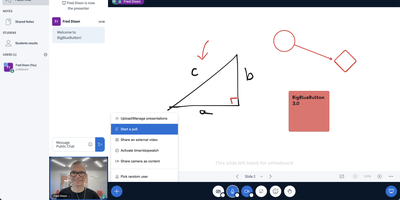
Used daily by millions of educators and learners in over 65 languages and embedded as the default virtual classroom in Moodle Cloud, Canvas, Sakai, D2L, Jenzabar, and Schoology — together comprising more than 75% of the worldwide learning management system market — BigBlueButton has been the leading open-source web conferencing platform for education since its creation at Carleton University in 2007. The platform delivers WebRTC-based real-time audio, video, and screen sharing with a tldraw v2-powered multi-user whiteboard featuring infinite canvas support, allowing multiple participants to annotate slides and draw simultaneously. Breakout rooms support up to eight concurrent groups with collaborative whiteboards enabled by default, and polling with customizable response types lets instructors assess understanding in real time. The built-in Learning Analytics Dashboard answers three questions at a glance: who is attending, who is participating, and who is learning based on poll responses, providing actionable engagement metrics without requiring webcam surveillance. Session recording captures audio, video, slides, chat, and whiteboard annotations for asynchronous playback on any device. The plugin architecture introduced in version 3.0 enables custom extensions, while IMS LTI 1.0 compliance allows integration with Blackboard, Desire2Learn, Pearson Learning Studio, and any conformant platform without custom code. The REST API enables programmatic session management, user authentication, and recording access for custom frontends like the included Greenlight application. Version 4.0 introduces LiveKit-based media and a redesigned interface. Running on a dedicated VPS on RepoCloud with guaranteed CPU, RAM, and SSD, full root SSH access, and a browser serial console. LGPL-3.0 licensed.
Emby
Point Emby at your movie, music, and photo libraries and it becomes a private streaming service: metadata and artwork arrive from TMDB and TVDB, everything lands in a polished browsable interface, and media transcodes on the fly whenever a client can't play the original format. The client reach is the selling point: native apps span Android TV, Apple TV, Google TV, Fire TV, Roku, LG and Samsung smart TVs, iOS, Android, Apple CarPlay, Android Auto, plus web browsers and desktop apps for Windows, macOS, and Linux, and DLNA devices are auto-detected for casting and remote control. Multi-user support gives each household member their own account, watch history, favorites, and recommendations, with genuinely capable parental controls: content restrictions, access schedules, time limits, and live monitoring with remote control of kids' sessions. Live TV works with hardware tuners like HDHomeRun or M3U playlists, with free guide data in the US, Canada, and UK. The server and core features are free; an optional Premiere key adds hardware-accelerated transcoding, DVR recording, offline sync, and Cinema Mode intros.