Malloy Publisher
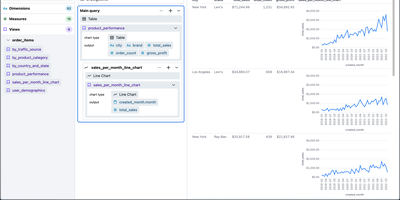
Analytics teams, and increasingly the AI agents working beside them, get one shared definition of the business from Malloy Publisher instead of a pile of SQL queries that each compute revenue slightly differently. You model what your data means once: the sources, the joins, the measures, and who may see what. Agents then compose queries against that model over MCP, so there is no wrong join, no invented column, and no fan-out that double-counts while looking plausible, and the same question returns the same numbers tomorrow. Applications and BI tools reach the same model over REST, and unattended agents use the same governed path instead of scraping raw tables. Reports declared in Malloy read top to bottom or lay out as tile grids you can build by dragging, no-build HTML data apps ship inside the package, and the built-in Console lets anyone browse environments, packages, models, and results without writing code. Access rules decide who may query and which rows they see, discovery curation decides what is even visible, and a single annotation materializes an expensive source or pre-aggregates it on a schedule. Local files work through built-in DuckDB, while BigQuery, Snowflake, Postgres, Databricks, and others connect when the data already lives there. Running on a dedicated VPS on RepoCloud with guaranteed CPU, RAM, and SSD, full root SSH access, and a browser serial console. MIT licensed.
LiftCut
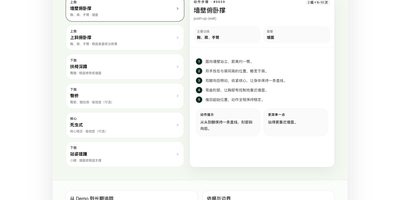
Training, meals, and body changes usually live in three different apps, and LiftCut puts them in one bilingual tracker where an AI agent helps keep the log instead of just drawing charts. Tell it what you ate, what you lifted, or what the scale said in plain language, in Chinese or English, and it prepares the entry from the exact numbers you gave, never inventing nutrients or weights, and saves nothing until you confirm it. Workout plans are editable rather than rigid programs, text import brings existing routines in, logging tracks completion and exercise performance, and personal records and PDF exports mark how far you have come. Food logs roll into nutrition summaries, and dated body measurements draw trend charts beside your training, so cause and effect sit on the same screen. AI training and nutrition proposals read your saved goals, restrictions, measurements, and recent actual loads first, then pass through extraction, strict validation, and an editable preview, and a proposal is rejected if the records it relied on changed in the meantime. Begin in the public no-sign-in demo or local-first guest mode, then create an account and migrate your history when ready, with offline queues holding entries until a connection returns. Providers span DeepSeek, any OpenAI-compatible endpoint, or a local vLLM server, so the intelligence can stay on hardware you control. Running on a dedicated VPS on RepoCloud with guaranteed CPU, RAM, and SSD, full root SSH access, and a browser serial console. MIT licensed.
Open Report
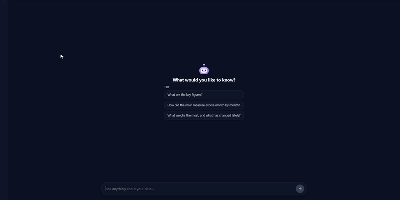
Open source reporting where an AI answers questions in plain words, builds whole dashboards page by page, and shows where a number comes from, while the data stays in your own databases. Ask what weighs the most and what has changed lately, in any language, and the answer arrives with its chart, a table view, and a button that adds it to a report. Describe the report you need and the assistant asks which pages you want, then builds the visuals, measures, data model, and look, ready to fine-tune on the canvas. Bring a local model through Ollama or LM Studio, any OpenAI-compatible API, Anthropic, or your Claude subscription, and decide how much of your data it may read: the schema only, cached aggregates, or query results. Connect Snowflake, BigQuery, Databricks, ClickHouse, Oracle, SQL Server, and MySQL, or load CSV, Excel, Parquet, and JSON files, then define joins with cardinality, dimensions, measures, and row-level security once for every report. The free canvas offers more than fifteen visual types, custom visuals, multi-page layouts, themes, cross-filtering, drill-down, and scheduled cache refreshes. Workspaces with viewer, editor, and admin roles, public links, PDF, PNG, and Excel export, and scoped API tokens cover sharing and automation, while OpenMetadata lineage maps a figure back through its bronze, silver, and gold tables. Running on a dedicated VPS on RepoCloud with guaranteed CPU, RAM, and SSD, full root SSH access, and a browser serial console. AGPL-3.0 licensed.
ScribeWizard
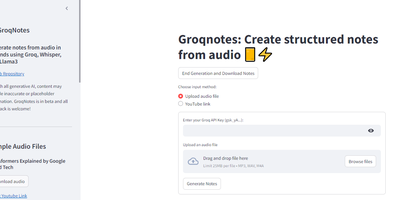
Audio lectures become structured, Markdown-formatted notes in about a minute with ScribeWizard (also known as GroqNotes). Upload an MP3, WAV, or M4A file - or paste a YouTube link - and the app runs a three-stage pipeline on Groq's LPU inference hardware: Whisper Large v3 transcribes the audio, a larger Llama model drafts a comprehensive outline of the material, and a faster Llama model fills each section with detailed content. This scaffolded prompting strategy is the core idea: the strong model handles structure where quality matters most, the fast model handles volume, and Groq's 1200+ tokens-per-second inference keeps the whole process near real time. Output renders as clean Markdown with support for tables and code blocks, and finished notes download as text or PDF. Model selection is configurable - swap in other Groq-hosted open models like Mixtral or Gemma to trade speed against quality or work around rate limits. Built as a single Streamlit app by Benjamin Klieger at Groq, it needs only a Groq API key to run, making it one of the simplest self-hosted AI tools to operate.
RustXNG
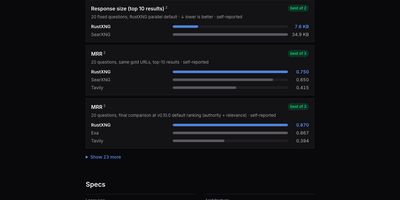
RustXNG gives your AI agents a private web search API that needs no keys, no accounts, and no per-search fees: ask once and get ranked results plus the text of the top pages, ready to ground an answer in real sources. A single request fans out to 180 search engines in parallel, drawn from 226 engine types covering general web, images, video, academic literature, package registries, and news, then merges what comes back with its own ranking that rewards term coverage and canonical-site authority instead of trusting any one engine's order. Engines that time out or keep answering nothing are suspended with backoff and rested automatically, so one dead source never stalls a task, and a repeated query returns from cache in about a hundredth of a second. Call it over HTTP with the familiar SearXNG-shaped JSON, CSV, RSS, or HTML formats, narrow results by domain, engine, or time range, or run the built-in MCP server and hand your agent native search and read_page tools with bounded, truncation-aware responses. Page fetches are hardened against untrusted URLs, an experimental local index can crawl your own corpus and merge it into results, and health, metrics, and per-engine status stay visible through the ops endpoints and the browser UI. Running on a dedicated VPS on RepoCloud with guaranteed CPU, RAM, and SSD, full root SSH access, and a browser serial console. AGPL-3.0 licensed.
ADHDev
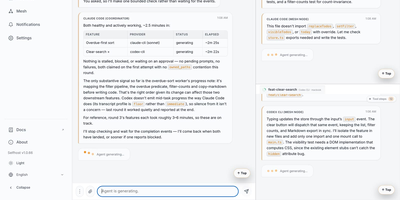
Your laptop, a desktop, and a build box each have a coding agent installed, and until now nothing has coordinated them. ADHDev is a self-hosted control plane that puts Claude Code, Codex, Kimi, Cursor CLI, Antigravity CLI, Grok CLI, and OpenCode behind one shared task queue and one web and mobile dashboard. Machines pair directly with an address and a one-time code on your own network, and a mesh binds to a single repository. Idle nodes claim tasks themselves. Dependencies order the queue, retries absorb failures, and missions group the work that belongs together. Every task gets an isolated git worktree the moment it starts. Agents build in parallel without touching each other's files, and the coordinator's prompt is rendered from live mesh state at launch, with events pushed in as they happen. Difficulty tags route easy work to cheap models and hard work to strong ones. The dashboard also reads how much of each subscription window remains, skips plans that are nearly empty, and shows the routing forecast before anything runs. Finished work enters the Refinery. Your repository's gates decide, the branch is rebased onto main, and the merge happens only when main has not moved, followed by automatic worktree cleanup. Running on a dedicated VPS on RepoCloud with guaranteed CPU, RAM, and SSD, full root SSH access, and a browser serial console. AGPL-3.0 licensed.
Synapse AI
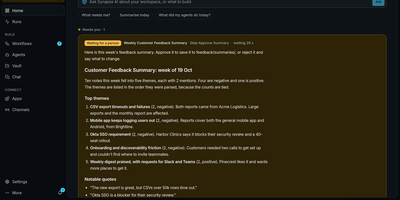
Hand a repeating job to Synapse AI and it drafts readable steps, runs them the same way every time, and stops to ask before anything goes out. Each workflow is a graph of steps that can call agents, tools, scripts, and different language models from over a dozen providers, local or cloud. An AI builder drafts the graph from a description, and a visual editor handles hand adjustments. Human approval steps pause a run until someone says yes, in the web interface or from Slack, Discord, Telegram, Teams, or WhatsApp. Cron and interval schedules start jobs automatically, and a run viewer shows the path, timing, tokens, and cost of every step. Any REST endpoint, Python script, webhook, or MCP server becomes a tool agents can call, and a shared vault stores files between runs. A template gallery offers ready-made workflows for research, reporting, and content, and an embeddable chat widget puts a knowledge-grounded assistant on your own site. A versioned REST API enqueues, streams, and cancels runs from your products. Running on a dedicated VPS on RepoCloud with guaranteed CPU, RAM, and SSD, full root SSH access, and a browser serial console. AGPL-3.0 licensed.
ProductFlow
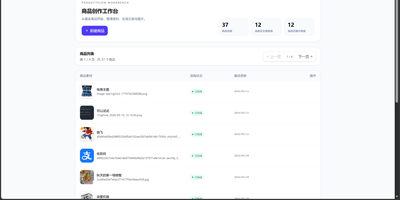
ProductFlow turns a product photo and a few facts into finished selling material, giving solo merchants and small teams one workspace for copy, posters, and repeatable image generation. You start by creating a product record, attaching original and reference images, then arranging product data, copy nodes, and image nodes on a zoomable canvas with drag, pan, multi-select, and connections. Copy nodes generate editable structured text that you can review, confirm, and keep in history before downstream image nodes read it. Poster generation runs in template mode with local rendering or generated mode through an image provider, and completed results can be downloaded, saved as product references, or promoted to the main product image slot. A separate image session view supports text-to-image and image-to-image runs with base image selection, candidate comparison, queue position, progress, cancel, and retry. Every finished image can move into the gallery with its source session, linked product, prompt, size, and model recorded for later reuse. Runtime settings cover provider profiles, model bindings, image tool parameters, prompt templates, upload limits, and concurrency, guarded by a separate settings token. The built-in help pages document the canvas, gallery, image sessions, and configuration in searchable sections. Running on a dedicated VPS on RepoCloud with guaranteed CPU, RAM, and SSD, full root SSH access, and a browser serial console. MIT licensed.
XianScan
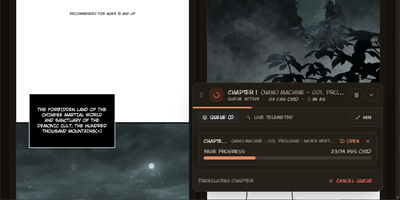
Reading a new manhwa chapter on release day usually means waiting for a scanlation group, or pasting panels into three tools yourself. XianScan collapses that whole relay into one server: point its browser extension at a chapter on a reader site and it captures every page, or drop raw pages into the studio and let the pipeline run. Speech bubbles, captions and sound effects are detected automatically, the text inside them is read by OCR supporting ten languages in vertical and horizontal layouts, and tall webtoon strips are resliced along natural panel gutters so no bubble is ever cut in half. Translation keeps a sliding memory of previous pages so speakers, pronouns and story topics stay consistent, while terminology glossaries lock character names and cultivation terms across an entire series. The original lettering is then removed by neural inpainting that rebuilds the artwork underneath, and the translation is typeset back into the bubbles with computed font sizes, line breaks and per-script fonts, including right-to-left scripts and accent fonts for attack names. Inspect OCR boxes and confidence scores, fix text before saving, then read in the web studio or stream chapters to the Mihon app on your phone. Local models through Ollama or LM Studio keep everything offline, or plug in Gemini, OpenAI, Groq or OpenRouter keys when you prefer the cloud. Running on a dedicated VPS on RepoCloud with guaranteed CPU, RAM, and SSD, full root SSH access, and a browser serial console. MIT licensed.
Guard Spec
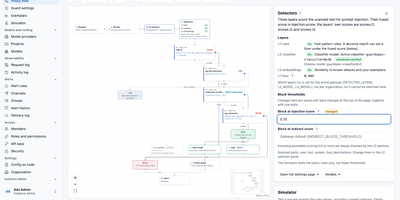
Any web page, document, or tool result your LLM reads can carry hidden orders, so Guard Spec sits between your app and the model and blocks prompt injection before it arrives. Change one base URL and the gateway accepts OpenAI-style chat completions, the Responses API, embeddings, and Anthropic's Messages API for Claude Code, then routes clean traffic to OpenAI, Azure OpenAI, Anthropic, Gemini, vLLM, or Ollama. Each request is sanitized, scored by pattern rules, an in-process classifier, and similarity to known attack examples, and judged against your policies; an injection gets an HTTP 400 and the model is never called. Tool results, retrieved documents, and MCP tool descriptions are scored one by one, so hidden instructions and poisoned tool definitions are caught. An output guard checks answers, including streamed ones, for exfiltration links, personal data, and a leaked canary. Policies per organization and project are written as text or in a visual editor, tested in a simulator, and edited as YAML with a diff. Rules see through Vietnamese diacritics, teencode, leetspeak, and homoglyphs, because detection was built for English and Vietnamese. Alerts reach Slack, Microsoft Teams, Telegram, email, PagerDuty, Opsgenie, or signed SIEM webhooks, and single sign-on works with OpenID Connect or SAML 2.0 plus SCIM provisioning and TOTP two-factor. Running on a dedicated VPS on RepoCloud with guaranteed CPU, RAM, and SSD, full root SSH access, and a browser serial console. Apache-2.0 licensed.
Overclick
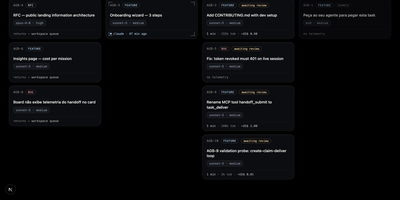
OverClick is the task board where your AI agents clock in: you write the assignments, they claim the work, and you stamp what actually got done. A card here is a contract, not a ticket: what should happen, why it matters, and a plain-language test script that says how to confirm it, all written before anyone starts. You tell your agent to grab the next task, and it claims the card over MCP, declares the CLI and model it really runs on, receives a self-contained briefing with the mission context and branch convention, and the card slides into progress. When it finishes, the handoff lands with a summary, evidence, branch and pull request links, and measured telemetry, the tokens per model and minutes the run actually took, read from the session transcript rather than guessed. Every card keeps three roles straight, who asked, who executed, and who reviews, and only a human can mark it validated; reopening with a comment puts your note in front of the agent's next claim. Big decisions can start as RFC cards whose approval spawns the execution cards, and insights roll up what each project, mission, and model consumed. Running on a dedicated VPS on RepoCloud with guaranteed CPU, RAM, and SSD, full root SSH access, and a browser serial console. MIT licensed.
OpenTranscribe
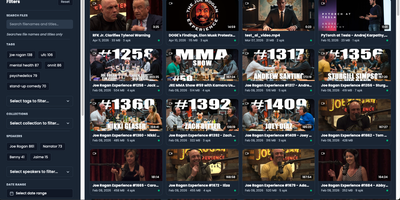
OpenTranscribe is a self-hosted transcription platform that converts your audio and video library into searchable, speaker-labeled transcripts, then lets you summarize and chat with those recordings. Upload files up to 15 GB, record from the browser microphone, or paste a link from YouTube and a thousand other sites, and playlists queue up for batch processing automatically. WhisperX produces word-level timestamps in over 100 languages, while the diarization engine works out who spoke when, corrects turn boundaries, and recognizes the same voice again across different recordings. Speaker profiles accumulate a voice fingerprint, speaking-time analytics, and merged identities, so a regular guest is named correctly in every episode without relabeling. Point it at an LLM and recordings gain structured summaries with action items, suggested tags and collections, and a chat interface that answers questions about your transcripts with citations, grouped into projects that pin their source recordings and standing instructions. Leave the model unconfigured and transcription, diarization, full-text and semantic search, and redaction still run entirely on local models. Watch folders, S3 buckets, and network shares import new media on a schedule with three-layer deduplication and automatic stitching of split recordings, and everything exports as subtitles, Word or PDF documents with citeable numbered lines, or Markdown. Running on a dedicated VPS on RepoCloud with guaranteed CPU, RAM, and SSD, full root SSH access, and a browser serial console. AGPL-3.0 licensed.
KeiRouter
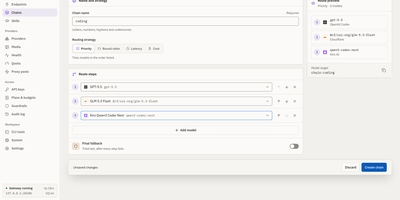
One endpoint, 130+ models from 90+ providers: KeiRouter is a self-hosted AI gateway, so apps, coding tools, and agents connect once and stop juggling provider keys. Your code speaks OpenAI Chat, OpenAI Responses, Anthropic Messages, or native Gemini, and KeiRouter translates to whichever upstream you want, including AWS Bedrock, Azure AI Foundry, Vertex, Snowflake Cortex, and self-hosted runtimes like Ollama and vLLM. Fallback chains keep requests moving when a provider goes down or hits a rate limit, using priority, round-robin, latency, or cost ordering, so coding sessions do not stop mid-task. Five token savers compress prompts on the way in and trim responses on the way out, with a live dashboard showing savings recovered. A response cache answers repeated prompts instantly for zero marginal cost, with optional semantic matching. Per-key budgets and rate plans set USD, token, RPM, and concurrency limits with auto-cutoff, stopping surprise bills. Guardrails scan for PII, prompt injection, toxicity, and banned topics at global, provider, model, chain, and key scopes, with a monitor showing what got blocked and what it cost. The dashboard tracks usage by provider and model, latency, a live console tracing each request through its fallbacks, and provider health. You can import from 9router or OmniRoute, white-label the portal for your team, and run replicas on Postgres and Redis for high availability. Running on a dedicated VPS on RepoCloud with guaranteed CPU, RAM, and SSD, full root SSH access, and a browser serial console. MIT licensed.
Foxel
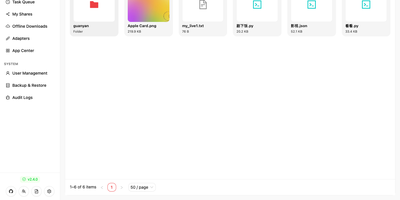
Foxel is a private cloud drive that gathers files scattered across disks, NAS shares, S3 buckets, and consumer cloud accounts into one browser file manager, then lets you find any of them by describing what is inside. Storage adapters for local folders, S3, WebDAV, SFTP, FTP, SMB, Google Drive, OneDrive, Dropbox, Telegram, AList, and Seafile mount each backend at its own path, so browsing, uploading, moving, copying, zipping, and extracting work the same everywhere. Type a plain-language query such as the scene you remember from a photo, and semantic search returns matching images and documents using the embedding provider and vector database you configure. Previews open images, video, PDFs, Office files, text, and code in the browser without a download. Role-based access control pairs Admin, User, and Viewer roles with per-path read, write, delete, and share rules, and an audit log records who did what from which IP address. Share folders through public or password-protected links that expire on a date you choose, or expose the library as an S3 endpoint, a WebDAV network drive, or signed temporary direct links. A task center runs indexing, backups, and scheduled jobs in the background, plugins add custom pages at runtime, and a built-in AI agent can browse, search, and process files, but it asks for approval before it changes any file. Running on a dedicated VPS on RepoCloud with guaranteed CPU, RAM, and SSD, full root SSH access, and a browser serial console. MIT licensed.
Fynt
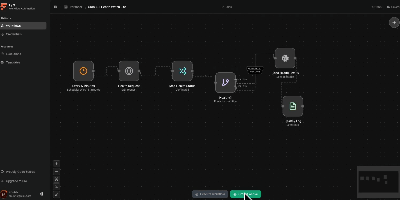
A clean alternative to n8n and Zapier that puts AI-native workflows front and center, Fynt is the MIT-licensed workflow automation platform where you drag nodes onto a React Flow canvas, wire them together with typed connections, and let a distributed BullMQ engine execute them — with every step streamed live to your browser over WebSockets so you never wonder what happened inside a run. The node library spans triggers (manual, webhook, cron scheduling), AI providers (OpenAI, Anthropic, and Gemini with structured output parsing), service integrations (GitHub webhooks, Notion databases, Slack channels, Discord bots, arbitrary HTTP endpoints), logic gates (conditional branching, filtering, data transformation), and utility nodes (delay, logging, payload mapping). The execution architecture separates concerns across three services: a Next.js 16 web application serving the React 19 workflow builder and tRPC API, a BullMQ worker processing jobs with node-level retries and checkpointing for crash-safe execution, and a dedicated WebSocket relay server broadcasting real-time run events via Redis Pub/Sub. All stored credentials are encrypted at rest using AES-256-GCM with per-credential initialization vectors. The full-stack deploys as a single Docker Compose stack (web, worker, realtime, PostgreSQL, Redis) or individually via pnpm workspaces in a Turborepo monorepo. Authentication is handled through better-auth with configurable OAuth providers. Running on a dedicated VPS on RepoCloud with guaranteed CPU, RAM, and SSD, full root SSH access, and a browser serial console. MIT licensed.
Mix Studio
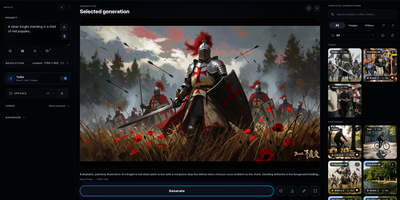
Mix Studio gives ComfyUI a calm, touch-friendly workspace where image and video generation happens through focused controls instead of a fresh node graph for every job. The Create view runs curated families including Krea 2, Flux 2 Klein, and Qwen Image with exact resolution, seed, batching, LoRA, and prompt enhancement controls. Region mode places aspect-correct boxes on the canvas, each carrying an independent prompt, LoRA stack, and reference image, then resolves them into one coherent generation. Edit mode combines whole-image editing, identity editing, and multi-reference Remix flows with masks, inpainting, outpainting, and source preservation. Video workspaces cover text-to-video, first and last frame control, reference-to-video, character animation, face lipsync, and motion transfer driven by a trimmed performance clip. An experimental photo-to-3D path turns a picture into an orbit video and a Gaussian splat you can view interactively and export. Upscaling pairs synchronized pan and zoom with a movable before-and-after divider for detail inspection. The Library keeps generations and uploads searchable with folders, groups, metadata, reusable settings, recoverable trash, and ZIP export, and separate profiles can carry PIN access. Live queue progress, cancellation, guided setup with dependency checks, and automatic backups keep daily operation orderly. Running on a dedicated VPS on RepoCloud with guaranteed CPU, RAM, and SSD, full root SSH access, and a browser serial console. GPL-3.0 licensed.
AIUsage
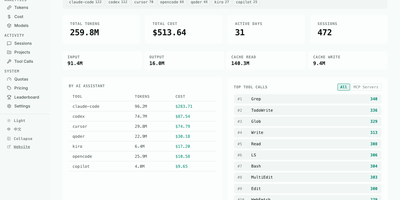
AIUsage shows where your AI coding spend actually went: it reads the session logs that Claude Code, Codex, Cursor, OpenCode, Copilot, Gemini CLI, and many other assistants leave behind, then turns them into one dashboard with tokens, estimated dollars, and activity. The Overview page totals tokens, cost, active days, and sessions for today, this week, this month, or all time, and filters by tool or device. Cost and Tokens pages chart daily spending and input, output, cache, and thinking usage, and Models ranks every model by share. The Sessions table lists duration, tool count, and cost per session, and a detail view walks through each API call and the tools it triggered. Tool Calls shows which built-in, MCP, and skill actions agents use most, Projects ranks directories by spend, and Quotas tracks subscription limits. Optional sync through GitHub, S3, R2, or MinIO merges several machines, and a public leaderboard accepts aggregate totals only. Running on a dedicated VPS on RepoCloud with guaranteed CPU, RAM, and SSD, full root SSH access, and a browser serial console. MIT licensed.
Argus
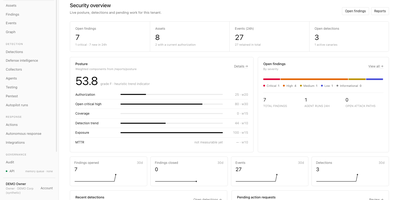
Hand your security alerts to a team of AI specialists and keep the final say on every action. Argus pulls events from cloud, identity, code, endpoint, and Kubernetes sources, runs fifteen detection rules, and turns matches into deduplicated findings enriched with CISA KEV and EPSS scores. Nine specialist agents hunt for evidence, build timelines, estimate blast radius, and propose fixes, but their only write path is a pending request that waits for human approval. Response playbooks can block an attacker or isolate a laptop through a catalog of 27 typed actions, starting in shadow mode with dry runs, caps, automatic rollback, and a tenant kill switch. Plant canary tokens aimed at rogue AI agents, replay eight simulated agent-driven attacks, and route OpenAI and Anthropic traffic through a gateway with model allowlists and budgets. Every step is written to a signed audit chain. A self-hosted command center with roles, TOTP sign-in, and Slack approvals fits small teams that have no SOC of their own. Running on a dedicated VPS on RepoCloud with guaranteed CPU, RAM, and SSD, full root SSH access, and a browser serial console. MIT licensed.