Stars
Forks
Watchers
Developer links
Malloy Publisher
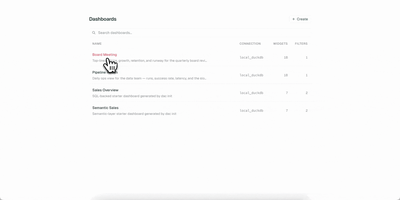
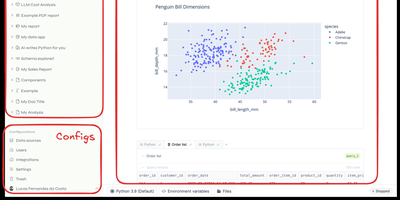
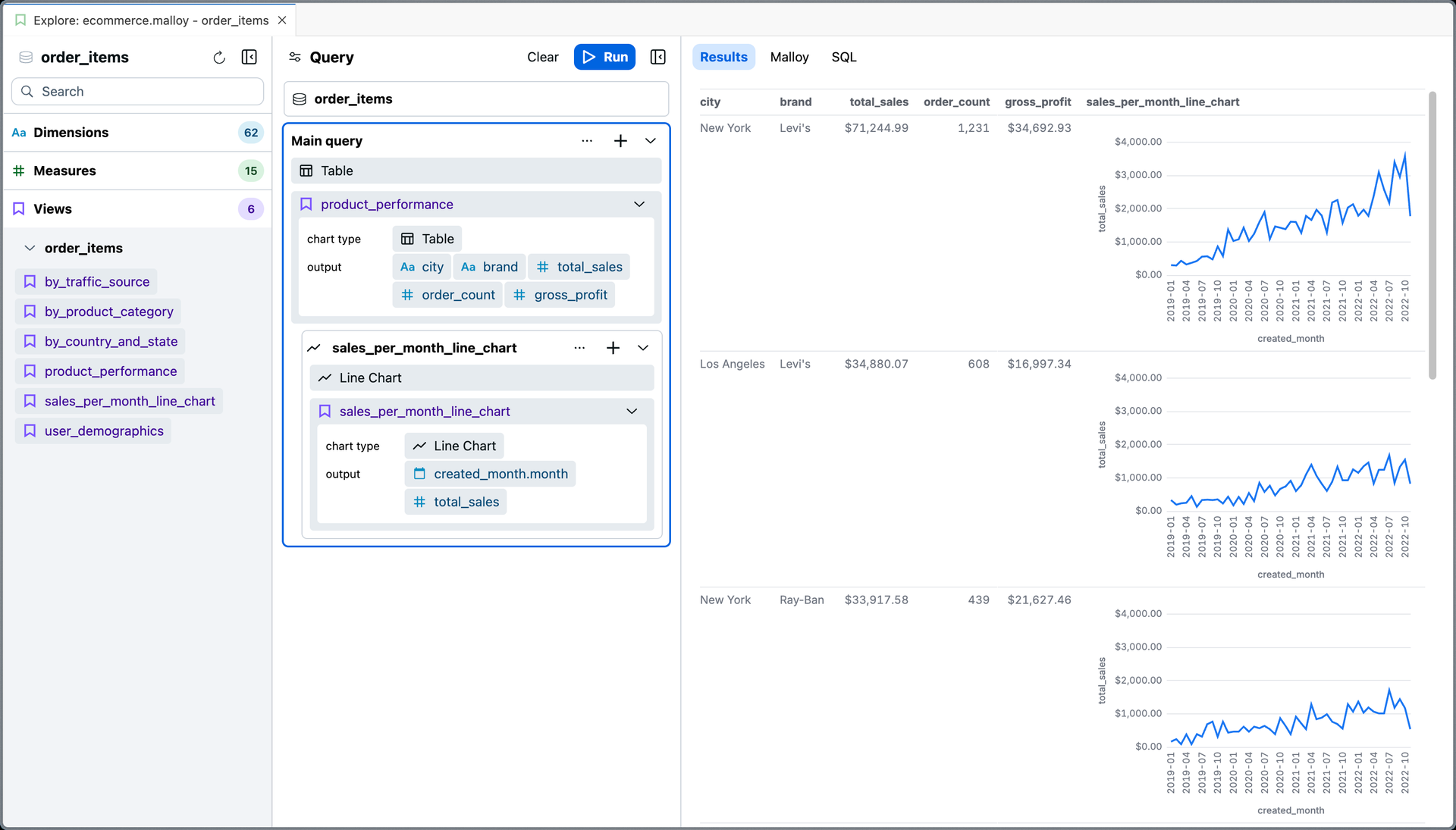
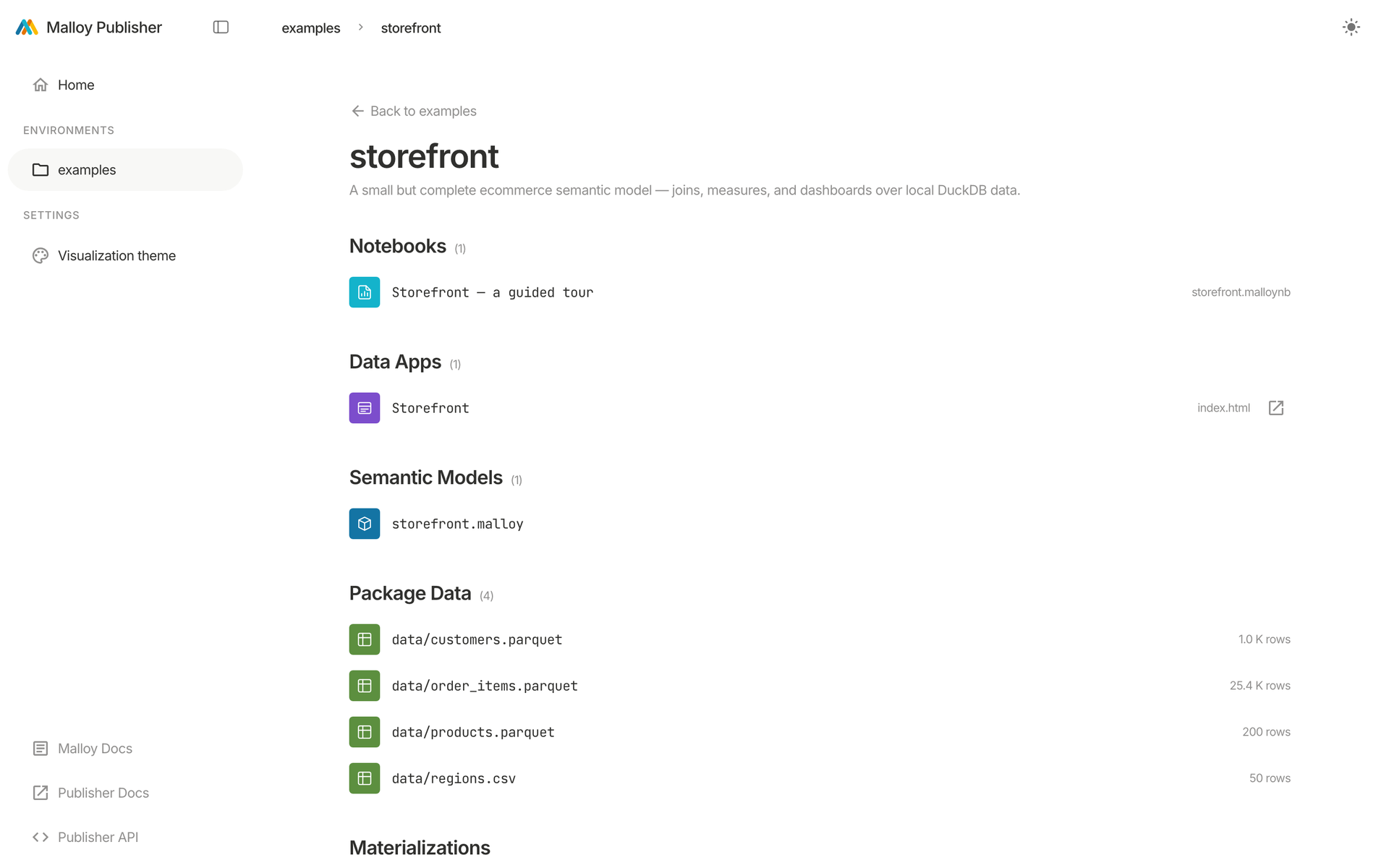
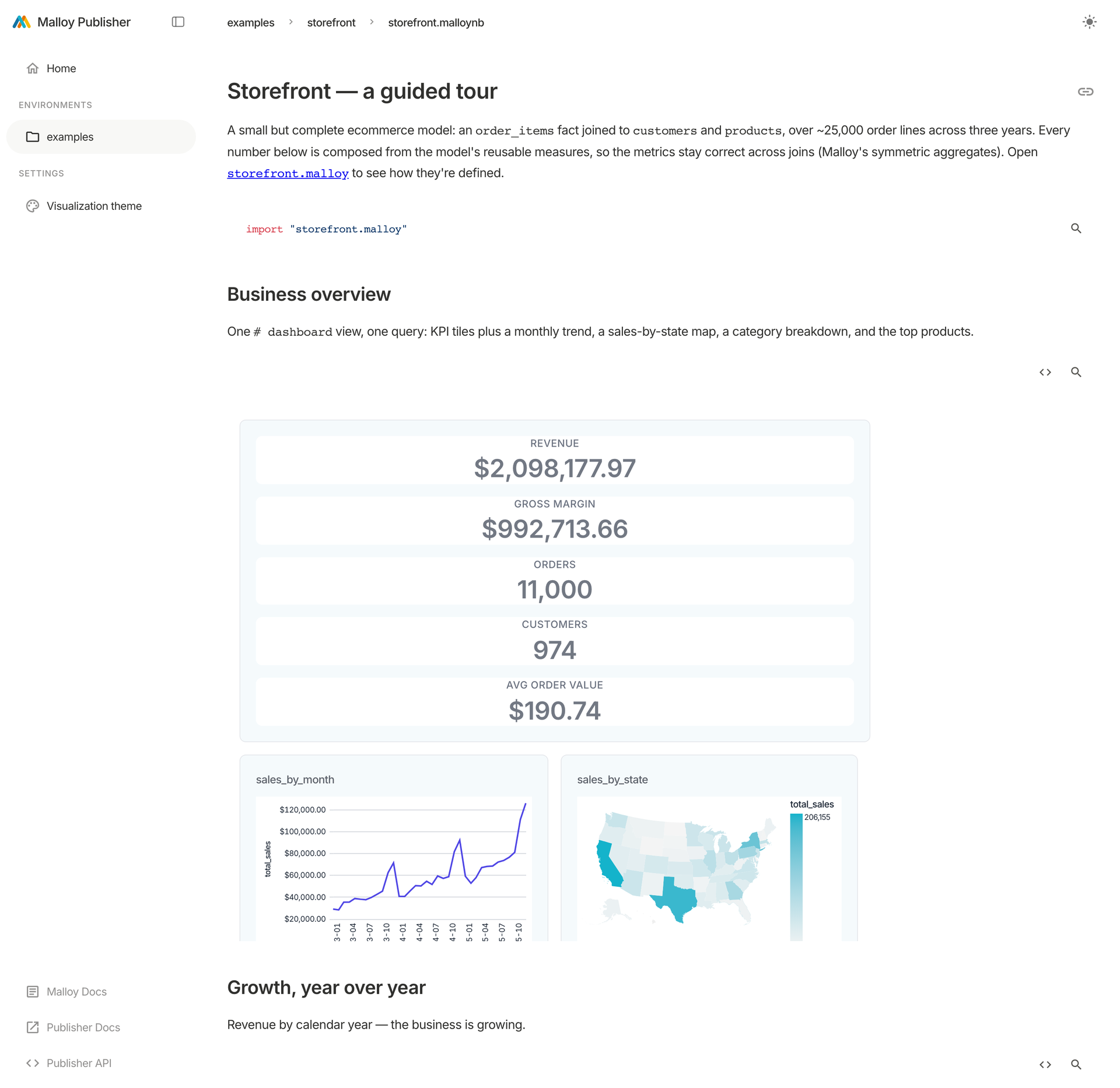
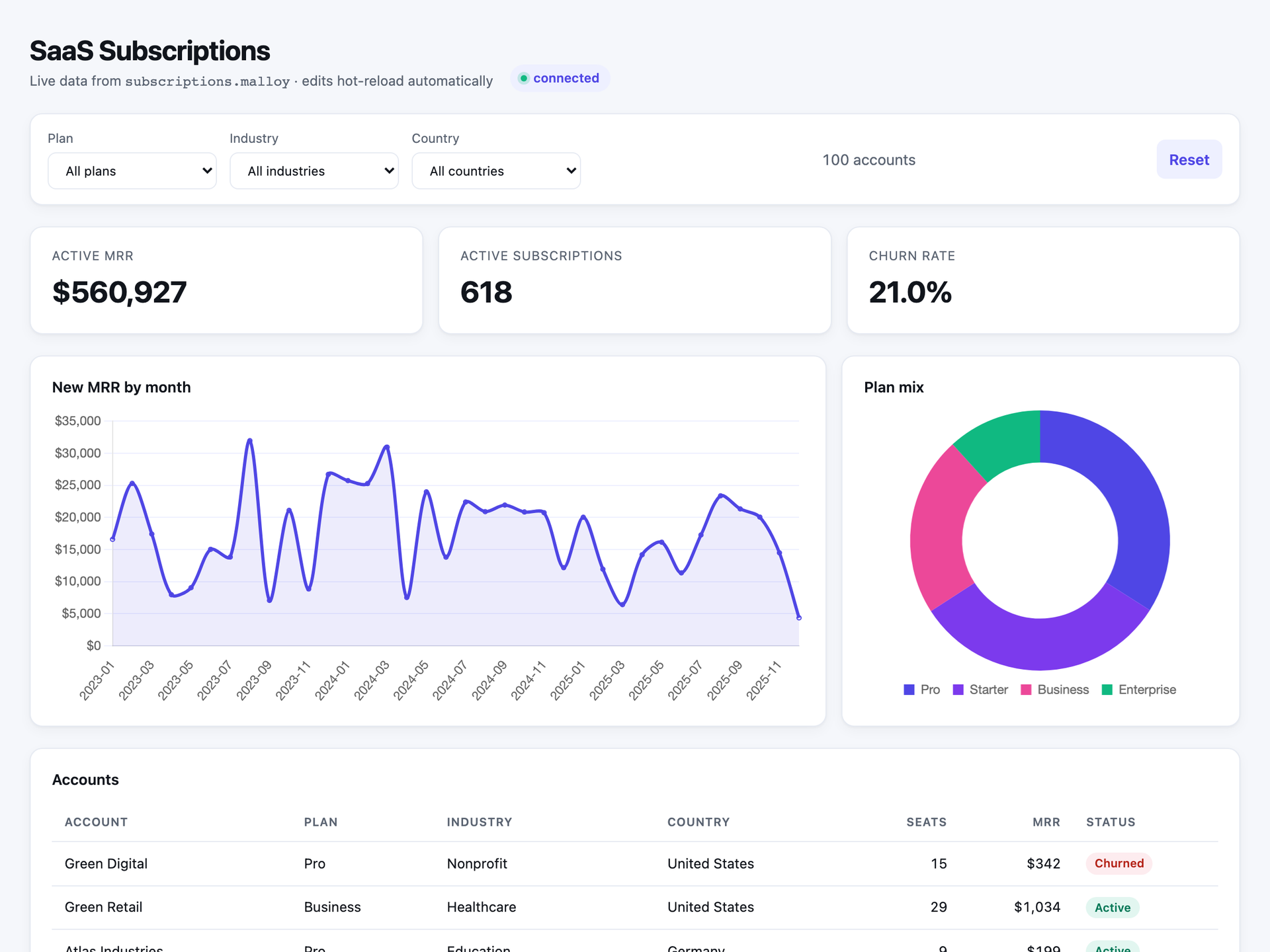
Analytics teams, and increasingly the AI agents working beside them, get one shared definition of the business from Malloy Publisher instead of a pile of SQL queries that each compute revenue slightly differently. You model what your data means once: the sources, the joins, the measures, and who may see what. Agents then compose queries against that model over MCP, so there is no wrong join, no invented column, and no fan-out that double-counts while looking plausible, and the same question returns the same numbers tomorrow. Applications and BI tools reach the same model over REST, and unattended agents use the same governed path instead of scraping raw tables. Reports declared in Malloy read top to bottom or lay out as tile grids you can build by dragging, no-build HTML data apps ship inside the package, and the built-in Console lets anyone browse environments, packages, models, and results without writing code. Access rules decide who may query and which rows they see, discovery curation decides what is even visible, and a single annotation materializes an expensive source or pre-aggregates it on a schedule. Local files work through built-in DuckDB, while BigQuery, Snowflake, Postgres, Databricks, and others connect when the data already lives there. Running on a dedicated VPS on RepoCloud with guaranteed CPU, RAM, and SSD, full root SSH access, and a browser serial console. MIT licensed.
Benefits
- One Model, Every Consumer
- A single semantic model serves AI agents over MCP, applications and BI tools over REST, and people through the Console, so every consumer computes metrics the same governed way.
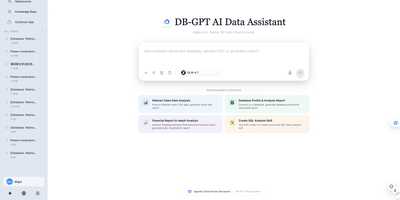
- Agents Query Meaning, Not Tables
- Because agents compose queries against modeled sources, joins, and measures, they cannot invent columns or double-count through bad joins, and answers stay consistent over time.
- Governance Built Into Queries
- Authorization annotations, access filters, and discovery curation decide who may query, which rows they see, and what is visible at all, enforced by the engine itself.
- Materialization Without Another Tool
- One persist annotation materializes expensive sources into tables and pre-aggregates rollups rebuilt on demand or on schedule, replacing a separate transformation and caching project.
Features
- Semantic Modeling In Malloy
- Models define sources, joins, measures, and dimensions in Malloy files, validated on each edit without a restart, with bundled open-source skills that help agents build them.
- MCP And REST Serving
- The model is served over MCP to Claude, Cursor, Codex, and custom agents, and over REST to applications and BI tools, exposing the same environment and package hierarchy.
- Reports And Data Apps
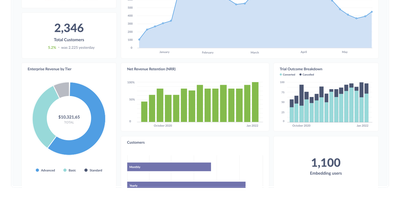
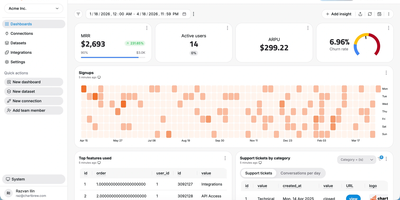
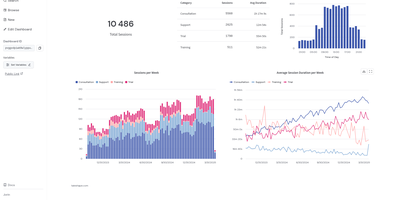
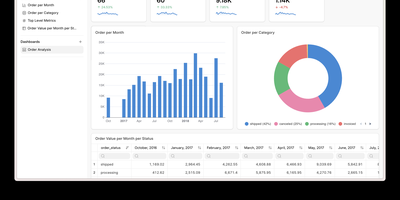
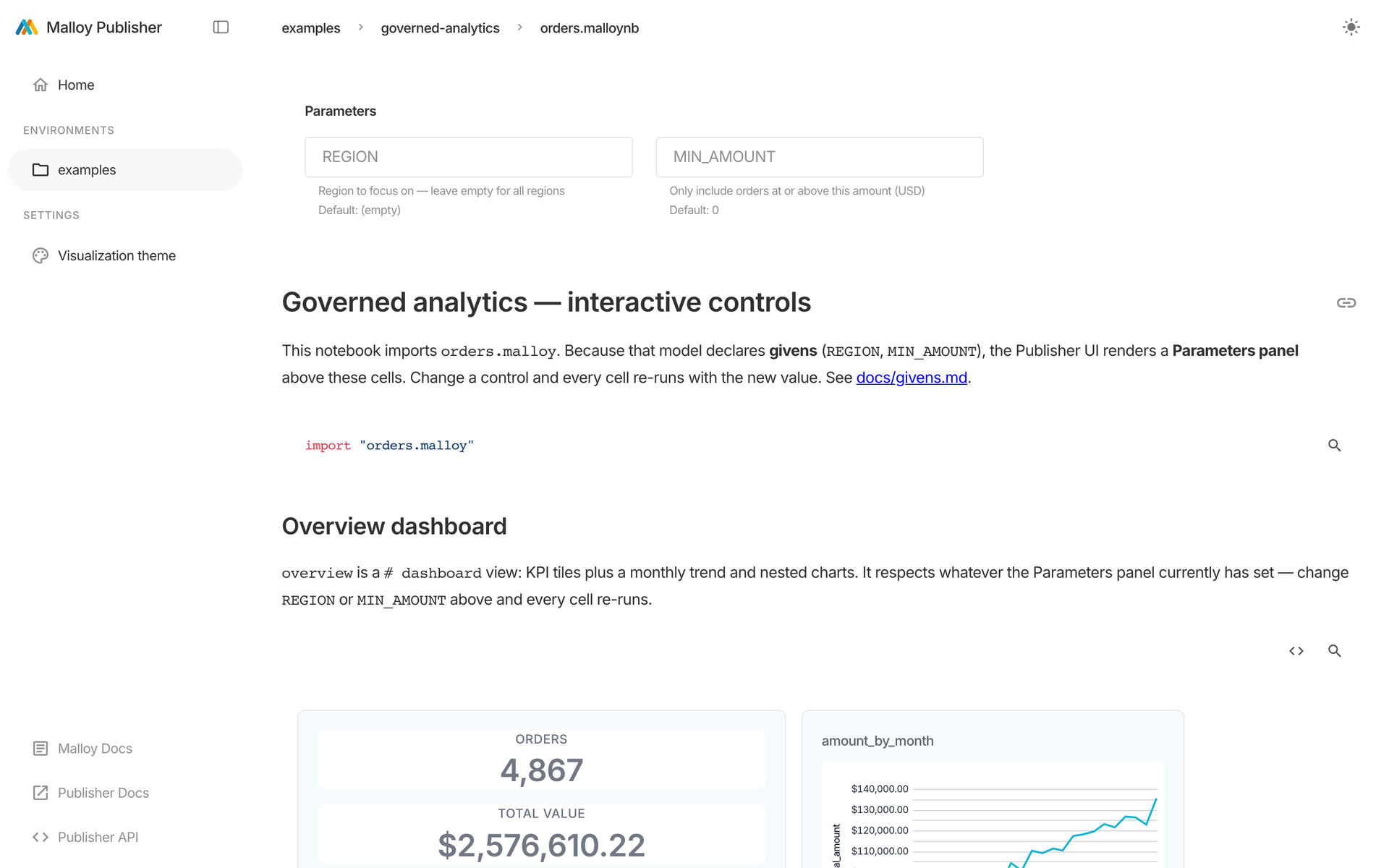
- Reports declared in Malloy render as linear documents or draggable tile grids with filter controls, and no-build HTML data apps ship inside the package alongside them.
- Access Control Annotations
- Givens, authorize and access_filter annotations, and row-level access rules govern who can query and who sees which data, checked by the query engine on every request.
- DuckDB And Warehouse Connections
- Built-in DuckDB handles CSV, Parquet, JSON, and Excel files with no credentials, while connections reach BigQuery, Snowflake, Postgres, Databricks, and MotherDuck.