Easy Invoice PDF
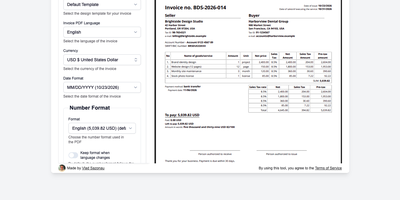
Freelancers, contractors, and small shops can turn a short form into a client-ready PDF invoice, with a live preview that redraws on every keystroke and no account to create. Fill in seller and buyer details, then add line items with quantity, unit, net price, and tax rate; net amounts, tax, totals, and the amount in words are calculated automatically. Item discounts take a percentage or fixed amount off any line under a custom label, and tax applies to the discounted figure. Pick a classic layout or a Stripe-style template, and add your logo as a JPEG, PNG, or WebP file. Invoices can be written in 13 languages, including Brazilian Portuguese, with 122 currencies, 18 date formats, and a number format setting that survives a language switch. Tax labels can read VAT, GST, Sales Tax, or anything else, or the tax columns can be dropped entirely. Bank account, SWIFT/BIC, payment method, due date, and notes sit alongside an optional QR code that can carry a payment link, UPI details, or contact information. Long invoices flow onto extra pages automatically. Saved seller and buyer profiles fill in the next invoice for you, and the data stays in the browser. Download the PDF or copy a shareable link that opens the same invoice for your client. Running on a dedicated VPS on RepoCloud with guaranteed CPU, RAM, and SSD, full root SSH access, and a browser serial console. AGPL-3.0 licensed.

Chevereto
Build your own image and video sharing site, with public galleries, private albums, and embeddable links, on a server you control. Uploads arrive by drag and drop, clipboard paste, image URL, camera, ShareX, or API, in AVIF, JPEG, PNG, GIF, WebP, BMP, MOV, MP4, and WebM, and chunked transfers handle large files. Lossless JPEG handling fixes orientation and can strip EXIF data. Duplicate detection catches repeat uploads. Tags are created on the fly with autocomplete, camera models become tags automatically, and albums nest into sub-albums with covers, privacy levels, and passwords. Categories, search, and explore views help visitors find things; a bulk importer brings in folders of existing media. Each file gets viewer, direct, thumbnail, and medium links plus HTML, Markdown, and BBCode snippets with one-click copy, and oEmbed lets other sites preview a link. Roles split admin, manager, and user duties, profiles can be private, and two-factor authentication protects accounts. Files sit on local disk or S3-compatible storage, optionally served through a CDN URL. A dashboard tracks usage, color palettes and custom CSS and JavaScript restyle the site, and a single-profile mode suits a personal portfolio. Running on a dedicated VPS on RepoCloud with guaranteed CPU, RAM, and SSD, full root SSH access, and a browser serial console. AGPL-3.0 licensed.
Teedy
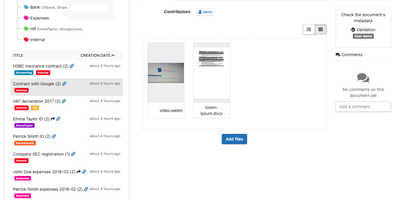
Every scan and PDF you drop into Teedy becomes searchable text in a self-hosted document archive, filed by nested tags instead of folders. OCR reads images in more than twenty languages, and the search box offers suggestions and highlights matches, even inside ODT, DOCX, and PPTX files. Video files are supported as well. Each record carries Dublin Core fields plus custom metadata of your own design, with comments and earlier file versions attached. When a document needs a second pair of eyes, workflow steps with assigned reviewers move it along in order until someone signs off. Pull in EML emails, let the server poll an inbox, or point the bulk importer at a whole folder, and incoming paperwork needs no manual filing. Share a single document through a public link, or keep it behind user and group permissions with a storage quota for each person. LDAP and two-factor authentication guard sign-in, 256-bit AES encryption protects stored files, and an audit log records who changed what. Webhooks alert other services, a documented REST API lets scripts take part, and an Android client carries the archive on a phone. Running on a dedicated VPS on RepoCloud with guaranteed CPU, RAM, and SSD, full root SSH access, and a browser serial console. GPL-2.0 licensed.
LMS
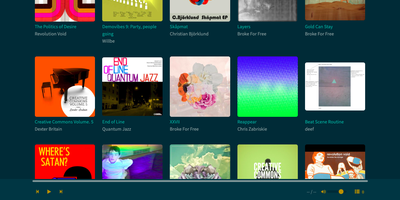
LMS is a self-hosted music server that streams your own library to any web browser or Subsonic-compatible player. Point it at a folder of tagged files and it builds a library that understands multi-valued genres and moods, composer, conductor, and producer credits, release types, and release groups that keep remasters beside the original. MusicBrainz identifiers settle duplicate artist and album names, and an artist information folder in Kodi NFO format adds biographies and portraits. Browse with filters like Electronic plus Relaxed, then switch on radio mode and the queue refills itself with similar tracks, chosen by audio similarity or by tags. Plays can be scrobbled to ListenBrainz and Last.fm, and loved tracks synchronize with ListenBrainz. Phone apps connect through the Subsonic and OpenSubsonic API with a personal API key, and transcoding trims bandwidth on slow connections. ReplayGain evens out loudness, podcasts and lyrics sit in the same interface, and an admin-only jukebox mode plays through the server's own audio output. Several libraries can live side by side, a .lmsignore file keeps unwanted folders out of scans, and logins can use the internal user database, PAM, or reverse-proxy SSO headers. Running on a dedicated VPS on RepoCloud with guaranteed CPU, RAM, and SSD, full root SSH access, and a browser serial console. GPL-3.0 licensed.
Indico
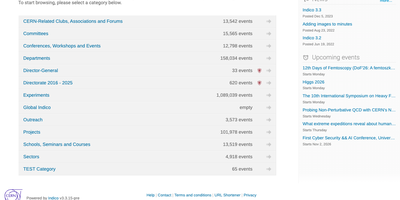
From the call for abstracts to the badge handed over at the registration desk, Indico handles every step of running a conference, plus the weekly meetings and one-off lectures that fill the calendar around it. Events live in a nested tree of categories, and access rules can be set per category, event, session, or single contribution, with custom roles inside each event. Speakers submit abstracts, track reviewers score them against questions the organizers define, judges accept or reject them, and accepted talks become contributions that sit in a drag-and-drop timetable of color-coded sessions. Registration forms are assembled field by field, carry fees, and take payment through PayPal, Stripe, or SIX Payment plugins; attendees get QR-coded tickets, and a badge editor prints name tags for the whole room. A paper reviewing workflow collects full papers. Meeting pages keep minutes and slide decks attached to the talk they belong to. The room booking module adds approvals, recurring reservations, and audiovisual equipment, and the Zoom plugin creates online sessions straight from an event page. Calendar views span a month, week, or day, filter by category, and export to iCal for subscriptions. Scripts pull event data from the HTTP export API as JSON or XML with personal API tokens. Running on a dedicated VPS on RepoCloud with guaranteed CPU, RAM, and SSD, full root SSH access, and a browser serial console. MIT licensed.

DSpace
With DSpace, a library or research office can give every thesis, journal article, and dataset its own permanent web address, a searchable metadata record, and files visitors download from the archive. Content sits in a tree of communities and collections, and each collection decides who may deposit and how many review steps follow; reviewers accept a submission or reject it with a note that sends it back to the author. Embargoes hold files back until a set date, access policies limit other files to chosen groups, and sign-in works through LDAP, Shibboleth, SAML, OpenID Connect, or ORCID. Search covers metadata and the extracted full text of uploaded files, facets narrow the results, and browse pages sort by title, issue date, author, or subject. Editors can correct a published item through the submission form. Administrators inspect an audit trail and rewrite homepage news from an admin form. Entity types for people, organizations, projects, journals, and datasets link each publication to the work behind it, and DOIs can be registered through Crossref. Optional settings let authors keep an email address private on their researcher profile and download their own restricted files. Usage reports count visits, downloads, and top countries per item. REST, OAI-PMH, SWORD, and Google Scholar metadata connect the archive to harvesters, deposit tools, and search engines. Running on a dedicated VPS on RepoCloud with guaranteed CPU, RAM, and SSD, full root SSH access, and a browser serial console. BSD-3-Clause licensed.
Kiwix Serve
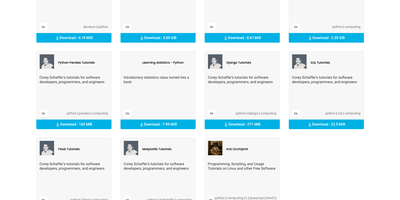
Websites such as Wikipedia, Project Gutenberg, and Stack Overflow pack into single ZIM files, and Kiwix Serve publishes a folder of them as a searchable library that opens in any browser, with no connection to the originals. Point it at individual files, a directory, or a library file, and visitors get a welcome page where they filter books by language, category, or words in the title and description. Each book opens in a built-in viewer without downloading the archive, with toolbar buttons for the library, a random article, and in-book search. Title suggestions appear as you type, and full-text search returns highlighted snippets from indexed books, across several at once when they share a language. OPDS catalogs let reader apps browse and fetch the collection, and the library reloads automatically when its file changes. Admins can swap in a custom welcome page, publish under a URL prefix, hide the library button or search box, block links that leave the archive, and cap connections per visitor. Interface translations cover dozens of languages. Universities, community networks, and home labs get a reference shelf that stays available when the original sites are slow, blocked, or gone, with developer documentation and Q&A always within reach. Running on a dedicated VPS on RepoCloud with guaranteed CPU, RAM, and SSD, full root SSH access, and a browser serial console. GPL-3.0 licensed.
Chitchatter
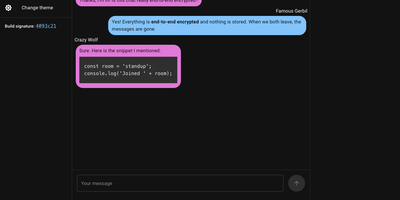
Chitchatter is a browser-based chat room for text, voice, video, screen sharing, and file transfers that exists only while its members are connected and keeps no record of what was said. Every visit starts with a random room name generated on your device, a UUID or a readable passphrase, and you invite people with the link or a QR code. Public rooms admit anyone with the link; private rooms also require a matching password. Messages support Markdown, multiline text, and code blocks, and clicking a name opens a direct conversation. Newcomers to public rooms receive the earlier conversation from peers already there, and typing indicators show who is writing. Start an audio or video call, share your screen to walk a relative through a settings problem, or hand over a file of any size, encrypted before it leaves your browser. Public-key checks verify each peer automatically, with a green lock marking everyone who passes and an icon showing whether the link is direct or relayed. Embed a room in any web page with an iframe or a web component that takes a room name, user name, and color mode. Light and dark themes are built in, and notifications and sounds announce new messages while you work in another tab. Close the tab and the transcript disappears. Running on a dedicated VPS on RepoCloud with guaranteed CPU, RAM, and SSD, full root SSH access, and a browser serial console. GPL-2.0 licensed.
TimeTagger
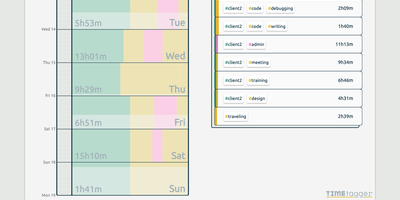
Freelancers, consultants, and solo workers get an accurate record of their hours from TimeTagger, a time tracker that logs tagged tasks on an interactive timeline and summarizes them as billable reports. Press S, type a description, and hit Enter to start the clock without the mouse, or drag across the timeline to log finished work. Hashtags in a description become autocompleting tags, with no projects to set up. Renaming a tag updates every record that uses it. Drag a record's edges to fix its times, then zoom the timeline out to a week or month with mouse, touch, or arrow keys. An overview panel totals time per tag combination for the selected range, and the Report button saves it as a client-ready PDF or a CSV with decimal hours. Daily, weekly, and monthly targets track progress toward your goals, and an optional Pomodoro timer alternates work and break periods with an alarm and a notification. Settings add a dark theme, local date notations, a Monday-to-Friday week, and a day offset for night shifts. The interface adapts from desktop to phone, installs as a progressive web app, works offline, and syncs records across devices once the connection returns. A web API and a command-line client let you query, create, and update records from scripts or the terminal. Running on a dedicated VPS on RepoCloud with guaranteed CPU, RAM, and SSD, full root SSH access, and a browser serial console. GPL-3.0 licensed.

SQLPage
If you can write a SELECT statement, you can publish a working web app with SQLPage, where each query's results appear on the page as tables, charts, maps, or forms. A .sql file is a page. Name a component in the first row, and the rows after it become lists, cards, data grids, timelines, or step trackers. Tables offer searching, sorting, frozen headers, and per-row edit and delete buttons. Charts cover line, area, bar, pie, scatter, bubble, and heatmap views with a one-click CSV export. Forms feed INSERT and UPDATE statements directly, with validation and file uploads. A complete CRUD tool takes a handful of queries. The map component plots markers and GeoJSON shapes, and the JSON component lets the same data serve other systems as an API. Protect private pages with password logins or single sign-on through Google, Microsoft, or your own identity provider. Connect to SQLite, PostgreSQL, MySQL, SQL Server, or ODBC sources such as DuckDB, Oracle, Snowflake, and BigQuery. Tabs, modals, alerts, breadcrumbs, and carousels shape multi-page sites, and custom templates, CSS, and JavaScript fill any gap. Running on a dedicated VPS on RepoCloud with guaranteed CPU, RAM, and SSD, full root SSH access, and a browser serial console. MIT licensed.
LiveCodes
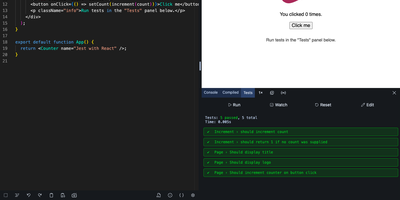
Try an idea in React, Svelte, Python, or SQL without installing anything: LiveCodes is a browser-based playground where code compiles, runs, and previews the moment you type it. Starter templates open ready-made projects for most of the 90+ supported technologies. The desktop editor brings completion, multi-cursor editing, Emmet, and Vim or Emacs bindings, while a lighter touch-friendly editor takes over on phones and tablets. Packages from npm, deno.land/x, jsr, and GitHub import straight into your code, and a console, compiled-code viewer, and test runner show what happens behind the preview. Bring projects in from GitHub gists, GitLab snippets, JS Bin, or zip files, then share them as links or QR codes, export them as HTML, JSON, or zip archives, or send them to CodePen and JSFiddle. Deploy a project to a public URL on GitHub Pages, sync your work across devices, or broadcast your editor and result live to a classroom. An embed builder and SDKs for JavaScript, React, Vue, Svelte, Solid, Preact, and web components place playgrounds inside documentation pages, and prefilled code makes every example editable. Projects stay private by default. Local assets, snippets, themes, and dark or light modes tailor the workspace to each person. Running on a dedicated VPS on RepoCloud with guaranteed CPU, RAM, and SSD, full root SSH access, and a browser serial console. MIT licensed.
CKAN
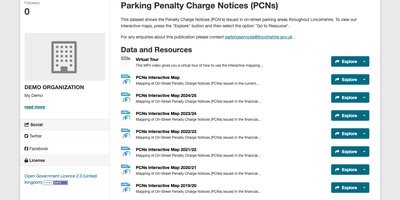
CKAN lets governments, research institutions, and companies publish data as a searchable catalog, where every dataset carries its description, license, tags, and downloadable files. Organizations own their datasets, and members, editors, and admins get different rights, so a dataset can stay private until someone with publishing rights releases it. Visitors narrow results with faceted filters on tags, formats, and organizations, or write fielded queries with wildcards and fuzzy matching. Resource pages preview spreadsheets in a grid and, when the data fits, as maps and charts, and they also display images, PDFs, and HTML. The DataStore keeps tabular resources as queryable tables, serving filtered rows with range conditions and nested AND/OR logic. Everything the web interface does is also available through the Action API. Groups gather related datasets, and custom metadata fields extend each record. Per-dataset activity streams document how data changes, and follow buttons feed a personal news feed. Files can be stored on local disk or, with extensions, in S3, Google Cloud Storage, or Azure Blob Storage. Extensions add geospatial search, harvesting for federated portals, multilingual metadata, and more chart types, and themes restyle the portal to match your brand. Running on a dedicated VPS on RepoCloud with guaranteed CPU, RAM, and SSD, full root SSH access, and a browser serial console. AGPL-3.0 licensed.
Modoboa
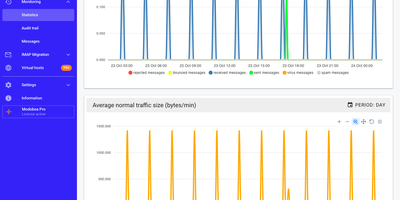
Modoboa turns a bare mail server into a managed hosting platform, with one web console for domains, mailboxes, aliases, and quotas, plus a full webmail for the people using them. Roles separate super administrators, resellers, domain administrators, and ordinary users, with caps on how many mailboxes and aliases each administrator may create and daily sending limits per domain or mailbox. The webmail offers conversation view, folder subscriptions, scheduled sending, attachments, and search across headers and message bodies. Calendars and address books sync with standard clients, and calendars can be shared. Each user writes Sieve filters and autoreplies in the browser. Deliverability checks cover MX records and DNSBL listings, DKIM keys are generated per domain, and DMARC aggregate reports become per-domain visual reports. Amavis quarantine pages and an Rspamd frontend help with spam. Traffic graphs show message volume. Accounts authenticate against the local database, LDAP, Active Directory, or an existing SMTP server, with TOTP codes or WebAuthn security keys as a second factor. Thunderbird and Outlook configure themselves through built-in autoconfig and autodiscover endpoints. An IMAP migration tool pulls mailboxes from another provider as each person signs in. Administrators can brand the console with custom logos, extend it through plugins, and automate it through a documented REST API. Running on a dedicated VPS on RepoCloud with guaranteed CPU, RAM, and SSD, full root SSH access, and a browser serial console. ISC licensed.
phpMyFAQ
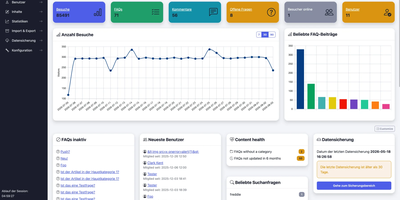
Publish the answers your team keeps repeating as a multilingual, searchable FAQ with phpMyFAQ, a knowledge base whose admin area handles writing, review, and permissions. Organize entries in nested categories that you rearrange by drag and drop, attach files, add tags and related FAQs, and let visitors leave comments. A WYSIWYG editor with an image manager writes each answer, a wiki-style revision history restores earlier versions, and a news system posts announcements. Full-text search covers every language, and optional Elasticsearch or OpenSearch backends handle larger collections. The interface covers more than 40 languages with right-to-left layouts, automatic content negotiation, and translated categories and entries. Privileges work per user and per group, so an editor can change an entry without being allowed to delete it, and categories can be limited to chosen readers. Sign in through LDAP, Active Directory, or Microsoft Entra ID, protect accounts with two-factor authentication, or try experimental passkeys. The dashboard charts 30 days of visits, lists inactive FAQs, and checks installed files against published hashes. Export entries to PDF, publish a dynamic sitemap, back up your content, and filter spam with built-in protections. Dark, light, and high-contrast themes keep the public site comfortable to read. Scripts and AI assistants reach the knowledge base through a REST API with an OpenAPI specification or an experimental MCP server, and plugins extend it. Running on a dedicated VPS on RepoCloud with guaranteed CPU, RAM, and SSD, full root SSH access, and a browser serial console. MPL-2.0 licensed.
Antirion
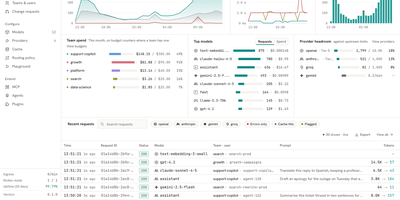
Your apps keep using the OpenAI SDK while Antirion, a self-hosted AI gateway, decides which provider answers, what each team may spend, and what gets logged. Clients speak the OpenAI, Anthropic, Gemini, or Bedrock APIs, and Antirion translates between them, so a Claude deployment can answer an OpenAI-style call, streams included. Add providers such as Amazon Bedrock, Vertex AI, Mistral, Groq, DeepSeek, or a vLLM server, then publish them as named Models. Routing rules send traffic by team or project with fallback chains, weighted splits, least-cost or least-latency targets, retries, hedging, and circuit breakers. Budgets and rate limits in dollars or tokens apply per organization, team, project, and key, with projections and alerts before money runs out. Guardrails check for personal data, secrets, keywords, and regex matches, then block, redact, flag, or divert. Exact and semantic caching answers repeated prompts without calling a provider. The request log records every attempt, route, token count, cost, and guardrail verdict, with Prometheus metrics and OTLP traces. An MCP gateway and A2A proxy put tools and agents behind the same keys. Sign in with OIDC, SAML, or GitHub, provision users with SCIM, and review every change in the audit log. Changes you choose can require a change request or a second person's approval, and the Playground sends requests from the console. Running on a dedicated VPS on RepoCloud with guaranteed CPU, RAM, and SSD, full root SSH access, and a browser serial console. Apache-2.0 licensed.
Review Board
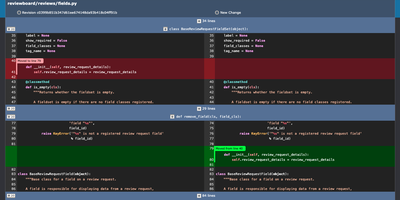
Before a change lands in the main branch, Review Board gives your team a self-hosted code review server where reviewers read the diff, open issues on specific lines, and sign off with a Ship It. Post a review request from the web or with RBTools, either before you commit or after, and every update becomes a new revision that stays in the history. Interdiffs show exactly what changed between revisions, and moved-code detection keeps rearranged blocks from drowning out real edits. Comments can open issues that reviewers later mark fixed or dropped. Images and Markdown files can be reviewed alongside code, with split, onion-skin, color, and side-by-side diffs for pictures. A dashboard with customizable columns separates incoming from outgoing requests by review group. Connect Git, Mercurial, Subversion, or Perforce repositories, including ones hosted on GitHub or GitLab, and review them all on one server. Slack and Discord notifications, Jenkins builds, and Review Bot linters report back inside the review. Private repositories and hidden or invite-only review groups restrict who sees what, with sign-in through Active Directory, LDAP, or SAML 2.0. A REST API, WebHooks, and Python extensions cover custom workflows. Running on a dedicated VPS on RepoCloud with guaranteed CPU, RAM, and SSD, full root SSH access, and a browser serial console. MIT licensed.
eLabFTW
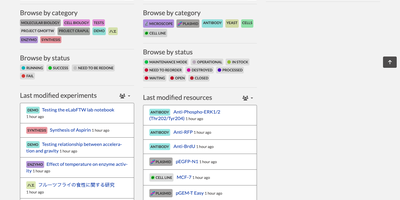
For research teams that need to show what was recorded and when, eLabFTW® is an electronic lab notebook that keeps experiments, lab inventory, and equipment bookings in one shared, searchable system. Each experiment holds rich-text notes, tables, images, checkable steps, custom metadata fields, tags, statuses, and attached files. Templates turn a protocol you repeat into a one-click starting point. A separate resource database catalogs antibodies, plasmids, cell lines, chemicals, and instruments, and typing # in an experiment links straight to any of them. Compounds import from PubChem by CID or CAS number, arriving with formulas, identifiers, and hazard data. The inventory tree maps buildings and their sub-locations, records where each container is stored, and tracks quantity and unit. Book a microscope by dragging a slot on the scheduler, and permissions decide who may reserve what. Entries can be signed with Ed25519 keys and timestamped through RFC 3161 authorities such as DFN, Digicert, and GlobalSign, or anchored on the Bloxberg blockchain; a timestamp archive can never be edited or deleted. Export to PDF, ZIP, CSV, JSON, or .eln archives, and import .eln or CSV files when moving from spreadsheets or another notebook. Users sign in locally or through SAML2 or LDAP, and an API with per-user keys lets instruments and scripts read and write entries. Running on a dedicated VPS on RepoCloud with guaranteed CPU, RAM, and SSD, full root SSH access, and a browser serial console. AGPL-3.0 licensed.
Dossier
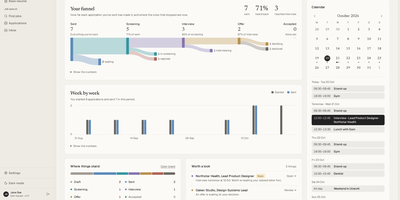
Paste in a job posting and Dossier, a self-hosted job search app, shows how your profile matches it, then drafts a tailored resume and cover letter that use only facts you have given it. Requirements your profile cannot back up appear as gaps instead of invented experience, and a chat lets you refine any part, undo AI changes, or return to an earlier version. Twelve resume themes and a theme builder print to PDF on the server. Find jobs through JSearch, Adzuna, or Germany's Bundesagentur für Arbeit, score a posting against your profile, and start an application in one click. An optional job agent runs one search a day and can prepare drafts that wait for your approval; it never sends or applies. A board and a table track each application from draft to offer, and the dashboard charts your funnel week by week. Connect Gmail and Google Calendar to send applications from your own address, have the AI read employers' replies and draft answers, and keep interviews in step both ways, with nothing sent until you confirm. Choose a local model through Ollama or LM Studio, or a hosted OpenAI-compatible, Anthropic, or Mistral provider. Everything exports as one file, with nightly backups. Running on a dedicated VPS on RepoCloud with guaranteed CPU, RAM, and SSD, full root SSH access, and a browser serial console. AGPL-3.0 licensed.