ReadyLLM
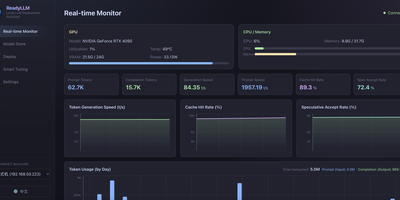
Your inference server should not sit mostly idle while a model crawls along at ten tokens per second, so ReadyLLM gives you a visual way to deploy, watch, and tune LLMs until the hardware is actually earning its keep. Add the machine under your desk or a remote box over SSH, let hardware detection read its GPU, VRAM, CPU, and memory, and get model recommendations that fit what you own instead of wishful downloads. A model store catalogs text, image, and video models with parameter counts, precision, resolutions, and real weight filenames, background downloads from multiple sources, and integrity checks when they land. One click starts or stops llama.cpp, vLLM, or SGLang services, installs a missing engine matched to your GPU backend, and leaves runtime parameters open for manual tweaks. Live curves track GPU utilization, memory, throughput, and latency as requests flow. When speed disappoints, two-phase auto tuning searches the knobs that matter, checks VRAM feasibility before it wastes your time, and benchmarks honestly against latency, throughput, or prefill goals; an AI tuning mode can reason through the same loop across several rounds. Beyond chat models, ComfyUI generation covers text-to-image and text-to-video, storyboards, shot-by-shot long video, and upscaling, with prompts optionally expanded first. Running on a dedicated VPS on RepoCloud with guaranteed CPU, RAM, and SSD, full root SSH access, and a browser serial console. MIT licensed.
Nodyx
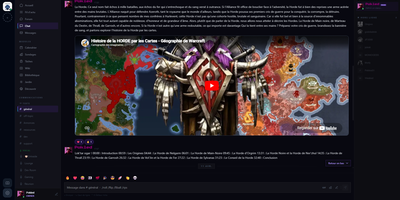
Nodyx puts forum threads, real-time chat channels, peer-to-peer voice calls, collaborative whiteboards, and a drag-and-drop homepage builder behind one installation script on hardware you control. Create categories and threaded discussions that search engines index, then switch to Socket.IO-powered chat rooms where replies, pins, link previews, and @mentions update instantly. Voice channels connect participants through WebRTC mesh networking, keeping audio between peers without routing through third-party servers; a Rust-based STUN/TURN relay handles restrictive NATs so home-server deployments work without port forwarding. The NodyxCanvas layer adds CRDT-synchronized collaborative drawing with 11 tools, voice-aware cursors, and board-scoped chat, all persisted to PostgreSQL snapshots. Build your community's landing page with a visual editor that places widgets across 11 layout zones, then extend functionality by dropping third-party widget archives into the admin panel or authoring your own with the plain-JavaScript Widget SDK. Private conversations stay end-to-end encrypted with ECDH P-256 key exchange and AES-256-GCM ciphers where the private key never leaves the browser, and the OctoGuard module automates moderation with five matcher types plus configurable actions from muting to banning. For streamers, a native Streamer Hub bridges Twitch chat bidirectionally, provides a drag-and-drop soundboard, generates OBS browser-source overlays, and offers a mobile Stream Deck. Instances discover each other through a gossip protocol, forming a decentralized network without central coordination. Running on a dedicated VPS on RepoCloud with guaranteed CPU, RAM, and SSD, full root SSH access, and a browser serial console. AGPL-3.0 licensed.
WechRSS
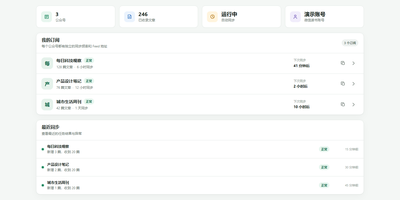
WechRSS brings WeChat Official Accounts back into your RSS reader, turning accounts that normally live inside a closed app into ordinary feeds you control. Paste any article link from an account and the tool identifies the publisher automatically, without hunting for obscure account parameters. Connect WeChat Reading by scanning a QR code in the web interface, and the session renews itself when possible so subscriptions keep flowing. Each account gets its own independent feed with its own sync schedule, item count, and on or off switch, so noisy publishers can be slowed down and favourites checked more often. A background scheduler keeps article titles, publication times, covers, and summaries up to date, with sync attempts, successes, and the latest new article all visible at a glance. Everything is stored locally, so your subscription list and credentials never sit on someone else's server. A first-time subscription wizard walks you from QR login to seeing the first article in your reader, saving progress if you get interrupted. Reader-specific links can be generated per account, letting a cloud reader fetch a feed without handing out management access. Health diagnostics flag expired logins, verification requests, and long sync gaps with concrete recovery steps. Running on a dedicated VPS on RepoCloud with guaranteed CPU, RAM, and SSD, full root SSH access, and a browser serial console. MIT licensed.
Google Browser Scraper
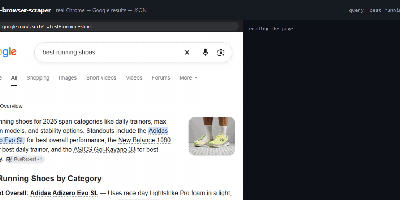
Google Browser Scraper is a self-hosted SERP API that gets Google results from a real Chrome browser and your own residential proxy, because plain HTTP scraping is refused and a fresh browser on a fresh IP is refused almost as fast. It warms a sticky proxy session with ordinary browsing first, lets the browser pass Google's checks, and then switches to a hybrid mode that fetches results pages directly over HTTPS with the browser's own cookies, at about 0.4 MB and 1.4 seconds per search on a warm IP. Every page comes back as SERP-style JSON with organic results, ads, related questions, related searches, pagination, the AI Overview, and local results. If a proxy IP starts serving poisoned pages for some other query, the scraper catches it within a few pages, drops that IP, and asks the query again on a fresh one. Captchas and blocks are reported as captchas and blocks, never disguised as an empty result set, so your pipeline knows when to retry or rotate. Run it as a CLI for keyword files, import it as a Python library, serve it as a local HTTP API, or expose the MCP server so AI agents get live Google search. Every run ends with a traffic and cost summary per thousand pages, and any sticky residential proxy works, with NodeMaven sessions handled for you. Running on a dedicated VPS on RepoCloud with guaranteed CPU, RAM, and SSD, full root SSH access, and a browser serial console. MIT licensed.

Imagor Studio
Imagor Studio is a photo workspace where browsing a huge library and editing what you find happen in the same place, and the originals never get touched. The gallery scrolls virtually through thousands of images with no indexing wait, while drag-and-drop moves files between folders and multi-select handles bulk work. Open any image and the editor lets you stack layers: other images as overlays or watermarks, text layers you can style inline, and solid color layers with blend modes and opacity. Adjust color, apply effects, and crop with a live preview, then copy the generated transformation URL and use that rendition anywhere without exporting a file. A look you build once can be saved as a template in portable JSON and applied across the whole library, so a watermark, a resize, and a color grade become one reusable recipe. You can also start from a blank canvas at any dimensions and compose from scratch. Storage stays yours throughout: point it at a local folder, S3, MinIO, or Cloudflare R2 and manage the same library the same way. Running on a dedicated VPS on RepoCloud with guaranteed CPU, RAM, and SSD, full root SSH access, and a browser serial console. AGPL-3.0 licensed.
Lalabase
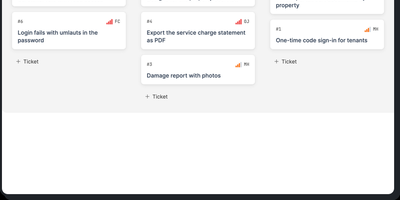
Lalabase is project management built for developers who work with clients, putting tickets, time tracking, documentation, and meetings in one workspace instead of five separate tools. Each client gets an organisation with its own projects and its own access, and roles decide exactly what clients can see. Tasks run as a list or a board with the statuses, priorities, and fields you define per project, rather than the workflow a vendor chose for you. Time tracking records several sessions per ticket, each billable on its own, with exports that go straight into the invoice. Documentation lives beside the work: notes and documents sit in the project, and a folder in your GitHub or GitLab repository becomes the project's docs automatically. Meetings keep their transcript, an AI summary, and the tasks that follow from what was actually said. When you need an answer, the AI assistant takes one question across tickets, comments, documents, hours, and meetings, and it cites the ticket, page, or conversation every answer came from. It even reads your repository's indexed code structurally, so questions about what is implemented get answered against the code. The assistant stays off until you enable it with your own provider key or a model in your own network. An MCP server and REST API let your own agents list, create, and update tickets, comment, and log time. Running on a dedicated VPS on RepoCloud with guaranteed CPU, RAM, and SSD, full root SSH access, and a browser serial console. AGPL-3.0 licensed.
Shell Online
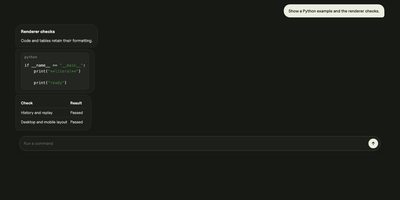
Shell Online lets a terminal session running on your own computer follow you to any browser, so your coding agent keeps working while you are away from your desk. Prefix the command you already run, such as shell claude, shell codex, or shell opencode, and your terminal prints a link, a password, and a QR code that open the same live session on a phone, tablet, or another computer. You watch output as it happens and reply to prompts from wherever you are, and closing the browser leaves the process running until it exits on its own. Inviting a teammate takes the same link: share it read-only so they can watch without typing, or let them type into the session with you. Terminal traffic is end-to-end encrypted by default, file access stays off until you deliberately expose a chosen directory, and a scoped MCP grant can let another agent inspect or steer a session for a limited time. With an account, linked machines and their sessions gather in one web app with team sharing. The relay the sessions pass through can run on your own server with the standalone Docker deployment, pointed at by the unchanged CLI. Running on a dedicated VPS on RepoCloud with guaranteed CPU, RAM, and SSD, full root SSH access, and a browser serial console. MIT licensed.
Lumina
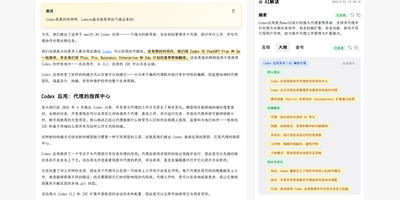
One click, one article: Lumina captures any web page from a browser extension, adds an AI summary, outline, and translation, and files it in a library you can read, annotate, and publish. Save a full page or a selection from the extension popup or the right-click menu. Search titles, then narrow by category, author, source, or time. Batch actions categorize, hide, or delete many articles at once. Switch between the original and the translation, or go immersive. A table of contents, notes, and highlights help you work through long articles. Code blocks, math, and common media embeds render in place. Background AI tasks write summaries, key points, quotes, and outlines. They also classify articles and suggest similar ones. Each task shows a timeline, and you can retry, repair, or cancel it. Columns turn articles, topics, and quotes into longer reading paths you can publish. Public RSS feeds cover articles and columns, and either kind of page downloads as Markdown. Readers comment after signing in with GitHub or Google, and admins moderate. The admin center manages model APIs, prompts, categories, and storage, and tracks calls, tokens, and cost. Backups run in the background, download as an archive, and import back incrementally. Running on a dedicated VPS on RepoCloud with guaranteed CPU, RAM, and SSD, full root SSH access, and a browser serial console. MIT licensed.

Lunarr
Lunarr turns the movie and TV folders you already store into a private streaming service with posters, progress tracking, and play-anywhere convenience. Point it at local disks or at libraries living on SFTP and WebDAV servers, and it scans, identifies, and decorates everything with TMDb artwork, cast pages, similar titles, and because-you-watched recommendations. Press play and the file either streams directly or is transcoded on the fly into seekable HLS, generating only the segments around the moment you are watching instead of converting whole films up front. Continue watching follows you between sessions, sidecar subtitles are picked up automatically, and known intros and credits can be skipped. Send the picture to the big screen with Chromecast or AirPlay, pair new devices without typing passwords, and hand a guest a share link instead of your account. Underneath, an admin console manages users, roles, and which libraries each person may see, watches background jobs, and holds API keys and registration settings. Rescans run on schedules you set from minutes to a month, local folders can be watched live for new arrivals, and metadata refreshes itself on a timer. Running on a dedicated VPS on RepoCloud with guaranteed CPU, RAM, and SSD, full root SSH access, and a browser serial console. Apache-2.0 licensed.
Netra
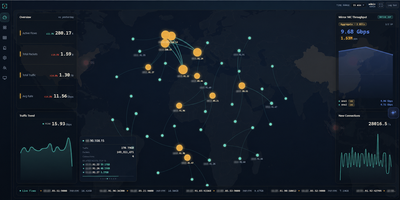
Netra watches your network from the side, plugged into a switch mirror port, and turns everything it sees into a live picture of your traffic without ever sitting in the forwarding path. A single binary loads its eBPF collectors in the kernel, so aggregation happens before packets reach user space and multi-gigabit mirror feeds stay observable instead of dropping samples. The dashboard opens on totals, protocol share, and traffic trends, then lets you drill into flows by address, port, domain, or service, check which countries your traffic talks to on a world map, and read the internal topology as a live graph. Domains surface passively from TLS handshakes, public addresses are enriched with country and organization data, and heuristic detectors flag scanning, flooding, and single-host surges, pushing alerts to your team chat with an optional AI-written explanation. You can ask the built-in assistant questions about real recorded history, connect external MCP servers so it can call your own tools while it answers, and stream flows onward to Kafka for other consumers. History rolls into compressed columnar files on a schedule and stays queryable for a month by default. Running on a dedicated VPS on RepoCloud with guaranteed CPU, RAM, and SSD, full root SSH access, and a browser serial console. GPL-3.0 licensed.
Tamari
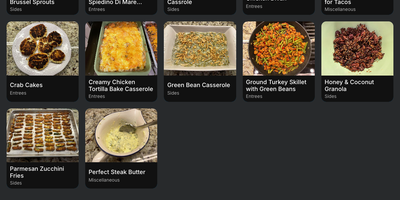
Recipes scattered across bookmarks, screenshots, and open browser tabs become one searchable cookbook with Tamari, which adds meal planning, per-store shopping lists, and one-click imports from a built-in library of over 400,000 recipes. Save each dish with its photo, ingredients, instructions, servings, time estimates, and nutrition information, then find it again through search, categories, or your favorites list. The Explore collection gathers more than 400,000 recipes from 300 cooking websites, and any of them moves into your personal cookbook with a single click. Pick a recipe and its full ingredient list lands on a shopping list at once, organized per store so a supermarket run and a farmers market run stay separate. Check items off as you shop, or scan a barcode to add something the moment you notice it running out at home. The meal planner assigns recipes to specific dates up to 30 days ahead, turning the weekly what-is-for-dinner debate into a settled schedule. Adjust how your cookbook displays, with large photos to show dishes off or compact photos to fit more on screen, sorting by title or date added, and light or dark themes for late-night cooking sessions. Share recipes with family members, reset a forgotten password by email, and manage everything programmatically through the REST API from scripts or other tools. Running on a dedicated VPS on RepoCloud with guaranteed CPU, RAM, and SSD, full root SSH access, and a browser serial console. GPL-3.0 licensed.
Price Comparison
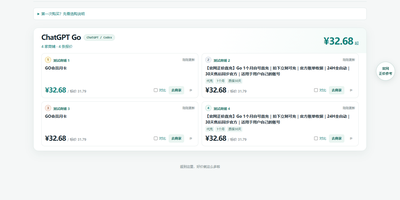
Where is ChatGPT Plus cheapest this week, and which seller actually honors the warranty? Price Comparison (Zhitu Shijia) is a self-hosted platform that gathers AI subscription and account offers from many card shops into one catalog you can search, compare, and question. Tell the built-in guide your budget and need, for example a Plus top-up under a monthly cap with warranty cover, and it filters offers, explains recharge channels and purchase conditions, and narrows the list through follow-up questions. Browse by platform, delivery method, term, and warranty to compare prices and stock for ChatGPT and Codex, Claude, Gemini, Grok, and Cursor offers side by side, including finished accounts, shared accounts, and redeem codes. Price history shows how an offer moved before you buy, and official regional prices give a reference point when a quote looks suspiciously cheap or expensive. Email accounts, SMS verification, and residential IP offers sit in the same catalog, so the extras a subscription needs can be priced in the same pass. Install the comparison Skill or connect the MCP service and your own AI assistant can search products, compare merchant quotes, and pull price history with source links and collection times attached. In the admin console you add and review shops, run collection, and supervise the pipeline that identifies, classifies, and publishes products into the catalog. Running on a dedicated VPS on RepoCloud with guaranteed CPU, RAM, and SSD, full root SSH access, and a browser serial console. GPL-3.0 licensed.
Muxarr
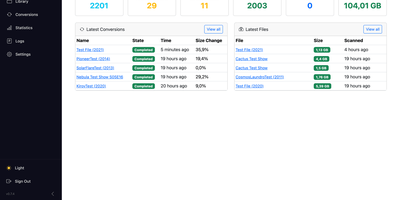
Muxarr cleans up your media library by stripping out the audio and subtitle tracks you will never use, so players stop offering twenty subtitle options and the wrong dub. Tell it which languages you actually watch and read, and it keeps those tracks while dropping commentary, foreign dubs, and redundant subtitles. Nothing is re-encoded: video and audio are copied as they are, so quality is identical and a large film finishes in about a minute instead of hours. Spare audio tracks alone often free ten to thirty percent of a file, which adds up quickly across a big library. Profiles apply different rules per directory, so anime, family films, and western shows can each keep different languages, with priority ordering, per-language limits, and fallback rules like English subtitles only when German ones are missing. Regional variants are understood, distinguishing Quebec French from France French or Latino from Castilian Spanish. When Sonarr or Radarr import something new, a webhook sends it straight to Muxarr, and original language detection makes sure a foreign film keeps its real soundtrack. Track names get cleaned of encoder tags, default and forced flags are fixed, and every output is validated before it replaces the original. Running on a dedicated VPS on RepoCloud with guaranteed CPU, RAM, and SSD, full root SSH access, and a browser serial console. GPL-3.0 licensed.
AgentBox
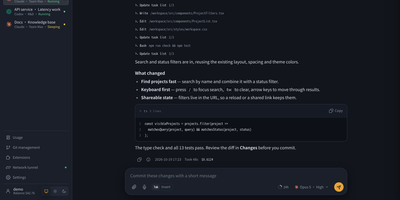
AgentBox is a self-hosted browser workspace that runs Claude Code and Codex CLI on a server you control, so a task goes from chat to reviewed code without leaving one place. Open a workspace from an empty project, an uploaded archive, or a Git clone, then talk to the agent in streaming web chat or drop into its original interactive terminal when you want the CLI itself. Files persist between sessions along with your home configuration and chat history, so a project picked up on a laptop continues on a phone exactly where it stopped. Review per-file diffs line by line before committing, pushing, or opening a pull request, and download the result when no Git connection is configured. Shared files, layered home templates, Claude skills, and MCP configuration carry your setup into every new workspace, with per-workspace overrides when a project differs. A trusted team shares central account pools with per-user scopes, while every model request is recorded with tokens, cache hit rate, cost, and latency, exportable to CSV and optionally capped by credits. An optional tunnel reaches allowlisted repositories and databases on private networks, and six interface styles with light and dark modes keep long sessions comfortable. Running on a dedicated VPS on RepoCloud with guaranteed CPU, RAM, and SSD, full root SSH access, and a browser serial console. Apache-2.0 licensed.
Contrack
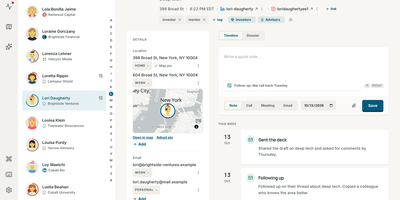
Your contacts live in four different address books; Contrack merges Apple, Google, LinkedIn, and Facebook into one self-hosted personal CRM you fully control. Importing merges the address books you already keep, and connecting a calendar or inbox lays past meetings and conversations along each person's timeline. Obvious duplicates merge themselves, borderline matches wait in a side-by-side review with field-level differences highlighted, and every merge can be undone for 90 days. A scribbled note such as 'met at Sarah's wedding, catch up quarterly' turns into fields, tags, dates, and reminders, while optional web research fills in roles and links with cited sources. Each morning, Pulse shows who is due a follow-up, whose birthday lands this week, and which friends have quietly gone a year without contact. Ask Contrack answers plain questions like 'who do I know in Lisbon' or 'who loves natural wine' by searching your notes and contacts locally. The map plots everyone by city, and drawing a loop around a neighborhood before a trip turns a visit into a dinner list in seconds. Households share one server while each profile keeps a private book, and the built-in MCP server lets Claude, ChatGPT, or Cursor look up context and log notes for you. One-click verified backups snapshot the whole address book, passkeys handle sign-in, and open exports mean your data leaves whenever you do. Running on a dedicated VPS on RepoCloud with guaranteed CPU, RAM, and SSD, full root SSH access, and a browser serial console. AGPL-3.0 licensed.
Talo
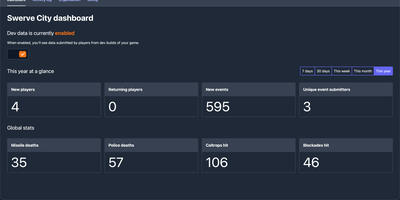
Shipping a game is hard enough without also building account systems, and Talo is the self-hosted backend that gives your Godot or Unity title player authentication, leaderboards, cloud saves, and analytics on infrastructure you control. Players persist across sessions with segments you define, so you can group testers, whales, or speedrunners and treat each group differently. Leaderboards sort ascending or descending, refresh on daily or weekly schedules, hide suspicious entries from the dashboard, and sync with Steamworks in one click. Event tracking records individual and global player actions, and the dashboard turns that stream into charts you can filter by group when a balance patch lands badly. Game saves load and store flexible state that also works offline, while global and per-player stats track everything from completions to currency earned. Live config lets you tune game settings from the web and push changes to running games with zero downtime. Channels carry real-time messages between subscribed players, presence shows who is online with custom statuses, and relationships add friends and followers when your game grows social. Steamworks, Google Play Games, and Apple Game Center integrations verify ownership and authenticate players through the platforms they already use. Running on a dedicated VPS on RepoCloud with guaranteed CPU, RAM, and SSD, full root SSH access, and a browser serial console. MIT licensed.
Subatic
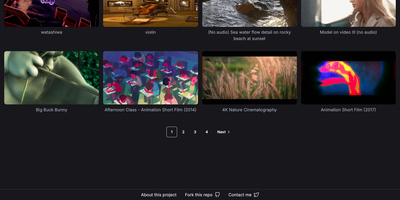
Your own video hosting site that behaves like the big platforms: upload a file, share a link, and anyone can press play. Subatic takes care of everything between those two moments. Drop in a raw video and the transcoding pipeline converts it into web-ready formats, stores the finished files in S3-compatible storage, and publishes a clean watch page with the title and an animated thumbnail that previews the content before a click. Playback streams directly from the storage bucket, so a Cloudflare R2 bucket with caching turns your little server into a video host whose delivery costs stay close to zero as views climb. A public homepage grid showcases your latest uploads with those moving thumbnails, and visitor counts can flow into Umami or Plausible if you want audience numbers without handing viewers to a third-party tracker. Creator accounts handle uploading, and one Docker Compose file brings up the whole stack: the app, the transcoder, MinIO for local object storage and PostgreSQL. A teacher can post course videos without platform rules, a band can share rehearsal footage, and a homelab can keep family clips on hardware in the closet. Running on a dedicated VPS on RepoCloud with guaranteed CPU, RAM, and SSD, full root SSH access, and a browser serial console. GPL-3.0 licensed.
Proval
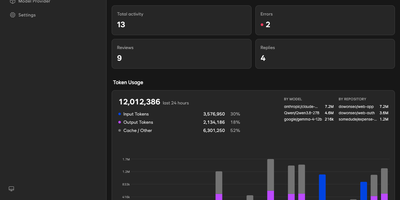
Proval is a self-hosted AI code review agent that reads every pull request on your GitLab, Forgejo, or GitHub server and posts a consolidated, severity-grouped review with inline comments, using a model you run yourself. When a pull request gets a meaningful push, a planning agent groups changed files into review units and dispatches specialist sub-agents in parallel, each exploring the codebase so cross-file issues surface. A writing agent merges their findings into one review, with comments on the affected lines, including multi-line ranges. Reply to any Proval comment and it reads the thread context and answers, and it works on issues too, greeting new ones and answering follow-ups on every message or only when mentioned. Choose per repository whether reviews run on first push only, every push, or not at all, skipping drafts until they are marked ready. Every review, reply, and issue comment is logged with its token usage, so each model's cost shows in the dashboard instead of hiding in an API bill. Your code is never stored; review context goes only to the LLM endpoint you configure, whether that is a cloud API or a local Ollama or llama.cpp server on your own network. Connect GitLab or Forgejo with an access token and webhooks, or GitHub through a GitHub App; Gitea and Codeberg use the same Forgejo-compatible path. Running on a dedicated VPS on RepoCloud with guaranteed CPU, RAM, and SSD, full root SSH access, and a browser serial console. AGPL-3.0 licensed.