AiPBX
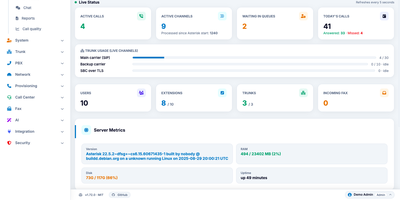
One server replaces the phone system, the meeting link, and the fax line: AiPBX turns a Linux machine into a business phone system with extensions, video meetings, chat, and call queues. Every employee gets one extension that rings a desk phone, the browser softphone, and the mobile app, while ring groups, multi-level IVRs, and time conditions route callers without anyone editing dialplan files. Queues staff your support line with dynamic agent sign-in, hold music, and position announcements, and a live wallboard lets supervisors watch waiting callers and agent states, then listen, whisper, or barge into a call. Meetings run in the browser: schedule conferences with PINs, send guests a magic link into a WebRTC room with screen sharing, and let streams forward without transcoding. Chat lives in the same portal: photos, files, presence, read receipts, and fax is composed in a rich-text editor or uploaded as PDF and delivered over T.38. Desk phones provision themselves: a discovery daemon spots new Yealink, Fanvil, Grandstream, Snom, and Cisco handsets and writes their configuration files. An AI assistant plans dialplan changes in plain language with dry-run preview and one-click undo, cloud voices from Google, Polly, Azure, ElevenLabs, or OpenAI read announcements aloud, and GDPR, KVKK, HIPAA, and PCI-DSS presets govern recording consent and retention purges. A 100-plus-endpoint REST API with scoped keys and HMAC-signed webhooks makes everything scriptable. Running on a dedicated VPS on RepoCloud with guaranteed CPU, RAM, and SSD, full root SSH access, and a browser serial console. MIT licensed.

AI WorkDeck
Lawyers work in piles of text, and AI WorkDeck gives them the IDE that programmers take for granted: every matter keeps its files, drafts, evidence and AI help in one window. The AI edits the real document, not a chat transcript, writing its changes straight into the file as tracked changes that you accept or reject one by one. Every conclusion carries a citation, and clicking it lands on the supporting passage in the source document, with changed or missing anchors flagged for review. Drafts live under git-backed history with three-way merges and paragraph-level provenance, so two people can revise the same pleading and still see exactly who wrote what. Out in the field, photos and recordings taken on a phone land back in the matter on your computer, filed by date and ready as evidence. A built-in marketplace adds one-click Skills, plugins and MCP servers, and a Word add-in meets colleagues who never leave their usual editor. Run it as a desktop app for one lawyer or as a server for the whole firm, where accounts, sync and shared matters live on infrastructure you control. Running on a dedicated VPS on RepoCloud with guaranteed CPU, RAM, and SSD, full root SSH access, and a browser serial console. AGPL-3.0 licensed.
Overclick
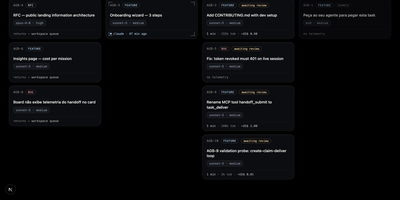
OverClick is the task board where your AI agents clock in: you write the assignments, they claim the work, and you stamp what actually got done. A card here is a contract, not a ticket: what should happen, why it matters, and a plain-language test script that says how to confirm it, all written before anyone starts. You tell your agent to grab the next task, and it claims the card over MCP, declares the CLI and model it really runs on, receives a self-contained briefing with the mission context and branch convention, and the card slides into progress. When it finishes, the handoff lands with a summary, evidence, branch and pull request links, and measured telemetry, the tokens per model and minutes the run actually took, read from the session transcript rather than guessed. Every card keeps three roles straight, who asked, who executed, and who reviews, and only a human can mark it validated; reopening with a comment puts your note in front of the agent's next claim. Big decisions can start as RFC cards whose approval spawns the execution cards, and insights roll up what each project, mission, and model consumed. Running on a dedicated VPS on RepoCloud with guaranteed CPU, RAM, and SSD, full root SSH access, and a browser serial console. MIT licensed.
Lurker
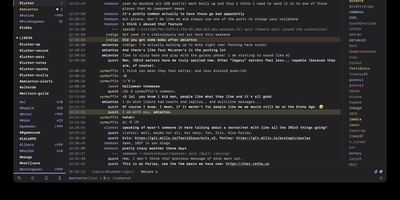
Lurker keeps you present in every IRC channel you care about, holding your connections open around the clock and recording everything said so a retro, searchable web client can hand it all back whenever you return. Invite your friends and each person gets their own set of networks under one roof, while admins decide which networks members may join and which channels newcomers are pointed at. Nothing said while you were away is lost: the full history is searchable by nick, channel or network, and clicking a result jumps straight to that moment, whether it happened an hour or a year ago. The everyday annoyances are handled too, with drafts that follow you between devices, a highlight and ignore system that cuts noise, bookmarks and private notes on users, reactions, replies, and image uploads that are optimized, stripped of metadata and stored on your own disk or S3. If you prefer your old client, the built-in bouncer speaks the soju and ZNC dialects with SASL, network discovery, on-demand scrollback and read markers that stay in sync everywhere, and DCC file transfers with an XDCC queue still work. Optional companion containers generate inline link previews in isolation and keep your IRC connections alive across restarts of the main service. Running on a dedicated VPS on RepoCloud with guaranteed CPU, RAM, and SSD, full root SSH access, and a browser serial console. MPL-2.0 licensed.

Aldine
Paper co-authors usually trade .tex files by email or pay for a hosted editor seat by seat; Aldine replaces both with a self-hosted LaTeX workspace where the whole team types in one document at once and sees a typeset PDF seconds later. Live cursors and presence show who is editing which paragraph, and the underlying sync is conflict-free, so two authors can rewrite the same section without overwriting each other. Every project is a real git repository: branch a draft, edit it independently, and merge it back from the interface when the argument holds together. Connect GitHub, GitLab, Gitea, or Forgejo to push and pull without leaving the editor, watch ahead and behind indicators, resolve conflicts, and open a pull or merge request on the merged result. Moving in is painless, since an exported Overleaf project ZIP dropped on the home screen imports with its root file detected and its first typeset automatic. Citations come from your own Zotero library or a single collection, kept in sync as a .bib file and inserted from a search panel or \cite autocomplete. Reviewers select text and leave anchored, threaded comments, optionally with a suggested replacement the author accepts in one click. Compiles run in a sandboxed container with no network access, warm recompiles land in about two seconds, and errors jump to the offending line. Running on a dedicated VPS on RepoCloud with guaranteed CPU, RAM, and SSD, full root SSH access, and a browser serial console. AGPL-3.0 licensed.
Tome
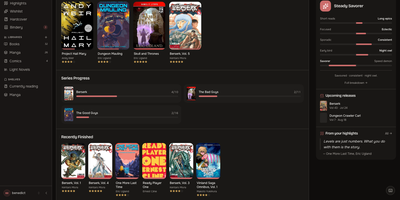
Tome is a self-hosted ebook library that knows how you read, not just what you own, syncing your place between an e-reader and the browser while turning every session into statistics. Its TomeSync plugin for KOReader records time on page, pages turned, and device, then syncs positions bidirectionally and works fully offline, queuing sessions until you reconnect. Browse and bulk-download whole series from the e-reader menu, with stable book IDs keeping history intact when files change. Reading stats grow sharper the more you read: streaks, time-of-day heatmaps, pace, completion estimates, author affinity, and per-book breakdowns fill three insight tabs. The built-in reader opens EPUBs with themes and font controls, manga in page, spread, or webtoon scroll modes with RTL support, and PDFs directly. Volumes group into series with arcs and status badges, so a forty-volume saga reads as one story. Metadata arrives from Hardcover, Google Books, and OpenLibrary with a side-by-side diff and cover picker. A Bindery inbox reviews incoming files before they join the library, and the OPDS catalog serves KOReader, Panels, or any OPDS client with per-user PINs. Admin, member, and guest roles govern per-book visibility behind API tokens. Running on a dedicated VPS on RepoCloud with guaranteed CPU, RAM, and SSD, full root SSH access, and a browser serial console. AGPL-3.0 licensed.
MarimoHub
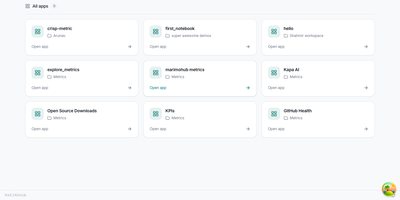
Running one marimo notebook is easy; running a team's worth of them, with storage, sign-on, versions, and somewhere for the results to live, is the job MarimoHub takes on. Notebooks gather in a searchable gallery organized by project, where every edit session leaves a version you can compare side by side, inspect, and restore when an experiment takes a wrong turn. Projects connect their data sources once through a versioned integration catalog, with sensitive values encrypted or pulled from external secret stores, and every new session receives the configuration automatically. When a notebook is ready for people who should never see its code, publish it as an interactive app: viewers get the controls and outputs while rollouts shift versions underneath them. Scheduled jobs rerun notebooks on a clock, GitHub sync keeps repository-backed notebooks current, and an assistant can work inside the notebook context with managed AI keys that never reach the sandbox. Underneath, you pick the object storage, the compute, and the identity provider, and back up one bucket to back up the whole hub. Running on a dedicated VPS on RepoCloud with guaranteed CPU, RAM, and SSD, full root SSH access, and a browser serial console. Apache 2.0 licensed.

Hexis
Hexis gives every AI agent in your company one governed brain: skills, tool manuals, and knowledge stored as files in a git repository you own. Engineers and non-technical teammates browse the same workspace to load plugins, read company context, and propose improvements without touching git themselves. A proposed change shows its exact diff to the owners of the files it touches, and it ships only when they approve, on the branch rules you set. Agents propose too: one that hits a broken skill mid-task can suggest the fix as a change request and wait for a person to decide. Claude Code, Cursor, Cline, Codex, and ChatGPT connect over MCP and discover skills by search at call time, so the context window stays lean. Each agent acts with its user's own permissions, resolved per file, and the credentials behind tools stay in an encrypted vault the agent never holds. Roles and folder-level grants decide who sees what, and your team signs in behind your own SSO. Every save is a commit, so history, blame, and revert come free, and the knowledge base can start from the bundled template in minutes. Running on a dedicated VPS on RepoCloud with guaranteed CPU, RAM, and SSD, full root SSH access, and a browser serial console. Apache-2.0 licensed.
OpenResto
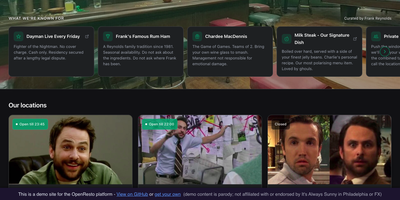
OpenResto is a self-hosted booking system that lets restaurants, bars, and cafes take reservations from their own website instead of paying a platform for every cover. Guests browse your locations, pick a party size, date, and time, and the exact table is held for five minutes while they type a name and email, with no account to create and nothing to install. Slots are grouped into Lunch, Dinner, and Off-Peak so guests jump straight to the sitting they want, and confirmation pages offer calendar export, reminders, and directions. Staff run the night from a dashboard with a live bookings list, a day timetable, and a service view, extending or cancelling reservations and pausing new bookings during private events without editing any configuration. One instance manages several restaurants, each with its own floor sections such as Patio or Bar, opening hours in its own timezone, policies, and pacing rules. The whole guest experience carries your name, colors, and icon, and the same screens can even be published as your own phone app. Every admin action lands in an append-only activity trail, and scoped API keys let your other tools read bookings without ever seeing guest contact details. Running on a dedicated VPS on RepoCloud with guaranteed CPU, RAM, and SSD, full root SSH access, and a browser serial console. MIT licensed.
LiftTrace
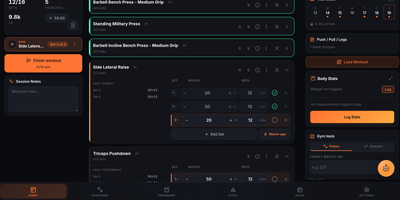
LiftTrace is a self-hosted weightlifting tracker that keeps your entire training history, programs, personal records, and progress photos on your own server in a single Docker container. Log every set with weight, reps, RPE, warm-up markers, and supersets, or type a line like bench 3x5 at 225 and let the Smart Log parser turn plain text or a voice note into structured sets. Follow multi-week programs where each week prescribes its own sets, reps, tempo, rest, and load, and watch the diary prefill today's session from the active template. Browse an exercise library merged from wger, Free Exercise DB, and ExerciseDB, add custom movements, or bulk import your own catalog from a spreadsheet. Automatic PR detection, estimated one-rep maxes, volume and frequency charts, and dated progress photos with a drag-to-compare view show how training is trending. The built-in Trace AI coach reads your workouts, programs, records, and body stats to answer questions, log sessions, and adjust plans through Claude, OpenAI, Gemini, or a local Ollama model. Coaches can prescribe workouts, leave notes on individual sets, and review filmed set videos with comments stamped at the moment that matters, all with explicit consent from the athlete. Import years of history from Strong, Hevy, FitNotes, Jefit, or Garmin FIT files, keep logging offline in the gym, and sign in with OIDC through Authentik, Keycloak, or Authelia. Running on a dedicated VPS on RepoCloud with guaranteed CPU, RAM, and SSD, full root SSH access, and a browser serial console. AGPL-3.0 licensed.
ADHDev
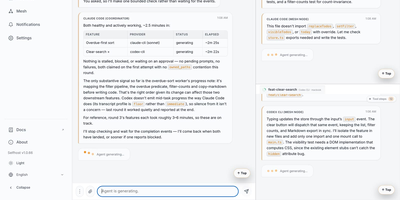
Your laptop, a desktop, and a build box each have a coding agent installed, and until now nothing has coordinated them. ADHDev is a self-hosted control plane that puts Claude Code, Codex, Kimi, Cursor CLI, Antigravity CLI, Grok CLI, and OpenCode behind one shared task queue and one web and mobile dashboard. Machines pair directly with an address and a one-time code on your own network, and a mesh binds to a single repository. Idle nodes claim tasks themselves. Dependencies order the queue, retries absorb failures, and missions group the work that belongs together. Every task gets an isolated git worktree the moment it starts. Agents build in parallel without touching each other's files, and the coordinator's prompt is rendered from live mesh state at launch, with events pushed in as they happen. Difficulty tags route easy work to cheap models and hard work to strong ones. The dashboard also reads how much of each subscription window remains, skips plans that are nearly empty, and shows the routing forecast before anything runs. Finished work enters the Refinery. Your repository's gates decide, the branch is rebased onto main, and the merge happens only when main has not moved, followed by automatic worktree cleanup. Running on a dedicated VPS on RepoCloud with guaranteed CPU, RAM, and SSD, full root SSH access, and a browser serial console. AGPL-3.0 licensed.
BrightBean Chat
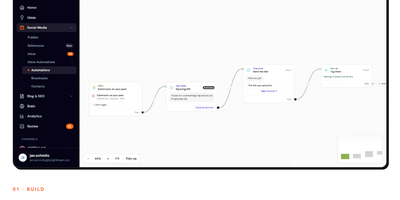
BrightBean Chat is a self-hosted chat automation platform that builds visual flows once and runs them across Instagram, WhatsApp, Messenger, Telegram, SMS, and email, so your audience automations live on your server instead of a per-contact subscription. You drag conditions, delays, randomizers, data collection, and message nodes onto a canvas, test the draft while the live version keeps running, then set it live with every save versioned. Flows start from keywords, comment-to-DM triggers, story mentions and replies, follows, ref URLs, QR codes, or calls to the public API. Every channel lands in one shared inbox where teammates assign conversations, label them, schedule replies, and take over from the bot, which pauses the automation for that contact. Contacts carry custom fields, tags, and segments that stay unified across channels, and imports and exports keep the list portable. Broadcasts and multi-step drip sequences check opt-outs and each platform's 24-hour messaging window before sending, pace themselves per channel, and show exactly who will receive a message and who is skipped. Per-node counters track sent, delivered, failed, and clicked, while a bearer-authenticated REST API and signed webhooks hand leads to Make, Zapier, n8n, or your own systems. Running on a dedicated VPS on RepoCloud with guaranteed CPU, RAM, and SSD, full root SSH access, and a browser serial console. AGPL-3.0 licensed.
CashPilot
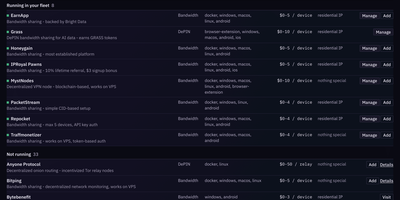
Idle bandwidth and spare hardware earn nothing sitting unused, so CashPilot deploys passive-income services across your servers and shows every balance in one web dashboard. From the catalog you start Docker earners such as Honeygain, Earn.fm, Traffmonetizer, PacketStream, ProxyRack, MystNodes, Storj, and Sia hostd with one click, no compose files to write, and you can add any service the catalog lacks by image name under the same container restrictions. Providers that run as browser extensions, desktop apps, or GPU nodes, 24 of them, are tracked alongside, while 15 built-in collectors read balances every hour into a single earnings history, so a service that runs without earning shows up as a flat line instead of a surprise. When a balance drops, CashPilot treats it as a probable payout and asks you to confirm rather than counting income by guesswork. One worker runs on each server under a single dashboard, with every figure broken down per server and per service. Extra copies of a service can earn through SOCKS5, HTTP CONNECT, or Tailscale exit-node proxies and stop dead if the proxy dies instead of leaking your real address. Earners are fenced off from your LAN, the host, your tailnet, and cloud metadata by default, and per-service guides flag restrictions such as providers that ban datacenter IPs. Running on a dedicated VPS on RepoCloud with guaranteed CPU, RAM, and SSD, full root SSH access, and a browser serial console. GPL-3.0 licensed.
ShipShipShip
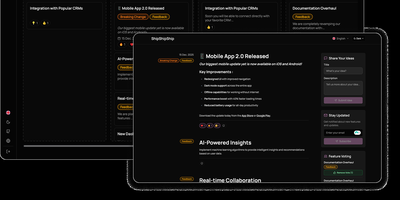
Keeping users informed about software releases while gathering community feedback on upcoming roadmap items becomes effortless with ShipShipShip, a self-hosted changelog, release notes, and feature voting platform. Product managers can draft rich release announcements using a formatting editor that supports Markdown, embedded media uploads, color-coded category tags, and exact publication timestamps. Instead of juggling disconnected feedback spreadsheets, teams organize backlog proposals, active development tasks, and shipped updates across a drag-and-drop Kanban board or a filterable list view. Visitors browsing the public roadmap can upvote proposed features to help prioritize the next sprint and react to announcements using eight expressive emoji reactions. When an item moves into a shipped status, the built-in newsletter engine automatically dispatches formatted release emails over SMTP to subscribers using customizable per-event templates and one-click unsubscribe links. Design-conscious organizations can install manifest-driven public themes, map internal workflow statuses to public roadmap columns, and tailor brand colors and logos. International audiences can navigate the interface in seven languages, including full right-to-left layout support, while engineering teams automate event creation through the REST API. Running on a dedicated VPS on RepoCloud with guaranteed CPU, RAM, and SSD, full root SSH access, and a browser serial console. Apache-2.0 licensed.
TutorLoom
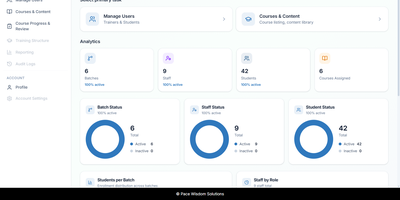
A training institute can run its courses, batches, trainers, and students from a single self-hosted TutorLoom installation it fully controls. One deployment serves many organizations at once, and every query is scoped to the organization, so trainers and learners only ever see their own data. Institute admins manage people and time-boxed batches, inviting trainers and students one by one or in bulk from CSV and Excel files. Courses are built as levels, chapters, and steps mixing videos, documents, tasks, and quizzes, with prerequisites and sequential unlocking so learners follow the path you designed instead of wandering. Students work through a guided step-by-step roadmap on the web or in the mobile app, watching completion fill in as they go and earning points and levels along the way. When learners submit work, trainers review everything in a single grading queue, approving or rejecting with a score and written feedback, then export progress to Excel when management asks for a report. Finishing a course produces a PDF completion certificate automatically. One account can hold several roles at once, so a trainer who also administers an institute switches portals without signing out. Branded email notifications keep learners informed under your own institute's name, and a documented REST API with interactive documentation powers the web app, the mobile app, and your own integrations. Running on a dedicated VPS on RepoCloud with guaranteed CPU, RAM, and SSD, full root SSH access, and a browser serial console. Apache-2.0 licensed.
Antirion
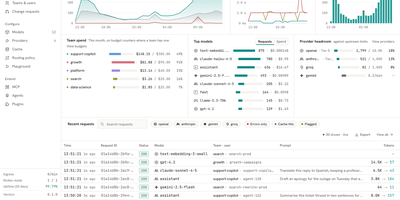
Your apps keep using the OpenAI SDK while Antirion, a self-hosted AI gateway, decides which provider answers, what each team may spend, and what gets logged. Clients speak the OpenAI, Anthropic, Gemini, or Bedrock APIs, and Antirion translates between them, so a Claude deployment can answer an OpenAI-style call, streams included. Add providers such as Amazon Bedrock, Vertex AI, Mistral, Groq, DeepSeek, or a vLLM server, then publish them as named Models. Routing rules send traffic by team or project with fallback chains, weighted splits, least-cost or least-latency targets, retries, hedging, and circuit breakers. Budgets and rate limits in dollars or tokens apply per organization, team, project, and key, with projections and alerts before money runs out. Guardrails check for personal data, secrets, keywords, and regex matches, then block, redact, flag, or divert. Exact and semantic caching answers repeated prompts without calling a provider. The request log records every attempt, route, token count, cost, and guardrail verdict, with Prometheus metrics and OTLP traces. An MCP gateway and A2A proxy put tools and agents behind the same keys. Sign in with OIDC, SAML, or GitHub, provision users with SCIM, and review every change in the audit log. Changes you choose can require a change request or a second person's approval, and the Playground sends requests from the console. Running on a dedicated VPS on RepoCloud with guaranteed CPU, RAM, and SSD, full root SSH access, and a browser serial console. Apache-2.0 licensed.
Mikochi
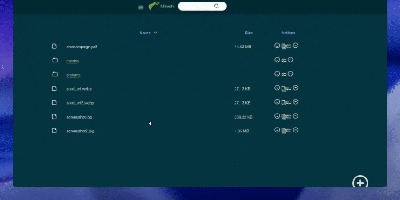
Point a browser at your server's folders and skip the FTP clients, the SSH tunnels, and the heavyweight cloud clones: Mikochi turns any directory on your machine into a clean web file browser you can open from anywhere. You browse nested folders in a fast list view, jump to files with fuzzy search, upload new material, create folders, rename items, and delete what is no longer needed. Whole directories come down as a single tar.gz archive, which makes backups and bulk transfers painless. Media files get a smarter treatment: Mikochi generates streaming links that open directly in VLC or mpv, so a film or album stored on the server plays on your screen without downloading gigabytes first. Access stays protected behind a username and password login with JWT sessions, and you can serve everything over TLS with your own certificates or disable authentication entirely on a trusted private network. Deployment takes one Docker command with a mounted data directory, and Kubernetes users get an official Helm chart. Homelab owners point it at a NAS share, developers drop it on a build box, and anyone tired of scp commands gets a permanent window into their files. Running on a dedicated VPS on RepoCloud with guaranteed CPU, RAM, and SSD, full root SSH access, and a browser serial console. MIT licensed.
Garcon
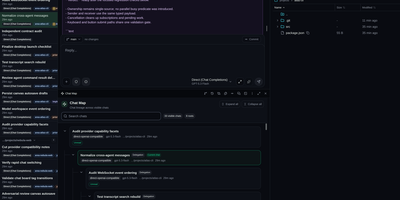
Garcon gives developers one browser workspace for running several coding agents at once, steering their work live, and turning reviewed changes into commits. Tile up to four resizable windows, move chats between them, and place live sessions on durable canvases that show delegated children, handoffs and parentage. Turn that activity into a tag-driven delivery board, or create tickets first and open chats from them with the project, priority, assignee and discussion already attached. Queue instructions, reorder them, answer agent questions, approve tool calls, pause work, interrupt a run or stop it without losing the transcript. Exchange labelled messages between chats, delegate bounded tasks to child agents, and bring final results back into the parent conversation. Browse and edit files, open terminals, inspect reasoning and tool calls, then stage individual lines, hunks, files or folders before committing and pushing. Search transcripts, save filters, pin or archive chats, export Markdown or XML, schedule prompts for later, and review token use and estimated API cost by day, agent and model. Connect trusted remote executors when work belongs on another machine, and open the same workspace from a phone when an agent needs a decision away from your desk. Running on a dedicated VPS on RepoCloud with guaranteed CPU, RAM, and SSD, full root SSH access, and a browser serial console. GPL-3.0 licensed.