FitTrackee
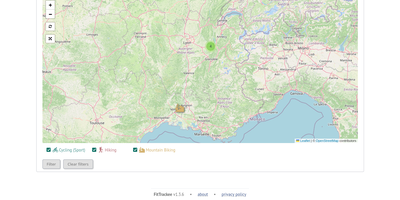
Cyclists, runners, hikers, and kayakers can log every GPS route in FitTrackee, a workout tracker where each workout stays private until shared. Upload a GPX, FIT, KML, KMZ, or TCX file and the workout appears with a map and charts. Zip archives and manual entry work too. Charts plot speed or pace, elevation, heart rate, cadence, and power on one graph or several. Each workout holds 20 photos at most, and photos with GPS coordinates appear on the map. Twenty-seven sports are available, including cycling, running, kayaking, and swimrun. Shoes, bikes, and boards each tally distance, duration, and workouts, and sports can have default equipment. The dashboard shows a monthly chart and a calendar of workouts and records, and statistics group totals by day, week, month, year, or sport. Filters narrow the workouts list by date, sport, equipment, location and radius, distance, or speed, and results can be mapped. A global map plots workouts, filtered by date and sport. Workout data, charts, map, and photos each get a visibility setting: private, followers only, or public. Follow requests need approval by default, and unwanted users can be blocked. Comments accept limited Markdown, and the five latest public workouts publish as an Atom or RSS feed. Data export bundles an account's workouts and uploaded files. Running on a dedicated VPS on RepoCloud with guaranteed CPU, RAM, and SSD, full root SSH access, and a browser serial console. AGPL-3.0 licensed.
Bitcart
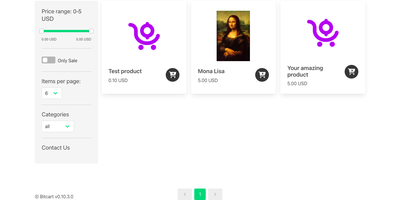
No middleman, no custody, no private keys to hand over: Bitcart is a self-hosted crypto payment processor that settles every payment straight into your own wallet. Connect wallets with just a public key or address; receiving payments never needs a private key. Accept Bitcoin, Litecoin, Bitcoin Cash, Ethereum, Monero, Tron, stablecoin tokens, and Lightning payments, with each store mixing as many wallets as it needs for multi-currency checkout. Issue invoices with custom expiration, promo codes, and per-invoice payment methods, then get status updates through webhooks, Telegram, or email. A ready-made storefront with categories, price filters, discounts, and a cart sells products or digital downloads, while a keypad point-of-sale view with amount, discount, and tip modes covers in-person sales. Approve payouts, issue refunds, export invoices as CSV or JSON, and add extensions from the plugin marketplace in one click. Bring crypto checkout to WooCommerce, Shopify, WHMCS, FOSSBilling, or Odoo, or script your own flow through the REST API. Running on a dedicated VPS on RepoCloud with guaranteed CPU, RAM, and SSD, full root SSH access, and a browser serial console. MIT licensed.

OpenVidu
For online classes, telehealth visits, and support calls, OpenVidu Meet is a video meeting app that anyone with a link can join from a browser, with no account or download. A room needs only a name, and an optional wizard adds limits on participants (up to 30) and meeting length (up to a day), plus microphone and camera defaults. A shared Moderator or Speaker link admits anonymous guests, a personal link identifies each invited guest, and registered users sign in with their accounts. Developers can embed a room with an iframe or web component, and webhooks report meeting events to as many endpoints as needed. A smart mosaic favors recent speakers and counts the participants it hides, and a status rail shows the recording light, an encryption badge, and the time left. Moderators mute one participant's microphone, camera, or screen share, switch them off for everyone, remove people, and promote others. Virtual backgrounds blur the room or swap in an image, before joining or mid-call. Recordings start by hand or when the first participant, the second participant, or a moderator joins, in grid, speaker, or single-speaker layout. Permitted members can play, download, delete, or share saved recordings by link. End-to-end encryption protects audio, video, chat, and names behind a shared passphrase, though encrypted rooms cannot be recorded. Running on a dedicated VPS on RepoCloud with guaranteed CPU, RAM, and SSD, full root SSH access, and a browser serial console. Apache-2.0 licensed.
YunoHost
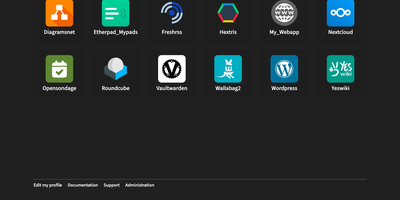
Host your own email, files, calendars, and passwords on a single server with YunoHost, a server operating system that puts every app behind one web admin and one shared login. Browse a catalog of more than 500 apps, such as Nextcloud, WordPress, and Vaultwarden, filter by quality level, and install in a few clicks, or paste a Git URL for a custom app. Each person signs in once at a portal that shows a tile for every app they may open, and apps with single sign-on skip their own login screen. Groups and per-app permissions control access, including public access for visitors, and the Admins group adds web admin, SSH, and sudo. A full mail stack handles incoming and outgoing email per domain with DKIM signing, and Let's Encrypt certificates renew automatically. The domain screen suggests the DNS records you need and can push them to a supported registrar's API, while free .nohost.me, .noho.st, and .ynh.fr subdomains configure themselves. Backups bundle system settings, mail data, and chosen apps into downloadable archives that can be restored selectively from the admin or the command line. Twice a day a built-in diagnosis checks DNS records, mail setup, and system resources, then emails the admins if anything needs attention, with a firewall editor and fail2ban protection alongside. Running on a dedicated VPS on RepoCloud with guaranteed CPU, RAM, and SSD, full root SSH access, and a browser serial console. AGPL-3.0 licensed.
ZaneOps
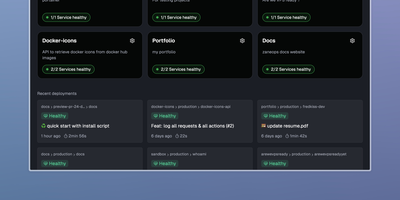
Shipping a Git repository to a live HTTPS URL takes one dashboard and one server with ZaneOps, an open-source alternative to Heroku, Railway, and Render. Linked GitHub or GitLab repositories build with a Dockerfile, Nixpacks, Railpack, or a static directory builder. Deploys start by hand, on git push, or from a CI webhook. Blue/green releases keep the previous version serving traffic while the new one starts. Each pull request or merge request can open its own preview environment, and the API can create one on demand. Configuration edits queue up as changes that you review before a new version deploys. A pasted docker-compose.yml or a ready-made template (Postgres, Redis, WordPress) deploys a whole stack with blue/green rollouts. Every domain gets a free SSL certificate that renews itself. Wildcard hosts, permanent or temporary redirects, and several services under one domain all work. Runtime logs, request logs, metrics, and health checks gather in the dashboard. Services get CPU and memory limits and volumes, and environment variables import or export as .env files. Viewer, Member, Admin, and Owner roles decide who can see and change what; the free tier allows one workspace and three users. A web terminal opens a shell inside any running deployment, and a second one reaches the server itself over SSH. Running on a dedicated VPS on RepoCloud with guaranteed CPU, RAM, and SSD, full root SSH access, and a browser serial console. MIT licensed.
AirTrail
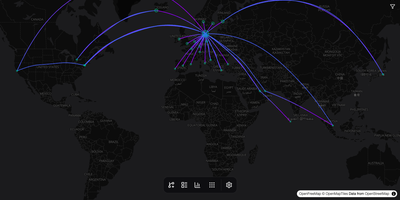
Commercial flight logbooks frequently lock historical travel records behind annual subscriptions or shut down unexpectedly, whereas AirTrail preserves your complete aviation history on an interactive world map under your own control. Enter a flight number to look up routes automatically or log departures manually with seat numbers, cabin classes, aircraft registrations, timestamps, notes, and custom metadata fields. Switching from another tracker takes seconds: the built-in importer ingests CSV, ICS, and JSON exports from MyFlightradar24, Flighty, App in the Air, OpenFlights, TripIt, JetLog, byAir, and JetLovers. The vector map renders geodesic flight paths, recorded GPS tracks, and airport runway details across customizable basemaps. Detailed statistics dashboards break down total distance flown, time in the air, top airlines, aircraft models, and visited countries. Families and travel groups can share a single instance with role-based permissions, OAuth single sign-on, and read-only public links, while developers automate entries through the versioned REST API or Model Context Protocol server. Running on a dedicated VPS on RepoCloud with guaranteed CPU, RAM, and SSD, full root SSH access, and a browser serial console. GPL-3.0 licensed.

ChronoFrame
Publish high-resolution photography without social media compression using ChronoFrame, a self-hosted portfolio and gallery platform built around EXIF camera telemetry, live motion media, and interactive map exploration. Drop JPEG, PNG, WebP, TIFF, or HEIC images alongside paired MOV clips into the browser uploader, and the background task queue automatically extracts camera bodies, lenses, focal lengths, shutter speeds, and RGB histograms while pairing Apple Live Photos and Motion Photos for hover playback. Visitors browse your work through a responsive masonry grid with instant ThumbHash placeholders, inspect fine details inside a hardware-accelerated WebGL tiled viewer, or explore shooting locations on an interactive MapLibre or Mapbox globe powered by reverse geocoding. Curators can group shots into reordered albums, protect private collections with passwords, edit ratings and metadata in bulk, and generate custom share preview cards. Storage scales across local disks, S3-compatible buckets, and OpenList backends with configurable CDN delivery. Running on a dedicated VPS on RepoCloud with guaranteed CPU, RAM, and SSD, full root SSH access, and a browser serial console. MIT licensed.
Manyfold
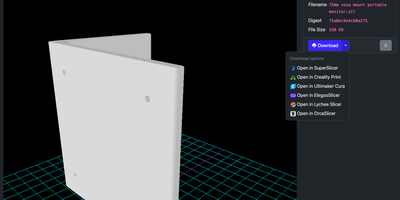
3D printing enthusiasts who accumulate thousands of downloaded STL, 3MF, STEP, and OBJ archives across disorganized folders can index, preview, and catalog their entire library with Manyfold, a self-hosted digital asset manager purpose-built for additive manufacturing. Point it at an existing local directory or an S3-compatible bucket and it automatically scans nested folders, groups multi-part meshes into unified model entries, and renders interactive 3D previews right in your browser. You can organize assets by creator, collection, tag, and scale, distinguish between pre-supported and unsupported resin files, and import rich metadata directly from Thingiverse, Printables, Cults3D, and MyMiniFactory. Built-in troubleshooting tools flag duplicate meshes, manifold geometry errors, and inefficient file formats, while customizable file-naming templates reorganize messy directory trees on disk with a single click. Ready to print? Open models directly in OrcaSlicer, PrusaSlicer, or UltiMaker Cura, or transmit sliced G-code straight to OctoPrint and Moonraker printers. Multi-user access control and native ActivityPub federation let you share public collections and follow remote creators across the Fediverse. Running on a dedicated VPS on RepoCloud with guaranteed CPU, RAM, and SSD, full root SSH access, and a browser serial console. AGPL-3.0 licensed.
Open Archiver
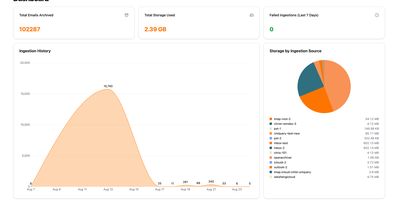
When a regulatory audit, legal discovery request, or employee offboarding requires years of verifiable email records, Open Archiver provides a tamper-evident, self-hosted vault for every message across your organization. Connect Google Workspace domains, Microsoft 365 tenants, personal Outlook OAuth accounts, or standard IMAP servers for continuous background synchronization, or upload historical PST, MBOX, and zipped EML archives in bulk. Every ingested message is deduplicated, compressed, and stored in standard EML format on local disks or S3-compatible object storage while SHA-256 cryptographic hashes verify file authenticity on demand through built-in Integrity Reports. Instant full-text search scans both message bodies and attached PDF or DOCX documents, letting compliance teams reconstruct complete conversation threads and enforce automated retention policies. Granular access control backed by an AWS IAM style policy engine, TOTP two-factor authentication, and an immutable audit trail keeps sensitive correspondence locked down. Running on a dedicated VPS on RepoCloud with guaranteed CPU, RAM, and SSD, full root SSH access, and a browser serial console. AGPL-3.0 licensed.
Donetick
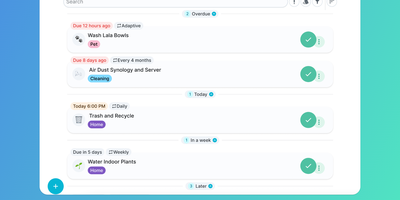
Recurring household chores and shared team checklists stay on schedule when Donetick coordinates assignments, reminders, and completion tracking from one self-hosted hub. Type a phrase like "change water filter every 6 months" and the natural-language parser extracts the due date and cadence automatically. Adaptive scheduling even adjusts future intervals from your actual completion history. Rotation rules distribute tasks fairly across family members or roommates via round-robin, random, or least-completed logic. Nested subtasks reset themselves each cycle. Finished chores earn points in the built-in gamification engine that members redeem in an admin-approved reward store. Stateful "Things" track numerical, boolean, or text metrics to trigger tasks automatically when values change. Tap physical NFC tags to check off chores on the spot, or mount a dedicated kiosk dashboard on a wall tablet for one-tap account switching. Real-time updates sync across devices alongside iCal calendar feeds, Home Assistant cards, OIDC single sign-on, and Pushover or Telegram notifications. Running on a dedicated VPS on RepoCloud with guaranteed CPU, RAM, and SSD, full root SSH access, and a browser serial console. AGPL-3.0 licensed.
Spoolman
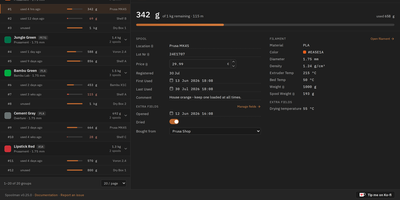
Running out of filament mid-print ruins multi-hour 3D printing jobs, and Spoolman solves this by tracking every gram of plastic across your entire workshop in a centralized, self-hosted inventory database. Connected directly to Klipper, Moonraker, Mainsail, Fluidd, OctoPrint, and OctoEverywhere, the service deducts filament weight automatically over live WebSockets as your extruders run. You can import manufacturer specifications from the community SpoolmanDB catalog, filter your library by color similarity or material type, and organize spools on a drag-and-drop board grouped by storage location or custom fields. A built-in label designer generates printable QR code sheets containing spool metadata, while NFC and RFID tag scanning lets you tap a physical roll against an ESPHome reader or Android phone to pull up its record immediately. Multi-printer workshops can monitor concurrent consumption from several machines simultaneously, expose inventory metrics to Prometheus and Home Assistant, and query stock levels through a Model Context Protocol (MCP) server. Running on a dedicated VPS on RepoCloud with guaranteed CPU, RAM, and SSD, full root SSH access, and a browser serial console. MIT licensed.
Viseron
Homeowners and facility operators deploy Viseron to turn standard RTSP and ONVIF security cameras into a self-hosted network video recorder with local AI object detection, face recognition, and license plate reading. Instead of uploading private camera feeds to subscription cloud services, you monitor low-latency WebRTC live streams, scrub through an interactive event timeline, and review 24/7 continuous recordings directly from a responsive web dashboard. You can draw custom detection zones and privacy masks in the visual camera tuning editor to filter out street traffic, while lookback buffering captures footage several seconds before motion or an object triggers an event. Pluggable computer vision pipelines connect your cameras to YOLOv7 Darknet, Google Coral EdgeTPU, CompreFace, dlib, and CodeProject.AI to classify people, vehicles, known faces, and license plates in real time. Tiered storage policies automatically migrate older video segments from fast NVMe drives to high-capacity archival disks based on age and quota rules. Bidirectional MQTT integration and Home Assistant auto-discovery let you toggle cameras on demand, ingest external motion sensors, and dispatch instant snapshot alerts to Telegram or Discord. Running on a dedicated VPS on RepoCloud with guaranteed CPU, RAM, and SSD, full root SSH access, and a browser serial console. MIT licensed.
Backrest
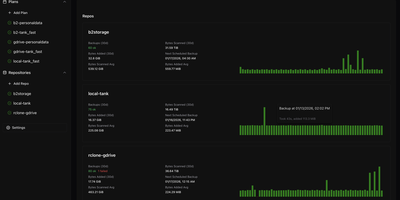
Backrest turns the command-line restic backup engine into a visual, browser-managed disaster recovery platform that schedules encrypted snapshots, orchestrates repository maintenance, and restores individual files from a unified web dashboard. Import existing restic repositories or initialize new encrypted backup stores across Amazon S3, Backblaze B2, Google Cloud Storage, Azure Blob Storage, SFTP servers, local directories, and any storage provider supported by rclone. Define granular backup plans with directory inclusion lists, glob exclusion rules, and flexible schedules driven by cron expressions, hourly intervals, or last-run-time clocks that prevent missed backups after server downtime. Automated retention policies handle snapshot forgetting, repository pruning, and cryptographic integrity checks in the background without manual intervention. When a file is accidentally deleted or corrupted, open the interactive snapshot tree browser to inspect historical directory structures and download or restore specific files directly to disk. Pre-backup and post-backup shell command hooks let administrators dump databases or pause containers before snapshots start, while configurable alerts dispatch status reports to Discord, Slack, Gotify, Healthchecks, and Shoutrrr endpoints whenever an operation succeeds or fails. Running on a dedicated VPS on RepoCloud with guaranteed CPU, RAM, and SSD, full root SSH access, and a browser serial console. GPL-3.0 licensed.
Warpgate
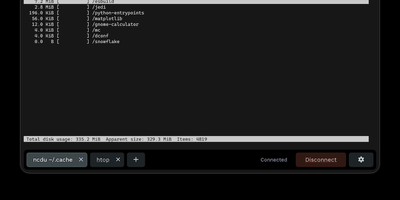
Warpgate is a clientless bastion host and privileged access management gateway that lets engineering teams secure, assign, and audit access to internal SSH servers, databases, Kubernetes clusters, web applications, and remote desktops from a single portal without installing VPN clients. Connect directly from standard tools like OpenSSH, VS Code Remote, psql, mysql, kubectl, or native RDP clients using formatted credentials, or launch browser-based SSH terminals, RDP desktops, and VNC sessions straight from the web interface. Administrators map users and roles to specific internal targets with granular 1:1 permissions, enforcing multi-factor authentication via TOTP and Single Sign-On through OpenID Connect providers like Google Workspace, Microsoft Entra ID, and Okta with automatic group-to-role provisioning. Every interactive terminal command, database query, HTTP request, and remote desktop session is captured in real time so security auditors can watch active connections live or replay historical recordings on demand from the web dashboard. Built-in brute-force defense automatically blocks suspicious IP addresses and locks compromised accounts, while temporary access tickets, just-in-time session approvals, encrypted credential storage, and S3-compatible recording archival support enterprise compliance workflows across multi-node clusters. Running on a dedicated VPS on RepoCloud with guaranteed CPU, RAM, and SSD, full root SSH access, and a browser serial console. Apache-2.0 licensed.
NutriTrace
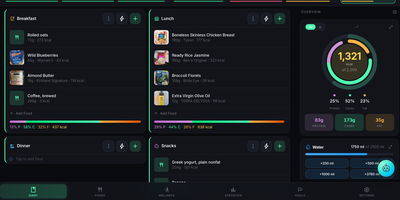
Stop handing your daily food diary, body weight history, and biometric sleep data to ad-funded fitness clouds: NutriTrace brings complete calorie, macro, micronutrient, and wellness tracking to your own server with an offline-capable web PWA and native Android app. Log meals across customizable slots using live Open Food Facts and USDA FoodData Central lookups, barcode scanning, AI nutrition label OCR, or direct recipe imports from Mealie and CookTrace. Calorie and macro targets adjust automatically through three goal engines, including an inspectable Adaptive TDEE algorithm that regresses 35 days of intake against scale weight at 7,700 kcal per kilogram. Connect Fitbit via Google Health, Garmin, Withings, and Android Health Connect to pull steps, heart rate variability, sleep stages, and body composition into unified Sleep, Readiness, and Resilience scores. An integrated Trace AI assistant and Smart Log let you log meals by voice, text, or meal photo, while the opt-in Model Context Protocol server exposes 20 read, write, and management tools to Claude Desktop, Cursor, and Codex. Multi-user households get OpenID Connect SSO and one-step migration from MyFitnessPal, Cronometer, Lose It, and Waistline. Running on a dedicated VPS on RepoCloud with guaranteed CPU, RAM, and SSD, full root SSH access, and a browser serial console. AGPL-3.0 licensed.
DBackup
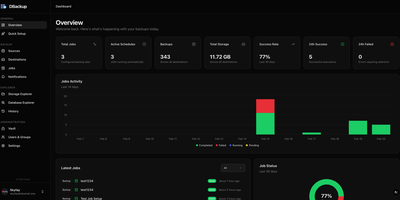
When a bad migration or disk failure strikes at 3 AM, DBackup guarantees that your PostgreSQL, MySQL, MariaDB, MongoDB, SQL Server, Redis, Valkey, SQLite, and Firebird databases, along with the application directories that belong to them, are encrypted, verified, and ready to restore in a few clicks. Connect directly over TCP or tunnel through SSH with zero agents installed on your target servers. Bundle database dumps and Docker volumes or remote SFTP directories into a single atomic job so your schema and uploaded assets always share the exact same recovery point. Every archive is compressed with Brotli or GZIP, sealed with AES-256-GCM encryption before leaving the host, and pushed simultaneously to up to 14 storage backends including Amazon S3, Cloudflare R2, Hetzner, Google Drive, Dropbox, OneDrive, SMB, and WebDAV. Reusable Grandfather-Father-Son retention policies prune daily, weekly, monthly, and yearly snapshots automatically. Need to inspect live tables or recover a single file? Use the built-in Database Explorer, remap a dump into a staging schema, or extract individual files over HTTP byte ranges without downloading the entire archive. Even if your backup server goes offline, the downloadable Recovery Kit decrypts standard SQL dumps and plain TAR archives using a standalone script. Running on a dedicated VPS on RepoCloud with guaranteed CPU, RAM, and SSD, full root SSH access, and a browser serial console. GPL-3.0 licensed.
TimeTracker
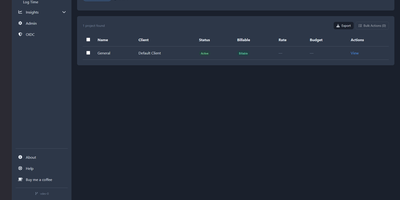
Why export timesheets from one tool, manage Kanban tasks in a second, and copy billable hours into a third just to send a client invoice when TimeTracker handles the entire agency workflow in one self-hosted platform? Start a persistent server-side timer from any browser or log hours manually using saved templates, bulk entry forms, and automatic idle detection. Project managers organize deliverables across drag-and-drop Kanban boards, Gantt timelines, and threaded task comments while monitoring real-time project budgets and cost burn rates. A built-in CRM tracks client contacts, lead scores, and sales pipeline stages before work even begins. When billing day arrives, you convert unbilled hours, reimbursable receipts, mileage logs, and per diem allowances directly into branded multi-currency invoices without double-billing a single minute. Finance teams can customize PDF invoice layouts, automate recurring billing schedules, and transmit EN 16931 compliant electronic invoices via Peppol or embedded ZUGFeRD/Factur-X XML. Interactive analytics dashboards and scheduled CSV or Excel exports give every stakeholder complete visibility into billable utilization. Running on a dedicated VPS on RepoCloud with guaranteed CPU, RAM, and SSD, full root SSH access, and a browser serial console. GPL-3.0 licensed.
multi-scrobbler
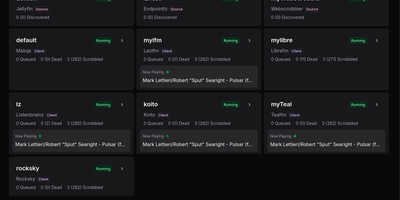
Listening to music across Spotify on your commute, Jellyfin at your desk, and Sonos in the living room usually leaves your play history fragmented across walled gardens, which is why multi-scrobbler unifies over 30 music sources and routes every track to your chosen scrobble backends automatically. Instead of relying on brittle browser plugins per device, you configure active polling or ingress webhooks once for sources including Plex, Navidrome, Subsonic, Apple Music, Deezer, YouTube Music, MPD, VLC, Chromecast, and Music Assistant. Every detected play passes through an intelligent pipeline that verifies listen duration thresholds, cleans messy track titles or featured artist tags using regex rules, and enriches missing metadata against the MusicBrainz, Spotify, or Rocksky catalogs. Before forwarding a play to Last.fm, ListenBrainz, Libre.fm, Maloja, Koito, teal.fm, Discord Now Playing, or Tuneshine, the engine checks temporal and title similarity scores to block duplicate scrobbles. When a downstream service goes offline, failed scrobbles enter a persistent retry queue so you never lose listening history, while Gotify, Ntfy, and Apprise webhooks alert you to source issues. Running on a dedicated VPS on RepoCloud with guaranteed CPU, RAM, and SSD, full root SSH access, and a browser serial console. MIT licensed.