Mitra
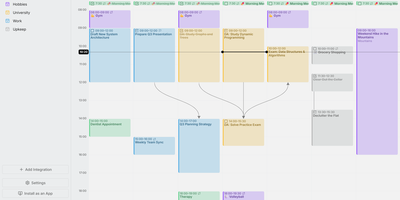
Mitra is a self-hosted calendar that puts your tasks on the same timeline as your events, so planning a week finally happens in one place instead of two. Drag across empty grid space to make an entry, drag it to move it, and stretch its edges to resize it. Tasks without a date sit in the Planning tab with a due date and an estimate until you drag them into the week. Subtasks and dependencies draw as lines between entries. Availability shading lays your working hours under the grid so double-booking becomes obvious before it happens. Keep calendars inside Mitra with no account behind them, or connect the ones you already use: CalDAV, Google Calendar, Apple Calendar, Notion, Todoist, and Tempo all sync both ways, and published feeds arrive as read-only subscriptions. Lists sort, filter, and change many entries at once. Files attach to entries, guests reply, reminders land as push notifications, and a command palette drives everything from the keyboard. Claude, Cursor, and other AI tools can read and plan your calendars over MCP. Eight languages, right-to-left layouts, light and dark themes, phone install, and OIDC sign-in for several people round it out. Running on a dedicated VPS on RepoCloud with guaranteed CPU, RAM, and SSD, full root SSH access, and a browser serial console. AGPL-3.0 licensed.
SmarterRouter
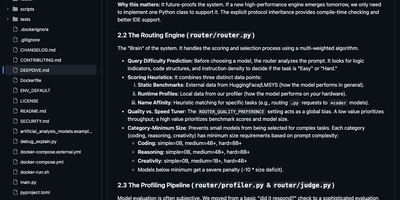
SmarterRouter stops you from playing model roulette with your local AI setup, choosing the right model for every prompt so you never have to. Point your applications at one familiar endpoint and send the request; the router studies the prompt, weighs category and complexity against benchmark results gathered on your actual hardware, and hands the job to the model most likely to answer well. It discovers the models your backend already serves, profiles each one with standard tests the first time it meets them, and keeps learning from the feedback your usage generates. When the first choice fails, a backup model takes over without your application noticing. Repeated questions come straight back from cache instead of burning another generation. Your graphics memory is watched continuously across one card or several, and models are unloaded before an ambitious request runs the machine dry. Cloud providers can join the same routing pool when a question deserves them, while everything local stays local and free. Running on a dedicated VPS on RepoCloud with guaranteed CPU, RAM, and SSD, full root SSH access, and a browser serial console. MIT licensed.
Habitat
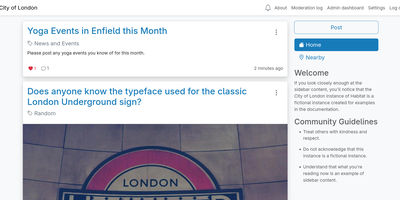
Habitat is a social platform for one place: your town, your neighborhood, your valley, run as your own instance where neighbors talk about what is happening around them. The home feed shows every post newest first, while the nearby feed reorders the same posts by distance from you, so the lost dog two streets away outranks news from across town. Posts carry a title, details, photos, and a category chosen from the list your administrator defines, and categories that need a place get a map marker pinned inside the area your Habitat covers. Comment on posts, tap the heart, hide categories you never want in your feed, and report what breaks the rules. Moderators work through user and post moderation queues, and every moderation action lands in a public log kept for thirty days, so decisions stay accountable to the community they affect. Administrators set the Habitat's location on a map, manage categories and whether each one requires a location, control registration, and pick defaults like kilometers or miles and light or dark themes. Members choose their own units and theme, change their details, or delete their account and everything it posted. There are no ads and no data harvesting, an RSS feed carries the ten newest posts, and notifications flag new comments on your posts. Running on a dedicated VPS on RepoCloud with guaranteed CPU, RAM, and SSD, full root SSH access, and a browser serial console. AGPL-3.0 licensed.
Vanilla Cookbook
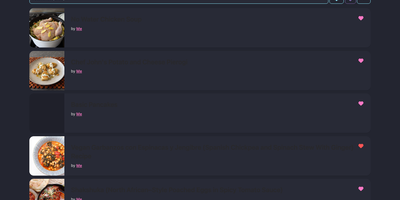
Every family recipe, bookmarked food blog post, and meal-prep formula stays organized inside Vanilla Cookbook, a self-hosted culinary library that converts volumetric measurements into precise gram weights and scales servings on the fly. Paste a URL or click the browser bookmarklet to scrape recipes from hundreds of cooking websites. Plain-text ingredient strings split automatically into structured quantities, units, preparation notes, and optional or to-serve badges. Home bakers switch effortlessly between US cups, imperial ounces, and metric grams across thousands of ingredient density profiles. Inline oven temperatures, fractions, and numeric ranges adjust automatically as serving counts change. Nutritional text parses into a structured per-serving breakdown, while integrated shopping lists, cooking logs, and equipment lists keep weekly grocery planning synchronized across desktop browsers and Progressive Web App mobile devices. Connecting an optional OpenAI, Anthropic, Google Gemini, Ollama, or LiteLLM endpoint unlocks AI fallback scraping for pages lacking Schema.org markup, automatic recipe translation, verbose direction summarization, photo-to-recipe extraction, and vector-based semantic search. Multi-user accounts, OAuth authentication, public recipe sharing links, and bulk import or export tools give households full control over their cookbook data. Running on a dedicated VPS on RepoCloud with guaranteed CPU, RAM, and SSD, full root SSH access, and a browser serial console. GPL-3.0 licensed.
NetMap
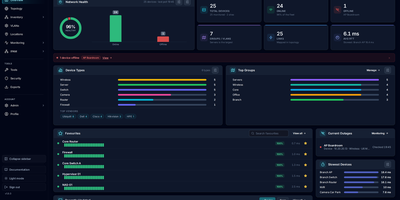
NetMap answers the four questions every homelab owner asks in four different tools: what is on my network, what address did it get, is it still up, and why is the firewall shouting about it. Devices you add appear automatically on a visual canvas where you can drag them into place, draw the links between them, and group them into VLANs or separate sites, and the layout is still there when you come back. Behind the map, every device is watched continuously: ping times graphed over history, service checks on the ports you care about, a heartbeat strip that betrays intermittent dropouts, and an uptime percentage that settles arguments. Address management stops being a spreadsheet: define subnets, import the leases your router already handed out, see used and free addresses as a grid, and get warned before a duplicate assignment causes a mysterious outage. Firewall logs stream in live and each entry links to the device it concerns, ready to search by address, port, or protocol. When something new appears, a network scan discovers hosts with their names, hardware addresses, and open ports for review before they join the inventory. Running on a dedicated VPS on RepoCloud with guaranteed CPU, RAM, and SSD, full root SSH access, and a browser serial console. GPL-3.0 licensed.
Chattermate
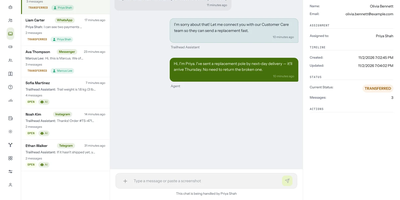
ChatterMate gives your website an AI support agent that answers customer questions from your own documentation around the clock, and hands the conversation to a human the moment it gets complicated. Feed it PDFs, help pages and URLs, and it chunks and indexes them into a knowledge base that answers with citations instead of guesses. Pick your model from OpenAI, Anthropic Claude, Google Gemini, Mistral, xAI Grok, DeepSeek or Groq with your own key, or point it at a self-hosted Ollama or vLLM endpoint. Every conversation lands in one shared inbox across nine channels, including the website widget, WhatsApp, Instagram, Messenger, Slack and email, where your team can search, filter and reassign. A drag-and-drop workflow builder designs branching flows from AI response, condition and human transfer nodes, so routine questions resolve themselves and hard ones arrive with context. Chats can raise tickets that the AI triages and investigates, writing an auditable root-cause analysis, or open a Jira ticket without leaving the conversation. The native Shopify integration answers order, shipping and product questions from live store data, and customers can attach images, PDFs and documents directly in chat. Theme the widget to your brand, require token authentication for private chats, and connect MCP tools so the agent can look up orders, issue refunds and call your APIs mid-conversation. Running on a dedicated VPS on RepoCloud with guaranteed CPU, RAM, and SSD, full root SSH access, and a browser serial console. Apache-2.0 licensed.
Blockbusterr
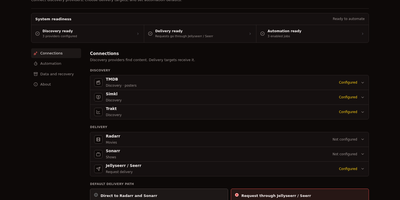
Your Radarr and Sonarr libraries only grow when someone remembers to add titles, and Blockbusterr removes that chore by discovering movies and shows on a schedule and delivering the ones that pass your rules. Jobs pull trending, popular, anticipated, box-office, and list feeds from TMDB, Simkl, Trakt, and MDBList, with experimental Letterboxd lists available when enabled. Every job applies one reusable rule set: content-rating limits, blocked and allowed titles, genre, year, runtime, language, and vote boundaries decide what qualifies before anything reaches your stack. Weighted scores blend IMDb, Trakt, TMDB, and Metacritic ratings, and Smart Popular adjusts its threshold against the feed it reads. Preview mode shows accepted, rejected, and skipped titles with the reason for each decision, so a new job can be tuned safely before it runs unattended. Delivery sends movies straight to Radarr and shows to Sonarr, or creates Jellyseerr and Seerr requests when you prefer an approval queue. Per-job caps and a rolling global budget keep a busy feed from flooding disk space, and an instance-wide dry run tests the whole setup without touching your library. Activity entries and job-run history record scores, decisions, and outcomes with posters. Running on a dedicated VPS on RepoCloud with guaranteed CPU, RAM, and SSD, full root SSH access, and a browser serial console. MIT licensed.
Nanote
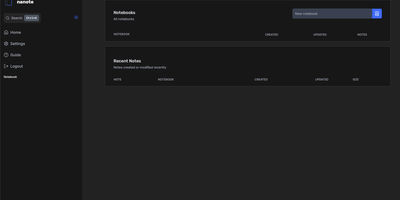
100% portability is Nanote's one non-negotiable principle as a self-hosted note-taking app. There is no database - notebooks are plain folders and notes are plain Markdown files on your filesystem, so the same notes remain fully manageable from a terminal, Notepad, or any other editor, and walking away from Nanote costs nothing because your data was never in a proprietary format to begin with. Built with Nuxt and TypeScript around the Milkdown editor, it layers modern conveniences on that plain-file foundation: fast content search across all notes using OS-optimized tooling (ugrep), native Markdown rendering, image and file attachments, and a mobile-friendly layout for reading and editing on a phone. Clever remark directives make plain text interactive - typing ::file inserts an inline upload picker, while ::today, ::now, and ::tomorrow expand to live dates and times. A fully typed REST API with validation covers automation, and access is protected by a configurable secret key. Deployment is one container with three env vars: paths for notes, uploads, and config, all bind-mountable so your Markdown lives wherever you want it - including inside an existing sync setup. AGPL-licensed and actively daily-driven by its author.
Sealskin
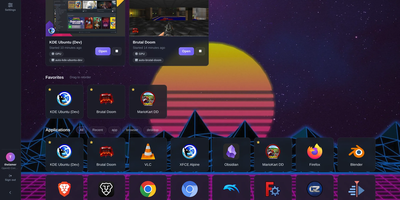
SealSkin is a self-hosted browser isolation platform that runs desktop applications in isolated containers on your server and streams them to any browser or phone, so links, files and downloads open remotely and nothing from the web ever executes on the device in front of you. Right-click a link, send a download, or drop a file from your local browser through the extension, and it opens in a fresh container on the server; close it and nothing is left behind, or keep a persistent home directory for work you return to. The catalog holds more than a hundred applications: browsers, office suites, IDEs, media editors, emulators and 3D tools from LinuxServer.io images, plus any Selkies-compatible image you add, with NVIDIA and DRI3 GPU acceleration for demanding workloads. Files stay on the server behind a file manager with chunked uploads, intercepted downloads, and password-protected public share links. Launch any app into a collaboration room with chat, voice and video, gamepad slots, and hand-over of mouse and keyboard control. Administrators brand the web app, manage users, groups, application keys, VPN profiles, and audit logs, and can route a session out through a WireGuard or OpenVPN exit at launch. Servers cluster with shared users and applications and no master node, and one manifest runs the whole thing on Kubernetes. Running on a dedicated VPS on RepoCloud with guaranteed CPU, RAM, and SSD, full root SSH access, and a browser serial console. MPL-2.0 licensed.
Velocity
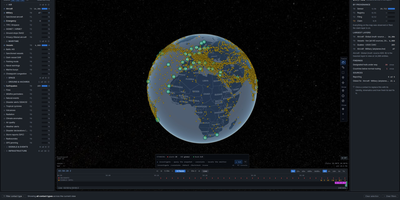
Velocity watches aircraft, ships, and satellites move across a live map and records everything it sees, so you can rewind the world to any moment you captured instead of begging commercial trackers for history. Thousands of contacts move across the globe in real time with no account and no API keys, and clicking any aircraft or vessel opens its dossier: identity, kinematics, route, track history, and a note on which feeds reported the position and how fresh it is. A scrubber along the bottom replays the last hour or the last week at up to 3600x speed, turning yesterday's near-miss or dark vessel into something you can actually inspect. Layers add GPS jamming, ships with AIS switched off, flight restrictions, earthquakes, military bases, ports, and maritime chokepoints such as Hormuz and Malacca with live transit counts. An autonomous watch officer ranks spoofing, jamming, and dark-vessel alerts into an inbox and writes cited incident briefs, while anything worth keeping drops into an evidence locker with hash-verified custody records exportable as reports. Running on a dedicated VPS on RepoCloud with guaranteed CPU, RAM, and SSD, full root SSH access, and a browser serial console. AGPL-3.0 licensed.
MarimoHub
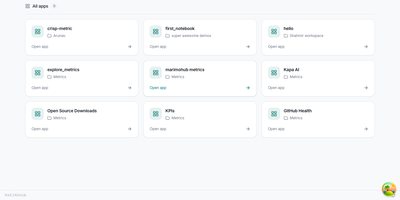
Running one marimo notebook is easy; running a team's worth of them, with storage, sign-on, versions, and somewhere for the results to live, is the job MarimoHub takes on. Notebooks gather in a searchable gallery organized by project, where every edit session leaves a version you can compare side by side, inspect, and restore when an experiment takes a wrong turn. Projects connect their data sources once through a versioned integration catalog, with sensitive values encrypted or pulled from external secret stores, and every new session receives the configuration automatically. When a notebook is ready for people who should never see its code, publish it as an interactive app: viewers get the controls and outputs while rollouts shift versions underneath them. Scheduled jobs rerun notebooks on a clock, GitHub sync keeps repository-backed notebooks current, and an assistant can work inside the notebook context with managed AI keys that never reach the sandbox. Underneath, you pick the object storage, the compute, and the identity provider, and back up one bucket to back up the whole hub. Running on a dedicated VPS on RepoCloud with guaranteed CPU, RAM, and SSD, full root SSH access, and a browser serial console. Apache 2.0 licensed.
KamiYomu
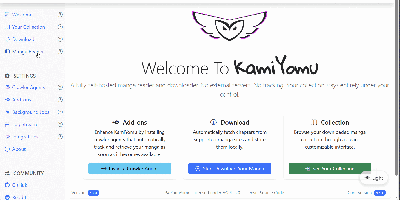
Manga readers use KamiYomu to build a private, self-hosted library: it fetches chapters from the websites they already follow, archives them locally, and serves everything back through a clean web reader on any device. The discovery flow runs on Crawler Agents, small plugins that teach KamiYomu how a particular source site lists series, chapters, and pages, so searching and fetching metadata happens inside the same interface as reading. Downloads land in a structured local archive, and reading picks up where you left off with history, filters for your library, and weekly views that surface new chapters and fresh releases. When a series is complete, export it as CBZ, PDF, or ZIP and take the files anywhere, no account or cloud library involved. Your e-reader and phone apps join through the built-in OPDS catalog, the same standard used by Moon+ Reader and KyBook, while a Swagger-documented API exposes the collection to your own scripts. Scheduled jobs keep watched series current in the background, checking sources and pulling new chapters without you babysitting tabs. Running on a dedicated VPS on RepoCloud with guaranteed CPU, RAM, and SSD, full root SSH access, and a browser serial console. AGPL-3.0 licensed.
AutoXpose
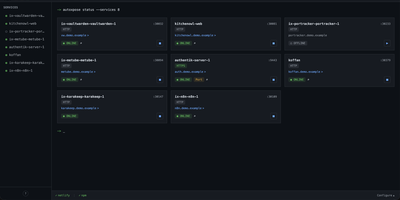
Tag a Docker container with two labels, and AutoXpose turns it into a published service with a DNS record, a reverse proxy route, and HTTPS, without you opening a single provider dashboard. From the web dashboard you connect one of six DNS providers, Cloudflare, Netlify, DigitalOcean, Porkbun, Aliyun, or Tencent DNSPod, and point it at the Nginx Proxy Manager or Caddy instance you already run. It watches your containers continuously after that: a new label creates the record, propagation is verified before the service shows as live, and removing the container removes its public entries too. Auto-expose mode publishes containers the moment they appear, while manual mode stages them in the dashboard for approval first. Color-coded service tags sort what you run into web, database, and media groups at a glance, and dashboard warnings flag misconfigurations before they become broken links. Nginx Proxy Manager access lists attach by label, so an admin panel stays reachable only from the networks you trust. When containers vanish, orphaned cleanup hunts down the stale DNS records and proxy hosts they left behind. Settings and state live inside the same single container, so the publishing pipeline for a homelab or a small fleet stays one compose service you can back up as a unit. Running on a dedicated VPS on RepoCloud with guaranteed CPU, RAM, and SSD, full root SSH access, and a browser serial console. MIT licensed.
EverShelf
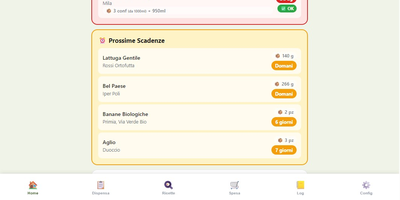
That yogurt hiding behind the ketchup expired three weeks ago, and the flour you bought "just in case" has been sitting in the pantry since last winter. EverShelf replaces mental guesswork with a structured inventory system that tracks every item across pantry, fridge, freezer, and custom locations with precise quantities, expiry dates, and consumption patterns. Scan barcodes with your phone camera to add products instantly, or let the Gemini AI identify items from a photo and estimate shelf life based on storage location. The dashboard surfaces expired items and upcoming expirations with color-coded urgency badges, while anomaly detection flags suspicious quantities and consumption predictions that deviate from your history. Opened products get reduced shelf-life calculations; vacuum-sealed items get extended dates automatically. The recipe engine generates context-aware meal suggestions from your current inventory, prioritizing ingredients approaching expiry so nothing goes to waste; each recipe includes step-by-step cooking mode with text-to-speech narration and timer integration. A smart shopping list auto-populates when stock hits zero and syncs bidirectionally with the Bring! app, with AI-estimated prices per item and consumption forecasts showing when you will need to restock. For Home Assistant users, a native HACS integration provides 22 sensors, expiry calendars, bidirectional todo-list sync, and voice assistant support for adding items hands-free. A dedicated Kiosk mode optimizes the interface for wall-mounted tablets with BLE scale integration. Running on a dedicated VPS on RepoCloud with guaranteed CPU, RAM, and SSD, full root SSH access, and a browser serial console. MIT licensed.

Garlic Hub
Garlic Hub runs your digital signage network from one self-hosted console, managing the players, the media library, and the playlists behind every screen without per-device fees. Build presentations as SMIL playlists: full-screen master playlists for a single message, reusable internal playlists for shared blocks like opening hours, and multizone layouts that split one display into independent areas. The visual zone editor arranges those areas by percentage or pixels, even overlapping, while the template editor produces image content without leaving the browser. Media arrives from local uploads, external links, screencasts, cameras, or stock platforms, organized in hierarchical folders with bulk actions. Date and time conditions, recurrence, and triggers from touch, key presses, or network messages decide what plays when, and nested playlists can take over by priority. Players fetch updates by polling or receive an immediate push when reachable, and the fleet view shows status at a glance with remote publish, refresh, and screenshot actions. Roles per module, OAuth2 tokens, a REST API, and webhooks let larger operations automate publishing and guard who changes what, in six interface languages. Running on a dedicated VPS on RepoCloud with guaranteed CPU, RAM, and SSD, full root SSH access, and a browser serial console. AGPL-3.0 licensed.
DiceFrame
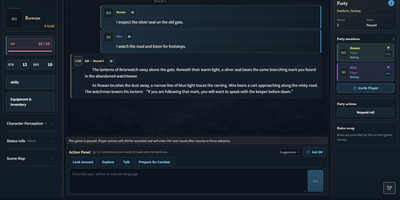
Game night keeps dying in the group chat because nobody can be in the same room, and the one willing game master is burned out by October. DiceFrame puts an AI game master on your own server instead: open the web UI, describe what your character does in plain language, and the engine adjudicates the action, rolls the dice check once, applies the result to your character sheet, and narrates what happens next. Run a solo campaign at midnight or invite friends through a link and play the same shared world from different cities, with waiting states, away players and live updates keeping the table in sync. Rules are layered rather than decorative; D&D 5e-inspired d20 play with advantage and disadvantage, CoC 7e-inspired d100 with bonus and penalty dice, custom d20 systems and freeform no-dice narrative all track hit points, gold, items, experience, death and revival properly. Build worlds, lorebooks and adventures in the content library, import scripts, PDFs and Foundry or Fantasy Grounds modules, or let AI assistance draft the world, rules and characters for you. Character cards are reusable across games, long campaigns are held together by session summaries and optional memory recall, and the story can be read aloud with text-to-speech through system voices or your own endpoints. Plugins and chat bots extend the table, all through your chosen OpenAI-compatible model endpoint. Running on a dedicated VPS on RepoCloud with guaranteed CPU, RAM, and SSD, full root SSH access, and a browser serial console. AGPL-3.0 licensed.
Pipewright
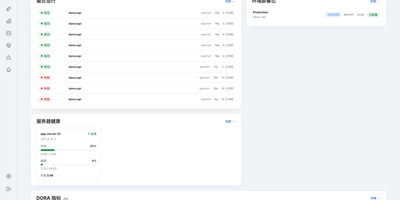
Draw a pipeline, push code, and watch it build, deploy, and roll back on its own: Pipewright is a self-hosted CI/CD platform delivered as one static binary. Pipelines are drawn on a two-level canvas of stages and jobs, then run with matrix builds, sidecar databases for tests, manual approval gates, and typed parameters validated at trigger time. The pipeline can also live in the repository as a per-branch .pipewright.yml file, and triggers cover webhooks, schedules, branch to environment mapping, and chained pipelines. Builds run isolated inside containers with cached dependencies and a content-addressed artifact store, and JUnit and Cobertura reports feed quality gates that stop bad code before deployment. Deployment is agentless over SSH: health checks gate a zero-downtime cutover, failures roll back on their own, and environments track their active version with one-click rollback and promotion toward production. Deployed services receive HTTPS domains through a managed Caddy proxy with automatic certificates, path routing, and load balancing, and each pull request gets a throwaway preview address with its own certificate. The operations side watches host CPU, memory, and disk, manages containers and networks across servers, and opens terminals in the browser. Notifications route by event to Slack, email, WeCom, DingTalk, Lark, or a webhook, approvals arrive as signed links, and the four DORA metrics are computed out of the box. Running on a dedicated VPS on RepoCloud with guaranteed CPU, RAM, and SSD, full root SSH access, and a browser serial console. MIT licensed.
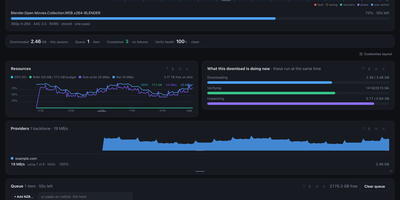
NZBfast
NZBfast is a drop-in SABnzbd and NZBGet replacement that downloads from Usenet at line rate and hands you finished jobs verified and extracted. Point Sonarr, Radarr, LunaSea, or nzb360 at it and they keep working untouched, because the APIs they already speak are the ones it answers. The dashboard charts live throughput and resource use beside a drag-to-reorder queue with per-job detail, a provider leaderboard, and data-usage history. Fetching, PAR2 verification, and unpacking overlap in a single pass, so archives open in the stream and a job needs about its own size in free disk. RAR, 7z, and zip sets, encrypted archives, password chains, and nested archives all go through that pipeline, with automatic PAR2 repair when articles arrive damaged. The poster wall turns your newsgroups into a browsable media library with cover art and metadata, and videos preview with real seeking mid-download. Switch on the optional built-in indexer and it scans your groups into a local index behind a Newznab endpoint your other tools can query. Watchlists grab new postings and chase quality upgrades, while RSS automation, Smart Folders, and a weekly scheduler keep recurring downloads hands-off. Every setting is editable in the browser, the log streams into the UI, and a crash-safe journal resumes an interrupted job article by article. Running on a dedicated VPS on RepoCloud with guaranteed CPU, RAM, and SSD, full root SSH access, and a browser serial console. GPL-3.0 licensed.