Doorman
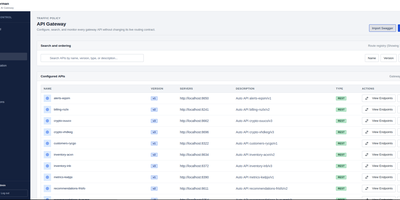
Doorman puts one controlled front door in front of every API you run, instead of teaching each service to reinvent keys, quotas, and abuse protection. It routes REST, SOAP, GraphQL, gRPC, gRPC-Web, and AI traffic through a single gateway while its control plane handles the surrounding work. Catalog APIs in a visual builder, configure protocols and endpoints, validate schemas, and manage semantic versions with deprecation and sunset dates as interfaces evolve. Control who may call what through users, roles, groups, and subscriptions, then attach credit tiers and quotas so heavy consumers stay inside the plan you sold them. Slow abusive clients with rate limits, throttling, and bandwidth caps, and keep flaky upstreams from cascading through retries and circuit breaking. Follow every request in searchable logs, review security controls and audit activity, and move configuration between environments with import and export. Start in a self-contained in-memory mode for a small deployment, then switch to shared MongoDB and Redis when several gateway instances need the same counters, revocations, and routing state. Running on a dedicated VPS on RepoCloud with guaranteed CPU, RAM, and SSD, full root SSH access, and a browser serial console. Apache 2.0 licensed.

MuckScraper
Reading the news should not mean opening twelve tabs about the same event, so MuckScraper folds every outlet's version into one story and shows you how the coverage differs. A scheduler fetches RSS feeds several times a day, with optional NewsAPI and GNews keys adding more sources, and each article is embedded and matched against recent stories so wire copies and follow-ups land together instead of flooding your feed. Every story carries a bias balance: how many left, center, and right outlets covered it, with each outlet rated from AllSides data or scored by the model where no rating exists. Local language models write the story summary and a deeper report comparing how each side frames the event, what is contested, and what nobody is mentioning, while guardrails reject cut-off summaries and figures that never appeared in the sources. Opinion columns stay in their own lane, linked to the stories they argue about and rounded up separately, never counted as news coverage. Twice a day the system publishes a balanced edition of twenty stories, and every past edition stays readable alongside full-text search across your whole archive. Reader, scraper, and admin roles decide who can simply read, who can trigger fetches, and who manages feeds, prompts, and users. Running on a dedicated VPS on RepoCloud with guaranteed CPU, RAM, and SSD, full root SSH access, and a browser serial console. MIT licensed.
37Studio
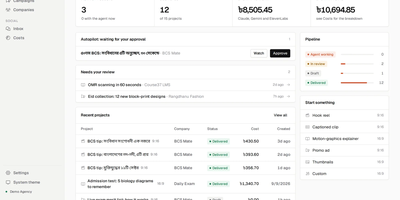
37Studio is a self-hosted AI video studio and social media desk that turns a short brief into on-brand videos, posts them to nine social platforms, and drafts replies to the messages that come back. Paste a company website and it builds a brand library of logos, photos, fonts, and colours, plus a knowledge base every later video and reply draws on. An editor agent builds each video as an animated composition, checks its own rendered frames, and takes revision requests in plain words. The same workflow yields hook reels, captioned clips, explainers, podcast clips, promo ads, and thumbnails, and any finished video can become a template. A two-hour recording becomes a shelf of short clips: transcription runs locally in about 100 languages at no cost, and YouTube or Drive links import directly. Publishing reaches Facebook Pages, Instagram, YouTube, TikTok, LinkedIn, X, Pinterest, Bluesky, and Mastodon in one action, now or scheduled, each with its own caption. Autopilot goes further: state a content plan in one sentence and a fresh video is made before every slot, waiting for one-click approval. Messenger, Instagram, and WhatsApp messages and social comments land in one inbox, with replies drafted in the customer's language under rules each brand sets. Exact AI spend shows on every project, and an MCP server lets your own AI tools run the studio. Running on a dedicated VPS on RepoCloud with guaranteed CPU, RAM, and SSD, full root SSH access, and a browser serial console. MIT licensed.

Photofield
Instead of paging through albums, Photofield lays a whole photo library out on one zoomable canvas, where thousands of thumbnails sharpen into full-resolution pictures as you zoom. Collections come straight from directories named in a configuration file. One setting turns every subfolder into its own collection. Pick a layout per collection: album grouped by date, timeline with month markers, wall, map, highlights with dates and place names, or flex. Sort oldest first, newest first, or shuffled hourly, daily, weekly, or monthly. Tiles load progressively, and an info drawer shows the date, file name, and dimensions. A right-click menu opens or copies an image, copies its link, or finds similar images. Originals are never modified, so a read-only mount is safe. Indexing runs at up to 10,000 files per second on a fast SSD with a warm cache. JPEG, PNG, AVIF, HEIC, DNG, GIF, MP4, and MOV files are recognized. Place names resolve from an embedded database, with no external lookups. The optional photofield-ai companion adds search by words like beach sunset or cat eyes, plus a Faces layout of detected faces. Alpha tagging lets you label photos. Running on a dedicated VPS on RepoCloud with guaranteed CPU, RAM, and SSD, full root SSH access, and a browser serial console. MIT licensed.
OpenNotebookLM
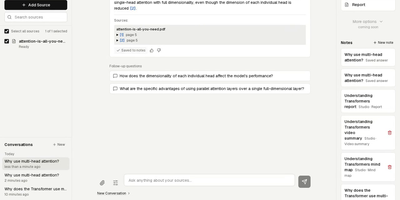
OpenNotebookLM is a self-hosted research workspace that reads your sources with you, answering questions only from the material you gave it and showing the passage behind every claim. Import papers, spreadsheets, recordings, web pages, PDF links, YouTube videos or playlists, Markdown folders, Obsidian vaults, and Git repositories, then select which sources the chat may use as evidence. Stream answers with follow-up questions, hover any numbered citation to inspect the supporting passage and page, and let the app flag citations that look unsupported before you trust them. The Studio turns the same sources into cited reports in briefing, study guide, FAQ, or timeline formats, expandable mind maps you can pan and question, two-host audio overviews in deep dive, brief, critique, or debate styles, narrated slides exportable to PowerPoint, and tables whose cells carry their own citations. Generate flashcards and timed quizzes from what you read, mark cards for review, and resume saved progress later. Save cited answers and Studio outputs as notes, convert notes back into searchable sources, and export almost anything: conversations, projects, mind maps as SVG, flashcards as Anki text, audio as MP3. Share projects with viewer or editor roles, keep conversations private per person, and bring Claude, OpenAI, any OpenAI-compatible provider, or a local Ollama model, with extraction, OCR, Whisper transcription, and Kokoro audio synthesis running on your own server. Running on a dedicated VPS on RepoCloud with guaranteed CPU, RAM, and SSD, full root SSH access, and a browser serial console. MIT licensed.
TidyQuest
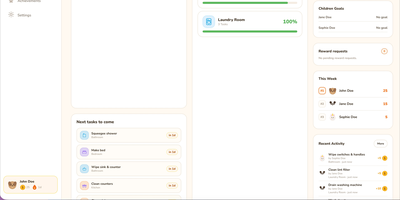
Whoever vacuums the living room this week should not be decided by whoever loses the argument, so TidyQuest turns household chores into quests with health bars, coins, and a family leaderboard. Every chore gets a health indicator that drains as its due date approaches, which makes overdue cleaning visible at a glance instead of festering in a group chat. Completing tasks pays coins into a personal wallet, builds daily and weekly streaks, and unlocks twelve milestone achievements from first chore to a thirty day run. Coins buy entries from a reward catalog your household defines, whether that is picking the Friday movie, extra game time, or sleeping in, and parents approve each redemption before it counts. Rooms organize work around the eight built-in spaces, from kitchen and bathroom to garage and garden, seeded with more than sixty predefined chores at realistic intervals. Assignment modes decide how credit lands: the first finisher takes everything, assignees split coins equally, or custom percentages reward whoever does the heavier share, while a strict mode requires admin approval before completions count. Reminders reach phones through web push, Telegram, ntfy, or Home Assistant, and vacation mode pauses decay for anyone away. A calmer couple mode strips the game layer away entirely, leaving plain shared tracking for households that just want the list. Running on a dedicated VPS on RepoCloud with guaranteed CPU, RAM, and SSD, full root SSH access, and a browser serial console. AGPL-3.0 licensed.
Noisedash
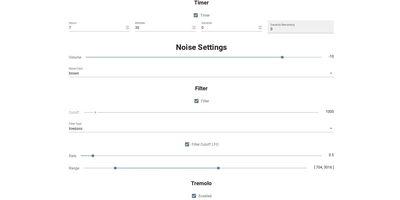
Noisedash is a self-hosted soundscape studio that generates the ambient noise you wish your surroundings made, from steady fan hums to layered rainstorms, and plays it in any browser. Start from white, pink, or brown noise and shape it with filters, LFOs, and effects until the hum in your head goes quiet. Upload your own recordings of rain, wind, thunder, or a café at noon, set loop points and fade-ins, and drop them into the mix as a continuous bed or an occasional sprinkle. Add reverb to a sample, let a thunderclap wander in every few minutes instead of looping, and balance every layer until the room feels right. Save the result as a noise profile, keep one for sleeping and another for deep work, and switch between them with a tap. Profiles travel: export one to share with a friend, import theirs, or record the generated audio to take the soundscape somewhere else entirely. An instance can host the whole household, with admin tools managing users, and the interface works as happily on a phone beside the bed as on a desktop. Running on a dedicated VPS on RepoCloud with guaranteed CPU, RAM, and SSD, full root SSH access, and a browser serial console. AGPL-3.0 licensed.
Enroute
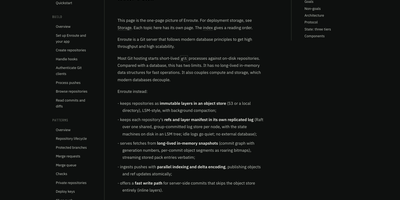
Git servers still think in folders on one machine's disk, and Enroute is the Git server rebuilt like a modern database: your repositories live as immutable layers in object storage, served by compute nodes you can add or replace at will. Point any Git client at it and push; the push creates the repository, gets indexed and validated without locks, and commits once its entry is replicated across the ledger nodes' disks, which is how a single repository absorbs thousands of pushes per second. Clones and fetches always read one consistent snapshot, so readers never block writers, and background layer merging replaces the git repack jobs you used to schedule. The programmable part is hooks: your own code decides who can read or write, which branches a client may see, whether a ref update is allowed, and what happens after a push, from running CI to mirroring elsewhere. A rich gRPC API lets applications create, inspect, and manage repositories programmatically, so you can build your own code-hosting product on top instead of forking a monolith. Start as one node with a local directory, then separate compute from ledger nodes and replicate across three machines without pushing a repository again. Running on a dedicated VPS on RepoCloud with guaranteed CPU, RAM, and SSD, full root SSH access, and a browser serial console. Apache-2.0 licensed.
Operational
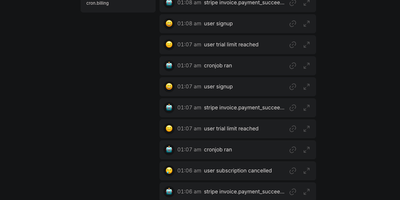
Operational watches your product for the moments that matter, signups, payments, failed webhooks and cron jobs, and pushes the important ones to your phone as they happen. Your code sends structured events with a name and a JSON payload through a simple API, using the official Node.js or PHP SDKs or the WordPress plugin, and every event lands in a searchable feed organized by project and category. Mark an event notify and it becomes a push notification on your phone through the installable web app, while everything else waits quietly in the feed for when you actually want to look. Related events nest inside each other as contexts, so a failed checkout can carry its payment attempt, gateway response and retry history in one expandable bundle instead of forty scattered log lines. Events can carry action buttons that trigger your webhooks, letting you approve a refund, restart a job or retry a delivery from the notification itself. Teammates share projects with their own accounts, a test mode lets you rehearse integrations without polluting the real feed, and a built-in MCP server exposes your events to AI tools. Running on a dedicated VPS on RepoCloud with guaranteed CPU, RAM, and SSD, full root SSH access, and a browser serial console. AGPL-3.0 licensed.
Rootprint
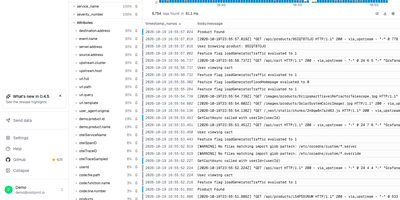
A year of searchable logs and traces no longer needs a metered logging service, because Rootprint keeps the whole index in a storage bucket you already own. A search matches any word on any line, since every log is indexed in full and no service name, stream, or label is needed first. A frequency histogram, one-click field filters, and saved views narrow the results, a fold mode collapses repeated lines, and exports arrive as NDJSON, CSV, or plain text, or as a share link. Open a trace from the log that emitted it, or paste a trace ID, and a waterfall shows per-span timing, attributes, events, and database calls grouped by query, with each span linking back to its logs. The trace explorer charts span volume, error rate, and p50, p95, and p99 latency, ranks the busiest operations, and filters spans by service, duration, and status. Every service gets its own page with request rate, error rate, operations, dependencies, and errors. Data arrives over OpenTelemetry from the Collector, Vector, or Fluent Bit, through a plain HTTP gateway, or by pulling from Kafka, Kinesis, or SQS, with guided setup for nine integrations. Indexes can live in S3, Google Cloud Storage, R2, MinIO, or Azure Blob. Teammates sign in with Google, GitHub, or any OpenID Connect provider, and scoped API keys serve scripts. Running on a dedicated VPS on RepoCloud with guaranteed CPU, RAM, and SSD, full root SSH access, and a browser serial console. Apache-2.0 licensed.
LlamaForge
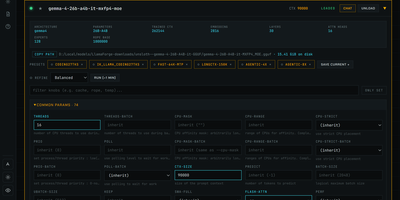
Running local models usually means choosing between a polished app that hides the engine and a terminal full of flags you half remember. LlamaForge refuses the trade: it installs and drives the official llama.cpp release itself, then puts a browser panel over all of it, every one of the 200-plus llama-server flags your build supports, grouped, searchable and editable per model. Before you load anything, each model is drawn into your GPUs at its real footprint, so the out-of-memory surprise happens on screen instead of in a crashed server; before you download anything, every quant on Hugging Face gets a fit rating for your VRAM, FITS, TIGHT or CPU OFFLOAD. Auto-Forge then measures placements, KV cache types and speculative drafters on your own hardware and keeps the fastest configuration, checking that a drafter still produces identical tokens before applying it with one click, and undoing it with one click. Keep several models loaded at once and a planner places each on the GPUs that fit it; when a game launches, Game Mode unloads your models and brings them back when you quit. Chat in llama.cpp's own interface, join from your phone by QR code, duel two models blind in the Arena under an Elo board, and let Embers, small local agents, keep a wiki and write scheduled briefs counting only facts they can quote verbatim. Running on a dedicated VPS on RepoCloud with guaranteed CPU, RAM, and SSD, full root SSH access, and a browser serial console. MIT licensed.
Uchiyomi
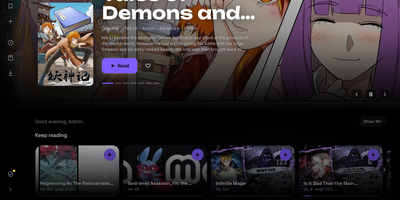
Uchiyomi is the manga server that also does the fetching, so your library keeps itself up to date while you just read. Follow a series once and new chapters download automatically from MangaDex, from sites you add by URL, or through installable Mihon extensions, with a release radar estimating when the next chapter is likely to land. The reader is built for webtoons first: continuous scrolling flows straight into the next chapter, wide pages split cleanly, borders crop away, and credit pages collapse so you reach the story faster. Your existing CBZ, CBR, PDF, and image files join downloaded series in one searchable library with covers, progress, filters, and smart lists you can share with the household. A health screen hunts down chapter gaps, short or corrupt downloads, duplicates, and failing sources, and Fix Everything works through the repairs on demand or nightly. Reading stats draw a year heat map of your habits, top series, and reading time, while Moments let you star favorite panels with notes. Each household member gets their own account, progress, libraries, and age limits, with two-factor sign-in and offline downloads that keep favorites ready on your phone. Running on a dedicated VPS on RepoCloud with guaranteed CPU, RAM, and SSD, full root SSH access, and a browser serial console. MPL-2.0 licensed.
Home Screens
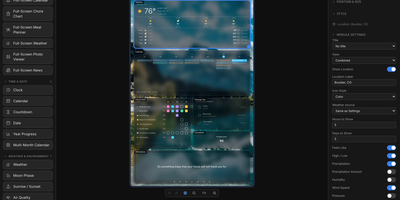
The family calendar is split across phones, the meal plan lives in someone's head, and the chore chart fell off the fridge: Home Screens turns a spare screen into a self-hosted family command center that puts calendars, weather, chores, meal plans, and photos on one shared display. You compose each screen in a drag and drop editor, placing any of 46 built in modules on a configurable canvas: clocks in 18 styles, weather in 14 views, calendars, to do lists, news, stock and crypto tickers, sports scores and standings for 15 leagues, traffic, air quality, and moon phases. Screens rotate through seven transitions, and a hub and spoke setup lets one server drive several physical displays, each with its own layout, dimensions, rotation, and scheduled profile. The phone remote wakes or sleeps displays, adjusts brightness, starts visual timers and morning routines, and runs the family organizer: chore charts with rewards, a meal planner with grocery list, shared to do lists, school timetables, and a notes board. Calendars arrive from Google, iCloud, or any iCal feed, weather from nine providers, and backgrounds from your uploads, Unsplash, NASA, Immich, Google Photos, iCloud, or OneDrive. Modules can appear or hide based on live conditions, plugins add new module types from a directory or a URL, and everything is stored locally with no cloud account. Running on a dedicated VPS on RepoCloud with guaranteed CPU, RAM, and SSD, full root SSH access, and a browser serial console. MIT licensed.
Mosparo
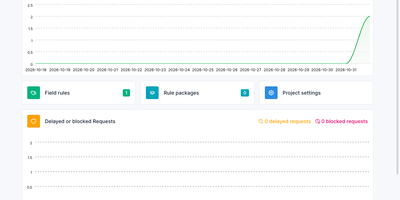
CAPTCHAs make every visitor solve a puzzle to prove they are human; Mosparo takes the opposite route and checks the submitted content itself, no challenges, no image grids, and no tracking cookies. Drop the customizable checkbox widget into any form and Mosparo inspects each field separately, scoring the entry against your rules the way an email spam filter scores a message. Build field rules for banned words, domains, email addresses, IP addresses and subnets, providers, Unicode blocks, user agents, and websites, each with its own rating weight, or subscribe to shared rule packages that refresh themselves automatically. Every submission lands in an admin inbox with its spam rating, IP address, and verification status, and dashboard charts show valid versus spam traffic plus delayed or blocked requests over time. Legitimate users notice nothing but a plain checkbox, which stays fully usable with assistive technology, while everything Mosparo stores is encrypted and automatically deleted after 14 days. Run one instance for many sites with separate projects, project groups, and member roles, and connect your forms over the documented API from any stack that can send an HTTP request. Running on a dedicated VPS on RepoCloud with guaranteed CPU, RAM, and SSD, full root SSH access, and a browser serial console. MIT licensed.
Stormkit
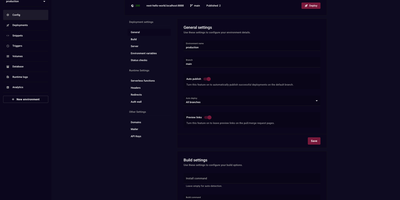
Stormkit delivers a self-hostable PaaS that eliminates vendor lock-in while providing Vercel-class deployment workflows. The Go backend handles build orchestration, hosting, and background job processing while the React frontend provides a complete management dashboard for applications, environments, and team collaboration. Git integration with GitHub, GitLab, and Bitbucket enables push-to-deploy workflows where every commit triggers automated builds with preview links posted directly to pull requests. Serverless functions use filesystem-based routing — each TypeScript or Node.js file in the API directory becomes an endpoint automatically, deploying to AWS Lambda with configurable timeouts. PostgreSQL database schemas ship with automatic migrations, isolated credentials per environment, and secure environment variable injection preventing credential leakage between staging and production. Custom domains provision TLS certificates automatically through Let's Encrypt with support for custom certificates and headers. The environment system creates isolated deployment contexts for production, staging, and development with independent variables, domain bindings, and auto-publish rules per branch. Privacy-respecting server-side analytics track visitors, referrers, and top paths without client cookies or third-party scripts. Role-based access control manages team permissions across applications. Docker Compose deployment provisions the full stack including the API server, hosting service, build runner, and worker server. Running on a dedicated VPS on RepoCloud with guaranteed CPU, RAM, and SSD, full root SSH access, and a browser serial console. AGPL-3.0 licensed.
AbuseBox
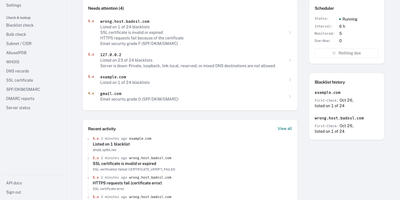
AbuseBox is a self-hosted monitor for the mail servers you operate, checking your IPs and domains against 24 DNS blacklists on a schedule and alerting you when a listing appears, disappears, or is about to matter. A listing is never just a red flag. AbuseBox decodes each list's return codes into a plain meaning and a severity, links the removal page, and folds the result into a risk score out of 100 for every asset, with each factor and its contribution shown. Before any verdict is trusted, the list itself is tested against its RFC test addresses, so a resolver being refused reads as No answer rather than clean. The same asset page grades SPF, DKIM, and DMARC from A to F, parses DMARC aggregate reports, and tracks certificate validity, domain expiry, DNS records, WHOIS details, and server reachability with response times. Assets arrive one at a time, in bulk lists of up to 300, or as an entire subnet, each with its own owner, check selection, and interval. The activity log records every change, history charts show the trend, and email, Slack, Discord, or webhook alerts carry the news. A public quick-check page answers one-off lookups without an account, and the REST API covers the rest. Running on a dedicated VPS on RepoCloud with guaranteed CPU, RAM, and SSD, full root SSH access, and a browser serial console. MIT licensed.
1time
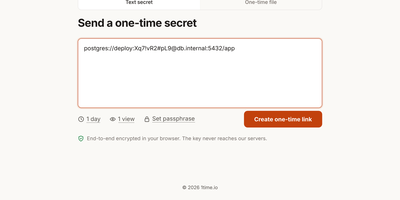
Stop pasting passwords into chat threads that keep them forever: 1time turns a secret into a link that opens once and then deletes itself. Paste a database URL, an API key, or any sensitive text, choose how long the link may live, from an hour to thirty days, and decide whether one person or up to ten may open it. Add a passphrase when the link alone should not be enough, then copy the ready link and send it through whatever channel you already use. The recipient opens it, sees the decrypted message with a copy button, and the message is burned, gone from the server the moment it is read. Files work the same way up to 250 MB, encrypted with their name and type and uploaded in pieces so a dropped connection only resends one chunk. Encryption happens in your browser before anything uploads, and the key travels inside the link itself, so the server holds only ciphertext it cannot read. A password generator, a command line client, and a browser extension that shares selected text speak the same protocol against your own instance. Running on a dedicated VPS on RepoCloud with guaranteed CPU, RAM, and SSD, full root SSH access, and a browser serial console. MIT licensed.
ivfi
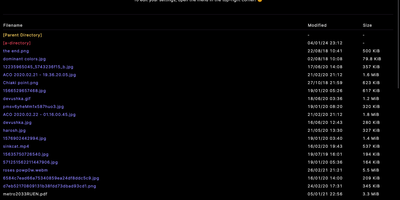
IVFi-PHP turns folders on your server into browsable media galleries: drop one PHP file into a web root and every directory of photos, videos, and audio becomes a polished, searchable index page. Hovering a filename previews the image or video inline, and clicking opens the gallery view where you can move through a whole directory's media, download originals, or reverse-search an image. Audio files play in place with a live visualiser, seeking, and their own volume control. Finding things is instant: filter filenames or file types with plain text, wildcards, or full regular expressions, sort by name, date, or size with settings that persist between visits, and dates automatically match the visitor's timezone. Select any set of files and download them as a single ZIP archive, or share direct download links file by file. Directories can render their README files as documentation pages, listings can hide sensitive entries through server-side filters, and optional Digest authentication keeps a listing private without any account database. Themes and per-visitor display preferences restyle the index, basic listings work even with JavaScript disabled, and the whole application also ships as a Docker image for a one-container deployment. Running on a dedicated VPS on RepoCloud with guaranteed CPU, RAM, and SSD, full root SSH access, and a browser serial console. GPL-3.0 licensed.