Webclaw
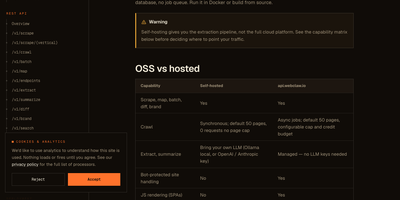
Webclaw turns messy web pages into clean content your AI tools can actually use, extracting the meaningful text and leaving the navigation, ads, and boilerplate behind. You point it at a URL and get back Markdown, plain text, structured JSON, raw HTML, or a format trimmed for language model input, with images stripped, links deduplicated, and whitespace cleaned. Crawl a whole site by following same-origin links page after page, map a domain first to discover every URL from its sitemap before deciding what to fetch, or batch many URLs at once and stream the results as they finish. CSS selectors let you include only the part of a page you care about or exclude the parts you never want, and main-content filtering keeps the article while dropping the chrome around it. Compare today's page against an earlier snapshot to see exactly what changed, or pull a site's colors, fonts, and logo into a brand profile. With your own language model connected, extraction follows a JSON schema or a plain prompt, and summaries come back at the length you ask for. Agents reach the same engine through an MCP server, scripts through the command line, and applications through the REST API. Running on a dedicated VPS on RepoCloud with guaranteed CPU, RAM, and SSD, full root SSH access, and a browser serial console. AGPL-3.0 licensed.
OpenAgentCore
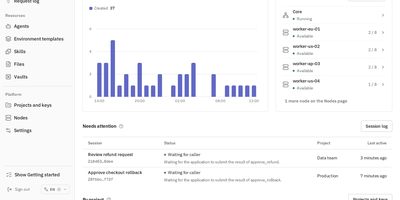
OpenAgentCore puts Codex, Claude Code, and MiniMax Code behind one self-hosted Agents API, so your applications start agent sessions through the official OpenAI SDK while the work runs on machines you control. Set OPENAI_BASE_URL to your installation and issue a Project API key, and the same client code that talks to OpenAI now talks to your Core. Each session runs a native harness, exactly as it runs on a developer's machine, with the model provider, model ID, and protocol you configure per harness or per session. Choose where sessions execute: microsandbox nodes you operate, Docker, E2B, or a self-hosted workstation, VM, or container connected by the oac-daemon with a credential scoped to one environment. Idle microsandbox sessions release their compute and resume on a compatible node with workspace files intact, so long investigations do not rent a machine while they sleep. The Web console walks operators through setup, tracks sessions and turns, manages models and credentials, and issues keys, while the separate Core API serves operators and the Agents API serves applications. Durable execution state in PostgreSQL keeps events, results, and schedules recoverable across restarts. Sandbox providers, workspace filesystems, harnesses, and model providers all plug in through defined protocols, so every layer can be replaced on its own. Running on a dedicated VPS on RepoCloud with guaranteed CPU, RAM, and SSD, full root SSH access, and a browser serial console. MIT licensed.
Open Intelligent UI
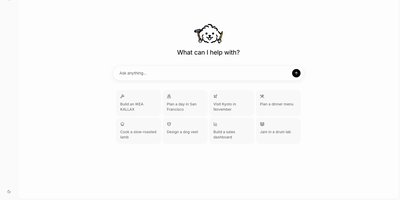
Ask for a day in San Francisco and get a routed map, photographs, and an editable itinerary instead of a wall of text. Open Intelligent UI recreates the interactive answers introduced in ChatGPT, with the model streaming a layout that the app renders live from a library of 55 components. A request for a phone comparison returns product cards and a side-by-side table, a money question returns sliders that recalculate loans and savings as they move, and a language question returns flip cards followed by a scored quiz. Dashboards offer date-range switches, KPI cards, area charts, ranked source bars, and sortable page tables, and maps add category filters, pins, expandable stops, and street routes. Fifty-nine built-in functions let each answer compute with its own state, so splits, schedules, and unit conversions update without another model call. Chat history keeps earlier answers, light and dark themes are one click away, and suggestion tiles start common requests. A development gallery shows worked examples, including a bike assembly guide, a retirement calculator, and a small arcade game, all without calling a model. Models connect through OpenUI Cloud, any OpenAI-compatible endpoint, or local Ollama, so keys and data stay in your control. Product teams, designers, and developers get a working reference for generative interfaces. Running on a dedicated VPS on RepoCloud with guaranteed CPU, RAM, and SSD, full root SSH access, and a browser serial console. MIT licensed.
Super Agent Party
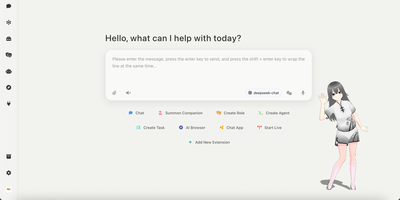
Super Agent Party gives you an AI companion with a face, a memory, and a to-do list, all running on your own server. The home screen starts a chat, summons a companion, creates a role or agent, queues a task, opens an AI browser, or adds an extension. Characters can appear as VRM 3D avatars, and character cards with long-term memory let several personas talk together in one group chat. The Task Center hands longer jobs to an agent that works in the background, calls tools through MCP and Agent Skills, and records every step in an execution timeline. A built-in browser lets agents open pages and act on them, and desktop vision tools can drive the mouse, keyboard, and terminal. One-click bot deployment connects an agent to Telegram, Discord, Slack, QQ, WeChat, Feishu, and DingTalk, and live-stream bots cover Bilibili, YouTube, and Twitch. The developer page serves an OpenAI-style endpoint, so other apps can call an agent as if it were a model. Extensions open in a sidebar or their own window. Running on a dedicated VPS on RepoCloud with guaranteed CPU, RAM, and SSD, full root SSH access, and a browser serial console. AGPL-3.0 licensed.
magpie
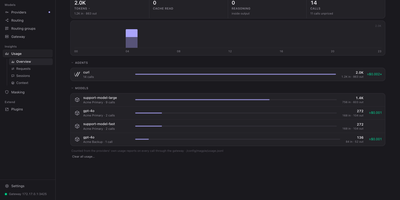
Point every coding agent and chat client at one self-hosted gateway, then choose which model answers from a single browser console. Add providers by preset or custom OpenAI-compatible URL, or sign in with the subscriptions you already pay for. Routing groups bundle several models into one name and move to the next member when a quota runs out, so the calling agent never sees the error. Create a gateway key per client, cap each with daily token or cost budgets, restrict its models, and watch usage counted separately. The Usage pages chart tokens, cost, request counts, cache hit rate, and a yearly heatmap, split by model, provider, or agent, with CSV export. A Routing view replays how each request was routed, with timing for masking, connecting, and the vendor. Masking swaps passwords, API keys, and tokens for placeholders before a prompt leaves your server and restores them in the answer. The browser page is protected by a key you set at launch. Running on a dedicated VPS on RepoCloud with guaranteed CPU, RAM, and SSD, full root SSH access, and a browser serial console. MIT licensed.
Liaison
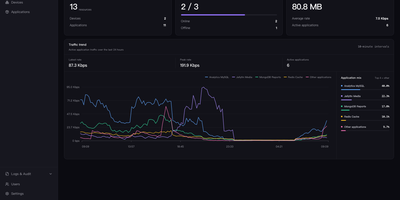
Liaison puts every private service you run behind one browser console, so a laptop, a homelab box, or a customer server becomes reachable without opening a single inbound port. Install a lightweight connector on each device and it dials out to the control plane, where administrators register applications over TCP, HTTP, HTTPS, WebSocket, and SSH and grant access per user. Browser workspaces cover audited Web SSH terminals, RDP and VNC desktops, SFTP file management, read-only S3 browsing, and database clients for MySQL, PostgreSQL, MariaDB, SQL Server, Oracle, MongoDB, and Redis, each with a session Agent that drafts commands and explains query results once you approve them. Local models are shared through authenticated APIs with a browser Playground, scoped keys, token quotas, and usage tracking, while Codex and Claude Code run on your own devices with resumable sessions and permission prompts. A built-in code-server IDE edits projects remotely, and on-demand TCP ports open for 5 to 300 seconds. Casbin-backed identity management, firewall policies by source IP or CIDR, and logs of management actions and supported sessions keep access accountable. Application discovery scans connector devices for existing services and registers them from the console. Running on a dedicated VPS on RepoCloud with guaranteed CPU, RAM, and SSD, full root SSH access, and a browser serial console. AGPL-3.0 licensed.
LLM Wiki v2
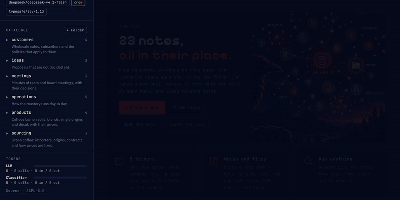
Instead of burying your documents in a vector index you cannot inspect, LLM Wiki v2 files them into a Markdown wiki you can read, browse, and question. Drop text, Markdown, or PDF files anywhere on the page and each one is catalogued automatically, filed into a folder that says what it holds, and linked to the notes it relates to. Ask a question and the answer cites the exact notes it used, with clickable sources you can open, verify, and correct. New documents update the note on their subject instead of piling up as disconnected chunks, so what you teach it stays taught. A small classifier routes filing and questions through the folder tree, keeping the wiki quick and cheap as it grows, and you can browse the tree, follow see-also links, move or delete notes, and watch the tokens spent by both the model and the classifier. Connect OpenRouter, OpenAI, Gemini, a local Ollama, or any compatible endpoint, and expose the same wiki to Claude Code or Codex as long-term memory they can recall from and write to. Because every note is plain Markdown in a folder you own, the whole knowledge base can live in git beside your other files. Running on a dedicated VPS on RepoCloud with guaranteed CPU, RAM, and SSD, full root SSH access, and a browser serial console. AGPL-3.0 licensed.
Pad
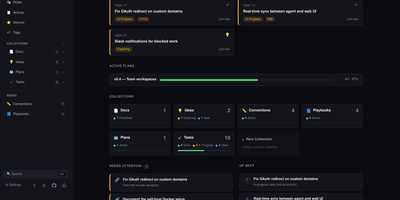
Your coding agents finish a session, close the laptop, and forget everything; Pad is where the project remembers. It holds the tasks, plans, bugs, ideas, and decisions in one workspace that you drive from a browser while your agents drive it from the terminal, so the next session, human or machine, picks up exactly where the last one stopped. You plan on boards, lists, and tables with drag-and-drop status columns, rich item pages, comment threads, and a dashboard that answers what needs attention and what to do next. Your agents read the queue, claim items, leave checkpoints, link their pull requests, and mark work fixed with the fixing PR attached. Conventions teach them the house rules once, like running tests before calling a task done, and playbooks hand them repeatable multi-step workflows they can invoke by name. Every change is versioned with its author, a person or a named agent, and new items appear in the browser the moment an agent creates them in the terminal. The same workspace is reachable three ways: the web interface, the pad CLI, and a bundled MCP server with a natural-language skill that plugs into Claude Code, Cursor, Codex, Windsurf, OpenCode, Copilot, Amazon Q, and Junie. Running on a dedicated VPS on RepoCloud with guaranteed CPU, RAM, and SSD, full root SSH access, and a browser serial console. Apache-2.0 licensed.
AI-Git-Bot
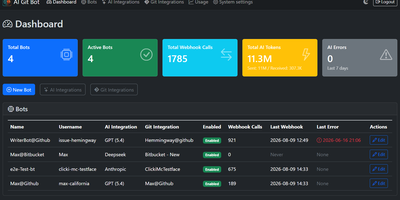
Inside your Git platform, AI-Git-Bot works as a self-hosted teammate that quietly handles the engineering chores everyone agrees matter and nobody has time for. Open a pull request and it reviews the diff with inline findings, re-reviews after a force-push, and answers questions when you mention it in the discussion, keeping the conversation context across updates. Assign it an issue and it can rewrite that issue with structure and acceptance criteria, route it to the right assignee with a stated reason, or implement it and open a pull request for you. It generates unit tests for new code, builds Playwright end-to-end suites and runs them against a preview environment, then posts the results back to the pull request. Documentation and locale files stop drifting, because README sync and translation coverage workflows update them as the code changes. Every run is observable through built-in metrics and signed outgoing webhooks, and you choose the brain behind it, from cloud models to a local model on your own hardware, so source code never has to leave your network. Running on a dedicated VPS on RepoCloud with guaranteed CPU, RAM, and SSD, full root SSH access, and a browser serial console. MIT licensed.
Pitot
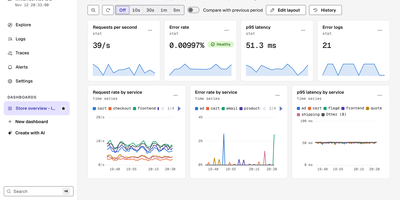
Point your OpenTelemetry exporters at one port and get traces, logs, metrics, dashboards, alerts, and an AI investigator, with no storage cluster to babysit. Pitot accepts OTLP over gRPC and HTTP, keeps everything in a single data directory as Parquet files you own, and lets you query with Explore and PitotQL even when no AI provider is configured. Ask the built-in agent which service is slowest right now and it runs typed queries across traces, logs, and metrics, then explains the evidence inline. Describe a dashboard in one sentence and it drafts, checks, and saves panels for request rate, error rate, p95 latency, service dependencies, slowest operations, and recent errors. Alerts watch service error rate, latency, throughput, and log volume. Prefer your own assistant? A remote MCP endpoint lets Claude Code or any MCP client search logs, inspect traces, query telemetry, and create dashboards after you approve its scopes through OAuth in the browser. Sign in with single-use login links or an OIDC provider, choose OpenAI or Anthropic for chat, and set how many days of telemetry to keep, 30 by default. Pitot runs as one node, which suits a single machine's worth of telemetry rather than fleet-scale clusters. Running on a dedicated VPS on RepoCloud with guaranteed CPU, RAM, and SSD, full root SSH access, and a browser serial console. Apache-2.0 licensed.
FCaptcha
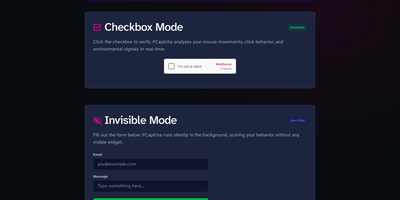
FCaptcha guards your forms with an invisible check that spots bots, headless browsers, and AI agents steering real browsers, all from a server you run yourself. Drop the widget into a signup or contact form and it quietly watches how the visitor actually behaves: pointer movement, typing cadence, scroll shape, and dozens of other signals that separate a person from a script. Vision agents that screenshot and click, and computer-use agents driving a browser through automation protocols, leave input traces the scoring engine catches. Self-declaring crawlers get flagged by name, and signed agent requests are verified cryptographically so polite, identified bots can be allowed while anonymous automation is blocked. A proof-of-work challenge adds a liveness gate behind the scenes. Humans see no puzzle at all, in any of 34 languages, and the widget meets accessibility standards for screen-reader and keyboard-only visitors. Your backend verifies each token through the same siteverify contract that Turnstile, reCAPTCHA, and hCaptcha use, so switching providers is a change of address rather than a rewrite. No cookies are set, no visitor data travels to a third party, and nothing phones home. Running on a dedicated VPS on RepoCloud with guaranteed CPU, RAM, and SSD, full root SSH access, and a browser serial console. MIT licensed.
Watcher
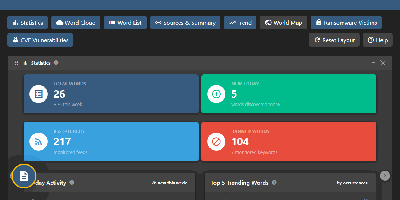
Six cyber threat monitoring modules share one dashboard in Watcher, covering trending advisories, CVEs and ransomware victims, leaked credentials, suspicious websites, DNS lookalikes, and approved domains. Threats Watcher reads RSS advisories from CERT-FR, CERT-EU, US-CERT, and the Australian Cyber Security Centre, ranks trending words, and raises a breaking-news alert when a keyword crosses a configurable threshold. An AI weekly digest condenses the top five topics, and on-demand summaries list the CVEs, threat actors, and organizations behind any keyword. Cyber Watch matches your watch rules against CVE and ransomware feeds from cve.circl.lu, ransomware.live, and ransomlook.io. Data Leak searches Pastebin, StackOverflow, GitHub, GitLab, Bitbucket, APKMirror, and npm for credentials and API keys matching your patterns. Website Monitoring tracks malicious domains for IP, mail record, and page-content changes using TLSH fuzzy hashes plus RDAP and WHOIS expiry checks, while DNS Threats hunts typosquatting and homograph lookalikes with dnstwist and Certificate Transparency streams. The Legitimate Domains register stores registrar, expiry, repurchase status, and UDRP cases, with a one-item-per-line bulk add that previews results before saving. Findings export to TheHive and MISP, alerts arrive by email, Slack, or Citadel, and sign-in works through LDAP, local accounts, or OpenID Connect. Running on a dedicated VPS on RepoCloud with guaranteed CPU, RAM, and SSD, full root SSH access, and a browser serial console. AGPL-3.0 licensed.
Elmo
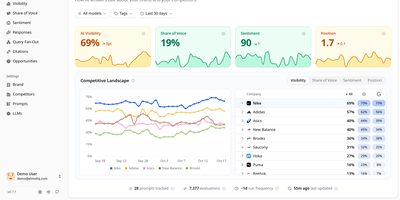
Tracking how ChatGPT, Claude, Gemini, Perplexity, and Google's AI answers talk about your brand, Elmo gives you a self-hosted dashboard for measuring and improving your AI search visibility. A setup wizard reads your website and suggests keywords, competitors, buyer personas, and tracking prompts. Behind the scenes, a worker reruns every tracked prompt on a schedule against the engines you connect, using scraping providers such as BrightData, Oxylabs, or SearchApi for real consumer experiences, or direct OpenAI, Anthropic, Mistral, and OpenRouter APIs. Each run feeds visibility scores per prompt and per model, mention tracking across names, aliases, and domains, sentiment from positive to negative, and each company's position in the answer. The Responses page filters answers by model, tag, prompt, or sentiment and highlights the passage behind each judgment. Citation analysis sorts cited URLs into your domains, competitors, social media, Google properties, and institutional sources. A share-of-voice leaderboard ranks competitors against you over time. Query fan-out shows the web searches engines ran before answering. Opportunities turns the numbers into a prioritized list of content to create, pitch, and seed. Shareable reports reach stakeholders without an account, and a REST API with TypeScript and Python SDKs plus an MCP server lets coding agents query the data. Raw engine output stays in your own database for later audit. Running on a dedicated VPS on RepoCloud with guaranteed CPU, RAM, and SSD, full root SSH access, and a browser serial console. MIT licensed.
Kept
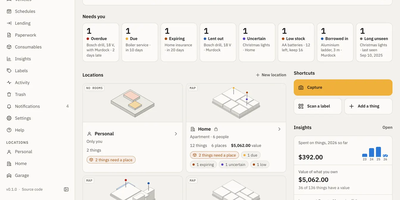
Kept is a self-hosted home inventory that answers where things are, what they are, and what is due. Locations, rooms, shelves, and boxes nest inside each other, so moving a box moves everything in it, and each location can be viewed as a list, a grid, or a 3D map with pins for low stock, loans, and due items. Every thing gets a short ID and a QR code for label sheets or roll printers, and scanning a label opens the box. Capture a thing, receipt, or whole room from the installable phone web app, offline too; an AI provider you choose, including Ollama, then suggests details for you to confirm. Receipts, manuals, and warranties attach to items, reminders arrive in the app, by email, by push, or in a calendar feed, and an insurance report exports photos, serials, and receipts. Lending tracking, vehicle readings and services, moving-house box lists, and stocktakes cover the rest of the household, with shared locations and roles for everyone you live with. An assistant answers questions like where the HDMI cable is, and an MCP endpoint lets Claude or other AI agents add and move things, with changes waiting for your approval. Nightly backups and imports from Homebox and CSV round it out. Running on a dedicated VPS on RepoCloud with guaranteed CPU, RAM, and SSD, full root SSH access, and a browser serial console. AGPL-3.0 licensed.
Datakeel
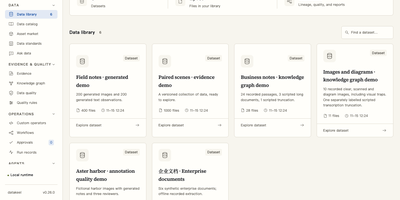
Datakeel is a workbench where teams proofread AI training data, trace every business number back to its definition, and approve risky changes before anything is deleted. Evidence review marks each claim as present, absent, or unknown, so missing annotations never pass as clean, and accepted decisions are stored apart from the extracted evidence. Ask data answers a question like last quarter's retail revenue from registered metrics, shows the bound SQL, source tables, and time range, and refuses or asks for clarification when a question is ambiguous. A data catalog maps sources, tables, fields, owners, lineage, and glossary terms, and an asset market handles access requests with purpose and expiry. A knowledge graph review queue turns document extractions into entities and relations that stay candidates until a person checks the source sentence. Dataset versions freeze file manifests with SHA-256 hashes, quality scores rank samples, and workflows run health checks, cleanups, and metric changes that pause at an approval sheet bound to a digest of the plan. Built-in agents and an MCP server can propose actions but never apply them alone, every receipt is kept in an append-only history, and the interface ships in English and Chinese with three themes. Running on a dedicated VPS on RepoCloud with guaranteed CPU, RAM, and SSD, full root SSH access, and a browser serial console. Apache-2.0 licensed.
LangBot
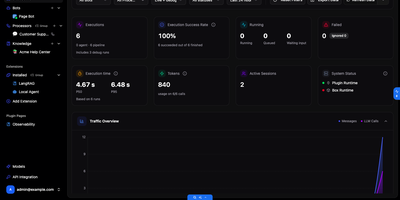
Connect one AI assistant to every chat app your customers already use, then manage it from a single admin panel. Create a bot for Slack, Discord, Telegram, LINE, Lark, DingTalk, WeCom, Matrix, KOOK, or QQ, or embed the Page Bot widget on a website with one script tag. Event routing sends each message to the processor you choose, and a pipeline controls triggers, safety rules, the model and prompt, and how replies are sent. A built-in Debug Chat streams answers as you edit, in private or group sessions. Knowledge bases split uploaded documents into chunks and search them by vector, full-text, or hybrid matching, with query rewriting and reranking options. Add providers like OpenAI, Anthropic, DeepSeek, Gemini, and Ollama, then give each pipeline its own models. The dashboard counts executions, success rate, token usage, and active sessions, and tabs list model calls, user feedback, and error logs. Sessions show the full conversation for each user, with a button to reset context. Install plugins and MCP servers from the extension marketplace to add tools. Use it for a support bot, a community assistant, an internal helpdesk, or a multi-channel front desk. Running on a dedicated VPS on RepoCloud with guaranteed CPU, RAM, and SSD, full root SSH access, and a browser serial console. Apache-2.0 licensed.
LibrePhotos
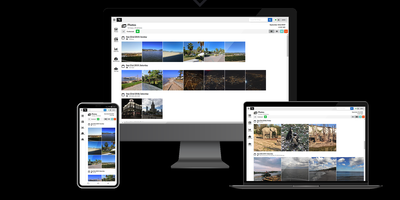
With over 8,000 GitHub stars and continuous development since 2020, LibrePhotos delivers the core intelligence of Google Photos — face recognition, object detection, semantic search, and automatic album generation — entirely on your own hardware without sending a single photo to a third-party server. The Django 5 backend processes uploaded media through a machine learning pipeline that runs face detection via the face_recognition library, clusters identified faces using scikit-learn and HDBSCAN, generates image captions through BLIP and Moondream 2, and classifies scenes using Places365 or Google's SigLIP 2 vision-language model with zero-shot classification against 900+ real-world tags. Semantic search lets you find photos by natural language queries like "sunset at the beach" without manual tagging, while metadata search filters by person, camera, lens, file type, and filesystem path. The React 18 frontend built with Vite presents a timeline view, fullscreen lightbox with slideshow mode, photo detail sidebar showing location and people, and a folder navigation view with breadcrumb paths. RAW files from any camera are converted via ImageMagick, videos processed through FFmpeg, and Live Photos paired with their RAW+JPEG counterparts as unified entries. Public album sharing via link provides fine-grained privacy controls, and duplicate detection uses perceptual hashing to identify near-identical images. Deployment runs as a single unified Docker container or via Docker Compose with Kubernetes manifests also available. Running on a dedicated VPS on RepoCloud with guaranteed CPU, RAM, and SSD, full root SSH access, and a browser serial console. MIT licensed.
Agentic Resource Registry
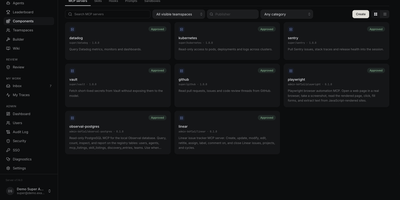
Every team building with coding agents has the same drawer problem: the best Skill, MCP server, or agent file lives in one person's repo, undocumented, while three colleagues rebuild it from scratch. Agentic Resource Registry is the internal catalog that ends the duplication, a self-hosted registry where your organization publishes Skills, MCP servers, hooks, prompts, agent files, and sandboxes in one searchable place. Browse by teamspace, publisher, category, or harness and see at a glance what each resource supports and how often it has been pulled. Authors build agent files in a four-step builder with a live summary and draft readiness checks, then submit them into a review queue where admins inspect the full prompt and version diffs before approving. Forking an approved release creates your own draft with pinned components, and reviewers can compare it against upstream line by line. The companion CLI installs any approved resource into Claude Code, Cursor, Codex, Kiro, Copilot, OpenCode, Pi, and more, generating the correct config for each harness automatically. Approved resources are also discoverable over the open ARD standard, so a running agent can hand part of its task to another approved agent or a remote A2A service. Running on a dedicated VPS on RepoCloud with guaranteed CPU, RAM, and SSD, full root SSH access, and a browser serial console. Apache-2.0 licensed.