Open Source App Cloud Marketplace
Deploy, host, and scale with one click, at half the cost. Then customize with AI agents.
OpenMontage
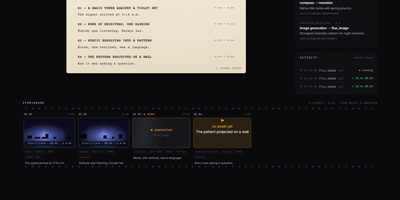
Reaching #1 on GitHub Trending with over 48,000 stars, OpenMontage is the first open-source agentic video production system — transforming AI coding assistants like Claude Code, Cursor, Copilot, Windsurf, and Codex into complete video studios that handle research, scripting, scene planning, asset generation, editing, and final rendering through natural language prompts. Twelve production pipelines cover animated explainers, cinematic trailers, documentary montages, talking heads, screen demos, podcast repurposing, character animation, localization and dubbing, avatar spokesperson videos, hybrid productions, clip factory batch processing, and animation workflows. Over 100 registered Python tools connect to 60+ providers including Kling, Runway Gen-4, Google Veo 3.1, FLUX, Google Imagen 4, ElevenLabs, and Suno AI for cloud generation, plus Piper TTS, WAN 2.1, Hunyuan, and CogVideo for fully local GPU rendering — while free footage from Archive.org, NASA, Wikimedia Commons, Pexels, and Unsplash powers the documentary montage pipeline's CLIP-indexed retrieval system for real-motion video without paid generation APIs. Two composition engines — Remotion for React-based programmatic video and HyperFrames for HTML/GSAP motion graphics — render final output with spring animations, word-level captions, kinetic typography, and SVG character rigs. A seven-dimension scored provider selector, pre-compose validation gates, post-render ffprobe self-review, slideshow risk scoring, configurable budget caps with per-action approval thresholds, and the Backlot live web dashboard for visual production monitoring enforce production-grade quality at every stage. Running on a dedicated VPS on RepoCloud with guaranteed CPU, RAM, and SSD, full root SSH access, and a browser serial console. AGPL-3.0 licensed.

Pocket ID
Backed by over 8,700 GitHub stars and OpenID Connect certification, Pocket ID delivers what enterprise identity platforms like Keycloak provide but without the configuration complexity — a passkey-only OIDC provider purpose-built for homelabs and small deployments. The core design decision is radical simplicity: no passwords exist in the system, only WebAuthn-based passkeys using hardware security keys, TouchID, FaceID, or device PINs, making phishing attacks structurally impossible rather than merely discouraged. The Go backend built on the Gin framework serves a compiled SvelteKit frontend as static assets, running as a single Docker container with SQLite as the default database and optional PostgreSQL for larger deployments. User management supports manual creation, signup links, and open registration, with group-based access control that restricts which OIDC clients each group can access and attaches custom claims for downstream role mapping. LDAP synchronization pulls users and groups from OpenLDAP or Active Directory, while SCIM support enables automated provisioning from compatible identity sources. Federated client credentials handle machine-to-machine authentication for service-to-service communication patterns. The audit system logs every authentication event with GeoIP enrichment, sends email notifications for sign-ins from unknown devices, and provides one-time login codes for accessing accounts from devices without passkey support. TLS with HTTP/2 is built in, PKCE adds code exchange protection, and OpenTelemetry provides tracing and metrics integration. Running on a dedicated VPS on RepoCloud with guaranteed CPU, RAM, and SSD, full root SSH access, and a browser serial console. BSD 2-Clause licensed.
Conductor
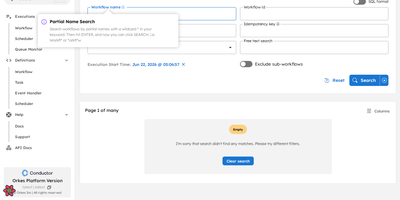
Originally built at Netflix to orchestrate microservices powering 230 million subscribers and now trusted in production at Tesla, LinkedIn, and J.P. Morgan, Conductor is the most battle-tested open-source workflow engine available — with 32,000 GitHub stars and horizontal scalability to billions of executions. The architecture cleanly separates orchestration from business logic: workflows are defined in declarative JSON while workers execute tasks in any of seven supported languages (Java, Python, Go, JavaScript, C#, Ruby, Rust) with zero framework constraints. Durable execution persists every state transition, enabling automatic retries, configurable timeouts, crash recovery, and instant replay from any failure point without re-executing completed tasks. Native AI agent orchestration supports 14+ LLM providers (Anthropic, OpenAI, Google Gemini, AWS Bedrock, Mistral, Cohere, HuggingFace, Ollama), MCP tool calling, function calling, human-in-the-loop approval gates, and vector database integration (Pinecone, pgvector, MongoDB Atlas) for RAG pipelines. Deploy with your choice of five persistence backends (PostgreSQL, Redis, MySQL, Cassandra, SQLite), six message brokers, and Elasticsearch or OpenSearch for workflow indexing — all configurable via Docker Compose files included in the repository. The built-in web UI provides workflow visualization, execution monitoring, task queue inspection, and manual intervention controls. Running on a dedicated VPS on RepoCloud with guaranteed CPU, RAM, and SSD, full root SSH access, and a browser serial console. Apache-2.0 licensed.
AnythingMCP
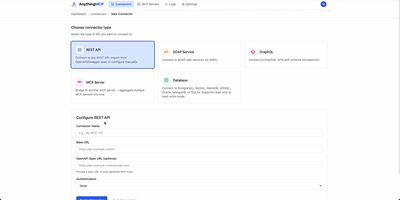
Connecting autonomous AI assistants to internal enterprise databases and legacy systems is streamlined by AnythingMCP, a visual Model Context Protocol gateway with automated knowledge graph generation and granular access controls. Engineers can import OpenAPI specifications, Postman collections, SOAP WSDL files, or raw database credentials to generate standardized Model Context Protocol tools in minutes without writing custom code. The built-in knowledge graph automatically maps entity relationships across disparate databases and software platforms, teaching agents how to correlate customer records in CRM tools with live order histories in enterprise resource planning software. System administrators can enforce fine-grained access policies by restricting tool execution permissions to specific roles and scoping database operations to read-only queries with strict row limits. An interactive web console provides real-time tool inspection, payload testing, request tracing, and comprehensive audit logs that capture every upstream invocation with full parameter visibility. Enterprise teams can integrate identity providers through OAuth2, SAML single sign-on, and SCIM automated user provisioning while protecting sensitive credentials using AES-256-GCM encryption at rest. Running on a dedicated VPS on RepoCloud with guaranteed CPU, RAM, and SSD, full root SSH access, and a browser serial console. GNU AGPLv3 licensed.
OpenLIT
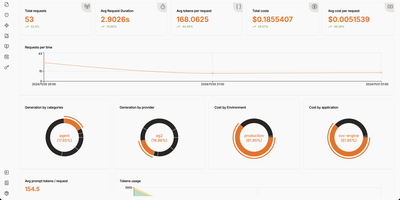
Your AI application is burning through API tokens faster than you can refresh the billing page, and you have no idea which prompt template is responsible. OpenLIT plugs that visibility gap with a self-hosted observability platform built specifically for LLM workloads. Add one line of code to instrument 90+ LLM providers, agent frameworks, and vector databases, then watch every request flow through a tracing dashboard that shows tokens consumed, latency measured, and dollars spent per call, per model, per environment. The requests view lists every LLM interaction with provider, model, cost, and token breakdown in a filterable table, while the trace detail panel lets you drill into individual spans to read the exact prompt sent and response received. Prompt Hub turns prompts into versioned artifacts you deploy, rollback, and A/B test without touching application code. OpenGround compares models side by side on the same input, so you can evaluate cost-versus-quality tradeoffs before committing to a provider. Automated evaluations run LLM-as-a-judge scoring on live production traces, flagging hallucinations, bias, and toxicity in real time. The Vault stores and rotates API keys centrally so secrets stay out of your codebase. Custom dashboards let you build drag-and-drop monitoring views with charts, stat cards, and tables backed by SQL queries against ClickHouse. GPU utilization, memory, temperature, and power metrics feed into the same platform for end-to-end infrastructure visibility. Running on a dedicated VPS on RepoCloud with guaranteed CPU, RAM, and SSD, full root SSH access, and a browser serial console. Apache 2.0 licensed.
MeshCentral
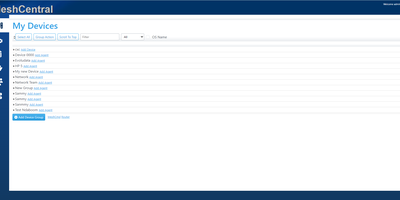
With over 7,000 GitHub stars and continuous development since 2017 by former Intel engineer Ylian Saint-Hilaire, MeshCentral has become the go-to self-hosted alternative to ConnectWise Control and Splashtop for managing devices remotely without per-seat licensing fees. The Node.js server installs via a single npm command and manages Windows, macOS, Linux, and FreeBSD endpoints through lightweight agents that maintain persistent WebSocket connections for real-time remote desktop, terminal access, and file transfer directly in the browser. Intel AMT integration provides out-of-band hardware management including power control and BIOS access even when the operating system is unresponsive. Device groups organize endpoints by location, customer, or function with granular role-based access control for multi-technician environments. Session recording captures remote desktop interactions for compliance auditing, while Wake-on-LAN powers on machines remotely across subnets. The server supports MongoDB for production deployments handling thousands of agents or the embedded NeDB for smaller setups under 200 devices, with a single 8GB VPS comfortably managing 1,500 concurrent agents. Security features include mandatory TLS with automatic Let's Encrypt certificate provisioning, multi-factor authentication via TOTP and FIDO2, SAML-based single sign-on, IP filtering, and HashiCorp Vault integration for secrets management. The web console provides real-time device monitoring with hardware and software inventory, network topology visualization, and customizable branding. TacticalRMM uses MeshCentral as its remote access layer. Running on a dedicated VPS on RepoCloud with guaranteed CPU, RAM, and SSD, full root SSH access, and a browser serial console. Apache-2.0 licensed.
Agenta
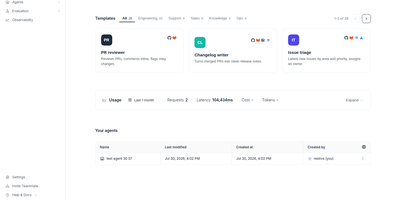
Agenta delivers a comprehensive open-source LLMOps workspace that covers the full lifecycle of AI application development — from prompt engineering through production monitoring. The platform supports 15+ model providers including OpenAI, Anthropic, Google Gemini, Mistral, Groq, Together AI, Azure, AWS Bedrock, and self-hosted models via Ollama, enabling teams to switch between providers without code changes. The prompt playground allows side-by-side comparison of different configurations, while the evaluation system offers LLM-as-a-Judge assessment, 20+ pre-built evaluators covering semantic similarity, regex matching, and factual accuracy, plus custom Python evaluators for domain-specific requirements. Teams run evaluations through both the web UI for subject matter experts and the Evaluation SDK for programmatic CI/CD integration. The observability layer captures full trace visibility across complex agentic workflows, flagging quality issues like hallucinations and off-topic responses in real time. Human annotation workflows let domain experts review and annotate LLM outputs, feeding corrections back into the evaluation loop. The architecture supports Chain of Prompts, RAG pipelines, and multi-step agent workflows, integrating with frameworks like LangChain and LlamaIndex. Self-hosting deploys via Docker Compose with Traefik for routing, requiring only a clone, environment configuration, and a single docker compose command. On RepoCloud, deploy Agenta on a dedicated VPS with root SSH access, persistent storage for evaluation datasets and traces, and complete control over model provider credentials, all under the MIT license with no usage restrictions.
Astron Agent
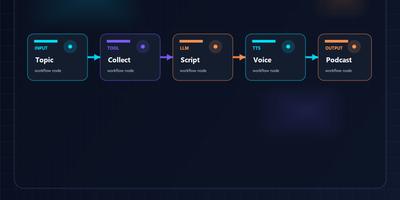
Recognized by the CNCF Landscape in the AI Agent – Workflow Orchestration category alongside Dify and Temporal, Astron Agent is iFLYTEK's fully open-source platform for building, deploying, and managing enterprise multi-agent systems — backed by 8,900+ GitHub stars and the production infrastructure behind one of China's largest AI companies. Unlike pip-install frameworks such as LangGraph, CrewAI, or AutoGen, Astron Agent ships as a complete microservices platform spanning 10+ services across Java, Python, Go, and TypeScript: a ReactFlow-based visual workflow builder for low-code agent orchestration, native integration with the Model Context Protocol (MCP) for tool calling, a built-in model management layer supporting iFLYTEK Spark, OpenAI, Anthropic, and on-premises MaaS deployments, and a multi-tenant Go authentication service powered by Casdoor. The standout differentiator is native RPA integration via the companion astron-rpa project (7,200+ stars), providing 300+ pre-built automation capabilities spanning browser, Office document, and enterprise system interaction — enabling agents to execute physical UI actions rather than only API calls. Infrastructure includes PostgreSQL for multi-tenant data isolation, MySQL for application metadata, Kafka for event streaming, Redis for caching, and MinIO for object storage, all orchestrated through Docker Compose with explicit health checks and dependency chains or production Kubernetes Helm charts. Running on a dedicated VPS on RepoCloud with guaranteed CPU, RAM, and SSD, full root SSH access, and a browser serial console. Apache 2.0 licensed.

Vendure
Vendure is a headless ecommerce framework where TypeScript plugins extend every aspect of commerce without forking the core, backed by 8,200+ GitHub stars and powering stores processing over 10,000 daily transactions. Two distinct GraphQL APIs serve different audiences: the Shop API powers storefronts while the Admin API handles back-office operations, both introspectable and type-safe through Apollo Server. NestJS modules with Vendure decorators inject services, modify schemas, subscribe to events, and add dashboard components, making extensibility a first-class concern rather than an afterthought. The React admin dashboard built with TailwindCSS and Shadcn UI provides order fulfillment workflows, catalog management, tiered pricing, dynamic promotion rules with side-effect hooks for free gift injection, and role-based access control across 14+ languages. Multi-channel support runs D2C, B2B, marketplace, and omnichannel from a single instance with channel-specific products, pricing, currencies, sellers, and permissions. Asset management handles images, videos, and documents with pluggable backends including AWS S3 and Minio, plus built-in image transformation via the AssetServerPlugin. Custom fields propagate automatically into GraphQL schemas and admin forms on every core entity. A dedicated worker process handles search indexing, email dispatch, and integration jobs with independent horizontal scaling. Deploys on PostgreSQL, MySQL, or MariaDB. Running on a dedicated VPS on RepoCloud with guaranteed CPU, RAM, and SSD, full root SSH access, and a browser serial console. GPLv3 licensed.
Sourcebot
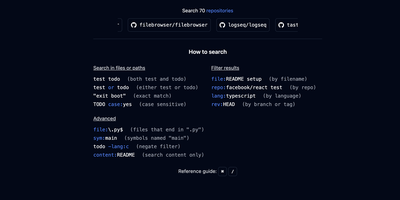
Point Sourcebot at your GitHub, GitLab, Bitbucket, Azure DevOps, Gerrit, or Gitea repositories and get regex, symbol, and filtered search results in under a second across thousands of repos and branches. Backed by Y Combinator with production deployments at NVIDIA, Shutterstock, SeatGeek, Arista, and Red Hat, the Zoekt-powered engine deploys as a single Docker container with zero external data transmission. Ask Sourcebot connects reasoning models like Claude Opus to your entire codebase, enabling natural language questions that return structured answers grounded with inline citations and navigable code snippets, backed by automatic tool calls that search code, follow references, and read files across all indexed repositories. Ask connectors extend this to Jira, Slack, Linear, and Confluence via MCP, pulling external context alongside code for debugging and documentation. IDE-level code navigation provides goto definition and find all references across repository boundaries without local cloning. The built-in file explorer renders any indexed file with syntax highlighting, breadcrumb navigation, and git blame showing per-line commit attribution. An analytics dashboard tracks daily, weekly, and monthly search activity. Permission syncing from GitHub and GitLab enforces access control lists so users only see repositories they are authorized to access. Running on a dedicated VPS on RepoCloud with guaranteed CPU, RAM, and SSD, full root SSH access, and a browser serial console. Other licensed.
Gitea
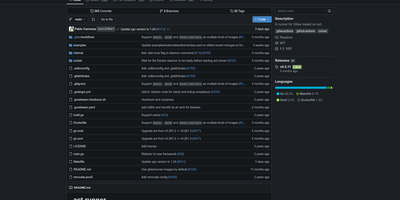
With over 57,000 GitHub stars and deployment across thousands of organizations worldwide, Gitea is the most popular self-hosted Git service, delivering a complete software development platform in a single Go binary that runs on as little as 512MB of RAM. The platform provides full repository management with pull requests featuring inline code review, branch protection rules, merge strategies including squash, rebase, and merge commit, and automated status checks through Gitea Actions. The built-in CI/CD system uses the same YAML workflow syntax as GitHub Actions and can directly reuse over 20,000 existing Actions plugins, allowing teams to migrate from GitHub with minimal pipeline rewrites using the open-source act_runner executor. The integrated package registry supports over 20 formats including npm, PyPI, Maven, NuGet, Cargo, Helm, Composer, Conda, RubyGems, Pub, and an OCI-compatible Container registry for Docker images with no additional configuration required. Project management features include issue tracking with labels, milestones, dependencies, and time tracking, alongside kanban project boards for visual workflow management. Gitea supports LFS for large file storage, built-in wiki pages per repository, webhook integrations with Slack, Discord, Telegram, Microsoft Teams, and custom HTTP endpoints, and OAuth2 authentication with LDAP, SAML, and PAM backend support. Repository mirroring enables bidirectional synchronization with GitHub, GitLab, and Bitbucket, while the comprehensive REST and GraphQL APIs power external integrations and the official tea CLI tool. Running on a dedicated VPS on RepoCloud with guaranteed CPU, RAM, and SSD, full root SSH access, and a browser serial console. MIT licensed.

Octop
Modern engineering teams and busy households deploy Octop to run private, autonomous AI agents equipped with persistent memory workspaces, scheduled cron jobs, and direct browser automation. Users can orchestrate specialist agents tailored for software development, IT operations, content generation, and system diagnostics through an interactive React dashboard. The platform connects directly to Discord, Feishu, DingTalk, and WeCom, allowing team members to delegate complex tasks without leaving their everyday messaging apps. An integrated remote desktop and browser control engine lets agents navigate websites, capture screenshots, fill forms, and operate graphical software autonomously. Administrators can assign distinct MBTI personality profiles to agents, establish granular role-based permissions, configure scheduled cron workflows, and integrate custom Model Context Protocol servers for external tool access. Long-term memory persists across conversations through dedicated workspace files, ensuring contextual continuity whenever switching between underlying language models or team collaborators. Running on a dedicated VPS on RepoCloud with guaranteed CPU, RAM, and SSD, full root SSH access, and a browser serial console. MIT licensed.
Bracket
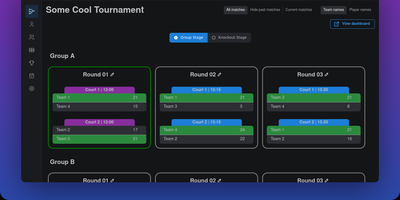
Organizers running sports leagues, gaming tournaments, and community athletics can deploy Bracket as an open-source competition control hub that coordinates multi-stage events without recurring SaaS subscription fees. Competition directors can configure multi-tier tournament topologies combining single elimination, double elimination, round-robin pools, and dynamic Swiss format brackets within a unified event schedule. An interactive calendar grid enables operators to drag and drop fixtures between designated courts, assign start times, and balance player recovery intervals across multiple playing areas. Public dashboard displays generate real-time match outcomes, court assignments, and standings boards that spectators can monitor on mobile devices or overhead venue monitors with customized team logos. Club administrators can manage multiple regional athletic organizations, register rosters through bulk CSV spreadsheet imports, and coordinate simultaneous divisions spanning amateur and championship flights. Integrated OpenAPI REST endpoints allow external scoring overlays, live stream graphic generators, and automated result bots to query match statuses or submit verified referee scorecards programmatically. Running on a dedicated VPS on RepoCloud with guaranteed CPU, RAM, and SSD, full root SSH access, and a browser serial console. AGPL-3.0 licensed.
Yopass
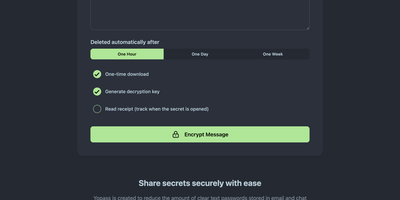
With nearly 3,000 GitHub stars and active development since 2014 through version 14.2.0, Yopass eliminates the universal bad habit of sharing passwords and API keys through Slack messages, email threads, and ticket systems by encrypting secrets entirely in the browser using OpenPGP before anything reaches the server. The Go backend stores only ciphertext — it never sees plaintext — while the React frontend handles all encryption and decryption client-side, generating one-time URLs that self-destruct after a single viewing or when the configured expiration of one hour, one day, or one week passes. File upload support streams encrypted files with configurable size limits, and optional custom password protection adds a second encryption layer beyond the URL-embedded key. The server supports Redis or Memcached as storage backends with automatic key expiration, deploying via Docker Compose in under five minutes or as Kubernetes manifests for production environments. Built-in TLS support works alongside reverse proxy configurations for Nginx, Caddy, and Traefik with automatic Let's Encrypt certificate provisioning. Prometheus metrics expose HTTP request counts, latency histograms, and secret lifecycle counters for Grafana dashboard integration and alerting. Read-only mode enables split-instance deployments separating secret creation from retrieval across different network zones. Multi-language support localizes the interface for international teams. The open-source core under Apache 2.0 provides full self-hosted functionality with no account management required. Running on a dedicated VPS on RepoCloud with guaranteed CPU, RAM, and SSD, full root SSH access, and a browser serial console. Apache-2.0 licensed.
QwenPaw
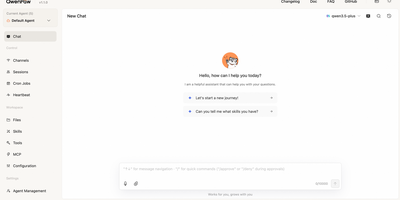
Designed as a unified personal AI workstation, QwenPaw operates as an autonomous digital copilot that coordinates scheduled automations, interactive coding sessions, and multi-channel team communication across everyday messaging apps. Users can dispatch long-running research tasks, process office documents including PDF, Excel, and Word files, and execute browser-based data collection without manual intervention. The built-in web console and terminal interface provide full visibility into agent reasoning, allowing operators to inspect intermediate thinking steps, review proposed file edits, and approve sensitive tool calls. Through direct connectors for Discord, Telegram, DingTalk, Lark, and WeChat, teams can trigger specialized skills or query shared workspaces directly from their existing group channels. A self-evolving personal memory system continuously indexes chat interactions and local resources into editable Markdown files, ensuring knowledge persists across restarts and task delegations. Built-in guardrails including a sandboxed execution runtime, tool access policies, and automated skill scanners protect underlying host files from unauthorized modifications during autonomous scripting runs. Running on a dedicated VPS on RepoCloud with guaranteed CPU, RAM, and SSD, full root SSH access, and a browser serial console. Apache 2.0 licensed.
Apache Superset
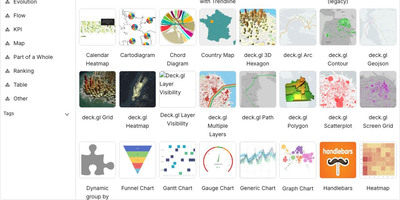
Powering data analytics at companies like Airbnb, Twitter, and Lyft where it originated, Apache Superset has become the leading open-source business intelligence platform with over 65,000 GitHub stars and an Apache Software Foundation top-level project designation. The platform ships with over forty visualization types out of the box including geographic maps, time-series charts, pivot tables, heatmaps, treemaps, and Sankey diagrams, all rendered with Apache ECharts for publication-quality output. Its SQL Lab provides a full-featured IDE experience with syntax highlighting, autocomplete, query history, and result caching for interactive data exploration. Superset connects natively to PostgreSQL, MySQL, ClickHouse, Trino, Presto, BigQuery, Snowflake, Apache Druid, Apache Hive, and dozens more databases through SQLAlchemy connectors, with support for custom database drivers via Python plugins. The semantic layer allows data teams to define calculated columns, metrics, and virtual datasets that business users can query without writing SQL. Role-based access control with row-level security enables fine-grained data governance, while the embedded analytics SDK lets you integrate dashboards directly into external applications via iframes with SSO pass-through. The caching layer supports Redis and Memcached for query result caching, and the asynchronous query execution engine powered by Celery handles long-running queries without blocking the UI. Alerts and reports can be scheduled via email or Slack with PNG or CSV attachments generated from any chart or dashboard. Running on a dedicated VPS on RepoCloud with guaranteed CPU, RAM, and SSD, full root SSH access, and a browser serial console. Apache 2.0 licensed.
AppFlowy
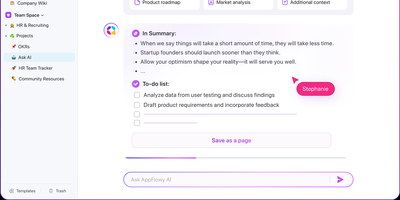
With over 75,000 GitHub stars and native apps across macOS, Windows, Linux, iOS, and Android, AppFlowy is the most widely adopted open-source alternative to Notion — delivering the same block-based workspace model with full data sovereignty. The Flutter frontend renders natively on every platform while a Rust backend powered by Actix-web and Tokio handles CRDT-based real-time collaboration, ensuring sub-second sync across devices with conflict-free concurrent editing. Relational databases support grid, board, kanban, calendar, and gallery views over the same dataset, with two-way relations, rollups, advanced filters, sorts, and formula calculations that cover the majority of Notion's database workflows. The block editor supports 40+ content types including nested pages, toggles, callouts, code blocks with syntax highlighting, embeds, and slash-command insertion. AI integration connects to OpenAI, Anthropic, or local models via Ollama for writing assistance, summarization, and translation — all without sending data off-premises when using on-prem LLMs. Team spaces with workspace-level and per-page permissions, OAuth and SSO authentication through GoTrue, and S3-compatible object storage via MinIO provide enterprise-grade access control and file management. The self-hosted stack deploys through Docker Compose with PostgreSQL for metadata, Redis for caching and pub/sub, and a dedicated background worker for imports and email notifications. Offline-first architecture ensures the desktop app functions without connectivity, syncing changes when the connection resumes. Running on a dedicated VPS on RepoCloud with guaranteed CPU, RAM, and SSD, full root SSH access, and a browser serial console. AGPL-3.0 licensed.
Emby
Point Emby at your movie, music, and photo libraries and it becomes a private streaming service: metadata and artwork arrive from TMDB and TVDB, everything lands in a polished browsable interface, and media transcodes on the fly whenever a client can't play the original format. The client reach is the selling point: native apps span Android TV, Apple TV, Google TV, Fire TV, Roku, LG and Samsung smart TVs, iOS, Android, Apple CarPlay, Android Auto, plus web browsers and desktop apps for Windows, macOS, and Linux, and DLNA devices are auto-detected for casting and remote control. Multi-user support gives each household member their own account, watch history, favorites, and recommendations, with genuinely capable parental controls: content restrictions, access schedules, time limits, and live monitoring with remote control of kids' sessions. Live TV works with hardware tuners like HDHomeRun or M3U playlists, with free guide data in the US, Canada, and UK. The server and core features are free; an optional Premiere key adds hardware-accelerated transcoding, DVR recording, offline sync, and Cinema Mode intros.