Open Source App Cloud Marketplace
Deploy, host, and scale with one click, at half the cost. Then customize with AI agents.
Tautulli
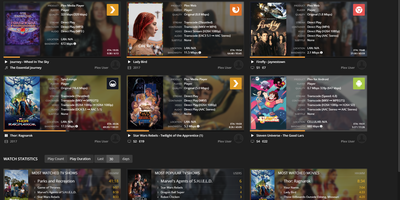
Plex's own dashboard shows current streams and forgets everything else - which is why every Plex server admin eventually installs Tautulli, the analytics layer. This Python web application (descended from PlexWatch and Headphones) logs complete watch history - what was watched, who watched it, when, where, from which device and IP, and whether it played directly or transcoded - and turns it into clean Highcharts graphs of daily plays, concurrent streams, bandwidth, and platform breakdowns. The home page surfaces top statistics over configurable windows: most-watched content, most active users, stream type ratios. For running a server shared with family and friends, this is operational truth: spot the user forcing 4K transcodes on a phone, see which libraries earn their disk space, and track sync activity across users. The notification engine triggers on server events - playback starts, transcode decision changes, recently added media, server down - through dozens of agents (Discord, Telegram, Slack, email, webhooks) with fully customizable text and conditions, plus arbitrary script execution. Scheduled newsletters email your users a styled digest of recently added content. A comprehensive API exposes every statistic for dashboards like Homarr, and an official mobile app monitors activity on the go. Themed to match Plex/Web. GPL-licensed.
Centrifugo
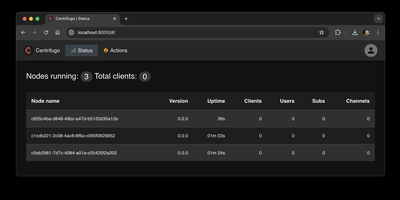
Benchmarked at one million concurrent WebSocket connections and 30 million delivered messages per minute on a single server, Centrifugo is a self-hosted real-time messaging server that integrates with any backend language — Node.js, Python, Go, Ruby, PHP, Java — without requiring architectural changes to your existing application. It handles persistent connections over WebSocket, HTTP-streaming, Server-Sent Events, gRPC, and experimental WebTransport, routing messages through a channel-based PUB/SUB model with automatic reconnection recovery that replays missed messages from hot channel history. Built-in horizontal scaling operates through Redis (including Redis Cluster, AWS ElastiCache, Valkey, KeyDB, and DragonflyDB), NATS, or PostgreSQL brokers, allowing multi-node deployments without external message queues. The server provides JWT-based authentication using HMAC or RSA keys, granular channel permissions, online presence tracking showing who is currently subscribed to a channel, and an RPC proxy that forwards client calls to your backend over HTTP or gRPC. The embedded ReactJS admin web interface displays real-time connection statistics, node information, and provides an interactive API console for publishing messages, managing subscriptions, and inspecting channel history. Official client SDKs are available for JavaScript, Dart, Go, Swift, and Java, with unidirectional transports requiring no SDK at all. Centrifugo also supports delta updates to minimize bandwidth, connection event proxying, and Prometheus-compatible metrics for Grafana monitoring. Running on a dedicated VPS on RepoCloud with guaranteed CPU, RAM, and SSD, full root SSH access, and a browser serial console. Apache 2.0 licensed.
Flipt
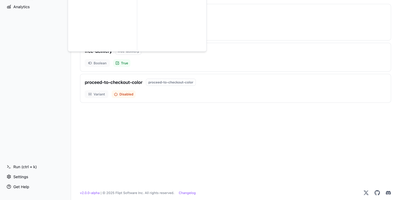
Backed by 4,800+ GitHub stars and trusted by teams replacing LaunchDarkly and Split with a self-hosted solution, Flipt v2 delivers the first truly Git-native feature management platform that treats feature flags as code stored in your own repositories. The architecture eliminates all database dependencies by building immutable in-memory snapshots from YAML flag definitions on every Git commit, delivering sub-millisecond evaluation latency with zero external runtime dependencies beyond the single Go binary. Multi-environment support maps directly to Git abstractions — separate repositories per environment, different directories within the same repository, or different branches — enabling teams to use their existing branching strategy, pull request workflows, and code review processes for flag changes. The evaluation engine supports boolean flags, multivariate string and numeric variants, segment-based targeting with constraint rules, percentage rollouts, and namespace isolation. Native SCM integration with GitHub, GitLab, BitBucket, Azure DevOps, and Gitea creates merge proposals directly from the UI with GPG-signed commits. Flipt implements the OpenFeature Remote Evaluation Protocol with official providers for Go, Node.js, Python, Java, C#, Ruby, and Web SDKs, enabling vendor-agnostic flag evaluation across all services. The gRPC API with REST HTTP gateway exposes flag management, evaluation, and analytics endpoints. Offline mode continues serving flags when the source repository is temporarily unavailable. Running on a dedicated VPS on RepoCloud with guaranteed CPU, RAM, and SSD, full root SSH access, and a browser serial console. Fair Core License (server) / MIT (client SDKs).
Dawarich
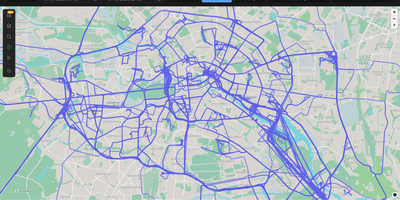
With over 9,000 GitHub stars earned since Google killed its browser-based Timeline, Dawarich fills the gap with a fully self-hosted location history platform that keeps your movement data under your control. Built on Ruby on Rails 8.0 with PostgreSQL and the PostGIS spatial extension for geometry-based queries, Dawarich imports your entire Google Takeout location archive in minutes and begins rendering interactive maps immediately. The visualization engine supports five map layers — heatmaps, points, lines, Fog of War exploration tracking, and a 3D globe view — each powered by Leaflet and spatial SQL rather than browser-side computation. Native iOS and Android apps handle background GPS tracking with offline support, automatically uploading location points when connectivity returns, while third-party integrations support OwnTracks, GPSLogger, Overland, Home Assistant, Traccar, and PhoneTrack. The trip system lets you create route visualizations between any two dates, attach notes, replay travel paths with a timeline scrubber, and share trips publicly with phrase-protected links and per-section visibility controls. Immich and PhotoPrism integrations automatically overlay geotagged photos on your maps and trips, while AirTrail integration renders flight history as arcs. Statistics dashboards break down countries visited, cities explored, total distance traveled, and active days by year and month, with visit detection suggesting places you have frequented. Running on a dedicated VPS on RepoCloud with guaranteed CPU, RAM, and SSD, full root SSH access, and a browser serial console. AGPL-3.0 licensed.
Owncast
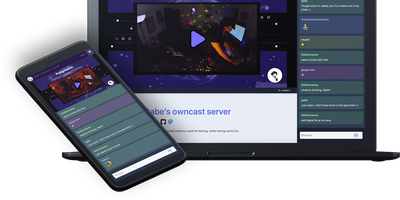
Twitch and YouTube Live, replaced by infrastructure you control: Owncast is a self-hosted live streaming and chat server. Point OBS, Streamlabs, or any RTMP-capable broadcaster at the server's ingest port, and Owncast transcodes the feed with FFmpeg into HLS with multiple quality variants, playing it in a built-in web page with a real-time chat beside it. Chat supports anonymous participation, custom emotes, and moderation tools - message removal, user bans and suspensions - with optional authentication via IndieAuth or a Fediverse account. ActivityPub integration puts the stream on the Fediverse: viewers on Mastodon and compatible services can follow a channel and get notified the moment it goes live. Video delivery can come straight off the server or offload HLS segments to S3-compatible object storage so a modest VPS handles thousands of concurrent viewers while only managing ingest and chat. The backend is a single Go binary with a React frontend - no accounts platform, no database server, no dependency stack - and the player embeds in any website. MIT-licensed, with roughly 9k GitHub stars, zero platform fees, and no algorithm or takedown policy between you and your audience.
Supertokens Core
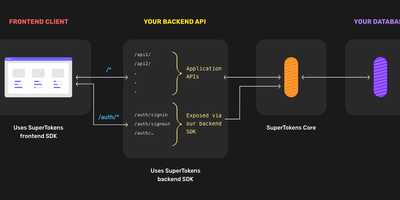
Authentication that lives inside your application rather than behind a redirect to an external identity provider - SuperTokens takes a fundamentally different architecture from Auth0 and AWS Cognito. Three tiers make that work - frontend SDKs (React, Angular, Vue, vanilla JS, React Native) render overridable login UI and manage tokens; backend SDKs (Node.js, Python, Go) expose auth endpoints on your own API domain; and SuperTokens Core, the piece you host here, is the stateless HTTP service handling core auth logic, password hashing, token signing, and database operations against PostgreSQL. The recipe system keeps features decoupled: use email/password, social login, passwordless (magic links, OTP), phone-password, multi-factor authentication (TOTP, WebAuthn), user roles, and microservice auth - individually or combined; you can even use SuperTokens purely for session management alongside another login provider. Sessions are where it shines: rotating refresh tokens with theft detection, automatic access-token refresh, CSRF protection, and secure cookie handling out of the box - the details that become vulnerabilities when hand-rolled. Verification happens locally in your backend via cached JWT signing keys, so the Core stays off the hot path. Self-hosted means no user limits, free forever, with all user data in your database. Apache-licensed.
Hoppscotch
Backed by nearly 80,000 GitHub stars and recognized as one of the most popular developer tools in the open-source ecosystem, Hoppscotch delivers a complete API development platform that runs instantly in any browser with zero installation. The platform supports six protocols out of the box including REST with full HTTP method coverage, GraphQL with schema introspection and multi-column documentation, WebSocket for full-duplex communication, Socket.IO, MQTT for IoT messaging, and Server-Sent Events for real-time streaming. Request collections organize your API calls into logical groups with support for sub-folders, environment variables with scope inheritance, pre-request scripts and post-request test scripts written in JavaScript, and automatic code snippet generation in over twenty languages and frameworks. Teams can collaborate in real-time with shared workspaces, role-based access controls, and cloud synchronization across devices. Migration from Postman, Insomnia, or OpenAPI specifications happens with a single click import. The self-hosted edition deploys via Docker Compose with PostgreSQL for data persistence, supporting SSO authentication through SAML and OAuth providers, SMTP configuration with OAuth2, and admin dashboard for user management. The platform also ships as a native desktop application for macOS, Windows, and Linux with offline support, plus a CLI tool for running collections in CI/CD pipelines. A built-in proxy mode bypasses CORS restrictions during development, and an interceptor enables request debugging and response modification. Running on a dedicated VPS on RepoCloud with guaranteed CPU, RAM, and SSD, full root SSH access, and a browser serial console. MIT licensed.
Ory Kratos
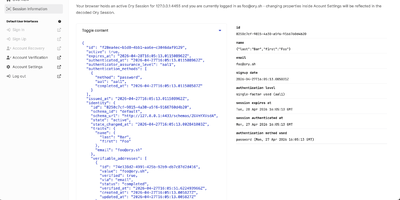
With 13,800 GitHub stars, adoption by OpenAI for ChatGPT's authentication infrastructure serving 800 million weekly active users, and governance under the Ory open-source ecosystem, Ory Kratos provides enterprise-grade identity management as a headless API server that separates authentication logic from user interface — enabling any frontend framework to consume standardized self-service flows for registration, login, recovery, verification, and profile management. Multi-factor authentication supports passkeys, WebAuthn security keys, TOTP authenticator apps, SMS one-time codes, email magic links, and backup recovery codes with configurable Authenticator Assurance Levels enforcing step-up authentication for sensitive operations. Social sign-in connects to any OpenID Connect provider including Google, GitHub, Apple, and Microsoft, plus enterprise SAML 2.0 federation for B2B single sign-on. Customizable identity schemas using JSON Schema define user profiles with flexible trait structures, while pre- and post-flow webhooks enable integration with CRMs, analytics, and compliance systems. The courier system handles email and SMS delivery for verification codes and password recovery links. Session management provides device tracking, forced logout, and configurable lifespans with privileged session elevation. Deploy alongside Ory Hydra for OAuth2/OIDC token issuance and Ory Keto for fine-grained permissions to build a complete identity platform. Docker Compose deployment with PostgreSQL. Running on a dedicated VPS on RepoCloud with guaranteed CPU, RAM, and SSD, full root SSH access, and a browser serial console. Apache 2.0 licensed.
Duplicati
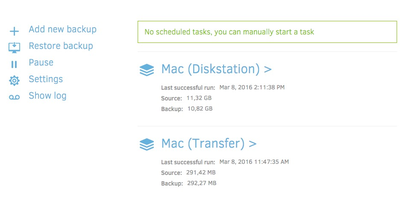
Encrypted, incremental, compressed backups on storage you already have - Amazon S3, Backblaze B2, Google Drive, Azure, OneDrive, Dropbox, MEGA, Storj, WebDAV, SFTP, FTP, SMB, or a plain local disk - is what the MIT-licensed Duplicati has quietly done for years. Its security model is Trust No One: every block is encrypted with AES-256 (or a local GPG instance) before leaving the machine, and the passphrase never travels, so the storage provider holds only ciphertext. The block-based storage engine gives the best of both backup worlds: after one initial full backup, only changed data blocks upload - modify a tiny part of a huge file and only that part transfers - yet every backup version restores like a full backup in a single operation, with no incremental chains to replay. Deduplication and compression keep remote storage growth slow even across years of versions. A web interface manages everything: the built-in scheduler keeps backups current automatically, flexible filters select folders, file types, or custom patterns, retention policies prune old versions, and an integrated updater flags new releases. On compatible object-lock backends, immutable (WORM) storage protects backup data from ransomware that reaches the credentials. Runs on Windows, macOS, and Linux, free even for commercial use.
PsiTransfer
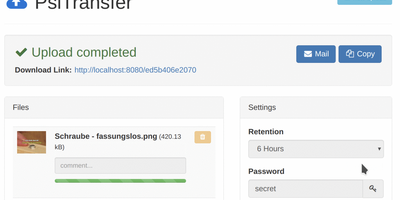
Upload files, get a share link, let it expire: PsiTransfer is a self-hosted WeTransfer with no accounts, no logins, and no third-party cloud with size caps and metadata harvesting. The engineering focus is large files over imperfect networks. Uploads use the tus.io resumable protocol, so a dropped connection on a multi-gigabyte video resumes exactly where it stopped once you're back online; downloads support HTTP range headers for the same resilience, and everything streams, so file size is bounded by your disk rather than memory. Files organize into upload buckets with retention you control: expire after a set time (up to weeks) or after a one-time download, with automatic cleanup when links lapse. Recipients need nothing installed - they open the link, preview files in modal views, and grab everything as a zip or tar.gz archive with one click. Buckets can be password-protected (AES-encrypted download lists), and security-through-obscurity is done properly: bucket URLs use hashed UUID tokens and stored filenames are replaced with UUIDs. An optional admin page (enabled by setting an admin password) lists bucket information and storage. The Vue.js frontend ships under 100 KB gzipped and is fully responsive. Honest caveat from the author: no end-to-end payload encryption yet. BSD-licensed, Docker-ready.
Kan
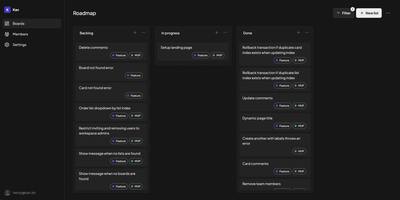
What Trello fans wanted Trello to stay: Kan (kan.bn) is a minimalist, frills-free kanban board capturing the original vision before the enterprise pivots - and then adds the things 2025 actually demands. The core is exactly right: drag-and-drop cards across lists, labels and filters to find work fast, comments for discussion on cards, checklists, a detailed activity log tracking every change, and reusable board templates. Workspaces gather your team with member invites and role management, and board visibility controls decide who can view or edit each board. Migration is first-class: a built-in Trello importer brings existing boards over, so switching costs an afternoon, not a quarter. The standout differentiator is the bundled Model Context Protocol server exposing 46 tools across workspaces, boards, lists, cards, comments, checklists, labels, and members - meaning Claude Desktop, Cursor, Copilot, or any MCP client can read and manage your boards in natural language: "move everything assigned to me into Done" becomes a sentence, not a click marathon. The stack is modern TypeScript - Next.js, tRPC, Drizzle ORM over PostgreSQL, Better Auth (credentials or OAuth), Tailwind - with optional SMTP email and S3 file storage. Unlimited boards, lists, and cards; AGPL-licensed.
Omni Tools
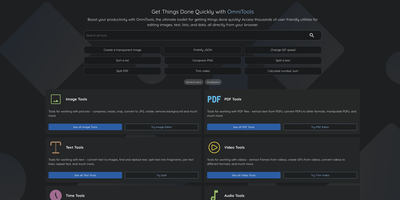
The ad-riddled "free online tools" sites people paste sensitive text into and upload confidential PDFs to - OmniTools replaces that whole ecosystem with one self-hosted app. It bundles 50+ utilities behind one clean React/TypeScript interface: image tools (resize, convert, crop, edit), video and audio tools (trim, reverse, convert), PDF tools (split, merge, edit), text and list utilities (case converters, formatters, shufflers), plus date/time, math, and data-format helpers for JSON, CSV, and XML. The architectural decision that makes it trustworthy is that all file processing happens entirely client-side in the browser - the server only serves static assets, and nothing you process ever leaves your device. That design has a pleasant side effect: the host needs almost no resources (people run it on a Raspberry Pi Zero), because your browser does the work while the server just delivers files. The Docker image is a remarkable 28 MB, making it one of the fastest apps to deploy and cheapest to keep running. There are no ads, no tracking, no accounts, and no upload limits. With multi-language support and an MIT license, it works equally well as a personal toolbox or a team-wide internal utility portal - one URL that replaces a bookmark folder full of questionable converters. Actively developed with 50 contributors and 9,500+ GitHub stars.
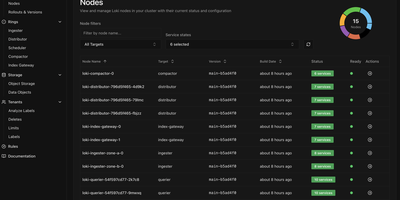
Grafana Loki
With over 28,600 GitHub stars and 450 contributors, Grafana Loki is the log aggregation system that takes the Prometheus approach to logging — indexing only metadata labels instead of full log content, making it dramatically cheaper and simpler to operate than traditional log management platforms. The label-based indexing strategy groups log streams using the same labels already applied to Prometheus metrics, enabling seamless switching between metrics and logs in Grafana dashboards without maintaining separate indexing infrastructure. Grafana Alloy, the telemetry collector replacing Promtail, scrapes and pushes logs with Prometheus-style service discovery, automatic Kubernetes Pod label extraction, and pipeline stages for parsing, filtering, and relabeling before ingestion. LogQL, the query language, combines label matchers for stream selection with regex line filters and aggregation functions, supporting rate calculations, pattern parsing, and metric generation from log data for alerting and dashboard panels. The storage architecture writes compressed log chunks and TSDB indexes to S3, GCS, Azure Blob Storage, or MinIO-compatible object stores, with configurable retention and compaction policies. Deployment modes scale from a single binary for development through monolithic high-availability mode with multiple replicas to full microservices decomposition with separate ingester, distributor, querier, query-frontend, compactor, and ruler components on Kubernetes via Helm charts. Multi-tenancy isolates data and query paths per tenant through header-based tenant ID assignment. Running on a dedicated VPS on RepoCloud with guaranteed CPU, RAM, and SSD, full root SSH access, and a browser serial console. AGPL-3.0 licensed.
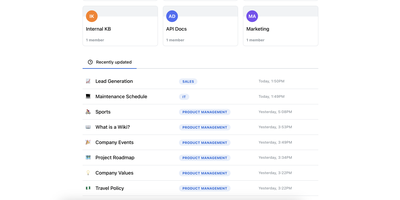
Docmost
Confluence and Notion both want your team's documentation in their cloud; Docmost, an open-source collaborative wiki platform, keeps it on your server. The centerpiece is a Notion-style block editor with CRDT-based real-time collaboration: multiple people edit the same page simultaneously and changes merge without conflicts or overwrites. Content lives in spaces - per team, project, or department - with nested page trees, role-based permissions, groups, inline comments, page history with restore, and full-text search across everything. The editor covers tables, code blocks, callouts, KaTeX math, and file attachments, and diagramming is built in rather than bolted on: Mermaid, Draw.io, and Excalidraw all render inside pages, alongside embeds for Airtable, Loom, Miro, and more. Migration paths include Notion, Markdown, HTML, and ZIP archive imports (Confluence, PDF, and DOCX importers ship in the Enterprise edition, along with SSO via SAML/OIDC/LDAP and MFA). The stack is TypeScript with PostgreSQL and Redis, deploys via Docker Compose, runs in air-gapped environments with no external dependencies, and is translated into 10+ languages. The AGPL-3.0 community edition carries no per-seat fees; the project has passed 20,000 GitHub stars since its 2024 launch.
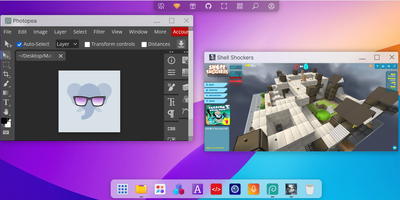
Puter
Puter delivers a complete cloud operating system that runs entirely in the browser — turning any device with internet access into a full-featured personal computer with desktop environment, file management, application hosting, and developer platform. The familiar desktop interface presents windows, taskbar, right-click menus, drag-and-drop, and multi-window management indistinguishable from native operating systems. The hierarchical filesystem supports file creation, uploads, sharing, permissions, and trash recovery with storage backends ranging from local SQLite for self-hosting to S3 and DynamoDB for production scale. Built-in AI integration provides access to GPT-4, Claude, and other models directly from the desktop for text generation, code assistance, and image creation. The developer platform offers a JavaScript SDK, REST APIs, cloud storage, key-value database, and serverless workers for building and hosting web applications without managing infrastructure. Sandboxed applications run in iframes with IPC communication and permission-based access to filesystem, AI, and system services. The app store enables publishing, discovering, and monetizing applications built on the Puter platform. Website hosting publishes static sites with custom domains directly from the file manager. Multi-user support provides individual accounts with authentication, resource isolation, and sharing capabilities. Deploy via Docker with a single command, Docker Compose for production, or npm for development — the one-line install script handles everything automatically on Linux, macOS, and Windows. Running on a dedicated VPS on RepoCloud with guaranteed CPU, RAM, and SSD, full root SSH access, and a browser serial console. AGPL-3.0 licensed.
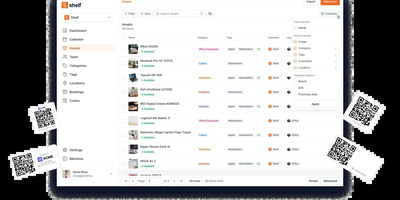
Shelf
Shelf answers the three questions every equipment manager dreads — who has it, where is it, and when is it coming back — using QR-code-first tracking where every asset gets a unique scannable label, every handover is logged with timestamps and e-signed custody agreements, and every scan captures GPS coordinates displayed on a map. Built on React Router 7 with React 19, TypeScript 5, Prisma 6 ORM, and Tailwind CSS 3 with Radix UI components, the platform generates QR codes and barcodes (Code128, Code39, Datamatrix) printable on DYMO, Brother, and Zebra label printers. The custody system records every handover with user details and generates PDF custody agreements with e-signatures for high-value items, while a complete audit trail tracks responsibility from check-out to return. The visual booking calendar prevents double-bookings automatically, supports partial check-outs and returns with segmented lifecycle bars, and handles quantity-tracked consumables alongside individually serialized equipment. Asset Models enable bulk creation of identical items with shared defaults while maintaining individual QR codes and custody histories. Location tracking displays last-scanned GPS coordinates on MapTiler maps. Supabase Auth provides email and SSO authentication, pg-boss handles background job queuing, and Nodemailer delivers SMTP email. The Shelf Companion app on iOS and Android enables field scanning and bookings. Export Asset Inventory, Asset Distribution, and Custody Snapshot reports for compliance. Deploy via Docker with PostgreSQL and Supabase. Running on a dedicated VPS on RepoCloud with guaranteed CPU, RAM, and SSD, full root SSH access, and a browser serial console. AGPL v3.0 licensed.
TriliumNext
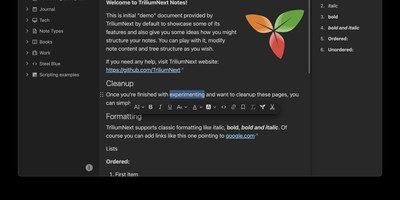
TriliumNext organizes notes in an infinitely deep tree where any single note can be cloned into multiple branches without duplication, building personal knowledge bases that mirror how ideas actually connect rather than forcing a single rigid folder hierarchy. Carrying forward the original Trilium project under active community stewardship with nearly 37,000 GitHub stars, the application is built on TypeScript with a CKEditor 5 WYSIWYG editor supporting rich text, tables, images, KaTeX math expressions, Mermaid diagrams, Excalidraw canvases, mind maps, spreadsheets with XLSX and CSV import/export, and code blocks with full syntax highlighting. A built-in JavaScript scripting engine runs on both frontend and backend, enabling custom widgets, automated workflows, scheduled tasks, and direct interaction with external REST services through a typed Script API. Full-text and fuzzy search with attribute-based queries locates any note instantly across databases tested at over 100,000 notes without performance degradation. The v0.104 release introduced importers for OneNote, Notion, Google Keep, Anytype, and Obsidian alongside 16 dedicated security fixes. Per-note AES encryption, OpenID Connect authentication, and TOTP two-factor protection safeguard sensitive content. The sync server keeps desktop clients, the progressive web app, and mobile devices in lockstep with zero third-party cloud dependency. Web Clipper captures content directly from browsers. Running on a dedicated VPS on RepoCloud with guaranteed CPU, RAM, and SSD, full root SSH access, and a browser serial console. AGPL-3.0 licensed.
Odoo
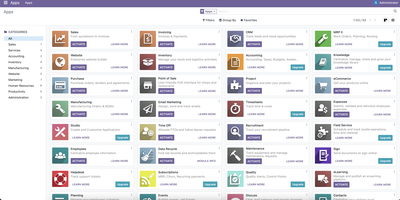
Roughly 40 integrated business apps forming a full ERP: Odoo's open-source suite runs companies end to end. The Community Edition, licensed LGPL-3.0, ships roughly 40 apps covering CRM, sales, invoicing, basic accounting (journals, chart of accounts, taxes, reconciliation), inventory and warehouse management with multi-step routes, manufacturing with BOMs and work orders, purchasing, project management, timesheets, HR, a website builder, and eCommerce. Each app works standalone, but they share one PostgreSQL database and one data model, so a confirmed sale updates stock, triggers procurement, and posts invoices without integration glue. The modular design means you enable only the apps you need and extend with 40,000+ community modules from the Odoo app store covering nearly any vertical requirement. Inventory supports multi-warehouse stock, reordering rules, and lot and serial tracking with barcode-ready operations; manufacturing ties BOMs, work orders, and work-center routing directly to sales demand and stock levels; and the website builder sells straight from your product catalog with payment provider integrations. You can start with just CRM and invoicing on day one and switch on inventory or eCommerce later - new apps integrate with existing data instantly because the schema is shared. The server is Python with an XML/JavaScript view layer, and because data lives in plain PostgreSQL there is no proprietary format: you can query, back up, migrate, and extend business data directly, with unlimited users and no per-seat licensing - where enterprise ERP pricing is per user per month, headcount here costs nothing.