Open Source App Cloud Marketplace
Deploy, host, and scale with one click, at half the cost. Then customize with AI agents.

Social Analyzer
Social Analyzer scans over 1,000 social media platforms in parallel to discover and correlate user profiles from a single username query, making it the most comprehensive OSINT reconnaissance tool of its kind. Three detection modes cover different accuracy and speed tradeoffs: fast HTTP library checks for rapid sweeps, Selenium WebDriver validation for JavaScript-heavy sites, and a special mode for stubborn edge cases. String analysis generates username permutations and combinations to catch related accounts with slight naming variations. Three interfaces serve different workflows: a Node.js web application on port 9005 with a browser-based GUI, a CLI for scripted batch operations, and Python plus Node.js APIs for embedding into automated investigation pipelines. The QeeqBox OSINT library extracts profile metadata, screenshots, titles, descriptions, and activity patterns, all visualized through Ixora-based force-directed graphs that map relationships between discovered accounts. Tesseract OCR analyzes profile images for additional detection vectors. Search results narrow by country codes, website categories, Alexa ranking thresholds, and confidence levels. Optional Google API and DuckDuckGo API integration adds search engine correlation alongside direct platform queries. Docker deployment bundles Node.js, Firefox ESR, Tesseract, and all dependencies into one container. Trusted by law enforcement and security researchers for digital forensics and identity verification. 23,000+ GitHub stars. AGPL-3.0 licensed.
Calibre
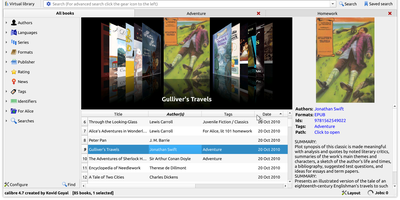
Serious readers organize, convert, edit, and serve their e-book libraries with Calibre - the definitive open-source e-book manager. This deployment runs the full Calibre desktop application on your server, accessible from any browser, so your library lives in one authoritative place instead of scattered across devices. Its conversion engine is the best in the business, translating between every major format - EPUB, MOBI, AZW3, PDF, DOCX, and dozens more - with fine control over fonts, margins, metadata, and structure detection. Metadata management downloads covers, descriptions, series info, and identifiers from online sources, and every field is editable in bulk. Beyond cataloging, Calibre includes a full e-book editor for EPUB and AZW3 internals, a news engine that fetches newspapers and magazines from the web on schedule and converts them into e-books, book comparison tools, and device syncing that sends the right format to each connected reader. The built-in content server exposes your library over HTTP so phones, tablets, and e-readers can browse and download remotely. A deep plugin ecosystem extends everything - metadata sources, format support, store integrations. For power users, the complete CLI (calibredb, ebook-convert) enables scripted library automation. Your books, your metadata, your server - permanent and DRM-free storage under your control.
Puter
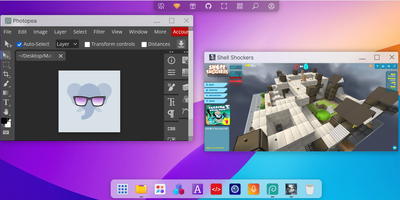
Puter delivers a complete cloud operating system that runs entirely in the browser — turning any device with internet access into a full-featured personal computer with desktop environment, file management, application hosting, and developer platform. The familiar desktop interface presents windows, taskbar, right-click menus, drag-and-drop, and multi-window management indistinguishable from native operating systems. The hierarchical filesystem supports file creation, uploads, sharing, permissions, and trash recovery with storage backends ranging from local SQLite for self-hosting to S3 and DynamoDB for production scale. Built-in AI integration provides access to GPT-4, Claude, and other models directly from the desktop for text generation, code assistance, and image creation. The developer platform offers a JavaScript SDK, REST APIs, cloud storage, key-value database, and serverless workers for building and hosting web applications without managing infrastructure. Sandboxed applications run in iframes with IPC communication and permission-based access to filesystem, AI, and system services. The app store enables publishing, discovering, and monetizing applications built on the Puter platform. Website hosting publishes static sites with custom domains directly from the file manager. Multi-user support provides individual accounts with authentication, resource isolation, and sharing capabilities. Deploy via Docker with a single command, Docker Compose for production, or npm for development — the one-line install script handles everything automatically on Linux, macOS, and Windows. Running on a dedicated VPS on RepoCloud with guaranteed CPU, RAM, and SSD, full root SSH access, and a browser serial console. AGPL-3.0 licensed.

Cal.diy
With over 47,000 GitHub stars, Cal.diy is the fully open-source community fork of Cal.com that strips away every proprietary license gate and enterprise paywall to deliver a pure MIT-licensed scheduling platform you completely own. The booking engine supports individual event types including recurring events, seated events with capacity limits, and paid bookings through Stripe and PayPal, all backed by customizable availability schedules with date overrides, buffer times, minimum notice periods, and travel schedule support. Calendar synchronization is bidirectional across nine providers — Google Calendar, Outlook and Office 365, Apple Calendar, CalDAV, Lark, Feishu, Zoho, Exchange, and ICS feeds — so every booking automatically appears on your existing calendar while blocking conflicting slots. Video conferencing links generate automatically for Zoom, Google Meet, Microsoft Teams, Webex, Jitsi, Daily.co, Whereby, and Huddle01, eliminating manual link management. The automation layer connects through webhooks, Zapier, n8n, Make, and Pipedream to CRM platforms like HubSpot, Salesforce, and Close, messaging services including Discord, Telegram, and WhatsApp, and analytics tools such as Google Analytics 4, PostHog, and Fathom. The entire application is built on the T3 stack — Next.js for server-rendered pages, tRPC for end-to-end type-safe APIs, Prisma for PostgreSQL database access, and Tailwind CSS for the responsive interface. Unlike Cal.com's open-core model, Cal.diy requires no license key and includes no gated features. Running on a dedicated VPS on RepoCloud with guaranteed CPU, RAM, and SSD, full root SSH access, and a browser serial console. MIT licensed.

Gods Eye View
God's Eye View turns your browser into a real-time spatial intelligence command center, rendering thousands of live aircraft, ships, satellites, earthquakes, traffic flows, and public cameras on a photorealistic 3D Earth powered by CesiumJS and Google Photorealistic 3D Tiles. Click any aircraft to see its transponder telemetry from OpenSky and adsb.lol, including route history, altitude, speed, and callsign; track live vessel positions worldwide through AIS beacon data from AISStream; or follow roughly 840 satellites color-coded by class using orbital elements from CelesTrak. A hands-free voice agent powered by the OpenAI Realtime API lets you ask the planet questions in natural language, and the globe annotates your answer directly in 3D space. Toggle FLIR mode for a thermal camera aesthetic, layer in NASA FIRMS wildfire data, switch between Google 3D, Bing aerial, and OpenStreetMap base layers, or tune into a geolocated world radio dial. Public CCTV cameras are projected into 3D city geometry with viewshed cones and direct-manipulation calibration. The cockpit mode provides a pilot-style briefing surface with mission-specific overlays. Entity inspection panels show detailed metadata for every tracked object, and shareable links let you send any scene configuration to a colleague. Ten of the thirteen live data layers work with zero API keys, while the required Google Maps key offers 1,000 free 3D tile sessions per month. Running on a dedicated VPS on RepoCloud with guaranteed CPU, RAM, and SSD, full root SSH access, and a browser serial console. MIT licensed.
Termix
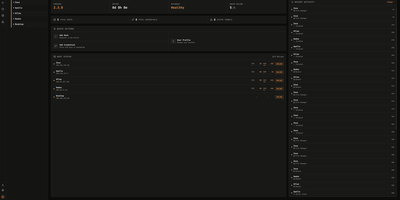
Termix delivers a unified, self-hosted infrastructure control center that consolidates SSH terminals, remote desktop streaming, and fleet automation into an intuitive browser workspace that replaces proprietary tools like Termius. Administrators connect to Linux servers and desktop environments using embedded RDP, VNC, and Telnet protocols powered by Apache Guacamole without requiring local client installations. The multi-panel terminal interface supports four-way split screens, allowing operators to broadcast keystrokes simultaneously across multiple production hosts or execute saved reusable script snippets with dynamic parameters. Real-time multiplayer session sharing lets engineers invite teammates via secure, time-limited links with configurable read-only or collaborative write permissions for troubleshooting incidents. Advanced networking layers handle SSH jump hosts, SOCKS5 proxy chains, Warpgate relays, and port knocking sequences to access segmented private networks securely. Integrated SFTP file managers provide drag-and-drop file transfers with editable path bars, inline text editing, and folder synchronization across remote machines. Background telemetry monitors CPU loads, memory utilization, disk IOPS, and container statuses, while built-in session recording captures complete terminal sessions for compliance auditing. Running on a dedicated VPS on RepoCloud with guaranteed CPU, RAM, and SSD, full root SSH access, and a browser serial console. Apache 2.0 licensed.
Harbor
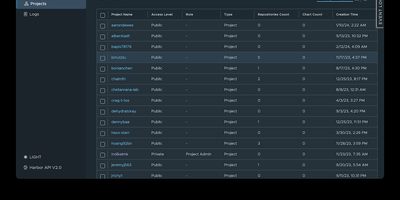
The first container registry to reach CNCF graduated status with over 29,000 GitHub stars since VMware open-sourced it in 2016, Harbor transforms the basic Docker Distribution into a hardened enterprise registry with vulnerability scanning, supply chain signing, multi-datacenter replication, and project-level access control out of the box. Trivy scans every pushed image against the NVD, GitHub Advisory Database, and distribution-specific vulnerability feeds, with scan-on-push policies that block deployment of images exceeding configurable severity thresholds. Artifact signing through Cosign keyless signatures and Notation enforces content trust policies ensuring only cryptographically verified images reach production clusters. Policy-based replication synchronizes images and Helm charts between Harbor instances across multiple datacenters using repository, tag, and label filters with automatic retry and bandwidth throttling — enabling hybrid-cloud and disaster-recovery topologies. The RBAC model isolates projects with per-project quotas, robot accounts for CI/CD automation, webhook notifications, and audit logging that tracks every pull, push, delete, and configuration change. LDAP, Active Directory, and OIDC authentication integrate with existing identity providers, while the proxy cache transparently caches images from Docker Hub, Quay, and other upstream registries to reduce pull latency and rate-limit exposure. The RESTful API with embedded Swagger UI, tag retention policies, garbage collection scheduling, and immutable artifact rules complete the lifecycle management. Deploy via Docker Compose or Helm Chart on Kubernetes. Running on a dedicated VPS on RepoCloud with guaranteed CPU, RAM, and SSD, full root SSH access, and a browser serial console. Apache 2.0 licensed.
SQL Chat
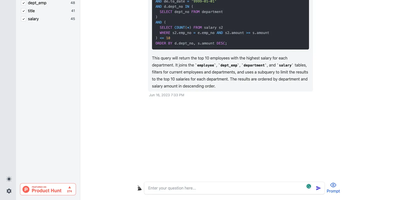
Describe what you want in plain language and get real SQL against your real schema: SQL Chat is an open-source, chat-based SQL client from the Bytebase team. Instead of writing queries in a traditional editor, you connect a database and describe what you want in plain language; the AI reads your schema automatically, generates SQL that references real table and column names, executes it, and returns tabular results in the conversation. Follow-up messages refine the query, so exploration becomes a dialogue - narrow a result set, add a join, change an aggregation - without retyping statements. It supports MySQL, PostgreSQL, SQL Server, TiDB Cloud, and OceanBase from one interface, and covers modification as well as reads: insert, update, and delete operations phrased conversationally. Built with Next.js and TypeScript, it deploys as a single stateless Docker container in single-user mode - connection profiles live in the browser, so there is nothing server-side to maintain. A custom AI endpoint setting routes inference through any OpenAI-compatible API, including self-hosted models, and an optional database-backed mode adds accounts and quotas for offering the tool to a team. MIT-licensed.
Coder
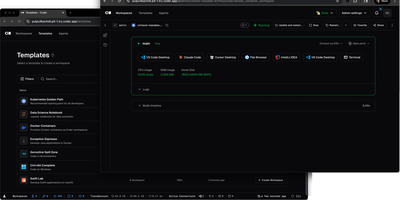
With over 14,000 GitHub stars and enterprise adoption by security-conscious organizations, Coder transforms how development teams provision, manage, and secure their coding environments. Every workspace is defined as a Terraform template, meaning infrastructure engineers can standardize development environments across EC2 instances, Kubernetes pods, Docker containers, or any combination, while developers get self-service provisioning that launches in seconds rather than days of manual setup. The WireGuard-based networking layer establishes encrypted tunnels between developer machines and remote workspaces, providing low-latency access without exposing ports or configuring VPN concentrators. Automatic idle detection shuts down unused workspaces after configurable periods, directly reducing cloud compute costs for organizations running hundreds of developer environments. The Coder Agents feature introduces native AI coding capabilities where the agent loop executes entirely within the control plane on self-hosted infrastructure, keeping LLM API credentials out of individual workspaces and eliminating credential exfiltration risks. Centralized model governance allows platform teams to approve specific AI providers and models, set per-user spend limits, and maintain complete audit logs of all prompts, tool calls, and agent activity. IDE integration supports VS Code through a dedicated extension, JetBrains IDEs via Gateway and Toolbox plugins, and browser-based code-server for web access. The template registry provides pre-built configurations for common development stacks. DevContainer support builds environments from standard devcontainer.json specifications. Deploy on a dedicated VPS on RepoCloud with guaranteed CPU, RAM, and SSD, full root SSH access, and a browser serial console. AGPL-3.0 licensed.
Mage
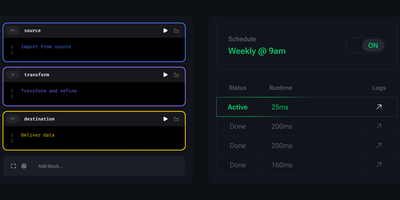
Backed by 8,700+ GitHub stars and designed as a modern alternative to Apache Airflow, Mage delivers the open-source data pipeline platform that combines the interactive flexibility of notebooks with production-grade orchestration in a single self-hosted environment accessible at port 6789. The modular block architecture lets data engineers compose pipelines from Python, SQL, and R code blocks with instant data previews, live execution logs, and visual debugging at each step. Over 100 prebuilt integrations connect sources and destinations including PostgreSQL, MySQL, Snowflake, BigQuery, Redshift, S3, Kafka, MongoDB, Amplitude, Salesforce, and Stripe with parallel stream synchronization for high-throughput data movement. Batch pipelines run on cron schedules or event triggers while streaming pipelines process real-time data from Kafka, Kinesis, and RabbitMQ with stream mode reducing memory usage by approximately 90 percent compared to batch processing. Native dbt integration builds, tests, and runs dbt models directly inside the pipeline editor alongside custom transformation blocks. Spark, Snowpark, and Databricks runtimes handle large-scale distributed processing. AI-assisted development generates code, fixes errors, and optimizes queries within the notebook interface. Monitoring dashboards track pipeline health with integrations to Datadog, Prometheus, New Relic, and OpenTelemetry. Terraform templates deploy production environments to AWS, GCP, or Azure with two commands, while Helm charts support Kubernetes clusters. Running on a dedicated VPS on RepoCloud with guaranteed CPU, RAM, and SSD, full root SSH access, and a browser serial console. Apache 2.0 licensed.
Omni
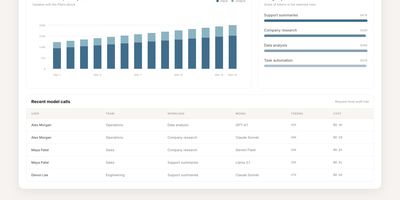
Omni is an open-source workplace AI agent and enterprise search platform that unites your company's scattered tools into a single context-aware workspace where team members can find answers and automate cross-application workflows. Employees can query connected knowledge sources including Google Drive, Gmail, Slack, Jira, GitHub, Confluence, and HubSpot to locate project specifications, customer records, and operational documents without jumping across tabs. The integrated AI assistant answers complex multi-step inquiries, summarizes lengthy email threads, and cites exact source passages so workers can verify factual accuracy before making business decisions. Granular permission inheritance mirrors existing access controls across every connected service, guaranteeing that sensitive personnel files, financial statements, and confidential repositories remain hidden from unauthorized staff. Engineers can construct bespoke data connectors and define automated agent skills through the extensible Python and TypeScript software development kits, triggering multi-service actions directly from interactive chat dialogues. Administrators can monitor background synchronization jobs, inspect audit trails, manage single sign-on access, and configure custom extraction pipelines using centralized operational dashboards. Running on a dedicated VPS on RepoCloud with guaranteed CPU, RAM, and SSD, full root SSH access, and a browser serial console. Apache 2.0 licensed.
OpenBB
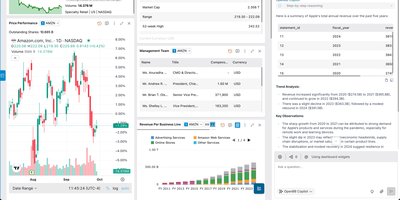
OpenBB stands as the world's most popular open-source finance repository — an Open Data Platform that evolved from a pandemic-era Reddit post into a full-blown infrastructure layer challenging Bloomberg's $25 billion empire. The "connect once, consume everywhere" architecture consolidates proprietary, licensed, and public financial data sources into multiple consumption surfaces simultaneously: Python environments for quants building models, OpenBB Workspace and Excel for analysts creating dashboards, MCP servers for AI agents performing automated research, and REST APIs for custom applications. The modular extension system supports dozens of data providers including Yahoo Finance, Alpha Vantage, FRED, Intrinio, Polygon, and Tradier with standardized schemas that normalize responses across vendors. The CLI offers a terminal-style interactive interface with autocomplete, parameter hints, and chart rendering for rapid data exploration. Provider routing handles authentication, rate limiting, and response normalization transparently so switching between free and premium data sources requires changing a single parameter. The platform covers equities, options, fixed income, crypto, forex, ETFs, mutual funds, economics, technical analysis, quantitative analysis, and alternative data across global markets. AI agent integration exposes every data endpoint as tool-callable functions with schema discovery enabling LLMs to query financial data programmatically. Install via pip with Python 3.9+ and deploy the REST API server for team access. Running on a dedicated VPS on RepoCloud with guaranteed CPU, RAM, and SSD, full root SSH access, and a browser serial console. AGPL-3.0 licensed.
Ocular
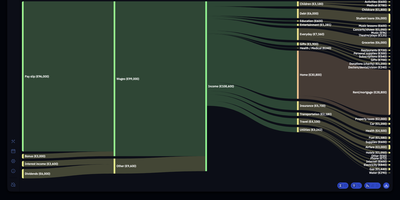
Ocular provides a modern personal finance workspace that plots your household income and expenditures across multi-year horizons to eliminate surprises in annual budgeting. Users can define custom income streams, configure recurring fixed obligations like rent and utilities, and allocate discretionary spending allowances into designated category groups. Interactive Sankey diagrams and cumulative balance curves visualize projected net savings trajectories, signaling upcoming cash crunches months in advance. The annual planning matrix breaks down monthly figures across twelve periods, calculates automatic net savings, and highlights active fiscal cycles. Keyboard shortcuts accelerate data entry with inline arithmetic expression evaluation directly inside currency cells. Built-in multi-currency conversion and localization settings allow international households and remote professionals to manage diverse revenue streams effortlessly. A dedicated privacy mode masks sensitive monetary amounts when working in public spaces, while complete ledgers export cleanly as portable JSON archives. Running on a dedicated VPS on RepoCloud with guaranteed CPU, RAM, and SSD, full root SSH access, and a browser serial console. MIT licensed.
Headlamp
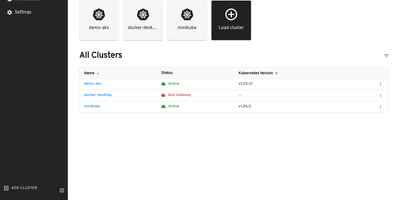
The Kubernetes project's own answer to cluster management UIs: maintained under SIG UI governance, Headlamp's roadmap tracks Kubernetes releases and its design philosophy reflects community needs rather than a vendor's product strategy. The React interface provides full read-write capabilities adapted to each user's RBAC permissions — delete, scale, edit, and restart buttons appear only when the authenticated user holds the corresponding cluster role, preventing accidental unauthorized actions. Multi-cluster support surfaces workloads across development, staging, and production from a single view without context switching. The plugin architecture drives extensibility through a curated catalog: an AI Assistant plugin answers natural-language cluster queries and performs operations via configurable LLM keys, Flux handles GitOps, Karpenter manages nodes. Integrated terminals provide browser-based exec access to running pods, live log streaming follows container output with filtering, and the YAML editor displays inline Kubernetes API documentation alongside resource definitions. Deployment creation forms let you configure containers, environment variables, volumes, and replicas without writing manifests. Side-by-side cluster comparison views surface differences in workload distribution. Works with any distribution: EKS, GKE, AKS, Minikube, Docker Desktop. Helm chart installation via the Headlamp repository with images on GitHub Container Registry. Running on a dedicated VPS on RepoCloud with guaranteed CPU, RAM, and SSD, full root SSH access, and a browser serial console. Apache-2.0 licensed.
It Tools
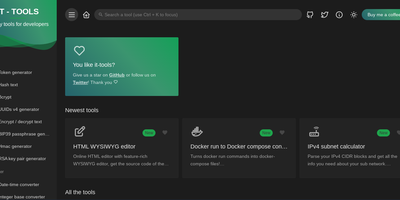
The utilities engineers otherwise scatter across a dozen ad-laden websites - 80+ of them - live together in IT-Tools, one fast, polished web app. Crypto covers JWT decoding, MD5 through SHA-512 hashing, HMAC and bcrypt generation, RSA key pairs, and password strength analysis. Converters handle JSON to CSV, YAML, and TOML, Base64 files, URL encoding, HTML entities, color formats, and Docker run commands to Compose files. Generators produce UUIDv4, ULID, BIP39 mnemonics, QR codes (including Wi-Fi QR), and tokens; text tools include a regex tester, diff viewer, slug and case converters; web utilities parse URLs and user agents, look up HTTP status codes and MIME types, and inspect Open Graph metadata; plus a cron parser, chmod calculator, and more. The privacy argument is the point: JWTs contain user IDs, hashes derive from passwords, JSON dumps hold PII - exactly the inputs you least want a third-party utility site to log. IT-Tools is a frontend-only static bundle (Vue/TypeScript, GPL-3.0, 39k+ GitHub stars) served by Nginx in one container, so everything runs client-side on your infrastructure with nothing transmitted anywhere. New tools ship roughly monthly, and a scaffolding script makes adding custom ones straightforward.
Kong
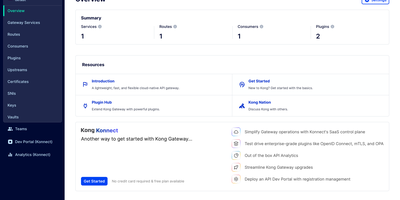
With over 43,000 GitHub stars and adoption by companies including Nasdaq, Samsung, and Expedia, Kong Gateway is the world's most deployed open-source API gateway, processing billions of API requests daily across hybrid-cloud and multi-cloud architectures. Built on the battle-tested NGINX engine with OpenResty's LuaJIT runtime, Kong delivers sub-millisecond proxy latency while supporting REST, gRPC, GraphQL, WebSocket, SOAP, and Kafka protocols. The plugin architecture includes authentication via JWT, Basic Auth, HMAC, key authentication, OAuth 2.0, and LDAP, alongside rate limiting with configurable windows per consumer, IP address, or API key. The AI Proxy plugin provides a universal LLM API that routes across OpenAI, Anthropic, Google Gemini, AWS Bedrock, Azure AI, Databricks, Mistral, and Hugging Face through a single standardized interface, while MCP proxy capabilities convert REST APIs into MCP tools and provide traffic governance for AI agents. Kong supports declarative configuration via YAML for GitOps workflows, a RESTful Admin API for dynamic configuration, and decK CLI for version-controlled infrastructure-as-code management. Upstream health checking with active and passive probes enables automatic failover, and the ring balancer distributes traffic across upstream targets with consistent hashing, round-robin, or least-connections algorithms. The Kong Plugin Hub hosts over 100 community and official plugins covering logging, monitoring, transformation, security, and traffic control. Running on a dedicated VPS on RepoCloud with guaranteed CPU, RAM, and SSD, full root SSH access, and a browser serial console. Apache 2.0 licensed.
Leantime
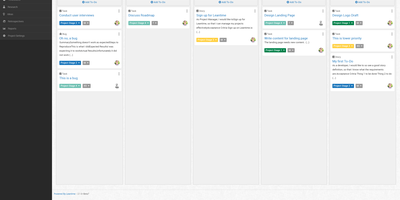
"As simple as Trello but as feature-rich as Jira" is how the Leantime team frames its goals-focused project management system for non-project managers - built from the ground up with ADHD, autism, and dyslexia in mind, with behavioral science shaping customizable dashboards, time blocking, low-cognitive-load prioritization, and Kanban, list, table, Gantt, and calendar views so each person works the way their brain does. The PHP application (AGPL, Laravel Blade frontend) connects strategy to execution: tasks with unlimited subtasks and dependencies roll up into milestones on a timeline, sprints and retrospectives handle iteration, and strategy-level blueprint boards - Lean Canvas, SWOT, risk analysis, goal and metric tracking - keep the "why" attached to the work. Knowledge lives alongside: wikis and docs, idea boards, comments on everything, file storage on S3 or local disk, even screen and webcam recording. Time tracking with timesheets supports estimation and client billing. Admin features are serious for an OSS tool: per-project permissions, two-factor auth, LDAP and OIDC single sign-on, Slack, Mattermost, and Discord integrations, a plugin system, and an expanding API that now powers a mobile app. Recent releases added multi-collaborator task assignment and low-vision accessibility improvements. Available in 20+ languages.
FireFlyIII
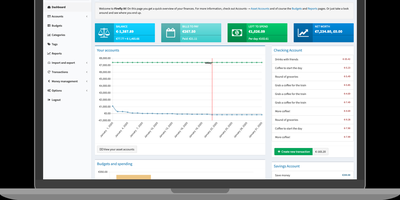
With over 24,000 GitHub stars and active development since 2014, Firefly III is the self-hosted personal finance manager that gives you complete control over your financial data without ever contacting external servers. The double-entry bookkeeping system tracks every transaction with source and destination accounts, ensuring accurate balance calculations and audit trails across checking, savings, credit card, cash, and asset accounts. Budget management sets monthly spending limits by category with visual progress tracking and rollover support for unused allocations. Rule-based transaction automation applies categorization, tags, and budget assignments automatically based on configurable conditions matching description, amount, source, and destination patterns. Recurring transactions schedule regular bills, subscriptions, and income entries with automatic creation on configured dates. Piggy banks divide savings accounts into virtual sub-accounts for goal tracking with target amounts and deadlines. Financial reports include income versus expense summaries, budget performance charts, category breakdowns, tag reports, and net worth tracking with weekly, monthly, and yearly time ranges. Multi-currency support handles any currency with configurable exchange rates for international finance tracking. The REST JSON API covers nearly every feature for integration with external tools, import utilities, and the companion Firefly III Data Importer for bank statement processing. Two-factor authentication provides account security. Self-hosting deploys via Docker containers or directly on PHP 8.5+ with MySQL or PostgreSQL. Running on a dedicated VPS on RepoCloud with guaranteed CPU, RAM, and SSD, full root SSH access, and a browser serial console. AGPL-3.0 licensed.