Categories
Collaboration Database API No-Code Data Management Internal Tools Spreadsheet Application BuilderStars
Forks
Watchers
Baserow
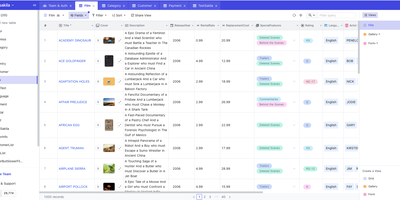
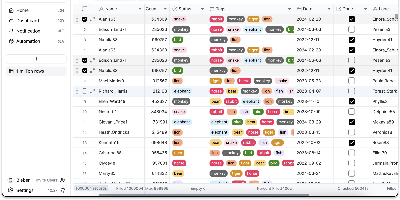
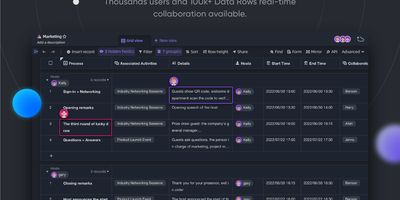
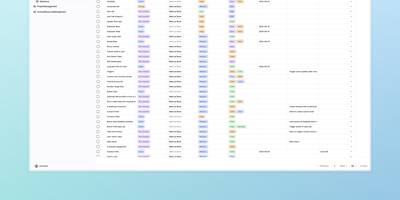
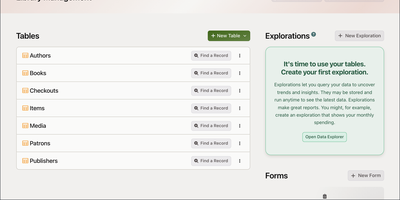
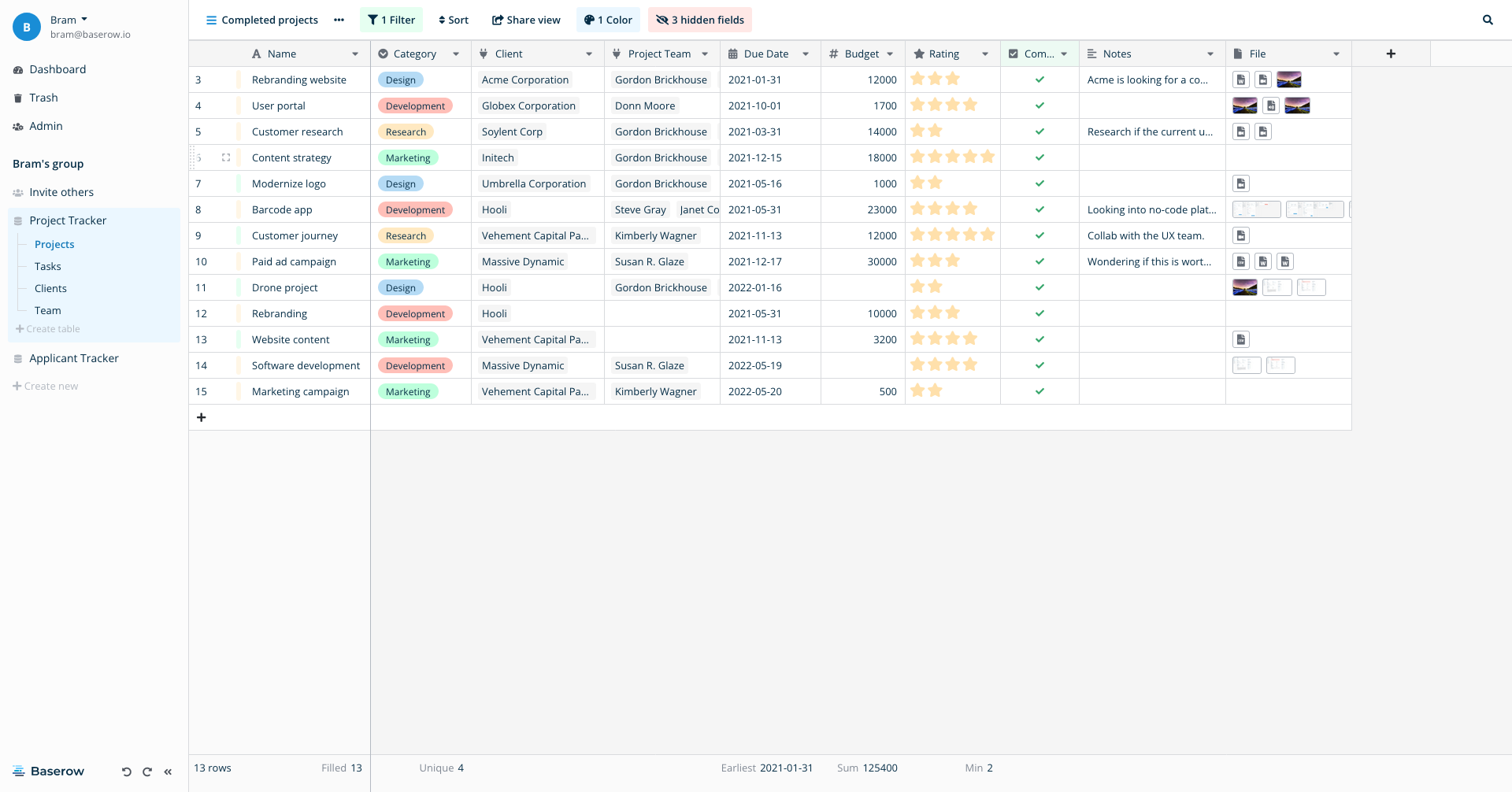
Airtable's spreadsheet-database model, self-hostable and open-source: that is Baserow. It presents data in a spreadsheet-style grid, but underneath each table is a real relational structure with typed fields, links between tables, filters, sorts, and multiple views (grid, gallery, form, kanban, calendar). Beyond the database core, it includes an application builder for composing pages and portals on your data, workflow automations, and dashboards. Everything is API-first: each table exposes a REST endpoint with token auth and webhooks, so it plugs directly into n8n, Zapier, or custom scripts. The stack is Django (Python) on the backend, Vue.js on the frontend, PostgreSQL for storage, with Redis for async tasks. Core features are MIT-licensed; premium features are a paid add-on. The self-hosted version has no row, storage, or API request limits - Airtable's per-base record caps and monthly API quotas simply don't exist here, and capacity is bounded only by your PostgreSQL database and disk. Existing Airtable bases, CSVs, and Excel files import directly with structure preserved, so migration doesn't start from a blank slate, and both the backend and frontend support plugins for custom field types and integrations without forking the core. For non-technical teammates the interface behaves like a spreadsheet; for engineers, the data model is the API.
Benefits
- No Row, Storage, or API Limits
- Airtable's pricing tiers cap records per base and API calls per month. A self-hosted Baserow instance has none of those caps; capacity is bounded only by your server's disk and the underlying PostgreSQL database.
- Usable by Non-Technical Teammates
- The interface behaves like a spreadsheet, so operations, marketing, and support staff can manage structured data directly, while the relational model keeps that data clean enough for engineers to build against.
- API-First by Design
- Every table automatically exposes a documented REST endpoint with database tokens for auth. There is no separate integration layer to configure; the data model is the API.
- Full Data Ownership
- All records live in your own PostgreSQL database. That satisfies data residency and compliance requirements that rule out hosted spreadsheet tools, and there is no vendor lock-in or proprietary export format.
Features
- Multiple Views Per Table
- Grid, gallery, form, kanban, and calendar views over the same underlying data, each with independent filters, sorts, and field visibility.
- Typed Fields and Table Links
- Field types include text, number, date, single/multi select, file, formula, and link-to-table, giving you real relational modeling instead of free-form spreadsheet cells.
- REST API and Webhooks
- Auto-generated API documentation per database, token-scoped access, and webhooks that fire on row changes for real-time integration with external systems.
- Application Builder and Automations
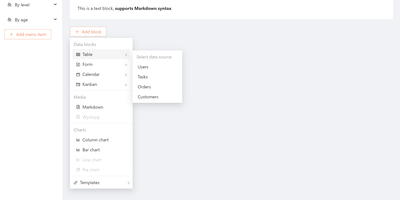
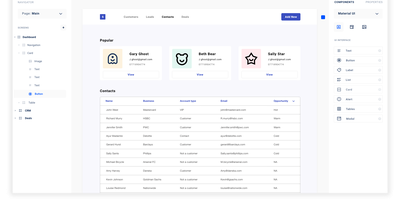
- Compose pages, portals, and dashboards on top of your tables and publish them on your own domain. Automations handle repetitive workflows triggered by data changes.
- Airtable, CSV, and Excel Import
- Bring in existing Airtable bases or spreadsheet files directly, preserving structure so migration does not start from a blank slate.
- Plugin Extensibility
- Both backend and frontend support plugins, so custom field types and integrations can be added without forking the core codebase.