Stars
Forks
Watchers
Developer links
Tapflow
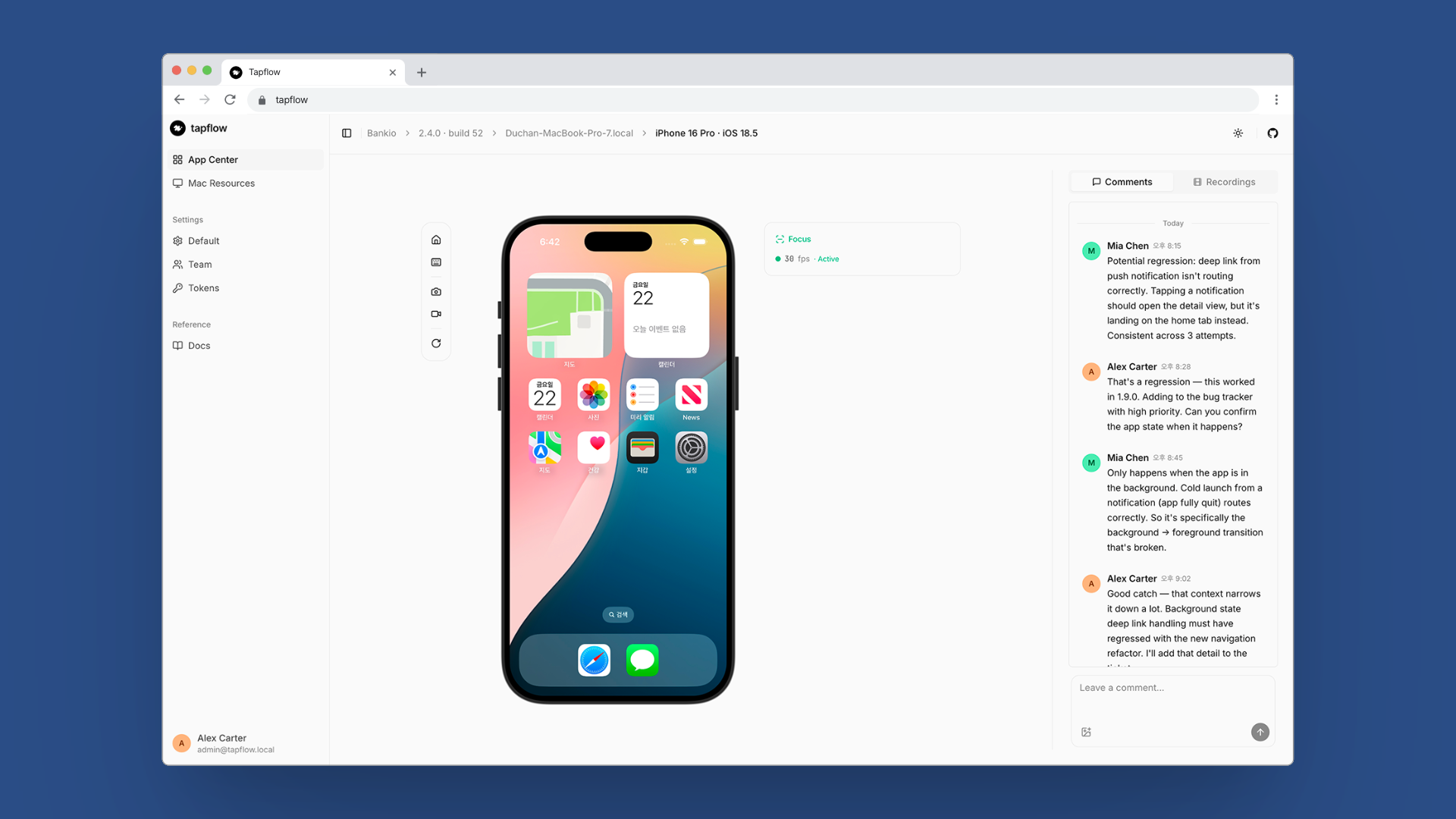
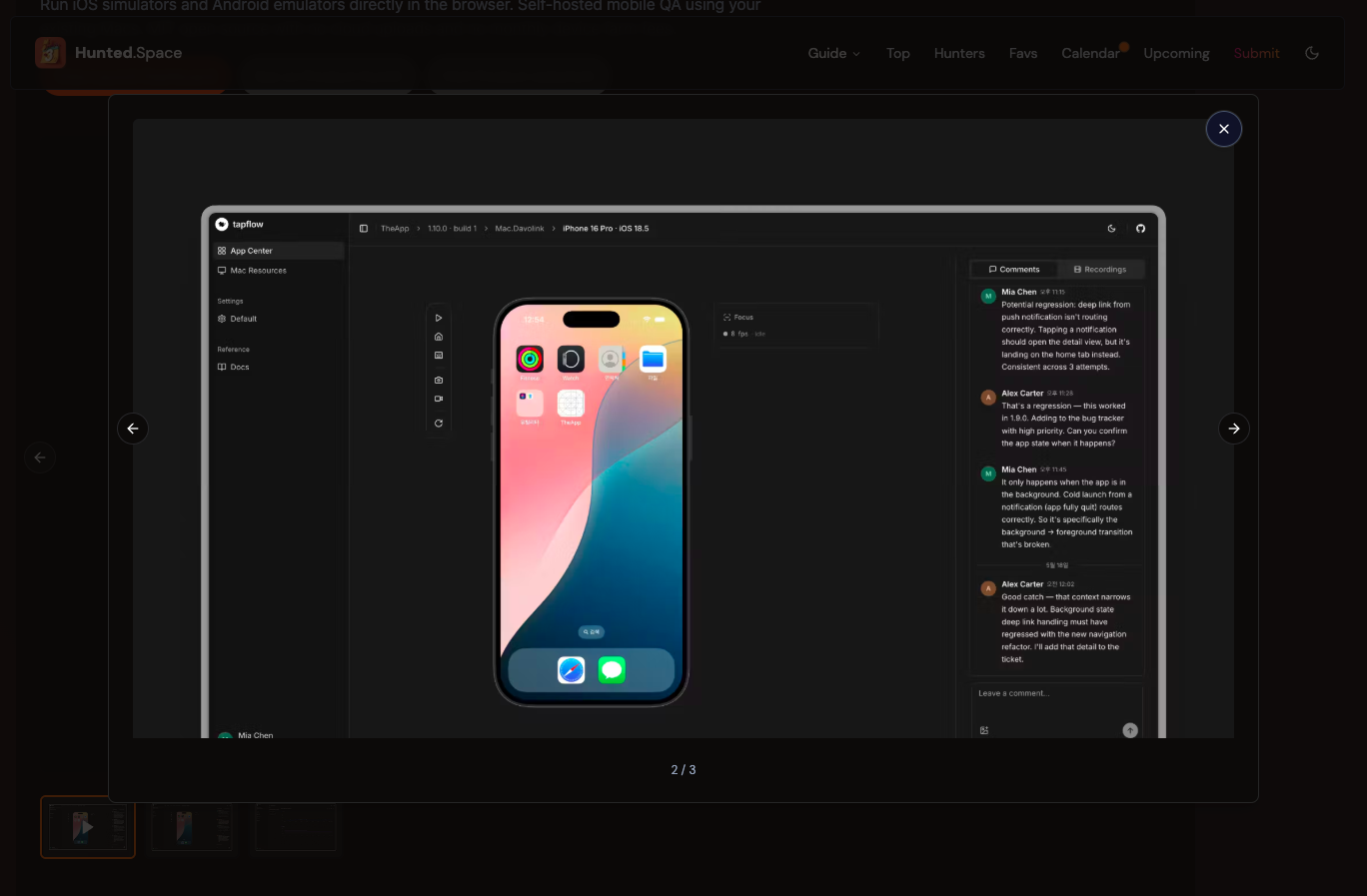
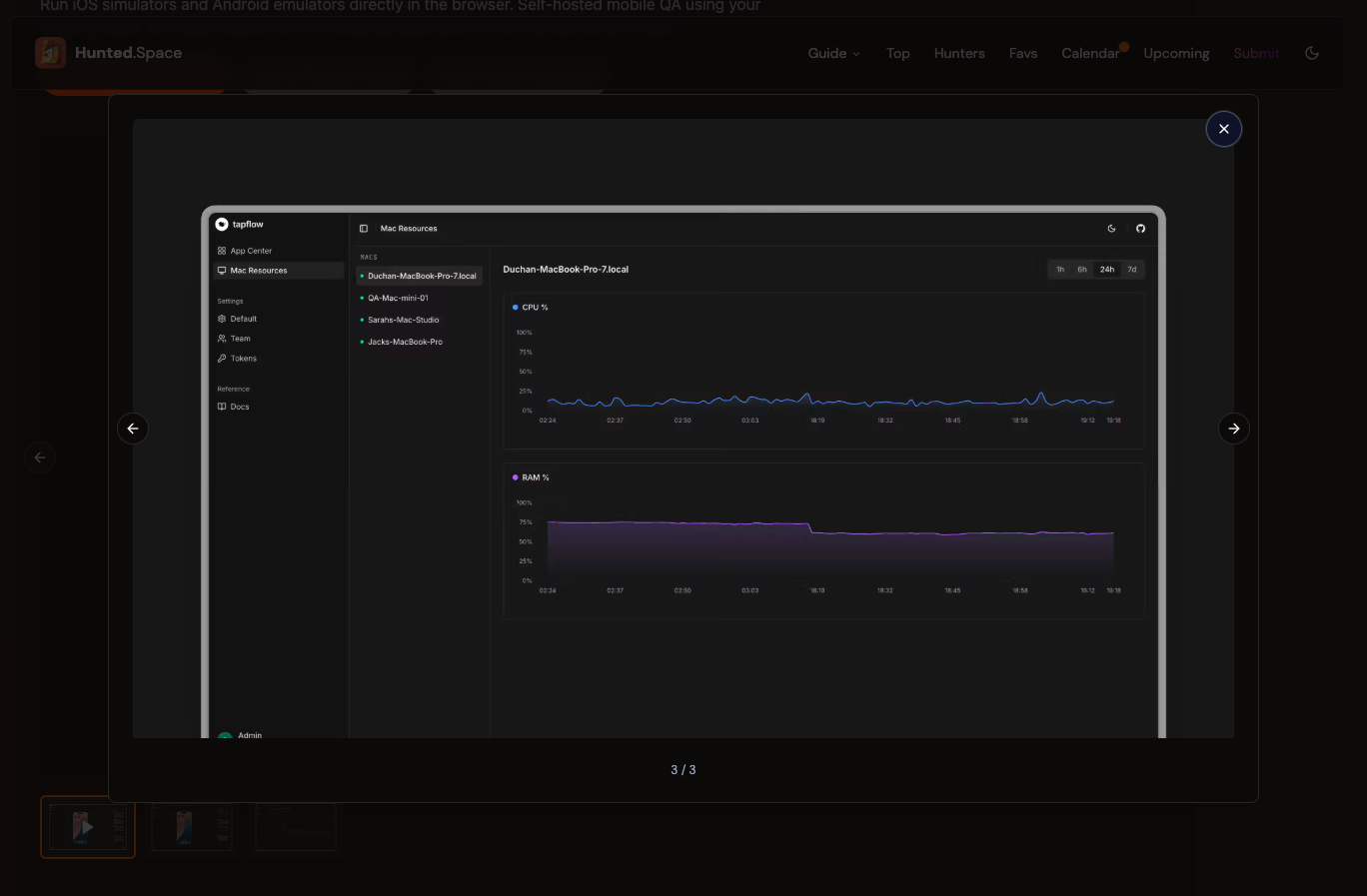
Tapflow puts your team's iOS simulators and Android emulators in every teammate's browser, so QA stops queueing for the one Mac that happens to have the right build installed. A relay server you host serves the dashboard and API, stores your builds and recordings, and keeps accounts and device control on infrastructure you own. Agents on your Macs connect out to the relay and drive the simulators already installed there, injecting touches directly without WebDriverAgent or any cloud device pool. From the browser you tap, swipe, and pinch at about 30 frames per second, open deeplinks from the QA toolbar, sync the clipboard both ways, hear device audio, and cut the network to see how the app copes offline. The App Center takes .app.zip and .apk uploads and tracks each build from backlog to done, and sessions can be recorded and shared before the relay purges them after about 72 hours. CI pipelines and AI agents get a screenshot endpoint and scoped access tokens, deterministic YAML flows replay checks with a JUnit report, and roles keep viewers, QA, developers, and admins in their lanes. Running on a dedicated VPS on RepoCloud with guaranteed CPU, RAM, and SSD, full root SSH access, and a browser serial console. MIT licensed.
Benefits
- Every Teammate Gets The Simulators
- PMs, designers, and backend developers test builds from a browser tab instead of booking time on a mobile developer's Mac or maintaining a pool of physical devices.
- Builds Never Leave Your Infrastructure
- App binaries, live device streams, and session recordings stay on your relay; no internal build is uploaded to a third-party simulator cloud or billed per device minute.
- Real Interaction, Not Screenshots
- Tap, swipe, and pinch land on the simulator in real time over an H.264 stream, with deeplinks, clipboard sync, device audio, and an offline switch for network testing.
- Automation Hooks For CI And Agents
- A REST screenshot endpoint, scoped Personal Access Tokens, a deterministic YAML flow runner with JUnit reports, and an MCP server connect pipelines and LLM agents to devices.
Features
- Browser Device Streaming
- iOS and Android stream at about 30 fps over H.264 with WebCodecs or WASM decoding and a JPEG fallback, so any modern browser can drive a device.
- Self-Hosted Relay Server
- The relay serves the dashboard and REST API on port 4000 from a Docker container or Node.js process, with builds and recordings in its own storage.
- Outbound Mac Agents
- Agents on macOS drive the iOS Simulator and Android emulator, connect outbound to the relay, and inject iOS touch directly with no WebDriverAgent.
- App Center Build Tracking
- Upload .app.zip and .apk builds and track each one through Backlog, In Progress, Done, and Rejected so the team always tests the right version.
- Roles And Access Tokens
- Invite links bring teammates in as Admin, Developer, QA, or Viewer, and scoped Personal Access Tokens serve CI uploads, remote agents, and API clients.
- Flows And MCP Server
- The experimental flow runner replays YAML checks deterministically with JUnit reports, and the MCP server lets LLM agents operate simulators as native tools.