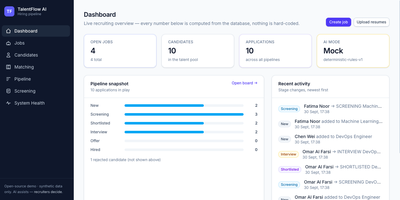
TalentFlow AI
Where most AI hiring tools return one mystery score, this hiring pipeline ranks candidates requirement by requirement and quotes the resume line behind the verdict. Paste a job description or upload a PDF, DOCX, or TXT file, and the requirements split into must-haves and preferences with skills, years, education, and location pulled out. Upload several resumes at once and each becomes a structured profile with an experience timeline, certifications, and canonical skills that keep their evidence line. Match scores print their own formula and weights, and semantic similarity stays a supporting signal that can never override a miss. A pipeline board carries candidates from New through Screening, Shortlisted, Interview, and Offer to Hired, with a Reject off-ramp and an append-only audit trail of every move. The AI assists; the recruiter decides. Screening question sets are generated per application from the match results, probing strengths and honest gaps. Without an OpenAI key the app runs a deterministic mock mode that labels extracted records as mock, and with a key it switches to live extraction and embeddings. A health page reports database and AI configuration without exposing secrets. No protected characteristics are stored or inferred, and the platform never issues a hire or no-hire verdict. Running on a dedicated VPS on RepoCloud with guaranteed CPU, RAM, and SSD, full root SSH access, and a browser serial console. MIT licensed.
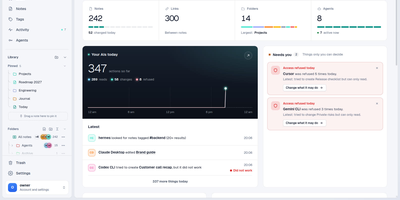
Memora
Memora is a self-hosted second brain where Claude Code, Cursor, ChatGPT, and your other AI agents share one memory made of plain Markdown notes that never leave your server. Agents read and write those notes through 77 tools on a Model Context Protocol endpoint, authenticating with a scoped API key per agent or with OAuth approved in the browser. Every change is committed to git, so any revision can be listed, diffed, and restored, and wikilinks and backlinks turn the vault into a navigable graph. The web UI shows a 3D brain with a region per folder, force, radial, and cluster graph layouts, and a canvas with a frame per folder, beside a reader and editor with reading settings. A live activity timeline records every read, write, search, and sign-in, with filters and JSON or CSV export. Mnemo, a built-in notes agent, finds, writes, tags, links, and tidies notes with your own OpenAI, Anthropic, or OpenAI-compatible key, shows every step, and hands tasks to sub-agents. Privacy rules hide folders from chosen agents, scopes and tool lists limit each key, and access rules allow or block by IP, CIDR, or domain. Images pasted into a note stay in its folder, and the interface installs as a PWA. Install with npm, Docker, or a systemd installer, then claim the instance with a one-time setup code. Running on a dedicated VPS on RepoCloud with guaranteed CPU, RAM, and SSD, full root SSH access, and a browser serial console. AGPL-3.0 licensed.

AI Inbox Agent
You open the inbox and AI Inbox Agent has already done the first pass: the mail sorted and summarized, and a draft in your voice waiting wherever an answer is needed. Unread Gmail lands in one of six categories, urgent through spam, with a priority, a confidence score, and a one-line reason, and phishing is flagged instead of answered. Summaries come with key points, action items with deadlines, and the sender's sentiment. Drafts come from your own history: the agent finds the closest past replies, borrows their tone, and lists the ones it used. Nothing leaves without your yes. Approve it, edit it, skip it, or type a plain-words note like "shorter, and confirm we'll cover the cost" for a rewrite. Approved replies join the examples, so drafts drift closer to how you write. Action items go to Google Tasks, Notion, or Todoist through n8n or any webhook, high-priority ones automatically and the rest in one click. High-priority threads return the next day and medium ones after a few days, with Done and Snooze. A morning digest lists what to act on first, and a stats page estimates the minutes saved. Rules decide which categories earn drafts and whether approval stays required. Bring a key for Anthropic, OpenAI, Gemini, or DeepSeek, or try the recorded demo mailbox first. Running on a dedicated VPS on RepoCloud with guaranteed CPU, RAM, and SSD, full root SSH access, and a browser serial console. MIT licensed.
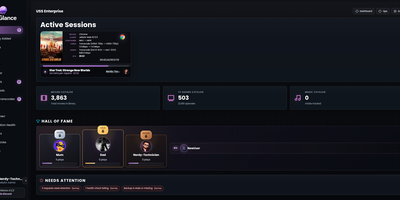
JellyGlance
Running a Jellyfin or Emby server usually means a dozen open tabs; JellyGlance folds your whole media server into one screen you can leave open on a wall. Live sessions show who is watching what, from where, on which client, with direct play or transcode state, codec, bitrate, subtitles, and progress for every stream. Playback history accumulates in its own database, so statistics survive even when the media server forgets: top movies, series, libraries, clients, and users, watch-time trends, activity heatmaps, and weekly, monthly, and yearly recaps rendered as shareable cards. The home dashboard arranges by drag and drop, with presets, density controls, themes, kiosk mode for a wall display, and alert rules. Recently added shelves group by library, while library views surface totals and metadata gaps. Jellyseerr and Overseerr requests appear with poster cards, requester context, and admin actions, and the release calendar pulls upcoming titles from your *arr apps beside the queues of your torrent and Usenet clients, stalled items included. Wizarr invites, Tdarr transcodes, and Maintainerr cleanup connect from the same integrations area. Notifications travel by webhook, Discord, Gotify, and email newsletters, backups export to a plain folder, and sign-in spans local accounts, Jellyfin Quick Connect, and OIDC. Running on a dedicated VPS on RepoCloud with guaranteed CPU, RAM, and SSD, full root SSH access, and a browser serial console. MIT licensed.
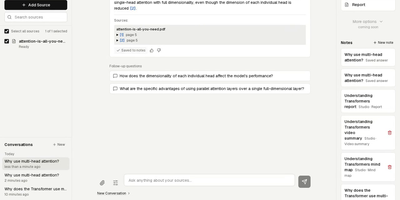
OpenNotebookLM
OpenNotebookLM is a self-hosted research workspace that reads your sources with you, answering questions only from the material you gave it and showing the passage behind every claim. Import papers, spreadsheets, recordings, web pages, PDF links, YouTube videos or playlists, Markdown folders, Obsidian vaults, and Git repositories, then select which sources the chat may use as evidence. Stream answers with follow-up questions, hover any numbered citation to inspect the supporting passage and page, and let the app flag citations that look unsupported before you trust them. The Studio turns the same sources into cited reports in briefing, study guide, FAQ, or timeline formats, expandable mind maps you can pan and question, two-host audio overviews in deep dive, brief, critique, or debate styles, narrated slides exportable to PowerPoint, and tables whose cells carry their own citations. Generate flashcards and timed quizzes from what you read, mark cards for review, and resume saved progress later. Save cited answers and Studio outputs as notes, convert notes back into searchable sources, and export almost anything: conversations, projects, mind maps as SVG, flashcards as Anki text, audio as MP3. Share projects with viewer or editor roles, keep conversations private per person, and bring Claude, OpenAI, any OpenAI-compatible provider, or a local Ollama model, with extraction, OCR, Whisper transcription, and Kokoro audio synthesis running on your own server. Running on a dedicated VPS on RepoCloud with guaranteed CPU, RAM, and SSD, full root SSH access, and a browser serial console. MIT licensed.
FoxProfile
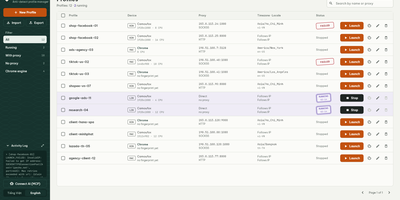
Every account you run deserves its own browser identity, and FoxProfile keeps those identities permanently separate instead of letting them bleed into one another. Create a profile once and it remembers its device: screen, GPU, CPU cores, fonts, and canvas noise are generated on first launch and reused on every later one, so the fingerprint a site saw yesterday is the fingerprint it sees tomorrow. Sessions stick too: history, cookies, and logins live in the profile directory, and the tabs you left open reopen where you left them. Each profile carries its own proxy (HTTP, HTTPS, SOCKS4, or SOCKS5, with a built-in checker) while timezone and locale follow the exit IP automatically or stay pinned to your choice, and the Check IP button compares the exit address across three services and flags mismatches or datacenter addresses. Cookies move in and out as standard editor JSON or Netscape files, whole profiles travel as ZIP archives, and bulk actions launch, stop, or delete fleets at once. On a server, the web panel runs profiles headlessly so you can manage them and view their screens from anywhere, the REST API scripts everything, and the MCP server lets AI agents drive the browsers directly. Running on a dedicated VPS on RepoCloud with guaranteed CPU, RAM, and SSD, full root SSH access, and a browser serial console. MIT licensed.
Lambda ERP
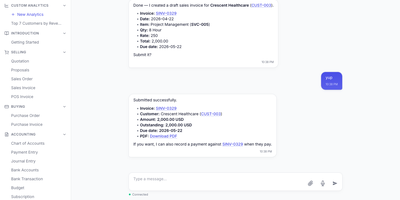
Lambda ERP gives a small business double-entry books, stock control, and full sales and purchase cycles, then lets people run all of it by chatting. A setup wizard asks your country and kind of business, proposes the chart of accounts and taxes for review, and books nothing until you approve. Quotations flow into orders, deliveries, invoices, and payments, purchasing mirrors them, and returns post credit notes with stock reversals. Tell it to bill a customer, change a price, or reorder stock, and it drafts the document, asks before submitting, and links the PDF. Attach a supplier PDF or photo and the assistant can turn it into an invoice or quotation. Trial balance, profit and loss, balance sheet, general ledger, aging, and stock reports come ready to use. Request a custom chart, such as top customers by revenue, and it is saved as a report you can rerun, edit, or share. Analytics queries use whitelisted datasets, never free-form SQL. Documents print as PDFs in layouts you edit by hand or by chat, and issued ones keep their original layout. An admin can enable role-scoped keys for a REST API, a chat API, and an MCP endpoint that Claude or Codex can drive. The assistant runs on your own OpenAI key. Admin, manager, and viewer roles and English, German, or French screens are included. Running on a dedicated VPS on RepoCloud with guaranteed CPU, RAM, and SSD, full root SSH access, and a browser serial console. Apache-2.0 licensed.
Memoturn
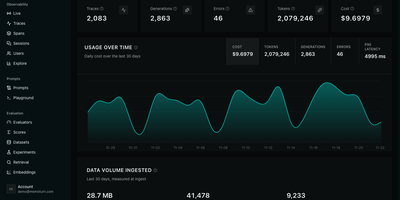
Tracing each model call, pricing it, scoring the answer, and versioning the prompt behind it, Memoturn gives AI teams proof of what works before it ships. Traces unfold on a waterfall timeline where agent plans, tool calls, retrievals, and generations each get a bar, with tokens and cost on every step. Quality is measured three ways: offline experiments over datasets, online judges sampling production traces, and human review queues with one-click scoring. Scores appear on the trace they came from. A versioned prompt registry promotes versions through deploy channels, A/B tests split live traffic between them, and a streaming playground compares models side by side. Cost, token, and latency charts break down by day, model, user, and tool, while budget alerts run every minute and automations post to Slack or a webhook when a score drops. A retrieval page flags weak document matches, and an embeddings map with similarity search turns one bad generation into every trace like it. An MCP server hands prompts, datasets, and review queues to agent IDEs like Claude Code and Cursor, with roles checked per tool. Teams get organizations and projects, SSO through OIDC or SAML, read-only viewer roles, PII masking at ingest, and retention rules. Data arrives from any OpenTelemetry exporter, with integrations for OpenAI, Anthropic, LangChain, and LiteLLM. Running on a dedicated VPS on RepoCloud with guaranteed CPU, RAM, and SSD, full root SSH access, and a browser serial console. Apache-2.0 licensed.
Imbo
Your coding agents work in separate terminals and cannot ask each other anything; Imbo gives Claude Code, Codex, opencode, Cursor CLI, and six other agent tools one shared messaging network, so a session can send a question to another session and get an answer while both keep working. Messages land inside the receiving session mid-task, and a reply wakes an idle session so it can act on the answer. You add people by account ID, and their agents can message yours; group chats let several sessions from several people coordinate on one brief, with every reply reaching every member. Sessions can send files that land in the receiving machine's ~/.imbo/files folder, and an agent asks you first before sending your data out, deleting files, spending money, or touching production. From the web app or the iPhone app you can message your own sessions from anywhere, and a closed Claude Code session reopens in the background to pick the message up. The server is a single binary with a bundled PostgreSQL, HTTPS through Let's Encrypt, email code sign-in, and optional domain restrictions on who may register. Running on a dedicated VPS on RepoCloud with guaranteed CPU, RAM, and SSD, full root SSH access, and a browser serial console. Apache-2.0 licensed.
Deskforce
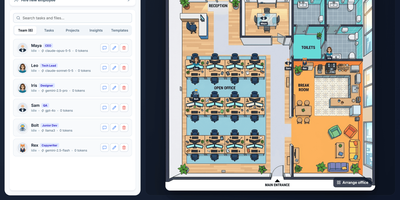
Staffing a virtual office with AI employees, Deskforce turns one goal into a plan you approve, delegated work, and a finished project. New hires pick a name, an avatar, a role, and their own model from OpenAI, Anthropic, Google Gemini, Grok, or a local Ollama server. On the floorplan, speech bubbles show what each model is writing as it writes it, and agents walk to the meeting room and coffee machine. Before anything is spent, the CEO proposes a plan with a cost estimate that you can approve, edit, or send back. Budgets cap each request, a monthly limit stops new work, and Insights charts spending per day, employee, and model. Model comparison runs one request on two or three models in separate projects and lines up result, time, and cost. Finished tasks land as git commits in the employee's name, ready to read or undo with one click. A file browser with history opens each project, and any project with an index.html gets a preview. When two agents need the same file, they hold a meeting first and agree who does what. Message the office from Slack and the senior employee answers, starts tasks, and flags plans waiting for approval. Templates rerun a saved task on a click, daily, or weekly. Close the browser tab and the work continues. Running on a dedicated VPS on RepoCloud with guaranteed CPU, RAM, and SSD, full root SSH access, and a browser serial console. MIT licensed.
Iso
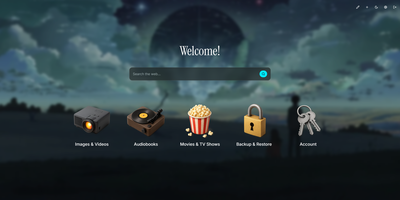
Drop a single container onto your host to launch Iso, a minimalist self-hosted startpage and service launcher that organizes every homelab web application behind a clean isometric icon grid and integrated search bar. No external database is required. Everything lives inside one human-readable JSON file or gets edited directly through the in-browser visual configuration modal. Add new service tiles in seconds, drag to reorder their display priority, and pick from a curated library of 3D isometric icons or upload custom graphics up to 25 megabytes. Switch instantly between built-in color palettes like Amethyst or upload a custom wallpaper with adjustable background blur and opacity sliders. A central search bar sits at the top of your startpage, routing queries directly to Google, DuckDuckGo, Startpage, Qwant, Searx, Bing, or any custom query URL template. Localize the interface into English, Spanish, French, or German with a single toggle. Custom greeting banners and optional page-load animations personalize the daily browsing experience for family members or lab users. Protect the dashboard and its visual editor behind shared password authentication configured via environment variables. Running on a dedicated VPS on RepoCloud with guaranteed CPU, RAM, and SSD, full root SSH access, and a browser serial console. MIT licensed.
Lampo
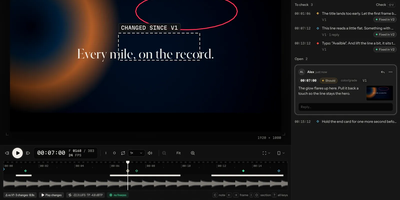
Feedback with a frame number attached: Lampo pins notes, drawings, and voice comments to exact video frames and hands AI agents the timecode and a marked screenshot of each. A producer marks up a cut, and the agent works through the notes, replying to each as fixed, won't fix, or a question pinned to that frame. The next render arrives as a new version with the unresolved notes carried over. Check mode lines up the old and new versions at the same frame, offering one key for looks right and another for still wrong. Hold T and talk while the video plays, and the note pins to where you started, transcribed and tagged by a speech engine on your own server. Auto-check reads burned-in text for typos and flags flash frames, freezes, clipping, silence gaps, and loudness that misses its target before anyone presses play. Clients draw on the frame, reply, and approve through a review link with no account, while you control downloads, expiry, and passwords. Sign-off stays with people. Claude Code, Codex, Cursor, and any MCP client connect through the CLI and MCP server, and an Agent view shows the plan, render progress, and a Stop button. Project Files hold footage, fonts, and logos with restorable versions, and playbooks carry the brief and house rules that agents read first. Running on a dedicated VPS on RepoCloud with guaranteed CPU, RAM, and SSD, full root SSH access, and a browser serial console. AGPL-3.0 licensed.
Llama RPC Farm
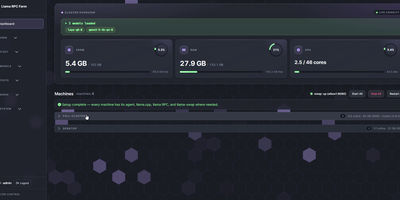
If your GPUs are scattered across a few machines, Llama RPC Farm pools them into one llama.cpp cluster behind a single OpenAI and Anthropic endpoint. A model editor lists every GPU and RAM chip, and ticking them lets one model span several machines with the device order in plain view. Models load on demand, and serve groups decide whether neighbors run together, stay always on, take turns, or clear the stage solo. A live dashboard tracks VRAM, memory, CPU load, temperature, and RPC state for each machine. The Flow Visualizer draws real per-tensor placement as a model runs, with pulsing GPUs wherever compute is in flight. Browse Hugging Face for GGUF files by quantization, task, company, or collection; sharded models download as one row. Weights can live on a shared network mount, or model sync can copy missing files to each machine. Access keys give each person or device a model allowlist and optional daily, weekly, or monthly request limits, with usage tracked per key. A Connect tab prints ready-to-paste client configs and tests the endpoint. A model that fits on one machine can run as a full replica on several, with requests balanced between them. Linux, Windows, macOS, and Raspberry Pi machines can share one cluster. A first-run walkthrough sets storage, installs the engines, and loads a tiny demo model. Running on a dedicated VPS on RepoCloud with guaranteed CPU, RAM, and SSD, full root SSH access, and a browser serial console. Apache-2.0 licensed.
Roamgate
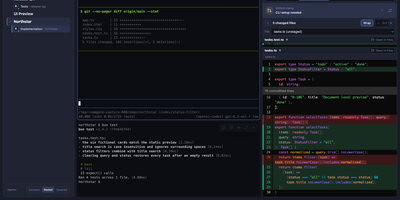
Close the laptop, keep the agents: Roamgate brings the Herdr workspace running on your server into any browser, so the terminal session you left mid-task is waiting on your phone exactly as you left it. Every workspace and recognized agent sits in one view: check what each agent is doing, read its conversation, and take over a real terminal with streaming output, split panes, scrollback, multiline paste, and clickable links. When the agent finishes, the review happens in the same place: inspect staged, unstaged, untracked, and branch changes, annotate exact diff lines, preview rendered Markdown, and send compiled feedback back into the agent pane without pre-filling a submission you did not approve. Files browse beside the terminals, and session history survives disconnects because Herdr owns the sessions, not your browser tab. Connections stay flexible: run the bridge beside Herdr on one machine, save SSH profiles to reach remote hosts, and install the whole thing as a PWA for an app window without tabs. Login is required even on loopback, push notifications flag agents waiting for input, and themes, accents, and terminal fonts make the cockpit yours. Running on a dedicated VPS on RepoCloud with guaranteed CPU, RAM, and SSD, full root SSH access, and a browser serial console. MIT licensed.
Clay Studio
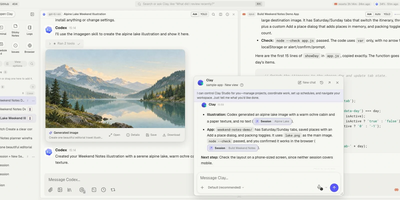
Clay Studio is a self-hosted workspace where your team and its coding agents share projects, live sessions, and project knowledge in one browser interface instead of scattering them across terminals. You organize several repositories in one sidebar and run sessions in parallel while teammates watch live activity, enter the same session, hand work off, and answer permission requests from wherever they are. Ten agent runtimes plug into the same workspace, Claude Code, Codex, Grok Build, Kimi Code, GitHub Copilot CLI, Qwen Code, Junie CLI, Antigravity CLI, OpenCode, and Kiro CLI, each keeping its own authentication and models. Persistent Mates give AI collaborators an identity, instructions, memory, direct messages, and roles in structured debates that survive beyond a single chat. Worktrees, paired sessions, spawned workers, scheduled tasks, and Ralph Loops let background jobs proceed without losing sight of what is running. You browse and edit files, inspect diffs and history, open terminals, install skills, connect MCP servers, and manage project knowledge without leaving the workspace. The installable PWA works on mobile and pushes notifications for approvals, failures, and finished work. Sessions and knowledge stay on your disk as portable JSONL and Markdown, so switching providers never means migrating your workspace. Running on a dedicated VPS on RepoCloud with guaranteed CPU, RAM, and SSD, full root SSH access, and a browser serial console. AGPL-3.0-only licensed.
Nowen Reader
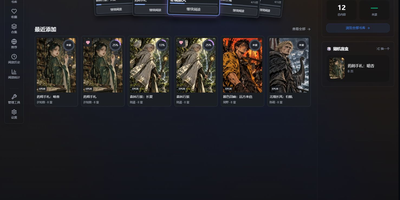
Nowen Reader turns a NAS folder of manga and novels into a private library you can browse, organize, and read from anywhere, without handing your collection to a cloud service. Drop comic archives and ebook files into watched folders and automatic scanning brings them into the library, detecting duplicates and cleaning up invalid entries along the way. Metadata arrives from AniList, Bangumi, MangaDex, MangaUpdates, and Kitsu, so covers, authors, and series information fill themselves in instead of being typed by hand. Read comics in single page, double page, or vertical webtoon modes with image filters and bookmarks, and pick up novels chapter by chapter where you left off. Reading status follows each user, with want to read, currently reading, and finished shelves plus personal ratings, favorites, and progress statistics. OPDS feeds stream pages directly to KOReader, Moon+ Reader, and other compatible apps, so your e-reader pulls from the same library. Optional AI assistance can suggest tags, summarize chapters, analyze covers, and translate pages. Libraries can be public, private, or shared with user groups, with per-library permissions for households. Running on a dedicated VPS on RepoCloud with guaranteed CPU, RAM, and SSD, full root SSH access, and a browser serial console. GPL-3.0 licensed.
Euron Open AI Chat
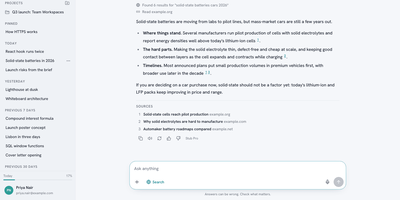
Your own ChatGPT-style assistant for a team or community runs on servers you control when Euron Open AI Chat answers from the models you enable. Admins add OpenAI, Anthropic, Gemini or any OpenAI-compatible endpoint, from OpenRouter and Groq to a local Ollama, and the picker lists only models whose provider has a key. Answers stream in and keep going when a tab closes or a phone drops its connection, and regenerated or edited messages stay as versions one click apart. Questions that need fresh facts trigger web search through SearXNG, Tavily, Exa or Brave, page reading, and answers with numbered citations. Attached images, PDFs, Word and Excel files, CSVs and code are read, and vision models describe photos. Image generation and editing work in the chat or in a studio with a gallery. Projects bundle shared instructions and knowledge files for a group of chats, and the assistant searches them and says where it looked. A memory page lists what the assistant remembers and who saved it, with a way to forget each fact. Voice means dictation and read-aloud. Shared conversations are frozen public links that an owner or admin can revoke. The /admin control plane manages users, roles, daily token and image allowances by tier, providers and models, sign-up rules, feature switches and an audit log, and never shows anyone's chats. Running on a dedicated VPS on RepoCloud with guaranteed CPU, RAM, and SSD, full root SSH access, and a browser serial console. MIT licensed.
SEO OS
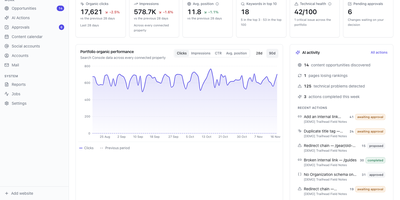
Instead of juggling a crawler, a rank tracker and a folder of spreadsheets, SEO OS audits your websites, proposes fixes, applies the ones you approve and measures whether they worked. Its crawler honors robots.txt, follows redirects and canonicals, avoids crawl traps and can render JavaScript. Sixty-one technical rules grade crawlability, indexability, metadata, content, links, structured data and security, each finding with evidence and a recommendation. Scores come with their factors, weights and a sentence explaining each one. Keyword reports flag striking-distance queries, CTR gaps, content decay and cannibalization, ranked by an explainable opportunity score. A content engine declines to create pages an existing one could cover, and a 14-stage pipeline takes approved ideas from research to publication. Internal-link suggestions come from PageRank over the site's link graph, with orphan detection and anchor-text auditing. GEO readiness scores pages across eleven machine-readability dimensions, while AI-visibility tracking checks whether assistants mention or cite the brand. Social listening watches Reddit, Hacker News and Bluesky for people describing the problem a site solves and drafts disclosed replies for approval. An approval queue groups changes by risk and shows each exact diff with the agent's reasoning, and adapters for WordPress, Git, Shopify, Webflow and webhooks apply only what you approve. Applied changes open experiments that report likely positive, inconclusive or likely negative, steering the next recommendations. Running on a dedicated VPS on RepoCloud with guaranteed CPU, RAM, and SSD, full root SSH access, and a browser serial console. MIT licensed.