TeamMapper
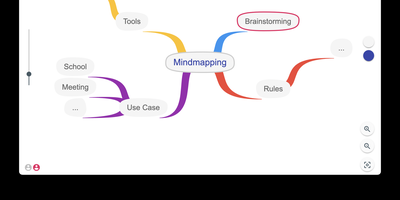
Turning chaotic group brainstorming sessions into structured visual diagrams, TeamMapper provides a real-time collaborative mind mapping workspace that teams and classrooms can join instantly without creating user accounts. Workshop facilitators, teachers, and product squads start from a central root topic and branch outward into hierarchical radial trees, using keyboard shortcuts and full undo-redo history to capture ideas at the speed of conversation. Every node can be styled with custom branch and background colors, adjustable font weights and sizes, external reference links, uploaded raster images, and visual pictograms from the ARASAAC library to reinforce memory and visual association. Sharing a live session takes a single click: hosts distribute either a view-only link, a full modification invite URL, or a scannable QR code so remote colleagues and students in the same room can edit branches simultaneously. When enabled by the administrator, an integrated AI assistant can automatically generate initial mind map branches and subtopics from a text prompt to jump-start planning sessions. Completed maps export cleanly to JSON, Mermaid diagram syntax, scalable SVG vectors, high-resolution PNG images, or printable PDF documents, and existing JSON maps can be re-imported at any time for follow-up workshops. Built-in privacy controls automatically purge inactive mind maps and orphaned image attachments after a configurable retention window, simplifying GDPR compliance for schools and enterprises. Running on a dedicated VPS on RepoCloud with guaranteed CPU, RAM, and SSD, full root SSH access, and a browser serial console. MIT licensed.

PullMD
PullMD turns any URL or file you point it at into clean Markdown your AI agent can actually afford to read. Paste a web page and get back tidy body text with metadata tucked into frontmatter instead of navigation soup and cookie banners. Send it a Reddit or Hacker News thread and it returns the full comment tree with depth and count under your control. Hand it a PDF, Word file, PowerPoint, spreadsheet, or EPUB and it hands back Markdown, with an optional OCR tier for stubborn table-heavy documents. YouTube links come back as title, description, and a transcript with clickable timecodes, no API key required. The query-scoped mode answers a question about a long page by returning only the relevant sections, typically cutting 70 to 95 percent of the tokens. Every conversion gets a short share link that re-fetches the source when it goes stale and serves the last good snapshot if the original dies. Agents connect through the built-in MCP server with OAuth 2.1, a plain REST API, or a downloadable Claude Code skill, while you keep history, an archive, and cache statistics in the web app. Running on a dedicated VPS on RepoCloud with guaranteed CPU, RAM, and SSD, full root SSH access, and a browser serial console. AGPL-3.0 licensed.
neTV
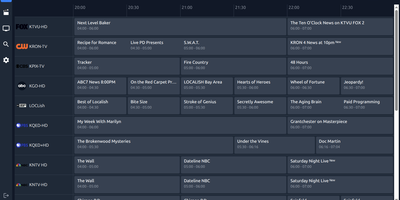
neTV turns any Xtream Codes or M3U IPTV subscription into a clean, fast player that you host yourself and open from a browser, iPhone, iPad, Apple TV, Mac, or Chromecast. The EPG grid guide shows what is on now and next, and catchup lets you browse earlier listings, replay a program from the beginning, or start over a show already airing, with timeline seeking whenever your provider keeps an archive. Intelligent Handoff lets you switch off the living room TV mid-match and resume on your phone from the exact moment you stopped, because the server keeps the stream going until the program ends. Movies and series arrive with metadata, seasons, episodes, and resume points, while search accepts regular expressions and favorites support drag-and-drop ordering alongside playlists that you build on the web and see in every app. Smart passthrough remuxes h264 and AAC streams without re-encoding, and NVENC or VAAPI hardware transcoding serves low-latency HLS to clients that need it. Owners of an NVIDIA GPU can switch on real-time 4K AI upscaling that lifts 1080p channels above 70 frames per second on an RTX 5090. A separate gateway port exposes your live sources as an Xtream-compatible endpoint for other native players, with per-user source access and stream limits. Running on a dedicated VPS on RepoCloud with guaranteed CPU, RAM, and SSD, full root SSH access, and a browser serial console. Apache 2.0 licensed.
VoucherVault
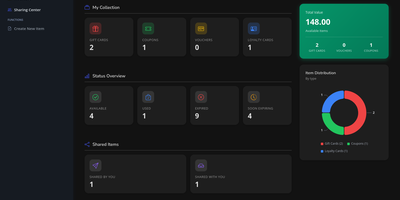
Stop losing money to forgotten paper gift cards and expired retail coupons by centralizing every voucher, loyalty barcode, and store credit inside VoucherVault, a self-hosted digital wallet accessible from any browser or mobile device. Point your phone camera at physical cards during item creation to scan 1D barcodes and 2D QR codes with automatic format detection, or upload original PDF receipts and image attachments directly to each entry. At the checkout register, pull up high-contrast QR codes and scannable barcodes instantly, even inside underground stores without cellular reception thanks to the manual 48-hour offline caching mode. Gift card balances update automatically as you log individual partial redemptions in the per-item transaction ledger. Configurable Apprise notification rules alert you 30 days and 7 days before any voucher expires across Telegram, Discord, Gotify, Ntfy, or email. Households and teams can share specific cards between accounts while keeping personal items private, and administrators can enable OpenID Connect single sign-on for frictionless login. Multi-currency conversion automatically calculates portfolio totals across international vouchers. A built-in REST API endpoint even exposes live portfolio counts and value statistics directly to Home Assistant dashboards. Running on a dedicated VPS on RepoCloud with guaranteed CPU, RAM, and SSD, full root SSH access, and a browser serial console. GPL-3.0 licensed.
Whirl
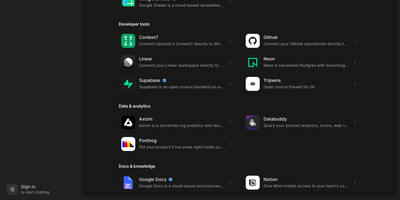
Whirl puts every top AI model in a single conversation and remembers what you were working on last week, so you can switch models mid-thought without losing the thread. Ask for a report, a chart, or a small interactive page and it appears as a living artifact in a side panel, still editable while you keep chatting, and shareable by link when it is ready to leave the conversation. Connect your own tools over MCP, with OAuth sign-in handled for you, or install skills that teach the app new tricks your team relies on. Long-term memory carries your preferences and project context from chat to chat, and live web search with page reading grounds answers in today's pages instead of the model's training data. Sensitive threads can be locked with a password that encrypts them on your device, where the server never sees the key and only zero-retention models may answer. Around those headline pieces sits the everyday kit: incognito mode, a message queue for when you think faster than the model replies, voice input, image generation, file attachments, folders, and sharing controls. An admin console manages the model catalog, integrations, and skills, and the interface itself switches between light and dark with your choice of accent color, installable as a mobile web app. Running on a dedicated VPS on RepoCloud with guaranteed CPU, RAM, and SSD, full root SSH access, and a browser serial console. MIT licensed.
Doca
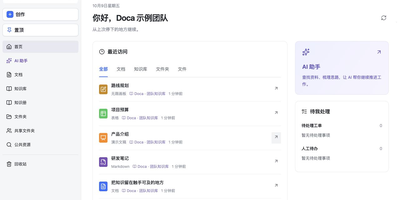
Doca puts rich text, Markdown, spreadsheets, slides, and an infinite canvas under one login and one permission model, giving individuals and small teams a self-hosted workspace for writing together. Every format supports real-time co-editing with presence, comments, saved history, and manual snapshots, and rich text and Markdown documents can be restored to an earlier version. Documents live in knowledge libraries with tree navigation, invitations, inherited permissions, share links, and trash, while personal files and shared folders sit on local disk or S3-compatible storage. Knowledge books go further: they subscribe to sources, run an editable workflow, keep source evidence, and route results through human review. A personal AI assistant, powered by whichever model you configure, searches authorized documents, reads PDF and Office attachments, edits images, and prepares browser drafts. MCP services let external AI clients such as Codex use those tools under your permissions. Sign in with a password, OIDC, Google, GitHub, WeChat, or QQ, review registrations before they go live, and send webhooks to other systems. A plugin SDK and marketplace add business modules, and a browser extension clips pages into documents. The interface ships in Chinese and English. Running on a dedicated VPS on RepoCloud with guaranteed CPU, RAM, and SSD, full root SSH access, and a browser serial console. MIT licensed.
ScribeWizard
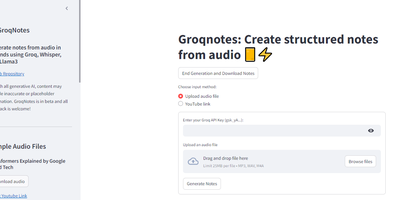
Audio lectures become structured, Markdown-formatted notes in about a minute with ScribeWizard (also known as GroqNotes). Upload an MP3, WAV, or M4A file - or paste a YouTube link - and the app runs a three-stage pipeline on Groq's LPU inference hardware: Whisper Large v3 transcribes the audio, a larger Llama model drafts a comprehensive outline of the material, and a faster Llama model fills each section with detailed content. This scaffolded prompting strategy is the core idea: the strong model handles structure where quality matters most, the fast model handles volume, and Groq's 1200+ tokens-per-second inference keeps the whole process near real time. Output renders as clean Markdown with support for tables and code blocks, and finished notes download as text or PDF. Model selection is configurable - swap in other Groq-hosted open models like Mixtral or Gemma to trade speed against quality or work around rate limits. Built as a single Streamlit app by Benjamin Klieger at Groq, it needs only a Groq API key to run, making it one of the simplest self-hosted AI tools to operate.
Eclipse Hono
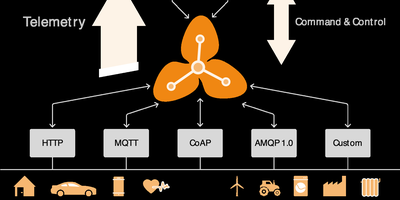
Eclipse Hono is an IoT connectivity platform that sits between device fleets and business applications, accepting connections over MQTT, HTTP, AMQP 1.0, and CoAP adapters and normalizing everything into uniform telemetry and event streams. Devices authenticate against a central registry of tenants and credentials, with X.509 client certificates, pre-shared keys, or automatic provisioning for zero-touch onboarding. Applications consume normalized data from Apache Kafka or an AMQP 1.0 messaging network, choosing per tenant which backbone carries its traffic, and send commands back down to devices through the same platform with delivery feedback. Resource limits cap how much data each tenant's devices may move, keeping one noisy fleet from crowding out the rest, while metrics and tracing follow every message hop. The 2.7 release adds preliminary MQTT 5 support with corrected connect reason codes, message tracing logs, and a hardened JDBC device registry backed by PostgreSQL for production tenant and credential management. Protocol adapters scale horizontally as stateless services, so capacity grows by adding instances behind a load balancer. Running on a dedicated VPS on RepoCloud with guaranteed CPU, RAM, and SSD, full root SSH access, and a browser serial console. EPL-2.0 licensed.
Oxynote
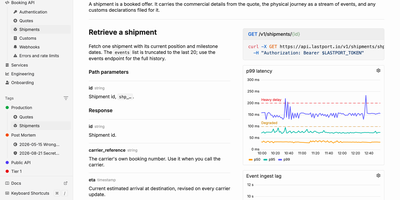
When an alert fires at 3 a.m., the live chart, the runbook, and the fix are already on one page of Oxynote, a self-hosted technical wiki. The chart is a Live Metrics block that runs its own Prometheus or SQL query and draws a time series, bar chart, or gauge. Several such blocks side by side make a dashboard inside the page. Around it, the editor works like Notion, with checklists, callouts, titled code blocks, Mermaid diagrams, Figma embeds, images, and files. Internal APIs get Stripe-style reference pages with the endpoint, a curl example, and a sample response beside the explanation. Mark a page reviewable and every edit lands in a draft. A block-aware diff shows renamed endpoints, fields, and reworded sentences in one red and green view until a reviewer approves. Freshness hooks watch GitHub files, container images, web pages, or dates, and remind maintainers when something a page depends on changes. Teammates edit together live and see who holds which block. Comments attach to a word, a diagram line, or a whole chart, with replies and an inbox for mentions. The Rubber Duck assistant edits pages and runs block queries with Anthropic, OpenAI, Google, OpenRouter, or a local Ollama model, and MCP lets Claude Code and Codex read and write the docs. Running on a dedicated VPS on RepoCloud with guaranteed CPU, RAM, and SSD, full root SSH access, and a browser serial console. Apache-2.0 licensed.
Upvote RSS
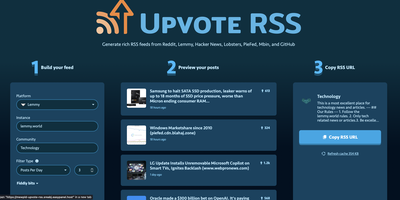
The antidote to doomscrolling: Upvote RSS turns Reddit, Hacker News, Lemmy, Lobsters, PieFed, Mbin, and trending GitHub repositories into calm, filtered RSS feeds. The MIT-licensed PHP app's killer feature is intelligent filtering: beyond simple score thresholds, the "posts per day" filter analyzes a community's recent history and computes the score cutoff that yields your target volume - say, exactly three r/technology posts daily - while a percentage-based threshold mode stays consistent as communities grow. Feeds are rich, not bare links: parsed full-article content via Readability (with optional Readability.js, Mercury, or Browserless for JavaScript-heavy pages), embedded videos and image galleries, top-voted comments with pinned-moderator filtering, scores, reading-time estimates, and optional AI summaries through Ollama, OpenAI, Gemini, Anthropic, Mistral, DeepSeek, or any OpenAI-compatible endpoint - with automatic provider fallback. A web UI builds the feed URL interactively with live preview; paste the result into any RSS reader. Reddit support includes custom domains like old.reddit.com plus NSFW filtering and blurring. Caching via filesystem, Redis, or APCu keeps repeated fetches cheap and avoids re-running paid summarizations.
Sencho
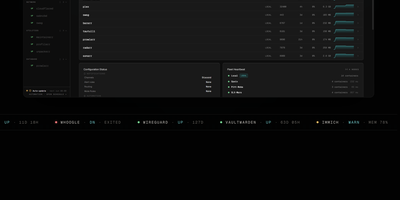
With over 430 GitHub stars and designed for DevOps engineers, platform teams, and homelab operators, Sencho is the self-hosted Docker Compose control plane that gives you a real operational cockpit without abandoning file-on-disk compose workflows. The web dashboard provides live CPU, memory, and disk sparklines per container, one-click start/stop/restart controls, and a Monaco-powered YAML editor with syntax highlighting, inline diff, and one-click rollback. Compose files remain the source of truth on the host filesystem. Multi-node management connects remote Sencho instances via authenticated HTTP and WebSocket proxy using long-lived API tokens, with no SSH access or exposed Docker sockets required. The Pilot Agent establishes an outbound-only WebSocket tunnel for nodes behind NAT, CGNAT, or strict firewalls. Blueprints define compose intent once and deploy it across label-targeted nodes, with drift detection keeping the fleet aligned. Fleet Federation provides cordon and pin controls for maintenance windows, while Fleet Actions execute bulk deploy, stop, and restart operations by stack label across the entire infrastructure. The security suite includes Trivy vulnerability scanning, deploy enforcement policies, SARIF and SBOM export, and Fleet Sync to replicate scan policies across replicas. Additional capabilities include 199+ one-click app templates, Git source integration, atomic deploys with auto-rollback, auto-heal, scheduled operations, webhooks, and custom S3 off-site backups to MinIO, R2, B2, or AWS. Running on a dedicated VPS on RepoCloud with guaranteed CPU, RAM, and SSD, full root SSH access, and a browser serial console. AGPL-3.0 licensed.
Oksskolten
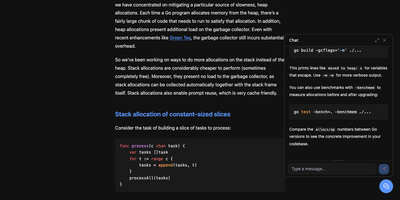
Subscribe to a feed and Oksskolten fetches the complete text of every new article, cleans it, and files it as Markdown in a library you can read without leaving the app. About 500 cleanup patterns strip ads, navigation, and tracking, with no per-feed toggles or selectors to maintain. No feed on the site? Auto-discovery goes first, then RSS Bridge, then LLM-inferred CSS selectors, while FlareSolverr gets past bot protection. Every feed is checked on its own schedule, somewhere between every 15 minutes and every 4 hours. Inbox, Read Later, Liked, and Read views keep the queue tidy. Clip any URL as a standalone article. Likes and bookmarks feed an engagement score that shapes search ranking and recommendations. One click summarizes or translates an article through Anthropic, Gemini, OpenAI, Ollama, or vLLM, with Google Translate and DeepL as translation engines. Ask the chat questions about your archive, or point Claude Code or Codex at the built-in MCP server to use the same tools. Search forgives typos and covers every stored article. Login works with a password, a passkey, or GitHub. Pick from four layouts and fourteen color themes, import custom themes as JSON, rebind keyboard shortcuts, and keep reading offline as a progressive web app. Running on a dedicated VPS on RepoCloud with guaranteed CPU, RAM, and SSD, full root SSH access, and a browser serial console. AGPL-3.0 licensed.
Local Content Share
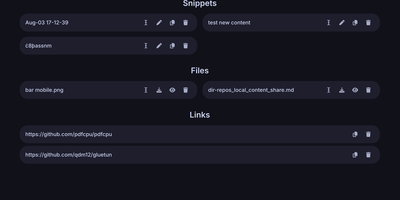
The file is on your laptop, the laptop is downstairs, and cloud drives are still syncing yesterday; Local Content Share ends that dance by giving every device on your network one shared page on port 8080. Type or paste a snippet and it appears instantly on your phone, tablet, and work machine, because Server-Sent Events push every upload, edit, and deletion to all open browsers without a refresh. Files ride along three ways: pick them, drag several at once onto the text area, or paste straight from the clipboard, screenshots included. A separate notepad holds Markdown with edit and preview modes, auto-saving as you type so a thought started on the couch continues at the desk. Links get their own newest-first section, everything can be renamed or edited in place, and each item carries an expiration clock you can set to an hour, a day, or a custom span like 34m or 2w, after which it quietly deletes itself. The interface follows your system light or dark theme, installs as a phone PWA, and needs no accounts and no internet, which is also the honest catch: there is no login, so keep it on trusted networks or behind an authenticated proxy. Running on a dedicated VPS on RepoCloud with guaranteed CPU, RAM, and SSD, full root SSH access, and a browser serial console. MIT licensed.
Larasend
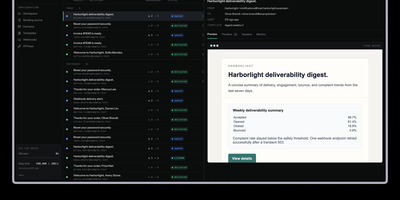
Larasend gives Laravel teams a self-hosted transactional email platform that sends through their own Amazon SES or Cloudflare account while keeping the dashboard, delivery logs, and message data on their own servers. Send mail with a simple POST to the emails API, or point existing mailables and notifications at the Larasend transport with one environment variable and no code rewrite. Every message lands in an activity dashboard where you can filter by status, search recipients and message IDs, open a preview with headers and metrics, and resend failures in one click. Delivery, bounce, complaint, open, and click events stream back from the provider and update each message timeline, so a missing receipt becomes a traceable record instead of a support mystery. Suppression lists build themselves from bounces and complaints, and guardrails watch complaint rates and verified domains before reputation damage can spread. Scoped API keys with expiration and rotation keep each project separate, while workspace roles control who can view, send, and administer. When replies arrive, the shared inbox threads inbound and outbound mail into conversations your team can assign, snooze, annotate, and answer with attachments and drafts. Webhooks notify your other systems about deliveries and inbound mail, and reusable templates keep recurring notices consistent across projects. Running on a dedicated VPS on RepoCloud with guaranteed CPU, RAM, and SSD, full root SSH access, and a browser serial console. MIT licensed.
QuickVoice
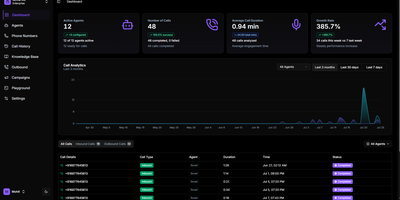
Your front desk phone rings at midnight and nobody sane is awake; QuickVoice answers it with an AI agent you configured, on servers you own, with call recordings you control. Build agents in the web console: write the prompt, pick speech-to-text, language model, and voice, set the first message, then link a real phone number from Twilio or Telnyx through LiveKit SIP trunks. Inbound callers get a receptionist that answers questions from your uploaded knowledge base, PDFs and web pages chunked and embedded for live retrieval, while outbound mode fires single quick calls or batch campaigns for reminders and follow-ups. Agents can invoke allowlisted MCP tools mid-call, so checking an order status or booking a slot happens inside the conversation instead of after it. Every call lands in the log with transcript, recording, and metadata, searchable from the analytics dashboard, and privacy controls redact personal data by default, can suppress recordings entirely, and sweep old transcripts on a retention schedule. Multi-language voices, per-agent runtime overrides for campaigns, organization accounts with API keys and audit logs, and Stripe billing hooks round out a platform built for teams who would rather inspect their voice stack than rent a black box. Running on a dedicated VPS on RepoCloud with guaranteed CPU, RAM, and SSD, full root SSH access, and a browser serial console. MIT licensed.
VyManager
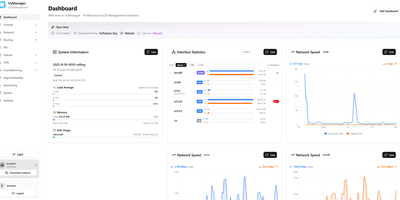
VyManager puts every VyOS router you run, across every site, into one web control plane with live dashboards and per-site permissions. Organize instances into logical sites, from the datacenter core to the smallest branch office, and add or remove routers without touching a command line. Live dashboards stream interface counters, system information, network graphs, and WireGuard peer status, so a saturated link announces itself before your users do. Configuration adapts to each router's VyOS version, with 1.4, 1.5, and rolling releases supported side by side during the longest upgrade cycle. Access is granted per site with OWNER, ADMIN, and VIEWER roles, API keys authenticate the machines, and SSH credentials stay encrypted at rest. A setup wizard walks a fresh deployment to its first managed router, and light, dark, and custom themes keep the night shift comfortable. For automation, AI assistants can be connected through the companion MCP integration, and the whole stack arrives as Docker Compose services you can redeploy in minutes. Running on a dedicated VPS on RepoCloud with guaranteed CPU, RAM, and SSD, full root SSH access, and a browser serial console. GPL-3.0 licensed.
RabiRoute
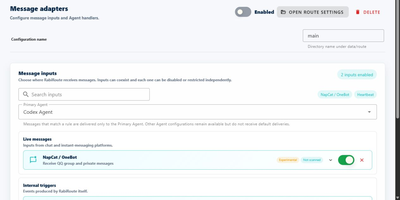
Which agent should answer a question that just arrived in your QQ group, and how much of the conversation should it see? RabiRoute is the self-hosted message gateway that answers those routing questions before your agent ever wakes up. Chat messages from QQ groups and direct chats (through NapCat and OneBot), webhooks, schedules, voice, desktop selections, and device events all arrive at one gateway, and message Routes decide which agent or local program receives each one. Every role keeps its own message history plus references to plans, memories, and skills, while each Route limits how many recent messages travel with a delivery. Roles can also fire agents on interval, time-window, daily, or one-time schedules, or run a configured local script, so recurring checks and reports happen without anyone typing a prompt. Replies to QQ, RabiLink, and other channels leave through a single sending API that validates targets, quoted messages, and sender identity, then records receipts for everything delivered. The Windows desktop side adds selected-text actions, screenshots, and annotations; speech, phone, glasses, wearable, and remote-computer clients connect as experimental integrations, and the Linux Host serves the Manager and browser WebGUI from a Node.js process. Running on a dedicated VPS on RepoCloud with guaranteed CPU, RAM, and SSD, full root SSH access, and a browser serial console. MIT licensed.
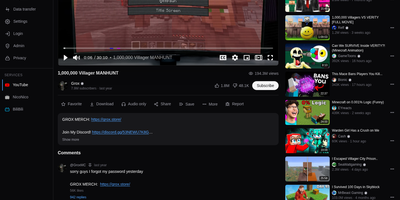
TypeType
On your own server, TypeType runs a private video platform for YouTube, NicoNico, and BiliBili, keeping subscriptions, history, and playlists out of someone else's recommendation engine. Pick a service and search it. Browse channels, Shorts, podcasts, and a home feed. Speed and quality control. Cinema mode. Native picture-in-picture. Subtitles, alternate audio tracks, and frame-by-frame stepping. SponsorBlock segments get skipped, or just marked, by category. Subscriptions, playlists, watch later, favorites, and resume positions fill the library. Import a Google Takeout export or a PipePipe backup and a new instance never starts empty. Download video or audio to local or S3-compatible storage and collect it in the browser when it is ready. Sign in locally or through OIDC. An admin console runs the instance. Block a channel and it disappears from feeds, search, and related videos. Hide Shorts. Hide personalized recommendations. Hide the suggestions column. A native Android client for phones and tablets syncs with the same instance. An optional experimental recommender can build a personalized home feed, and each user chooses whether to turn it on. Running on a dedicated VPS on RepoCloud with guaranteed CPU, RAM, and SSD, full root SSH access, and a browser serial console. MIT licensed.