TradingAgents GUI
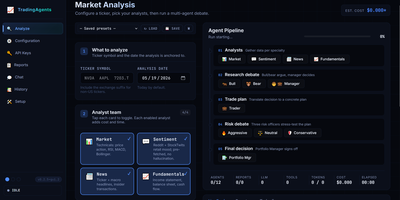
Built atop the TauricResearch TradingAgents framework with nearly 100,000 GitHub stars, TradingAgents GUI transforms a CLI-only multi-agent LLM stock analysis pipeline into a polished web application accessible at localhost:5000. The system deploys twelve specialized AI agents — fundamental analysts, sentiment experts, technical analysts, bull and bear researchers, a trader, risk management team, and portfolio manager — who collaboratively debate market conditions through structured LangGraph workflows before producing a final BUY, SELL, or HOLD recommendation. The interface supports ten LLM providers including OpenAI, Anthropic, Google, OpenRouter, DeepSeek, Ollama, xAI, Qwen, GLM, and MiniMax, with a first-run wizard that auto-detects configured API keys and tests connections. A live pipeline visualization shows each agent's status with real-time progress bars, while the tabbed output area separates Live Feed, Reports preview, and Tool calls into dedicated panes. The three-pane Reports tab provides searchable indexing, table-of-contents navigation, and export to Markdown, HTML, or PDF formats. Report length control across Concise, Standard, and Comprehensive modes saves up to 50% on token costs. Multi-session chat allows pinning past reports as grounding context with live token counting and context-window warnings. Three built-in themes — Terminal, Modern, and Bloomberg — persist per browser. Docker Compose deployment maps port 5000 with persistent report storage. Running on a dedicated VPS on RepoCloud with guaranteed CPU, RAM, and SSD, full root SSH access, and a browser serial console. Apache 2.0 licensed.
Simon
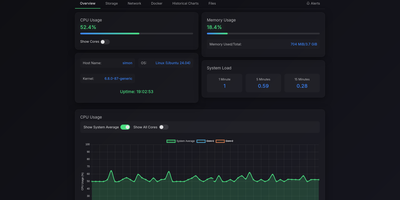
Simon is a lightweight self-hosted system monitor that shows live CPU, memory, disk, and network metrics for your server and its Docker containers in one web dashboard, with threshold alerts and a built-in file browser. Open the dashboard to watch real-time gauges alongside historical charts, so a slow memory leak becomes visible hours before it takes a service down. Every running container appears with its own CPU and memory stats, and its logs open in a searchable viewer, so routine diagnosis never needs a terminal session on the host. The file browser lets you navigate the directories you choose to expose, preview file contents, upload with drag and drop, create folders, and move or delete items. Downloads support range requests, which means large files resume cleanly after a dropped connection and media files stream instead of failing halfway. Alert rules fire when CPU, memory, disk, or network activity crosses thresholds you set, and notifications arrive through Telegram, ntfy, Gotify, Pushover, Pushbullet, Matrix, or any custom webhook. Prebuilt notification templates get common setups running in minutes, and password authentication keeps the dashboard private on a public server. Resource-constrained machines benefit most: the monitor runs comfortably on single-board computers and small instances where heavier monitoring stacks would consume the very memory they exist to watch. Running on a dedicated VPS on RepoCloud with guaranteed CPU, RAM, and SSD, full root SSH access, and a browser serial console. MIT licensed.
AgentBox
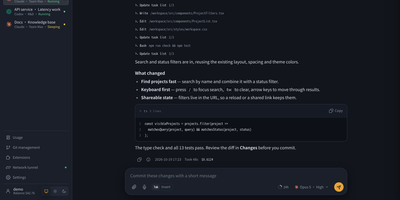
AgentBox is a self-hosted browser workspace that runs Claude Code and Codex CLI on a server you control, so a task goes from chat to reviewed code without leaving one place. Open a workspace from an empty project, an uploaded archive, or a Git clone, then talk to the agent in streaming web chat or drop into its original interactive terminal when you want the CLI itself. Files persist between sessions along with your home configuration and chat history, so a project picked up on a laptop continues on a phone exactly where it stopped. Review per-file diffs line by line before committing, pushing, or opening a pull request, and download the result when no Git connection is configured. Shared files, layered home templates, Claude skills, and MCP configuration carry your setup into every new workspace, with per-workspace overrides when a project differs. A trusted team shares central account pools with per-user scopes, while every model request is recorded with tokens, cache hit rate, cost, and latency, exportable to CSV and optionally capped by credits. An optional tunnel reaches allowlisted repositories and databases on private networks, and six interface styles with light and dark modes keep long sessions comfortable. Running on a dedicated VPS on RepoCloud with guaranteed CPU, RAM, and SSD, full root SSH access, and a browser serial console. Apache-2.0 licensed.
Netra
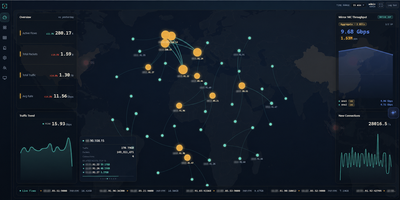
Netra watches your network from the side, plugged into a switch mirror port, and turns everything it sees into a live picture of your traffic without ever sitting in the forwarding path. A single binary loads its eBPF collectors in the kernel, so aggregation happens before packets reach user space and multi-gigabit mirror feeds stay observable instead of dropping samples. The dashboard opens on totals, protocol share, and traffic trends, then lets you drill into flows by address, port, domain, or service, check which countries your traffic talks to on a world map, and read the internal topology as a live graph. Domains surface passively from TLS handshakes, public addresses are enriched with country and organization data, and heuristic detectors flag scanning, flooding, and single-host surges, pushing alerts to your team chat with an optional AI-written explanation. You can ask the built-in assistant questions about real recorded history, connect external MCP servers so it can call your own tools while it answers, and stream flows onward to Kafka for other consumers. History rolls into compressed columnar files on a schedule and stays queryable for a month by default. Running on a dedicated VPS on RepoCloud with guaranteed CPU, RAM, and SSD, full root SSH access, and a browser serial console. GPL-3.0 licensed.
YAFFA
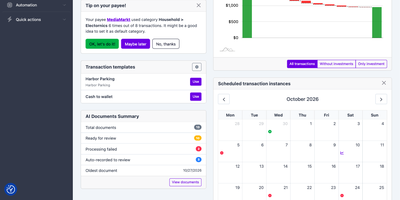
If your money is split across a bank app, a brokerage portal, and a half-abandoned spreadsheet, YAFFA, a self-hosted personal finance application, gathers it into one ledger with budgets, scheduled transactions, and forecasts. Record withdrawals, deposits, and transfers across unlimited accounts, and split a single supermarket receipt across categories so it lands in both Food and Household. Suggestions surface your most-used accounts and payees, and each payee's default category fills in automatically. Define rent, salary, or a loan payment once as a scheduled transaction; it appears on the dashboard calendar, enters with one action or records itself, and feeds the forecast. Import bank history from CSV or QIF files with rules for country- and bank-specific formats, and review every row before it is recorded. Optional AI document processing turns a receipt, invoice, or forwarded email into a draft transaction with payee, date, amount, and line items, using your own OpenAI or Gemini key and self-hosted Tesseract OCR for images. Accounts in different currencies roll up into your default currency using daily rates from the free Frankfurter service. Investments track gain and loss, with optional daily prices from Alpha Vantage. The dashboard summarizes accounts and upcoming schedules, the cash flow report can look ahead with a forecast, and Find Transactions filters history by payee, category, tag, or date. Running on a dedicated VPS on RepoCloud with guaranteed CPU, RAM, and SSD, full root SSH access, and a browser serial console. MIT licensed.
Omnibus
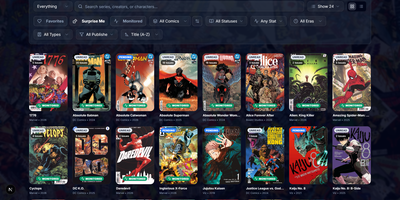
Omnibus runs your whole comic habit from one shelf: discover a series, request the missing issues, and read them in the browser when they land. Discovery starts with ComicVine or Metron metadata (high-resolution covers, synopses, and creator credits) and a release calendar that flags what you own and what is still missing across your monitored series. Requests are one click for a single issue or a whole run; Omnibus searches your indexers, hands the release to qBittorrent or SABnzbd, then imports, renames, and shelves the file with metadata embedded into the archive itself. Loose files that match nothing meet the Smart Matcher, which proposes the right series and applies every confident match in one pass. The built-in reader opens CBZ, natively read CBR and EPUB files in left-to-right, right-to-left manga, or continuous webtoon modes, with double-page spreads, brightness and contrast controls, page preloading, and preferences remembered per series; an offline button caches a full issue for the road. Reading lists assemble themselves from a pasted event ID or arrive by import from CBL files, League of Comic Geeks CSVs, AniList, or MyAnimeList, always showing how far through them you are. Everyone gets their own account, reading progress, follows, and an Updates feed, while OPDS, KOReader sync, and a Komga-compatible endpoint feed Panels, Mihon, and Paperback on the side. Running on a dedicated VPS on RepoCloud with guaranteed CPU, RAM, and SSD, full root SSH access, and a browser serial console. GPL-3.0 licensed.
Tamari
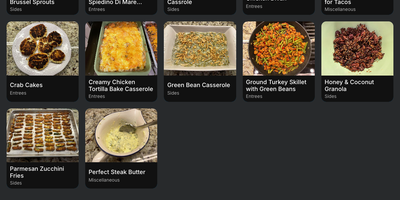
Recipes scattered across bookmarks, screenshots, and open browser tabs become one searchable cookbook with Tamari, which adds meal planning, per-store shopping lists, and one-click imports from a built-in library of over 400,000 recipes. Save each dish with its photo, ingredients, instructions, servings, time estimates, and nutrition information, then find it again through search, categories, or your favorites list. The Explore collection gathers more than 400,000 recipes from 300 cooking websites, and any of them moves into your personal cookbook with a single click. Pick a recipe and its full ingredient list lands on a shopping list at once, organized per store so a supermarket run and a farmers market run stay separate. Check items off as you shop, or scan a barcode to add something the moment you notice it running out at home. The meal planner assigns recipes to specific dates up to 30 days ahead, turning the weekly what-is-for-dinner debate into a settled schedule. Adjust how your cookbook displays, with large photos to show dishes off or compact photos to fit more on screen, sorting by title or date added, and light or dark themes for late-night cooking sessions. Share recipes with family members, reset a forgotten password by email, and manage everything programmatically through the REST API from scripts or other tools. Running on a dedicated VPS on RepoCloud with guaranteed CPU, RAM, and SSD, full root SSH access, and a browser serial console. GPL-3.0 licensed.
Gofer
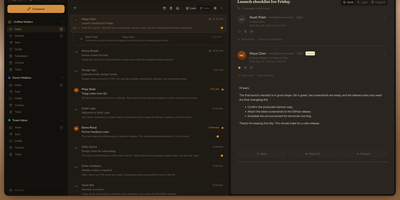
Five mailboxes, five tabs, five passwords: Gofer folds Gmail, Outlook, iCloud, and plain IMAP accounts into one browser tab where every inbox reads as a single, searchable whole. Threads, labels, and drag and drop keep triage fast, and search still finds the receipt from three years ago. Signatures and custom senders shape outgoing mail, scheduled sends wait for Monday morning, and a thread in another language translates in place. The calendar keeps pace with your mail: Google, Outlook, and CalDAV events sync both ways, invitations land in the inbox, and an RSVP or a Meet or Teams link attaches without leaving the message. Contacts follow the same rule through Google, Outlook, and CardDAV sync, so the address book you fix once is right everywhere. One install can serve a household or a small office, with separate users, encrypted credentials, blocked remote images, and passkey or authenticator sign-in for anyone who wants it. Classic, Minimal, and retro Express themes, flexible layouts, and push notifications make the daily inbox feel personal rather than administered. Leaving stays easy too: mailboxes export as mbox, mail moves between accounts, and a whole setup imports into another Gofer. Running on a dedicated VPS on RepoCloud with guaranteed CPU, RAM, and SSD, full root SSH access, and a browser serial console. MIT licensed.
Knock-Knock
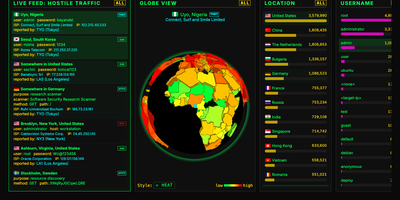
Bots that knock on your server's login ports are always turned away by Knock-Knock, a multi-protocol honeypot that shows every attempt on a live dashboard. Honeypots answer on the standard ports for SSH, Telnet, FTP, RDP, SMB, SIP, HTTP, and SMTP, with MQTT, Node-RED, Modbus, S7, and SNMP as optional extras. Authentication is always rejected, so no bot ever gets a shell. Who is knocking? The live feed shows each attempt's country, username, password, ISP, IP, and protocol. From where? A 3D globe marks the origin in one of six styles, including an extruded country heat map. Trying what? Leaderboards rank countries, usernames, passwords, ISPs, and IP addresses, and a trivia panel explains why bots favor certain credentials. A protocol filter re-slices the feed, globe, and leaderboards together; SIP shows dialed numbers and toll-call destinations, and RDP shows hostnames and accounts. Too fast? Press the space bar to pause, right-click any knock for details, or switch on a virtual Geiger counter that clicks as attacks arrive. Want to fight back? Download hourly 30-day and 365-day blocklists with recipes for CSF, CrowdSec, ipset, nftables, and pfSense, or query the optional API for any IP, CIDR range, or ASN. Several honeypot servers can stream into one aggregated dashboard. Running on a dedicated VPS on RepoCloud with guaranteed CPU, RAM, and SSD, full root SSH access, and a browser serial console. MIT licensed.
Mitra
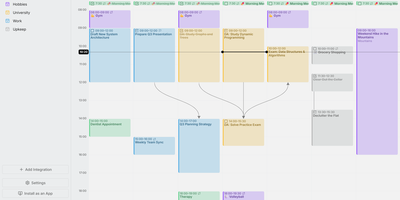
Mitra is a self-hosted calendar that puts your tasks on the same timeline as your events, so planning a week finally happens in one place instead of two. Drag across empty grid space to make an entry, drag it to move it, and stretch its edges to resize it. Tasks without a date sit in the Planning tab with a due date and an estimate until you drag them into the week. Subtasks and dependencies draw as lines between entries. Availability shading lays your working hours under the grid so double-booking becomes obvious before it happens. Keep calendars inside Mitra with no account behind them, or connect the ones you already use: CalDAV, Google Calendar, Apple Calendar, Notion, Todoist, and Tempo all sync both ways, and published feeds arrive as read-only subscriptions. Lists sort, filter, and change many entries at once. Files attach to entries, guests reply, reminders land as push notifications, and a command palette drives everything from the keyboard. Claude, Cursor, and other AI tools can read and plan your calendars over MCP. Eight languages, right-to-left layouts, light and dark themes, phone install, and OIDC sign-in for several people round it out. Running on a dedicated VPS on RepoCloud with guaranteed CPU, RAM, and SSD, full root SSH access, and a browser serial console. AGPL-3.0 licensed.
Wildbox
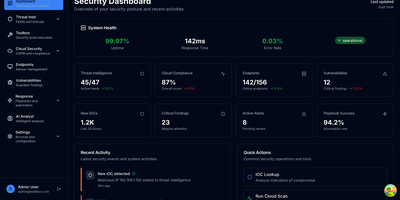
Enterprise security stacks assume an enterprise budget; Wildbox assumes a server you already own. It runs your whole security operation as a set of cooperating services behind a single HTTPS gateway: threat intelligence collectors pull indicators from seven public feeds on a schedule, starting with abuse.ch's Feodo Tracker, and every indicator is searchable in one place. Fifty-two security tools sit behind one API, covering DNS, TLS, email security, headers, and port analysis. The cloud posture service runs 22 configuration checks against your live AWS accounts and keeps each scan's report, while the vulnerability service inventories your assets, prioritizes findings by risk, and tracks them through remediation with SLA checks and alert rules. When something needs doing, YAML playbooks execute response workflows as background jobs, and the agents service writes Claude-generated threat-enrichment reports for suspicious indicators when you give it an API key. An osquery-based sensor streams endpoint telemetry from your hosts into the platform, kept separate per team. Users, teams, roles, and scoped API keys live in the identity service, and the backends accept nothing that did not arrive through the gateway, so your security data never leaves hardware you control. Optional Compose profiles add n8n automation and Prometheus monitoring. Running on a dedicated VPS on RepoCloud with guaranteed CPU, RAM, and SSD, full root SSH access, and a browser serial console. MIT licensed.
Filex
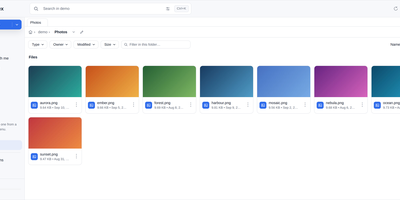
Your files already live in five places; filex puts them in one tree and serves that tree back out through almost any protocol. Mount local disks, S3 buckets, SFTP servers, WebDAV shares, FTP sites, and SMB network drives side by side, then copy in one storage and paste into another without thinking about where anything physically sits. The same tree is reachable as S3, SFTP, FTPS, NFS, and WebDAV, so rclone, restic, the AWS CLI, WinSCP, or FileZilla all work against it with the same per-user and per-folder permissions as the web interface. Sharing leaves the server under your control: public links carry a PIN, an expiry, and a download limit, and file-request links let people upload into a folder without seeing its contents. Anything deleted stays recoverable inside a retention window, overwritten files keep version snapshots, and encrypted folders are sealed in the browser so the server never receives a key. People sign in with OIDC single sign-on, LDAP or Active Directory, or the host machine's own accounts, with roles, groups, and tenants plus folder-level exceptions. A desktop app keeps chosen folders in sync within about a second, the file manager embeds into other products as a web component, and an MCP server plus REST API let agents work the same tree. It runs from one static binary or container on port 5212. Running on a dedicated VPS on RepoCloud with guaranteed CPU, RAM, and SSD, full root SSH access, and a browser serial console. MIT licensed.
NotifKit
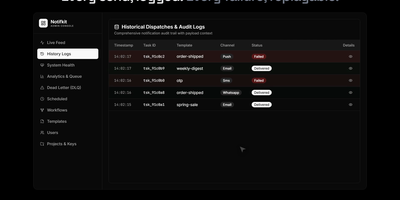
One notify() call is all your product needs to reach users on push, email, SMS, chat, and webhooks, with NotifKit deciding how and when each message travels. List the channels in the order you prefer and NotifKit tries each in turn, so a failed push quietly becomes an SMS or an email instead of a lost message. Per-user preferences, consent, and quiet hours in each user's own timezone hold non-urgent sends until morning, while critical messages such as one-time passwords travel their own lane immediately. Templates, multi-step workflows that wait days or block on events, scheduling, throttling, and deduplication all run behind that single call, defined in TypeScript and kept in your repository. Delivery logs record every attempt, and the admin dashboard shows a live activity feed, queue depth per priority lane, workflow runs step by step, and a replayable dead-letter queue. Several products can share one deployment as separate projects with their own API keys, rate limits, and data, and any service can call the REST API without the TypeScript SDK. Ask an AI assistant why a password reset never arrived by connecting the built-in MCP server to Claude Code, Cursor, or another MCP client. Running on a dedicated VPS on RepoCloud with guaranteed CPU, RAM, and SSD, full root SSH access, and a browser serial console. MIT licensed.
Usulnet
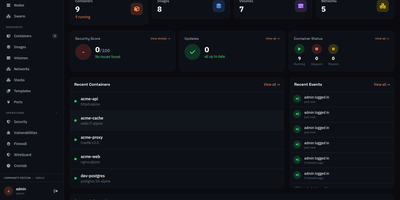
Usulnet packs container management, Trivy security scanning, Nginx reverse proxy, scheduled backups, WireGuard VPN, firewall rules, and multi-node orchestration into a single 70MB Go binary with zero external runtime dependencies. Every module ships in one download with no paid tiers, no telemetry, and no edition gating. Container lifecycle management covers creation, start, stop, restart, pause, kill, and removal with bulk operations, real-time resource statistics, filesystem browsing, and settings editing. Trivy integration scans images and running containers for CVEs with severity scoring, generates SBOMs, and validates CIS benchmarks. The multi-node architecture supports standalone, master, or agent modes where agents connect over NATS JetStream with mTLS encryption, enabling remote Docker host management from a central dashboard. Reverse proxy configuration handles Nginx with automatic Let's Encrypt certificates, TCP/UDP stream proxying, access lists, and dead host detection. Backup operations capture container volumes and Compose stacks on configurable schedules with retention policies and full restore capabilities. A built-in application catalog provides 60+ one-click templates for common services. JWT license validation uses an RSA-4096 public key embedded in the binary, requiring no call-home and working entirely offline. For teams tired of maintaining separate tools for each infrastructure concern, Usulnet collapses the entire stack into a single point of management with Docker Compose deployment alongside PostgreSQL, Redis, and NATS.
Warpdrive
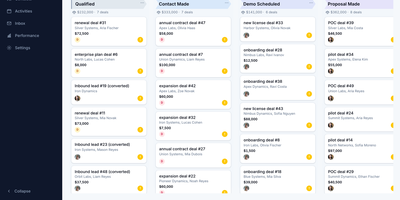
Warpdrive is a self-hosted sales CRM that gives business-development teams the complete Pipedrive workflow, pipelines, deal timelines, and two-way Gmail, on infrastructure they own outright. Drag deals across a Kanban board with custom stages while per-stage weighted totals, rotting-deal warnings, and saved filters keep the forecast honest without a weekly cleanup meeting. Every deal opens into one workspace where activities, notes, files, emails, and the full change history share a single timeline, with participants, followers, labels, and lost reasons attached. People and organizations carry custom fields, firmographics, and org-to-org relationships, and a leads inbox plus CSV import with an undo step keeps new data from corrupting the book. Contact enrichment from Apollo, RocketReach, and GetProspect fills empty people and organization fields, and every enriched value waits behind an explicit review step before it lands. Two-way Gmail sync threads every message onto its deal and contact automatically, and templates, signatures, merge fields, scheduled sends, and open tracking live in the same inbox. Boards, inboxes, and notifications update in real time across the team, while funnel and activity stats show exactly where deals stall and who is carrying the pipeline. An MCP server lets AI assistants query the pipeline and log activity under the same permissions, and role-based access keeps every seat scoped to its own work. Running on a dedicated VPS on RepoCloud with guaranteed CPU, RAM, and SSD, full root SSH access, and a browser serial console. MIT licensed.
Digarr
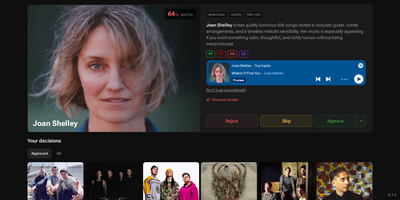
Your next favorite record is hiding in your listening history, and Digarr is the self-hosted discovery engine that finds it, scores it, and queues it for your library. Connect ListenBrainz, Last.fm, Spotify, Deezer, Discogs, or your Plex, Jellyfin, Emby, or Subsonic server, and Digarr builds a taste profile from what you actually play. An AI provider you choose, from Anthropic, OpenAI, and Gemini to a local Ollama model, proposes candidates, and a weighted scoring system ranks them by consensus, similarity, genre overlap, and your past feedback. Every suggestion lands in a review queue where you can preview tracks, approve, reject, or permanently block artists before anything touches your collection. Approve an artist and Digarr adds them to Lidarr with your quality profile, queues the release in slskd, or exports a playlist to Spotify, Navidrome, Jellyfin, Emby, or Plex. Album-level discovery runs on its own: Release Radar catches new releases from artists you follow, Library Gap-Fill surfaces the studio albums you are missing, and scheduled subscriptions keep fresh candidates flowing in without you lifting a finger. Share the instance with family or friends, each with their own queue and connections, protected by local accounts or OIDC single sign-on, and get notified through webhooks, ntfy, Telegram, or Apprise when new picks arrive. Running on a dedicated VPS on RepoCloud with guaranteed CPU, RAM, and SSD, full root SSH access, and a browser serial console. MIT licensed.
KamiYomu
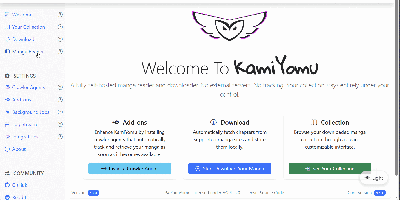
Manga readers use KamiYomu to build a private, self-hosted library: it fetches chapters from the websites they already follow, archives them locally, and serves everything back through a clean web reader on any device. The discovery flow runs on Crawler Agents, small plugins that teach KamiYomu how a particular source site lists series, chapters, and pages, so searching and fetching metadata happens inside the same interface as reading. Downloads land in a structured local archive, and reading picks up where you left off with history, filters for your library, and weekly views that surface new chapters and fresh releases. When a series is complete, export it as CBZ, PDF, or ZIP and take the files anywhere, no account or cloud library involved. Your e-reader and phone apps join through the built-in OPDS catalog, the same standard used by Moon+ Reader and KyBook, while a Swagger-documented API exposes the collection to your own scripts. Scheduled jobs keep watched series current in the background, checking sources and pulling new chapters without you babysitting tabs. Running on a dedicated VPS on RepoCloud with guaranteed CPU, RAM, and SSD, full root SSH access, and a browser serial console. AGPL-3.0 licensed.

Imagor Studio
Imagor Studio is a photo workspace where browsing a huge library and editing what you find happen in the same place, and the originals never get touched. The gallery scrolls virtually through thousands of images with no indexing wait, while drag-and-drop moves files between folders and multi-select handles bulk work. Open any image and the editor lets you stack layers: other images as overlays or watermarks, text layers you can style inline, and solid color layers with blend modes and opacity. Adjust color, apply effects, and crop with a live preview, then copy the generated transformation URL and use that rendition anywhere without exporting a file. A look you build once can be saved as a template in portable JSON and applied across the whole library, so a watermark, a resize, and a color grade become one reusable recipe. You can also start from a blank canvas at any dimensions and compose from scratch. Storage stays yours throughout: point it at a local folder, S3, MinIO, or Cloudflare R2 and manage the same library the same way. Running on a dedicated VPS on RepoCloud with guaranteed CPU, RAM, and SSD, full root SSH access, and a browser serial console. AGPL-3.0 licensed.