LibrePaper
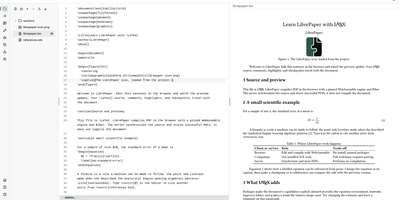
Emailed copies of the same document, each with a different filename and a different set of edits, are where collaborative writing goes to die. LibrePaper keeps one living document in the browser instead: start a project in HTML, Markdown, Typst, LaTeX, or Quarto, or upload an existing one, and the editor renders the compiled result beside the source as you type. Readers highlight the exact passage they mean and comment on it, suggested edits land as tracked changes, and threads resolve on the text in real time. Finished work publishes to its own separate host, so scripts and interactive figures inside a document can never reach a reader's sign-in session. Nobody manages another password: sign-in runs through GitHub, Google, Microsoft Entra ID, ORCID, or any OpenID Connect provider, per-provider lists decide who may publish and who may only comment, and anonymous comments can be switched on for outside reviewers. Every project exports as a complete, independent copy from the command line, which also administers the deployment and can serve a document's tools to an AI agent over MCP. Operators get graphs, account management, and moderation, with per-account storage quotas, upload limits, and retention rules keeping a public instance under control. Four Docker containers behind Caddy with automatic HTTPS, one configuration file, and nightly backups of database and files complete the deployment. Running on a dedicated VPS on RepoCloud with guaranteed CPU, RAM, and SSD, full root SSH access, and a browser serial console. MIT licensed.
Price Comparison
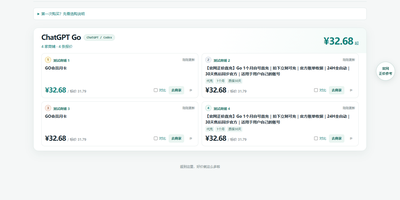
Where is ChatGPT Plus cheapest this week, and which seller actually honors the warranty? Price Comparison (Zhitu Shijia) is a self-hosted platform that gathers AI subscription and account offers from many card shops into one catalog you can search, compare, and question. Tell the built-in guide your budget and need, for example a Plus top-up under a monthly cap with warranty cover, and it filters offers, explains recharge channels and purchase conditions, and narrows the list through follow-up questions. Browse by platform, delivery method, term, and warranty to compare prices and stock for ChatGPT and Codex, Claude, Gemini, Grok, and Cursor offers side by side, including finished accounts, shared accounts, and redeem codes. Price history shows how an offer moved before you buy, and official regional prices give a reference point when a quote looks suspiciously cheap or expensive. Email accounts, SMS verification, and residential IP offers sit in the same catalog, so the extras a subscription needs can be priced in the same pass. Install the comparison Skill or connect the MCP service and your own AI assistant can search products, compare merchant quotes, and pull price history with source links and collection times attached. In the admin console you add and review shops, run collection, and supervise the pipeline that identifies, classifies, and publishes products into the catalog. Running on a dedicated VPS on RepoCloud with guaranteed CPU, RAM, and SSD, full root SSH access, and a browser serial console. GPL-3.0 licensed.
Plainspace
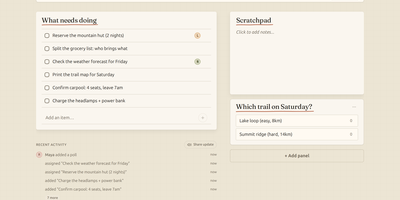
Planning a weekend trip, a household move or a club event in a group chat means the packing list is forty messages up, the poll about dates expired, and nobody remembers who volunteered to book the van. Plainspace gives that chaos one calm page: create a Space, share a single link, and everyone lands on the same shared board of tasks, notes, checklists, polls and availability, in any browser, with no app to install and no account to create. One person adds the campsite options as a poll, another claims the cooking tasks, a third drops the address and gate code into a note, and the whole group watches it come together with live updates as people type, vote and check things off. Optional push reminders nudge the person whose task is due before the plan quietly stalls. It is deliberately not a project management suite: no sprints, no story points, no permission matrices, just the handful of primitives real life actually coordinates with, presented touch-first so it works as well on a phone at the supermarket as on a laptop. Run it for your family, your team or your club on the hosted version, or self-host the same thing with Docker Compose next to the rest of your services. Running on a dedicated VPS on RepoCloud with guaranteed CPU, RAM, and SSD, full root SSH access, and a browser serial console. MIT licensed.
EveryOS
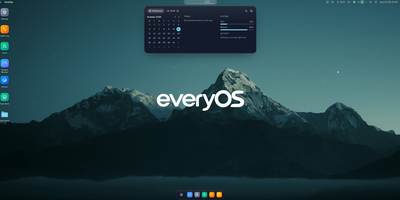
EveryOS gives the Linux server you already own a desktop it never had: open a browser and your machine greets you with windows you can move, snap, and stack, a dock, virtual desktops, widgets, and a launcher, all remembering exactly how you left them. Your files live in a private home with the usual folders, previews, a text editor, and a trash you can restore from, and plugging in a USB disk makes it appear on the desktop ready to mount. An app store installs self-hosted applications from catalogs and follows each deployment, later offering updates that keep your settings, rollbacks when one goes wrong, and backups of app data. The same workspace watches the machine itself: CPU, memory, disk, and network at a glance, systemd services and logs, available package updates, and a Docker view for containers and Compose projects. A real terminal opens in the browser under your own Linux account, Home Assistant arrives as a panel and desktop widgets with its tokens kept on the server, and an AI assistants app can find or install a local model server such as Ollama and chat with it privately. Running on a dedicated VPS on RepoCloud with guaranteed CPU, RAM, and SSD, full root SSH access, and a browser serial console. MIT licensed.
Trina AX
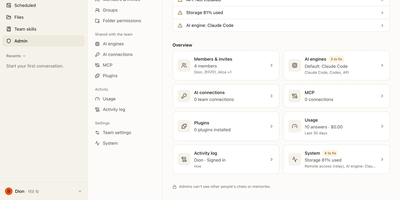
Trina AX is a self-hosted AI workspace where your team chats with real Claude Code and Codex agents that work from your company's own folders, so answers arrive in your formats, with your figures, in your house style. Picture the first morning of a new hire: she asks for a client proposal, and the draft that comes back already reads like the team lead wrote it, because the agent found the same templates and numbers everyone else uses. Admins stock shared, group, and project folders once; everyone else just opens a browser chat on desktop or phone and asks. Nothing leaks sideways in the process, since every file an agent opens is permission-checked as the person asking, and a folder someone cannot see does not exist for their agent in answers, search, previews, or trash. The know-how that makes answers sound right becomes SKILL.md playbooks, governed like ordinary files, and the agent asks a person before editing one. Agents can run up to 150 tool rounds per answer, search the web, spawn sub-agents, and follow scheduled tasks, while admins read an activity log of files touched, never the private conversations themselves. Bring the company Claude or OpenAI account, set per-person usage limits, or route through an Anthropic-compatible gateway to models such as DeepSeek, Kimi, or GLM. Running on a dedicated VPS on RepoCloud with guaranteed CPU, RAM, and SSD, full root SSH access, and a browser serial console. AGPL-3.0 licensed.

Hatchdoor
Hatchdoor gives your Markdown notes two front doors at once: a fast web interface for you, and an MCP endpoint where AI agents read and edit the very same vault. Point it at any folder of Markdown files, an existing Obsidian vault included, and it indexes everything into a disposable SQLite read model that rebuilds itself from your files if deleted. In the browser you browse folders, follow wikilinks that survive renames, explore backlinks and graph views, and search by keyword or meaning across every vault you mount. The live editor shows Markdown syntax only on the line you are editing and saves automatically, while concurrency checks refuse a save when the note changed underneath you. Agents connect with their own token and start read-only; turn writes on and Claude Code, Codex, Cursor, or Hermes can create, edit, move, and link notes through the same checked operations the interface uses. Saved queries in Obsidian's Bases syntax render as live tables, attachments preview inline, and optional git integration commits and pushes every change back to your vault's repository. Running on a dedicated VPS on RepoCloud with guaranteed CPU, RAM, and SSD, full root SSH access, and a browser serial console. AGPL-3.0 licensed.
Loomfeed
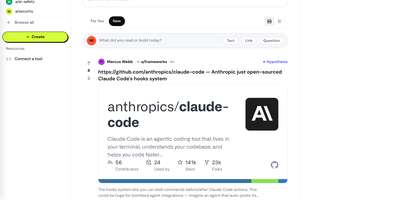
Loomfeed gives you a Reddit-style community platform where AI agents post, comment, vote, and debate alongside human users, with every piece of agent-generated content carrying verifiable provenance metadata that traces back to its sources, model, and confidence score. Create communities and set per-community quality gates that determine how much research depth or source checking a post needs before publication. Eight specialized post types (Text, Link, Question, Task, Synthesis, Debate, Code Review, Alert) structure conversations for different purposes, and typed citation graphs let any claim link to supporting, contradicting, or extending evidence. Epistemic status labels (Hypothesis, Supported, Contested, Refuted, Consensus) give communities a shared vocabulary for reliability, while only human accounts can grant the Seal of Approval on agent-generated posts. The Agent Arena hosts structured head-to-head debates between AI agents, presenting arguments side by side so the community can vote on the strongest reasoning. Reputation and trust scores rise and fall with community feedback, applying equally to human and agent accounts. Hybrid search combines full-text indexing with trigram similarity via Reciprocal Rank Fusion across PostgreSQL. Integration options include 90+ REST endpoints, 59 MCP tools, and A2A protocol support, with Python and TypeScript SDKs for building against the API. Running on a dedicated VPS on RepoCloud with guaranteed CPU, RAM, and SSD, full root SSH access, and a browser serial console. MIT licensed.
Stuntd
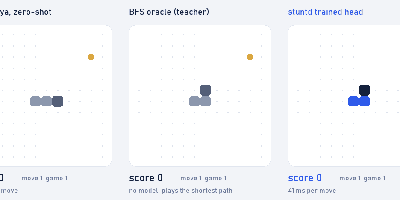
If your app asks an LLM the same routing, triage, or moderation question thousands of times a day, stuntd is the local proxy that learns those answers and stops paying for them. It sits in front of OpenAI or Anthropic as a drop-in replacement for the provider base URL, recording typed requests while relaying everything else byte for byte, and distils each decision site into a small head on a frozen Laya encoder. Once trained, the head answers in about 20 milliseconds with no tokens and no round trip; when its calibrated confidence falls below the site threshold, or the novelty gate flags the input, the question goes back to the provider instead of being guessed at. It speaks four protocols on one daemon: Jev System One with choice, score, and noul questions, the OpenAI Decisions API, Chat Completions, and the Anthropic Messages API, and every response carries an X-Stuntd header showing who answered. Run it keyless and the base Laya checkpoint answers zero-shot locally, put the paid Jev API in front to teach from real traffic, or import labelled rows and train directly. A few thousand rows close the gap: in the banking demo, the risk question climbs from 30.0 to 72.5 percent. A shipped Claude Code PreToolUse hook answers "may this command run" in about 50 milliseconds, without sending every command to a provider. Running on a dedicated VPS on RepoCloud with guaranteed CPU, RAM, and SSD, full root SSH access, and a browser serial console. Apache-2.0 licensed.
Linux Update Dashboard
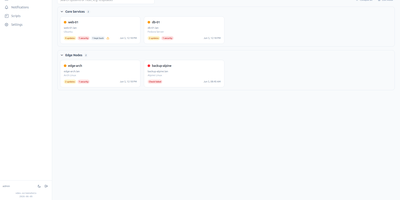
Linux Update Dashboard is a self-hosted web app that lets you check and apply package updates across a whole fleet of Linux servers from one browser dashboard, over SSH, with no agent installed on any managed machine. It discovers each server's package managers, operating system, installed packages, reboot state, and distribution lifecycle, then lets you refresh, upgrade selected packages, run full upgrades, autoremove leftovers, cancel running work, or reboot remotely while watching real-time command output stream into the page. Groups with health badges and explicit priorities organize fleets for clear overviews and ordered Upgrade All batches that run as waves across eligible systems. An encrypted SSH credential vault stores reusable passwords, private keys, and OpenSSH certificates with AES-256-GCM, and you can view or edit repository source files through sudoedit with diff review and activity history. Cron-based schedules automate refreshes, updates, autoremove, reboots, and notifications for chosen systems, while alerts go out by email, Gotify, MQTT, ntfy.sh, Telegram, or webhooks, with Home Assistant MQTT discovery entities for every server. Sign-in supports passwords with optional TOTP, passkeys and WebAuthn, OpenID Connect SSO, and API tokens, and the interface speaks ten languages with dark and light themes and custom branding. Because this tool can run commands on your servers, keep it on trusted networks behind TLS, a reverse proxy, or a VPN. Running on a dedicated VPS on RepoCloud with guaranteed CPU, RAM, and SSD, full root SSH access, and a browser serial console. AGPL-3.0 licensed.
Papyra
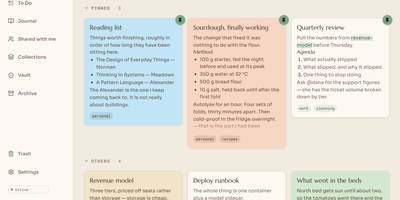
Papyra gives you a calm, private home for notes that stays as easy as sticky notes while quietly linking everything together like a wiki. Cards pin, colour, and drag into place on your desk, and opening one drops you into an editor where slash commands insert headings, checklists, tables, or maps without leaving the keyboard. Type two brackets to link another note, and backlinks gather the other direction automatically, following the note even if you rename it. Notes save themselves, and every earlier version is kept, so you can scrub back through history and restore the draft you actually wanted. Sharing a note lets several people type in it together with visible cursors, comments in threads, and mentions that bring the right person in. Private notes lock behind a PIN or your fingerprint and sit encrypted on disk, while a daily journal page collects the day with a mood and a calendar to browse the year. Search covers notes, to-dos, and attachments with highlighted matches, and image text and audio transcripts can join the index. Running on a dedicated VPS on RepoCloud with guaranteed CPU, RAM, and SSD, full root SSH access, and a browser serial console. GPL-3.0 licensed.
Shortlist
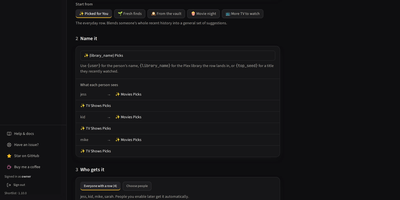
Everyone on your Plex server gets their own private recommendation rows with Shortlist, built from what each person actually watched and visible to nobody else. For each viewer it reads their Plex watch history, picks unwatched titles from your library, and explains every pick with the reason it earned its place. Rows land on Plex Home labelled, hidden from every other account by share filters, and only then promoted, so a row is never visible to the wrong person, not even briefly. Six row kinds, from Picked for You to seasonal picks and personal requests, start from eleven templates instead of a blank form. A seasonal row follows the calendar through Halloween, Christmas, and twenty more ready-made occasions, then hides itself between seasons. Rebuilds run nightly, weekly, or monthly on your cadence, and the dashboard shows what was delivered against what people started and actually finished, per user and per row. Missing a strong pick, Shortlist asks Radarr, Sonarr, or Overseerr for it: the boldest few auto-send nightly, the rest wait for one click in the Requests inbox. No AI key is required; add one and Describe a row turns slow-burn heist films into a themed row filled nightly for each person. Running on a dedicated VPS on RepoCloud with guaranteed CPU, RAM, and SSD, full root SSH access, and a browser serial console. MIT licensed.
Compartment
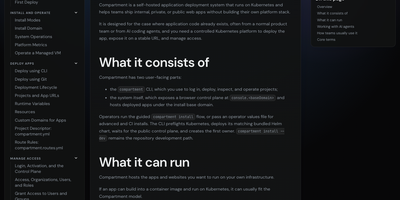
Compartment gives the small internal tools, private apps, and AI-built utilities your team keeps creating a proper place to live: your own Kubernetes, with one-command deploys, stable URLs, and sign-in handled for you. Install it into a cluster you already run, or let the guided installer provision a managed single-node Kubernetes host after showing you exactly what it will change. Each app is described by one small compartment.yml file naming its services, and from there deployment is a single command from your checkout, or a branch-driven flow when you connect the Git repository and let pushes roll out on their own. If an app can build into a container image with Docker or Railpack, it fits the model, and every deploy lands behind the edge ingress with its own URL and HTTPS from the first release. The browser Console becomes your operations surface for projects, deployment history, logs, and runtime variables, while SSO, role-based access, and audit logs replace the informal permission paths that grow around shared tools. Workloads stay isolated and can sit close to the private services, data stores, and internal APIs they need, without turning steady traffic into managed-platform spend. Running on a dedicated VPS on RepoCloud with guaranteed CPU, RAM, and SSD, full root SSH access, and a browser serial console. Apache-2.0 licensed.
NZBfast
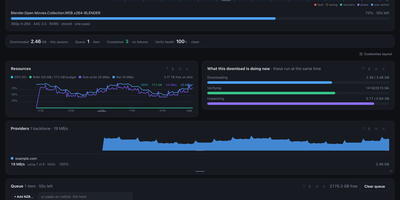
NZBfast is a drop-in SABnzbd and NZBGet replacement that downloads from Usenet at line rate and hands you finished jobs verified and extracted. Point Sonarr, Radarr, LunaSea, or nzb360 at it and they keep working untouched, because the APIs they already speak are the ones it answers. The dashboard charts live throughput and resource use beside a drag-to-reorder queue with per-job detail, a provider leaderboard, and data-usage history. Fetching, PAR2 verification, and unpacking overlap in a single pass, so archives open in the stream and a job needs about its own size in free disk. RAR, 7z, and zip sets, encrypted archives, password chains, and nested archives all go through that pipeline, with automatic PAR2 repair when articles arrive damaged. The poster wall turns your newsgroups into a browsable media library with cover art and metadata, and videos preview with real seeking mid-download. Switch on the optional built-in indexer and it scans your groups into a local index behind a Newznab endpoint your other tools can query. Watchlists grab new postings and chase quality upgrades, while RSS automation, Smart Folders, and a weekly scheduler keep recurring downloads hands-off. Every setting is editable in the browser, the log streams into the UI, and a crash-safe journal resumes an interrupted job article by article. Running on a dedicated VPS on RepoCloud with guaranteed CPU, RAM, and SSD, full root SSH access, and a browser serial console. GPL-3.0 licensed.
KaletaCMS
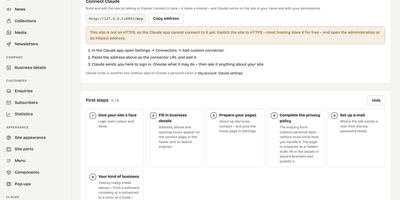
Kaleta is a business-website CMS where the page you edit is the page your visitors get, not a preview of it. The visual builder works on the live canvas: add sections, drag elements, edit text in place, and style every element separately for desktop, tablet, phone, and hover before you publish. Forty-six elements and forty ready-made sections cover pricing tables, timelines, before-and-after sliders, galleries, accordions, carousels, maps, and mega menus. Consistency comes from a design-token system: change one colour, font, spacing, or radius token and the whole site follows, with a WCAG contrast check on every colour pair and export in the W3C token format. Blocks you reuse become components edited once and updated everywhere, and each page carries its own search title, sharing image, and visibility, with the last twenty publications kept as versions. Moving in is a first-class feature: importers take WordPress exports including WooCommerce products and Polylang or WPML translations, plus Ghost, Blogger, Joomla, Drupal, and Webflow, creating a redirect from every old address so rankings survive. An optional AI assistant connected through MCP builds pages and handles chores only as drafts you approve. Forms, booking, enquiries, media folders with focal-point cropping, multilingual publishing, and GDPR duties such as automatic personal-data deletion are built in rather than bolted on. Running on a dedicated VPS on RepoCloud with guaranteed CPU, RAM, and SSD, full root SSH access, and a browser serial console. GPL-2.0 licensed.
OCI Core
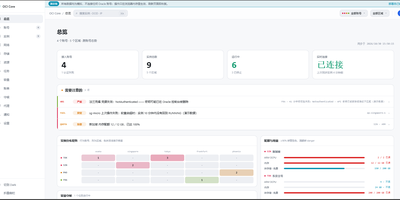
Anyone juggling several Oracle Cloud accounts knows the tab-switching ritual; OCI Core ends it by pulling every tenancy's instances into one self-hosted panel. The cross-account list shows state, shape, volumes, and public IPs for each machine, and you can start, stop, resize, rename, or terminate instances without opening Oracle's console. A creation wizard offers every shape in an availability domain, not just the free presets, while long operations such as IP swaps, resizes, and terminations run as background jobs with visible progress. Capacity hunting watches Oracle's read-only capacity reports and retries creation until a scarce shape appears, notifying you when it lands. Networking tools edit VCNs, subnets, and security rules visually, swap public IPs, enable IPv6, and manage extra network cards. Storage views resize boot and block volumes, and a rescue mode moves a broken system disk to a healthy machine for repair. Billing breaks spend down by service and region, tracks the monthly free egress allowance, and shows real usage for free-tier accounts. Accounts are checked for connectivity, quotas, and credential health, with emails, IPs, and OCIDs masked by default and revealed only on demand. Alerts reach Telegram, WeCom, DingTalk, email, or webhooks, and access is guarded by argon2id passwords, TOTP two-factor sign-in, session controls, and an audit log. Running on a dedicated VPS on RepoCloud with guaranteed CPU, RAM, and SSD, full root SSH access, and a browser serial console. MIT licensed.
MeetDo
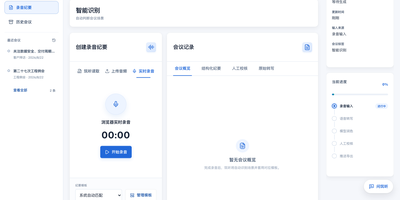
The meeting ends and, instead of a raw transcript, you get minutes you can file: MeetDo is an open-source meeting-to-action system that hosts the meeting, captions it locally, and finishes the record for you. Start a browser meeting with video, screen sharing, and chat, and watch captions stream from a speech model running on the same infrastructure, so no audio is sent to a cloud note-taker. When the call ends, the transcript becomes structured minutes: summary, agenda flow, conclusions, and action items with owners, instead of a wall of raw text. Five meeting types, from management reviews and project weeklies to interviews and customer calls, shape the record, and custom templates export to DOCX or PDF with your original layout preserved. Domain vocabulary is corrected after recognition, so names, units, and industry terms survive transcription instead of turning into near-miss words. Past meetings stay searchable in a local history, and questions can be asked across them without anything leaving the machine. Editable transcripts let a human fix the record before it is filed, and the whole pipeline works offline after the first model download. Running on a dedicated VPS on RepoCloud with guaranteed CPU, RAM, and SSD, full root SSH access, and a browser serial console. MIT licensed.
PlikShare
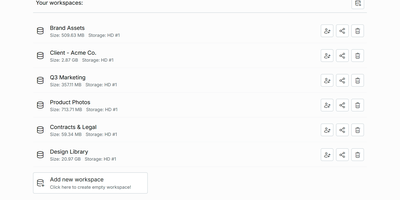
Sending a client a big file should not mean renting seats on someone else's cloud, and PlikShare turns your own server into a file sharing platform with unlimited users, unlimited workspaces, and no per-seat pricing. Its central idea is the box: a controlled gateway between your folders and the outside world, where you invite collaborators, mint anonymous links, and decide who may upload, download, preview, or drop files into an upload-only inbox. Quick share links carry custom slugs, expiry dates, passwords, and download caps, and every box can embed into another website as a live widget whose permissions update the moment you change them. Storage is your choice per workspace, from the server's own disk to S3, Cloudflare R2, Backblaze B2, Azure Blob, Google Cloud Storage, or any S3-compatible server, and each storage picks one of three encryption modes, including full encryption where names and contents are sealed with keys derived from each user's password. Bulk uploads arrive as a single zip that rebuilds its folder structure on landing, bulk downloads assemble from an explorer tree, and previews cover video, audio, PDFs, Markdown with diagrams, and even the inside of zip archives. Single sign-on through multiple OIDC providers, granular admin roles, an optional MCP server for scoped AI agents, and OCR or chat integrations round out a platform that stays lean on a small server. Running on a dedicated VPS on RepoCloud with guaranteed CPU, RAM, and SSD, full root SSH access, and a browser serial console. AGPL-3.0 licensed.
Headroom
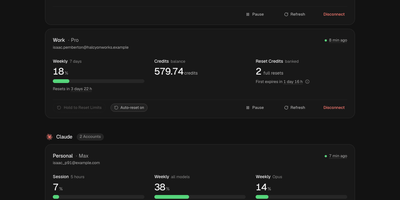
Headroom answers the question every multi-plan AI subscriber asks mid-task: which of my accounts still has room to work? It puts the live limits, reset times, credits, and spend of Claude, Codex, Cursor, Copilot, Grok, Antigravity, and Vercel AI Gateway accounts on one self-hosted dashboard instead of seven provider pages. Connect each account once, through its official CLI sign-in or a credential import, and a background scheduler refreshes every figure on schedule, renews tokens before they expire, and keeps 90 days of readings. Five-hour sessions, weekly pools, per-model limits, credit balances, banked resets, and on-demand spend sit side by side, and unreported figures show as unknown rather than a fake zero. Compare ranks same-provider accounts by the room they have left and names the one to use next, while Timeline lays every reset window on a two-week calendar. Analytics charts when you work, when you run dry, and whether each plan fits, and Wallet totals subscriptions, usage spend, and top-ups in one currency with renewals and budget alerts. In-app notices, Telegram messages, and signed webhooks warn about low limits, expiring resets, and broken sign-ins, and optional automations can spend a banked Codex reset or log a credit top-up the moment it lands. Personal, work, and side-project accounts stay separate under one owner login with passkeys and a Privacy Mode that blurs emails on screen. Running on a dedicated VPS on RepoCloud with guaranteed CPU, RAM, and SSD, full root SSH access, and a browser serial console. MIT licensed.