Remyral
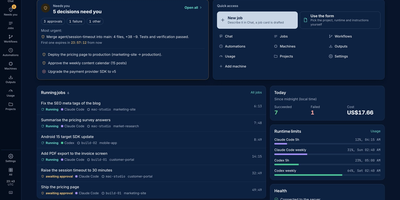
Remyral is a self-hosted control plane that runs Claude Code, Codex, Pi, and OpenCode across your own machines, with a shared queue, approvals, and an audit log. Requests start in chat, where the assistant drafts a job card that you approve, edit, or dismiss; plan mode writes phases and open decisions first and changes nothing until you approve the plan. The queue places each job on a Linux, macOS, Windows, or Docker worker by capacity, disk state, and required runtime, and the project's sandbox applies a network policy of off, allow-list, or web. Workflows mix agent steps with conditions, loops, HTTP calls, code, and approval nodes, started by a schedule, a signed webhook, or the API. A shared memory of rules, facts, decisions, and lessons reaches every runtime the same way, and lessons that agents propose wait for a person to accept them. Three security presets decide which actions need a person plus an authenticator code, and privileged actions land on a hash-chained audit log. Software jobs end as pull requests on GitHub, GitLab, or Bitbucket, with a merge decision and a deploy through Coolify or Cloudflare Pages, while usage and cost are tracked per runtime and account. Transient failures retry on another machine, and jobs that hit a usage limit wait for the window to reopen. Running on a dedicated VPS on RepoCloud with guaranteed CPU, RAM, and SSD, full root SSH access, and a browser serial console. Apache-2.0 licensed.
DooTask
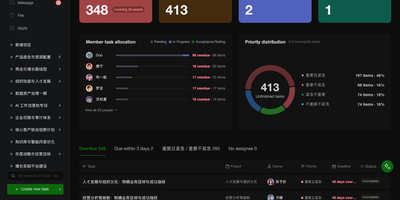
Open a project in DooTask and your tasks appear as a Kanban board, a list, a Gantt timeline, or a calendar, with team chat and file sharing beside them. Start from a project or task template and set a task to repeat so each new occurrence links back to the original. Mention colleagues in project and task chats, add emoji, and keep messages protected with asymmetric encryption. Files from chats and tasks gather in a Collaboration Files section, and WebDAV lets you manage My Files and Shared Files from Finder or Explorer. Check the dashboard for what is overdue, due today, or coming up, while department heads switch to a team view charting overdue and incomplete tasks per member. Visit the App Store to install official apps for approvals, OKRs, AI assistants, OnlyOffice, Minder mind maps, and Drawio diagrams. Administrators can add custom apps from an archive, a URL, or a GitHub repository. Add an API key for ChatGPT, Claude, Gemini, DeepSeek, or Grok, or point to Ollama or any OpenAI-compatible URL, then type @AI Robot in a project chat to draft tasks. Log in on the web by scanning a QR code with the mobile app, or use an LDAP or Active Directory username. The free Open Source Edition covers three users; paid editions raise that to ten or unlimited. Running on a dedicated VPS on RepoCloud with guaranteed CPU, RAM, and SSD, full root SSH access, and a browser serial console. AGPL-3.0 licensed.
Budibase
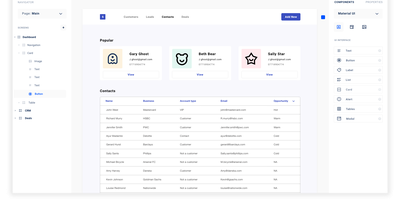
Step right up to the magical world of Budibase, the open-source wizardry that turns the grueling task of building internal tools into a walk in the digital park. Imagine crafting mighty tools and formidable forms in less time than it takes to brew a cup of coffee, all without typing a single line of code! With Budibase, you can charm data from an ancient external database, summon information from a Rest API, conjure up figures from a CSV, or create something entirely new with Budibase's own mystical database. Design your digital dominion with a flick of the drag-and-drop, and automate your kingdom's workflows as if by magic. Join the ranks of the 75,000 teams who've harnessed the power of Budibase to accelerate their business quests. Need to safeguard data like a digital fortress, automate tasks like a sorcerer, or streamline operations like a high-speed chariot? Budibase is your trusty steed in the race to operational victory. And with RepoCloud hosting, you'll save a treasure chest of gold compared to those other cloud-dwelling giants!

ima2-gen
ChatGPT, Grok, Gemini, NovelAI, and ComfyUI sit behind one prompt composer in ima2-gen, a studio that branches favorite AI images into variants and keeps every image and video in a searchable gallery. Multimode fires several candidates from one prompt and fills the slots as they finish, with up to five reference images attached. In the node graph a favorite grows into gold, marble, or forest variants that each remember their parent, so the original is never overwritten. Canvas Mode annotates, erases, and cuts out backgrounds, verifies GPT transparency from the decoded bytes, then exports PNG, SVG with an embedded raster, or traced vector paths. Grok video models turn text, one image, or a set of references into clips, and Storyboard mode keeps characters and scenes consistent across frames. Further lanes reach AtlasCloud, MiniMax, and MCP-connected Runway and Higgsfield, and each job goes only to the provider you choose. A prompt library imports packs from local files or GitHub folders, Prompt Builder refines rough ideas, and the gallery stores each render with its prompt, timing, and settings. A CLI and three Markdown skills let coding agents generate assets, vectorize logos, and run video jobs against the same studio. Binding to a network address requires an access token. Running on a dedicated VPS on RepoCloud with guaranteed CPU, RAM, and SSD, full root SSH access, and a browser serial console. MIT licensed.
Teedy
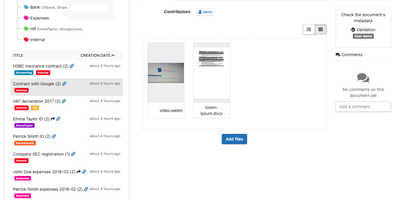
Every scan and PDF you drop into Teedy becomes searchable text in a self-hosted document archive, filed by nested tags instead of folders. OCR reads images in more than twenty languages, and the search box offers suggestions and highlights matches, even inside ODT, DOCX, and PPTX files. Video files are supported as well. Each record carries Dublin Core fields plus custom metadata of your own design, with comments and earlier file versions attached. When a document needs a second pair of eyes, workflow steps with assigned reviewers move it along in order until someone signs off. Pull in EML emails, let the server poll an inbox, or point the bulk importer at a whole folder, and incoming paperwork needs no manual filing. Share a single document through a public link, or keep it behind user and group permissions with a storage quota for each person. LDAP and two-factor authentication guard sign-in, 256-bit AES encryption protects stored files, and an audit log records who changed what. Webhooks alert other services, a documented REST API lets scripts take part, and an Android client carries the archive on a phone. Running on a dedicated VPS on RepoCloud with guaranteed CPU, RAM, and SSD, full root SSH access, and a browser serial console. GPL-2.0 licensed.
OpenCode
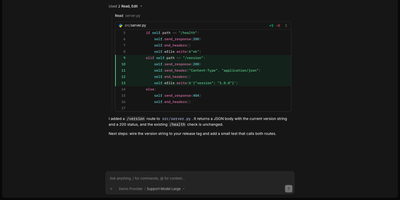
OpenCode puts a capable coding agent in a browser tab, so a project on your server can be worked on from any device. Start a session, describe the change, and watch the agent read files, edit code, and explain what it did in plain language. A review panel lists every changed file with unified or split diffs, a file tree, and a git changes view, so nothing lands without a look. Sessions open as tabs, run in parallel, and keep a searchable history per project. The model picker spans more than 200 providers plus free hosted models, and any OpenAI compatible endpoint can be added from a config file, which keeps local and self-hosted models in reach. Settings offer top tabs, side tabs, or an inbox layout, optional permission auto-accept, steer or queue behavior for follow-up prompts, timeline detail levels, themes, and fonts. Extensions cover MCP servers, plugins, and skills, and custom agents and commands capture the team's habits. One-time pairing links connect a new browser or app to the server in seconds. Running on a dedicated VPS on RepoCloud with guaranteed CPU, RAM, and SSD, full root SSH access, and a browser serial console. MIT licensed.
Mandate
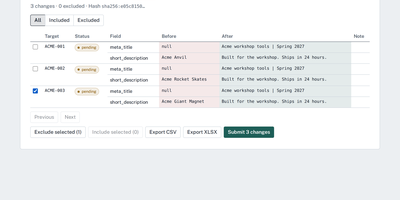
Let Claude or ChatGPT propose changes to your online shop, issue tracker, or internal APIs, and Mandate makes sure a person approves the exact before-and-after list before a single record is written. Requesters can exclude records or export the list as CSV or XLSX, while the approver's page is rendered by the server from stored data, never from text the model wrote. Approval rules depend on record count and role, chains can have several steps, and nobody approves their own request. Roles default to deny: an operation no role grants is never listed to the client, grants can pin an argument such as one brand, and fields like cost stay hidden. Approved changes are applied in batches by a durable workflow that survives restarts, and rollback restores the values recorded before the write. Any REST API with an OpenAPI document or any MCP server attaches without code, and presets for Magento 2 catalogs and Gitea issues ship ready to use. Typical uses include bulk shop edits, issue triage, read-only lookups for support staff with sensitive fields removed, and nightly automation that proposes while a person approves. One endpoint, one login, and one audit log with JSON Lines export serve every connected client, and credentials stay in an encrypted vault the model never sees. Running on a dedicated VPS on RepoCloud with guaranteed CPU, RAM, and SSD, full root SSH access, and a browser serial console. Apache-2.0 licensed.
StackStorm
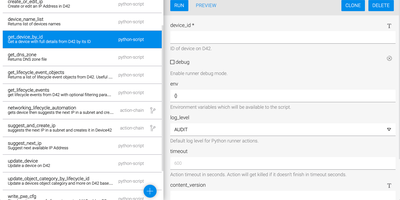
Sensors watch your infrastructure so your engineers do not have to watch it at 3 a.m. StackStorm is event-driven automation: Python sensors poll or listen to external systems (monitoring alerts, ticket updates, chat messages, webhooks, timers) and inject each event as a trigger. Rules match triggers against criteria you define and fire the response automatically, mapping the event payload straight into action parameters. Actions do the work: SSH commands, REST calls, and integrations for AWS, Docker, OpenStack, Puppet, Jira, Slack, and hundreds more from community packs, or your own scripts wrapped with a few lines of metadata. Multi-step responses become workflows that sequence actions with conditions, branching, and data passed between tasks, handling everything from disk-full remediation to full deployment pipelines. Everything bundles into packs, the shareable units that group sensors, rules, actions, and workflows per product or per automation, installable from the StackStorm Exchange or your own Git repositories. The web UI runs actions, explores workflow executions down to individual task results in real time, manages rules, and installs packs, while every execution, manual or automated, lands in an audit trail with its triggering context. ChatOps aliases even let the team trigger approved automations from chat. Running on a dedicated VPS on RepoCloud with guaranteed CPU, RAM, and SSD, full root SSH access, and a browser serial console. Apache-2.0 licensed.
TongFlow
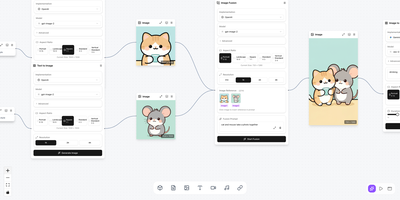
Text, images, audio, video, 3D models, documents, and links share one canvas in TongFlow, where a campaign brief can become copy options, key visuals, and a short clip without leaving the page. Every step is one of three actions: add material, transform it, or combine several pieces, and each result stays on the canvas as a node you can branch from. Over 60 capability slots cover image generation and editing, video generation, music, speech synthesis and recognition, noise reduction, speaker separation, matting, image-to-3D, and shot splitting. A capability is separate from the model that runs it, so swapping OpenAI, Gemini, DeepSeek, OpenRouter, or a Modal-hosted open model leaves the surrounding steps untouched. The plugin manager installs official plugins in place, and credentials live in a Settings dialog. Agents get the same tools through a local MCP server and a Claude Code plugin, producing workflow files that people can open, edit, and run again, and each run is kept in a history with its inputs, outputs, and timing. App Mode turns a finished workflow into a simple form that colleagues can fill in, even from a phone browser. Spend-heavy steps wait for a person's approval. Running on a dedicated VPS on RepoCloud with guaranteed CPU, RAM, and SSD, full root SSH access, and a browser serial console. AGPL-3.0 licensed.
Flowctl
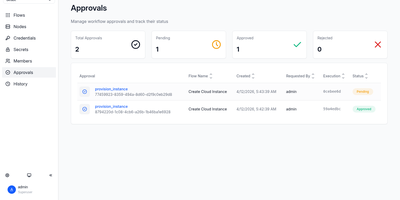
Flowctl turns repetitive ops work, such as granting SSH access, restarting a service, or provisioning a server, into self-service forms that anyone on the team can run without holding credentials. Each workflow is a YAML or HUML file with typed inputs, validation rules, and a list of actions. Actions run in order or as a dependency graph, so independent branches execute in parallel. Every action runs in a Docker container, as a shell script, or as another flow, and scripts can target remote servers over SSH, several at once. Sensitive steps pause until a reviewer approves or rejects them. Output from one action feeds the next, files pass along as artifacts, and failed actions can be retried. Cron schedules with time zones and labels run flows unattended, while logs stream live in the browser. Email, Slack, Mattermost, and webhook notifications announce success, failure, waiting, or cancellation. Teams get isolated namespaces with user, operator, reviewer, and admin roles, OIDC single sign-on, and encrypted storage for SSH keys and secrets. A built-in flow editor means nobody has to hand-write files, and custom executors can be added as Go plugins. Running on a dedicated VPS on RepoCloud with guaranteed CPU, RAM, and SSD, full root SSH access, and a browser serial console. Apache-2.0 licensed.

Reflex
A payment fails, a reply lands on a ticket, an order sits unshipped: Reflex wakes an AI agent that handles the safe part and sends the rest to a person. A reflex bundles a trigger, Markdown instructions, MCP connections, and a policy for every tool. Triggers include signed webhooks from GitHub, Stripe, or any source, MCP resource subscriptions, polls, cron schedules, and X without Y, which fires when an order is paid but not shipped within minutes. Automatic tools run, approval tools wait, and forbidden tools do not exist for the agent. People decide in a Decisions inbox that shows the agent's reason and the exact call, and approving runs that call without asking the model again. Some actions can require two approvers. Reflex recalls up to three similar past decisions, so the agent stops repeating proposals people already rejected. Each reflex has a daily token budget and caps on tool calls and run time, and three failed runs in a row switch it off. Runs resume from stored steps after a crash. Pick Claude or an open model through Hugging Face for each reflex, and without a key the demo replays recorded answers. Reflex is an MCP server too, behind OAuth, so Claude Code can read runs and approve or reject decisions as you. Running on a dedicated VPS on RepoCloud with guaranteed CPU, RAM, and SSD, full root SSH access, and a browser serial console. MIT licensed.
Tagvico
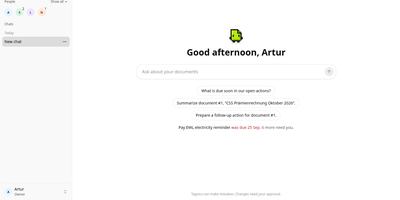
Paperless-ngx files the document; Tagvico, its companion, makes sure someone acts on it, turning letters, bills, and renewals into deadlines the whole household can see. A tax letter in the archive can become an Action Case. The case carries an owner, a due date, a priority, and up to 100 checklist steps. Needs you collects everything overdue, due this week, or due later in one list. Approvals and review items wait there too. Each family member has a profile page and a role that limits what they can approve. Ask the chat about your archive and it cites the documents behind every answer. Anything it wants to change, from a tag to a case, arrives as a proposal. An adult or the owner presses Approve, and the decision enters an audit trail. Run it on a ChatGPT Plus or Pro plan with no API key, or bring OpenAI, OpenRouter, Ollama, or any compatible endpoint. Relatives on Telegram or Discord can search, upload scans, and, if they are adults, approve from a phone. Each uses a personal Paperless token, so permissions stay with Paperless. Deadline reminders arrive once a day. New documents can also get suggested titles, tags, and dates in a review queue, with snapshots that restore the original metadata. Running on a dedicated VPS on RepoCloud with guaranteed CPU, RAM, and SSD, full root SSH access, and a browser serial console. MIT licensed.