Categories
Self-Hosted AI Agents DevOps Agent Orchestration Coding Agents Claude Code Approval Workflows Control PlaneStars
Forks
Watchers
Developer links
Remyral
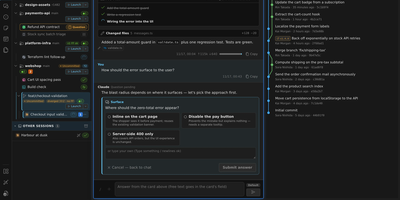
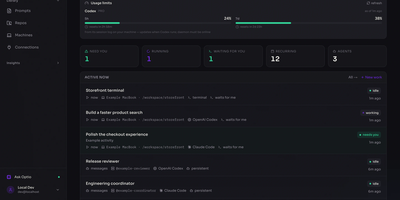
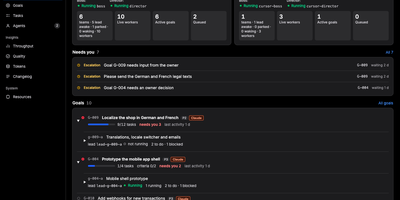
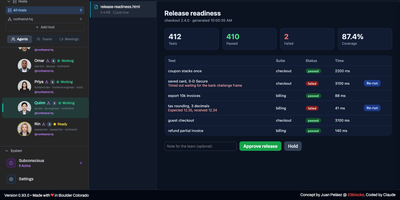
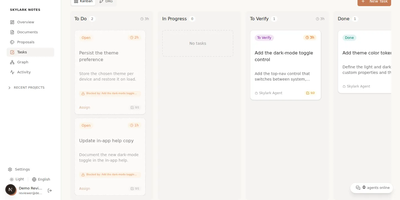
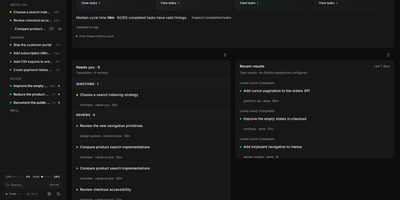
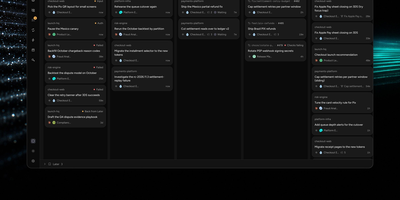
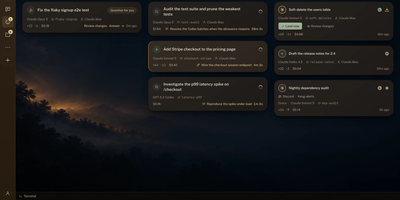
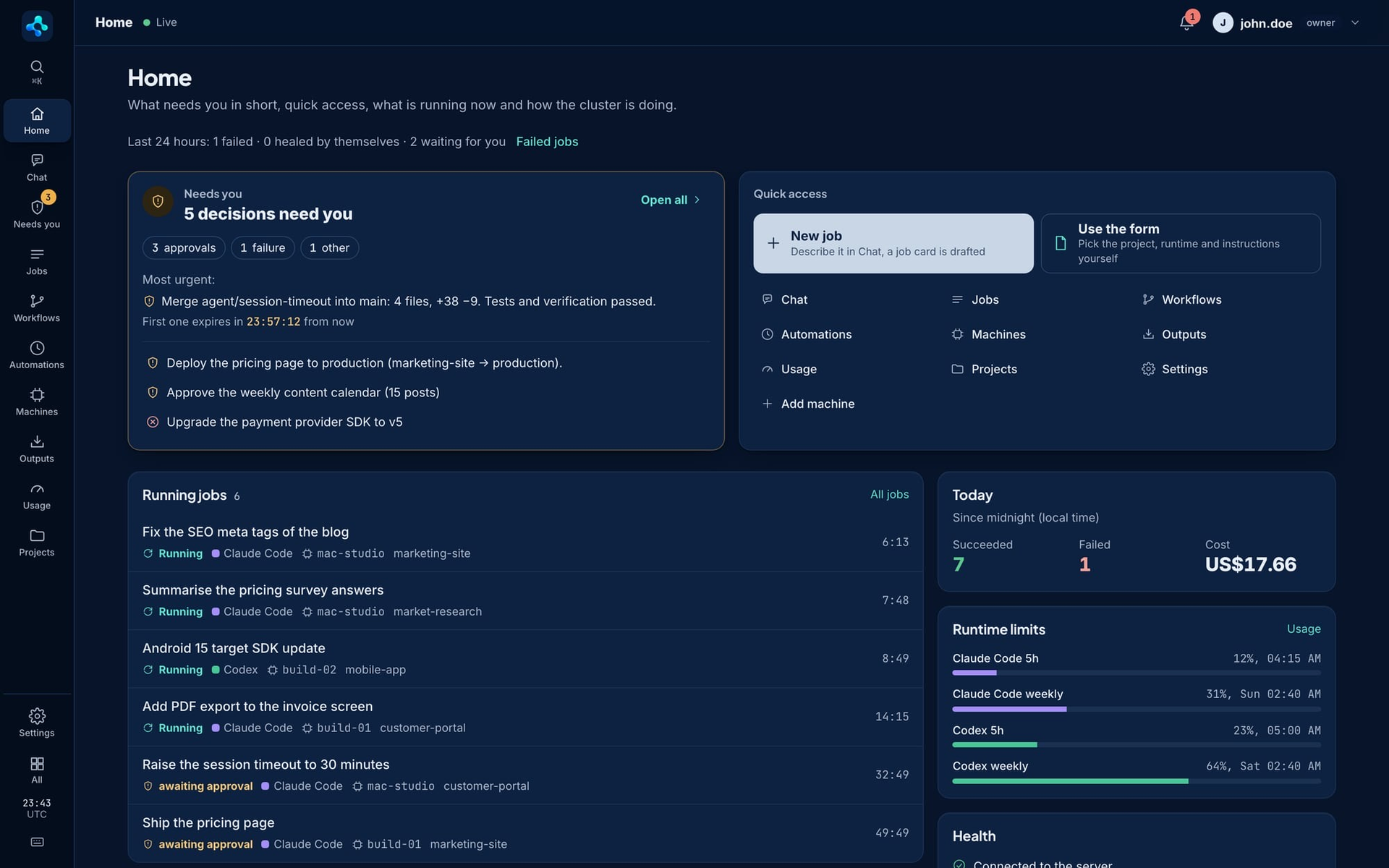
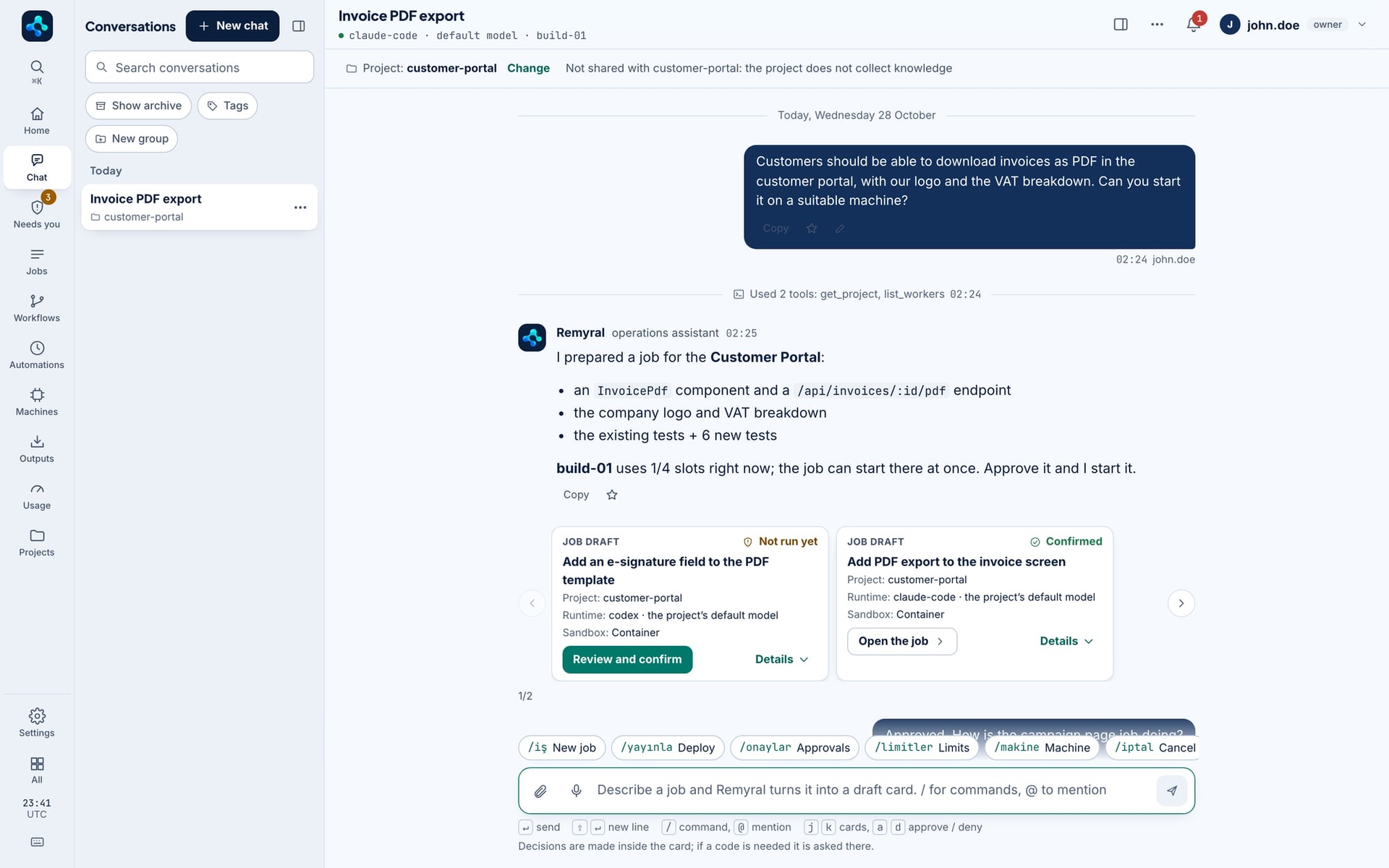
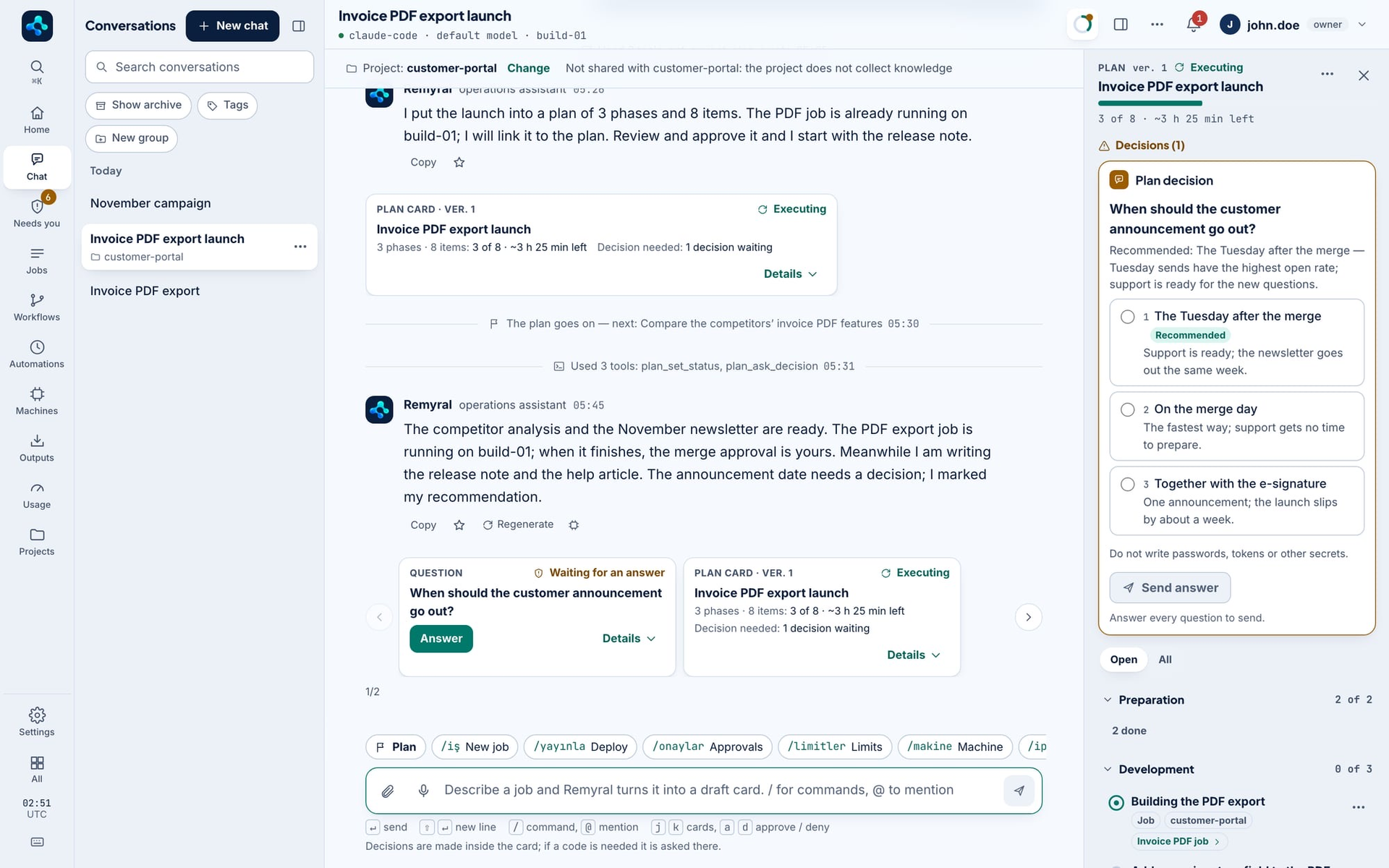
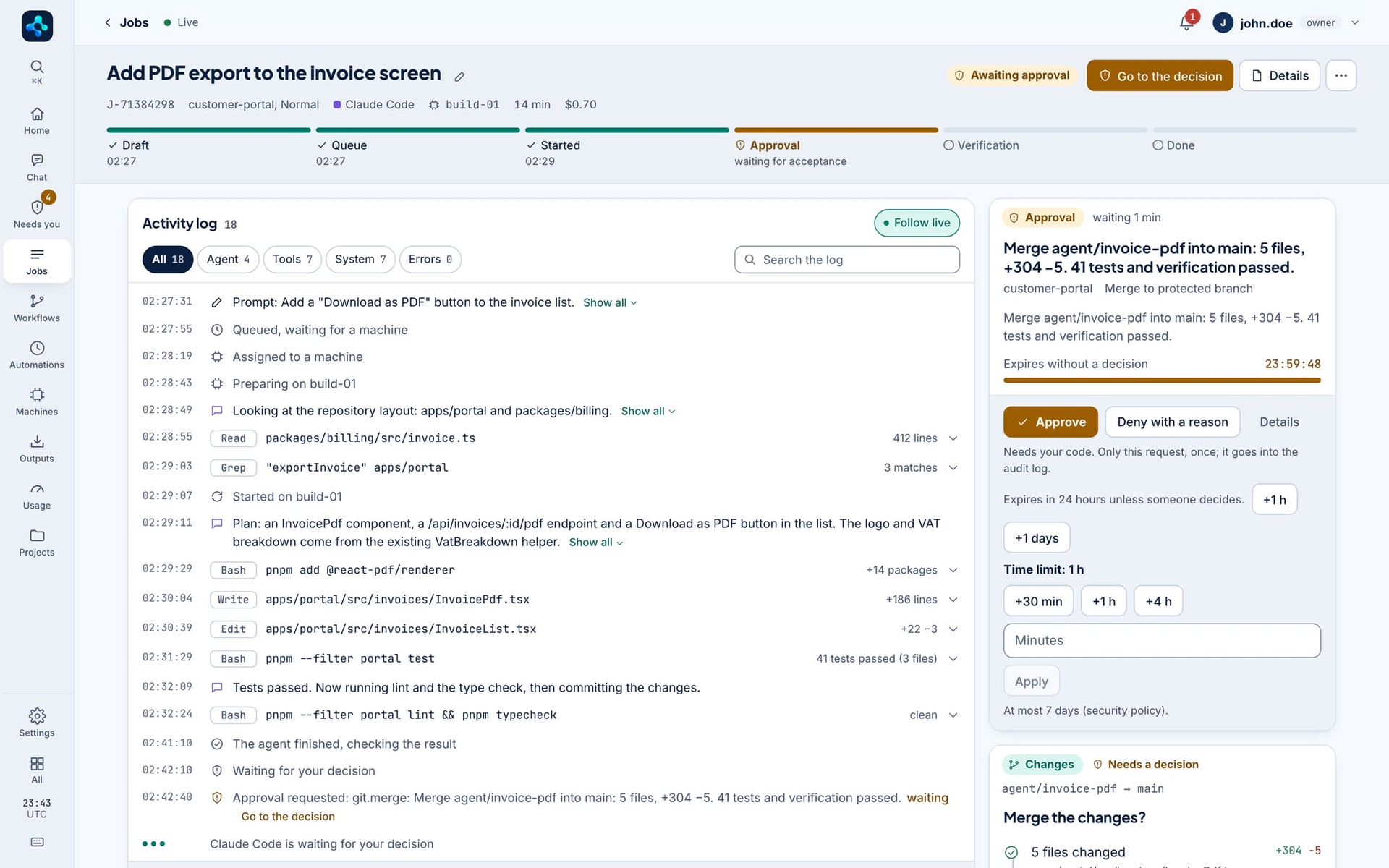
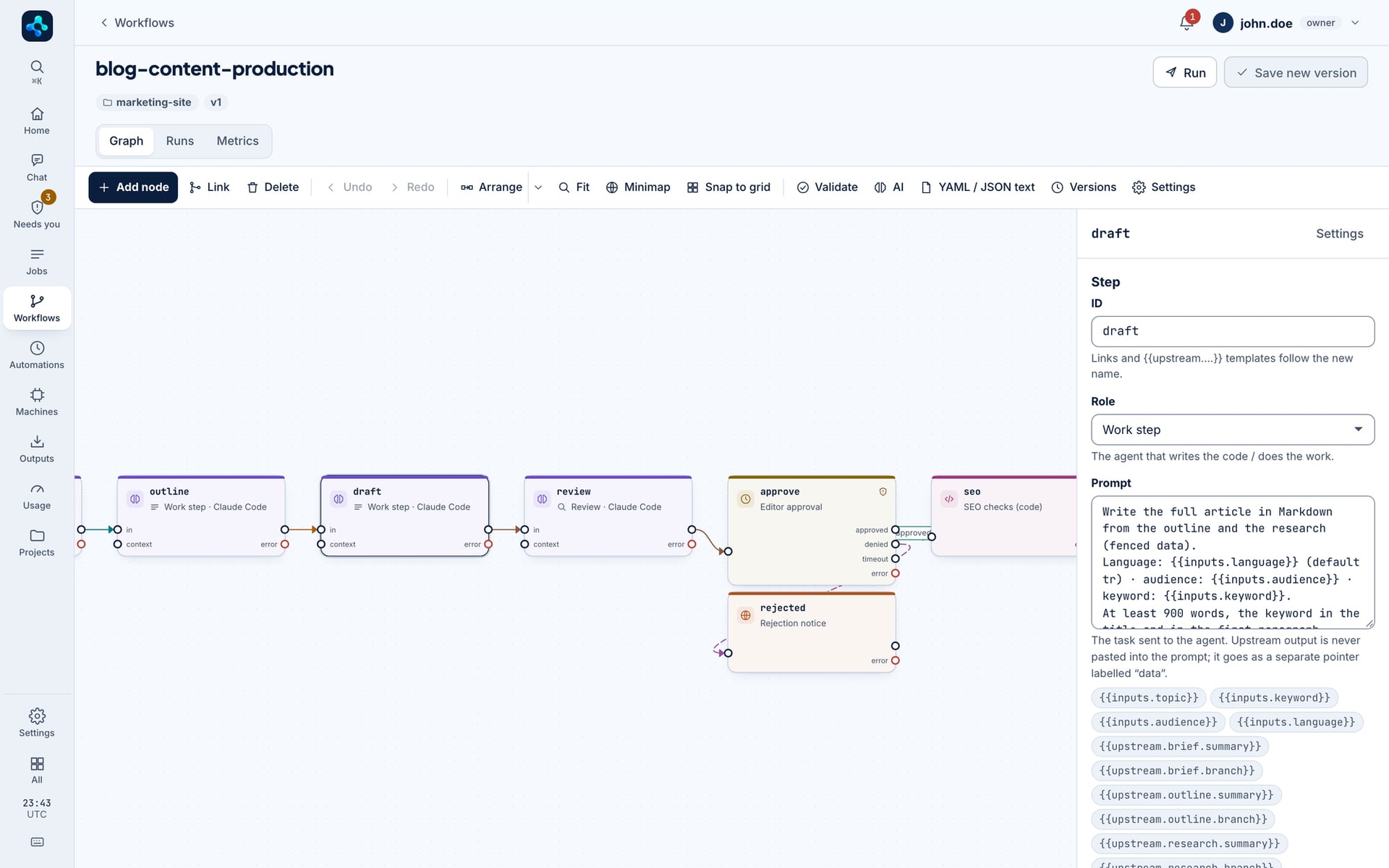
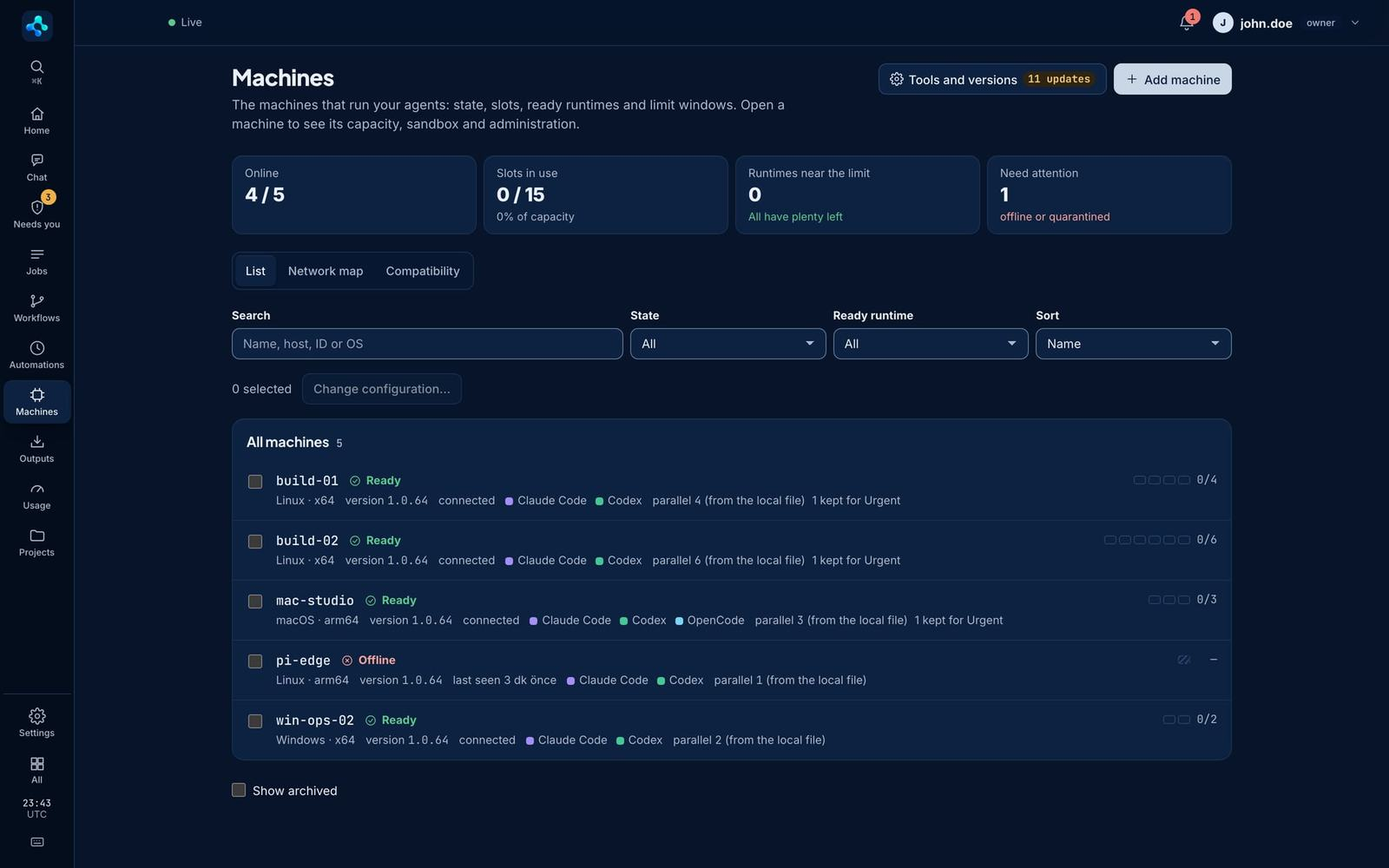
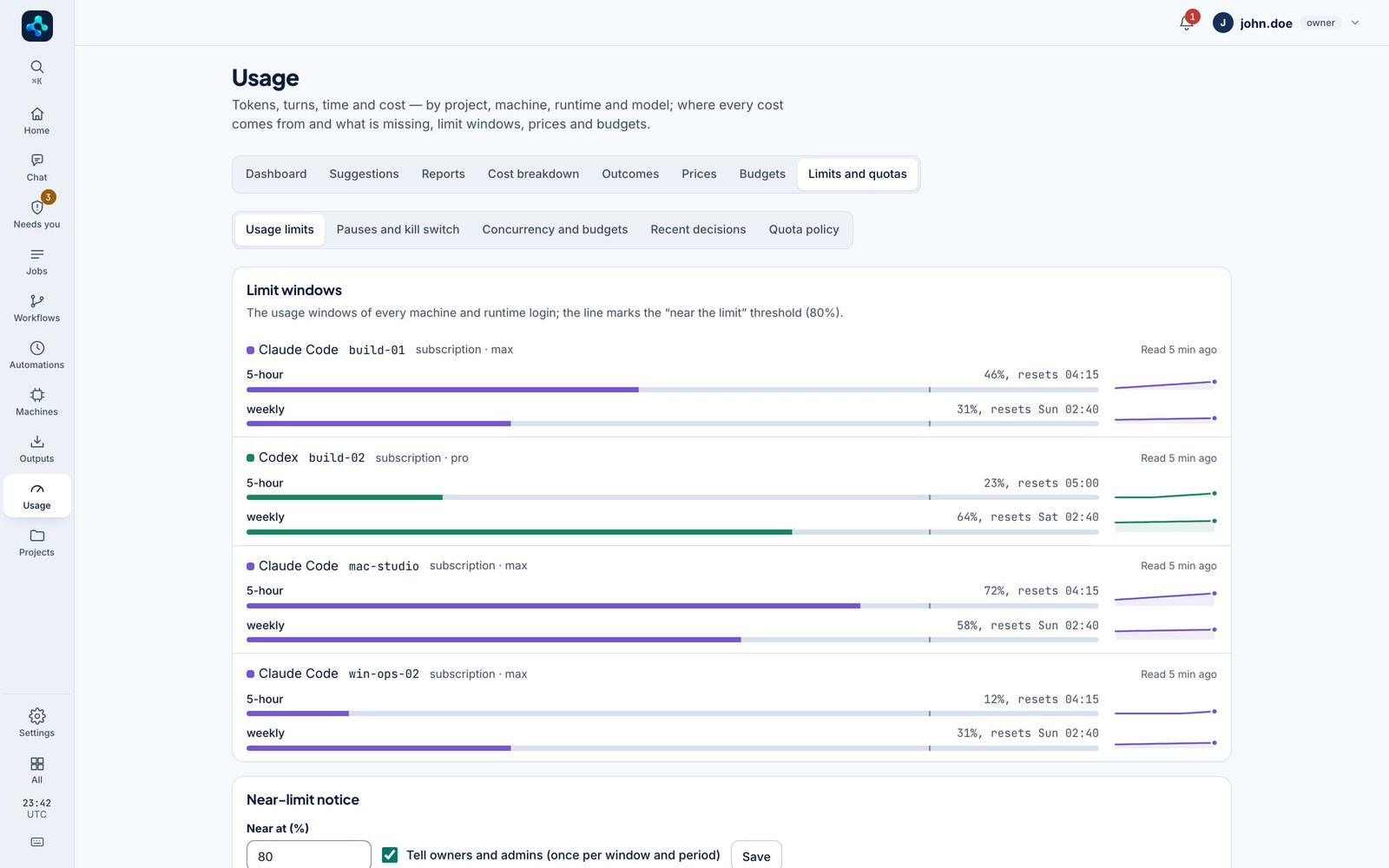
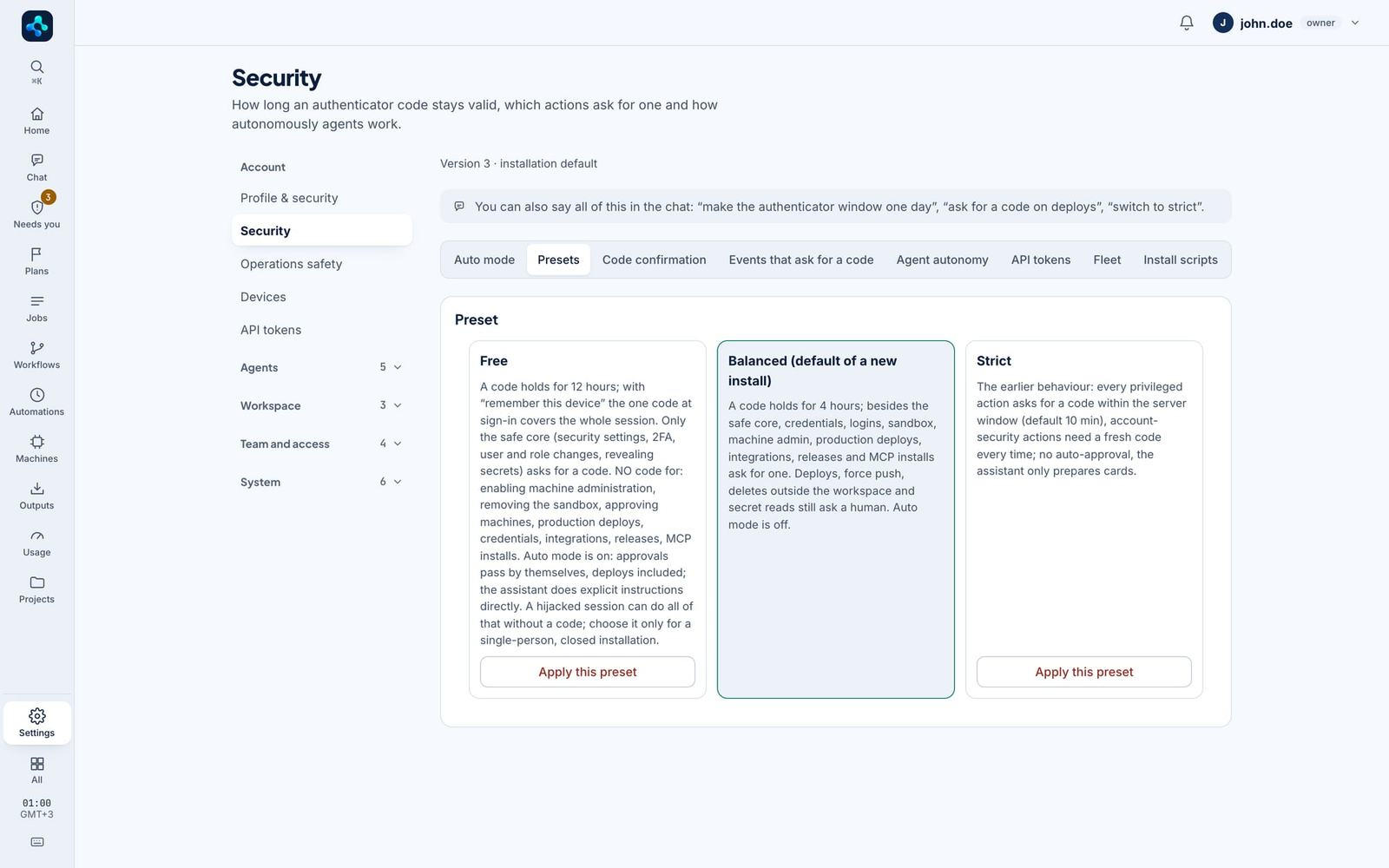
Remyral is a self-hosted control plane that runs Claude Code, Codex, Pi, and OpenCode across your own machines, with a shared queue, approvals, and an audit log. Requests start in chat, where the assistant drafts a job card that you approve, edit, or dismiss; plan mode writes phases and open decisions first and changes nothing until you approve the plan. The queue places each job on a Linux, macOS, Windows, or Docker worker by capacity, disk state, and required runtime, and the project's sandbox applies a network policy of off, allow-list, or web. Workflows mix agent steps with conditions, loops, HTTP calls, code, and approval nodes, started by a schedule, a signed webhook, or the API. A shared memory of rules, facts, decisions, and lessons reaches every runtime the same way, and lessons that agents propose wait for a person to accept them. Three security presets decide which actions need a person plus an authenticator code, and privileged actions land on a hash-chained audit log. Software jobs end as pull requests on GitHub, GitLab, or Bitbucket, with a merge decision and a deploy through Coolify or Cloudflare Pages, while usage and cost are tracked per runtime and account. Transient failures retry on another machine, and jobs that hit a usage limit wait for the window to reopen. Running on a dedicated VPS on RepoCloud with guaranteed CPU, RAM, and SSD, full root SSH access, and a browser serial console. Apache-2.0 licensed.
Benefits
- One queue across every machine
- Linux, macOS, Windows, and Docker workers connect outbound only, so no inbound ports open on your machines, and the queue places each job by capacity, disk state, and required runtime.
- Approvals matched to your risk
- Three security presets set which merges, deploys, and credential actions need a person and an authenticator code, while plan mode changes nothing until you approve the plan.
- Secrets never reach the model
- Runtime and API keys are sealed with the key of the machine that uses them, and git and deploy tokens stay encrypted on the control plane, away from workers and models.
- One memory for every runtime
- Rules, facts, decisions, and lessons are typed and scoped, rendered the same way for Claude Code, Codex, Pi, and OpenCode, and each job records the memory versions it used.
Features
- Fastify API, React console
- A Fastify API and React console use PostgreSQL as the source of truth and Redis for dispatch, installed on one Linux host by a signed installer or through Coolify.
- Outbound-only worker service
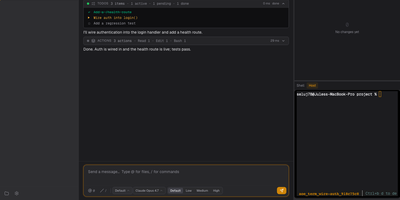
- A Node.js worker on each machine connects over WSS, pairs with a code and fingerprint, then runs each runtime through a versioned adapter in a per-job workspace.
- Chat, plan mode, workflows
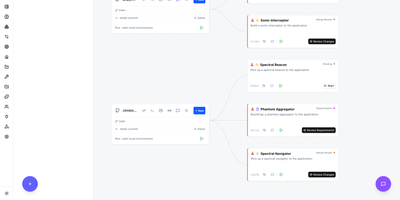
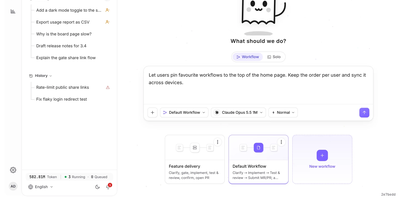
- A chat assistant drafts jobs, plan mode writes phased plans with recommended decisions, and a canvas editor chains agent steps with HTTP, code, loop, and approval nodes.
- MCP, webhooks, and OpenAPI
- Tools connect through signed incoming webhooks, HMAC-signed outgoing events, MCP servers with version locks and per-tool permissions, scoped API tokens, and a public OpenAPI document.
- Git and deploy integrations
- Branches, commits, and pull requests go to GitHub, GitLab, or Bitbucket Cloud, then releases deploy through Coolify or Cloudflare Pages with domains and environment variables.
- MFA sign-in and audit chain
- Authenticator-app sign-in with recovery codes, roles for owners, admins, operators, and viewers, and a tamper-evident hash-chained audit log cover every privileged action.