SignaturePDF
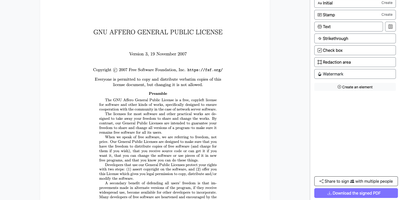
Signature PDF turns the print, sign, scan, email routine into a browser tab: upload a contract, place your signature on the page, and send the finished document back without paper ever entering the loop. Sign alone in seconds, or share a link and let partners, clients, and colleagues add their signatures to the same document in turn. Draw your signature with the mouse or trackpad, type it in a handwriting style, or stamp a scanned image of your handwriting onto any page. Drop the signature exactly where it belongs, resize it, and apply it across selected pages before downloading the signed file. Organize mode lays every page out as thumbnails you can reorder, rotate, delete, extract, and merge with pages from other PDFs. The metadata editor rewrites title, author, and custom fields, and compression shrinks bulky scans to a size email can carry. For shared signing, PDFs rest on the server only for the retention window you choose, and optional storage encryption keeps their contents unreadable to anyone missing the key. Where cryptographic proof is required, certificate-backed digital signing proves who signed and exposes any later edit to the file. A built-in demo document lets anyone test the full flow first, and the translated interface serves signers in many languages. Running on a dedicated VPS on RepoCloud with guaranteed CPU, RAM, and SSD, full root SSH access, and a browser serial console. AGPL-3.0 licensed.
Argilla
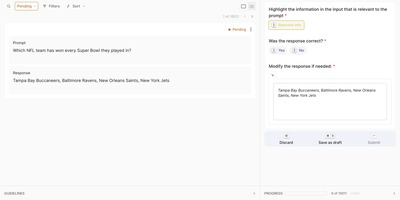
Before a language model learns from your data, someone has to label it well; Argilla gives AI engineers and domain experts a shared workspace to label, review, and refine the datasets that fine-tune language models and train NLP pipelines. You build each dataset from the Python SDK, mixing text, chat, and image fields with the exact questions your task needs: single-label classification for intent detection, span questions for named entities, ratings for response quality, rankings for preference tuning, or free text for corrections. Annotators then work through records in a focused labeling interface where model predictions already sit attached as suggestions, turning most reviews into a fast confirm-or-correct decision instead of a blank-page exercise. Full-text search, metadata filters, and status filters slice a hundred thousand records down to the ones needing attention, while vector-based semantic search finds lookalike examples, near-duplicates, and the disagreement hotspots where guidelines need sharpening. Dataset owners watch completion progress, manage who has responded to what, and split work across workspaces with owner, admin, and annotator roles for each team or client. Finished datasets export with responses, suggestions, and metadata intact, locally or straight to the Hugging Face Hub, ready for fine-tuning and evaluation runs. Running on a dedicated VPS on RepoCloud with guaranteed CPU, RAM, and SSD, full root SSH access, and a browser serial console. Apache-2.0 licensed.
Gerrit Code Review
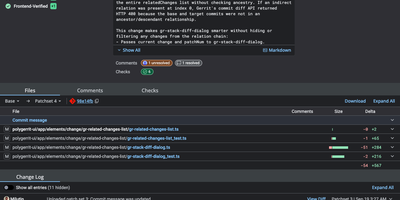
Unlike pull-request forges, Gerrit reviews every Git change as a series of patchsets, and nothing merges until the required approvals are in. Developers upload with a plain git push to a refs/for ref, adding push options for topics, hashtags, work-in-progress, or private changes. Each change gets a page listing reviewers, CCs, an attention set that flags who must act next, and submit requirements driven by labels such as Code-Review and Verified, with a quick approve button for the last missing vote. Side-by-side diffs with syntax highlighting take inline comments written in Markdown, saved as drafts and published together. A Checks tab shows CI runs reported by plugins, and integrations reach Jenkins, GitHub Actions, Zuul, and webhooks. Access rights attach to groups and branch patterns, including regular expressions, and inherit from parent projects and All-Projects. Sign-in works with LDAP, OAuth, OpenID, or HTTP single sign-on, and SAML through a plugin. A query language filters changes by status, owner, reviewer, label, file path, and reviewer count. Projects pick a submit strategy: merge if necessary, fast forward only, rebase if necessary, rebase always, merge always, or cherry pick. A REST API, SSH commands, and a plugin system extend the server, and an optional Review Agent chat panel can summarize a change once an AI provider plugin is installed. Running on a dedicated VPS on RepoCloud with guaranteed CPU, RAM, and SSD, full root SSH access, and a browser serial console. Apache-2.0 licensed.
1FlowBase
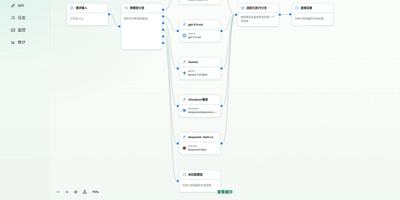
1FlowBase gives teams a single self-hosted foundation that connects model providers, retains every AI conversation, and turns that activity into working business applications. You connect OpenAI, Anthropic, Gemini, DeepSeek, Alibaba Cloud Bailian, or any OpenAI-compatible API through provider plugins and publish one stable endpoint for clients. Requests convert between Anthropic Messages, OpenAI Chat Completions, and OpenAI Responses, so applications keep working when a provider changes. You can route traffic by model name, fall back across branches when a provider fails, and combine planning, execution, and review models into a virtual model that callers use like any other model. Every gateway conversation is recorded with its model, reasoning effort, status, token totals, recorded cost, and latency, then broken down by model and by user in statistics views. You define data models and data sources, expose CRUD APIs, schedule workflows, and publish an OpenAPI 3.1 document for each application. Agents reach the same runtime through MCP with progressive list, get, and call tool discovery, and you manage MCP instances and third-party servers from the console. Pages come from native React blocks that you edit in place with a built-in AI assistant. Running on a dedicated VPS on RepoCloud with guaranteed CPU, RAM, and SSD, full root SSH access, and a browser serial console. Apache-2.0 licensed.
SandBase Harness
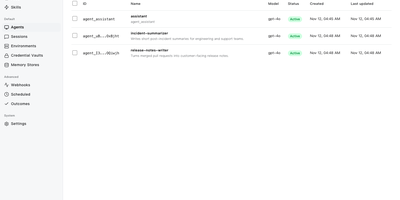
SandBase Harness gives your AI agents a proper home with sessions, tools, sandboxes, and an audit trail instead of a pile of scripts. The console lists agents with their model, status, and version, and an agent page shows its system prompt, attached tools, and skills. Every session keeps a resumable event log, and a transcript view opens any user or agent message as a rendered or raw event. Built-in tools run in a local process, per-session Docker containers, Kubernetes, or a self-hosted worker queue, and permission policies can always allow a tool or always ask a human first. MCP toolsets, credential vaults, and skill packages extend what an agent can reach, with Anthropic's xlsx, pptx, pdf, and docx skills listed next to your own. Memory stores, webhooks, scheduled deployments, and outcome definitions cover longer-running work. Settings include a model provider form, API keys for bearer authentication, and an interactive API reference for sessions, agents, environments, and vaults. A TypeScript SDK and a bundled MCP bridge connect other tools to the same runtime. Running on a dedicated VPS on RepoCloud with guaranteed CPU, RAM, and SSD, full root SSH access, and a browser serial console. Apache 2.0 licensed.
Fluvio
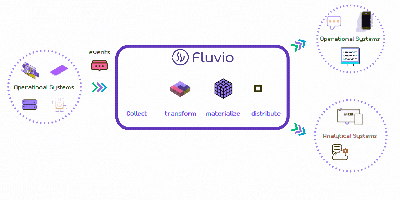
Fluvio is a distributed data streaming platform that moves records between your applications on partitioned topics and transforms them in flight with WebAssembly modules before they land anywhere. Producers publish to topics and consumers read at their own pace, with client libraries for Rust, Python, and JavaScript plus a full command line for producing and consuming interactively. SmartModules are reusable WebAssembly functions that filter, reshape, and enrich records inside the stream, so cleanup and routing logic runs once at the platform layer instead of inside every consumer. Stateful DataFlow builds continuous processing on top of the same streams, keeping state across records to aggregate, join, and react as data arrives. Inbound connectors collect from HTTP endpoints, webhooks, MQTT brokers, and Kafka clusters, and outbound connectors deliver to HTTP, SQL databases, and Kafka, with a development kit for building connectors to your own systems. A local cluster starts with one command for development, and the same platform deploys on Kubernetes for production streaming at the edge or in the cloud. Running on a dedicated VPS on RepoCloud with guaranteed CPU, RAM, and SSD, full root SSH access, and a browser serial console. Apache-2.0 licensed.
imgpush
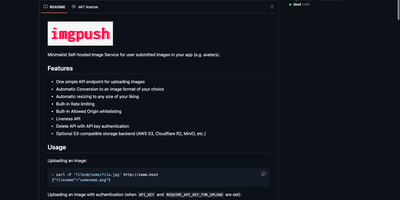
Your app needs avatars, attachments and user photos, and imgpush is the tiny service that takes them off your hands. Send one upload request with a file or a URL and you get back a filename; ask for that file with a width and height in the address and you receive exactly that crop, converted to the format you configured. Originals live on local disk or in any S3-compatible bucket (AWS S3, Cloudflare R2, MinIO or Backblaze B2), with resized variants cached locally for fast serving. Abuse controls come built in: per-IP upload quotas per minute, hour and day, an allowed-origins whitelist, and an optional nudity filter that can also sample video frames before an upload is accepted. An API key can be required for uploads, deletes remove the original together with every cached size, and a liveness endpoint keeps Docker and Kubernetes health checks honest. One Docker container on port 5000, a page of environment variables, and your application never writes image code again. Running on a dedicated VPS on RepoCloud with guaranteed CPU, RAM, and SSD, full root SSH access, and a browser serial console. MIT licensed.
Corteza
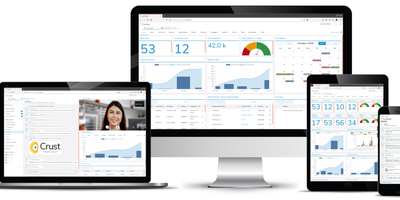
Salesforce's platform model, 100% open-source (Apache 2.0): Corteza is a Go/Vue.js low-code platform developed under a foundation, so there is no open-core bait to grow out of. The heart is Corteza Compose: namespaces contain applications, modules define record structures the way Salesforce objects do, and a drag-and-drop page builder assembles record pages, list pages, dashboards, and charts from configurable blocks. Automation comes from a visual, BPMN-style workflow engine plus JavaScript automation scripts, so cross-application business logic - approval chains, field updates, notifications - is configured rather than programmed. Granular role-based permissions reach down to individual modules, fields, and records, mirroring real organizational hierarchies. Corteza CRM ships as the flagship application built entirely on Compose: leads, accounts, opportunities, campaigns, and cases with a 360-degree customer view, covering most Salesforce standard objects - and because it is just a Compose app, adding or reshaping modules is configuration, not a fork. Everything is reachable over REST APIs, deliberately familiar tooling eases Salesforce admin migration, and a CLI can even generate synthetic records for load-testing what you build.
Traduora
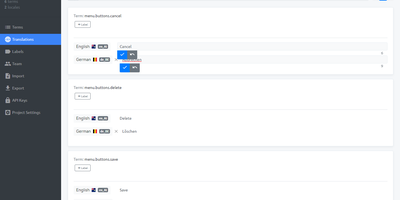
Teams that ship one app in many languages keep every string, translator, and reviewer in a single workspace by hosting their own Traduora translation management platform. Developers import the files they already have: JSON, YAML, PO, XLIFF, CSV, Android XML, iOS Strings, Java properties, PHP array, or RESX. Each string becomes a term that can carry a context note and colored labels. A search bar and a label filter narrow long lists in seconds. Translators open a locale and type inline beside a reference language, with per-locale progress showing how much is finished and a toggle that hides what is already done. Colleagues join by email invitation as admins, editors, or viewers, with optional Google sign-in. Build pipelines get their own API clients, each with a role, to fetch and push translations over a REST API. Exports go back out in whichever format each platform wants, with fallback-locale and untranslated-key options. Mobile and web teams can keep iOS, Android, and website copy in sync from a single source of truth. Running on a dedicated VPS on RepoCloud with guaranteed CPU, RAM, and SSD, full root SSH access, and a browser serial console. AGPL-3.0 licensed.
sish
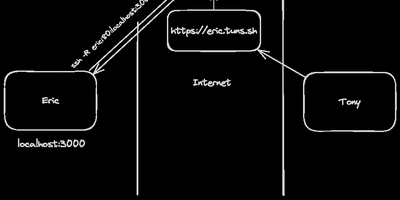
Private machines hide their services behind routers and firewalls; sish gives those services a public address, reached with nothing more exotic than the SSH client already on your laptop. Point a standard remote forward at the server and a local web app appears at its own subdomain over HTTPS, ready to share with testers, clients, or a webhook provider. Raw TCP forwards work the same way, publishing a database, a game server, or an SSH port on a fixed external port you choose. Private aliases keep sensitive services off the public internet entirely, reachable only through an authenticated SSH jump from another machine you control. SNI routing passes encrypted TLS connections to the right backend by hostname, so several services share one public endpoint without the tunnel terminating their encryption. Aliases can spread traffic across multiple backends with built-in load balancing modes, handy when several replicas sit behind one name. The service console lists live tunnels and inspects forwarded requests as they pass, turning tunnel debugging into reading a log instead of guessing. Access rests on SSH keys or passwords with hot-reloaded key directories, and binding policies cap which subdomains and ports each user may claim. Because clients need no agent software, locked-down laptops, CI runners, and embedded devices can open tunnels with the tools already installed. Running on a dedicated VPS on RepoCloud with guaranteed CPU, RAM, and SSD, full root SSH access, and a browser serial console. MIT licensed.
Cliparr
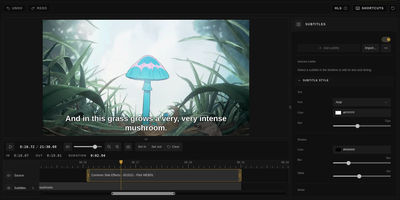
You are halfway through a film when a scene begs to be shared, and Cliparr is the self-hosted clip maker that turns moments from your Plex, Jellyfin, or local video library into shareable clips without opening a full video editor. Connect a media server and Cliparr follows live playback sessions automatically, so the scene you are watching is already loaded when you decide to keep it. Local video files open directly in the browser without being uploaded anywhere first. Mark the range, fine tune the start and end, then crop the frame freely or to a fixed aspect ratio with mouse or touch controls, which makes vertical clips for phones as easy as widescreen ones. Exports run entirely in your browser as video, audio only files, or GIFs, so the server never turns into a render box and the clip lands on the device you are using. Source details, artwork, and clip timing travel inside supported containers, keeping the exported file labelled with where it came from. Captions are a first class step: write your own subtitles, import an existing file, style the text, and burn it into the picture before export. Editor keyboard shortcuts, access control, and reverse proxy support round out a tool that fits into an existing media setup instead of replacing it. Running on a dedicated VPS on RepoCloud with guaranteed CPU, RAM, and SSD, full root SSH access, and a browser serial console. MIT licensed.
EDDI
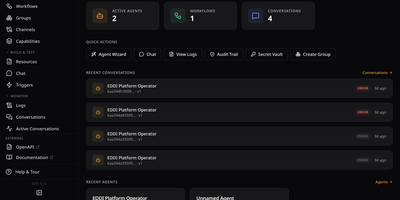
Deploy autonomous conversational AI agents and coordinate complex multi-agent workflows through EDDI, an open-source orchestration middleware that turns declarative configuration files into secure, production-grade enterprise assistants. Engineering teams connect AI models from twelve different commercial and local providers, using bilateral Model Context Protocol tools to let external desktop clients and coding assistants interact directly with running conversational services. Autonomous agents collaborate through structured group interaction patterns including round table discussions, peer reviews, Delphi consensus rounds, and devil's advocate debates to refine generated solutions before delivery. Declarative workflow extensions automate external REST API calls with dynamic request templating, extracting structured properties into persistent conversation memory and chaining multi-step service interactions without custom script glue. Built-in secret vaults safely manage sensitive API credentials, while the centralized web dashboard provides live conversation inspection, token quota enforcement, and comprehensive audit logging for regulatory compliance. Running on a dedicated VPS on RepoCloud with guaranteed CPU, RAM, and SSD, full root SSH access, and a browser serial console. Apache 2.0 licensed.
OpenTickly
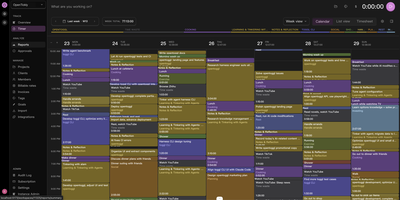
OpenTickly is a self-hosted Toggl alternative that keeps your timers, projects, clients, and reports on infrastructure you control, so tracking time does not mean renting access to your own work history. Start the timer from the web app or an installable mobile PWA that works offline, then review the week in a color-coded calendar, switch to list or timesheet views, or open reports to see where hours actually went. Projects, clients, tags, billable rates, invoices, goals, and favorites organize entries the way agencies and freelancers already work, with team activity, top projects, and time-by-project panels on the admin overview. Because the public API mirrors Toggl Track v9 and Reports v3, existing scripts, integrations, and reporting jobs carry over, and coworkers can move their Toggl data in or back out without losing entries. The generous API also suits AI workflows: pair it with toggl-cli and an agent can track, organize, and review your time for you, then combine it with the Lyubishchev method to spot time waste across learning, social, rest, and work categories. Approvals, an audit log, integrations, and instance administration round out team operations, and seat limits, per-user fees, and usage caps simply do not exist here. Running on a dedicated VPS on RepoCloud with guaranteed CPU, RAM, and SSD, full root SSH access, and a browser serial console. AGPL-3.0 licensed.
CodeX Docs
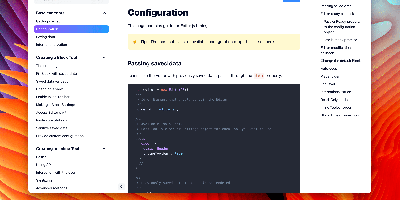
Writing docs should feel like editing a modern document, not wrangling Markdown files - CodeX Docs delivers that on Editor.js, the block-styled editor its CodeX team builds and thousands of products use. Content is composed from clean blocks (headings, lists, code, images, embeds) with a UI that reads well on both desktop and mobile, and pages render statically with human-readable, SEO-friendly URLs. Structure is free-form: pages nest to any depth, so a flat FAQ and a deep product manual coexist in one instance, and the UI tunes to fit - collapse sections, hide the sidebar. The operational footprint is deliberately tiny. No database is required: the default driver persists to a local folder, with MongoDB available when you want it, and the whole app configures through one YAML file (overridable with APP_CONFIG_ environment variables) covering title, start page, auth password, and JWT secret. Editing mode sits behind password authentication. Thoughtful extras are wired in: readers can report misprints straight to your Telegram or Slack, Hawk error tracking catches frontend and backend exceptions, and Yandex Metrica analytics is a one-line config. A ready-made Helm chart covers Kubernetes. Written in TypeScript.
PrintStash
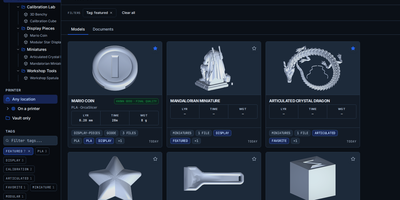
Every printing household eventually drowns in files named final_v3_REAL.gcode, and PrintStash is the library that brings order to your models, G-code, and print history. Upload STL, 3MF, OBJ, STEP, and other formats directly, or point it at a folder or NAS share and let it index everything in place without overwriting originals. Each model page pairs a 3D preview with its recommended G-code, the slicer settings behind it, and one-click actions to open files in your slicer. Revisions carry needs-test and known-good labels, so the version that printed beautifully is never confused with the experiment that delaminated. Connected printers report live temperatures and progress, accept sent G-code, and take queued copies across printer groups, with material or nozzle mismatches blocking automatic routing before they waste filament. Print outcomes feed time and cost tracking per model, and an optional Spoolman integration keeps filament inventory honest. Collections, tags, filters, favorites, and saved views keep a growing vault browsable, and optional AI search with local models finds models by description. Verified backups, file audits, trash recovery, user permissions, API keys, and OIDC single sign-on round out the administration side. Running on a dedicated VPS on RepoCloud with guaranteed CPU, RAM, and SSD, full root SSH access, and a browser serial console. AGPL-3.0 licensed.
OpenRouteService
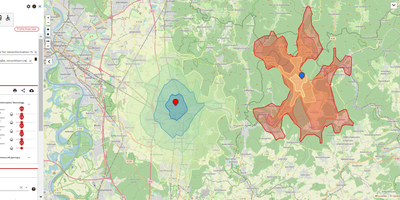
OpenRouteService gives applications driving directions, reachable-area polygons, and origin-destination travel times computed from OpenStreetMap data on hardware you control, with no metered API key. Ask for a route and it answers with turn-by-turn instructions, distance, duration, and elevation gain for cars, heavy trucks, several cycling styles, walking, hiking, and wheelchairs. Draw an isochrone and the map fills with the area reachable inside five, fifteen, or sixty minutes, ready for site selection, delivery zones, and coverage studies. The matrix endpoint prices every pairing in a grid of origins and destinations in one request, so fleet tools and location analytics stop making thousands of single calls. Steer results with avoid areas, controlled borders, tollways, ferries, and road classes, with per-request limits on distance and climb. Snap stray GPS points back onto the road network, export the underlying graph for your own network analysis, and watch instance health from the built-in status endpoints. Load the regional OpenStreetMap extract you actually serve, rebuild graphs on your schedule, and every answer stays inside your network at whatever volume your hardware allows. Running on a dedicated VPS on RepoCloud with guaranteed CPU, RAM, and SSD, full root SSH access, and a browser serial console. GPL-3.0 licensed.
LlamaForge
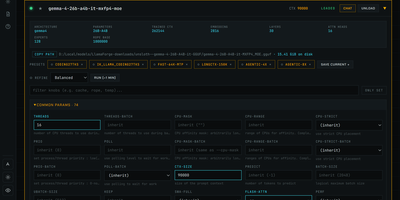
Running local models usually means choosing between a polished app that hides the engine and a terminal full of flags you half remember. LlamaForge refuses the trade: it installs and drives the official llama.cpp release itself, then puts a browser panel over all of it, every one of the 200-plus llama-server flags your build supports, grouped, searchable and editable per model. Before you load anything, each model is drawn into your GPUs at its real footprint, so the out-of-memory surprise happens on screen instead of in a crashed server; before you download anything, every quant on Hugging Face gets a fit rating for your VRAM, FITS, TIGHT or CPU OFFLOAD. Auto-Forge then measures placements, KV cache types and speculative drafters on your own hardware and keeps the fastest configuration, checking that a drafter still produces identical tokens before applying it with one click, and undoing it with one click. Keep several models loaded at once and a planner places each on the GPUs that fit it; when a game launches, Game Mode unloads your models and brings them back when you quit. Chat in llama.cpp's own interface, join from your phone by QR code, duel two models blind in the Arena under an Elo board, and let Embers, small local agents, keep a wiki and write scheduled briefs counting only facts they can quote verbatim. Running on a dedicated VPS on RepoCloud with guaranteed CPU, RAM, and SSD, full root SSH access, and a browser serial console. MIT licensed.
AI Chatbot Framework
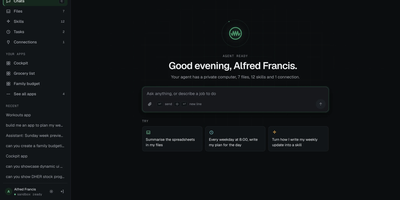
Ask for a job in plain words and an agent with its own private computer does it: it reads files, runs commands, calls connected apps, and reports back in the chat. Every user gets a persistent sandbox workspace, so one person's files and commands never touch another's. Type a new message mid-run and the agent picks it up without stopping, or press Stop at any time. For bigger jobs the agent starts sub-agents that work side by side, each on a model of its choice, and the chat shows what each one is doing. Skills teach it repeatable methods in the open Agent Skills format; upload a zip, write one by hand, or let the agent write its own, and use them from a slash menu. The Connections page links Linear, Notion, Jira, Stripe, and other apps through one-click OAuth sign-in, or any MCP server by address. Scheduled tasks run on a repeating or one-time schedule, and each run becomes a readable chat. Small personal apps like a to-do cockpit or budget view appear in the sidebar, and charts, plans, and forms can render right inside answers. A files browser, an artifacts panel, a command menu, light and dark themes, and a phone layout round out the interface. Running on a dedicated VPS on RepoCloud with guaranteed CPU, RAM, and SSD, full root SSH access, and a browser serial console. MIT licensed.