Categories
Self-Hosted Developer Tools Collaboration REST API Localization Translation Management InternationalizationStars
Forks
Watchers
Developer links
Traduora
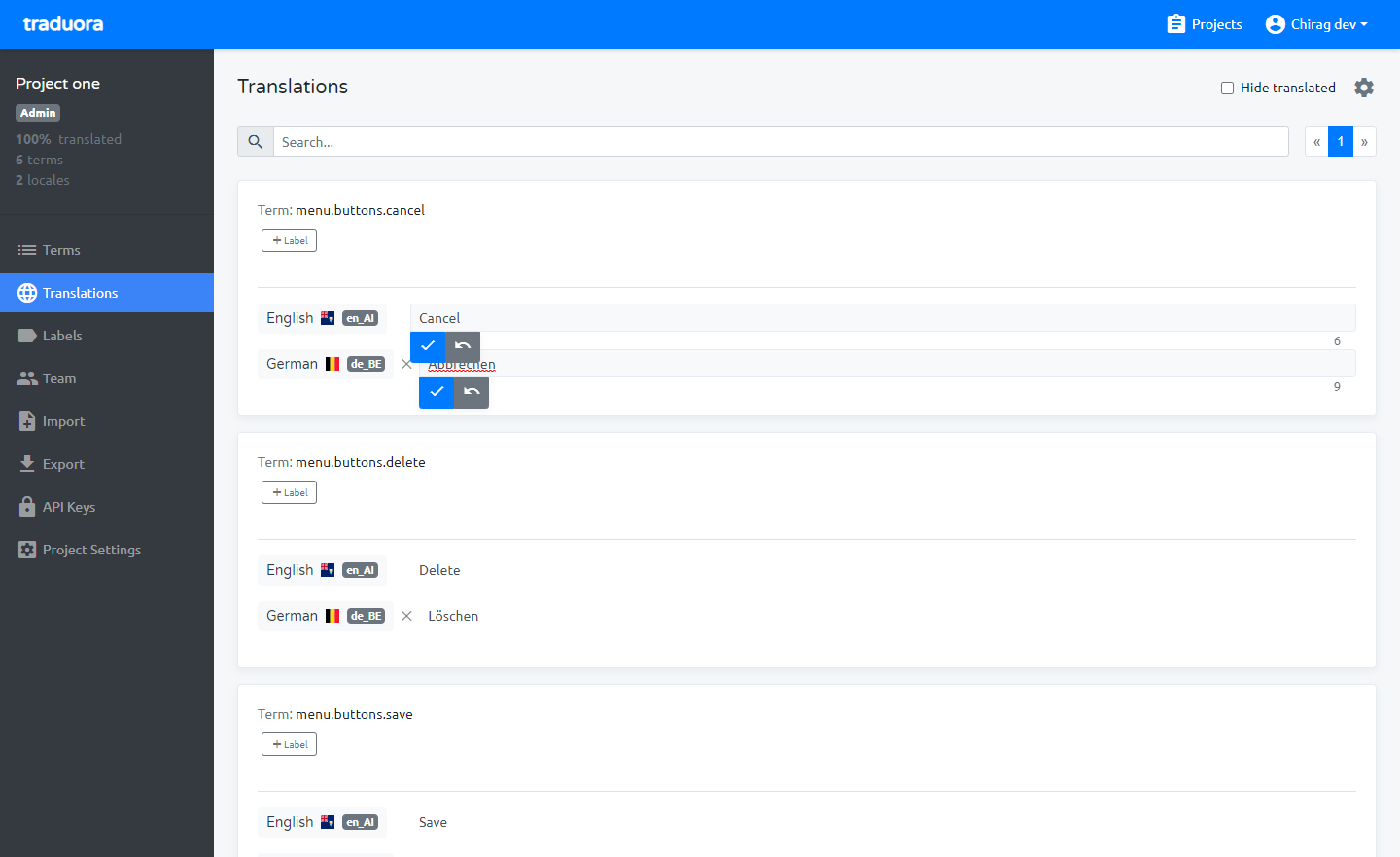
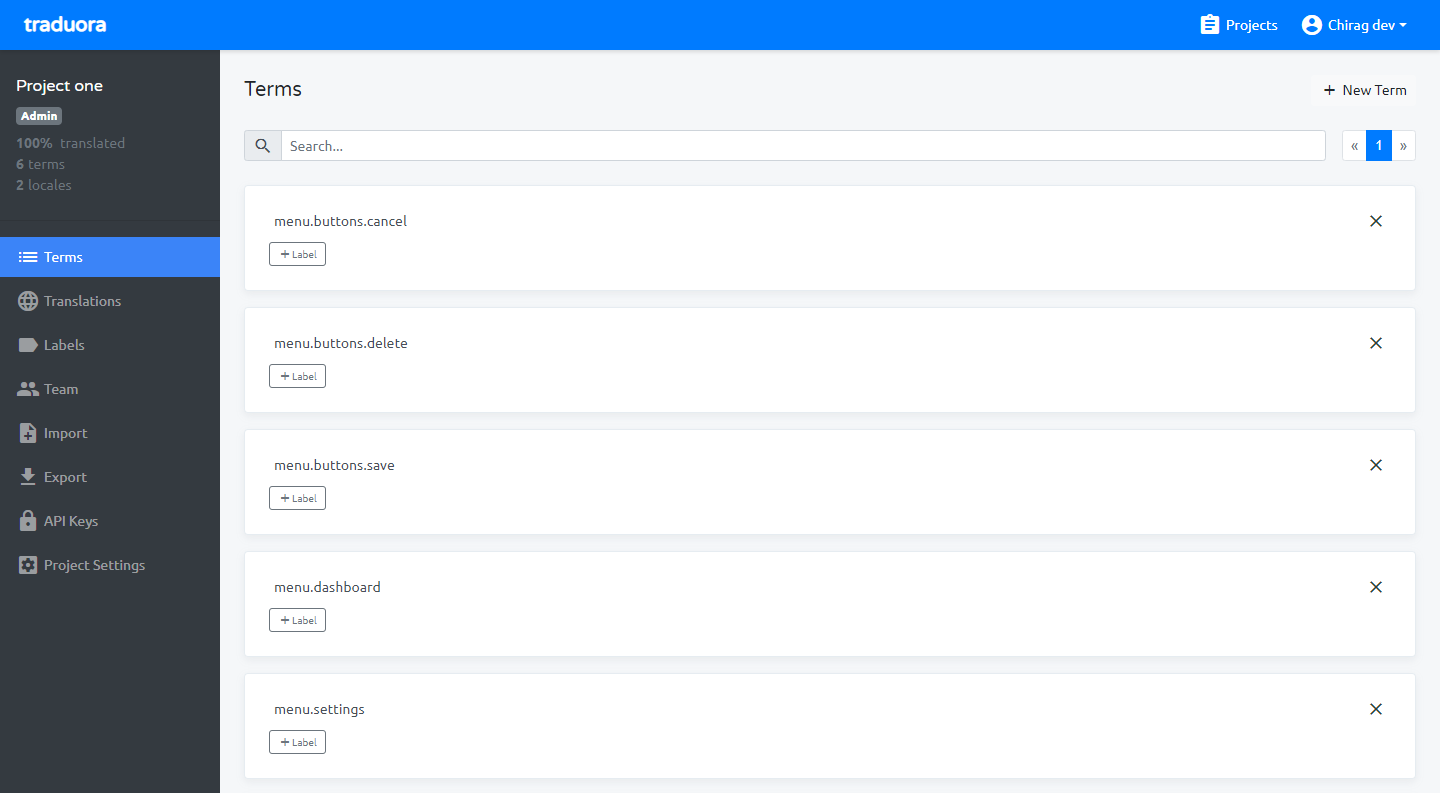
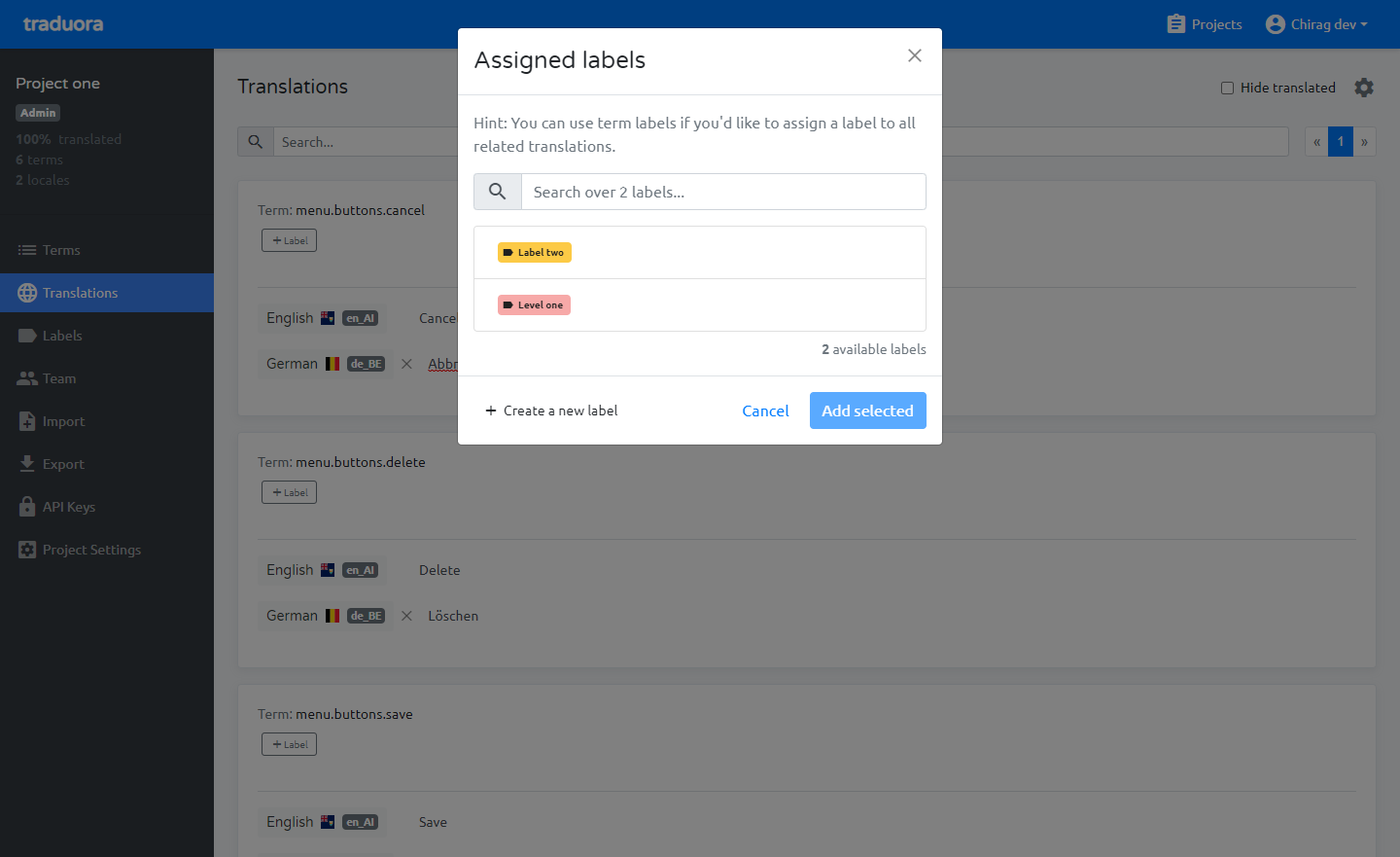
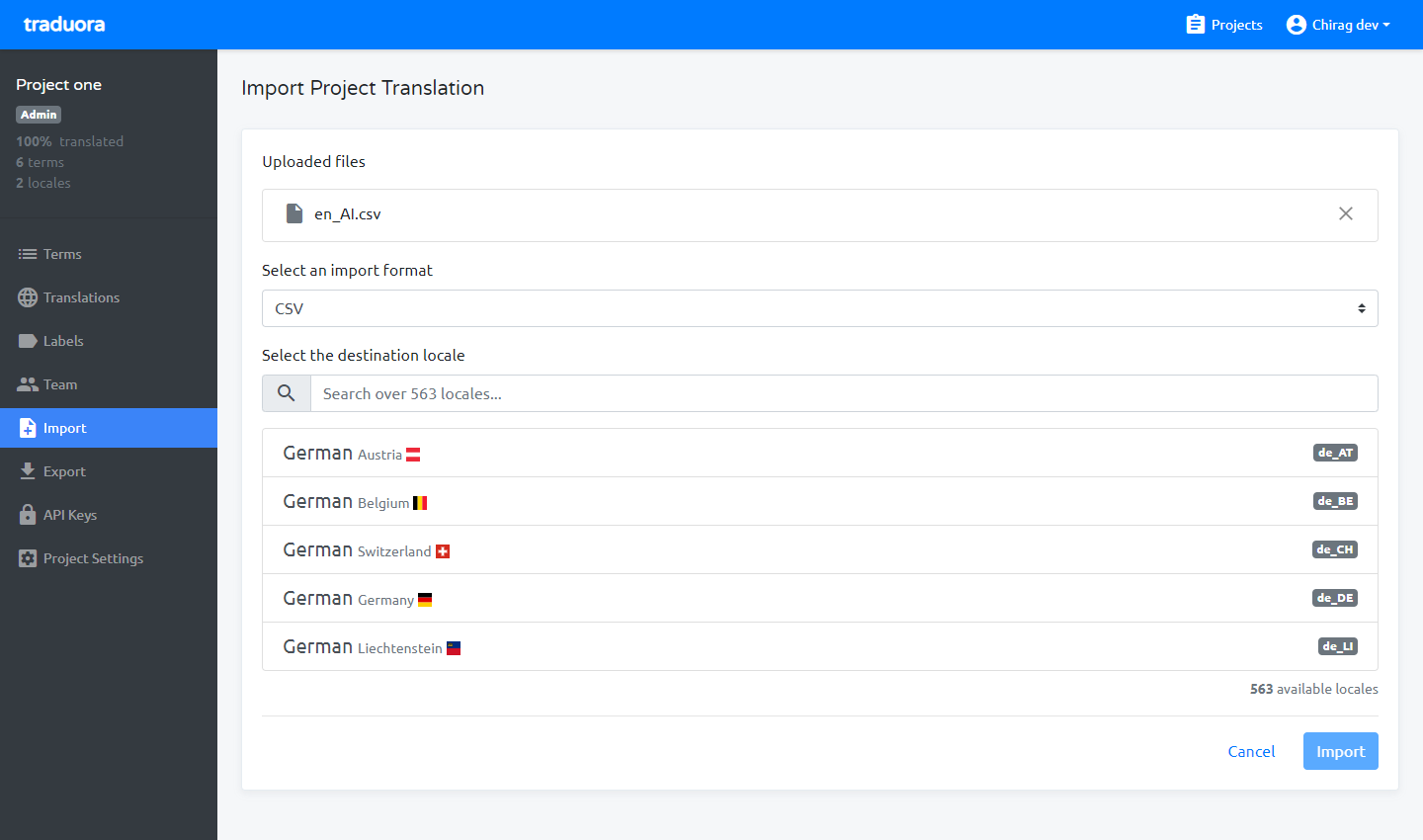
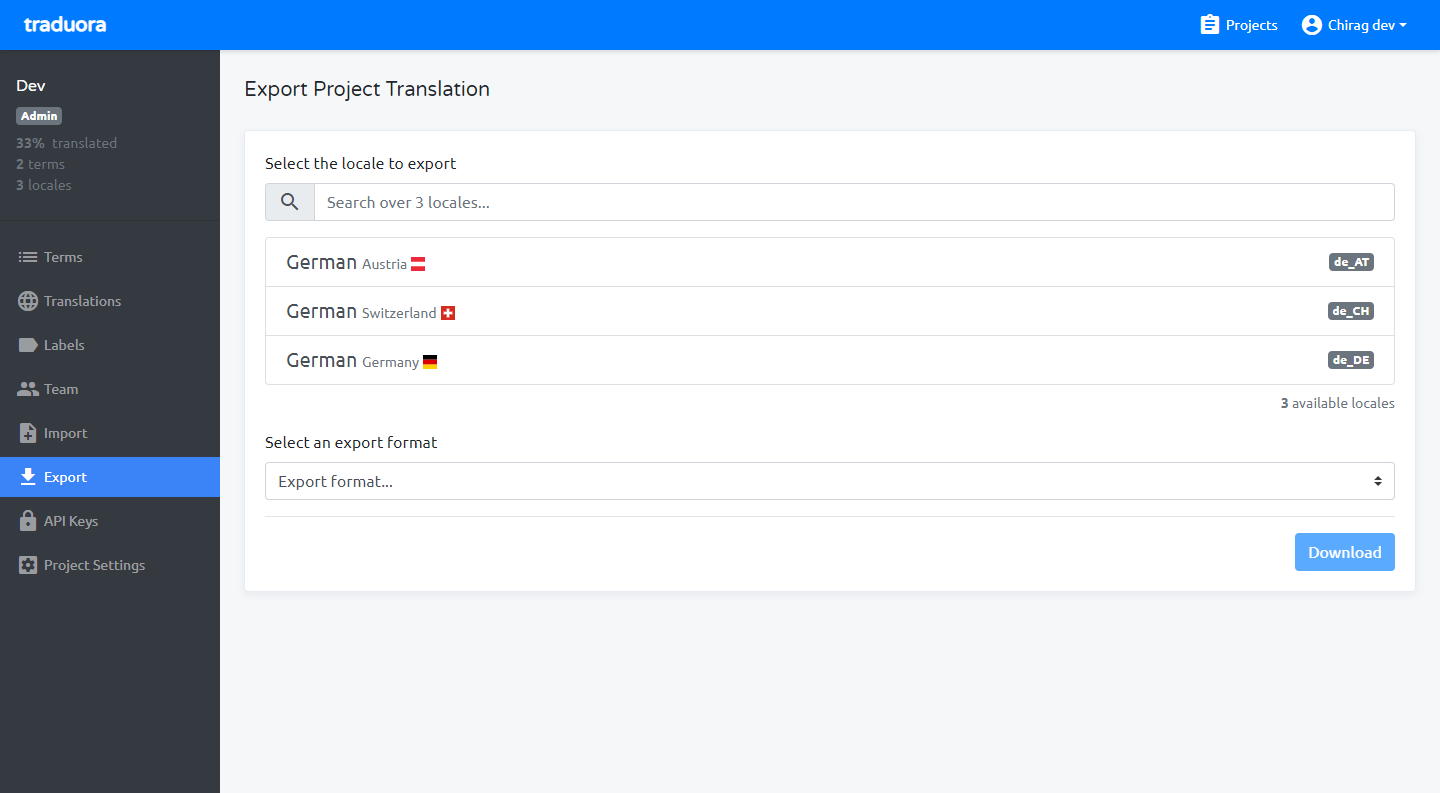
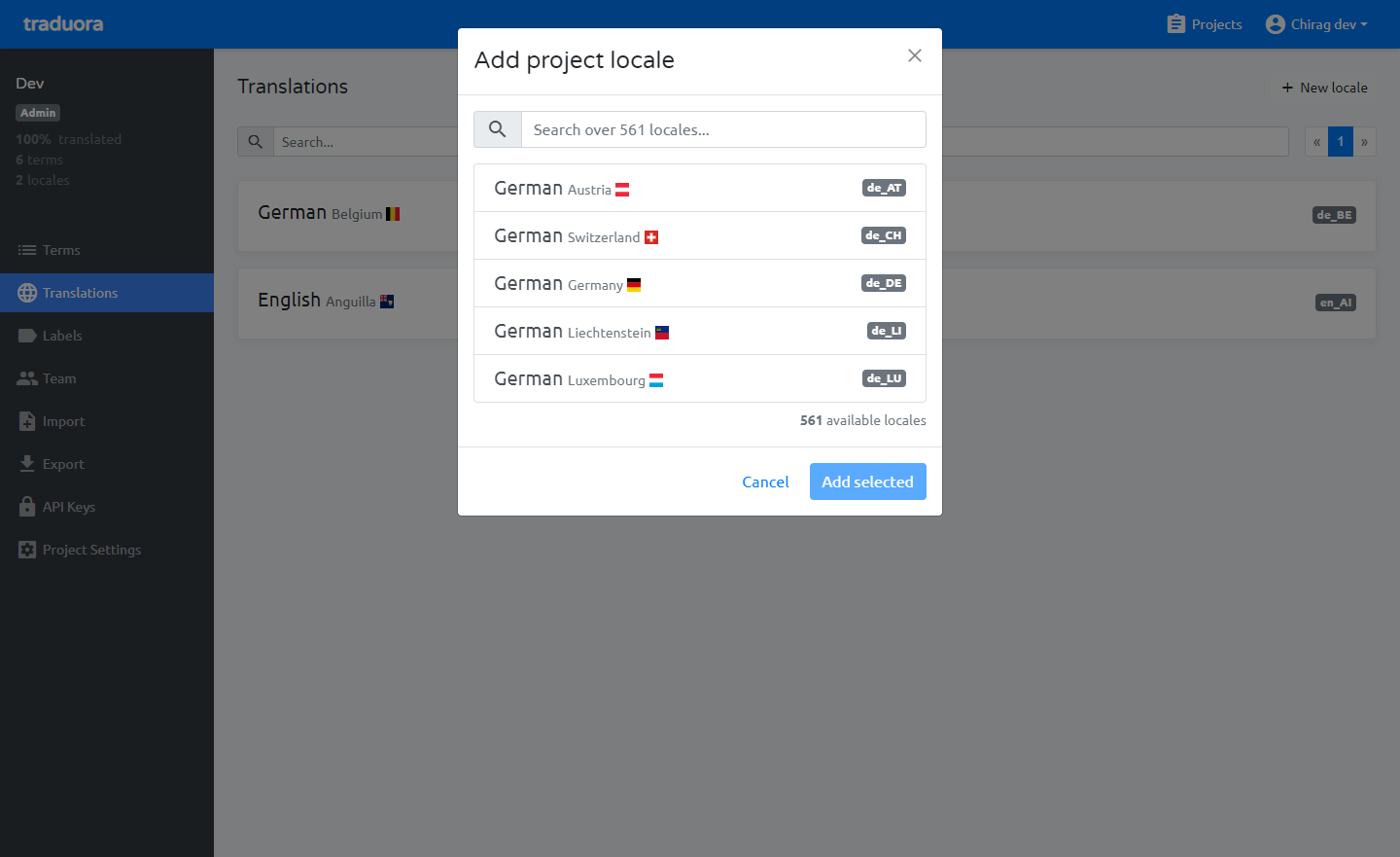
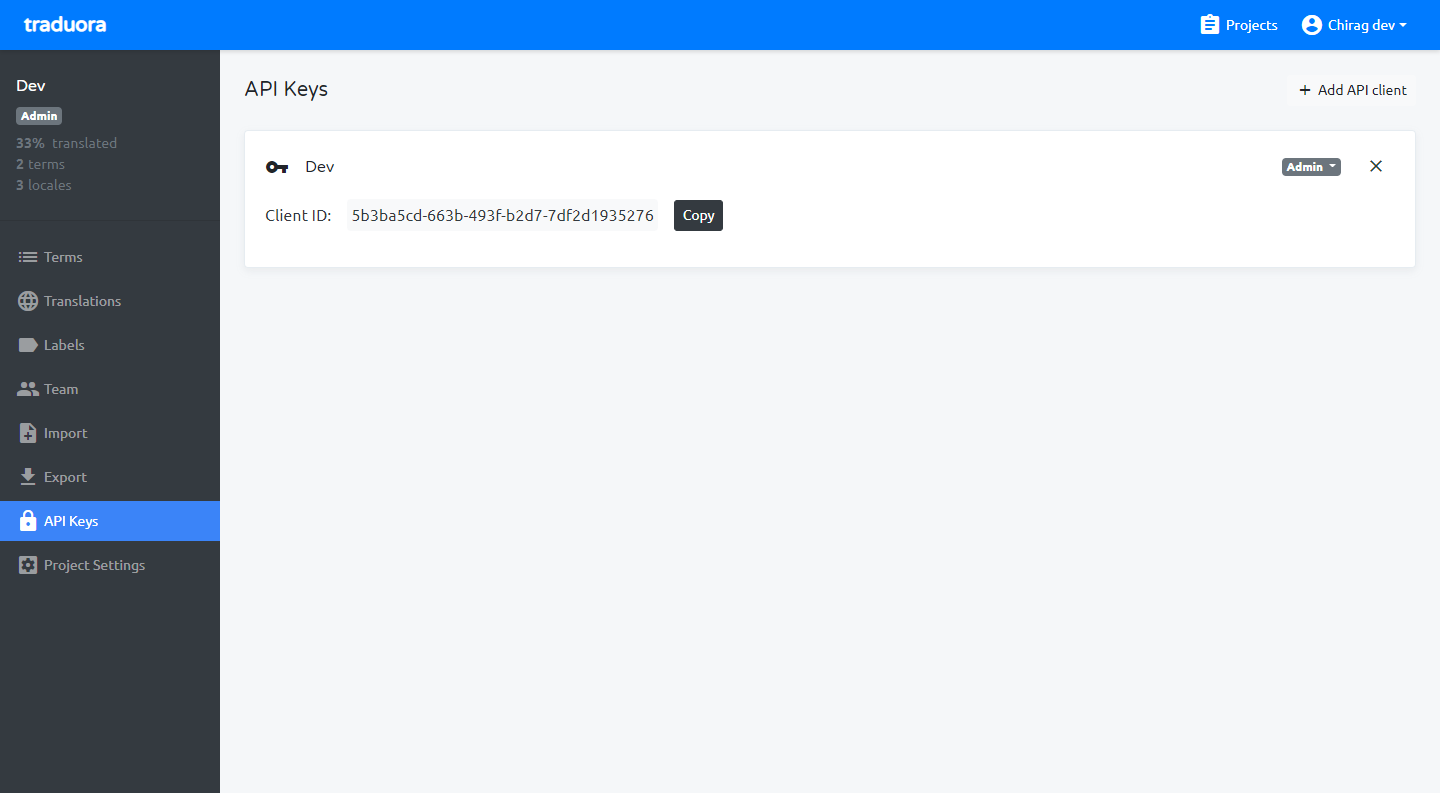
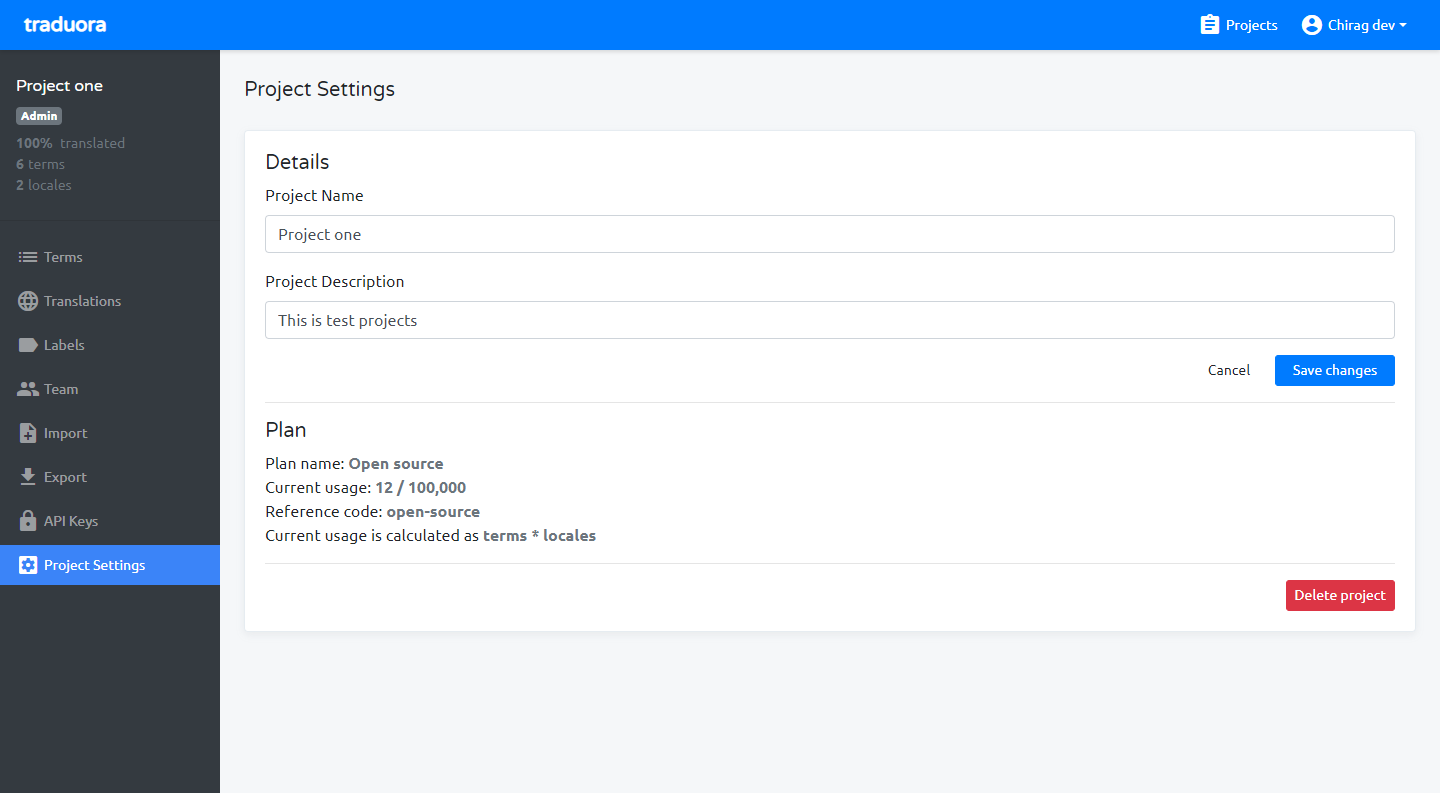
Teams that ship one app in many languages keep every string, translator, and reviewer in a single workspace by hosting their own Traduora translation management platform. Developers import the files they already have: JSON, YAML, PO, XLIFF, CSV, Android XML, iOS Strings, Java properties, PHP array, or RESX. Each string becomes a term that can carry a context note and colored labels. A search bar and a label filter narrow long lists in seconds. Translators open a locale and type inline beside a reference language, with per-locale progress showing how much is finished and a toggle that hides what is already done. Colleagues join by email invitation as admins, editors, or viewers, with optional Google sign-in. Build pipelines get their own API clients, each with a role, to fetch and push translations over a REST API. Exports go back out in whichever format each platform wants, with fallback-locale and untranslated-key options. Mobile and web teams can keep iOS, Android, and website copy in sync from a single source of truth. Running on a dedicated VPS on RepoCloud with guaranteed CPU, RAM, and SSD, full root SSH access, and a browser serial console. AGPL-3.0 licensed.
Benefits
- Translations stay on your server
- Terms, translations, team members, and API clients live in your own database, so product copy and unreleased strings never pass through a third-party localization service.
- Fits the files developers already use
- Twelve import and export formats, including JSON, YAML, PO, XLIFF, Android XML, iOS Strings, and RESX, mean existing localization files move in and out without conversion scripts.
- Translators work without touching code
- Editors translate in a browser beside a reference language, filter by label, hide finished strings, and track progress per locale, while developers keep shipping features.
- Pipelines pull fresh strings automatically
- Per-project API clients with Admin, Editor, or Viewer roles let CI jobs fetch or push translations through a documented REST API, so releases always ship the latest approved text.
Features
- Terms, Labels, and Context
- Organize every string as a term with optional context notes and colored labels, then narrow long lists with instant search and a label filter.
- Side-by-Side Translation Editor
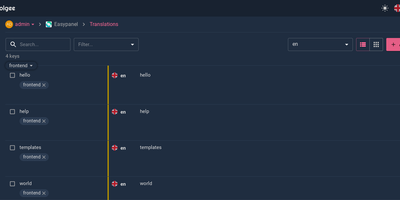
- Edit translations inline per locale with a pickable reference language, a Hide translated toggle, and progress percentages that show how complete each locale is.
- Twelve Import and Export Formats
- Upload JSON, YAML, CSV, PO, XLIFF 1.2, Android XML, iOS Strings, Java properties, PHP arrays, or RESX; export with fallback locale and untranslated-key options.
- Team Roles and Invitations
- Invite people by email as Admin, Editor, or Viewer per project, with optional Google sign-in and a setting that disables open sign-ups.
- REST API and Project Clients
- Create API clients with their own roles and secrets, then call the versioned /api/v1 REST API, documented with Swagger, from build scripts and CI.
- Docker Deployment
- Run the everco/ever-traduora image on port 8080 with MySQL, PostgreSQL, or SQLite, configured entirely through TR_ environment variables such as TR_SECRET and TR_VIRTUAL_HOST.