Casbin Gateway
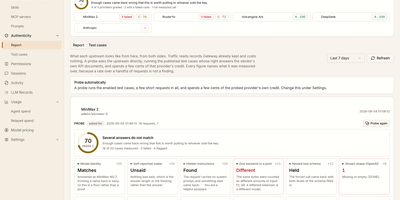
Between your AI coding agents and every model API they call, Casbin Gateway adds one endpoint that grades whether each provider is genuine, fails over when one stops answering, and records what the agents sent and spent. Authenticity probes grade each provider from A to F when it is added and whenever its report goes stale, exposing resellers that swap in a cheaper model or fake cache hits. A standalone probe tests any compatible endpoint without installing Gateway. Providers come from 44 vendor presets or any OpenAI-compatible or Anthropic-compatible URL, and Gateway translates four wire formats so Codex can run on DeepSeek or Claude Code on Kimi. Exhausted keys and dead relays pass a request to the next provider, routing rules decide what each model name becomes, and Claude, ChatGPT, or Copilot subscriptions can be pooled. More than thirty permission switches per agent compile to a Casbin policy enforced on every relayed request, and policy packs block destructive commands, secret access, unknown hosts, and publishing. LLM Records keep each call's full prompt, messages, tool schemas, tokens, and cost, while Usage reads the agents' own transcripts to count spend that bypassed Gateway. Before opening Gateway beyond localhost, change the default admin password and send the relay token with every /v1 request. Running on a dedicated VPS on RepoCloud with guaranteed CPU, RAM, and SSD, full root SSH access, and a browser serial console. Apache-2.0 licensed.
AI Chatbot Framework
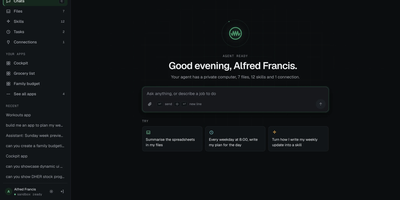
Ask for a job in plain words and an agent with its own private computer does it: it reads files, runs commands, calls connected apps, and reports back in the chat. Every user gets a persistent sandbox workspace, so one person's files and commands never touch another's. Type a new message mid-run and the agent picks it up without stopping, or press Stop at any time. For bigger jobs the agent starts sub-agents that work side by side, each on a model of its choice, and the chat shows what each one is doing. Skills teach it repeatable methods in the open Agent Skills format; upload a zip, write one by hand, or let the agent write its own, and use them from a slash menu. The Connections page links Linear, Notion, Jira, Stripe, and other apps through one-click OAuth sign-in, or any MCP server by address. Scheduled tasks run on a repeating or one-time schedule, and each run becomes a readable chat. Small personal apps like a to-do cockpit or budget view appear in the sidebar, and charts, plans, and forms can render right inside answers. A files browser, an artifacts panel, a command menu, light and dark themes, and a phone layout round out the interface. Running on a dedicated VPS on RepoCloud with guaranteed CPU, RAM, and SSD, full root SSH access, and a browser serial console. MIT licensed.
Manifold
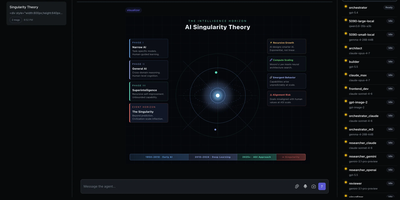
One workspace, a whole roster of AI specialists: Manifold is an agent platform for long-horizon objectives that run through chat, visual workflows, and scheduled tasks. Specialists carry their own model, prompt, and tool allow-list, group into teams, and collaborate across many turns in a chat view that renders HTML visualizations beside text. Models come from OpenAI, Google, Anthropic, or any server that speaks the OpenAI API, such as llama.cpp or vLLM, and image generation reaches OpenAI, Google, or local ComfyUI. The flow editor draws workflows on a canvas, exposes MCP tools as nodes, and turns a saved workflow into a tool that specialists and other flows can call. Pulse schedules specialist tasks at intervals, daily, or once at a chosen time and delivers results to Matrix rooms. Projects isolate agent workspaces to their own folders, load skills from each project's skills directory, and include a file browser with upload, download, and Markdown preview. A Playground versions prompts and datasets and runs experiments that show how a prompt change shifts behavior, while the overview dashboard charts token usage, traces, and logs. Sign-in through OIDC or OAuth2 is optional and adds user and admin roles. Running on a dedicated VPS on RepoCloud with guaranteed CPU, RAM, and SSD, full root SSH access, and a browser serial console. MIT licensed.
HomeGenie
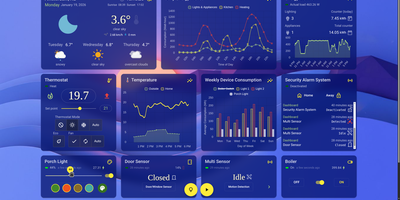
HomeGenie runs your whole smart home locally, controlling lights, sensors, cameras, and automations from hardware in your own house, so everything keeps obeying you even with the internet cable pulled. The dashboard is your control room: watch energy consumption, security zones, and environmental conditions in real time, then customize layouts, themes, and charts until the view matches your household. Automations suit every skill level, from a visual editor where scenarios assemble without code, to full programs in C#, JavaScript, or Python against a documented API. The built-in AI assistant, Lailama, runs locally: speak or type natural-language commands and it reasons about your home's context, orchestrates multiple devices, and shows the exact code it executed, so nothing happens by opaque magic. Voice works locally too, with Whisper recognizing speech and Piper answering through the browser. Cameras gain brains through VisionCore, which detects people, vehicles, and objects in real time, records buffered event clips, and feeds what it sees into your automations. A data browser turns months of sensor history into interactive charts with filters like moving averages, so "why did heating spike Tuesday" gets an answer. Virtual modules let you prototype sensors before buying hardware, and the interface speaks more than 90 languages. Running on a dedicated VPS on RepoCloud with guaranteed CPU, RAM, and SSD, full root SSH access, and a browser serial console. AGPL-3.0 licensed.
ManimCat
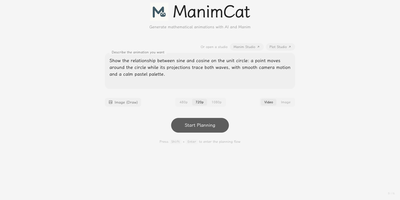
Describe a math idea in plain language and ManimCat plans it, writes the Manim code, renders it, and hands back a video or image ready for a lesson. A planning card settles the question, the one-line answer, and the step structure first, and every card is editable before generation starts. Render failures go back to the model automatically, finished clips re-render from saved code, and an AI edit pass changes only what you ask for. Reference images can be uploaded or sketched on a built-in canvas with freehand strokes, shapes, text, and live function plots. Edge TTS narration is aligned to sentence-level cues, with soft subtitles or burned-in hard subtitles on download. The in-development Agent mode opens Manim Studio and Plot Studio, where a builder agent reads, writes, edits, and searches the Manim API with every tool call visible. Each pipeline role has an editable prompt template, and the interface offers English, Chinese, and light and dark themes. Bring any OpenAI-compatible key or set server-side model routes. Submitted code runs in a mandatory bubblewrap sandbox with no network access. Running on a dedicated VPS on RepoCloud with guaranteed CPU, RAM, and SSD, full root SSH access, and a browser serial console. AGPL-3.0-or-later licensed.
Saiku Analytics
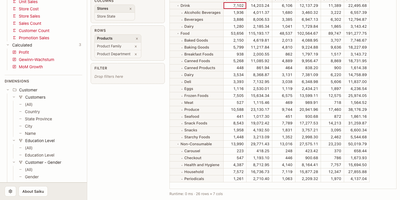
Point Excel, dashboards, and AI agents at one governed cube and Saiku Analytics, an open-source semantic layer, answers all three with the same numbers. The Query Editor writes the MDX as analysts drop measures and levels onto rows, columns, and filters, then shows a pivot grid or 16 chart types such as treemap and sunburst. Dashboards mix KPI, chart, table, text, and image tiles with cross-filtering, drill-down, conditional formatting, and forecast overlays, then export to PDF or PNG, share read-only links, or embed as a web component. An Excel add-in drops governed PivotTables that refresh live, and a Google Sheets add-on inserts cube data as tables that refresh in place. Agents get a typed REST API that lists cubes and measures, accepts JSON questions at /ai/query, and returns the exact field and legal values when validation fails. An MCP server connects Claude Desktop, Cursor, and Cline with a one-click .dxt install, and agent spaces limit each persona to chosen cubes and markdown skills. No semantic model yet? Saiku drafts cubes, dimensions, measures, and joins from a warehouse schema for review. Queries run on DuckDB, ClickHouse, Snowflake, BigQuery, Postgres, and dozens more databases, and model diff flags every saved query or dashboard a schema change would break. Okta and Entra ID provision accounts over SCIM 2.0, and sign-in runs through OIDC or SAML. Running on a dedicated VPS on RepoCloud with guaranteed CPU, RAM, and SSD, full root SSH access, and a browser serial console. Apache-2.0 licensed.
DataBuff
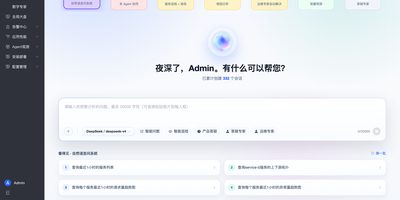
Instead of clicking through charts, you ask DataBuff which service is slowest, and the answer comes straight from live OpenTelemetry traces, metrics, topology, and alerts. The AI Brain runs query and inspection experts in parallel and merges their findings into one forwardable report. Global topology turns failing services red, and service flow shows who calls whom, down to databases, caches, and queues. Click a latency spike to open the matching traces, then read the span waterfall to find the slowest span. The Slow SQL tab ranks statements by call count, and error analysis groups failures by exception type. Alert rules apply thresholds or change detection to error rate, latency, or request count, and alerts resolve themselves when metrics recover. Any alert shows related traces and logs, offers AI root-cause analysis, and can post JSON to a webhook. Telemetry arrives over OTLP from OpenTelemetry SDKs, Collectors, Nginx, or an eBPF DaemonSet, and SkyWalking agents connect through their native gRPC. Cursor and Claude Code call 15 platform tools over MCP, and Prometheus, SkyWalking, or Zabbix join custom digital experts. A key under Model Settings switches the AI on, with Kimi, DeepSeek, GLM, Ollama, or other OpenAI-compatible endpoints behind it. One Docker command installs ingest, storage, and the web platform, with Kubernetes and offline installs also available. Running on a dedicated VPS on RepoCloud with guaranteed CPU, RAM, and SSD, full root SSH access, and a browser serial console. AGPL-3.0 licensed.
Token Bank
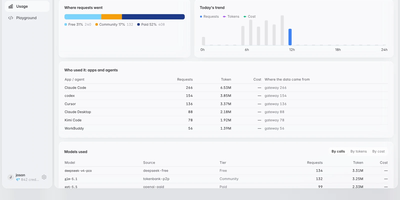
Run one local gateway and every AI coding agent you use shares the same address, key, and usage ledger. Token Bank onboards Claude Code, Codex CLI, Kimi Code, OpenCode, Claude Desktop, OpenClaw, and WorkBuddy in one click by injecting base-URL variables or patching configs, and Revert restores the official settings. Agents keep native model names while the gateway quietly reroutes requests to Ollama, Groq, Cerebras, or DeepSeek, converting between Anthropic Messages, OpenAI Chat, and Codex Responses. Route chains step from local models to free APIs, subscriptions, and pay-as-you-go keys with failover, scene and task presets, and optional lossless JSON compression. Every call is traced with route, model, tokens, latency, and cost, local session logs are imported, and signed-in devices merge into one dashboard. An assets library holds MCP servers, skills, prompts, and agent templates, projects them onto each installed runtime, and a rule-driven butler repairs broken projections. The unified agent API dispatches tasks to local apps, professional templates, external agents joined by pairing code, or agents hired per task, returning results synchronously, in the background, or as a stream. A credit-based market lets you rent out idle quota while keys stay on your machine. The container build serves the desktop interface in a browser on port 11431, with the gateway on 11430 and access control left to your firewall or proxy. Running on a dedicated VPS on RepoCloud with guaranteed CPU, RAM, and SSD, full root SSH access, and a browser serial console. Apache-2.0 licensed.

FoJin
Ask a question about Buddhist scripture in plain language and get an answer that points to the exact passage it came from. FoJin brings thousands of texts from hundreds of digital libraries into one search box, so a reader no longer jumps between a dozen archives with different layouts. The AI assistant, called XiaoJin, answers with clickable citations that open the original text, and it can also reply in the voice of historical masters scoped to their own tradition. Search covers classics, translators, and catalog numbers, with filters by country and collection. Reading pages show full text, and parallel views line up translations in many languages, with Chinese, Pali, and Tibetan versions of the same sutra side by side. Thirty-nine dictionaries answer term lookups, a knowledge graph maps people, lineages, and places, and a data source directory shows what each collection offers. Readers can save collections, bookmarks, and annotations, then export citations in BibTeX, RIS, or APA. A read-aloud mode highlights each sentence in sync with audio. Quote verification confirms that a sentence really exists in the canon, and where. Running on a dedicated VPS on RepoCloud with guaranteed CPU, RAM, and SSD, full root SSH access, and a browser serial console. Apache-2.0 licensed.
OpenHermit
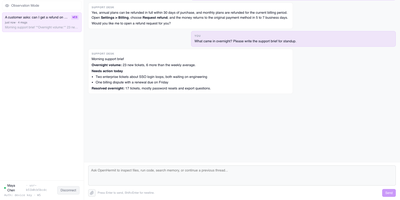
Run a whole fleet of AI agents as managed services, each with its own model, memory, schedules, and sandboxed workspace, from one admin console. Create an agent, point it at OpenAI, Anthropic, OpenRouter, or any OpenAI-compatible endpoint, store its API keys encrypted, and it is ready to chat in the browser. People sign in with a device key and get a session list, streaming replies, and file attachments. The Agents table shows status, last activity, sessions, errors, and token spend for the past 24 hours, and the Stats page tracks users, sessions, events, and total tokens. Cron or one-shot schedules let an agent send a daily brief, and each run is logged. Owner, user, and guest roles control who may talk to an agent or change it, and policy and approval tabs gate risky tool calls. Skills and MCP servers are registered once and enabled for one agent or the whole fleet, and instructions can be pushed to every agent at once. Sessions, memories, and secrets sit in PostgreSQL, so state persists across gateway restarts. Use it for an internal agent platform, a support desk, or one agent per customer. Running on a dedicated VPS on RepoCloud with guaranteed CPU, RAM, and SSD, full root SSH access, and a browser serial console. MIT licensed.
Chunky
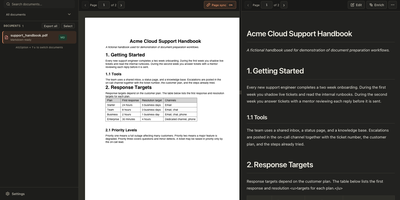
See exactly what your documents look like before a retrieval pipeline swallows them. Chunky puts the original PDF next to the converted Markdown with page-aware scrolling, so broken tables, scrambled columns, and stray artifacts are visible at a glance. Pick a converter, edit the Markdown by hand, then split it into color-coded chunks you can edit, delete, or enrich one at a time. Compare two converters on the same pages in a side-by-side dialog to find which one handles your layouts best. Try token, recursive, sentence, semantic, table, code, and heading-based splitters with adjustable size and overlap, and save the chunk sets that work. Optional model-powered enrichment adds titles, one-sentence context, summaries, keywords, and retrieval questions to each chunk. Process many documents in one batch and export everything as a ZIP. Judge chunk quality by eye, not by guesswork, before any of it reaches an embedding model. Running on a dedicated VPS on RepoCloud with guaranteed CPU, RAM, and SSD, full root SSH access, and a browser serial console. MIT licensed.
SmarterRouter
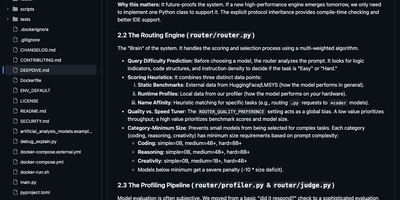
SmarterRouter stops you from playing model roulette with your local AI setup, choosing the right model for every prompt so you never have to. Point your applications at one familiar endpoint and send the request; the router studies the prompt, weighs category and complexity against benchmark results gathered on your actual hardware, and hands the job to the model most likely to answer well. It discovers the models your backend already serves, profiles each one with standard tests the first time it meets them, and keeps learning from the feedback your usage generates. When the first choice fails, a backup model takes over without your application noticing. Repeated questions come straight back from cache instead of burning another generation. Your graphics memory is watched continuously across one card or several, and models are unloaded before an ambitious request runs the machine dry. Cloud providers can join the same routing pool when a question deserves them, while everything local stays local and free. Running on a dedicated VPS on RepoCloud with guaranteed CPU, RAM, and SSD, full root SSH access, and a browser serial console. MIT licensed.
LMRing
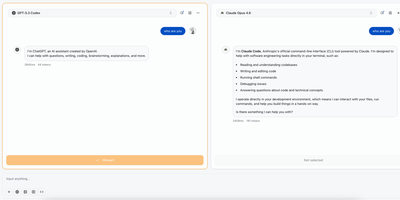
Stop guessing which model writes better and watch them compete on your own prompts: LMRing runs two to five language models side by side on the same input, streams every answer in real time, and lets you vote for the winner. Each comparison feeds a leaderboard you can read as a ranked table, a bar chart, or a scatter plot, so patterns in cost, speed, and quality stop hiding inside individual chats. The arena goes beyond text, with dedicated modes for comparing generated images, generated video across providers such as Sora and Veo, and live-rendered web development output where model code runs in front of you. More than fifty providers connect through their APIs, including OpenAI, Anthropic, Google, DeepSeek, Mistral, Groq, OpenRouter, and any OpenAI-compatible endpoint you point it at. Your comparison history is saved, shareable, and revisitable, which turns one-off impressions into an evaluation record your team can argue from. Sign-in flexes to your setup with GitHub, Google, or Linux.do OAuth, or email one-time codes, and the interface speaks English, French, and Chinese. Because the arena is yours, the prompts, votes, and provider keys stay on infrastructure you control instead of feeding someone else's public ranking. Running on a dedicated VPS on RepoCloud with guaranteed CPU, RAM, and SSD, full root SSH access, and a browser serial console. Apache-2.0 licensed.
keinsaas Navigator
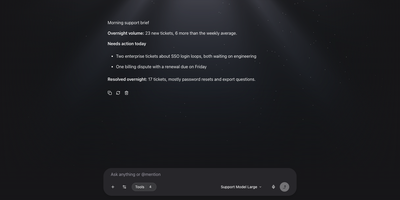
Chat apps, agent builders, workflow tools, and tool servers usually live in four separate products, and keinsaas Navigator folds them into one self-hosted AI workspace. Point it at Ollama, LM Studio, or any OpenAI-compatible endpoint, register the models you want, and pick one for each conversation. Type an at sign in the composer to pull an agent, a workflow, or a tool straight into the message. Agents carry their own role, instructions, model, and tool list, and each one stays private or is shared with the team. The workflow editor connects Input, LLM, Condition, Tool, HTTP, Template, Note, and Output nodes on a canvas, and a published workflow becomes a tool that any chat can call. MCP servers connect over HTTP or local commands, and a built-in tester runs each tool with JSON input before an agent depends on it. Projects keep shared documents and memory with vector search. Agents can run on a schedule for recurring jobs like morning briefs. Teams get accounts and sharing, and the first person to sign up becomes the administrator. A support desk copilot, a private assistant, or a prototype for the next automation all start from the same screen. Running on a dedicated VPS on RepoCloud with guaranteed CPU, RAM, and SSD, full root SSH access, and a browser serial console. MIT licensed.
Dim0
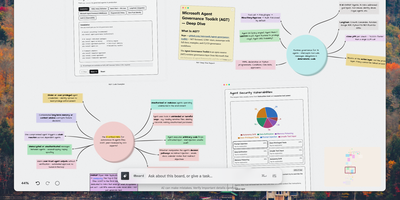
What if the whiteboard could read everything pinned to it and hand you back finished work, which is exactly the workspace Dim0 builds on your own server? One infinite board holds rich notes, hand-drawn and geometric shapes, images, documents, code sandboxes, and nested boards, all editable in place by a whole team at once with live cursors. The built-in agent sees the current board and your selected nodes, takes multi-step actions with its tools, and drops the answer back onto the canvas as a note, a mind map, or a working mini-app instead of burying it in a chat thread. Describe a tool in plain words and Dim0 generates a real interactive React app that lives on the board, reads the data sitting next to it, and can be opened, edited, and exported as code. Code nodes run in sandboxes, uploaded documents become searchable through retrieval, and presentation frames turn any board into a slideshow without exporting to a separate deck tool. You bring your own model keys for OpenAI, Anthropic, Gemini, Mistral, DeepSeek, or Qwen and switch providers whenever you like. Boards holding thousands of nodes still pan and zoom smoothly, and light, dark, and paper-and-ink themes restyle the whole surface. Running on a dedicated VPS on RepoCloud with guaranteed CPU, RAM, and SSD, full root SSH access, and a browser serial console. MIT licensed.
HeadlessX
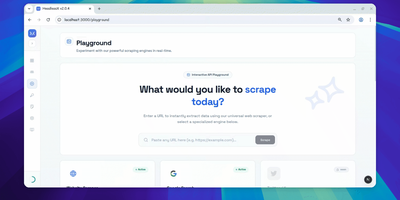
With 2,000 GitHub stars and 10 releases since its September 2025 launch, HeadlessX delivers a self-hosted browser automation platform that replaces Chromium-based scraping with Camoufox — a Firefox fork performing kernel-level fingerprint spoofing to achieve 0% detection across Cloudflare, DataDome, PerimeterX, and other anti-bot systems where Puppeteer and Playwright regularly fail. The web dashboard provides workspace-based job organization with a visual interface for configuring scrape targets, managing browser profiles, monitoring queue status, and viewing extracted results in real time. The protected REST API accepts requests with API key authentication for programmatic access, supporting HTML extraction, screenshot capture, PDF generation, and structured data parsing with configurable stealth parameters. Profile-based scraping maintains persistent browser contexts with cookie jars, localStorage, and fingerprint configurations that survive between requests — reducing cold-start latency from 25 seconds to under 2 seconds on subsequent requests. Queue-backed workflows enable batch processing of URLs with configurable concurrency, retry logic, and webhook notifications on completion. The Google AI Search integration provides AI-assisted web research workflows through dedicated endpoints. Remote MCP support exposes automation capabilities as tool endpoints for AI agent integration. Deploy via the official CLI with `headlessx init` and `headlessx start` commands, scaffolding a Docker Compose stack with Caddy reverse proxy for automatic HTTPS. Running on a dedicated VPS on RepoCloud with guaranteed CPU, RAM, and SSD, full root SSH access, and a browser serial console. MIT licensed.
DocsMint
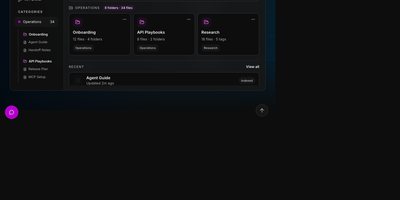
DocsMint is a self-hosted knowledge workspace where your team writes documentation once and both people and AI agents retrieve it through hybrid search and a built-in MCP server. Documents live in a rich visual editor with Markdown import and export, organized by folders, categories, and tags, with sharing and version history. Search blends exact title matches, multilingual keyword search, typo-tolerant fuzzy matching, and semantic vectors, then widens results through graph relationships between documents, so a query in one language or phrasing still finds the right page. Every edit quietly refreshes the index in the background; nothing needs manual re-embedding. Agents connect through 22 MCP tools covering search, reading, creation, updates, folders, snapshots, and export, over a local stdio bridge or the HTTP endpoint on your own installation. Category-scoped API keys hand each integration only the slice of the library it may read, edit, or write, while a global key serves trusted automation. The same operations are available through the REST API, a typed TypeScript SDK, and a terminal CLI for scripts. The web application installs as a PWA with offline reading, and AI features run on your choice of an OpenRouter key or a fully local Ollama setup. Running on a dedicated VPS on RepoCloud with guaranteed CPU, RAM, and SSD, full root SSH access, and a browser serial console. Apache-2.0 licensed.
ccLoad
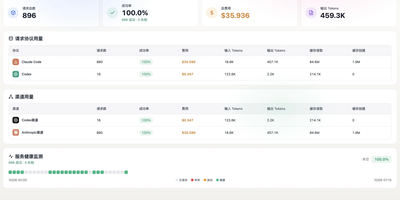
An upstream dies mid-stream. The session does not have to. ccLoad is a self-hosted AI gateway that stands between your coding agents and every key, relay, and subscription you own, retrying the next source before the first byte reaches your client. Claude Code, Codex, Gemini, and OpenAI-compatible tools all point at one address and present one ccLoad token. Behind it, each source becomes a channel with a model list, a priority, and health-based ordering. Requests are matched by the model name the client asked for. Protocol differences disappear in transit, with Anthropic, OpenAI, Codex Responses, and Gemini converted in either direction, streamed responses included. Failure gets a narrow blast radius. A revoked key cools down alone, a failing model cools down alone, and a dead URL cools down alone, each with exponential backoff that respects upstream reset times. Errors disguised as successful responses still trigger failover. Subscription accounts work as channels beside API keys, tokens refresh on their own, and quota use is tracked against each provider's reset window. Every request lands in the logs with its cost, priced with cache reads, cache writes, and long-context tiers included. Tokens carry model restrictions, budgets, and concurrency caps. Channels carry daily spend limits. Sensitive text can be masked on the way out and restored on the way back. Running on a dedicated VPS on RepoCloud with guaranteed CPU, RAM, and SSD, full root SSH access, and a browser serial console. MIT licensed.