Agent Fleet
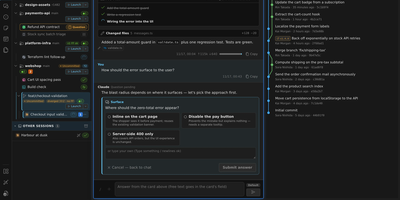
Closing the laptop no longer stops your coding agents: Agent Fleet runs Claude Code, Codex, GitHub Copilot, Cursor, and five more agent kinds on your own server, each member in a persistent, isolated workspace. One session list shows which agents are working and which are waiting on a question, a plan, or a permission prompt. Answer from a card in the browser, on a phone, or in the session's Slack or Discord thread. Each session can start in its own git worktree, and the console adds a commit graph, diffs, staging, split panes, and a live terminal. A session can hand a review to another agent kind, and a fleet graph draws who started whom. Scheduled runs wake a stopped workspace, and a turn cut short by a usage limit resumes when the limit lifts. Token use is broken down by feature, agent, and model, with calls that report no tokens counted as unmeasured. Sign-in works through Google, Microsoft Entra ID, GitHub, or any OIDC provider such as Okta or Keycloak, with tenants, roles, an audit log, and encrypted secrets. The interface switches between English and Japanese, and HTTPS certificates come from Let's Encrypt. Running on a dedicated VPS on RepoCloud with guaranteed CPU, RAM, and SSD, full root SSH access, and a browser serial console. Apache-2.0 licensed.
Versus Incident
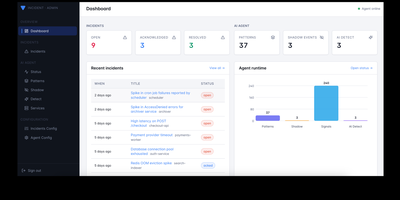
Versus Incident is a self-hosted AI SRE agent and incident manager that learns what normal looks like in your logs, metrics, traces, and Kubernetes clusters, then opens a triaged incident the moment something genuinely new appears. Detection earns trust gradually. Training mode only observes and catalogs patterns; shadow mode records what it would have alerted so you can judge its instincts; detect mode creates real incidents with an AI-written summary, a severity, and suggested next steps attached. Existing alerting does not have to move: Alertmanager, Grafana, Sentry, CloudWatch, Fluent Bit, and custom scripts post to the same webhook endpoint, and every incident, however it arrived, is rendered with your Go templates. Delivery fans out to Slack, Microsoft Teams, Telegram, Viber, email, and Lark. Silence has a deadline, because unacknowledged incidents escalate to on-call through PagerDuty, AWS Incident Manager, Opsgenie, incident.io, or ServiceNow. The Kubernetes dashboard gathers cluster health and capacity, workloads, resource relationships, recent changes, Helm releases, and GitOps status, and a DevOps chat agent in the web UI answers questions against the connected systems while responders work. The admin dashboard reviews learned patterns, shadow events, and raised incidents, so the agent's judgment stays inspectable. Running on a dedicated VPS on RepoCloud with guaranteed CPU, RAM, and SSD, full root SSH access, and a browser serial console. MIT licensed.
Latitude
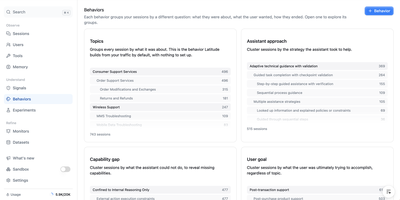
Production AI agents fail in quiet ways, and Latitude records every trace, session, and tool call so each failure can be found, grouped, and fixed. One line of telemetry from the TypeScript or Python SDK, or any OpenTelemetry exporter, sends traces from OpenAI, Anthropic, LangChain, LlamaIndex, CrewAI, and dozens of other providers and frameworks. Failing traces are clustered into signals with status, size, and trend, and flaggers and annotation queues let reviewers score outputs by hand. Evaluations are generated from those judgments and tracked with an alignment score. Semantic and exact-text search covers every trace, and saved searches, filters, and behavior groupings keep recurring questions one click away. Dashboards report cost per session, tool failure rates, and agent score across outcome, reliability, speed, and safety. Memory views show how an agent's stored memory changes over time, with diffs and the trace behind each edit. Monitors raise alerts, regression datasets replay fixes against the traces that failed, and Agent Dispatch hands the evidence to a coding agent. Running on a dedicated VPS on RepoCloud with guaranteed CPU, RAM, and SSD, full root SSH access, and a browser serial console. MIT licensed.
Clay Studio
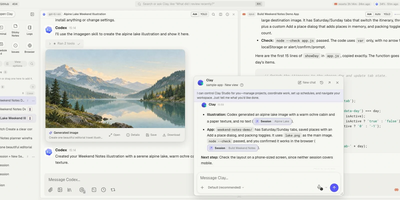
Clay Studio is a self-hosted workspace where your team and its coding agents share projects, live sessions, and project knowledge in one browser interface instead of scattering them across terminals. You organize several repositories in one sidebar and run sessions in parallel while teammates watch live activity, enter the same session, hand work off, and answer permission requests from wherever they are. Ten agent runtimes plug into the same workspace, Claude Code, Codex, Grok Build, Kimi Code, GitHub Copilot CLI, Qwen Code, Junie CLI, Antigravity CLI, OpenCode, and Kiro CLI, each keeping its own authentication and models. Persistent Mates give AI collaborators an identity, instructions, memory, direct messages, and roles in structured debates that survive beyond a single chat. Worktrees, paired sessions, spawned workers, scheduled tasks, and Ralph Loops let background jobs proceed without losing sight of what is running. You browse and edit files, inspect diffs and history, open terminals, install skills, connect MCP servers, and manage project knowledge without leaving the workspace. The installable PWA works on mobile and pushes notifications for approvals, failures, and finished work. Sessions and knowledge stay on your disk as portable JSONL and Markdown, so switching providers never means migrating your workspace. Running on a dedicated VPS on RepoCloud with guaranteed CPU, RAM, and SSD, full root SSH access, and a browser serial console. AGPL-3.0-only licensed.
octo-agent
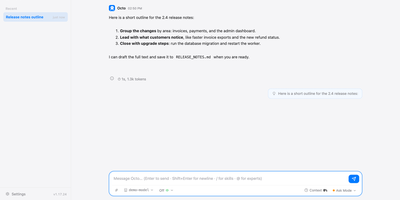
One download gives you a coding agent and personal assistant that is ready to work after a single message. The agent runs shell commands, reads and edits files, searches the web, calls MCP servers over stdio or HTTP with OAuth, and splits work across parallel sub-agents. Chat from the terminal, the web dashboard, a desktop app, VS Code, Obsidian, an Android app, or IM bridges for Telegram, Discord, Feishu, DingTalk, WeCom, and WeChat. Bring DeepSeek, Kimi, Qwen, Anthropic, OpenAI, or any compatible endpoint, with prompt caching tuned for each provider to keep token bills predictable. Skills use the Claude Code SKILL.md format, so an existing skills folder works unchanged. Cross-session memory, scheduled tasks, reusable multi-agent workflows, and Chrome automation that records, replays, and repairs browser steps cover the repetitive jobs. Light Apps are small agent-built tools that run in the browser with no further tokens. Safety is built in: catastrophic commands are hard-denied, deleted or overwritten files go to a recycle bin first, and an OS sandbox can confine the terminal. There is zero telemetry, and the web dashboard loads no outside fonts or scripts. Expose the server on a VPS behind its auto-generated access key and reach the same sessions from any device. Running on a dedicated VPS on RepoCloud with guaranteed CPU, RAM, and SSD, full root SSH access, and a browser serial console. MIT licensed.
Murmur
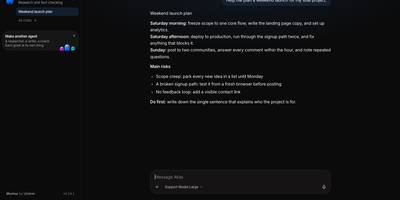
Every AI agent gets a face, a colour, and a job in Murmur, a chat app that makes running Hermes Agent as friendly as texting a colleague. Start from a template (Researcher, Writer, Planner, Coder, Coach, or Chef) or describe a new agent from scratch, then talk to one at a time or drop several into a group room and call on a single one with an at-mention. Replies stream in live, long jobs show a plan that ticks itself off, and every step appears in plain words. Connect a model with a ChatGPT plan, a local model server, or an API key from OpenRouter, OpenAI, Anthropic, and others, with the model and thinking effort chosen per agent or chat. Agents can reach Notion, Linear, Todoist, Figma, and dozens of other apps, and they ask for an Allow or Don't allow before changing anything important. Morning briefings run as routines, a memory view shows what each agent knows with controls to edit or forget it, and WhatsApp or Telegram can be linked by scanning a code. A voice call mode lets an agent answer out loud, and slash commands set long-running goals or ask quick side questions. Chats sync across browser, desktop, and phone. Solo builders, homelab fans, and small teams get a calm front door to their own agents. Running on a dedicated VPS on RepoCloud with guaranteed CPU, RAM, and SSD, full root SSH access, and a browser serial console. MIT licensed.
Markus
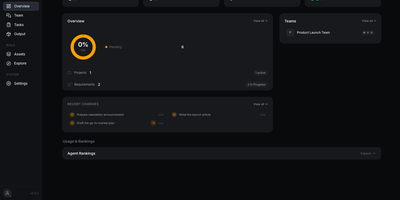
Markus is an AI workforce you run yourself: describe a goal in plain language and a team of specialist agents plans it, splits it into tasks, does the work, and reports back. A built-in Secretary agent hires agents from role templates, groups them into teams, and turns requirements into dependency-linked tasks. Work runs in parallel, each task in its own workspace, and a peer reviewer approves or sends back every delivery before it counts as done. Follow progress on a backlog table, a kanban board, or a dependency graph that shows which task unblocks which. Agents keep persistent memory, patrol their own task board around the clock, and can join team group chats or take direct messages. Connect Slack, Telegram, Discord, WhatsApp, or Feishu so people can reach agents where they already talk, and give agents browser and desktop automation through an optional Chrome extension. Pick any model provider, including Anthropic, OpenAI, Google, DeepSeek, OpenRouter, or a local Ollama server, and import skills from MCP servers or community hubs. A REST and WebSocket API, usage rankings, and an audit trail round out the control room. Running on a dedicated VPS on RepoCloud with guaranteed CPU, RAM, and SSD, full root SSH access, and a browser serial console. Apache-2.0 licensed.
Prospex
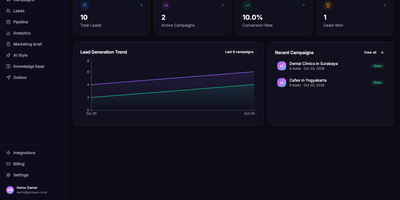
Local businesses that need what you sell turn up in one dashboard, each with an AI-drafted outreach message built from real data that you approve before it goes out. Prospex reads your website, documents, or pasted text to write a marketing brief and fill in a campaign form, listing anything your sources do not say instead of inventing it. A campaign scrapes Google Maps by business type and city, gathers up to 2,000 leads, and ranks each from 0 to 100 using rating, review volume, reachability, and an AI judgement of fit with the reason shown. The Outbox holds every draft as a WhatsApp bubble to edit, approve, or reject, and one message can fan out to many leads with name and category filled in. Approved messages send one at a time with hourly and daily caps, quiet hours, random gaps, and typing indicators, or go by email through your own SMTP account. Replies are classified, follow-ups are cancelled or drafted, and a pipeline tracks deal value, won and lost reasons, and what needs your attention. AI Style learns your voice from exported chats, a knowledge base grounds drafts in your facts, and any OpenAI-compatible model works, including Ollama. The interface is available in English and Indonesian. Running on a dedicated VPS on RepoCloud with guaranteed CPU, RAM, and SSD, full root SSH access, and a browser serial console. AGPL-3.0 licensed.
ScribeCrate
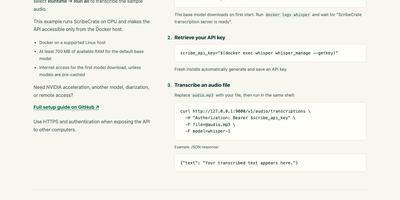
ScribeCrate is a self-hosted speech-to-text API that turns recordings into transcripts, subtitles, and English translations on your own server. It speaks the OpenAI Whisper API fluently: point any compatible client at your server's address, swap in your API key, and uploads come back as text. Ask for plain text, JSON with timestamps, or ready-to-publish SRT and WebVTT subtitle files, and for long recordings the segments can stream back over SSE as they are decoded. Turn on speaker diarization and every segment is labeled with who is speaking, which makes interview and meeting transcripts readable at a glance. Choose the model that fits the job, from tiny for quick drafts to large-v3 for maximum accuracy, and run it on a modest CPU, a Raspberry Pi class ARM board, or an NVIDIA GPU. Almost any recording works: MP3, M4A, WAV, WebM, OGG, and FLAC are all accepted, and with models cached in advance the server keeps transcribing with no internet connection at all. Running on a dedicated VPS on RepoCloud with guaranteed CPU, RAM, and SSD, full root SSH access, and a browser serial console. MIT licensed.
Kokoro FastAPI
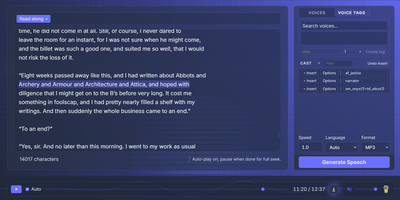
Kokoro-FastAPI turns text into natural-sounding speech across eight languages by serving the 82-million-parameter Kokoro-82M model through an OpenAI-compatible REST API, so any existing OpenAI SDK client can generate audio by just changing the base URL. With over 5,300 GitHub stars since December 2024, the fully Dockerized FastAPI server covers American English, British English, Spanish, French, Hindi, Italian, Japanese, Brazilian Portuguese, and Mandarin Chinese with language-specific phoneme processing. Inline voice mixing blends multiple profiles using weighted ratios like af_bella(2)+af_heart(1), automatically normalizing weights and caching combined voicepacks as PyTorch tensor files for reuse. Audio streams in real time over HTTP with configurable chunk sizes, or generates complete files in MP3, WAV, OPUS, FLAC, AAC, or PCM formats with speed control from 0.25x to 4.0x. Per-word timestamped captions with speaker-tagged voice labels enable subtitle generation for podcasts, audiobooks, and accessibility workflows. Pre-built Docker images support NVIDIA GPU acceleration via CUDA, experimental AMD GPU inference via ROCm, and CPU-only deployment on linux/amd64 and linux/arm64 architectures, with Apple Silicon MPS support available through direct UV execution. The integrated web interface at port 8880 provides browser-based speech generation, while the Swagger UI at /docs exposes the full API reference. Debug endpoints report system statistics for monitoring inference load. Running on a dedicated VPS on RepoCloud with guaranteed CPU, RAM, and SSD, full root SSH access, and a browser serial console. Apache 2.0 licensed.
Auto Company
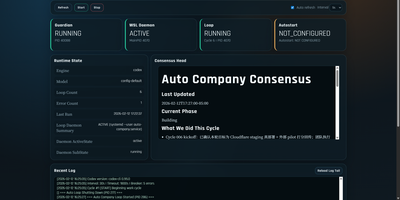
With over 2,700 GitHub stars, Auto Company is the first open-source framework that runs a fully autonomous AI company 24/7 — 14 specialized agents modeled after Jeff Bezos (CEO strategy), Werner Vogels (CTO architecture), Charlie Munger (critical analysis), DHH (full-stack engineering), Kelsey Hightower (DevOps), Seth Godin (marketing), and eight more domain experts collaborate through dynamic squad formation to ideate products, write code, deploy infrastructure, and execute marketing campaigns without human intervention. The five-layer architecture separates execution, orchestration, cognition, workflow routing, and observability, while the consensus memory pattern uses a single markdown file as a relay baton between cycles — no vector databases, no Redis, no embeddings required. A bash loop invokes Claude Code or OpenAI Codex CLI every 30 seconds, each cycle selecting 2-5 agents from the 14-person pool based on task context. Over 30 reusable skills handle specialized tasks from frontend design to competitive analysis and deployment automation. Circuit breakers trigger cooldown after consecutive errors, rate-limit detection auto-sleeps on API throttling, and sandbox rollback protects against destructive changes. The Python-powered web dashboard displays real-time cycle status, cost tracking per cycle averaging under $2, and agent activity visualization, with CLI control via make start, stop, monitor, pause, and resume. Supports macOS via launchd, Windows via WSL with systemd, and native Linux deployment. The npx create-auto-co command scaffolds a new AI company in seconds. Running on a dedicated VPS on RepoCloud with guaranteed CPU, RAM, and SSD, full root SSH access, and a browser serial console. MIT licensed.
Basjoo
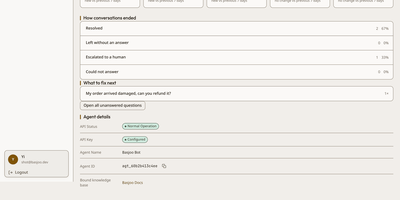
Support tickets that repeat the same twelve questions all week can answer themselves when Basjoo turns your website and documents into an embeddable AI support agent you host yourself. Knowledge bases are built independently of agents, fed by crawling a single page or an entire site, or by uploading PDF, Word, Excel, HTML, and text files that are parsed into searchable chunks. Visitors chat through a widget added with one script tag, in a floating bubble, inline frame, or iframe, and answers stream back with source citations so people can verify what the bot claimed. A curated question and answer index is matched before retrieval, which means correcting a wrong answer takes effect immediately without reindexing the whole collection, and a keyword fallback mode can answer matched questions with no model key at all. When a conversation needs a person, operators watching the live session wall can take over, reply with saved macros, release the chat back to the bot, or resolve it, with business hours deciding when the bot is off duty. Lead capture forms, an unanswered question queue that groups repeats into future answers, thumbs feedback rolled into analytics, and signed outbound webhooks for seven event types round out the operator side. Running on a dedicated VPS on RepoCloud with guaranteed CPU, RAM, and SSD, full root SSH access, and a browser serial console. MIT licensed.
Open Canvas
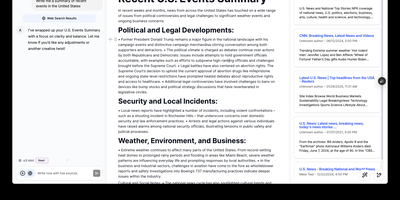
Open-source alternative to OpenAI's Canvas — a collaborative writing and coding environment where AI agents help you draft, edit, and refine documents through an agentic architecture built on LangGraph. The dual-mode editor combines a BlockNote rich text editor for live-rendered markdown with a CodeMirror-based code editor supporting syntax highlighting across multiple programming languages, letting you switch between prose and code artifacts within the same session. The built-in reflection agent automatically generates style rules and user insights from your chat history, storing them in a shared LangGraph memory store that persists across sessions for increasingly personalized assistance. Pre-built quick actions provide one-click access to common writing transformations including summarize, expand, simplify, and translate, while coding actions offer explain, refactor, add comments, and convert between languages. The monorepo architecture separates the Next.js 14 frontend from the LangGraph agent backend, connecting via HTTP and WebSocket protocols through the @langchain/langgraph-sdk client. Seven LLM providers are supported out of the box — OpenAI, Anthropic Claude, Google Gemini, Fireworks AI, Groq, Azure OpenAI, and local Ollama models — with Supabase handling authentication and data persistence. Deploy via Docker or build from source. Running on a dedicated VPS on RepoCloud with guaranteed CPU, RAM, and SSD, full root SSH access, and a browser serial console. MIT licensed.
Briefer
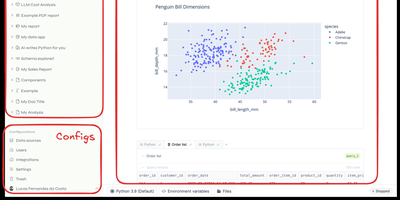
Backed by Y Combinator with 4,300 GitHub stars and growing rapidly since its September 2024 launch, Briefer delivers the first truly unified notebook-and-dashboard platform that eliminates the fragmented workflow of juggling Jupyter for analysis, Tableau for visualization, and Notion for documentation — combining all three in a single Notion-like workspace where SQL query results automatically become Python DataFrames accessible in subsequent code blocks. The built-in AI analyst understands your database schema and notebook context to generate SQL queries, write Python transformations, create visualizations, and fix errors on demand using configurable OpenAI or private LLM backends. Connect directly to PostgreSQL, MySQL, BigQuery, Redshift, Snowflake, and Amazon Athena as data sources, or upload CSV files for immediate analysis. Native point-and-click visualizations produce charts, tables, and dashboards without writing code, while interactive data apps use inputs, dropdowns, and date pickers to create parameterized reports for non-technical stakeholders. Scheduled execution runs notebooks and dashboards periodically with results delivered via Slack integration or public shareable links. Write-back queries modify production data directly from notebooks for ad-hoc pipeline testing. The architecture runs as three Docker containers — web frontend, API server, and optional AI service — backed by PostgreSQL and a Jupyter server for Python execution, deployable via single Docker command, Docker Compose, or Helm charts for Kubernetes. Running on a dedicated VPS on RepoCloud with guaranteed CPU, RAM, and SSD, full root SSH access, and a browser serial console. AGPLv3 licensed.
AI Real Estate Assistant
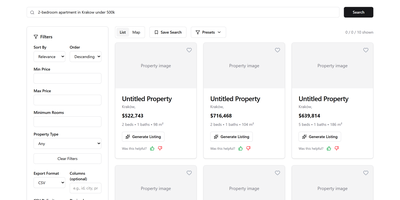
AI Real Estate Assistant puts a conversational search engine on top of your own property catalogue, so buyers type a request in plain language and receive matched listings in return. A query about a two-bedroom apartment in a named city under a price limit becomes extracted filters, semantic ranking over the catalogue, and a shortlist that matches the words instead of a rigid form. Behind the chat sits a working toolbelt: a mortgage calculator, a rent-versus-buy comparison, ROI and total-cost-of-ownership estimates, and an AI valuation that projects a property value one, three, five and ten years ahead with a confidence band. Every listing card shows an estimated monthly payment, and every property page carries an AI neighbourhood summary covering district character, nearby amenities and ease of getting around. Interactive maps cluster markers by area, a city overview page compares markets across districts, and a documents section accepts uploaded files that visitors can question in the same conversation. An agent directory presents the people behind the listings together with their stock, and the interface speaks nine languages with compliance labels on AI output. The demo mode answers with a local model and needs no paid key, and a real deployment routes each request to any of sixteen providers. Running on a dedicated VPS on RepoCloud with guaranteed CPU, RAM, and SSD, full root SSH access, and a browser serial console. MIT licensed.

InnoShop
InnoShop runs your entire online store on your own server, from a multilingual storefront and checkout to orders, shipments, and returns, and it even lets an AI assistant operate the shop alongside you. Set up products with SKUs, attributes, brands, and categories, then sell through a responsive storefront that speaks your customers' languages and prices in their currencies. Orders flow into the admin panel with status updates, shipment tracking, and return handling, while customers pay through PayPal, Stripe, bank transfer, or payment and shipping plugins you install. A built-in media library keeps product photos and files organized and reusable across the whole catalog. Visit analytics show who is browsing the store, with bot detection and geographic aggregation separating real shoppers from crawler noise. The unusual part is the AI door: a built-in MCP server exposes more than 45 store operations as tools, so an assistant can list products, check inventory, update an order status, or pull a sales report in plain conversation. That door is disabled by default, opens only with an admin token, stays read-only until you explicitly enable write tools, and never exceeds the permissions of the account behind the token. Plugins extend the store without forking it, and themes reshape the storefront without touching the catalog underneath. Running on a dedicated VPS on RepoCloud with guaranteed CPU, RAM, and SSD, full root SSH access, and a browser serial console. OSL-3.0 licensed.
Paddler
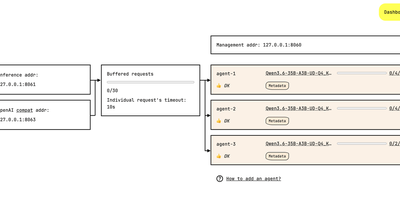
One binary. A fleet of machines. One calm endpoint for inference. Paddler balances large language model traffic across whatever hardware you already own, instead of renting tokens by the million. The balancer exposes an inference service, a management service, and a web admin panel from a single self-contained program. Agents on separate machines generate tokens and embeddings through slots, each carrying its own context and KV cache. Inference runs on the built-in llama.cpp engine, CPU or GPU. Need a different model? Swap it dynamically, no rebuild, no redeploy. Capacity follows demand: agents join the fleet when traffic grows and leave when it fades, and request buffering holds early work in a queue so scaling up from zero hosts drops nothing. Operators watch fleet health through observability metrics, configure models, chat templates, and inference parameters in the admin panel, and test prompts graphically before users ever see a change. A desktop edition drafts office workstations into service beside the rack servers. For medical, financial, or otherwise sensitive prompts, everything stays inside your own network, and predictable hardware replaces per-token pricing exposure. Running on a dedicated VPS on RepoCloud with guaranteed CPU, RAM, and SSD, full root SSH access, and a browser serial console. Apache License 2.0 licensed.
FeedCraft
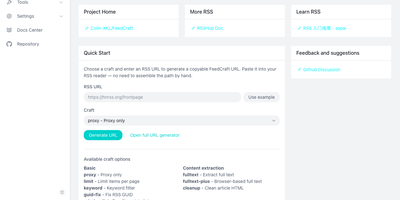
Excerpt-only feeds, truncated teasers, and articles in languages you do not read make RSS feel broken; FeedCraft sits between the source and your reader and fixes the feed itself. Pick from more than twenty single-step crafts: extract the full article text, even from JavaScript-rendered pages through a headless browser, translate titles or whole articles, add AI introductions and summaries, strip ads and clutter, or filter items by keyword, embedding similarity, or a natural-language prompt to your own LLM. Chain crafts into FlowCraft pipelines, so one pass can limit a feed to ten items, fetch every full text, drop the advertorials, and summarize what survives. Save the result as a recipe and FeedCraft hands you a permanent crafted feed URL that drops straight into the reader you already use, while portable mode transforms any feed on the fly from a single crafted URL prefix. When a site has no feed at all, the visual generators build one from a webpage with CSS selectors, from a JSON API with curl import, or straight from search results. Running on a dedicated VPS on RepoCloud with guaranteed CPU, RAM, and SSD, full root SSH access, and a browser serial console. GPL-3.0 licensed.