Open Source App Cloud Marketplace
Deploy, host, and scale with one click, at half the cost. Then customize with AI agents.
OpenCode Manager
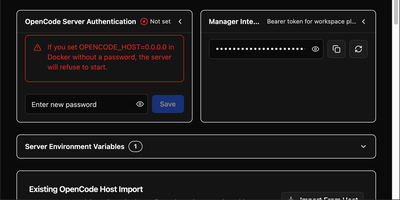
OpenCode Manager is a mobile-first command center for AI coding agents. Install the PWA on your phone or tablet and you get real-time streaming chat, multi-repository Git operations, and scheduled automation right in your pocket. Git integration handles SSH-authenticated repo cloning, worktree management, unified diffs, and branch operations across all your projects in one dashboard. Chat with coding agents through Server-Sent Events streaming that supports slash commands, @-mentions for files, Plan and Build modes, and Mermaid diagram rendering for architecture discussions. Schedule reusable prompts to run against any repository on intervals or cron expressions, with each run tracking history and linking to sessions so you can pick up exactly where automation left off. MCP server configuration adds local and remote HTTP servers with OAuth support, plugging into the broader Model Context Protocol ecosystem. A dedicated assistant workspace provides an isolated AI environment with auto-provisioned skills for managing schedules, notifications, and settings. Multiple AI providers are supported including Anthropic, GitHub Copilot, and OpenAI-compatible services, each configurable with custom system prompts and granular tool permissions. Push notifications alert you to session events, agent questions, errors, and task completions across all managed repositories.
Mail-in-a-Box
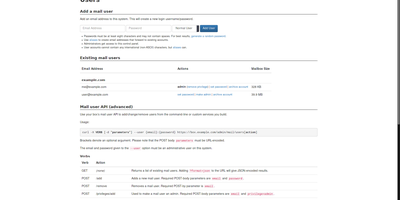
Mail-in-a-Box turns a single Ubuntu server into a fully functional email system with one setup command, installing and configuring Postfix for SMTP, Dovecot for IMAP, Roundcube for webmail, and Z-Push for Exchange ActiveSync push notifications in an automated sequence that would take days to replicate manually. The DNS server auto-configures the full suite of email authentication records: SPF, DKIM, DMARC, DNSSEC with DANE TLSA, MTA-STS, and SSHFP. Getting all of these right is what separates email that lands in inboxes from email that lands in spam, and most manual installations never achieve the complete set. Nextcloud integration adds CardDAV contact sync and CalDAV calendar sharing across devices. Let's Encrypt certificates provision and renew automatically for every hosted domain. The web control panel manages users, aliases, custom DNS records, and automated backups, protected by TOTP two-factor authentication. Daily health checks verify that services run correctly, ports remain open, TLS certificates stay valid, and DNS records resolve properly, alerting you before delivery problems develop. Multiple domains and users operate from one installation with internationalized domain name support. Built-in HTTPS static site hosting uses the TLS infrastructure already in place. Runs on a dedicated RepoCloud VPS with guaranteed resources, root SSH, and browser serial console for complete email sovereignty. CC0 public domain licensed.
Docmost
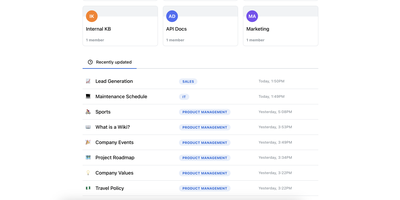
Confluence and Notion both want your team's documentation in their cloud; Docmost, an open-source collaborative wiki platform, keeps it on your server. The centerpiece is a Notion-style block editor with CRDT-based real-time collaboration: multiple people edit the same page simultaneously and changes merge without conflicts or overwrites. Content lives in spaces - per team, project, or department - with nested page trees, role-based permissions, groups, inline comments, page history with restore, and full-text search across everything. The editor covers tables, code blocks, callouts, KaTeX math, and file attachments, and diagramming is built in rather than bolted on: Mermaid, Draw.io, and Excalidraw all render inside pages, alongside embeds for Airtable, Loom, Miro, and more. Migration paths include Notion, Markdown, HTML, and ZIP archive imports (Confluence, PDF, and DOCX importers ship in the Enterprise edition, along with SSO via SAML/OIDC/LDAP and MFA). The stack is TypeScript with PostgreSQL and Redis, deploys via Docker Compose, runs in air-gapped environments with no external dependencies, and is translated into 10+ languages. The AGPL-3.0 community edition carries no per-seat fees; the project has passed 20,000 GitHub stars since its 2024 launch.
Kutt
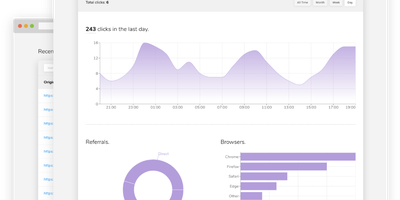
Built for self-hosting from the ground up, Kutt is a modern, MIT-licensed URL shortener: zero-configuration setup, no build step, and SQLite, PostgreSQL, or MySQL with optional Redis caching. Links carry real management features - custom slugs from a configurable alphabet (confusable characters like 0/O and l/1 omitted by default), password protection, descriptions, expiration times, and the ability to edit a destination URL without changing the short link already in circulation. Custom domains make branded short links first-class: add as many as you like and serve each under your own name instead of a third-party's. Private, per-link statistics track clicks, browsers, operating systems, and countries without logging visitor IPs or sensitive data. An admin page manages users and links instance-wide, and two environment flags (DISALLOW_REGISTRATION, DISALLOW_ANONYMOUS_LINKS) lock the instance down for private use; OpenID Connect login integrates with an existing identity provider. Automation runs through a documented REST API - create, list, delete, and pull stats - plus Chrome and Firefox extensions and ShareX compatibility for shortening from anywhere. Built with Node.js and React, deployed in one Docker container, it replaces Bitly with something you own: your domain, your analytics, and links that never die with a vendor.
big-AGI
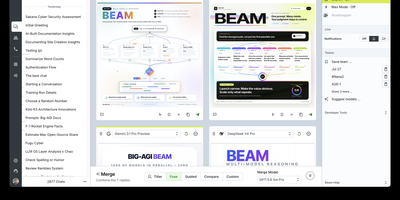
big-AGI is an open-source generative AI workspace that provides a unified, local-first interface for orchestrating multi-model reasoning, automated code execution, and custom persona workflows across private infrastructure. Users query multiple large language models simultaneously through the Beam scatter-gather engine, which prompts independent AI systems in parallel, compares candidate completions side by side, and merges optimal passages into a single refined response. Knowledge workers assemble tailored AI personas equipped with specialized system instructions, custom temperature settings, and predefined document context to handle domain-specific tasks ranging from architectural design reviews to legal contract analysis. The application renders rich multimedia outputs including interactive Mermaid sequence diagrams, LaTeX mathematical formulas, syntax-highlighted code blocks with live execution previews, and AI-generated image generation canvases. Teams integrate local inference servers like Ollama and LocalAI alongside commercial API endpoints to route confidential datasets strictly through internal networks while monitoring per-prompt token usage and operational latency. Users attach complex PDF documents, spreadsheets, and source code repositories for automatic parsing and semantic retrieval, while local-first storage engines ensure private chat transcripts and custom presets remain encrypted on host drives. Running on a dedicated VPS on RepoCloud with guaranteed CPU, RAM, and SSD, full root SSH access, and a browser serial console. MIT licensed.
APITable
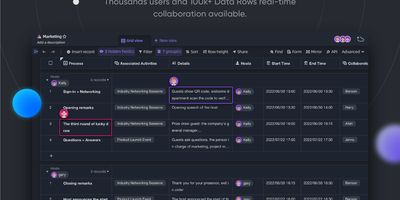
With over 15,000 GitHub stars and positioning itself as the most feature-complete open-source alternative to Airtable, APITable combines a buttery-smooth spreadsheet interface with a full database engine and automatic API generation that turns every datasheet into a queryable REST endpoint without writing a single line of backend code. Real-time collaborative editing powered by Operational Transformation algorithms supports 100,000+ rows with multiple simultaneous users, while seven built-in view types — Grid, Kanban, Gallery, Gantt chart, Calendar, Mindmap, and Form — let teams visualize the same data in whatever format suits their workflow. The one-click API panel exposes every table as a documented REST API with filtering, sorting, and pagination, effectively functioning as a backend-as-a-service for frontend developers and automation builders. Robot automation triggers workflows on record changes with integrations into n8n, Zapier, Appsmith, and Slack, while the extensible widget system provides 20+ open-source widgets for custom charts, dashboards, and data visualizations embedded directly into datasheets. Enterprise features include SAML single sign-on, field-level and row-level permissions via Mirrors, organizational team management, audit logging, database auto-backup, and data export. Bi-directional table linking with infinite cross-links creates relational data models across workspaces, and built-in templates cover CRM, project management, inventory, and content planning. Running on a dedicated VPS on RepoCloud with guaranteed CPU, RAM, and SSD, full root SSH access, and a browser serial console. AGPL-3.0 licensed.
Semaphore
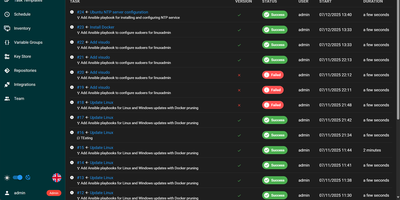
With nearly 14,000 GitHub stars and over 200 releases, Semaphore UI has established itself as the lightweight yet powerful alternative to enterprise automation platforms like Ansible AWX and Jenkins. Unlike AWX's heavyweight Kubernetes-dependent architecture, Semaphore ships as a single Go binary with zero external runtime dependencies — install it, run setup, and you have a production-ready automation server in minutes. The platform natively orchestrates Ansible playbooks, Terraform and OpenTofu infrastructure code, Terragrunt configurations, PowerShell scripts, Bash commands, and Python automation, all from a clean Vue.js web interface that displays task history, execution logs, and scheduling status at a glance. Semaphore supports concurrent task execution across multiple servers using distributed project runners, enabling horizontal scaling of automation workloads without complex clustering. The built-in inventory management system handles both static and dynamic inventory sources, while four-level RBAC (Owner, Manager, Task Runner, Guest) provides granular access control for team environments. Notifications flow to Slack, Microsoft Teams, Telegram, email, Rocket.Chat, and Gotify, keeping operators informed of failed tasks and deployment status. Integration with HashiCorp Vault secures sensitive credentials, and the comprehensive REST API with built-in Swagger documentation enables programmatic automation. Deploy via Docker Compose, Helm chart for Kubernetes, or native packages for Debian, Ubuntu, and RHEL-based distributions. Running on a dedicated VPS on RepoCloud with guaranteed CPU, RAM, and SSD, full root SSH access, and a browser serial console. MIT licensed.

Standard Notes
Standard Notes keeps your notes, files, and tags encrypted on your device before anything touches the network, meaning the server stores only ciphertext it cannot read. Cross-platform sync across desktop, mobile, and web delivers fast, conflict-free updates on unlimited devices with the same zero-knowledge guarantee that only your password can decrypt your content. The V2 server architecture condenses everything into four Docker containers consuming roughly 570MB RAM total (down from 13 containers and 1.7GB in the legacy setup), with startup under one minute. Revision history automatically preserves every version of every note, so recovering deleted text or reverting to a previous state never depends on manual backups. A nested tag system organizes thousands of notes with hierarchical categorization that goes well beyond flat folder structures, while search operates entirely on client-side decrypted content. File attachments of any type encrypt and sync alongside notes with identical end-to-end protection. Multiple editor options span plain text, Markdown with preview, and rich formatting to fit different writing workflows. Two-factor authentication via TOTP with email backup codes adds a second barrier beyond your password. An optional separate container serves the web frontend, providing browser access to your encrypted vault without depending on standardnotes.com infrastructure. With 5,500+ GitHub stars and active development, the project continues expanding editor plugins and sync improvements.
Letta
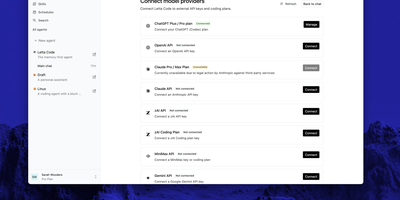
With over 24,000 GitHub stars and origins in the MemGPT research paper on virtual context management, Letta has evolved into the leading open-source platform for building AI agents that maintain persistent memory, identity, and continuity across sessions rather than operating as stateless prompt-response loops. The core architecture uses memory blocks — structured, labeled text chunks that reside permanently in the agent's context window — allowing agents to programmatically rewrite their own memory, learn new skills, and improve through a sleeptime dreaming process that runs reflection and memory organization during idle periods. The self-hosted App Server deploys via Docker and exposes a WebSocket API on port 4500, letting the TypeScript Agent SDK connect from any application using local, remote, or cloud backends. Agents support git-versioned memory through MemFS where every memory change is tracked and auditable, multi-agent communication via subagents, scheduled tasks, and integration with messaging platforms including Slack, Discord, Telegram, WhatsApp, and Signal. The platform is fully model-agnostic, routing to OpenAI, Anthropic, xAI, or self-hosted open-weight models through Ollama depending on cost, performance, and data residency requirements. The Agent File format serializes complete agent state — memory, skills, prompts, and conversation history — into portable snapshots. Desktop applications for macOS, Windows, and Linux provide native interfaces alongside the terminal CLI and web chat at chat.letta.com. Running on a dedicated VPS on RepoCloud with guaranteed CPU, RAM, and SSD, full root SSH access, and a browser serial console. Apache-2.0 licensed.
MiroFish
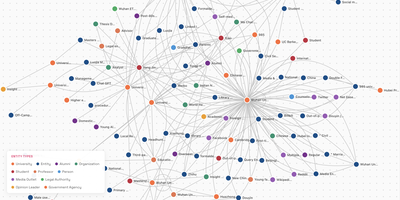
Upload a report, ask a "what if" question in plain language, and MiroFish builds a small simulated society that plays out the answer before you commit to a decision. It reads your seed documents, whether news, policy drafts, financial signals, or a novel, and extracts entities and relationships into a GraphRAG knowledge graph. Entities from the graph become agents with a profession, a biography, and interest tags, and the app estimates simulation rounds from the simulated time span, with a custom mode for shorter runs. Agents post and react on two simulated platforms at once, a feed-style plaza and a topic community, while a live monitor tracks rounds, elapsed simulated time, and actions. A ReportAgent then plans an outline and writes the prediction report section by section with the InsightForge, PanoramaSearch, QuickSearch, and InterviewSubAgent tools. Afterward you can keep questioning the ReportAgent, chat with any individual agent, or send a survey question to a selected group and read their answers. Typical uses include rehearsing public relations responses, testing policy drafts against likely reactions, and exploring alternate endings for a story. The interface switches between English and Chinese, and you bring your own model: any OpenAI SDK compatible LLM endpoint works, Zep Cloud stores agent memory, and the project suggests starting under 40 rounds because runs consume many tokens. Running on a dedicated VPS on RepoCloud with guaranteed CPU, RAM, and SSD, full root SSH access, and a browser serial console. AGPL-3.0 licensed.

openGym
openGym is a self-hosted gym and body-weight tracker that plans your weekly routines, guides every set with pre-filled weights and rest timers, and keeps your training data on a server you control instead of inside a subscription app. Over 5,600 exercises come with animated demos, searchable by body part and the equipment you own, and you can add custom ones with your own photo or video. Progression follows a rule you pick per routine (linear, Greyskull LP, double, triple, or added time), and each target explains where it came from. Supersets, warm-ups, drop sets, rest-pause, timed planks, and cardio by time and speed all log properly, and plate math shows what goes on each side of the bar. A muscle map shows where your volume went, what is still recovering, and what went untrained, beside estimated one-rep maxes, a year-long heatmap, and body weight charted against your goal. Imports from FitNotes, Strong, and Hevy carry your history over. Several people can share one server, each with a private passkey profile, and an optional admin dashboard handles invite-only signup. An optional AI coach, off by default, drafts routines and suggests changes through your own Anthropic, OpenAI, Gemini, or Ollama endpoint, and nothing applies without your approval. The interface speaks 19 languages. Running on a dedicated VPS on RepoCloud with guaranteed CPU, RAM, and SSD, full root SSH access, and a browser serial console. AGPL-3.0 licensed.
RustFS
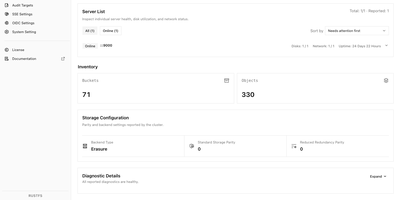
Tools and applications that already speak S3 can use RustFS as their storage backend, so backup jobs, data pipelines, and services keep working while the data stays on infrastructure you control. A built-in web console on port 9001 manages buckets, object uploads and downloads, access keys, users, groups, and IAM policies, with a status page for cluster health, capacity, and scanner activity. Versioning, Object Lock retention, bucket quotas, and server-side encryption with Vault or AWS KMS backends protect objects once they land. Lifecycle rules expire or transition data, and tiering moves cold objects to remote targets such as Amazon S3 or Wasabi. Bucket replication and site replication keep clusters in sync, and event notifications call webhooks when objects change. Single-node mode suits a lab or small server, while distributed mode adds erasure coding, bitrot protection, background healing, and pool expansion or decommissioning as capacity grows. Sign-in works with local users, OIDC single sign-on, or OpenStack Keystone, and FTPS and WebDAV are available by default, with SFTP and the Swift API as opt-in builds. A preview of S3 Tables exposes an Iceberg REST catalog for tools such as DuckDB and PyIceberg, and a documented migration path moves existing MinIO deployments across. Typical uses include backups, container registries, logs and traces, data lakes, and AI training sets. Running on a dedicated VPS on RepoCloud with guaranteed CPU, RAM, and SSD, full root SSH access, and a browser serial console. Apache-2.0 licensed.
Forem
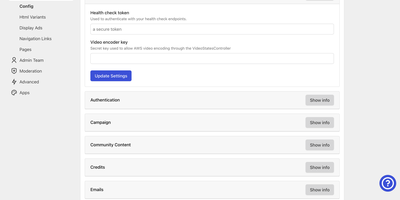
With 22,700 GitHub stars, 4,100+ forks, and proven scale powering dev.to — one of the largest developer communities serving millions of monthly users — Forem provides a complete community platform for building engaged audiences around shared interests, whether for developer documentation, customer communities, fan bases, or professional networks. The Rails backend with Preact frontend delivers article publishing with a rich Markdown editor, threaded discussions, user profiles with portfolio links, tag-based content organization, podcast hosting, classified listings for jobs and events, and social interactions including reactions, bookmarks, and following. AI-powered semantic search using PostgreSQL pgvector embeddings surfaces relevant content across articles and concepts, while scheduled automations enable community bots to create automated roundups, republish curated content, and trigger time-based moderation actions. Score-based content ranking replaces simple reaction counts with nuanced algorithms that resist gaming. The admin dashboard provides user management, content moderation, community settings, analytics, and organization controls. OAuth integration supports GitHub, Twitter, Apple, and configurable OIDC providers for frictionless sign-up. Dynamic open-graph image generation creates branded social cards automatically. Deploy with Kamal 2 to any cloud provider or bare metal server with PostgreSQL and Redis. Running on a dedicated VPS on RepoCloud with guaranteed CPU, RAM, and SSD, full root SSH access, and a browser serial console. AGPLv3 licensed.

Traccar
Whether it is a delivery van, a trailer in a storage yard, or a dog on a hike, Traccar is the GPS tracking server that puts it on one live map you host and control. Every position and event lands in your own SQL database. Over 200 protocols covering 2000+ tracker models decode out of the box, so a Teltonika fleet unit and a budget dongle share one device list. Pick a device to see speed, address, ignition, and total distance. Routes replay on a timeline slider, and a ruler tool measures distances. Geofences can be polygons, polylines, or circles, linked to devices or groups, colored as you like, and limited by calendar schedules. Alerts for overspeed, fuel drops, offline devices, alarms, and maintenance arrive by web, email, push, SMS, Telegram, or WhatsApp. Reports cover trips, stops, summaries, charts, events, and positions, with Excel export and scheduled email delivery. Commands go out over the tracker's own connection or by SMS, queued for offline devices. Computed attributes derive ignition or fuel values from raw inputs using expressions. Resellers get admin, manager, user, and read-only roles with device limits, plus white-label branding. Traccar Client lets a smartphone report as a tracker, and Traccar Manager monitors devices from mobile. Teams who want AI assistants to query their devices can add the MCP endpoint, which is optional. Running on a dedicated VPS on RepoCloud with guaranteed CPU, RAM, and SSD, full root SSH access, and a browser serial console. Apache-2.0 licensed.
World Monitor
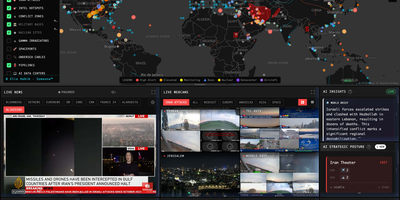
World Monitor replaces twenty or more browser tabs by fusing geopolitical, military, financial, and infrastructure signals onto a single interactive canvas built with TypeScript, Vite, globe.gl with Three.js for the 3D globe, and deck.gl with MapLibre GL for the flat map. World Monitor ingests live data from 530 upstream sources including ACLED and UCDP for conflict events, OpenSky Network for military and civilian aircraft, AISStream for vessel positions, NASA FIRMS for satellite fire detection, USGS for earthquakes, and FRED, IMF, BIS, and Finnhub for macroeconomic and market data. The Country Instability Index v8 computes real-time stress scores across 31 Tier-1 nations, while the finance radar tracks 29 stock exchanges, commodities, and cryptocurrency with a 7-signal market composite. Six specialized dashboard variants — World, Tech, Finance, Commodity, Energy, and Happy — deploy from a single codebase. AI summarization runs locally through Ollama and LM Studio integration or optionally via Groq and OpenRouter cloud providers, with Transformers.js powering browser-side inference. The platform supports 26 languages with native-language feeds and RTL layout, and provides MCP server integration for AI agent connectivity. Running on a dedicated VPS on RepoCloud with guaranteed CPU, RAM, and SSD, full root SSH access, and a browser serial console. AGPL-3.0 licensed.
Keeper
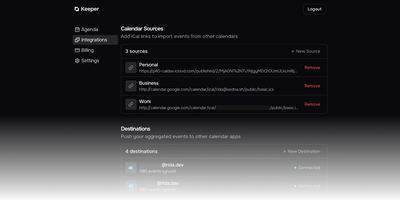
Work, personal, business, and school calendars at different providers double-book because no one system sees your real availability - Keeper solves that multi-calendar collision problem. Its pull-compare-push sync engine aggregates events from Google Calendar, Outlook/Office 365, iCloud, FastMail, any CalDAV server, or read-only iCal/ICS feeds, and pushes blocking events to one or many destination calendars so time slots align everywhere. The design is deliberately content-agnostic - it syncs timeslots, not titles or descriptions, so a personal appointment shows as busy time on your work calendar without leaking details. Sync logic is clean: events Keeper creates carry a traceable UID suffix, deletions propagate, and orphaned entries are purged automatically. A token-authenticated aggregated iCal feed combines selected calendars into one subscribable URL for Apple Calendar or Thunderbird. An optional MCP server gives AI agents read-only calendar access over OAuth 2.1 - list calendars and query events by date range, with no write capability. Built with Next.js and Bun under AGPL-3.0, the standalone Docker image bundles web, API, cron, worker, Redis, and PostgreSQL in one container, and self-hosting unlocks every Pro feature - unlimited calendars and one-minute sync intervals - for free.
InvoicePlane
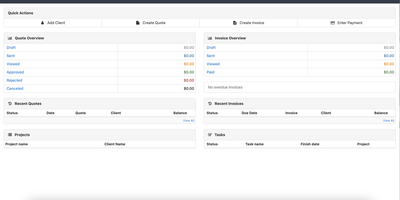
InvoicePlane manages the complete freelance and small-business billing cycle — draft quotes, convert them to invoices, automate recurring charges, collect payments through Stripe and PayPal, and generate EU-compliant eInvoice XML for automated processing by accounting systems. Deployed over 100,000 times across 193 countries, the PHP 8.2+ application on CodeIgniter 3 with MySQL or MariaDB handles everything from first estimate to final receipt. EU-compliant eInvoice generation creates machine-readable XML invoices meeting European Union standards since version 1.6.2. Recurring invoices automate periodic billing with configurable controls that pause generation when previous invoices remain unpaid. Online payment integration lets clients pay directly through Stripe, PayPal with Advanced Credit Cards, and Venmo support. The CRM-like client management module stores contact details, notes, custom fields, and complete transaction history per client. Product and task management modules let you build line-item invoices from reusable product catalogs and project tasks. Customizable PDF templates powered by mPDF support branded invoice layouts with QR codes, while email delivery via PHPMailer handles automated sending with configurable SMTP. A guest portal gives clients read-only access to view and pay their outstanding invoices and quotes. Financial reporting tracks revenue, outstanding balances, and payment history. The multi-language interface supports community translations, and multi-currency handles international invoicing. Deploy via Docker Compose with automatic database migrations. Running on a dedicated VPS on RepoCloud with guaranteed CPU, RAM, and SSD, full root SSH access, and a browser serial console. MIT licensed.
Duckle
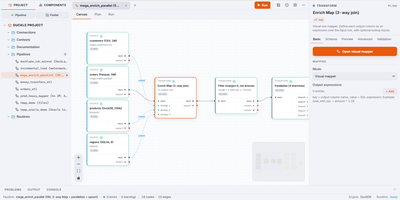
Duckle compiles visual data integration pipelines into vectorized analytical SQL executed on an embedded columnar engine, eliminating the overhead and cloud egress costs of traditional ETL infrastructure. Engineers can construct data pipelines on a drag-and-drop canvas, connecting hundreds of data sources spanning relational databases, cloud object storage, streaming event buses, vector databases, and SaaS application programming interfaces. An interactive mapping editor enables complex joins between primary data inputs and lookup streams with typed transform expressions and live sample inspections. Built-in transformation blocks execute change data capture, slowly changing dimensions, aggregation rollups, and integrated dbt models with zero row-based metering or cloud egress fees. Teams schedule headless production executions through a dedicated web console equipped with role-based access management, execution audit trails, and automated failure alerts dispatched to webhook endpoints. Embedded Model Context Protocol capabilities allow AI coding assistants to validate schema configurations, inspect execution logs, and trigger batch workflows directly through conversational commands. Workspaces store entire pipeline definitions as individual files in version control, ensuring reproducible deployments across staging and production environments. Running on a dedicated VPS on RepoCloud with guaranteed CPU, RAM, and SSD, full root SSH access, and a browser serial console. Apache-2.0 licensed.