ZoneMinder
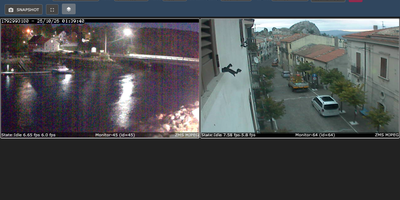
Turn ordinary IP cameras, USB webcams, and video files into a self-hosted surveillance system that watches, records, and replays everything from a browser. Every camera becomes a monitor that can capture, analyze, and record around the clock or only when motion appears. Draw detection zones in six types (active, inclusive, exclusive, preclusive, inactive, and privacy) so a visitor on the driveway raises an alarm and swaying trees do not. The Montage view tiles live feeds in selectable layouts, Cycle rotates through them, and the Watch view adds scale, stream quality, and player controls for a single camera. Events arrive in a sortable list with thumbnails, durations, and alarm scores, play back against a timeline, and can be reviewed across every camera in Montage Review. Filters automate housekeeping by archiving, emailing, messaging, uploading, copying, moving, or deleting matching events on a schedule. PTZ controls steer supported cameras. User roles limit who can view or change each monitor, a REST API and MQTT support connect other tools, and the optional event server adds push notifications and object detection through machine-learning hooks. Multi-server installs spread cameras and storage across machines, and the zmNinjaNg app brings the same views to phones and desktops. Running on a dedicated VPS on RepoCloud with guaranteed CPU, RAM, and SSD, full root SSH access, and a browser serial console. GPL-2.0 licensed.
GlobaLeaks
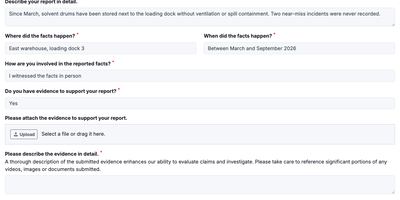
A secure drop box for tips and misconduct reports, GlobaLeaks lets organizations, newsrooms, and public institutions receive anonymous submissions and reply to the people behind them. Whistleblowers answer a questionnaire, attach files, and leave with a unique 16-digit receipt that reopens their report later for replies, comments, and the choice of whether and when to reveal their identity. Administrators build the intake form with a questionnaire builder, route reports through channels by topic or department, and host several branded whistleblowing sites from one installation in more than 90 languages. Recipients triage in a searchable inbox with labels, reminders, and customizable case statuses. Analysts, custodians, and administrators get separate roles, and the custodian role can gate access to a reporter's identity. Reports and messages are encrypted, an automatic Tor onion service gives whistleblowers an anonymous way in, two-factor authentication protects staff logins, and PGP secures email notifications. Audit logs track staff actions, and retention rules expire old reports to support GDPR duties and EU Directive 2019/1937 workflows. Running on a dedicated VPS on RepoCloud with guaranteed CPU, RAM, and SSD, full root SSH access, and a browser serial console. AGPL-3.0 licensed.
Apache Druid
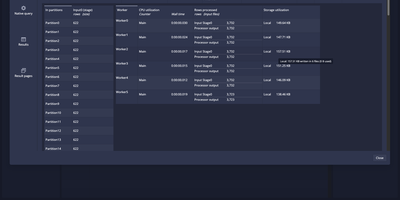
When dashboards must answer in under a second over billions of streaming events, Apache Druid is the real-time analytics database built for the job. Point a supervisor at an Apache Kafka topic or Amazon Kinesis stream and events are queryable on arrival, late data included, with exactly-once guarantees. Batch loads run as SQL: INSERT and REPLACE statements ingest files, and EXTERN reads external sources. Schema auto-discovery adds new columns and types as data lands. Joins run at ingestion or at query time. A web console gathers the daily work in one place: a tabbed Query view with EXPLAIN PLAN and query history, a Connect external data wizard, and pages for datasources, segments, retention rules, supervisors, tasks, services, and lookups. Configurable tiers place hot and cold data on different hardware. Quality-of-service settings shield priority workloads from heavy ones. Clickstream analytics, ad campaign reporting, network telemetry, application performance tracking, and IoT metrics all fit. Applications connect over the HTTP SQL API or the Avatica JDBC driver, and native JSON queries remain available for advanced needs. Running on a dedicated VPS on RepoCloud with guaranteed CPU, RAM, and SSD, full root SSH access, and a browser serial console. Apache-2.0 licensed.
Saltcorn
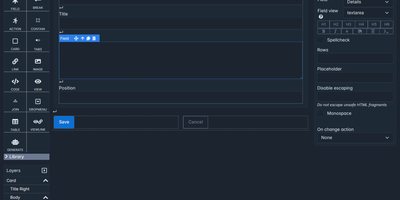
Spreadsheets and old Access databases give way to custom business apps that a team builds itself in a browser with Saltcorn, a no-code database application builder. Tables hold related records with typed and calculated fields, and CSV files import straight into them. Views start from patterns such as list, show, edit, filter, kanban, calendar, gantt, map, and chart, then take shape on a drag-and-drop canvas with a layers tree and desktop, tablet, and mobile previews. A view can embed another view, so clicking a row narrows the others and builds a cross-filtering dashboard with no glue code. Triggers react to row changes, schedules, logins, and API calls, while visual workflows branch, loop, and pause for a person's form before resuming days later. An AI copilot drafts tables, pages, and workflows from a plain-language prompt. The same views also become native Android and iOS apps with offline mode, PDF or image documents, and responsive emails. Every table, view, and page carries a minimum user role, and an auto-generated REST API exposes the data. Packs such as project management and an address book start an app from a ready template. Running on a dedicated VPS on RepoCloud with guaranteed CPU, RAM, and SSD, full root SSH access, and a browser serial console. MIT licensed.
Live Helper Chat
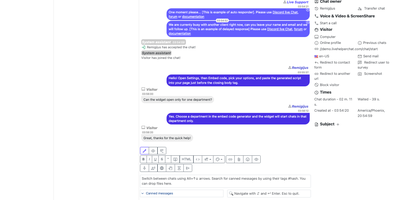
Add a live support desk to any website with Live Helper Chat, where visitors talk to operators or bots and you own every transcript. Site owners paste a generated embed snippet into any page, and the start-chat fields are customizable. Chats are routed by department, language, location, or custom attributes, wait in a priority queue, and move between agents. Operators, departments, and simultaneous chats are unlimited. Agents watch a visitor type before the message is sent, read pages visited and time on site in the online visitors list, and send proactive invitations to people who linger. Voice, video, and screen sharing run through Jitsi or Agora, and a screenshot shows what the visitor sees. Bot designers chain triggers and actions in a visual builder, call ChatGPT, Gemini, Ollama, Rasa, or any REST API, and hand the conversation to a person when needed. Incoming email becomes tickets beside chats, and extensions connect Telegram, WhatsApp, Facebook Messenger, and Twilio SMS. Staff answer from the browser, a desktop app, a Chrome extension, or iOS and Android apps. Management tools include roles, groups, statistics, transcripts, and an archive, and extensions add two-factor login, LDAP, and single sign-on. It suits banks, healthcare teams, universities, and game studios that must keep chat data in house. Running on a dedicated VPS on RepoCloud with guaranteed CPU, RAM, and SSD, full root SSH access, and a browser serial console. Apache-2.0 licensed.
Wag
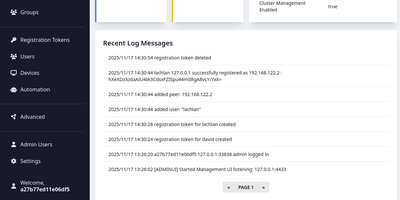
Wag is an authentication gateway for WireGuard that lets each device reach only the routes it should, and asks for a second factor before the sensitive ones open. Admins write access policies for everyone, groups, or single users, marking subnets, hosts, ports, and protocols as MFA-required, always allowed, or denied, and the most specific prefix wins, so one allowed address can sit inside a protected range. Devices join with a registration token, and the public endpoint answers with a finished WireGuard profile. Users then confirm a TOTP code, a WebAuthn security key, an OIDC single sign-on login that maps identity provider groups into Wag groups, or a PAM prompt, and repeated failures lock the account. Session lifetime and idle timeouts decide when they must prove themselves again. The browser portal lists users, devices, rules, registration tokens, and webhooks with real-time notifications, while a command line locks devices, resets MFA, and manages administrators. Webhooks turn JSON from an HR or identity system into new tokens or removed users and devices, and clients can fetch the list of guarded routes from a small API. Remote staff, contractors limited to one host, and homelabs are typical uses. When a server fails, the VPN remains reachable through clustering with witness nodes or an external etcd, and certificates arrive through ACME with HTTP-01 or Cloudflare DNS-01. Running on a dedicated VPS on RepoCloud with guaranteed CPU, RAM, and SSD, full root SSH access, and a browser serial console. BSD-3-Clause licensed.
AtomicServer
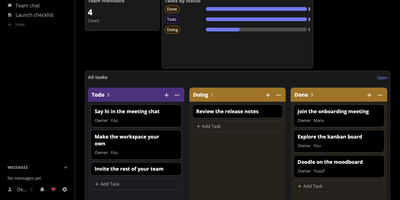
Documents, tables, files, chat, and video meetings share one workspace in atomic.place, and AtomicServer is the part you host yourself so a team can edit together while the data stays on a machine it controls. Documents are collaborative rich text with comments, icons, and cover images, tables enforce a strict schema with keyboard navigation and copy and paste, and any table can switch to a kanban, calendar, dashboard, or timer view. Templates start an issue tracker, a CRM, a project task list, or a time tracker. Live cursors, typing indicators, and presence avatars show who is working where, group channels carry attachments, replies, and search, and an infinite canvas can be drawn on together. Every write is a signed commit, so a full history is kept. Read and write rights follow the resource hierarchy, and invite links bring people in. Websites are designed in the browser, published in one click, and rolled back to any earlier version. Custom classes and properties come from the Ontology Editor, small apps are plain JavaScript screens over the same data, and AI features work with any model through OpenRouter or a local Ollama and support MCP. Typeahead search suggests results as you type. A REST API answers in JSON-AD, Turtle, or JSON-LD for automation, and export and import commands write and read JSON-AD backups. Running on a dedicated VPS on RepoCloud with guaranteed CPU, RAM, and SSD, full root SSH access, and a browser serial console. MIT licensed.
MantisBT
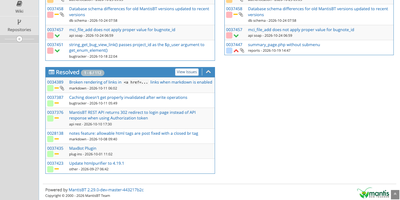
Every bug a team finds, from the first report to the day it is marked resolved, lives in one shared list in MantisBT, an open-source issue tracker. Reporters file issues with a summary, steps to reproduce, severity, and attachments, and email notifications reach the reporter, the handler, monitors, and note authors. Six access levels, from viewer to administrator, can be overridden project by project, and private projects stay hidden from users below the configured level. Administrators define their own status values, workflow transitions, and custom fields. Sub-projects inherit versions and categories from their parents, and issues link as related, parent and child, or duplicates. @mentions pull colleagues into a discussion, tags group related work, and a chronological history records who changed what. Triage works from stored and shared filters, the My View page, and summary charts, while a roadmap and changelog track what each version contains. Reporting comes through CSV and Excel export, optional time tracking with billing totals, and RSS feeds. Sign-in can use LDAP or Active Directory, scripts reach the tracker through REST and SOAP APIs, plugins extend the interface, and 50 languages are included. Running on a dedicated VPS on RepoCloud with guaranteed CPU, RAM, and SSD, full root SSH access, and a browser serial console. GPL-2.0-or-later licensed.
Admidio
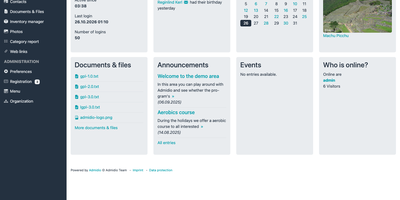
Admidio is membership management software for clubs, associations, and groups, built so that every permission follows from the roles a person holds. Organizers define roles such as board, youth team, or trainers, decide who may email or see each one, and grant module rights like managing events, editing contacts, or uploading photos with simple switches. Contact records use customizable profile fields, record relationships such as parent and child, and can be imported in bulk or exported as vCards. New members register online and administrators review each request. Events carry dates, venues, calendars, and participant lists with sign-up, and the schedule downloads as iCal. Messages go as HTML email to individuals, roles, or groups, and members also find announcements, a categorized forum, document folders with role-based access, and photo albums with e-cards. The inventory manager tracks equipment, who holds it, and its borrowing history. Optional two-factor login protects accounts, a change history can be switched on for every module, and single sign-on lets other applications authenticate against the member database. Twenty-five languages are included, the interface installs as a progressive web app, and sub-organizations can be managed from the same installation. Running on a dedicated VPS on RepoCloud with guaranteed CPU, RAM, and SSD, full root SSH access, and a browser serial console. GPL-2.0 licensed.
OpenSlides
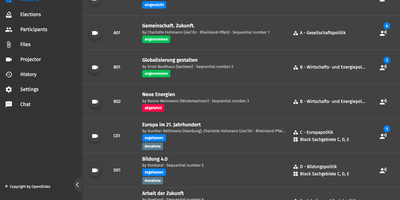
If an assembly needs motions, amendments, speaker lists, and secret ballots on one shared screen, OpenSlides is the open-source web application that runs them. Before the meeting, administrators set up committees and meetings, import participants from CSV or connect a SAML identity provider for single sign-on, email invitations with login data, and sort people into groups with freely defined rights. Members file motions in an HTML editor, attach documents, gather supporters, and send them through customizable workflows with automatic numbering by category, and amendments and change recommendations attach to specific line numbers. Motions can be forwarded to other meetings. During the session the agenda reorders by drag and drop, and every item, motion, or election gets its own speaker list with countdowns, points of order, and recorded speaking time. Votes are open, secret, or nominal and run live for present participants in voting groups, with proxy delegation, vote weighting, multiple rounds, and Yes/No/Abstain options per candidate or list. Results appear against a chosen reference value on projectors, in PDF exports, or as individual tallies. Several projectors can show the current item, a lower third for the active speaker, and live results, and Autopilot guides participants through whatever is happening. A video livestream brings in remote attendees. Afterward, motions export to PDF, CSV, or XLSX. Running on a dedicated VPS on RepoCloud with guaranteed CPU, RAM, and SSD, full root SSH access, and a browser serial console. MIT licensed.
DOMjudge
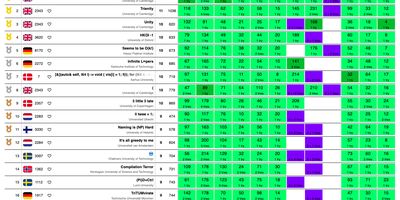
Built for ICPC-style programming contests, DOMjudge takes team submissions, judges them in a restricted sandbox, and posts a live scoreboard. Each team gets its own page. There they read the problem set, submit source code from the browser or a command line client, follow verdicts, and send clarification requests. Judges see every submission, judging run, and output diff. They verify results and rejudge a single submission or everything for a language, problem, team, or judgehost. Administrators schedule activation, start, freeze, end, and unfreeze times, import teams, categories, affiliations, and problems in bulk, and watch a traffic-light status for every team. The public scoreboard freezes for the final stretch and exports as a static HTML page. Judgehosts compile and run each solution with time and memory limits in languages such as C, C++, Java, Python, Kotlin, Go, and Haskell, with custom validators and interactive problems when a task calls for them. Balloon runners get a delivery queue. Clarifications sort into categories. Open contests accept self-registration. The Contest API and event feed connect external scoreboards, and a shadow mode compares results against another system. Running on a dedicated VPS on RepoCloud with guaranteed CPU, RAM, and SSD, full root SSH access, and a browser serial console. GPL-2.0 licensed.
Redlib
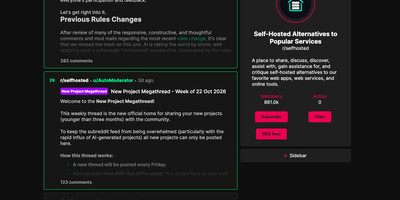
Redlib lets you read Reddit without an account, ads, or trackers, through a clean page served from a machine you control. Open any subreddit, user profile, or comment thread and the server fetches the content and relays every image and video itself, so your browser never talks to Reddit directly. Pages need no JavaScript, unless you opt in to HLS video playback with sound. Choose card, clean, or compact layouts, a wide interface, and one of more than a dozen themes, from Dracula and Nord to Gruvbox and Tokyo Night. Post and comment sorting, a search box scoped to the current subreddit, a wiki tab, and subreddit filters help you find and tame your feed. Subscriptions build a personal home page with no login. Spoilers and NSFW previews can be blurred or hidden, and an SFW-only mode blocks mature content for the whole instance. Optional RSS feeds let a feed reader follow subreddits. Links to removed posts open in a configurable undelete viewer. Operators set defaults through environment variables, add an instance banner, discourage search indexing, and route outbound traffic through an HTTP or SOCKS proxy. Settings live in a browser cookie and can be exported or imported between devices. Running on a dedicated VPS on RepoCloud with guaranteed CPU, RAM, and SSD, full root SSH access, and a browser serial console. AGPL-3.0 licensed.
Fusio
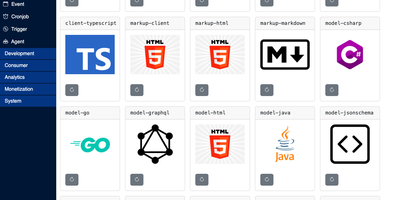
Fusio turns the data and services you already run into a managed API that partners, apps, and AI agents can actually use. The workflow starts small: add a database connection and a table becomes a REST endpoint, or proxy a remote service and route traffic between internal microservices. Each operation pairs an HTTP path with an action and a schema, so requests are validated and an OpenAPI specification plus client SDKs for major languages come out without extra effort. Custom behavior lives in reusable actions, and an AI assistant can draft actions and schemas from a plain-language prompt. Native Model Context Protocol support then offers those actions to autonomous agents as tools. Third-party developers get a self-service portal with documentation, testing tools, and their own keys. Every endpoint can be protected with scopes and rate limits. Asynchronous work runs through events, webhooks, cronjobs, and triggers. When the API becomes a product, plans, quotas, and transactions handle billing, and analytics follow usage, performance, and errors. A marketplace installs ready-made actions and apps, and the generator and test panels speed up development. Running on a dedicated VPS on RepoCloud with guaranteed CPU, RAM, and SSD, full root SSH access, and a browser serial console. Apache-2.0 licensed.
Infinite Canvas
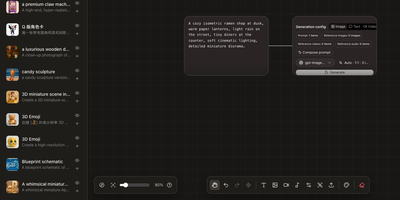
Instead of juggling a chat window, a folder of reference images, and a notebook of half-remembered prompts, Infinite Canvas puts the whole image-making process on one zoomable board. Drop in text, image, video, and generation-settings nodes, then wire them together so every result stays connected to the prompt and references behind it. Add one or several OpenAI-compatible endpoints, choose default text, image, and video models, and set image count, aspect ratio, quality, and transparent backgrounds per node. Batch results arrive as linked nodes that remember their prompt, model, and dimensions, so any of them can be retried later with the same settings. A prompt library searches seven built-in sources plus your own JSON sources and inserts the winner straight onto the board. An asset shelf keeps reusable images, clips, and audio within reach. Projects can be duplicated, exported, and synced between devices over WebDAV. Want a helper? A local Canvas Agent lets Codex read the active board and edit it through MCP, with approvals and permissions shown in a side panel. Plugins add node types, inspectors, and toolbar actions. Running on a dedicated VPS on RepoCloud with guaranteed CPU, RAM, and SSD, full root SSH access, and a browser serial console. MIT licensed.
OpenRemote
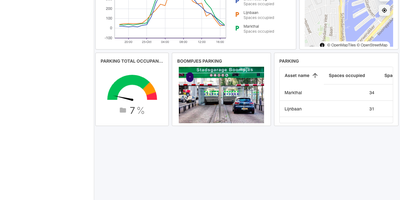
OpenRemote is an IoT platform that models every building, EV charger, solar panel, and street light as an asset in one tree, then maps, charts, and automates them from a single web dashboard. Define your own asset types, and give each attribute live readings, writable setpoints, history, and forecasts. Connect hardware with protocol agents for HTTP, MQTT, Modbus, KNX, Z-Wave, LoRaWAN, SNMP, and serial, discovering devices or importing project files where the protocol allows. Plot assets on a map with live position and heading, tint markers by attribute value, and add geofences and GeoJSON layers. Automate with When-Then rules, a drag-and-drop Flow editor, or Groovy and JavaScript rules, and run them on a schedule. Raise e-mails, push notifications, webhooks, or assignable alarms from the result. Compose shareable dashboards in Insights from nine widget types, including charts, KPIs, gauges, maps, and tables. Give each customer a realm with its own users, roles, and white-label branding. Sync edge gateways to a central instance and open them remotely through tunnels. Let devices with X.509 certificates register themselves. Read and write every attribute over REST, MQTT, or WebSocket, and let AI assistants manage assets in plain language through the MCP server. Typical projects span smart cities, building and energy management, and equipment fleets, in an interface that speaks nine languages. Running on a dedicated VPS on RepoCloud with guaranteed CPU, RAM, and SSD, full root SSH access, and a browser serial console. AGPL-3.0 licensed.
Polaris Control Plane
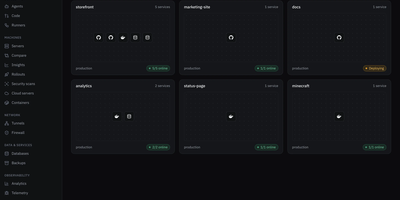
Polaris puts app deploys, file storage, team chat, tasks, and a password vault behind one login on a server you control. Deploy from a Git repository or an image with databases, volumes, environment variables, logs, a terminal, and a domain, published through your own domain, a Cloudflare tunnel, or DuckDNS. Enroll more machines over SSH with one generated command, then watch their containers and metrics and schedule backups with restore. Drive spans local disks, SFTP, S3-compatible storage, SMB, NFS, Google Drive, OneDrive, and Dropbox, with password-protected public links, expiry, and drop points for people without an account. Vault works with the Bitwarden apps and extensions and encrypts in the browser, so the server never sees your master password. Chat brings channels, threads, direct messages, voice and video calls, screen sharing, and a soundboard, while Tasks adds lists, boards, sprints, goals, and time tracking, and can hand work to coding agents over MCP. Calendar syncs both ways with Google, Microsoft 365, and CalDAV and offers booking pages. Game servers run Minecraft, ARK, and FiveM, a firewall blocks countries, networks, and bots, and one-click Marketplace installs add more apps. The interface comes in English and Spanish. Running on a dedicated VPS on RepoCloud with guaranteed CPU, RAM, and SSD, full root SSH access, and a browser serial console. AGPL-3.0 licensed.
TraceRoot
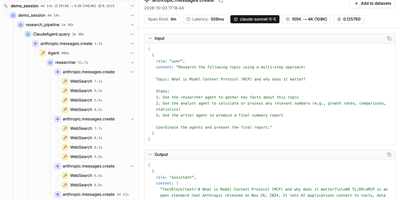
An agent run can finish without errors and still give the wrong answer, so TraceRoot traces every model and tool call, flags the production runs that missed the mark, and helps your coding agent ship verified fixes. Each run becomes a browsable call tree with inputs, outputs, latency, and cost, searchable by session or filter. Instrument with the Python or TypeScript SDK, the agent-native CLI, or any OpenTelemetry exporter, with ready integrations for LangChain, LangGraph, OpenAI Agents SDK, CrewAI, Vercel AI SDK, Mastra, and Pydantic AI. Detectors use LLM judges to score live traffic against the behavior you define and can post alerts to Slack. Judge outputs cluster into signals, then a background coding agent reads the traces and your connected GitHub code in a sandbox and recommends changes down to the commit, file, and line. Datasets, test cases, and scored eval runs compare versions so regressions surface before a release, and dashboards of widgets chart your trace data. The CLI hands your coding agent, such as Claude Code or Codex, the traces, signals, detectors, and evals to work from. Self-hosting keeps all of that trace data on infrastructure you control. Running on a dedicated VPS on RepoCloud with guaranteed CPU, RAM, and SSD, full root SSH access, and a browser serial console. Apache-2.0 licensed (core edition).
Levelrail
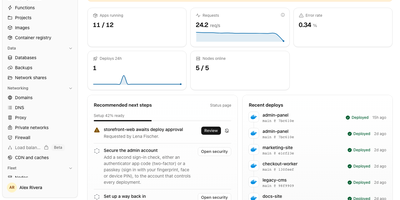
Push to git, watch the deploy go live over HTTPS, and roll back in one click, all on servers you own: Levelrail is a self-hosted platform for running apps and databases without Kubernetes. Deploys start from GitHub, GitLab, Bitbucket, or Gitea webhooks and build from a Dockerfile, Compose file, image, or framework preset such as Next.js, Go, React, or Spring Boot, with preview environments per pull request, canary and blue-green rollouts, approvals, and freezes. Embedded Caddy gives every app a domain with HTTPS: self-signed by default, Let's Encrypt with one toggle, a free sslip.io address when no domain exists, or your own uploaded certificate. Provision Postgres, MySQL, MariaDB, MongoDB, Redis, ClickHouse, and more with scheduled backups that are re-downloaded and verified, Postgres point-in-time recovery, and password rotation. Metrics with deploy markers, searchable live logs, alerts, and a public status page need no separate monitoring stack. Roughly 360 one-click templates and a Cmd+K search across apps, databases, and nodes speed up daily work. Extra servers enroll with a one-time token and a reverse-dialed agent that needs no inbound ports. Sign in with passkeys, TOTP, OAuth from 20 providers, or OIDC, then scope access with IAM policies, encrypted secrets, and a tamper-evident audit log. A CLI, HTTP API, and MCP server let scripts and coding agents deploy and roll back. Running on a dedicated VPS on RepoCloud with guaranteed CPU, RAM, and SSD, full root SSH access, and a browser serial console. Apache-2.0 licensed.