bewCloud
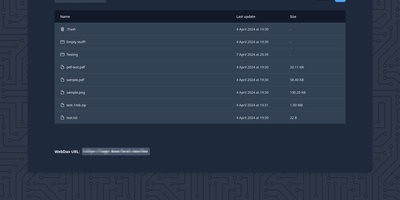
A personal cloud does not need the weight of a small enterprise suite, and bewCloud proves it by keeping files, photos, notes, contacts, and calendars in one compact service a single person can run for a whole household. The Files app stores uploads in a plain folder tree on disk, offers public sharing links, optional whole-folder downloads as zip archives, and a WebDAV endpoint that desktop tools can mount. Photos turns that same storage into a browsable gallery, while Notes keeps quick text within reach of every login. Contacts and Calendar speak CardDAV and CalDAV through a bundled Radicale server, so the calendar and address book on a phone or laptop stay in sync without another account anywhere. News collects feeds to read in the browser, and Expenses tracks spending in a small ledger beside everything else. The header shows only the apps you enable, in the order you choose, and companion desktop and mobile apps connect to the same server for people who prefer native sync. Accounts can be protected with multi-factor authentication using TOTP, passkeys, or email codes, and optional single sign-on lets a household sign in through an existing identity provider. Running on a dedicated VPS on RepoCloud with guaranteed CPU, RAM, and SSD, full root SSH access, and a browser serial console. AGPL-3.0 licensed.
Apache OFBiz
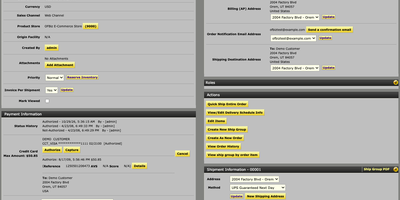
Apache OFBiz is the enterprise resource planning system a company installs when accounting, inventory, orders, and the factory floor must all agree with each other in real time. One shared data model connects the modules, so a sales order entered by the CRM team immediately reserves stock in the warehouse, schedules a pick list, and posts the receivable to the general ledger when it ships. The catalog manager handles unlimited stores, categories, and product variants with price rules and a promotion engine, and the built-in e-commerce storefront and point of sale sell from the same inventory your warehouse counts. Manufacturing plans production with bills of materials, routings, and MRP runs that propose purchase orders for missing raw materials, then costs every job as it moves through the shop. Accounting is proper double-entry: accounts receivable and payable, invoicing, payments, fixed assets with depreciation, budgets, and financial reports across multiple organizations. Facility tools manage several warehouses with lot and serial tracking, receiving, returns, and physical inventory counts, while the HR module keeps positions, contracts, expenses, and performance reviews. Party management unifies customers, suppliers, and employees into one record, REST and service APIs expose every function to integrations, and project and work effort tools track tasks against orders. Running on a dedicated VPS on RepoCloud with guaranteed CPU, RAM, and SSD, full root SSH access, and a browser serial console. Apache-2.0 licensed.
Horilla HRMS
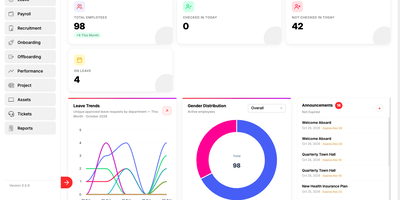
Horilla HRMS gives a growing company one home for the whole employee journey, from the first job posting to the final payslip, instead of five disconnected HR tools. Recruiters publish openings, collect resumes, and drag candidates through a Kanban hiring pipeline with interview scheduling and email built in; the moment someone is hired, structured onboarding checklists take over. Every employee record lives in one directory with documents, job history, and reporting lines, and staff help themselves through a self-service portal for leave requests, attendance views, and payslip downloads. Attendance arrives from biometric devices, mobile check-ins, or geo-fenced punches, and leave balances update themselves as approvals flow through managers. Payroll then reads that same attendance and leave data, applies your salary structures, overtime rules, loans, and statutory deductions, and generates itemized payslips in a single run. Managers set goals, run review cycles, and collect continuous feedback in the performance module, while the asset register tracks every laptop and phone issued to the team. An internal helpdesk queues employee requests with priorities and assignees, offboarding workflows make sure exits are as orderly as arrivals, and LDAP integration ties accounts to your existing directory. Running on a dedicated VPS on RepoCloud with guaranteed CPU, RAM, and SSD, full root SSH access, and a browser serial console. LGPL-2.1 licensed.
Chamilo LMS
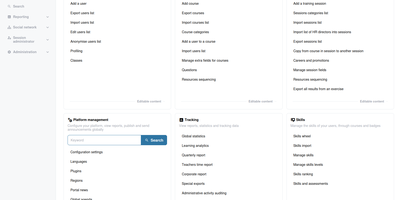
Schools, training companies, and HR teams use Chamilo LMS to publish courses, guide learners step by step, and prove completion with grades, badges, and certificates. Teachers build courses from documents, videos, and 360 media, then arrange them into learning paths that unlock in sequence and track every learner's progress. Quizzes offer more than twenty question types with randomized draws, time limits, and adaptive testing, while assignments accept submissions, support co-grading, and plug into plagiarism checks. The gradebook turns scores into certificates with QR codes, and skills frameworks record competency levels as learners advance. Sessions let one course run for many cohorts on different calendars, attendance tools handle sign-in and Qualiopi style reporting, and the course catalogue can even sell enrolments through its e-commerce module. Discussion forums, live chat, surveys, and videoconference integrations keep classes social, and SCORM, QTI, LTI, and xAPI support means existing content and external tools slot in without conversion projects. Administrators import users in bulk, connect LDAP or OAuth2 logins, and export personal data for GDPR requests; learners get all of it in more than sixty languages, including right-to-left scripts. Running on a dedicated VPS on RepoCloud with guaranteed CPU, RAM, and SSD, full root SSH access, and a browser serial console. GPL-3.0 licensed.
Shopware
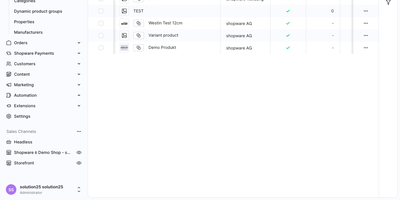
Shopware is where a merchant's products, prices, stock, orders, and customers live when the catalog must sell through a storefront, a headless front end, and marketplace feeds at once. Merchants manage products, variants, prices, stock, orders, and customers in a single administration, then publish them to any number of sales channels, from the classic storefront to comparison portals and social shopping feeds. Shopping Experiences gives the marketing team a drag-and-drop editor for landing pages, category layouts, and shop pages, so campaigns launch without a developer touching templates. The Rule Builder turns conditions about carts, customers, and products into living business logic that controls shipping costs, payment availability, advanced prices, and who qualifies for which promotion. Flow Builder acts on shop events automatically, sending order documents, changing order statuses, or calling external URLs when those rules match, removing hours of manual back-office work. Promotions support percentage and fixed discounts, voucher codes, usage limits, and validity windows, while cross-selling, reviews, tags, and configurable search help shoppers find and trust the catalog. Customer groups with net or gross pricing, multi-currency and tax handling, and unlimited languages let the same installation sell into several countries at once. The Store API can drive a custom headless storefront or a point-of-sale client while the standard storefront keeps running untouched, and 3,100+ community extensions add payment providers, shipping integrations, and marketing tools. Running on a dedicated VPS on RepoCloud with guaranteed CPU, RAM, and SSD, full root SSH access, and a browser serial console. MIT licensed.
farmOS
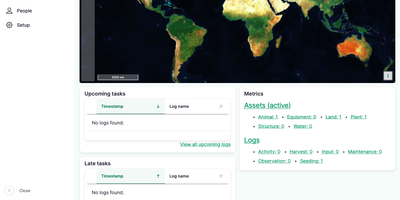
farmOS is the record book, map, and planning board for a working farm, replacing the notebook, the spreadsheet, and the whiteboard with one web app the whole crew can check from the field. The dashboard opens on a map of your land, so you click a field, a barn, or a pasture to reach every record tied to that place. Assets are the things you manage, from fields and animals to equipment and plantings, and Logs are everything that happens to them: seedings, harvests, treatments, movements, and observations, each with dates, notes, and photos. Quantities attach real numbers to those logs, such as kilograms harvested, litres applied, or hours worked, turning daily notes into yields and input costs you can compare across seasons. Quick forms make common entries fast on a phone, and upcoming or late tasks on the dashboard keep pending work from being forgotten. Plans group assets and logs around a purpose such as a grazing rotation or a season of crop production, while reports summarize the records for analysis. Crew members get their own accounts with permissions, records stay private by default, and an API plus add-on modules connect sensors and other farm tools. Running on a dedicated VPS on RepoCloud with guaranteed CPU, RAM, and SSD, full root SSH access, and a browser serial console. GPL-2.0 licensed.

Damselfly
Damselfly puts a searchable brain over a folder-based photo archive, so a library of hundreds of thousands of images stays browsable from any browser. Point it at your existing folders and it indexes everything in the background, generating thumbnails and reading IPTC keywords, EXIF camera data, and file names into one catalogue. Search returns results in under a second even across 500,000 photographs, and advanced filters narrow by date range, camera or lens model, file size, orientation, detected objects, or recognized faces. Face detection and recognition run locally and offline, so you tag a person once and Damselfly finds them in other shots without sending family photos to a cloud service. Keyword tagging writes metadata with ExifTool without re-encoding JPEGs, keeping originals byte-identical while tags travel with the files into DigiKam, Photoshop, or other tools. The Picasa-style basket collects picks from search results for download, watermarked export for social media or email, or upload to WordPress, and baskets can be personal or shared between users. Photos with location metadata appear on a map, visually similar images can be found from a single example, and untagged shots can be listed so nothing stays unlabelled. Accounts with role-based permissions let everyone browse while only editors tag or reorganize, and an optional desktop client syncs basket selections to a laptop for editing. Running on a dedicated VPS on RepoCloud with guaranteed CPU, RAM, and SSD, full root SSH access, and a browser serial console. GPL-3.0 licensed.
Znuny
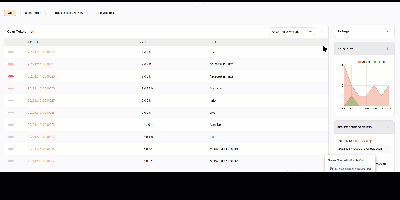
Znuny turns every customer request into a ticket with an owner, a priority, a deadline, and a complete history, no matter whether it arrived by email, phone, web portal, API, or a monitoring alert. Agents work from a dashboard that lists open and new tickets, escalations, running processes, a seven-day created-versus-closed chart, upcoming events, and logged-in colleagues. Queues route tickets to the right team, and automation handles classification, escalation, notifications, and state changes, from simple email filters up to multi-step business processes. Service level agreements are tracked against every ticket, with alerts before deadlines pass and overdue items highlighted. Customers help themselves through a self-service portal and a searchable FAQ knowledge base, while agents opening a ticket immediately see who the customer is, which company they belong to, the services they are entitled to, and their full support history. Configuration items in the CMDB link assets and services to the tickets they affect, statistics and reports turn ticket data into decisions, and calendar appointments can create tickets on schedule. Administrators shape the system with over 2,000 configuration options, dynamic fields, and granular permissions. Running on a dedicated VPS on RepoCloud with guaranteed CPU, RAM, and SSD, full root SSH access, and a browser serial console. GPL-3.0 licensed.
TYPO3
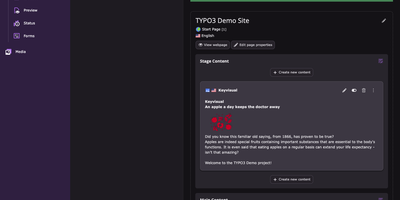
TYPO3 lets an organization run any number of multilingual websites from one installation, with editors working in a page tree and administrators deciding who may touch what. Editing happens in a context panel that slides in beside the page layout, and a guided wizard creates new pages step by step. Translations can be copied or connected to their source with change tracking, and sites can mix languages, including right-to-left scripts. Workspaces keep edits away from the live site until they are previewed and approved, while access lists, page permissions, and mounts control which parts of the tree each backend user may change. Marketing teams get a QR code module and a short URL module with hit counters and expiry dates, and redirects are created automatically whenever a page slug changes. The Form Framework builds forms with multiple file uploads in one field, CKEditor 5 text editing, and email notifications customized in the backend. A dashboard shows widgets such as recent documents and backend logins, and a Bookmark Manager groups shortcuts into large page trees. The Camino starter theme gives integrators a ready-made frontend with several color schemes, and developers shape sites further with Fluid templates and TypoScript, plus extensions from extensions.typo3.org. Running on a dedicated VPS on RepoCloud with guaranteed CPU, RAM, and SSD, full root SSH access, and a browser serial console. GPL-2.0 licensed.
SkillHub
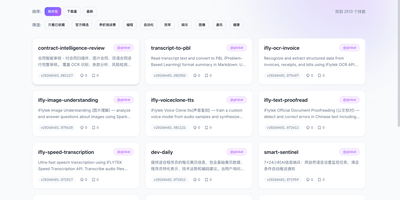
SkillHub gives teams a private, npm-style registry for AI agent skills, so a useful skill package is published once, reviewed, versioned, and installed into a compatible agent from the command line. Upload a package from the web console, the CLI, or the REST API, pick PUBLIC, NAMESPACE_ONLY, or PRIVATE visibility, and track releases with semantic versions plus tags such as beta and stable. Team namespaces keep their own members with Owner, Admin, and Member roles and publishing policies, while full-text search filters by namespace, downloads, ratings, and recency and hides whatever a user may not see. Every submission enters a review queue: namespace admins approve or reject team skills, platform admins decide promotions to the global scope, and each governance action lands in the audit log. A built-in Skill Scanner inspects published packages and shows its report on the skill page, with optional behavioral, LLM, VirusTotal, and Cisco AI Defense engines. Members can star and rate skills, follow download counts, receive notifications, and report problem packages. Skill suites bundle several skills into one versioned collection with an entry skill, scoped API tokens serve the CLI and scripts, and the interface speaks English, Simplified Chinese, Russian, and Korean. Packages live on local disk or S3-compatible storage such as MinIO. Running on a dedicated VPS on RepoCloud with guaranteed CPU, RAM, and SSD, full root SSH access, and a browser serial console. Apache-2.0 licensed.
YAFFA
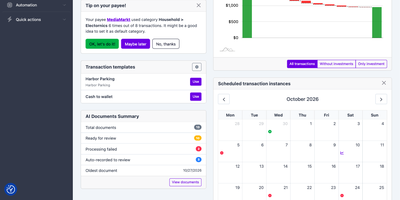
If your money is split across a bank app, a brokerage portal, and a half-abandoned spreadsheet, YAFFA, a self-hosted personal finance application, gathers it into one ledger with budgets, scheduled transactions, and forecasts. Record withdrawals, deposits, and transfers across unlimited accounts, and split a single supermarket receipt across categories so it lands in both Food and Household. Suggestions surface your most-used accounts and payees, and each payee's default category fills in automatically. Define rent, salary, or a loan payment once as a scheduled transaction; it appears on the dashboard calendar, enters with one action or records itself, and feeds the forecast. Import bank history from CSV or QIF files with rules for country- and bank-specific formats, and review every row before it is recorded. Optional AI document processing turns a receipt, invoice, or forwarded email into a draft transaction with payee, date, amount, and line items, using your own OpenAI or Gemini key and self-hosted Tesseract OCR for images. Accounts in different currencies roll up into your default currency using daily rates from the free Frankfurter service. Investments track gain and loss, with optional daily prices from Alpha Vantage. The dashboard summarizes accounts and upcoming schedules, the cash flow report can look ahead with a forecast, and Find Transactions filters history by payee, category, tag, or date. Running on a dedicated VPS on RepoCloud with guaranteed CPU, RAM, and SSD, full root SSH access, and a browser serial console. MIT licensed.
Nautobot
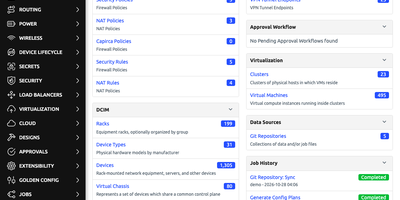
From the first rack to the last circuit, Nautobot is the open-source network source of truth that records what your network should look like and runs automation against it. Built-in models cover locations, racks, devices, interfaces, cables, VLANs, VRFs, IP prefixes, circuits, and contacts, so one searchable record replaces the spreadsheet and the wiki. Teams encode their own standards with custom fields, user-defined relationships, computed fields, and validation rules. Config contexts attach JSON or YAML data, such as syslog servers, to devices by location, role, platform, or tag. Jobs run your own automation code from the web UI, REST API, or command line, on a schedule, or through hooks when an object changes, with approvals and logs built in. Query the data over REST or GraphQL, and let the GraphiQL editor autocomplete a device and interface query you can save inside Nautobot. When an object is created, updated, or deleted, webhooks notify outside systems, with Jinja2-templated bodies and HMAC SHA-512 signatures. Git repositories can carry export templates, Jobs, and config contexts too, so YAML data and Jinja2 templates get pull request review before Nautobot syncs them. Open-source Apps add Golden Configuration for config backup, compliance, and remediation, Device Lifecycle for hardware tracking, SSoT for syncing other systems, and ChatOps. Object permissions and change logging keep a shared instance auditable. Running on a dedicated VPS on RepoCloud with guaranteed CPU, RAM, and SSD, full root SSH access, and a browser serial console. Apache-2.0 licensed.
ntopng
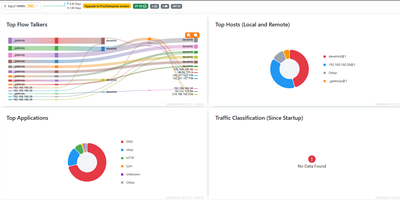
Network traffic stops being a mystery once ntopng names the hosts, applications, and protocols behind every flow, live in your browser. To find the host saturating an uplink, open the dashboard, which ranks top talkers, countries, autonomous systems, and protocols beside historical charts. To see what a suspicious host is contacting, open its page for traffic, ports, DNS queries, TLS details, and visited sites, plus a map of its conversations. Deep packet inspection recognizes applications such as Facebook, YouTube, and BitTorrent, so charts name the app behind the bytes instead of relying on port numbers alone. The console reads packets from a SPAN port or TAP and NetFlow, sFlow, or IPFIX records from routers and switches through nProbe, so it can cover a single switch or many remote sites. Behavioural checks raise alerts for flows, hosts, and interfaces and send them to email, Discord, Telegram, or webhooks. Active monitoring probes remote hosts over ICMP and HTTP/S, and network discovery lists the devices on your local network. A REST API and Lua scripting pull statistics into your own tools and add custom checks. Running on a dedicated VPS on RepoCloud with guaranteed CPU, RAM, and SSD, full root SSH access, and a browser serial console. GPL-3.0 licensed.
iTop
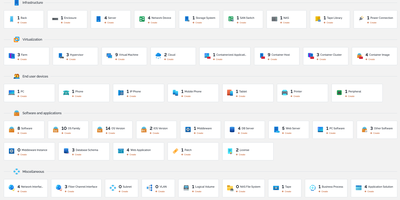
Keep every ticket tied to the servers, applications, and contracts it affects with iTop, an IT service management platform that joins a configuration management database (CMDB) to a helpdesk. Agents work user requests, incidents, problems, known errors, and changes through ITIL-style life cycles, and SLA targets for time to own and time to resolve move a ticket to an escalated status when a deadline passes. The CMDB models infrastructure, virtualization, end-user devices, software, and business applications, and its impact analysis graph shows what a failing server would take down. A service catalog of services and subcategories, backed by customer and provider contracts, feeds a user portal where employees and customers submit requests from a mosaic, tree, or list, follow progress, add comments and attachments, and reopen resolved tickets. Administrators bulk-load inventory from CSV, run consistency audits to catch data-quality problems, synchronize records from external sources, and connect other tools through REST web services. Sign-in works with local accounts, LDAP, or CAS, with optional two-factor authentication through authenticator apps, email codes, or recovery codes, and the console offers dark, high-contrast, and color-blind-friendly themes. Running on a dedicated VPS on RepoCloud with guaranteed CPU, RAM, and SSD, full root SSH access, and a browser serial console. AGPL-3.0 licensed.
Magento Open Source
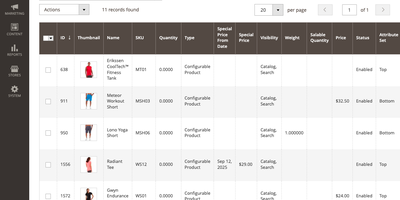
One admin panel, many storefronts: Magento Open Source is a free ecommerce platform for selling online under separate domains, category trees, languages, and currencies from a single install. Catalog managers create simple, configurable, grouped, virtual, bundle, and downloadable products and organize them with categories and attribute sets. Merchandisers assemble CMS pages, blocks, and product and category content in Page Builder by dragging rows, columns, tabs, banners, sliders, videos, and product lists onto a visual stage. Catalog price rules and cart price rules with coupon codes drive promotions, and customer groups such as Wholesale and Retailer can get targeted discounts and their own tax class. Shoppers browse the Luma storefront theme and check out as guests or with accounts. Staff then take each order through invoice, shipment, and credit memo, while Multi-Source Inventory tracks stock across warehouses, stores, and drop shippers. Built-in sales, customer, and product reports show what sells, and Login as Customer lets permitted staff view the storefront as an opted-in shopper sees it. Import and export tools move products and customers in bulk, and the REST and GraphQL APIs let ERPs, shipping tools, and headless front ends read and write store data. Running on a dedicated VPS on RepoCloud with guaranteed CPU, RAM, and SSD, full root SSH access, and a browser serial console. OSL-3.0 licensed.
Apache SkyWalking
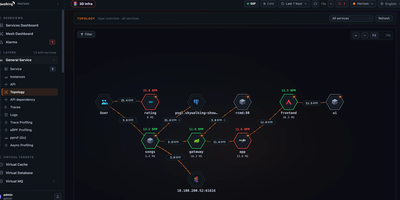
An open-source application performance monitoring platform for microservices, Kubernetes, and service meshes, Apache SkyWalking draws the live service map and ties slow requests to their traces, logs, and metrics. Agents cover Java, .NET Core, PHP, Node.js, Go, Lua, Rust, C++, browser JavaScript, and Python, and OpenTelemetry, Zipkin, Prometheus, Zabbix, and Telegraf data can be ingested too. Start at the service topology map, follow a request through the trace waterfall, then drill into the instance and its API dependencies. When the cause is inside the code, trace profiling, async-profiler, Go pprof, eBPF, and network profiling render flame graphs and process graphs in the same console. The Rover eBPF agent profiles Kubernetes workloads for CPU and network problems, and Istio and Envoy service meshes, including Istio Ambient, report into the same dashboards. Alarm rules target a service, deployment, or API, and alarms and telemetry can be forwarded to third-party systems. Metric and log analysis rules hot-update at runtime without a restart, and a live debugger shows what each rule stage receives and produces. An AI assistant answers plain-language questions with charts, topology, and traces from live data, using an OpenAI-compatible or Amazon Bedrock model you configure, and an MCP connection serves your own AI client. Running on a dedicated VPS on RepoCloud with guaranteed CPU, RAM, and SSD, full root SSH access, and a browser serial console. Apache-2.0 licensed.
Orchard Core
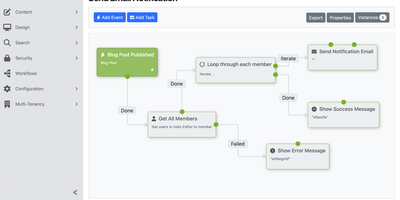
Content types, media libraries, workflows, roles, search, and a GraphQL API all ship in the box with Orchard Core, a free CMS and application framework that hosts many separate websites from one install. Editors build content types in the admin by combining parts and fields, with no migrations to write, and preview an item live before publishing it. Designers adjust page HTML safely with Liquid templates, and developers add their own modules. Multi-tenancy runs many isolated sites from one deployment, each with its own content, users, settings, and theme, and a setup screen lets you pick a recipe and database for each site. Media uploads can be resized on the fly and stored on remote providers, and a visual workflow editor automates content approvals, webhooks, and form submissions. A typed GraphQL API feeds headless sites and single-page applications, and custom SQL or Lucene queries can be exposed as endpoints. Roles and fine-grained permissions decide who can do what, OpenID Connect handles external sign-in, and two-factor authentication protects accounts. Content and the admin interface can be localized, and deployment plans move content and configuration from staging to production. SQLite works out of the box, SQL Server, MySQL, MariaDB, or PostgreSQL can be chosen at setup, and the official Docker image starts a site with one command. Running on a dedicated VPS on RepoCloud with guaranteed CPU, RAM, and SSD, full root SSH access, and a browser serial console. BSD-3-Clause licensed.
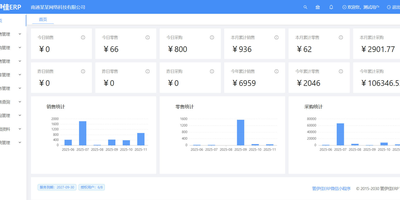
jshERP
jshERP lets a small or midsize business, from a shop to a wholesaler, run purchasing, stock, sales, and money from one place instead of scattered spreadsheets. A purchase requisition becomes a purchase order, then a receipt that raises stock. A sales order becomes an outbound delivery that lowers it, or a purchase order when more must be bought in. Retail sales, returns, and serial-number scanning run through the same stock. Products sit in a category tree up to three levels deep, with barcodes, images, multiple attributes, customer-specific prices, and a base unit plus up to three secondary units. Transfers move goods between warehouses, assembly and disassembly merge and split products, and shelf locations record where each item sits. Other receipts and issues cover opening stock, stocktake corrections, and scrapped goods, while moving-average cost keeps valuation current. Finance logs income, expenses, receipts, payments, transfers, and prepayments against settlement accounts, and customer and supplier reconciliation reports export to Excel. Reports track stock levels, low-stock alerts, in-out statistics, and purchase and sales summaries, and the home page totals yesterday's and retail sales. Roles limit access down to single menus and buttons and can mask prices. A tenant model runs several businesses on one installation, and the interface switches among 73 languages. Running on a dedicated VPS on RepoCloud with guaranteed CPU, RAM, and SSD, full root SSH access, and a browser serial console. Apache-2.0 licensed.