Agentic Resource Registry
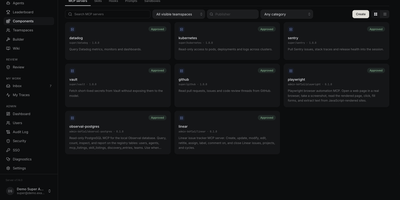
Every team building with coding agents has the same drawer problem: the best Skill, MCP server, or agent file lives in one person's repo, undocumented, while three colleagues rebuild it from scratch. Agentic Resource Registry is the internal catalog that ends the duplication, a self-hosted registry where your organization publishes Skills, MCP servers, hooks, prompts, agent files, and sandboxes in one searchable place. Browse by teamspace, publisher, category, or harness and see at a glance what each resource supports and how often it has been pulled. Authors build agent files in a four-step builder with a live summary and draft readiness checks, then submit them into a review queue where admins inspect the full prompt and version diffs before approving. Forking an approved release creates your own draft with pinned components, and reviewers can compare it against upstream line by line. The companion CLI installs any approved resource into Claude Code, Cursor, Codex, Kiro, Copilot, OpenCode, Pi, and more, generating the correct config for each harness automatically. Approved resources are also discoverable over the open ARD standard, so a running agent can hand part of its task to another approved agent or a remote A2A service. Running on a dedicated VPS on RepoCloud with guaranteed CPU, RAM, and SSD, full root SSH access, and a browser serial console. Apache-2.0 licensed.

Halcyon Video
Friday night, 1994: you are standing in the Action aisle deciding what the weekend looks like, except the shelves are stocked with your own library and the store lives in your browser. Halcyon Video rebuilds that ritual in 3D around your Jellyfin, Plex, or Emby server, turning libraries into aisles and genres into signed sections you can walk. Pick a case off the shelf and it comes up in your hand at true rental proportions; flip it over for the synopsis, cast, runtime, ratings, and a technical table read from the actual file. Seasons arrive as box sets, popular titles sit deeper on the shelf, and the clerk behind the counter searches by title, director, or genre and recommends from your catalog and watch history. Carry an armful to the checkout and she bags them in plastic that folds around the cases, receipt and all. A RomM connection opens a games department with platform-correct cartons and clamshells, while Jellyseerr requests appear as discovery cases you can order in-store. Drive it from the couch with a TV remote, gamepad, keyboard, or phone, or let attract mode tour the floor past the ceiling CRTs. Running on a dedicated VPS on RepoCloud with guaranteed CPU, RAM, and SSD, full root SSH access, and a browser serial console. GPL-3.0 licensed.
LastSignal
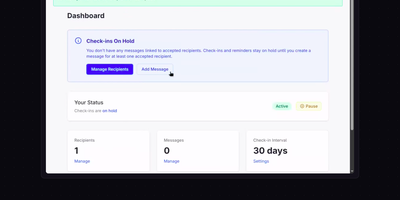
Write the messages today that the people you love would need if you suddenly could not send them, and LastSignal holds them encrypted until silence says it is time. The system emails you a check-in on a schedule you set; answer it and nothing happens, which is exactly the point. Miss one and reminders follow at fixed intervals, and the final reminder can ping a trusted contact who is able to pause the countdown, buying time when a hospital stay or a lost phone is the real story. If nobody responds, your messages are delivered by email to each recipient, who decrypts them with their own passphrase; the server never holds plaintext, so even the person running it cannot read what you wrote. You can stagger access with a per-recipient delay, so one person reads their message the day it arrives while another waits the number of days you chose. Automations can report in through a keep-alive token endpoint instead of email, for machines that prove you are around by staying alive themselves. Timings for check-ins, reminders, and the trusted-contact pause are all configurable per account. Running on a dedicated VPS on RepoCloud with guaranteed CPU, RAM, and SSD, full root SSH access, and a browser serial console. MIT licensed.
Chaptarr
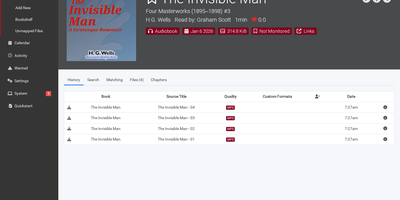
One library for the books you read and the books you listen to: Chaptarr manages audiobooks and eBooks side by side, so the same title can live on your server as a chaptered M4B and an EPUB without two separate apps fighting over it. It knows the difference between editions and narrators, which means a dramatized production, an unabridged reading, and the print text can coexist as first-class versions of one work. Multi-part releases and multi-file recordings are handled as single books, and MP3 audiobooks can be converted into one chaptered M4B with chapters preserved or inserted where they are missing. Separate root folders keep audiobooks and eBooks apart, or place eBooks alongside their audio twins; either way, matching uses file tags, folder names, and release metadata to attach files to the right book automatically. Series are organized for you, metadata profiles control which languages belong in your library, and flexible renaming tokens produce filenames that read the same way a human would shelve them. Custom quality profiles per library drive automatic upgrades when a better release appears, and the standard download clients and indexer integrations from the *arr family plug straight in. Running on a dedicated VPS on RepoCloud with guaranteed CPU, RAM, and SSD, full root SSH access, and a browser serial console. GPL-3.0 licensed.
OpenFlowKit
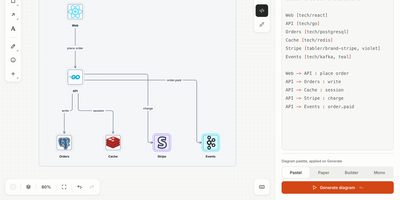
Draw it, write it as code, or hand it to your AI agent: OpenFlowKit is an open-source diagram canvas where the picture and the text behind it are always the same diagram. Drag shapes on the canvas or type a few forgiving lines, and each side regenerates the other as a single undo step. Ten diagram types share that one language: architecture with C4 views and cloud icons, sequence, flowchart, entity-relationship, state, class, mind maps, git graphs, charts, and wireframes. Paste Mermaid, Structurizr, or D2 and it converts into editable shapes, and Copy as Mermaid sends a flowchart or sequence back out for your README. Paste a GitHub repository instead and Map mode draws its architecture for you, with every arrow citing the exact file and line behind it, and a CLI that maps a local checkout for private repos. Connect Claude Code, Cursor, or any MCP client and the agent draws on your live canvas, restyles what is there, and screenshots its own work to check it. A built-in assistant works with your own key from Claude, OpenAI, Gemini, Groq, Mistral, OpenRouter, or a local Ollama, and exports cover PNG, SVG, PDF, JSON, and animated SVG, GIF, MP4, or WebM you can drop into documentation. Running on a dedicated VPS on RepoCloud with guaranteed CPU, RAM, and SSD, full root SSH access, and a browser serial console. MIT licensed.
Whisper Money
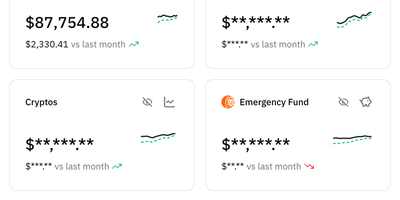
Ditch the spreadsheet for good: Whisper Money is a privacy-first personal finance app you host yourself to see exactly where your money goes, without your data being sold or profiled for ads. Connect multiple bank accounts in one place, fill them by hand or CSV import, and watch transactions categorize themselves automatically. Automation rules handle the repetitive sorting: rent, subscriptions, and transfers land in the right buckets every time. Brokers and exchanges including Indexa Capital, Coinbase, Binance, Bitpanda, Wise, and Interactive Brokers connect with your own API keys, so investments sit beside everyday spending. Optional open banking through EnableBanking can pull a year of movements and keep them current, and it stays switched off until you configure it. AI features suggest categories and rules and summarize your stats reports, and you choose the provider: Gemini by default, or OpenAI, Anthropic, Groq, DeepSeek, Mistral, any OpenAI-compatible endpoint, or a local Ollama server so nothing leaves your infrastructure. Spending pattern insights turn raw transactions into an honest picture of your habits, month after month. Running on a dedicated VPS on RepoCloud with guaranteed CPU, RAM, and SSD, full root SSH access, and a browser serial console. CC BY-NC 4.0 licensed.

TaskView
Your team's work lives in boards, sprints, and deadlines, and TaskView keeps all of it on infrastructure you control instead of a vendor's cloud. Projects break down into lists, tasks, and nested subtasks with priorities, tags, deadlines, and assignees, arranged on custom Kanban boards whose statuses you define yourself. A dependency graph shows which tasks block which, sprints organize iterations, and recurring tasks regenerate on schedule so weekly rituals never need manual recreation. Built-in time tracking separates billable from non-billable hours, and analytics turn that data into workload reports, productivity views, and income and expense summaries. Multiple organizations share one instance with invites, granular role permissions, and real-time updates, while SAML 2.0, OpenID Connect, and SCIM provisioning plug into your existing identity provider. GitHub and GitLab integrations connect development work to the board, signed webhooks push events into your other systems, and scoped API tokens plus a TypeScript client make automation safe to hand out. An MCP server lets AI assistants search projects, create and update tasks, and manage statuses within the exact permissions you grant. Running on a dedicated VPS on RepoCloud with guaranteed CPU, RAM, and SSD, full root SSH access, and a browser serial console. TaskView Source-Available License licensed.
Yubal
Paste any YouTube Music album, playlist, or track link into Yubal and get back a clean, fully tagged music library instead of a pile of video files. Tracks land in Artist and Year-Album folders with numbered filenames, cover art, and synced .lrc lyrics files, while playlists become M3U files that reference the album copies so a song appearing in ten playlists is stored exactly once. Subscribe to playlists and a cron-driven scheduler pulls new tracks into your library automatically on the schedule you set. The web interface shows real-time progress and a job queue that works on mobile, with automatic retries on failed downloads and graceful cancellation when you change your mind. Lyrics come from lrclib.net with a YouTube Music fallback, ReplayGain tags keep playback volume consistent across tracks and whole albums, and audio arrives as opus, mp3, or m4a, downloaded directly when possible and transcoded otherwise. Finished libraries drop straight into Navidrome, Jellyfin, or Gonic, and a browser extension for Firefox and Chrome queues downloads or subscriptions from the YouTube page you are already browsing. Optional cookie support unlocks private playlists, Liked Music, and age-restricted content, and a companion CLI downloads and inspects metadata from the terminal. Running on a dedicated VPS on RepoCloud with guaranteed CPU, RAM, and SSD, full root SSH access, and a browser serial console. MIT licensed.

Doory
Design posters, social posts, presentations, invitations, resumes, thumbnails, and business cards in your browser with Doory, a self-hosted design editor that keeps your files, fonts, and brand assets on your own server. Start from one of ten starter templates or a blank canvas, then place text, shapes, lines, arrows, emoji, stickers, QR codes, and roughly 27,500 built-in icons anywhere on the page. Photo tools cover cropping, masks, filters, in-browser background removal, and 2x to 4x image upscaling, with stock photo search through Unsplash or Pexels. Layers can be renamed, locked, hidden, grouped, and reordered, while guides, snapping, rulers, per-page sizes, and format resizing keep multi-page designs tidy. Animations add 27 enter and exit effects, 12 emphasis motions, and 16 page transitions, plus Creative Commons music loops and sound effects, so decks can be presented live with speaker notes or exported as MP4, WebM, or GIF. Share links grant view, comment, or edit access with an optional password, and collaborators can pin comments, co-edit in real time, and roll back through version history. Brand kits store your colors, fonts, and logos so recurring posts stay on-brand, and exports cover PNG, JPG, SVG, and print-ready PDF with bleed and crop marks. An optional MCP server lets AI assistants create and fill designs from prompts, including bulk template filling from spreadsheet-style rows. Running on a dedicated VPS on RepoCloud with guaranteed CPU, RAM, and SSD, full root SSH access, and a browser serial console. Attribution Assurance License licensed.
JobOps
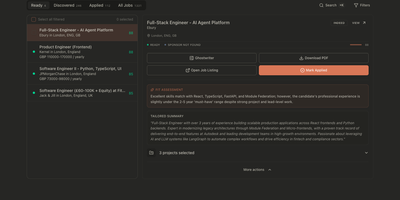
Job hunting usually means twenty open tabs, five versions of the same CV, and a spreadsheet you stopped updating in week two; JobOps replaces that sprawl with one self-hosted pipeline that searches LinkedIn, Indeed, Glassdoor, Adzuna, Hiring Cafe and more than ten other boards from a single screen. Every role it finds gets a fit score from 0 to 100 against your profile, so you review a ranked shortlist instead of doomscrolling listings, and sponsorship checks flag which UK roles can actually support a visa before you invest an evening in them. For the roles worth chasing, it rewrites your CV against the exact job description and exports a polished PDF locally or through Reactive Resume, while deliberately never auto-applying, because recruiters spot mass automation and quietly blacklist it. Once you apply, connecting Gmail lets it read recruiter replies for you: interview invitations move the application to Interviewing, rejections close it out, and uncertain matches wait in an inbox with a suggested job attached for one-click confirmation. You choose the brain behind the scoring, OpenAI, Gemini, OpenRouter, or a local model through Ollama or LM Studio, and webhooks, scheduled backups, analytics and multi-user workspaces round out the tracking. Running on a dedicated VPS on RepoCloud with guaranteed CPU, RAM, and SSD, full root SSH access, and a browser serial console. AGPL-3.0 licensed.
Gibbon
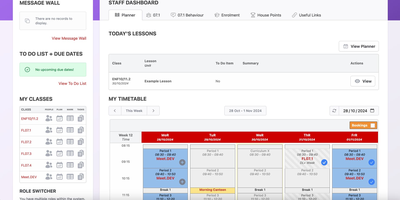
Running a school means juggling lesson plans, timetables, attendance, behaviour notes, and grades all at once; Gibbon gives teachers, students, parents, and administrators one shared web system for that daily work. Teachers build lessons from reusable Smart Blocks, assemble them into units with learning outcomes, set and collect homework online, and grade the results in a colour-coded markbook that stays linked to every class. The timetabling engine builds schedules from reusable day structures, ties them to real calendar dates, handles exceptions, books rooms and facilities, and shows every student and teacher exactly where they should be. Attendance can be taken by form group, class, or individual student, with future absences recorded ahead of time and reports ready for emergencies or truancy follow-up. Behaviour records log the good alongside the bad using your school's own descriptors and severity levels, notify form tutors when something needs attention, and surface patterns across a student's history. Each student's profile pulls timetable, attendance, behaviour, library, and assessment information into one page, while activities sign-ups, a school-wide resource library, and departmental scope-and-sequence views keep the wider community connected. Because every module can be switched on or off per role and extended with community modules, the same platform fits a small primary school and a large secondary school in 26 languages. Running on a dedicated VPS on RepoCloud with guaranteed CPU, RAM, and SSD, full root SSH access, and a browser serial console. GPL-3.0 licensed.
Microcks
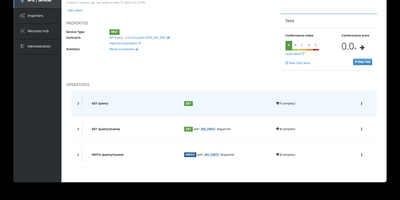
Microcks turns your API specifications into living mocks and contract tests, so teams can develop and verify against an API long before the real implementation exists. Feed it OpenAPI, AsyncAPI, GraphQL schemas, gRPC Protobuf files, Postman collections, or SoapUI projects, and it immediately publishes mock endpoints that answer with realistic examples drawn from the specification itself. Dispatching rules route requests by path, query parameters, headers, body content, or XPath and Groovy expressions, while content negotiation and templating functions shape each response to look convincingly real. Event-driven APIs get the same treatment, with AsyncAPI mocks that publish messages to Kafka topics or WebSocket channels your consumers can subscribe to during development. When an implementation shows up, contract tests replay the recorded expectations against the live service and report every mismatch, down to the exact request and response that failed. Run those tests from the web interface, on a schedule, or from CI pipelines with the command-line client, and wire importers to rescan your Git repositories so new specification versions appear as mocks automatically. The built-in hub adds one-click samples and reusable API packages, giving a new team a stocked repository of mockable services within minutes of the first login. Running on a dedicated VPS on RepoCloud with guaranteed CPU, RAM, and SSD, full root SSH access, and a browser serial console. Apache-2.0 licensed.
MediaMTX
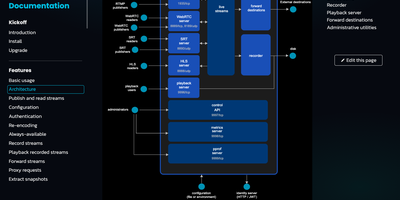
MediaMTX sits between cameras and viewers as a self-hosted live media server, taking in video and audio streams over one protocol and handing them back out over another, so one IP camera feed can end up playing in a browser, a phone app, and a recording archive simultaneously. Publish with FFmpeg, GStreamer, OBS Studio, a browser, or a Raspberry Pi camera over RTSP, RTMP, SRT, WebRTC, Media-over-QUIC, HLS, MPEG-TS, or RTP, and read it back on any other protocol without a transcoding pipeline. Run dozens of camera feeds side by side, each on its own path, and keep every path available even while its publisher is offline. Record everything to disk in fMP4 or MPEG-TS as it streams, then play recordings back later through the same server instead of shipping files around. Authenticate publishers and viewers with built-in users, an external HTTP check, or JWT, and use the control API plus Prometheus metrics to wire the server into the rest of your monitoring stack. Forward streams to other servers, proxy cameras behind NAT, and fire hook commands whenever a client connects, publishes, or disconnects, so a doorbell camera can trigger a snapshot or an alert as it starts streaming. Reload the configuration while clients stay connected, and tune everything from the same mediamtx.yml file or environment variables, with no database or runtime dependencies to babysit. Running on a dedicated VPS on RepoCloud with guaranteed CPU, RAM, and SSD, full root SSH access, and a browser serial console. MIT licensed.

Galene
Galene is a self-hosted video conferencing system that runs full meetings, lectures, and tutorials in the browser while asking remarkably little of the server it runs on. Every group gets its own page with video tiles, a user list, and a chat pane, and participants join from desktop or mobile browsers with nothing to install. Presenters share a screen or individual windows, stream a video or audio file straight from disk, and switch to blackboard mode when a slide needs resolution more than frame rate. Moderators can warn or remove participants and lock the group, raise-hand status keeps question queues orderly, and anyone can blur their background or exchange files directly with peers. Groups are simple configuration files: set public or private rooms, passwords or login tokens, client limits, and expiry windows, then create users with moderator or presenter privileges using the galenectl command. Automatic subgroups spin up identical breakout rooms on demand, the pattern its author uses to supervise forty students working in pairs during computer science practicals. Calls stay smooth on poor networks because the server adapts video quality per participant, recovers lost packets, and relays media through its built-in TURN server when firewalls block direct paths. Running on a dedicated VPS on RepoCloud with guaranteed CPU, RAM, and SSD, full root SSH access, and a browser serial console. MIT licensed.

Mbin
Mbin is a federated community platform that mixes magazine-based link aggregation and threaded discussion with short-form microblogging, so one self-hosted instance works as both a Reddit-style forum and a Mastodon-style social feed. Members create magazines around topics, then post links, articles, photos, and videos into them, vote submissions up or down, boost the best ones to their followers, and argue the details in threaded comment trees. The microblog stream sits beside the magazines for quick status posts, and a combined view blends both content types into a single feed you can sort by hot, new, active, or most commented. Because the whole platform speaks ActivityPub, your magazines and users federate with Mastodon, Lemmy, Pixelfed, Pleroma, and PeerTube, and follows, replies, and votes travel across instance boundaries in both directions. Magazine owners appoint moderators, pin threads, and handle reports, while instance admins control registration, federation allow and block lists, and which remote servers the instance talks to. Readers shape their own view with subscriptions to magazines, people, and tags, plus personal blocks for users, magazines, and entire instances. A documented REST API with OAuth 2.0 access lets mobile clients, bots, and integrations read and publish content, and Service-type accounts are supported for automated posters. Running on a dedicated VPS on RepoCloud with guaranteed CPU, RAM, and SSD, full root SSH access, and a browser serial console. AGPL-3.0 licensed.
uMap
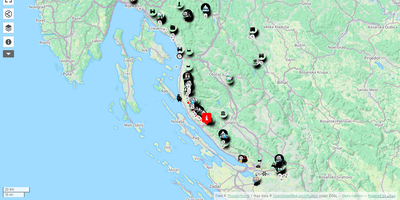
uMap turns OpenStreetMap into a personal mapmaking canvas: draw markers, lines and polygons in the browser, layer your own data over detailed street maps, and embed the finished map in any website. Each map is built from data layers you can style independently, choosing marker shapes, colors, icons and popups that show names, descriptions, photos or videos when clicked. You can sketch points of interest by hand or batch import whole datasets in GeoJSON, GPX, KML or OSM format, then let clustering group dense markers or a heatmap reveal where things concentrate. Backgrounds come from a choice of OpenStreetMap based tile layers, so the same map can sit on a street plan or a cycling map depending on the audience. Finished maps embed with a snippet of HTML, stay interactive inside the page, and can be downloaded or shared by link with read only access for viewers. Permissions decide who owns, edits or only views each map, and with real time collaboration switched on, several editors can draw on the same map simultaneously and watch each other's changes appear live. A slideshow mode turns layers into a guided story, stepping viewers through places in order with text and media attached to each stop. Running on a dedicated VPS on RepoCloud with guaranteed CPU, RAM, and SSD, full root SSH access, and a browser serial console. AGPL-3.0 licensed.
GoCD
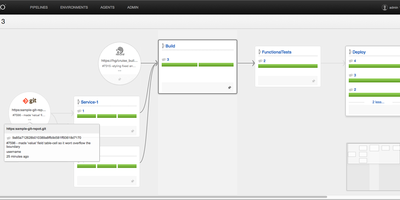
GoCD treats delivery as a pipeline you can see: every commit enters a sequence of stages, passes or fails in the open, and travels from first build to production deployment along one visible, traceable path. Stages split work into jobs that run in parallel on a fleet of agents, so unit tests, integration suites, packaging, and security scans finish together instead of queueing behind each other. Pipelines connect with fan-in and fan-out dependencies, meaning a release pipeline waits for every upstream component to pass before it assembles them, and one library build can feed a dozen services. The value stream map draws that whole web on one screen, from the triggering commit through every stage to deployment, and any run can be compared with another to spot exactly what changed. Materials watch Git, Subversion, or Mercurial repositories and start pipelines on new commits, while artifacts produced by one stage are fetched, versioned, and promoted by the stages after it. Environments group pipelines and agents so test and production stay isolated, resources tag agents by capability, and elastic agents appear on Docker, Kubernetes, or cloud hosts only while work exists. Pipeline definitions can live in YAML or JSON inside a repository, changing through code review like the software they deliver, and templates keep repeated release patterns consistent across teams. Running on a dedicated VPS on RepoCloud with guaranteed CPU, RAM, and SSD, full root SSH access, and a browser serial console. Apache-2.0 licensed.
NodeDR Restaurant POS
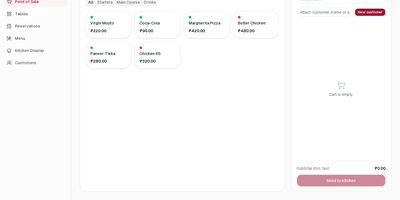
OrderRestro runs an entire restaurant from one server on the premises: tills take orders, the kitchen watches tickets arrive, tables fill and clear, and the books close at night, all without a subscription, and it keeps working when the internet drops. Billing covers dine-in and takeaway with merged bills, discounts, gift cards, tips, and refunds, and it taxes under India GST, US sales tax, EU VAT, or Spanish IVA, with UPI QR payments confirmed by an audible alert. A visual floor plan follows every table while reservations and a waitlist manage the door, and guests scan a table QR code to order, add modifiers, call the waiter, or request the bill. Kitchen tickets route to the right station on the display system with preparation tracking, and the menu supports modifier groups, combos, seasonal menus, and scheduled availability. Ingredient inventory with recipe costing, purchase orders, goods receiving, and waste tracking keeps food costs honest, and accounting closes cash nightly with variance checks, profit and loss, a balance sheet, and bank reconciliation. Staff clock in and out, shifts are scheduled with clash checks, payroll comes from clocked hours, and loyalty points, memberships, coupons, and happy-hour campaigns keep regulars returning. Delivery runs on zones with fees, minimums, and driver assignment, chains switch branches and transfer stock between them, and eighteen reports export to print, CSV, Excel, or PDF. Running on a dedicated VPS on RepoCloud with guaranteed CPU, RAM, and SSD, full root SSH access, and a browser serial console. AGPL-3.0 licensed.