PG Back Web
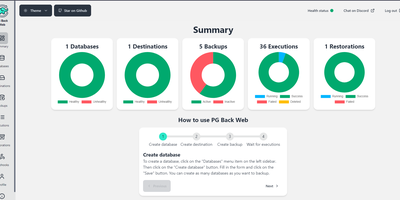
Automating PostgreSQL backup lifecycles across local volumes and S3-compatible object storage, PG Back Web gives database administrators and developers a self-hosted web console to schedule, encrypt, monitor, download, and restore database dumps without writing manual shell scripts. Instead of maintaining fragile crontab entries across individual database servers, you register PostgreSQL 13, 14, 15, 16, 17, or 18 instances in one dashboard and define recurring backup schedules with custom retention policies and timezone-aware timestamps. Each backup execution can target local directories or multiple S3 buckets across providers like AWS S3, MinIO, Backblaze B2, and Cloudflare R2, with built-in connection testing and presigned download links for rapid archive retrieval. To protect sensitive production records at rest and in transit, the platform applies PGP encryption to dump files while encrypting stored database connection strings and bucket credentials. Real-time execution logs record exact archive sizes, durations, and output streams, and the web interface lets operators trigger on-demand dumps, duplicate existing backup jobs, or run direct browser-based restorations when disaster recovery is required. Automated background health checks continuously verify connectivity to every registered PostgreSQL database and storage destination, firing configurable HTTP webhooks to Slack, Discord, or incident pipelines whenever a backup completes, fails, or changes health status. Running on a dedicated VPS on RepoCloud with guaranteed CPU, RAM, and SSD, full root SSH access, and a browser serial console. AGPL-3.0 licensed.
Wavelog
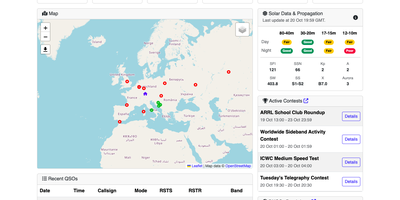
Whether operating from a home shack, a portable Parks on the Air activation, or a multi-operator club station, Wavelog gives amateur radio operators a browser-accessible logbook for recording and confirming QSO contacts from anywhere. Real-time transceiver frequency and mode data flow directly into the Live QSO logging interface from Hamlib, FLRig, and WSJT-X through the companion WavelogGate helper or REST API endpoints. An integrated DX Cluster and visual band waterfall display active spots filtered by continent, band, and DXCC status so operators can click a spot and QSY their rig immediately. Built-in two-way synchronization handles QSL confirmations and log uploads across Logbook of The World (LoTW), eQSL, QRZ.com, HRDLog, ClubLog, and the QO-100 DX Club alongside ADIF 3.1.8 and Cabrillo file imports and exports. Interactive Maidenhead grid maps, satellite pass tracking, and automated progress matrices for over 20 international awards (including DXCC, WAS, WAC, WAZ, IOTA, SOTA, POTA, and WWFF) show exactly which bands and modes still need confirmation. Dedicated contest logging windows and role-based club station permissions let teams work the same event simultaneously without log conflicts. Running on a dedicated VPS on RepoCloud with guaranteed CPU, RAM, and SSD, full root SSH access, and a browser serial console. MIT licensed.

Jelu
Every time a commercial book-tracking platform changes its terms or shuts down, years of reading notes and carefully curated wishlists risk getting lost in messy spreadsheet migrations; Jelu puts your entire reading life under your own control as a self-hosted personal Goodreads alternative. Readers log books as currently reading, finished, or dropped, track page progress and dated reading events, and organize titles across unlimited custom shelves using flexible tags. Adding new books takes seconds through mobile camera ISBN barcode scanning, EPUB and OPF metadata extraction, or automated online searches that query Calibre metadata plugins and fallback book providers for covers, summaries, and publisher identifiers. Migrating existing libraries is effortless with bulk imports for Goodreads CSV exports and plain-text ISBN lists alongside one-click CSV data exports. Author pages automatically pull biographies from Wikipedia and include a deduplication tool to merge duplicate author records created during bulk imports. Household and book-club members can sign in via local accounts, LDAP, or reverse-proxy authentication to share book ratings, write public or instance-wide reviews, inspect yearly and monthly reading statistics, and generate HTML or Markdown embed snippets for personal blogs and digital journals. Running on a dedicated VPS on RepoCloud with guaranteed CPU, RAM, and SSD, full root SSH access, and a browser serial console. MIT licensed.
MyIP
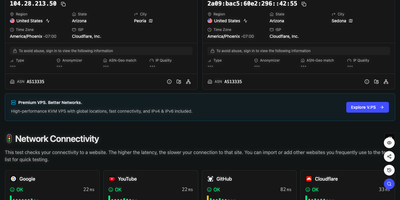
Behind a single dashboard, MyIP brings together multi-source IPv4 and IPv6 geolocation lookups, WebRTC and DNS leak detection, global latency probes, and Autonomous System routing analysis so you can audit network privacy and connectivity without bouncing between a dozen ad-ridden diagnostic sites. Side-by-side IP cards compare your detected address across multiple independent providers, displaying country, city, local time zone, ASN details, RPKI prefix announcements, and upstream transit paths to Tier 1 backbones. Privacy tests immediately expose real IP addresses leaked over WebRTC SDP handshakes or misconfigured VPN DNS resolvers, while a browser fingerprint analyzer and a 258-item cybersecurity checklist help harden client configurations. Network engineers can test reachability and multi-round minimum latency across up to 60 websites using curated category packs, verify split-tunnel proxy rules, and run worldwide ping, MTR traceroute, and censorship checks powered by distributed Globalping nodes. Additional lookup tools include a multi-country DNS resolver for spotting DNS poisoning, Whois and MAC vendor queries, a local IPv4 and IPv6 subnet calculator, live status feeds for major cloud services, and shareable diagnostic reports exported as expiring links, Markdown, or JSON. Running on a dedicated VPS on RepoCloud with guaranteed CPU, RAM, and SSD, full root SSH access, and a browser serial console. MIT licensed.
Mainsail
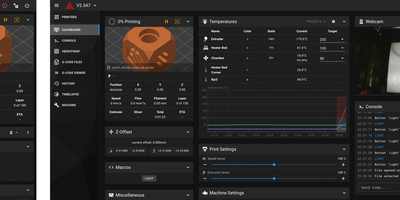
Controlling Klipper-powered 3D printers from a single browser workspace, Mainsail delivers a responsive web interface for monitoring print jobs, tuning kinematics, and managing multi-printer farms in real time. Makers and print farm operators monitor extruder and heated bed temperatures, fan speeds, and toolhead coordinates live on customizable dashboard layouts. An integrated file manager and syntax-highlighted editor let you upload G-Code directly from your slicer, organize print job queues, and modify Klipper configuration files (`printer.cfg`) without opening an SSH terminal. Interactive 3D visualizations render bed mesh heightmaps for first-layer leveling diagnostics alongside a real-time 3D G-Code toolpath viewer that tracks layer progress. Multi-webcam streaming, automated timelapse recording through `moonraker-timelapse`, Spoolman filament spool tracking, and mid-print object exclusion help salvage multi-part plates when a single model detaches. You can also organize parameterized Klipper macros, switch smart relays or Tasmota power plugs, and audit historical job success rates and filament consumption. Running on a dedicated VPS on RepoCloud with guaranteed CPU, RAM, and SSD, full root SSH access, and a browser serial console. GPL-3.0 licensed.
Frappe HR
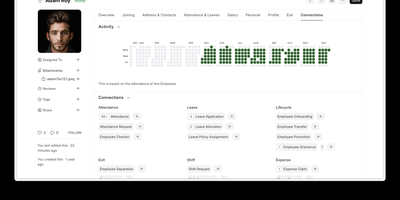
Stitching together separate SaaS subscriptions for applicant tracking, time-off requests, expense approvals, and monthly payroll creates fragmented employee records and costly per-seat bills; Frappe HR consolidates over 13 human resource modules into one self-hosted platform. People operations teams manage the complete employee lifecycle from job openings, interview assessments, and offer letters through structured onboarding, internal transfers, promotions, and exit interviews. Shift planners organize rotational rosters and capture geolocation-verified attendance check-ins, while employees request leave against regional holiday calendars and multi-tier policies. Finance and payroll managers build custom salary structures, configure regional income tax slabs, process regular or off-cycle payslips, and reconcile employee expense claims and cash advances directly with ERPNext accounting ledgers. Goal tracking and appraisal cycles align individual key result areas (KRAs) with self-evaluations and manager feedback scores. A progressive web app interface lets staff submit leave requests, log attendance, and file expense receipts from their phones. Running on a dedicated VPS on RepoCloud with guaranteed CPU, RAM, and SSD, full root SSH access, and a browser serial console. GPL-3.0 licensed.
Jellystat
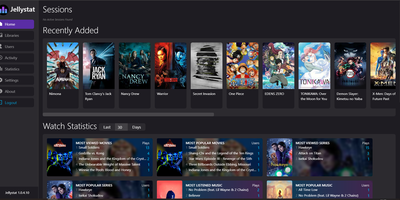
Jellystat is a self-hosted media analytics and live session monitoring dashboard for Jellyfin and Emby servers that turns raw streaming activity into detailed user, library, and playback insights. Media server administrators use the live dashboard to watch active streams in real time, inspecting transcoding status, client devices, bitrates, and playback progress as sessions happen. Every completed or partial stream is logged automatically so you can browse chronological watch histories, filter by library or stream type, and analyze peak concurrent streaming hours across the week. Dedicated library and user views break down total watch duration, play counts, and most popular movies, episodes, or music albums per account. If you already use the official Jellyfin Playback Reporting or Statistics plugins, you can import existing historical records directly into your instance without losing past data. Built-in database backup and restore tools, automatic library synchronization tasks, IP geolocation via MaxMind GeoLite, and interactive Swagger API documentation at the /swagger endpoint round out the administrative toolkit. Running on a dedicated VPS on RepoCloud with guaranteed CPU, RAM, and SSD, full root SSH access, and a browser serial console. MIT licensed.
Your Spotify
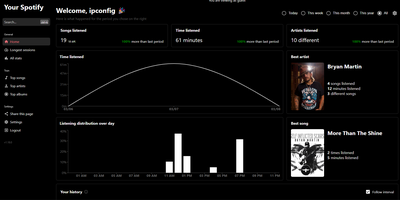
To explore years of personal music streaming habits without waiting for an annual year-end summary, Your Spotify continuously tracks your listening history and presents it inside a private analytics dashboard. Music enthusiasts use the interface to inspect daily, weekly, monthly, and custom date-range breakdowns of their most played tracks, top artists, favorite albums, and total listening duration. Listeners who want their complete historical archive from day one can upload official Spotify privacy data exports, including both past-year StreamingHistory JSON files and multi-year Extended Streaming History archives, directly through the settings panel. Friends and family sharing an instance can use the collaborative affinity view to compare overlapping listening habits across multiple accounts in intersection or union mode. From any historical table, top-tracks ranking, or multi-user affinity comparison, you can generate new playlists directly inside your Spotify account or trigger track playback on active devices. Administrators can manage user registrations, generate shareable public guest tokens for read-only dashboard access, blacklist specific artists from skewing statistics, and expose ingestion metrics to Prometheus. Running on a dedicated VPS on RepoCloud with guaranteed CPU, RAM, and SSD, full root SSH access, and a browser serial console. GPL-3.0 licensed.
PeaNUT
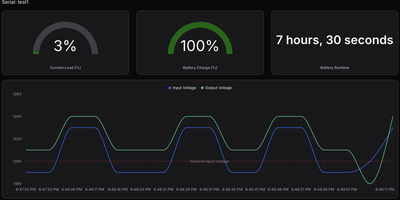
When a power outage hits your server rack, deciphering raw command-line output from Network UPS Tools should not stand between you and a safe shutdown; PeaNUT wraps your NUT servers in a real-time web dashboard that monitors battery charge, load capacity, and voltage telemetry across every uninterruptible power supply on your network. Operators can connect multiple local or remote NUT servers into a single interface and switch between devices with one click. Live gauges track battery percentage, estimated runtime, real power draw in watts, and apparent power in volt-amperes. Interactive line charts plot input and output voltage alongside load fluctuations over time. Need to test a battery or silence an alarm? You can execute instant UPS hardware commands, edit writable device variables, or open a browser-based terminal directly to the underlying NUT daemon without leaving the web interface. Configuration works either through the visual settings panel or a declarative YAML file, protected by built-in account authentication. For broader infrastructure observability, you can stream time-series power data to InfluxDB v2, scrape the native Prometheus metrics endpoint into Grafana, query the REST and WebSocket APIs, or embed live UPS status cards inside Homepage and Glance dashboards. Running on a dedicated VPS on RepoCloud with guaranteed CPU, RAM, and SSD, full root SSH access, and a browser serial console. Apache-2.0 licensed.
MySpeed
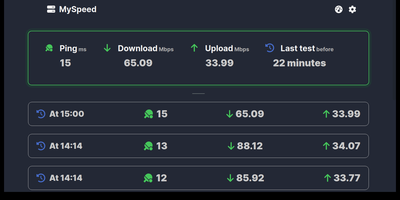
Holding internet service providers accountable for promised bandwidth requires continuous, automated measurement, and MySpeed turns any server into an always-on connection performance analyzer that tracks download speeds, upload throughput, ping latency, and jitter around the clock. Instead of running manual browser tests only when video calls stutter, you can schedule recurring speed checks using custom Cron expressions and switch freely between Ookla, LibreSpeed, and Cloudflare testing servers to verify routing performance across different upstream networks. Interactive statistics views render gradient speed timelines, ping and jitter graphs, hourly performance breakdowns that expose peak-hour congestion, and standard deviation consistency charts, using smart 300-bucket downsampling so multi-month histories load instantaneously. Failed tests are flagged with visual markers on the timeline, while built-in health checks dispatch instant alerts to Discord, Telegram, Signal, WhatsApp, Gotify, email, or custom webhooks whenever bandwidth drops below your target thresholds or outages occur. Administrators can link multiple remote MySpeed instances into a single dashboard to compare bandwidth across branch offices, pause scheduled runs during heavy file transfers, export historical logs, and scrape real-time telemetry into Prometheus and Grafana. Running on a dedicated VPS on RepoCloud with guaranteed CPU, RAM, and SSD, full root SSH access, and a browser serial console. MIT licensed.
Gramps Web
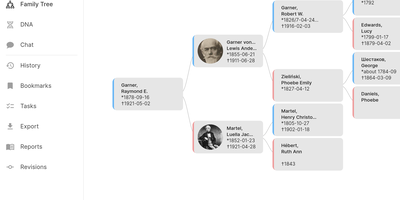
Together with relatives and fellow researchers anywhere in the world, family historians can build, visualize, and preserve shared ancestry databases using Gramps Web, a self-hosted collaborative genealogy platform. Interactive family tree charts let you explore ancestor, descendant, hourglass, relationship, and fan views across configurable generation depths, while inline editing buttons allow you to add parents, spouses, and children directly inside the graph and export finished diagrams as SVG files. When tracing where ancestors lived and migrated, the interactive map plots life events across OpenStreetMap and OpenHistoricalMap layers with a historical time slider and custom image overlays, complemented by a zoomable chronological timeline spanning centuries. Photograph collections become searchable archives through automated face detection that tags relatives in two clicks, alongside an integrated family history blog for publishing illustrated biographical stories. Researchers can also analyze autosomal DNA match segments in an interactive chromosome browser, determine patrilineal Y-DNA haplogroups locally without sending genetic data to third parties, and query people, places, citations, and notes using Gramps Query Language filters or a conversational AI assistant. Bidirectional synchronization with Gramps Desktop, full transaction history with undo, role-based privacy controls for living individuals, and pre-filled searches for FamilySearch and Ancestry keep every record accurate and protected. Running on a dedicated VPS on RepoCloud with guaranteed CPU, RAM, and SSD, full root SSH access, and a browser serial console. AGPL-3.0 licensed.
ShipShipShip
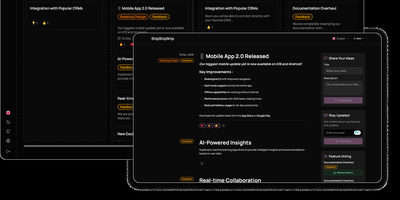
Keeping users informed about software releases while gathering community feedback on upcoming roadmap items becomes effortless with ShipShipShip, a self-hosted changelog, release notes, and feature voting platform. Product managers can draft rich release announcements using a formatting editor that supports Markdown, embedded media uploads, color-coded category tags, and exact publication timestamps. Instead of juggling disconnected feedback spreadsheets, teams organize backlog proposals, active development tasks, and shipped updates across a drag-and-drop Kanban board or a filterable list view. Visitors browsing the public roadmap can upvote proposed features to help prioritize the next sprint and react to announcements using eight expressive emoji reactions. When an item moves into a shipped status, the built-in newsletter engine automatically dispatches formatted release emails over SMTP to subscribers using customizable per-event templates and one-click unsubscribe links. Design-conscious organizations can install manifest-driven public themes, map internal workflow statuses to public roadmap columns, and tailor brand colors and logos. International audiences can navigate the interface in seven languages, including full right-to-left layout support, while engineering teams automate event creation through the REST API. Running on a dedicated VPS on RepoCloud with guaranteed CPU, RAM, and SSD, full root SSH access, and a browser serial console. Apache-2.0 licensed.
GZCTF
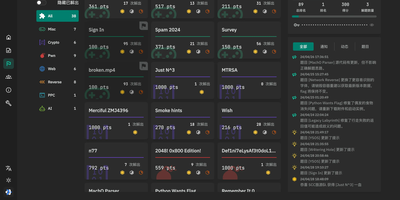
When cybersecurity instructors and competition organizers host Capture The Flag tournaments, GZCTF orchestrates isolated per-team challenge containers, dynamic anti-cheat flags, and live exponential scoreboards from a single web platform. Event administrators can configure four distinct challenge modes covering static attachments, team-specific dynamic attachments, shared static containers, and isolated dynamic containers where unique flags are injected into each team's environment at launch. A customizable exponential scoring engine adjusts point values automatically as more teams solve a problem while awarding first, second, and third blood bonuses to top contenders. Built-in flag-sharing detection monitors every submission in real time, flagging suspicious cross-team flag reuse alongside live event streams and container logs. Participants can group into divisions, track their ranking trajectory on interactive score timelines, and upload post-game writeups directly into the portal for organizer review and batch archiving. Built-in network proxying forwards challenge traffic over WebSocket tunnels with optional packet capture so referees can audit exploit payloads during active matches. Multi-language localization, customizable branding, invitation gates, and email domain restrictions adapt the portal to university courses, corporate security drills, or international tournaments. Running on a dedicated VPS on RepoCloud with guaranteed CPU, RAM, and SSD, full root SSH access, and a browser serial console. AGPL-3.0 licensed.
Koillection
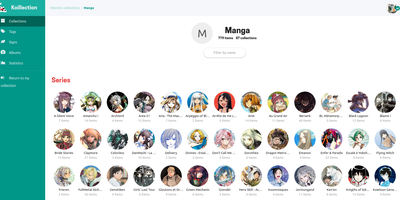
Koillection is a self-hosted physical collection and inventory manager that organizes books, vinyl records, video games, stamps, trading cards, and any custom hobby catalog using hierarchical folders, reusable metadata templates, wishlists, and loan tracking. Collectors can structure nested sub-collections like a file system and attach tailored attributes to each item, ranging from star ratings, purchase dates, and country flags to autographs, PDF manuals, and video clips. Reusable item templates and choice lists standardize data entry across uniform categories so adding a new comic issue or board game takes seconds rather than repetitive typing. Custom HTML and JSON scrapers let you pull item titles, cover art, and structured fields directly from external catalog websites into your forms using XPath or JMESPath selectors. Cross-collection tags link related pieces across separate folders, while dedicated photo albums store supplementary event galleries or condition photographs alongside your main inventory. Built-in wishlists track desired acquisitions with target prices and currencies, and a loan manager records which friend borrowed an item and when it was returned. Granular visibility settings let households run independent multi-user accounts or share read-only collection pages with guests, and a REST API exposes every catalog entity for external automation. Running on a dedicated VPS on RepoCloud with guaranteed CPU, RAM, and SSD, full root SSH access, and a browser serial console. MIT licensed.
ComposeToolbox
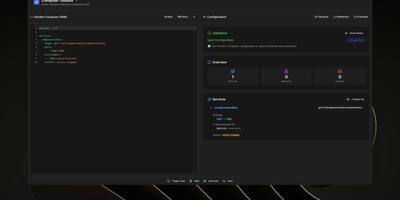
To eliminate YAML indentation errors and cryptic container misconfigurations before running docker compose up, ComposeToolbox pairs a full-featured code editor with a live configuration analyzer in a single self-hostable web workspace. Paste or write any docker-compose.yml file in the left pane to see immediate syntax validation alongside actionable best-practice warnings, such as unpinned latest image tags, missing healthchecks, or deprecated version declarations. On the right side, an interactive Configuration Overview breaks down every defined service, exposed port mapping, persistent volume mount, environment variable, and custom network into structured tabs. Built-in Quick Insert buttons let operators drop new service blocks, volume definitions, or network stanzas into the editor with one click. By mounting the persistent /app/data directory, administrators can define custom quick-insert YAML snippets with selectable hardware and networking icons in custom-templates.yml. Teams can also customize startup-template.yml so the editor opens with their organization's standard homelab or production boilerplate every time the page loads. Keyboard shortcuts, light and dark themes, and one-click YAML formatting or file export streamline daily container authoring. Running on a dedicated VPS on RepoCloud with guaranteed CPU, RAM, and SSD, full root SSH access, and a browser serial console. MIT licensed.
Dockerizalo
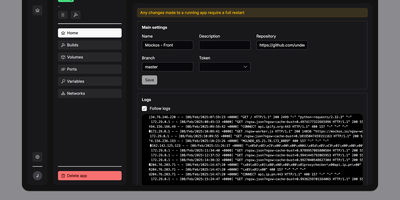
For self-hosters who want Git-driven container deployments without surrendering control of their existing reverse proxy or host networking, Dockerizalo provides a lightweight web platform that clones repositories, builds Docker images, and manages running services from a single dashboard. Point an application entry at any Git-compatible repository or public container registry image, configure custom build paths, and let the platform build and launch the container directly on your host Docker engine. A built-in template library accelerates database provisioning with pre-configured variables, networks, and persistent storage mounts. Through the web interface, operators manage environment secrets, bind-mounted volumes, custom Docker labels, and published TCP or UDP ports while coexisting peacefully alongside Caddy, Nginx, or Traefik setups. Per-application HTTP webhook triggers let teams automate continuous delivery from GitHub, GitLab, Gitea, or custom CI pipelines on every push event. Real-time paginated build and runtime container log streams prevent memory exhaustion on chatty APIs while keeping every deployment event visible. Configurable image retention policies automatically prune older tags and remove dangling images after each rollout so disk space stays clean. Multi-user account management allows homelab administrators to invite collaborators to the dashboard without sharing a single root credential. Running on a dedicated VPS on RepoCloud with guaranteed CPU, RAM, and SSD, full root SSH access, and a browser serial console. AGPL-3.0 licensed.
Atlas CMMS
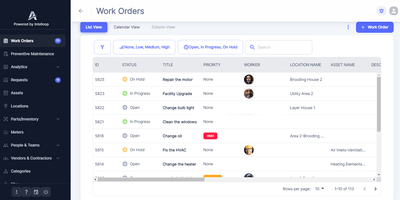
Unplanned equipment downtime and scattered paper work orders cost facility teams hundreds of maintenance hours every year, an operational bottleneck that Atlas CMMS resolves through a centralized, self-hosted computerized maintenance management platform. Maintenance supervisors can create, prioritize, and assign reactive or scheduled work orders to internal technicians and external contractors, attaching multi-step inspection checklists, labor timers, and completion photos. Automated preventive maintenance rules generate recurring tasks on daily, weekly, monthly, or meter-based intervals so critical machinery receives servicing before breakdowns happen. Asset managers can organize hierarchical equipment registers mapped to physical facility locations via Google Maps, tracking downtime history, repair costs, and reliability metrics per machine. Built-in spare parts inventory management monitors stock levels with low-quantity alerts and links directly to purchase order creation and multi-stage vendor approval workflows. Non-technical staff can submit maintenance requests through a simplified service portal, while field technicians update tickets, scan barcodes, and log parts usage from the companion Android and iOS mobile apps. Executive analytics dashboards export compliance rates, mean time to repair, and labor cost breakdowns across 18 supported interface languages. Running on a dedicated VPS on RepoCloud with guaranteed CPU, RAM, and SSD, full root SSH access, and a browser serial console. AGPL-3.0 licensed.
Iso
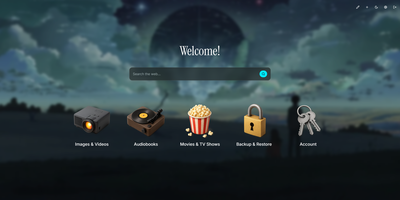
Drop a single container onto your host to launch Iso, a minimalist self-hosted startpage and service launcher that organizes every homelab web application behind a clean isometric icon grid and integrated search bar. No external database is required. Everything lives inside one human-readable JSON file or gets edited directly through the in-browser visual configuration modal. Add new service tiles in seconds, drag to reorder their display priority, and pick from a curated library of 3D isometric icons or upload custom graphics up to 25 megabytes. Switch instantly between built-in color palettes like Amethyst or upload a custom wallpaper with adjustable background blur and opacity sliders. A central search bar sits at the top of your startpage, routing queries directly to Google, DuckDuckGo, Startpage, Qwant, Searx, Bing, or any custom query URL template. Localize the interface into English, Spanish, French, or German with a single toggle. Custom greeting banners and optional page-load animations personalize the daily browsing experience for family members or lab users. Protect the dashboard and its visual editor behind shared password authentication configured via environment variables. Running on a dedicated VPS on RepoCloud with guaranteed CPU, RAM, and SSD, full root SSH access, and a browser serial console. MIT licensed.