WyrmRSS
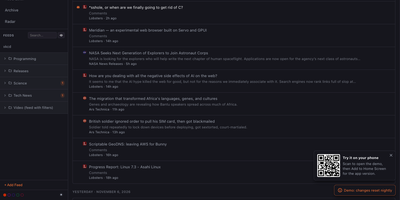
Your reading, back under your own roof: WyrmRSS is a self-hosted RSS reader that follows all your feeds from one web and mobile interface you control. Paste a blog homepage or a YouTube channel URL and feed discovery finds the actual feed for you, then background polling keeps every subscription fresh on an interval you set. Posts can be browsed per feed or as one combined river, and each feed gets a display mode: River for the main flow, Feed only for direct visits, or Radar for quiet sources you check occasionally. Folders in a collapsible sidebar carry unread counts and survive OPML import and export, so moving an existing subscription list in or out takes minutes. Per-feed filters include or exclude entries by URL, title, or content patterns, which tames noisy channels by dropping shorts, trailers, or job posts before they reach you. YouTube and HLS or Reddit video play inline in the reader, full-text search covers titles and descriptions, and Read Later plus archiving keep the important pieces. Keyboard shortcuts move, open, mark, save, and archive without the mouse and can be rebound in Settings, webhooks notify Discord, Slack, or custom endpoints on new posts, and feeds behind authentication are handled with per-host credentials. Running on a dedicated VPS on RepoCloud with guaranteed CPU, RAM, and SSD, full root SSH access, and a browser serial console. GPL-3.0 licensed.
ClickHouse Loom
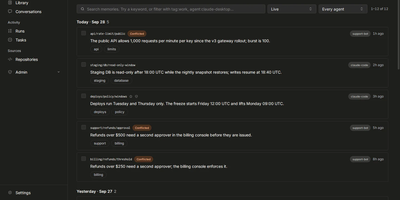
Give every AI agent you use the same memory, so what Claude Code learns on Monday is waiting for Codex or Cursor on Tuesday. Loom is a self-hosted server that stores memories, documents, conversations, and a code index, then serves them to agents over MCP, HTTP, and Python or TypeScript SDKs. Each fact is saved under a key with history and provenance, near-duplicates merge, and contradictions land in a review queue where a person keeps one side, drops one, or allows both. Search can abstain instead of guessing, and the Ask AI panel answers with numbered citations back to the memory or document behind each claim. A library indexes PDF, docx, and pptx files, and the repository explorer finds symbols, callers, and change impact with the commit it answers from. Namespaces, roles, and tokens let teams share memory safely, an audit log records every save, delete, and grant, and erasure requests are verified. Task inboxes pass work between agents with leases and retries. One installer script starts Loom and ClickHouse, and plugins connect Claude Code and Codex. Running on a dedicated VPS on RepoCloud with guaranteed CPU, RAM, and SSD, full root SSH access, and a browser serial console. Apache-2.0 licensed.

Kumiho
Drop a hard drive's worth of comics, e-books, and audiobooks into folders, point Kumiho at them, and the whole collection becomes a library you can browse and read from any browser. The scanner walks nested folders recursively and treats the folders that actually hold pages or files as series, so an existing collection works as it is, with no metadata matching ritual before the first read. Comics and manga open in a responsive viewer built for the format: page turning on a desktop, continuous webtoon scrolling on a phone or tablet. E-books in EPUB, PDF, and TXT open in the same library, while archives in ZIP and CBZ are read directly without unpacking. Audiobooks get a real player, with a chapter list, resume playback that remembers where you stopped, progress tracking, bookmarks, and a sleep timer for listening at night. A series folder can even carry its own soundtrack: an MP3 whose filename matches starts playing as background music while you read. Everything runs from one lightweight Go server in a single Docker container, storing its database and configuration in mounted volumes, so the library sits comfortably on a small VPS next to the files it serves. Running on a dedicated VPS on RepoCloud with guaranteed CPU, RAM, and SSD, full root SSH access, and a browser serial console. Apache 2.0 licensed.

Pixtale
Scroll, do not file: Pixtale turns a folder of photos into a flowing masonry river you can browse for hours, pulling images from local disk, S3, and even Telegram into one gallery. Uploads get automatic thumbnails and high-resolution previews tuned for slow connections, so grandparents on hotel Wi-Fi see pictures fast instead of watching loading spinners. Every photo keeps its EXIF story, camera, lens, exposure, and capture time, and the timeline arranges the library chronologically without you renaming a single file. The Pixtale Sync companion ships photos from phones and PCs to the gallery automatically, ending the cable-and-import ritual after every trip. Favorites, albums, and a trash bin keep curation tidy, while multiple user accounts let each family member sign in to the same library with their own credentials. An admin overview watches photo counts, storage consumption, CPU, and memory, and storage settings let you add or repoint backends as the collection outgrows its first disk. Because the whole gallery runs from one Docker container with a small SQLite database, backups are a folder copy and the library stays portable between machines. Your photos live on your hardware, under your accounts, with no per-seat pricing as the archive grows. Running on a dedicated VPS on RepoCloud with guaranteed CPU, RAM, and SSD, full root SSH access, and a browser serial console. AGPL-3.0 licensed.
OpenNotebookLM
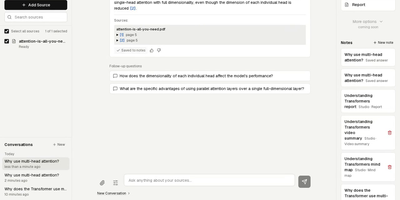
OpenNotebookLM is a self-hosted research workspace that reads your sources with you, answering questions only from the material you gave it and showing the passage behind every claim. Import papers, spreadsheets, recordings, web pages, PDF links, YouTube videos or playlists, Markdown folders, Obsidian vaults, and Git repositories, then select which sources the chat may use as evidence. Stream answers with follow-up questions, hover any numbered citation to inspect the supporting passage and page, and let the app flag citations that look unsupported before you trust them. The Studio turns the same sources into cited reports in briefing, study guide, FAQ, or timeline formats, expandable mind maps you can pan and question, two-host audio overviews in deep dive, brief, critique, or debate styles, narrated slides exportable to PowerPoint, and tables whose cells carry their own citations. Generate flashcards and timed quizzes from what you read, mark cards for review, and resume saved progress later. Save cited answers and Studio outputs as notes, convert notes back into searchable sources, and export almost anything: conversations, projects, mind maps as SVG, flashcards as Anki text, audio as MP3. Share projects with viewer or editor roles, keep conversations private per person, and bring Claude, OpenAI, any OpenAI-compatible provider, or a local Ollama model, with extraction, OCR, Whisper transcription, and Kokoro audio synthesis running on your own server. Running on a dedicated VPS on RepoCloud with guaranteed CPU, RAM, and SSD, full root SSH access, and a browser serial console. MIT licensed.
Ybkkasi
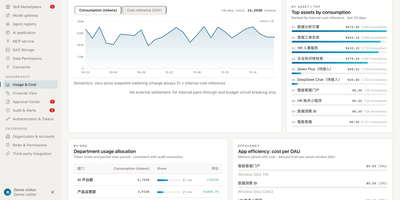
Enterprises keep buying AI tools and wondering why output does not compound, when the real gap is governance: nobody can say which agent owns what, what it may touch, or what it cost. Ybkkasi answers those three questions in one console for every MCP server, skill, agent, and AI application you run. Register each asset and move it through a lifecycle state machine from discovery to retirement, with 85 permission points deciding who can view, call, publish, or approve at every step. Work itself is organized as goals that break into projects and tasks, assigned to digital employees who each carry a home organization, a human supervisor, and a roster status. Approvals route through a dedicated center where lifecycle changes and sensitive actions wait for a human decision instead of happening silently. Every call is metered, so usage and cost reports attribute spend by department, by agent, and by skill, making showback a query rather than an argument. The audit log records who did what to which asset and when, giving compliance a trail they can actually read. Running on a dedicated VPS on RepoCloud with guaranteed CPU, RAM, and SSD, full root SSH access, and a browser serial console. MIT licensed.
bullstudio
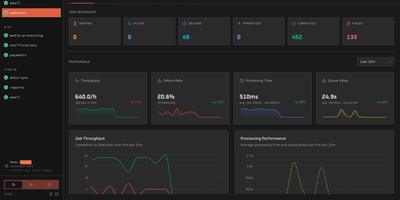
bullstudio turns a pile of opaque Redis keys into a live control panel for your BullMQ and Bull queues, so you can see what is stuck, failing, or delayed without opening a Redis CLI. Point it at a Redis URL and it discovers every queue and prefix on its own, including Redis Cluster setups. The overview page tracks waiting, active, delayed, prioritized, completed, and failed counts next to throughput, failure rate, processing time, and queue delay charts. Open any job to read its input data, logs, return value, and stack trace, then retry, promote, or remove it in one click. Flow view draws parent and child jobs as a color-coded dependency graph, which makes it easy to spot the step where a multi-stage job stalled. Separate screens list connected workers with their concurrency and heartbeat, and show repeatable and cron schedules with their next run time. Pause, resume, drain, or clean a queue directly from the header. Basic authentication, a read-only mode, and a base path for reverse proxies keep access under control. Running on a dedicated VPS on RepoCloud with guaranteed CPU, RAM, and SSD, full root SSH access, and a browser serial console. MIT licensed.

BokeBox
BokeBox turns the read-later pile into private podcast episodes you can finish on a commute. Upload a video or audio file, paste a link, or drop in a draft, and the pipeline runs transcription, a spoken-style rewrite, cover art, notes, flashcards, and voice synthesis, with progress shown on the home screen. A host persona sets name, role, tone, and speaking style, and each episode can override it with a preset voice or a voice described in words. The player shows scrolling lyrics, notes, flashcards, and an outline, remembers where you stopped, and offers speed control and a sleep timer. Albums queue episodes for continuous play, and the Star Map links episodes by shared tags. Schedules pull RSS feeds, URL lists, GitHub Trending, and Hacker News on a cadence and create episodes automatically. Plugins add new content sources, speech recognition engines, and voices. An MCP endpoint lets Cursor, Claude, or Codex create podcasts from a URL or text and check job status. Running on a dedicated VPS on RepoCloud with guaranteed CPU, RAM, and SSD, full root SSH access, and a browser serial console. LGPL-3.0 licensed.
lastGLANCE
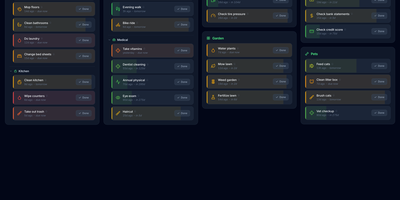
Green means handled, amber means soon, red means overdue: lastGLANCE turns recurring chores and neglected catch-ups into one recency dial you can read at a glance. Add a chore once, set how often it should happen, and its color ages from fresh green through amber to red as days pass, with overdue items floating to the top on their own. Mark a job done and the timer restarts; backdate the entry when you finished it yesterday but only remembered to log it today. Seasonal work hides outside its active months, categories and subcategories arrange into a masonry board, and reminders fire when something crosses its due line. Each chore keeps its own statistics, average interval against target, and a timestamped history with notes, and a contribution-style heatmap in the header charts your whole completion record. People get the same treatment: circles for family, friends, and work contacts show when you last reached out, who usually initiates, and which birthdays arrive in the next thirty days. Households share chores with assignments and a Mine view, everything works offline as an installable PWA, and optional WebDAV or Nextcloud sync merges changes without conflicts under optional end-to-end encryption, with hourly, daily, and weekly remote backups. Running on a dedicated VPS on RepoCloud with guaranteed CPU, RAM, and SSD, full root SSH access, and a browser serial console. MIT licensed.
RabiRoute
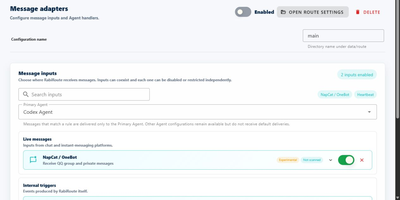
Which agent should answer a question that just arrived in your QQ group, and how much of the conversation should it see? RabiRoute is the self-hosted message gateway that answers those routing questions before your agent ever wakes up. Chat messages from QQ groups and direct chats (through NapCat and OneBot), webhooks, schedules, voice, desktop selections, and device events all arrive at one gateway, and message Routes decide which agent or local program receives each one. Every role keeps its own message history plus references to plans, memories, and skills, while each Route limits how many recent messages travel with a delivery. Roles can also fire agents on interval, time-window, daily, or one-time schedules, or run a configured local script, so recurring checks and reports happen without anyone typing a prompt. Replies to QQ, RabiLink, and other channels leave through a single sending API that validates targets, quoted messages, and sender identity, then records receipts for everything delivered. The Windows desktop side adds selected-text actions, screenshots, and annotations; speech, phone, glasses, wearable, and remote-computer clients connect as experimental integrations, and the Linux Host serves the Manager and browser WebGUI from a Node.js process. Running on a dedicated VPS on RepoCloud with guaranteed CPU, RAM, and SSD, full root SSH access, and a browser serial console. MIT licensed.
QBitWebUI
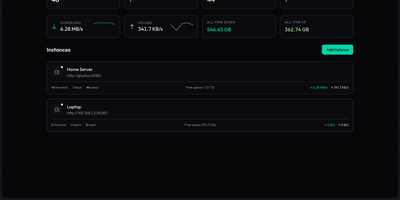
QBitWebUI is a single self-hosted dashboard that manages every qBittorrent instance you run, whether that is one seedbox or five, from one place. Instance cards show each client's status, live speeds, and torrent counts, with aggregate statistics across all of them and quick switching between instances. The torrent list brings sortable, resizable columns you can reorder and hide, filters for status, category, tag, and tracker, multi-select bulk actions with a context menu, and a details panel covering trackers, peers, files, and web seeds. Search your Prowlarr indexers from inside the UI and send results straight to the right instance, then let RSS feeds with regex auto-download rules keep recurring releases flowing in unattended. Browse the downloads directory and pull finished files or whole folders as tar archives, run an automatic cross-seed pass to match torrents across trackers, and check the connection with the network agent's speedtest, IP check, and DNS diagnostics. Edit qBittorrent preferences directly from the settings tabs, pick a color theme, and keep working from your phone with the installable PWA and mobile view. Running on a dedicated VPS on RepoCloud with guaranteed CPU, RAM, and SSD, full root SSH access, and a browser serial console. MIT licensed.
Open Walnut
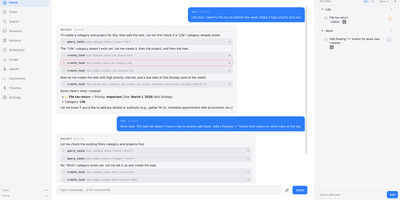
Open Walnut replaces your scattered terminals and notes with one self-hosted command center where a CEO agent and a lead for each project run your Claude Code sessions like a small company. You talk to the CEO; each project lead plans the work, spawns worker sessions, checks their output, and only brings you the questions that actually need a person. Every session sits in its own column with live output, permission controls, terminals, and files, and sessions survive browser disconnects, dropped SSH connections, and server restarts. Codex, Gemini, OpenCode, and Goose sessions join the same columns, on your laptop or on remote dev boxes reached over SSH. Finished work comes back as a per-session diff: comment on individual lines and send the review straight back into the session that wrote it. Around the agents sit your tasks with subtasks, dependencies, and due dates, Markdown notes with wiki links and backlinks, a calendar, and long-term memory that a background job keeps consolidated. Search covers notes, tasks, sessions, and memory together, mixing keyword matching with local embeddings, so nothing you told it last month gets lost. Routines run one-time, interval, and cron jobs; plugins add whole apps, tools, and skills; and paired phones reach the same console through device tokens. Running on a dedicated VPS on RepoCloud with guaranteed CPU, RAM, and SSD, full root SSH access, and a browser serial console. MIT licensed.
Omni
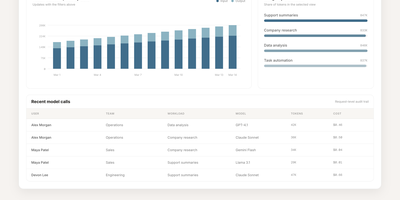
Omni is an open-source workplace AI agent and enterprise search platform that unites your company's scattered tools into a single context-aware workspace where team members can find answers and automate cross-application workflows. Employees can query connected knowledge sources including Google Drive, Gmail, Slack, Jira, GitHub, Confluence, and HubSpot to locate project specifications, customer records, and operational documents without jumping across tabs. The integrated AI assistant answers complex multi-step inquiries, summarizes lengthy email threads, and cites exact source passages so workers can verify factual accuracy before making business decisions. Granular permission inheritance mirrors existing access controls across every connected service, guaranteeing that sensitive personnel files, financial statements, and confidential repositories remain hidden from unauthorized staff. Engineers can construct bespoke data connectors and define automated agent skills through the extensible Python and TypeScript software development kits, triggering multi-service actions directly from interactive chat dialogues. Administrators can monitor background synchronization jobs, inspect audit trails, manage single sign-on access, and configure custom extraction pipelines using centralized operational dashboards. Running on a dedicated VPS on RepoCloud with guaranteed CPU, RAM, and SSD, full root SSH access, and a browser serial console. Apache 2.0 licensed.
Geo-Monitor
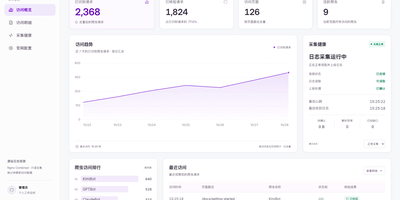
Search is being answered by AI crawlers first and humans second, yet most site owners cannot name a single bot that read their pages last week; Geo-Monitor answers that from the access logs you already have. A small collector sits beside Nginx or OpenResty, mounts the log read-only, and streams only new lines in batches, resuming after outages and surviving log rotation without ever touching your site's code. The console separates today, the last week, and the last month into identified requests, crawled pages, active crawlers, and trend lines, then drills into every visit with time, path, method, status code, claimed identity, and verification state. Identification and verification are deliberately different things here: a user agent only proves what a request claims to be, while a verified badge requires trusted log addresses and official IP evidence to agree. Twenty built-in identities cover OpenAI, Anthropic, Perplexity, Kimi, and Bytespider crawlers, and you can add, edit, or disable rules as new bots appear. Your sitemap syncs or imports as the content catalog, so coverage views show which pages crawlers actually reached, and collector health exposes heartbeat, backlog, and parsing problems. Running on a dedicated VPS on RepoCloud with guaranteed CPU, RAM, and SSD, full root SSH access, and a browser serial console. Apache-2.0 licensed.
Jellydash
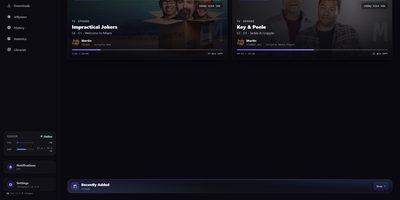
Jellydash answers the questions every Jellyfin admin asks, starting with who is watching right now and whether that stream is transcoding. Live cards show each session's artwork, user, quality, progress, and playback method, including the reason a transcode was needed, and live TV channels appear with real program progress. Behind the scenes, a background poller records every play even when nobody has the dashboard open, building a history you can search, filter by user or library, and export to CSV with poster art intact. Older Jellyfin or Emby Playback Reporting backups import in seconds, so years of viewing are not lost when you switch. Statistics turn that history into watch-time trends, top users, device and client activity, codec breakdowns, and transcode reasons, and clicking a chart opens the exact plays behind it. A monthly recap looks back at a finished month with rankings and daily activity, while trending and all-time most-watched strips show what your household actually loves. Optional pages follow Jellyseerr requests as they arrive and read the status of SABnzbd, qBittorrent, Transmission, Deluge, and NZBGet clients without ever touching their queues. Server activity, maintenance tasks, and system status stay one click away, and selected users can be excluded from monitoring entirely. When someone presses play, a notification can reach your phone through Telegram, Pushover, Discord, ntfy, Gotify, or Web Push. Running on a dedicated VPS on RepoCloud with guaranteed CPU, RAM, and SSD, full root SSH access, and a browser serial console. MIT licensed.
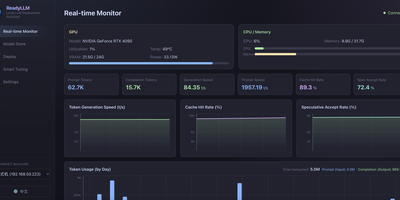
ReadyLLM
Your inference server should not sit mostly idle while a model crawls along at ten tokens per second, so ReadyLLM gives you a visual way to deploy, watch, and tune LLMs until the hardware is actually earning its keep. Add the machine under your desk or a remote box over SSH, let hardware detection read its GPU, VRAM, CPU, and memory, and get model recommendations that fit what you own instead of wishful downloads. A model store catalogs text, image, and video models with parameter counts, precision, resolutions, and real weight filenames, background downloads from multiple sources, and integrity checks when they land. One click starts or stops llama.cpp, vLLM, or SGLang services, installs a missing engine matched to your GPU backend, and leaves runtime parameters open for manual tweaks. Live curves track GPU utilization, memory, throughput, and latency as requests flow. When speed disappoints, two-phase auto tuning searches the knobs that matter, checks VRAM feasibility before it wastes your time, and benchmarks honestly against latency, throughput, or prefill goals; an AI tuning mode can reason through the same loop across several rounds. Beyond chat models, ComfyUI generation covers text-to-image and text-to-video, storyboards, shot-by-shot long video, and upscaling, with prompts optionally expanded first. Running on a dedicated VPS on RepoCloud with guaranteed CPU, RAM, and SSD, full root SSH access, and a browser serial console. MIT licensed.
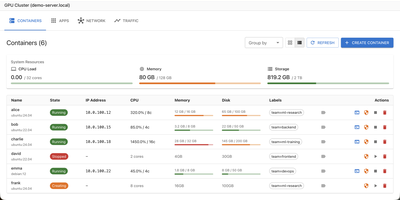
Containarium
Containarium gives every AI agent a persistent Linux box of its own, reachable over SSH and driven through structured tools instead of a fragile terminal session. One command creates a named sandbox, syncs the SSH configuration, and wires the box into Claude Code, Codex, Gemini or Cursor through an MCP server that runs inside the container. From there the agent can execute shell commands, read and write files, install services, and expose a port on a public hostname with TLS terminated by a Caddy sentinel. Detached code runs keep working after a laptop sleeps or a connection drops, and the operator reattaches to the same byte-exact log later, checks status, or stops the run without losing output. An optional per-tenant eBPF egress policy limits outbound traffic per box, logs denied attempts for audit, and keeps provider API keys inside a model gateway rather than inside the agent environment. Boxes run on LXC or Kubernetes, keep state between agent sessions, support GPU passthrough for local model work, and stay separate from the host operating system and the cluster control plane. The dashboard presents containers, traffic, security events, audit records, GPU state and monitoring in one place. Running on a dedicated VPS on RepoCloud with guaranteed CPU, RAM, and SSD, full root SSH access, and a browser serial console. Apache-2.0 licensed.
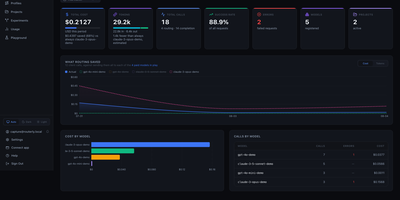
Routerly
Routerly is the one front door for every AI model your apps use: point your OpenAI or Anthropic client at it, and it chooses the right model for each request, enforces your budget, and keeps the receipts. Nothing in your code changes except the base URL, and from that moment streaming chat completions and messages flow to OpenAI, Anthropic, Gemini, Mistral, Cohere, xAI or your own Ollama models behind a single token. Nine routing policies score every candidate in parallel: cheapest, fastest, healthiest, most capable, biggest context, least rate-limited, fairest, most budget left, and one that asks a small model to judge which model fits the task. When the winner errors or times out, the next candidate takes over automatically, and the recorded routing trace shows exactly why each model won or lost. Guardrails can block or log content that breaks your rules, and phone numbers, card numbers, SSNs, IBANs and emails can be scrubbed out before anything reaches a provider. Every call is logged with tokens, USD cost and latency, and hard limits per model, project and token reject overspending requests before a provider can charge for them. Projects keep separate tokens, model lists and budgets for each team or tool, role-based permissions decide who may change what, and alerts land in Slack, email, webhooks or PagerDuty when budgets or providers misbehave. Running on a dedicated VPS on RepoCloud with guaranteed CPU, RAM, and SSD, full root SSH access, and a browser serial console. AGPL-3.0 licensed.