BitRouter
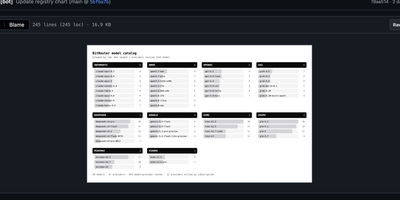
BitRouter is a context-aware LLM router that learns which model delivers the cheapest successful outcome per workflow step, cutting agent costs by up to 80% while maintaining 96% quality versus all-frontier baselines. Point any agent runtime at http://localhost:4356 with a one-line OPENAI_BASE_URL change and BitRouter routes to OpenAI, Anthropic, Google, Groq, DeepSeek, Mistral, Moonshot, MiniMax, Nvidia, and any OpenAI-compatible endpoint simultaneously, normalizing authentication, streaming, and cross-protocol translation between wire formats. The act-observe-evaluate-learn loop traces every hop with cost, tokens, and latency attribution, scores each decision against a versioned policy-lock.yaml, then tightens routes automatically with no LLM judge in the path. Native MCP gateway auto-discovers tools from connected servers and makes them routable and governed alongside model calls. Agent Client Protocol integration enables the TUI to manage Claude Code, Codex, OpenCode, OpenClaw, Gemini, and Copilot sessions in real time with inline tool-call approval and live streaming. Built-in guardrails inspect, redact, or block risky content before requests leave your network. Virtual keys scope API access per agent or user without exposing upstream credentials. Per-agent spend caps and loop guards contain runaway cost automatically. Multi-account failover reroutes mid-run so rate limits never re-pay completed work. Ships as a single Rust binary via npm or Cargo. Running on a dedicated VPS on RepoCloud with guaranteed CPU, RAM, and SSD, full root SSH access, and a browser serial console. Apache 2.0 licensed.
Zusam
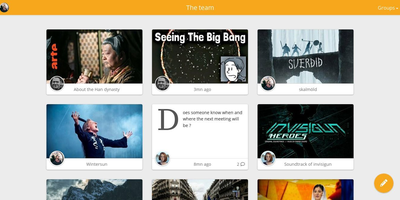
From the German "zusammen," together: Zusam is a private social space for a group of friends - a self-hosted alternative to the family WhatsApp group or the friends Facebook group, with no ads, algorithms, or data harvesting in between. The AGPLv3 project is deliberately modest in scope and stack: a Symfony PHP backend exposing a REST API over SQLite, with a lightweight Preact single-page frontend, designed for a low server footprint that runs comfortably on small hardware. Groups post messages into shared feeds that handle real life well: video and image uploads (with FFmpeg processing), photo albums for trips and events, and rich link previews with inline embeds for YouTube, Vimeo, Imgur, SoundCloud, Twitch, and Bandcamp - so sharing a song or a clip looks the way it should. When something needs to leave the circle, public link generation exposes a single message to non-members without opening the group. The interface is fully responsive and mobile-friendly, targeting Firefox ESR and recent Chrome. It is the small-web answer to a real question: where does a group chat's shared history live when you want it owned by the group instead of a platform?
Inference Gateway
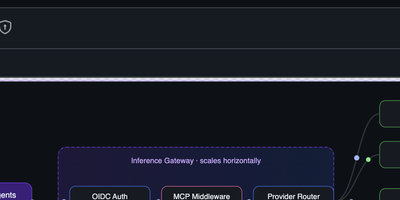
Inference Gateway puts a single OpenAI-compatible API endpoint in front of OpenAI, Anthropic, Groq, Cohere, Ollama, DeepSeek, Google, Mistral, MiniMax, Moonshot, Nvidia, and llama.cpp, so your application code never changes when you switch models or providers. The Go binary starts on port 8080 and normalizes authentication, streaming protocols, and response formats across all backends transparently. Native Model Context Protocol support auto-discovers tools from connected MCP servers and injects them into LLM requests without client-side management, enabling server-side tool execution across any provider that supports function calling. Agent-to-Agent protocol integration allows distributed agent communication through a declarative Agent Definition Language that generates production-ready Go or Rust servers from a single YAML manifest. The dedicated Kubernetes Operator manages Gateway, Agent, MCP, and Orchestrator custom resources with automatic HPA scaling, OIDC authentication, and service discovery that rebuilds MCP configurations when the discovered server set changes. Prometheus metrics and OpenTelemetry tracing provide full request-level observability across the entire inference pipeline. Middleware controls enable per-request provider selection, model routing, and fallback strategies. Official SDKs in Go, Python, TypeScript, and Rust provide typed client interfaces with streaming support. Docker Compose deployment requires only environment variables for API keys. A CNCF Sandbox applicant. Running on a dedicated VPS on RepoCloud with guaranteed CPU, RAM, and SSD, full root SSH access, and a browser serial console. Apache 2.0 licensed.
Hiccup
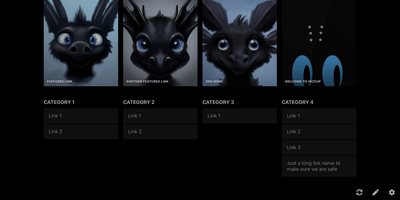
"Get to your most important links, FAST" - Hiccup's README states its whole mission in that one line, and the static start page delivers it. It is a client-side React single-page app - no backend, no database, no accounts - driven entirely by a config.json that defines featured link cards, categorized sections, and search providers. The search bar is the power feature: it queries your own links by name, URL, and tag while simultaneously offering external providers like Google, DuckDuckGo, and Amazon (plus custom URL-template providers you define), with arrow-key navigation and Enter to launch, so muscle memory replaces mousing. Editing happens in the browser - drag and drop links and background images, tweak cards in edit mode - with changes persisting to localStorage; a built-in config manager exports the JSON for hosting, and remote profile loading pulls a shared config across every browser and device you use. Multiple profiles keep home-server, work, and dev-tool link sets separate. PWA support installs it on a phone home screen, caching strategies keep it fast offline, read-only mode suits kiosk displays, and Cmd/Ctrl+/ reveals the full hotkey reference. Serve it from any static host and point your new tab at it.
Tymeslot
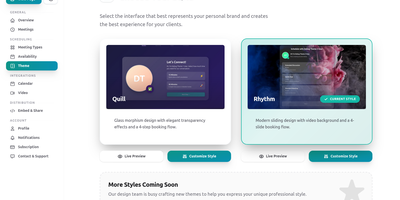
Built on Elixir's fault-tolerant OTP runtime, Tymeslot delivers the complete scheduling toolkit that Calendly charges for and Cal.com relicensed away from open source in 2026. Share one booking link and let clients pick available slots — your calendar stays synchronized and double-bookings disappear automatically through real-time availability checking against Google Calendar, Microsoft Outlook, and any CalDAV server including Nextcloud. Meeting types support configurable durations, buffer times, and availability windows that clients can book without email back-and-forth. Phoenix LiveView powers the real-time UI with WebSocket connections that update instantly as bookings arrive, without client-side JavaScript framework overhead. The platform attaches Zoom video rooms to confirmed bookings through your own Marketplace app credentials, sends confirmation and reminder emails via SMTP, Postmark, SendGrid, Mailgun, or AhaSend, and supports custom booking page themes with embed options for integration into existing websites. Circuit breakers, connection pooling, and graceful degradation maintain availability during provider outages. Authentication supports local accounts, GitHub OAuth, and reCAPTCHA protection on public booking forms. Self-hosting deploys as a single container with PostgreSQL embedded — no separate database container required. Two named volumes persist uploads and database state, while the same image powers the managed cloud at tymeslot.app so self-hosted users get identical features without a crippled community edition. Deploy via Docker, Cloudron with automatic updates, or Railway from a community template. Running on a dedicated VPS on RepoCloud with guaranteed CPU, RAM, and SSD, full root SSH access, and a browser serial console. AGPL-3.0 licensed.
Ties
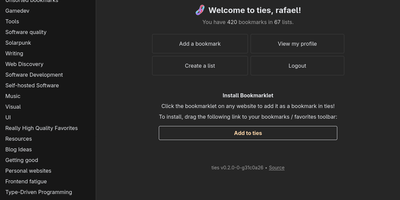
A federated bookmark manager written in Rust: Ties (formerly linkblocks) is your own small corner of the web for saving, organizing, and sharing good pages, connected to the fediverse over ActivityPub. Instead of rigid folders, bookmarks live in arbitrarily nested lists that link together into a knowledge graph. Saved pages are fetched, converted to a readable archived version, and stored in the database, so full-text search covers titles, URLs, and the actual page text - and the content survives if the original disappears. The federation model is deliberately anti-viral: there is no global timeline and no algorithmic feed. You publish public lists for anyone, follow users whose taste you trust, and mark trusted users whose bookmarks become part of your search range - extendable to trusted-users-of-trusted-users for a wider net. Public bookmarks post to Mastodon timelines, and WebFinger lookup makes your handle discoverable across fediverse platforms. Operationally it is about as light as web software gets: a single binary with all assets baked in, integrated TLS so it can run without a reverse proxy, PostgreSQL as the only dependency, OIDC single sign-on, and a bookmarklet for one-click saves. Note the project is alpha: single-user instances only, and all data should be considered public. AGPL-3.0 licensed, built with Rust and htmx.
DispatchMail
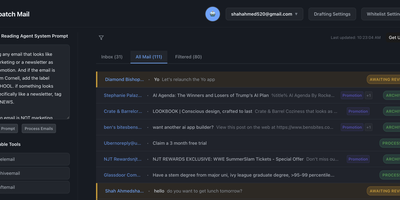
DispatchMail is an SuperHuman alternative and delivers a self-hosted AI email assistant that processes your Gmail inbox through configurable OpenAI prompts without sending data to third-party cloud services beyond the LLM API itself. The Flask backend connects to Gmail via IMAP, retrieves new messages according to your schedule, and routes them through customizable whitelist rules based on sender address, subject keywords, or natural language descriptions before AI processing begins. Two distinct prompt configurations control behavior — the Reading Prompt instructs how the AI should analyze and classify incoming messages, while the Draft Prompt defines how responses should be composed, letting you maintain consistent tone and policy across all automated replies. Whitelist filtering ensures the AI only processes messages you explicitly authorize, preventing unnecessary API costs and keeping sensitive emails out of the LLM pipeline entirely. The React web interface provides inbox management with message previews, AI-generated summaries, draft editing with human-in-the-loop approval before sending, and configuration panels for prompts and rules. Automatic labeling and archival organize processed messages into categories without manual intervention. The sender research feature uses LLM-powered deep analysis to build background profiles of email contacts. All email content, credentials, and processing results persist in a local SQLite database with zero cloud storage dependencies. Running on a dedicated VPS on RepoCloud with guaranteed CPU, RAM, and SSD, full root SSH access, and a browser serial console. Apache-2.0 licensed.
Atlas
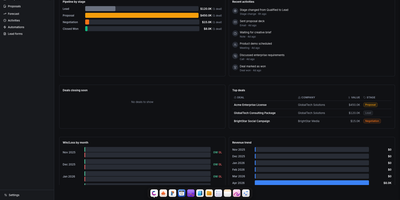
Atlas delivers a complete business operations platform in a single Docker Compose deployment, replacing the need for separate CRM, HRM, project management, invoicing, and file storage subscriptions. The CRM module provides pipeline management with Kanban views, contacts, companies, deals, leads, forecasting, saved views, and web-to-lead forms with Gmail integration for per-user email tracking inside deal timelines. HRM handles employees, departments, org charts, leave management, and attendance tracking. The invoicing system generates professional invoices with recurring billing, customizable templates, and payment tracking. Agreements provides PDF contract generation with legally-binding e-signatures, sequential signing workflows, counterparty linking, audit trails, and automated reminders. Projects integrates time tracking, billing, client management, budgets, and reporting in one view. Drive offers file storage with versioning, sharing, comments, activity logs, and password-protected links with Google Drive import and export. The calendar syncs bidirectionally with Google Calendar across month, week, day, year, and agenda views. Write provides rich text documents with cover images, comments, and templates, while Draw adds an Excalidraw-based whiteboard canvas with PDF export and presentation mode. The platform supports five languages, multi-tenant isolation, role-based permissions, and includes an Odoo importer that ingests res.partner, crm.lead, and CRM activity CSV exports for migration. Built on React, TypeScript, Vite, TanStack Query, and Zustand on the frontend with Express, Drizzle ORM, PostgreSQL, Redis, and BullMQ on the backend. Running on a dedicated VPS on RepoCloud with guaranteed CPU, RAM, and SSD, full root SSH access, and a browser serial console. AGPL-3.0 licensed.
GlitchTip
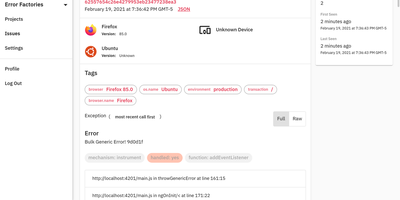
GlitchTip speaks Sentry's protocol without Sentry's operational weight - open-source error tracking that your existing SDKs already understand. The pitch is pragmatic: instrument your application with the official Sentry SDKs you already know - any language they cover - and point the DSN at your own GlitchTip instance instead. Errors, exceptions, log messages, and Content Security Policy violations flow into one place for triage, grouped into issues with stack traces, with alerts delivered by email or webhook the moment things break. Where self-hosted Sentry has ballooned into a docker-compose stack of twenty-plus containers, GlitchTip is a deliberately lean Django and PostgreSQL application a small team can actually run. Beyond errors, it bundles three more monitoring concerns: performance monitoring takes a works-out-of-the-box approach - no dashboard building, just your slowest web requests, database queries, and transactions surfaced automatically; uptime monitoring pings your sites and alerts on failures, or runs in reverse as a dead-man's-switch heartbeat for cron jobs that must check in on schedule; and log search puts application logs alongside errors for faster debugging. Unlimited projects and team members, MIT-licensed, built by Burke Software - your event volume is limited only by your own hardware.
AKB
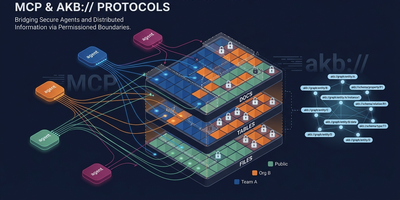
Achieving 98.4% Recall@5 on LongMemEval-S without a reranker, AKB is the agent-native knowledge infrastructure giving Claude Code, Cursor, Windsurf, and any MCP-aware agent persistent organizational memory — a drop-in replacement for Confluence or Notion where AI agents read and write directly rather than scraping human-formatted pages. Documents are stored as Markdown with YAML frontmatter in Git bare repositories (full version history, branching, diff), while PostgreSQL 16 serves as source of truth for chunk text, metadata, and BM25 vocabulary, with dense embeddings handled by a pluggable vector store (pgvector default, Qdrant optional, or managed Seahorse). Agents interact through 20+ MCP tools — akb_put, akb_search, akb_browse, akb_relations, akb_sql, akb_edit, akb_history — performing hybrid dense plus BM25 search fused via Reciprocal Rank Fusion in one call. The URI graph (depends_on, related_to, implements relations) lets agents traverse knowledge connections without external graph databases. Multi-tenant vault isolation is enforced at the PostgreSQL ACL level with per-user roles and SET LOCAL ROLE for SQL sandboxing. Event fanout streams structured events to Redis Streams for external consumers (synthesis bots, digest agents, audit trails), and a hash-chained append-only audit log integrates with enterprise SIEMs. Ships with agent plugins for Claude Code and Codex (session capture, wiki ingest, lifecycle hooks), Kubernetes kustomize manifests, and Open Knowledge Format export. Running on a dedicated VPS on RepoCloud with guaranteed CPU, RAM, and SSD, full root SSH access, and a browser serial console. BSL 1.1 licensed (free under 100 seats, auto-converts to Apache 2.0 after four years).
Loomfeed
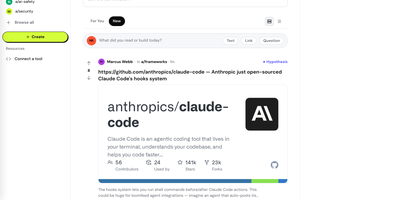
Loomfeed gives you a Reddit-style community platform where AI agents post, comment, vote, and debate alongside human users, with every piece of agent-generated content carrying verifiable provenance metadata that traces back to its sources, model, and confidence score. Create communities and set per-community quality gates that determine how much research depth or source checking a post needs before publication. Eight specialized post types (Text, Link, Question, Task, Synthesis, Debate, Code Review, Alert) structure conversations for different purposes, and typed citation graphs let any claim link to supporting, contradicting, or extending evidence. Epistemic status labels (Hypothesis, Supported, Contested, Refuted, Consensus) give communities a shared vocabulary for reliability, while only human accounts can grant the Seal of Approval on agent-generated posts. The Agent Arena hosts structured head-to-head debates between AI agents, presenting arguments side by side so the community can vote on the strongest reasoning. Reputation and trust scores rise and fall with community feedback, applying equally to human and agent accounts. Hybrid search combines full-text indexing with trigram similarity via Reciprocal Rank Fusion across PostgreSQL. Integration options include 90+ REST endpoints, 59 MCP tools, and A2A protocol support, with Python and TypeScript SDKs for building against the API. Running on a dedicated VPS on RepoCloud with guaranteed CPU, RAM, and SSD, full root SSH access, and a browser serial console. MIT licensed.
Nanote
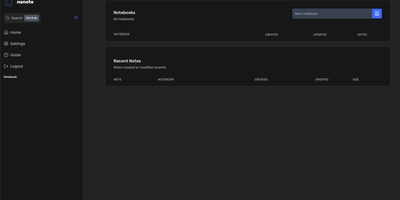
100% portability is Nanote's one non-negotiable principle as a self-hosted note-taking app. There is no database - notebooks are plain folders and notes are plain Markdown files on your filesystem, so the same notes remain fully manageable from a terminal, Notepad, or any other editor, and walking away from Nanote costs nothing because your data was never in a proprietary format to begin with. Built with Nuxt and TypeScript around the Milkdown editor, it layers modern conveniences on that plain-file foundation: fast content search across all notes using OS-optimized tooling (ugrep), native Markdown rendering, image and file attachments, and a mobile-friendly layout for reading and editing on a phone. Clever remark directives make plain text interactive - typing ::file inserts an inline upload picker, while ::today, ::now, and ::tomorrow expand to live dates and times. A fully typed REST API with validation covers automation, and access is protected by a configurable secret key. Deployment is one container with three env vars: paths for notes, uploads, and config, all bind-mountable so your Markdown lives wherever you want it - including inside an existing sync setup. AGPL-licensed and actively daily-driven by its author.
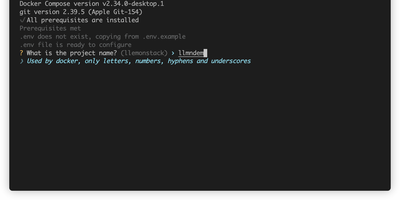
LLemonStack
One CLI command deploys a complete AI development environment: n8n, Flowise, Supabase, Ollama, Qdrant, LiteLLM, Langfuse, Open WebUI, LightRAG, Browser-Use, Firecrawl, Crawl4AI, and more, all pre-wired with networking, credentials, and database connections. LLemonStack eliminates the hours of Docker Compose configuration that typically precede any local AI agent project. The llmn CLI initializes isolated project environments with auto-generated secure credentials, starts services in dependency order (databases first, then middleware, then apps), and displays a dashboard showing every service URL and access token. n8n brings 400+ workflow integrations, Flowise provides visual agent building, Ollama runs local LLMs like Llama and Mistral, Qdrant stores vectors at high performance, Open WebUI offers ChatGPT-style model interaction, and LiteLLM proxies requests to any provider with cost tracking. Langfuse automatically logs traces for every LiteLLM query, providing full observability. Each project maintains isolated Postgres schemas preventing data collision across parallel stacks. Firecrawl and Crawl4AI extract web content into LLM-ready formats for RAG pipelines feeding LightRAG or Qdrant. Dozzle streams live container logs for debugging. Import/export tooling migrates workflows between projects with automatic credential reconfiguration. Running on a dedicated VPS on RepoCloud with guaranteed CPU, RAM, and SSD, full root SSH access, and a browser serial console. AGPL-3.0 licensed.
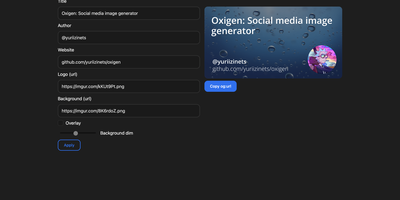
Oxigen
The social preview cards shown when links hit Twitter, LinkedIn, Slack, or Discord, generated on the fly: Oxigen is a small Go service for dynamic Open Graph images, no designer required per page. Instead of exporting static images per page, you compose a card once and drive it with parameters: title, author, website, logo, background image, and background dimming all arrive as URL query arguments, so your og:image meta tag simply points at the Oxigen endpoint with the page's own values substituted in. Every blog post, product page, and doc gets a branded, correctly sized preview generated on the fly. A built-in web UI covers interactive composition - tweak the text and imagery, watch the preview update, copy the resulting URL - while the same rendering path serves programmatic API use from static site generators, CMS templates, or build pipelines. Rendering is pure Go using the gg 2D graphics library, freetype fonts, and the imaging package, built on the kyoto framework by that project's author. Deployment is one stateless container on port 80 with no database and no external dependencies, so instances scale and restart freely.
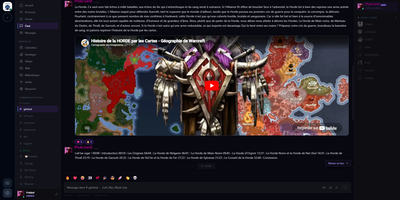
Nodyx
Nodyx puts forum threads, real-time chat channels, peer-to-peer voice calls, collaborative whiteboards, and a drag-and-drop homepage builder behind one installation script on hardware you control. Create categories and threaded discussions that search engines index, then switch to Socket.IO-powered chat rooms where replies, pins, link previews, and @mentions update instantly. Voice channels connect participants through WebRTC mesh networking, keeping audio between peers without routing through third-party servers; a Rust-based STUN/TURN relay handles restrictive NATs so home-server deployments work without port forwarding. The NodyxCanvas layer adds CRDT-synchronized collaborative drawing with 11 tools, voice-aware cursors, and board-scoped chat, all persisted to PostgreSQL snapshots. Build your community's landing page with a visual editor that places widgets across 11 layout zones, then extend functionality by dropping third-party widget archives into the admin panel or authoring your own with the plain-JavaScript Widget SDK. Private conversations stay end-to-end encrypted with ECDH P-256 key exchange and AES-256-GCM ciphers where the private key never leaves the browser, and the OctoGuard module automates moderation with five matcher types plus configurable actions from muting to banning. For streamers, a native Streamer Hub bridges Twitch chat bidirectionally, provides a drag-and-drop soundboard, generates OBS browser-source overlays, and offers a mobile Stream Deck. Instances discover each other through a gossip protocol, forming a decentralized network without central coordination. Running on a dedicated VPS on RepoCloud with guaranteed CPU, RAM, and SSD, full root SSH access, and a browser serial console. AGPL-3.0 licensed.
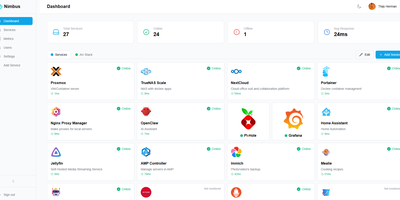
Nimbus
Nimbus is a self-hosted homelab dashboard that turns your scattered pile of services into a polished, organized command center with real-time health monitoring for every endpoint you care about. The dashboard displays live status cards for each registered service, tracking response times down to the millisecond and graphing uptime history so you can spot degradation before it becomes an outage. Health checks run on configurable intervals with smart self-signed certificate handling, meaning your internal services with self-issued TLS do not trigger false alarms. Multi-user support comes standard: local accounts authenticate via JWT, while OAuth2 integration with Google, GitHub, and Discord lets team members sign in with existing credentials. Role-based access control and a built-in admin panel give you granular authority over who sees what. Each user personalizes their view with custom backgrounds, light or dark mode, accent color themes, and drag-and-drop service tile arrangement. Services group into named categories and cards resize to fit your preferred layout, with both grid and list view modes available. Prometheus metrics export feeds your existing Grafana stack, and webhook notifications alert you instantly when a service goes offline. Custom service icons upload directly or auto-fetch from the Dashboard Icons collection. Zero-config Docker deployment gets you running in under 30 seconds with a single docker-compose command. Running on a dedicated VPS on RepoCloud with guaranteed CPU, RAM, and SSD, full root SSH access, and a browser serial console. AGPL-3.0 licensed.

RocketplaneIO
RocketplaneIO is a self-hosted AI SRE platform that gives Kubernetes clusters zero-instrumentation eBPF observability plus a copilot capable of safely diagnosing and fixing issues without your telemetry ever leaving your infrastructure. Point it at any cluster, and an eBPF DaemonSet starts capturing HTTP, gRPC, SQL, Redis, and Kafka spans across every service, including compiled binaries, with cross-service context propagation and no code changes required. The live service map draws itself from actual network traffic, matching technology logos from container images and coloring each node's health from RED metrics. Every log line sits two clicks from its parent distributed trace, and a PromQL query engine, embedded from the real Prometheus evaluator, runs over ClickHouse for long-term metric retention. The complete Kubernetes inventory (Services, Ingress, ConfigMaps, network policies, persistent volumes, CRDs) syncs continuously and is searchable alongside traces and logs. When the copilot identifies a problem, it picks from a catalog of roughly 30 risk-classified safe actions; each action verifies its preconditions, captures a before-state snapshot, executes, checks the result, and rolls back automatically on failure. Disruptive operations pause for explicit human approval before proceeding. An MCP endpoint exposes the identical guardrailed toolbox to external AI agents, so Claude Code or Cursor can operate the cluster through the same safety boundary the browser copilot uses. Complex remediations compose as searchable, forkable Starlark workflows that compile deterministically at save. Running on a dedicated VPS on RepoCloud with guaranteed CPU, RAM, and SSD, full root SSH access, and a browser serial console. Apache-2.0 licensed.
Usulnet
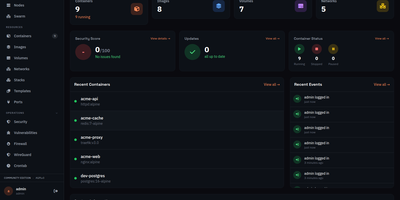
Usulnet packs container management, Trivy security scanning, Nginx reverse proxy, scheduled backups, WireGuard VPN, firewall rules, and multi-node orchestration into a single 70MB Go binary with zero external runtime dependencies. Every module ships in one download with no paid tiers, no telemetry, and no edition gating. Container lifecycle management covers creation, start, stop, restart, pause, kill, and removal with bulk operations, real-time resource statistics, filesystem browsing, and settings editing. Trivy integration scans images and running containers for CVEs with severity scoring, generates SBOMs, and validates CIS benchmarks. The multi-node architecture supports standalone, master, or agent modes where agents connect over NATS JetStream with mTLS encryption, enabling remote Docker host management from a central dashboard. Reverse proxy configuration handles Nginx with automatic Let's Encrypt certificates, TCP/UDP stream proxying, access lists, and dead host detection. Backup operations capture container volumes and Compose stacks on configurable schedules with retention policies and full restore capabilities. A built-in application catalog provides 60+ one-click templates for common services. JWT license validation uses an RSA-4096 public key embedded in the binary, requiring no call-home and working entirely offline. For teams tired of maintaining separate tools for each infrastructure concern, Usulnet collapses the entire stack into a single point of management with Docker Compose deployment alongside PostgreSQL, Redis, and NATS.