ClientSt0r
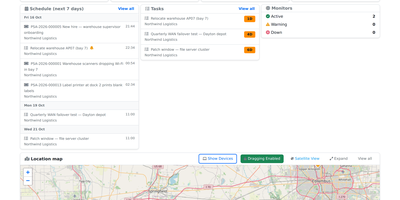
ClientSt0r is a self-hosted operations platform for managed service providers that keeps client documentation, IT assets, credentials, and the service desk in one multi-tenant system running on your own infrastructure. Open any ticket and the client's active contract, the asset it concerns, the runbook that covers it, and the vault entries you are allowed to use appear alongside the conversation, so nobody switches between four products during an outage. Readiness scoring grades every client against what should be documented, explains each gap, and queues the fixes, while versioned documents with owners and review dates keep runbooks from quietly going stale. The credential vault encrypts secrets with AES-256-GCM, isolates them per client, enforces IP, geography, and time-of-day access rules, logs every reveal, generates TOTP codes, checks passwords against known breaches, and imports existing Bitwarden or Vaultwarden libraries. Asset records cover hardware inventory, IP address management, rack layouts, and printable QR labels. The service desk adds queues, SLA timers, dispatch views, time entries, quotes with electronic signatures, invoices, contracts, approvals, a workflow rule builder, a threading email engine, and guided client portal forms, while procurement, profitability reporting, CVE scanning, SSL expiry tracking, and uptime monitoring round out daily operations. Running on a dedicated VPS on RepoCloud with guaranteed CPU, RAM, and SSD, full root SSH access, and a browser serial console. MIT licensed.
Hatchdoor
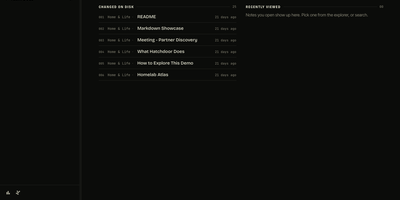
Hatchdoor gives your Markdown notes two front doors at once: a fast web interface for you, and an MCP endpoint where AI agents read and edit the very same vault. Point it at any folder of Markdown files, an existing Obsidian vault included, and it indexes everything into a disposable SQLite read model that rebuilds itself from your files if deleted. In the browser you browse folders, follow wikilinks that survive renames, explore backlinks and graph views, and search by keyword or meaning across every vault you mount. The live editor shows Markdown syntax only on the line you are editing and saves automatically, while concurrency checks refuse a save when the note changed underneath you. Agents connect with their own token and start read-only; turn writes on and Claude Code, Codex, Cursor, or Hermes can create, edit, move, and link notes through the same checked operations the interface uses. Saved queries in Obsidian's Bases syntax render as live tables, attachments preview inline, and optional git integration commits and pushes every change back to your vault's repository. Running on a dedicated VPS on RepoCloud with guaranteed CPU, RAM, and SSD, full root SSH access, and a browser serial console. AGPL-3.0 licensed.
Tasterr
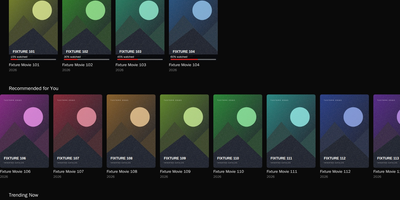
Tasterr is a self-hosted discovery front end that learns what each person in your household actually likes and fills the home screen with movie and show rails picked for them. It reads the TMDB catalog in your chosen metadata language and merges it with your Plex, Jellyfin, Seerr, and Trakt accounts, so library titles, requests, and watch history shape every recommendation. Continue Watching pulls resumable movies, episodes, and next-up picks from Plex and Jellyfin into one rail, and Because You Watched rails spin off new suggestions from finished titles. Watched titles disappear from discovery by default, a Not interested button banishes titles for good, and My List keeps the maybes one tap away. When the household gathers, Something for Everyone Tonight blends member profiles into one shared shortlist, and Picks You Wouldn't Usually Watch deliberately wanders outside each profile. Requests flow into Seerr under the signed-in member's name, availability badges show where a title already lives, and admins tune regions, streaming services, rails, language, theme, and accent color. Running on a dedicated VPS on RepoCloud with guaranteed CPU, RAM, and SSD, full root SSH access, and a browser serial console. AGPL-3.0 licensed.
Owlmail
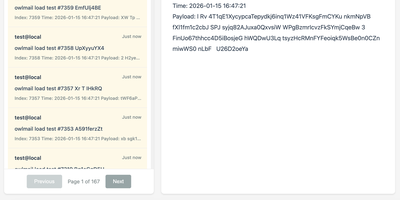
Every email your app sends while you build and test it lands in OwlMail's browser inbox instead of a customer's mailbox. Point any application's SMTP settings at OwlMail and every message is ready to open as rendered HTML, plain text, headers, or raw source. Attachments and inline images sit beside the body, and seven preset preview widths show how the message lays out on phones, tablets, and desktops before anyone real sees it. A Verify panel checks subject, body, and link hosts against expectations, while CI pipelines use the REST API with delivery cursors to wait for exactly the messages their test run produced, assert on them, and clean up afterwards. Coding agents get the same inbox read-only over MCP, so an assistant can confirm a signup email arrived without touching your mail server. When a message proves itself, relay it onwards to a real SMTP server, by hand or automatically under filtering rules, or fire webhooks with HMAC signatures and retry queues into the rest of your automation. Everything stores as plain .eml files on disk, with optional SQLite indexing, S3 attachment storage, and ZIP exports for archiving. Running on a dedicated VPS on RepoCloud with guaranteed CPU, RAM, and SSD, full root SSH access, and a browser serial console. MIT licensed.
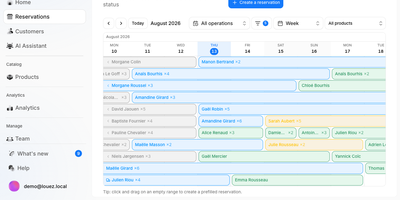
Louez
Bikes, cameras, party tents, power tools: if you hand it out by the day, Louez runs the booking desk for you. Each shop gets a branded online catalog where customers filter products, pick pickup and return times, and see real availability before they check out. Behind it sits a dashboard with a reservation calendar and planning timeline, a product catalog with stock and tiered pricing, and a customer database with full booking history. Pricing supports duration discounts, seasonal rates, and promo codes, and a simulator previews what a rental will cost. Every reservation can generate a PDF contract, send confirmation and reminder emails, and take deposits, with Stripe payments as an optional extra. Customers get a passwordless portal to follow their bookings, and staff get roles and permissions through team invitations. Equipment inspections, delivery options, multi-store overviews with revenue and occupancy charts, and API keys round out the toolkit, and the interface ships in thirteen languages. Use it for a bike hire shop, a tool library, an AV rental company, or a community gear pool. Running on a dedicated VPS on RepoCloud with guaranteed CPU, RAM, and SSD, full root SSH access, and a browser serial console. AGPL-3.0 licensed.
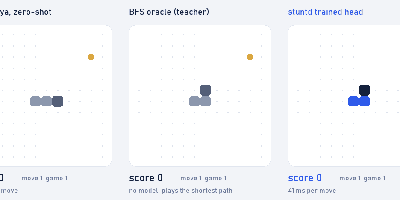
Stuntd
If your app asks an LLM the same routing, triage, or moderation question thousands of times a day, stuntd is the local proxy that learns those answers and stops paying for them. It sits in front of OpenAI or Anthropic as a drop-in replacement for the provider base URL, recording typed requests while relaying everything else byte for byte, and distils each decision site into a small head on a frozen Laya encoder. Once trained, the head answers in about 20 milliseconds with no tokens and no round trip; when its calibrated confidence falls below the site threshold, or the novelty gate flags the input, the question goes back to the provider instead of being guessed at. It speaks four protocols on one daemon: Jev System One with choice, score, and noul questions, the OpenAI Decisions API, Chat Completions, and the Anthropic Messages API, and every response carries an X-Stuntd header showing who answered. Run it keyless and the base Laya checkpoint answers zero-shot locally, put the paid Jev API in front to teach from real traffic, or import labelled rows and train directly. A few thousand rows close the gap: in the banking demo, the risk question climbs from 30.0 to 72.5 percent. A shipped Claude Code PreToolUse hook answers "may this command run" in about 50 milliseconds, without sending every command to a provider. Running on a dedicated VPS on RepoCloud with guaranteed CPU, RAM, and SSD, full root SSH access, and a browser serial console. Apache-2.0 licensed.

Sora Frame
An old tablet on the shelf can show family photos all day once Sora Frame feeds it. The slideshow runs in any browser with soft cross-fades, a large clock, date, and weather widget, and it keeps the screen awake, even on iPads and phones. Install it to the home screen like an app, then pick what plays: every photo or a single folder, nested folders included. The library takes photos by drag and drop or the Upload button, builds folder covers from their own pictures, moves photos with a drag, deletes a multi-selection in one go, and offers an optional Google Photos import. JPEG, PNG, WebP, GIF, and iPhone HEIC files are accepted, and only a resized copy is stored. Notes slip a message like a visit reminder into the rotation, with up to four photos, a date range, an optional event countdown, and a choice of eight memory-book layouts. Each frame or family member gets a PIN limited to chosen folders, and a new frame pairs by scanning a QR code or opening an address that carries the PIN. The interface speaks English, Spanish, French, German, Portuguese, Italian, Dutch, Hindi, Japanese, Chinese, and Arabic, and keyboard shortcuts cover play, next, fullscreen, and photo info. A living room shelf, a grandparent's tablet, or an office desk display makes a fine home for it. Running on a dedicated VPS on RepoCloud with guaranteed CPU, RAM, and SSD, full root SSH access, and a browser serial console. AGPL-3.0 licensed.
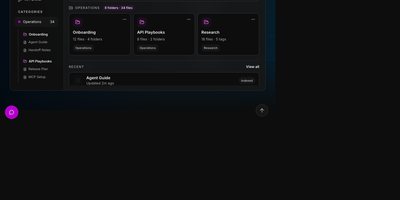
DocsMint
DocsMint is a self-hosted knowledge workspace where your team writes documentation once and both people and AI agents retrieve it through hybrid search and a built-in MCP server. Documents live in a rich visual editor with Markdown import and export, organized by folders, categories, and tags, with sharing and version history. Search blends exact title matches, multilingual keyword search, typo-tolerant fuzzy matching, and semantic vectors, then widens results through graph relationships between documents, so a query in one language or phrasing still finds the right page. Every edit quietly refreshes the index in the background; nothing needs manual re-embedding. Agents connect through 22 MCP tools covering search, reading, creation, updates, folders, snapshots, and export, over a local stdio bridge or the HTTP endpoint on your own installation. Category-scoped API keys hand each integration only the slice of the library it may read, edit, or write, while a global key serves trusted automation. The same operations are available through the REST API, a typed TypeScript SDK, and a terminal CLI for scripts. The web application installs as a PWA with offline reading, and AI features run on your choice of an OpenRouter key or a fully local Ollama setup. Running on a dedicated VPS on RepoCloud with guaranteed CPU, RAM, and SSD, full root SSH access, and a browser serial console. Apache-2.0 licensed.
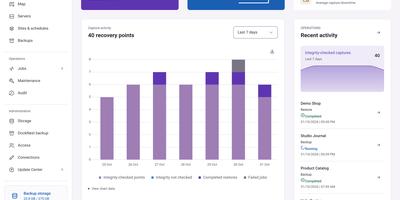
DockNest
A backup nobody has restored is only a hope, so DockNest backs up your Docker sites to storage you own and proves each one by restoring it to a private copy. It connects to your Linux servers over SSH and finds the Docker projects and static nginx sites on them. Schedules, retention, and pinned backups are set per site. A Map page draws your servers, sites, and backup storage as connected nodes, and dragging a site to another server moves it, with a backup first and the old copy kept stopped for seven days. Jobs show live progress, a step timeline, and plain-language reasons when something fails. Automatic restore tests bring the latest backup up on a test server and check it. Hardening scores grade each site from A to F with a fix for every finding, and server cleanup previews reclaimable space before anything is removed. Alerts reach Telegram, Slack, Discord, email, ntfy, and many more channels. Backups are encrypted with AES-256-GCM, sign-in needs an authenticator app, and the interface offers light and dark themes plus a phone layout. Running on a dedicated VPS on RepoCloud with guaranteed CPU, RAM, and SSD, full root SSH access, and a browser serial console. AGPL-3.0 licensed.
Flopwire
Flopwire lets your AI coding agents message each other and search each other's history, so a Claude Code session on your laptop can ask the Codex session on your server what it already tried before duplicating the work. Agents see who is online and what they started on with peers, then reach each other mid-turn with send; a message arrives inside the recipient's running turn, or with its human's next prompt, and only your own live session can be woken deliberately. A device agent indexes transcripts from Claude Code, Codex, Devin CLI, and opencode within about a second; grep runs regex over every session, and search returns ranked matches naming the user, device, harness, session, and byte range each hit came from. From any full commit ID, trace finds the session that produced it and lets an agent read the conversation behind the change. The same capabilities ship as MCP tools and a messaging skill, so agents recover earlier decisions without you relaying context by hand. Secrets are redacted on the device before upload and again on the server, and path rules keep chosen repositories out of the index. One machine needs no server at all; add the team server with Docker Compose, Postgres, and any S3 compatible object store when a whole team's devices should share one searchable archive over TLS. Running on a dedicated VPS on RepoCloud with guaranteed CPU, RAM, and SSD, full root SSH access, and a browser serial console. Apache-2.0 licensed.
Better Status Page
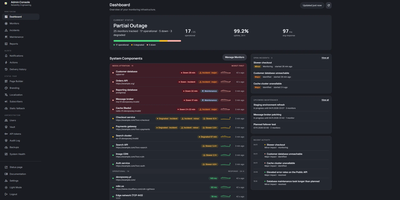
Better Status Page watches your services around the clock and turns outages into calm, branded status updates for your users instead of a flood of support tickets. Its monitors probe HTTPS endpoints with authentication flows and TLS expiry warnings, ping and TCP ports, DNS records, Docker containers, mail servers over SMTP, IMAP, and POP3, and databases from PostgreSQL and MySQL to Redis, MongoDB, SQL Server, and Oracle. A slower-than-usual alert fires when a monitor's p95 response time climbs against its own last seven days, and passive webhook heartbeats catch jobs that simply stop checking in. Alerts reach the team through email, Slack, Discord, Microsoft Teams, Telegram, ntfy, Pushover, webhooks, and Twilio SMS or voice calls, with failure thresholds, quiet hours, rate caps, and grouping keeping the noise down. Incidents carry severity levels, public updates, linked monitors, and recurring maintenance windows, and subscribers follow along by email, webhook, RSS or Atom feed, or a JSON status API. A drag-and-drop builder restyles the public page with your branding, dark mode, and translations, a static fallback keeps the page readable if the server itself falls over, and uptime reports export to CSV for SLA reviews. Running on a dedicated VPS on RepoCloud with guaranteed CPU, RAM, and SSD, full root SSH access, and a browser serial console. MIT licensed.
OpenVPM
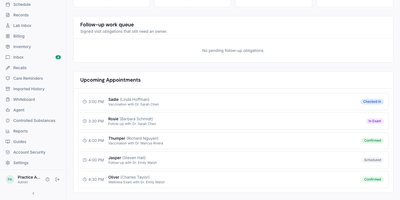
A clinic day starts before the first patient arrives, and OpenVPM has the whole of it on one screen: the schedule, the charts, the invoices, and the shelves. The calendar gives every doctor a column across day and week views, color-codes appointment types, flags doctor and room conflicts, and walks each visit from Scheduled to Checked In, In Exam, and Checked Out. Any chart opens in seconds through fuzzy search, carrying species, breed, weight trend charts, microchip numbers, photos, and allergy alerts that surface before anyone prescribes. SOAP notes sit beside problem lists, vaccination records with reminders and downloadable certificates, lab results against reference ranges, and prescriptions with a dosing calculator and refill tracking. Checkout ties the medicine to the money: treatment templates draft itemized invoices with tax, estimates convert to invoices, payments post to the account balance, and stock deducts itself when products are dispensed. Owners get their own portal for health records, appointment requests, vaccination certificates, invoices, and active prescriptions. The practice whiteboard refreshes itself as animals move between rooms, so the whole team always knows who is waiting, who is in exam, and who is done. Running on a dedicated VPS on RepoCloud with guaranteed CPU, RAM, and SSD, full root SSH access, and a browser serial console. AGPL-3.0 licensed.
GuideAnts
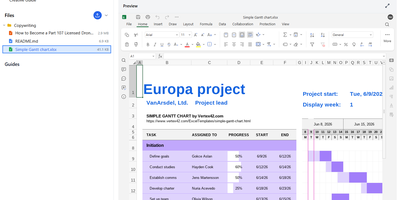
GuideAnts is an AI workspace where files, conversations, and generated documents stay together in project notebooks, so good work gets reused instead of vanishing into chat history. Projects own folders, notebooks, guides, assistants, and usage records, and each notebook keeps its conversation, file context, artifacts, and version history side by side. Word, PowerPoint, Excel, and OpenDocument files open and co-edit in place through an optional document server, Markdown has a live-preview editor, and extracted Markdown copies feed retrieval. A Guide Builder packages instructions, tools, files, starter prompts, and model choices into reusable guides and assistants, and portable SKILL.md packages can be imported or authored there. Published guides get friendly URLs, a web component for embedding in other sites, public APIs, and MCP access to their skills, with anonymous, key-protected, or webhook-validated entry plus daily and billing-period charge limits. Telemetry attributes each message, tool call, and charge to a model and assistant, so you can see which steps truly need a frontier model; the maintainers report one public workload falling from hundreds of dollars a day to about ten. Chat, embeddings, document intelligence, image generation, and speech can each route to a different cloud or local provider, with slim, CPU, NVIDIA, AMD, and Vulkan runtimes to choose from. Running on a dedicated VPS on RepoCloud with guaranteed CPU, RAM, and SSD, full root SSH access, and a browser serial console. Apache-2.0 licensed.
CodeRail
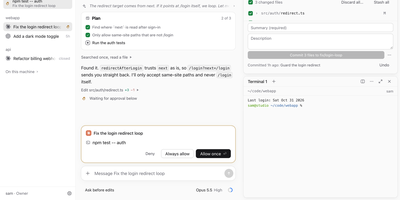
Close the laptop, walk away, and your coding agents keep working; CodeRail is the remote control that lets you supervise them from a browser or your phone without handing your machines to anyone's cloud. A small bridge on each computer connects outbound to your server, so there are no open ports and no VPN to babysit, and each machine keeps its own Claude Code and Codex logins because CodeRail never holds your AI keys. Chats show plans, tool calls, models, modes, and background tasks, and when an agent wants to run something sensitive, the approval lands with you wherever you are, including as a phone push notification. Real terminals outlive the browser tab, files can be viewed, edited, uploaded, and downloaded in place, and git work, pull requests included, sits beside the conversation that produced it. Each chat even gets a browser on the computer itself, shared live with everyone in the chat and drivable by the agent. Roles run Owner, Operator, or Viewer per computer, narrowed down to folders and agents, with every change audited, and sessions keep running with every browser closed while history stays readable offline. Running on a dedicated VPS on RepoCloud with guaranteed CPU, RAM, and SSD, full root SSH access, and a browser serial console. Apache-2.0 licensed.
nexdeck
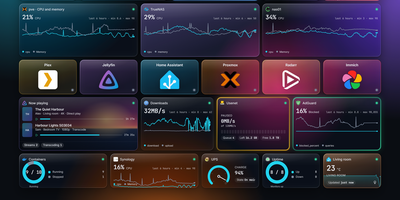
Every homelab ends up with twenty browser tabs, and nexdeck turns them into one board of cards that update on their own. The server asks each service in its own rhythm and pushes changes to every open browser, so ten tabs cost a service only one request. Cards cover Proxmox, Docker, Synology, TrueNAS, Pi-hole, Plex, Radarr, Home Assistant, and over two hundred more. Administrators can act from the cards by restarting a container, starting a VM, or pausing downloads, and every action is logged. Pages arrange freely on a 12, 24, or 36 column grid, with a phone layout that stacks cards in order and a kiosk link for wall displays that needs no sign-in. A network page draws a live UniFi plan with traffic on every link. A chronicle records outages and changes, history charts reach back two years, and alerts go to Telegram, email, Web Push, ntfy, Gotify, Discord, Slack, or Apprise. Boards export as YAML for Git, Docker labels create tiles, and OpenID Connect handles sign-in with roles and board sharing. Thirteen colour themes, light and dark modes, skins, and twelve languages make it yours. A demo board with invented data offers a safe first look. Running on a dedicated VPS on RepoCloud with guaranteed CPU, RAM, and SSD, full root SSH access, and a browser serial console. AGPL-3.0 licensed.
pvecenter
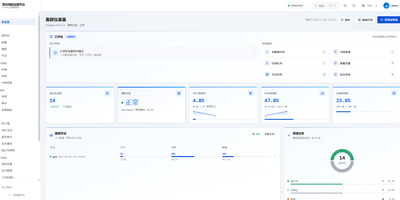
Handing a teammate the keys to a Proxmox cluster usually means handing over far too much, so pvecenter puts a narrower, self-service web panel in front of it. The dashboard shows node health, CPU, memory, storage, and recent tasks, and several Proxmox hosts can be managed from one place. Virtual machines are created through a guided wizard or in batches, then powered, cloned, migrated, resized, snapshotted, and reached through an in-browser console. LXC containers get their own pages, and a template pipeline builds cloud-init templates from cloud images. Bridges, VLANs, address pools, and the native Proxmox firewall are managed with rule templates pushed to many guests at once. Backups can run now or on a schedule, with restore, delete protection, and integrity checks. Administrators define reusable resource sizes, per-user quotas, roles, two-factor sign-in, and an audit log of every write. A security baseline scores hosts and offers guided hardening, SSH brute-force protection bans repeat offenders, and an AI inspection assistant explains findings and asks approval for every change. Alerts reach email, Feishu, and webhooks, and certificates renew automatically. The interface is Chinese-first, with a language switch and an English guide. Running on a dedicated VPS on RepoCloud with guaranteed CPU, RAM, and SSD, full root SSH access, and a browser serial console. Apache-2.0 licensed.
uptimepage
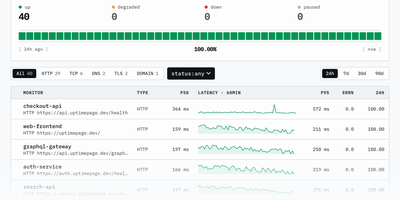
Uptime checks, a customer-facing status page, and on-call paging arrive in one self-hosted package, so a failing check can open an incident, page the right person, and update the public page without a second tool. Monitors cover HTTP, TCP, ICMP ping, DNS, TLS certificate expiry, domain expiry, cron heartbeats, and scripted browser login flows with per-step timings. Probe agents run in any region you choose, and the dashboard shows latency by region. Incidents open on failure and close on recovery, with acknowledgement to silence paging and reminders per monitor. Escalation policies page channels and schedules level by level, and layered on-call rotations support daily, weekly, or custom shifts, calendar overrides, and an iCalendar feed. Alerts reach Slack, Discord, Teams, Telegram, PagerDuty, SMS, WhatsApp, ntfy, Gotify, email, and webhooks. The public status page shows 90 days of uptime per component, maintenance windows, incident updates, and RSS, JSON, and email subscriptions. Everything can be driven by REST API, scoped tokens, a Terraform provider, or an MCP server for AI assistants. Self-hosted installs have no monitor limits and no plan to buy. Running on a dedicated VPS on RepoCloud with guaranteed CPU, RAM, and SSD, full root SSH access, and a browser serial console. AGPL-3.0 licensed.
OpsKnight
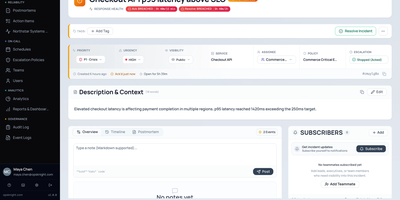
When production breaks at 3 a.m., somebody has to know it is their turn, and OpsKnight keeps that answer on your own server instead of a per-seat subscription. Alerts from Prometheus, Grafana, Datadog, Sentry, CloudWatch, and generic webhooks arrive at authenticated endpoints, get deduplicated, and are routed to the right service. On-call schedules support rotation layers, daylight saving safe handoffs, and temporary overrides, and escalation policies page users, schedules, or whole teams in timed steps. Responders get push, email, SMS, WhatsApp, and Twilio voice calls where the keypad acknowledges the page. Each incident has an ownership panel, a timeline, notes, subscribers, action items, and SLA timers, and Slack or Teams war rooms keep chat in step. The Command Center shows active, muted, and unassigned incidents at a glance, analytics report MTTA, MTTR, and SLA compliance, and a System Health Center runs live diagnostics. A public status page with uptime history, maintenance notices, and subscribers keeps customers informed, and postmortems capture what the team learned. Sign-in supports OIDC and SCIM provisioning, and an installable mobile web app brings pages to your phone. Running on a dedicated VPS on RepoCloud with guaranteed CPU, RAM, and SSD, full root SSH access, and a browser serial console. AGPL-3.0 licensed.