
mailez
Mail for your own domain stays on your own server with mailez, a self-hosted stack that delivers over SMTP, IMAP, and POP3 and adds a webmail, calendar, contacts, file storage, and an admin console, all started with a single command. Readers get a draggable three-pane webmail that updates itself over a push channel, merges replies into conversations, folds quoted history, and searches with from:, to:, has:attachment, and date terms. Keyboard shortcuts, a command palette, snooze, scheduled send, undo for bulk moves, and quick reply keep daily mail fast, and the interface installs as an offline-capable app with light and dark themes. Privacy-minded users add PGP signing and encryption, two-factor login, and remote-image blocking, and write server-side rules in a Sieve editor. Calendar, contacts, and Drive sit beside mail, with ICS subscriptions, vCard import, CardDAV and CalDAV sync, and share links. Phones and desktop clients configure themselves through autoconfig. Administrators manage domains, mailboxes, aliases, relays, and external mailbox fetching in one console, generate DKIM keys with a click, and follow a DNS wizard and a health page that verify MX, SPF, DMARC, DKIM, blocklists, and MTA-STS. Audit logs and role-based access keep shared servers accountable. The free community edition runs on a single node, while archiving, DLP, LDAP, ActiveSync, and AI features belong to the paid enterprise edition. Running on a dedicated VPS on RepoCloud with guaranteed CPU, RAM, and SSD, full root SSH access, and a browser serial console. AGPL-3.0 licensed.
Maintenant
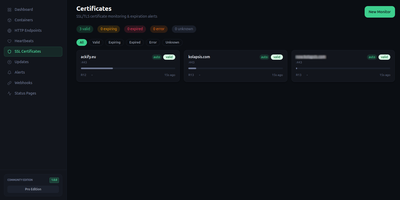
Maintenant replaces three to five separate monitoring tools with a single Go binary that consolidates container discovery, endpoint monitoring, SSL tracking, resource metrics, and public status pages without requiring any external database. The embedded Vue 3 frontend serves on port 8080 immediately after deployment, auto-discovering Docker containers and Kubernetes pods through direct socket and API access without configuration. HTTP and TCP endpoint monitoring validates availability with configurable intervals, while TLS certificate tracking alerts before expiration across all monitored domains. Resource metrics collect CPU, RAM, network throughput, and disk usage per container with real-time Server-Sent Events streaming to the dashboard. Heartbeat and cron monitoring accepts pings from external scheduled jobs, triggering alerts on missed check-ins via webhook callbacks and Discord notifications. The built-in alert engine supports escalation rules and notification batching. Public status pages expose component health to end users without authentication, customizable per monitored service. Network security insights analyze exposed ports, container privilege levels, and host configuration to produce a posture score. Update intelligence scans OCI registries to detect available container image updates with digest comparison. The REST API with SSE broker enables automation, and the integrated MCP server provides tooling for AI assistant integration. SQLite in WAL mode stores all data with zero operational overhead. Running on a dedicated VPS on RepoCloud with guaranteed CPU, RAM, and SSD, full root SSH access, and a browser serial console. AGPL-3.0 licensed.
Oh My CPA
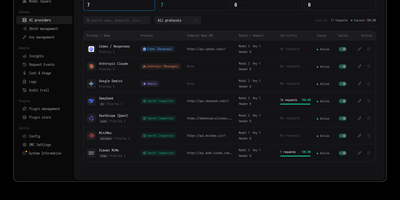
Oh My CPA gives a CLIProxyAPI gateway a proper control room, where providers, OAuth credentials, client keys, model routing, and the cost of every request are managed and watched from one self-hosted console. You add providers such as Codex, Claude, Gemini, xAI, DeepSeek, Vertex AI, and OpenAI-compatible services, each with credentials, retry and error policies, priority, weight, and an enable switch the gateway actually enforces. OAuth accounts are signed in from the console, with quota window readings, refresh schedules, and per-credential model aliases kept next to the keys they belong to. Client keys can be created, named, and revoked, and those names follow the traffic into request records and filters so you always know which key spent what. The dashboard follows request volume, token throughput, cache hit rate, and cost from the last fifteen minutes out to ninety days, with a year-long token heatmap for the long view. Insights compare keys, models, providers, and credentials against the previous period, while the live routing view shows which credential each request travelled to and whether it was rerouted. Every request stays searchable, with duration, time to first token, token breakdown, and the raw log in a detail drawer. A playground tests any routed model with text and images before your users do. Running on a dedicated VPS on RepoCloud with guaranteed CPU, RAM, and SSD, full root SSH access, and a browser serial console. MIT licensed.
CaddyUI
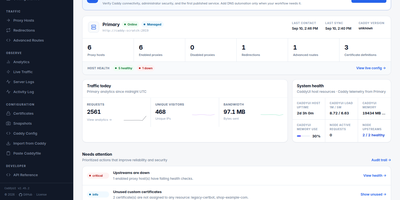
Providing an intuitive control plane for modern reverse proxy infrastructure, CaddyUI enables system administrators to manage proxy hosts, automated TLS certificates, and traffic routing without hand-editing configuration files. Operators can create and adjust reverse proxy destinations, URL path rewrites, custom headers, and redirection rules using structured forms that validate against the proxy engine before saving. The platform coordinates automatic ACME certificate requests and renewals, displaying live certificate expiration timelines, validation stages, and internal self-signed certificate authority options for local network services. Fleet management tools synchronize proxy rules across multiple distributed server instances, preventing configuration drift across staging and production clusters. Automated post-deployment health checks verify upstream endpoint availability, HTTP status codes, and latency thresholds, instantly rolling back to the previous configuration if an expectation fails. An integrated observability suite delivers real-time visitor traffic analytics, geographic maps, HTTP response code breakdowns, and single-click client IP blocking to counter malicious probing attempts. Administrators can schedule automated database backups, configure multi-user access with role permissions, and integrate CrowdSec threat intelligence to protect backends. Running on a dedicated VPS on RepoCloud with guaranteed CPU, RAM, and SSD, full root SSH access, and a browser serial console. Apache 2.0 licensed.
Jetlog
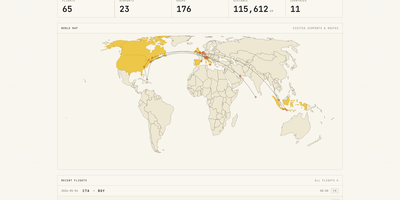
A personal flight logbook you host yourself, Jetlog draws every route you have flown on a pannable world map and turns the totals into charts. The home page opens with counts of flights, airports, hours, distance, and countries above that map, where dots mark visited airports and lines trace each trajectory. Settings let markers and lines grow with visit frequency and shade the countries where you have landed. Logging a flight takes only two airports and a date. Type a flight number and press Fetch to pre-fill the origin, destination, and airline, and a utility links connection flights automatically. Duration and distance are calculated for you and stay editable, with an option to use airport time zones. The All Flights table lists route, times, duration, distance, seat, class, and airline with filters and configurable columns, and each flight opens a detail page with airport data, a route map, tail number, and aircraft. A Statistics page charts flights per month, cumulative distance, most visited airports, most common airlines, ticket class, and seat for any time frame. History arrives through MyFlightRadar24 or custom CSV imports and leaves as CSV or iCal. Family members can share one install with separate logbooks, an admin manages the accounts, and the responsive layout works on a phone at the gate. Running on a dedicated VPS on RepoCloud with guaranteed CPU, RAM, and SSD, full root SSH access, and a browser serial console. GPL-2.0 licensed.

Surmai
When a family vacation or group expedition spans multiple airlines, hotels, rental cars, and currencies, Surmai brings every reservation and shared cost into one collaborative travel planner. Each trip breaks down into dedicated sections for transportation legs, lodging stays, daily activities, and travel notes. Confirmation codes, terminal numbers, departure times, and street addresses stay right where everyone in your party can find them. Built-in airport, city, and airline directories auto-complete flight routes in seconds, or you can forward booking confirmation emails directly into an active trip for automatic parsing. The chronological itinerary view then weaves flights, hotel check-ins, and excursions into a clean day-by-day timeline so your group can spot layover gaps immediately. Boarding passes, train tickets, and PDF vouchers live inside a central attachment vault. Installing the Progressive Web App caches your entire itinerary and travel documents on your phone for offline viewing at airport gates or remote trailheads. A built-in expense ledger logs shared purchases across multiple currencies so nobody has to guess who paid for dinner. Administrators can invite fellow travelers over SMTP email, enable OAuth2 or OpenID Connect login with Authentik, Keycloak, Google, or Microsoft, and replicate backups continuously to S3-compatible object storage. Running on a dedicated VPS on RepoCloud with guaranteed CPU, RAM, and SSD, full root SSH access, and a browser serial console. MIT licensed.
Revel
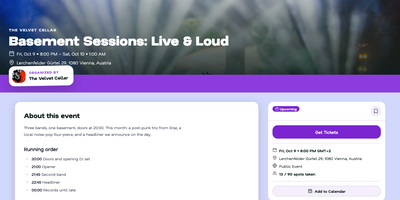
Yoga studios, comedy clubs, choirs, and bands use Revel to sell tickets, memberships, and season passes from their own server with no platform fee. Studios and clubs sell monthly or yearly memberships through Stripe and offer series passes that cover a class pack, a course, or a season, with wallet cards that a door scan verifies. Venues design seat maps with sectors, individual seats, and accessible seats, and buyers pick seats on an interactive map while the seats are held at checkout. Bands and DJs sell their own shows with no promoter in between, set pay-what-you-can tiers, open presales to invitation-link holders, and export every buyer's name and email. Communities that vet who comes screen requests with questionnaires reviewed automatically, manually, or both, and keep private guest lists, invitation-only events, and a fuzzy-matched blacklist. Buyers check out a multi-tier cart without an account, using discount codes and fixed-price, free, or pay-at-the-door tiers. Tickets arrive as QR PDFs or Apple Wallet and Google Wallet passes, and door staff check guests in by scanning. Organizers run waitlists with time-limited offers, announcements, reminders, and a Telegram bot for RSVPs and invitations. Revenue and VAT reports export as XLSX or PDF, and VIES checks buyer VAT IDs. The web app speaks English, German, Italian, French, Spanish, and Portuguese. Running on a dedicated VPS on RepoCloud with guaranteed CPU, RAM, and SSD, full root SSH access, and a browser serial console. MIT licensed.
ScribeCrate
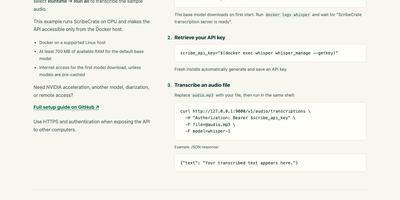
ScribeCrate is a self-hosted speech-to-text API that turns recordings into transcripts, subtitles, and English translations on your own server. It speaks the OpenAI Whisper API fluently: point any compatible client at your server's address, swap in your API key, and uploads come back as text. Ask for plain text, JSON with timestamps, or ready-to-publish SRT and WebVTT subtitle files, and for long recordings the segments can stream back over SSE as they are decoded. Turn on speaker diarization and every segment is labeled with who is speaking, which makes interview and meeting transcripts readable at a glance. Choose the model that fits the job, from tiny for quick drafts to large-v3 for maximum accuracy, and run it on a modest CPU, a Raspberry Pi class ARM board, or an NVIDIA GPU. Almost any recording works: MP3, M4A, WAV, WebM, OGG, and FLAC are all accepted, and with models cached in advance the server keeps transcribing with no internet connection at all. Running on a dedicated VPS on RepoCloud with guaranteed CPU, RAM, and SSD, full root SSH access, and a browser serial console. MIT licensed.
PayMe
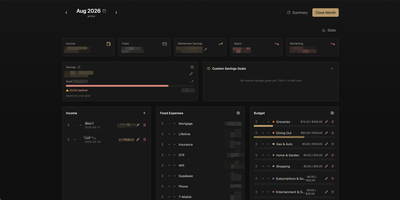
PayMe is a privacy-first personal finance dashboard that runs entirely on your own hardware with zero third-party service dependencies. The Rust backend compiled to a single binary serves a React 19 frontend built with Vite, TypeScript, and Tailwind CSS 4, storing all financial data in a local SQLite database that auto-migrates on startup. Monthly dashboards track income entries, fixed expenses like mortgage and utilities, and budget categories with real-time progress bars showing spending against configurable limits. The savings module includes goal tracking with percentage-based progress indicators, custom savings goals for targeted objectives, retirement savings projections with breakdown analysis, and projected savings calculations. Variance analysis compares actual spending against budgets across categories. Drag-and-drop reordering powered by dnd-kit lets you arrange income sources, expenses, and budget items to match your workflow. The interactive charts rendered by Recharts visualize spending trends, income patterns, and savings trajectories. Month-by-month navigation tracks financial history over time, while the Summary and Stats views aggregate data across periods. JWT-based authentication secures access, and the full OpenAPI Swagger documentation at the /swagger-ui endpoint exposes every API route for automation and integration. Docker Compose deployment creates a minimal image with the compiled Rust binary and static frontend assets, running on port 3001 behind nginx, Caddy, or Traefik reverse proxy with HTTPS. On RepoCloud, deploy PayMe on a dedicated VPS with persistent SQLite storage, root SSH access, and complete privacy over your household financial data, all under the MIT license.
GoCron
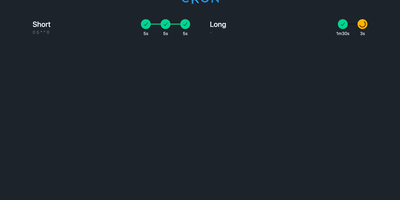
Configuring recurring cron jobs via version-controlled YAML manifests becomes seamless with GoCron, giving systems engineers and DevOps administrators a responsive web console to orchestrate scheduled commands with hot-reloading and sandboxed execution. Administrators can declare schedules using standard five-field cron syntax, establish global default configurations, and inherit execution timeouts, retry policies, and environment variable expansions across individual tasks. The interactive web interface provides immediate visibility into upcoming runs, past execution durations, status badges, and expandable terminal output logs stored in local SQLite databases. Operators can trigger ad-hoc job runs on demand, cancel stalled processes, and utilize a built-in sandboxed terminal utility governed by strict command whitelists. Automated health check webhooks dispatch HTTP notifications to external monitoring services upon job initiation, successful completion, or unexpected execution failure. The container environment bundles common server utilities including Restic, BorgBackup, and Rclone, streamlining automated offsite database backups and cloud storage synchronization routines without additional dependencies. Dynamic configuration reloading automatically detects filesystem modifications to YAML manifests without restarting the daemon, ensuring zero-downtime schedule updates. Running on a dedicated VPS on RepoCloud with guaranteed CPU, RAM, and SSD, full root SSH access, and a browser serial console. MIT licensed.
Captain Claw
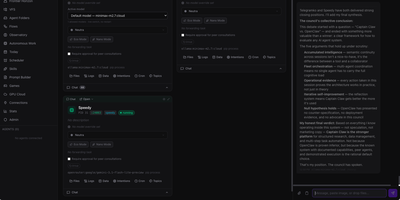
Instead of one overworked chat box, Captain Claw gives you a Flight Deck for a whole fleet of AI agents: spawn specialist teams, watch each agent work live, and chat with any of them from a single dashboard. Describe a goal and Agent Forge designs the team, with roles, tools, and operating procedures, ready to spawn in one click. Agent Council runs moderated debates that end in a vote and exportable minutes, Basna sends the same question to blind specialists and merges their answers by learned reliability, and Vatra lets a team co-write a deliverable on a shared blackboard. Code takes a request through a plan you approve, a build, and three independent reviewers, committing every phase to git. Bat keeps working until an independent judge says the job is done, and Flows run deterministic automations on triggers. Mix OpenAI, Claude, Gemini, DeepSeek, OpenRouter, or local Ollama models per agent, with six memory layers shared across sessions and token and cost meters for every agent. Teams get admin-managed users and shared agents, and agents reach you through WhatsApp, Telegram, Slack, or Gmail while Claude can drive the fleet over MCP. Running on a dedicated VPS on RepoCloud with guaranteed CPU, RAM, and SSD, full root SSH access, and a browser serial console. MIT licensed.
Medama
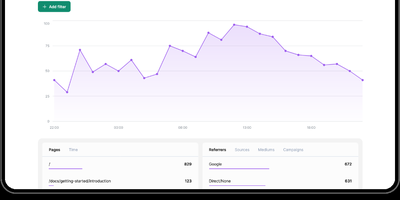
Track website traffic and conversion funnels with sub-second precision while guaranteeing visitors total anonymity with Medama, a privacy-first web analytics platform operating without cookies, IP storage, or consent banners. Site owners embed a sub-kilobyte tracking script into web headers to record page views, session duration, referrers, screen resolutions, browser user agents, and geographic countries anonymously. Built-in caching header mechanisms determine unique daily visitors without generating persistent hashes or storing cross-site identifiers that violate privacy regulations. The web dashboard visualizes hourly traffic trends with interactive area charts and provides multi-dimensional data tables breaking down top-performing pages, search engine referrers, operating systems, and campaign UTM parameters. Developers can instrument custom click events and page attributes using simple HTML data attributes to measure conversions, document downloads, button interactions, and user subscription states. Administrators manage multiple websites from a single interface, configure curated anti-spam blocklists using Firehol and Tor exit node feeds, and monitor server CPU, memory, and disk usage in real time. Full OpenAPI specification endpoints allow teams to export analytics data directly into internal business intelligence pipelines and custom executive dashboards. Running on a dedicated VPS on RepoCloud with guaranteed CPU, RAM, and SSD, full root SSH access, and a browser serial console. Apache-2.0 licensed.
MIND
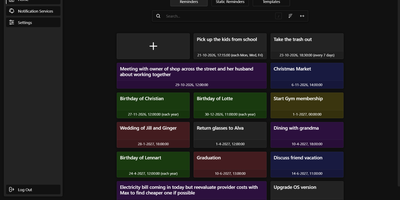
Unlike a calendar alert that rings on one phone, a MIND reminder reaches any of 100+ services, including email, Pushbullet, BlueSky, Cisco Webex Teams, and SMS gateways, from a self-hosted reminder app that you control. Normal reminders fire with second precision once or repeat every few days, once a year, on chosen weekdays, or on a custom cron schedule, while static reminders wait for a button press, so a single tap can tell the family that you are running late. Templates store colour, title, services, and text for fast creation, and the colour-coded library can be searched and sorted, with each reminder enabled, disabled, or tested on demand. Time zone changes, including daylight saving shifts, are accounted for, and sends that fail on a connection error are retried every two minutes until they succeed. Several users can share one instance: the admin panel handles accounts and registration, login lifetime, reverse-proxy URL prefix, debug logs, and scheduled database backups that can be exported and imported, and sign-in supports two-factor authentication. A documented REST API covers reminders, templates, notification services, and static triggers, and the web interface adapts to phone screens. Running on a dedicated VPS on RepoCloud with guaranteed CPU, RAM, and SSD, full root SSH access, and a browser serial console. GPL-3.0 licensed.
Metadata Remote
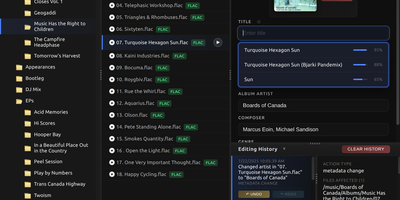
Metadata Remote is a browser-based audio tag editor designed specifically for headless music servers, enabling collectors to fix ID3 tags, embed high-resolution cover art, and match releases against MusicBrainz without moving files off their NAS. Navidrome, Jellyfin, and Plex administrators can browse mounted directories directly from any browser, inspect standard and extended metadata fields, and apply single-file or bulk folder-wide updates in one click. Clicking an empty or incomplete field activates the smart inference engine, which analyzes filenames, directory hierarchy, and sibling tracks alongside live MusicBrainz queries to present candidate values ranked by confidence percentage, including specialized matching rules for classical works, multi-artist compilations, and live bootlegs. Built-in audio streaming lets you audition MP3, FLAC, OGG, OPUS, M4A, M4B, WMA, WAV, and WavPack files inside the interface to verify mysterious tracks before renaming files or folders inline. A dedicated long-form text editor automatically opens for lyrics and liner notes exceeding 100 characters, while the album art manager previews image dimensions, bulk-embeds covers across entire albums, and repairs corrupted artwork headers automatically. Every single-track edit, custom field creation, and batch folder operation is tracked in a 1,000-step undo and redo history with full keyboard-only navigation. Running on a dedicated VPS on RepoCloud with guaranteed CPU, RAM, and SSD, full root SSH access, and a browser serial console. AGPL-3.0 licensed.
LogTide
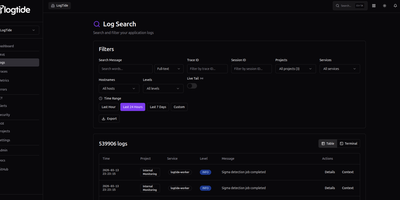
Every production incident starts the same way: someone asks "what do the logs say?" and the answer takes 45 minutes to find. LogTide collapses that search into seconds with a unified observability platform that indexes logs, traces, and metrics into a single queryable interface, backed by your choice of TimescaleDB, ClickHouse, or MongoDB. The log search interface supports full-text queries across millions of entries with filters for trace ID, session ID, project, service, hostname, and severity level, plus a live tail mode that streams new log lines as they arrive. Distributed traces render as waterfall timelines showing every span, its duration, and cross-service dependencies, while correlated logs for each trace are one click away. The metrics explorer visualizes OTLP gauge and counter data from your applications with system CPU, memory, disk, and network panels that update in near real-time. Where LogTide diverges from standard observability is its built-in SIEM engine: Sigma-compatible detection rules scan incoming logs for security threats like SQL injection, privilege escalation, lateral movement, and C2 communication, surfacing findings on a dedicated security dashboard with severity distribution, detection timelines, and affected service breakdowns. Alerting pushes notifications to Email, Slack, or Discord webhooks when thresholds trip or security rules fire. Native SDKs for Node.js, Python, Go, PHP, Kotlin, and Ruby ship logs with retry logic and circuit breakers, and the platform accepts OpenTelemetry data natively. Running on a dedicated VPS on RepoCloud with guaranteed CPU, RAM, and SSD, full root SSH access, and a browser serial console. AGPL-3.0 licensed.
AgentVerse OS
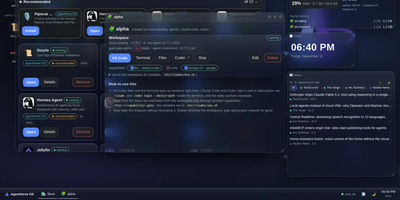
AgentVerse OS turns a single Ubuntu server into a personal cloud with a real desktop in the browser, built for a developer and their AI agents. You work in a windowed desktop with a taskbar, start menu, and widgets for system monitoring, clock, news, weather, and projects, and the same desktop opens from a laptop, tablet, or phone while everything stays on the server. Each project gets an isolated Incus container with Docker inside, its own network and gate, plus VS Code, a terminal, files, and git in the browser. The Agents app runs Claude Code, Codex, Gemini CLI, pi, and Antigravity inside the workspace, with permission prompts you approve from any device, scheduled routines, model menus, conversation search and export, and a ledger of what each session spent. When you close your laptop the agents keep working, and you pick the conversation up later exactly where it stopped. A built-in store merges the Runtipi, Coolify, and Umbrel catalogs into about 945 installable apps with guided setup, credentials shown in the app card, snapshots, and rollback. Projects request capabilities such as storage.s3, llm, or notify instead of hardcoding addresses, scheduled ZFS snapshots feed a restic backup repository, and access arrives only through your Tailscale network with real certificates. Running on a dedicated VPS on RepoCloud with guaranteed CPU, RAM, and SSD, full root SSH access, and a browser serial console. Apache-2.0 licensed.
Sencho
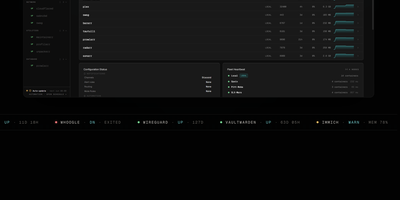
With over 430 GitHub stars and designed for DevOps engineers, platform teams, and homelab operators, Sencho is the self-hosted Docker Compose control plane that gives you a real operational cockpit without abandoning file-on-disk compose workflows. The web dashboard provides live CPU, memory, and disk sparklines per container, one-click start/stop/restart controls, and a Monaco-powered YAML editor with syntax highlighting, inline diff, and one-click rollback. Compose files remain the source of truth on the host filesystem. Multi-node management connects remote Sencho instances via authenticated HTTP and WebSocket proxy using long-lived API tokens, with no SSH access or exposed Docker sockets required. The Pilot Agent establishes an outbound-only WebSocket tunnel for nodes behind NAT, CGNAT, or strict firewalls. Blueprints define compose intent once and deploy it across label-targeted nodes, with drift detection keeping the fleet aligned. Fleet Federation provides cordon and pin controls for maintenance windows, while Fleet Actions execute bulk deploy, stop, and restart operations by stack label across the entire infrastructure. The security suite includes Trivy vulnerability scanning, deploy enforcement policies, SARIF and SBOM export, and Fleet Sync to replicate scan policies across replicas. Additional capabilities include 199+ one-click app templates, Git source integration, atomic deploys with auto-rollback, auto-heal, scheduled operations, webhooks, and custom S3 off-site backups to MinIO, R2, B2, or AWS. Running on a dedicated VPS on RepoCloud with guaranteed CPU, RAM, and SSD, full root SSH access, and a browser serial console. AGPL-3.0 licensed.
dayGLANCE
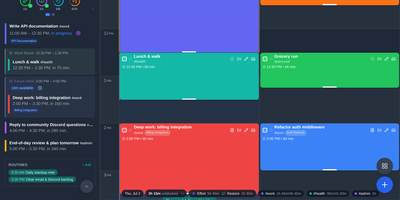
Instead of locking your daily schedule inside proprietary cloud calendars, dayGLANCE offers a privacy-first visual time-blocking planner that syncs directly with your own WebDAV server, Nextcloud instance, or Obsidian vault. Drag tasks from a prioritized Smart Inbox onto an interactive 24-hour timeline, resize blocks as priorities shift, and carve out recurring energy-tagged Frames for deep work or administrative batches. The live Glance panel highlights your current commitment, remaining free time, and daily routines, then transitions into GLANCEahead each evening to preview tomorrow's start time, deadlines, and total committed hours. Switch between multi-day, single-day, weekly, and monthly layouts, or launch the fullscreen Day Dial to view your schedule, solar daylight arc, and watch-style progress complications on a secondary wall display. Long-term work stays organized inside a Goals and Projects hierarchy with duration-weighted progress bars, visual roadmaps, and dedicated hyperGLANCE focus workspaces that pair a Pomodoro timer with project notes and subtasks. Bidirectional Obsidian synchronization reads and writes markdown daily notes and wikilinked tasks directly, while optional bring-your-own-key AI assistants and encrypted backups keep your productivity workflow completely under your control. Running on a dedicated VPS on RepoCloud with guaranteed CPU, RAM, and SSD, full root SSH access, and a browser serial console. MIT licensed.