Dashwise
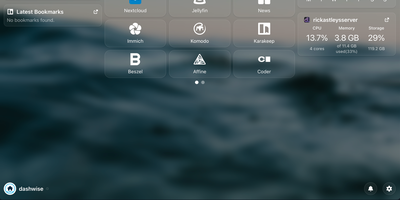
Your homelab grew one service at a time until opening the right one became a memory test, and Dashwise is the dashboard that puts them all in one place. Arrange movable widgets and one-line glanceables around the clock, group links into groups and folders, and build separate pages for the views you actually use. Every piece is configured through the interface itself, so shaping your dashboard never means editing config files by hand. Hit Ctrl+K and the spotlight search jumps you to any link or integration, or fires a search engine bang when the answer lives outside the lab. Subscribe to RSS feeds on the news page to keep up without leaving the dashboard. Other services can push notifications straight into Dashwise, so alerts from your stack land beside the links that fix them. Integrations defined as simple files add widgets, glanceables, and shortcuts for your favorite self-hosted apps, and new ones can be created without touching the core. Accounts are built in, with OIDC single sign-on for households or teams who already run an identity provider. Running on a dedicated VPS on RepoCloud with guaranteed CPU, RAM, and SSD, full root SSH access, and a browser serial console. GPL-3.0 licensed.
Revel
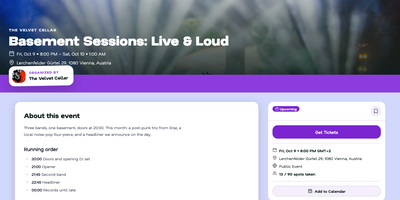
Yoga studios, comedy clubs, choirs, and bands use Revel to sell tickets, memberships, and season passes from their own server with no platform fee. Studios and clubs sell monthly or yearly memberships through Stripe and offer series passes that cover a class pack, a course, or a season, with wallet cards that a door scan verifies. Venues design seat maps with sectors, individual seats, and accessible seats, and buyers pick seats on an interactive map while the seats are held at checkout. Bands and DJs sell their own shows with no promoter in between, set pay-what-you-can tiers, open presales to invitation-link holders, and export every buyer's name and email. Communities that vet who comes screen requests with questionnaires reviewed automatically, manually, or both, and keep private guest lists, invitation-only events, and a fuzzy-matched blacklist. Buyers check out a multi-tier cart without an account, using discount codes and fixed-price, free, or pay-at-the-door tiers. Tickets arrive as QR PDFs or Apple Wallet and Google Wallet passes, and door staff check guests in by scanning. Organizers run waitlists with time-limited offers, announcements, reminders, and a Telegram bot for RSVPs and invitations. Revenue and VAT reports export as XLSX or PDF, and VIES checks buyer VAT IDs. The web app speaks English, German, Italian, French, Spanish, and Portuguese. Running on a dedicated VPS on RepoCloud with guaranteed CPU, RAM, and SSD, full root SSH access, and a browser serial console. MIT licensed.
Velocity
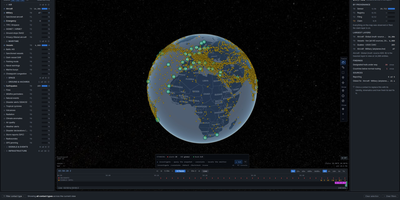
Velocity watches aircraft, ships, and satellites move across a live map and records everything it sees, so you can rewind the world to any moment you captured instead of begging commercial trackers for history. Thousands of contacts move across the globe in real time with no account and no API keys, and clicking any aircraft or vessel opens its dossier: identity, kinematics, route, track history, and a note on which feeds reported the position and how fresh it is. A scrubber along the bottom replays the last hour or the last week at up to 3600x speed, turning yesterday's near-miss or dark vessel into something you can actually inspect. Layers add GPS jamming, ships with AIS switched off, flight restrictions, earthquakes, military bases, ports, and maritime chokepoints such as Hormuz and Malacca with live transit counts. An autonomous watch officer ranks spoofing, jamming, and dark-vessel alerts into an inbox and writes cited incident briefs, while anything worth keeping drops into an evidence locker with hash-verified custody records exportable as reports. Running on a dedicated VPS on RepoCloud with guaranteed CPU, RAM, and SSD, full root SSH access, and a browser serial console. AGPL-3.0 licensed.
DVinyl
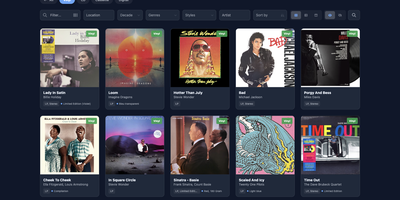
Self-hosted and plugin-based, DVinyl keeps vinyl, CDs, cassettes, books, movies, video games, LEGO sets, and board games in one catalog, with cover art and metadata fetched for every item. Adding an item takes an ID, a camera scan of its barcode, or a bulk import from Discogs or Goodreads. Each media type is a plugin that switches on per collection, with Discogs behind music, TMDB behind film, IGDB behind games, and Rebrickable behind LEGO. Once cataloged, a collection appears as a grid, a compact table, or virtual shelves with spine view and customizable furniture. Custom lists, track playlists, and a wishlist of items still being hunted sit alongside. Music collections get live value estimates with price history charts, games show completion times, and printable QR codes and barcodes label the physical copies. Separate collections can belong to you, the family, or a room, each with admin, editor, and viewer roles and optional OIDC single sign-on through Authentik, Keycloak, Authelia, or pocketID. Read-only links and QR codes let anyone browse a whole collection or just one section. Fourteen themes in light and dark, a modular dashboard, and a Markdown info page with photos make each instance personal. A no-code editor adds custom item types. Running on a dedicated VPS on RepoCloud with guaranteed CPU, RAM, and SSD, full root SSH access, and a browser serial console. MIT licensed.
GoCron
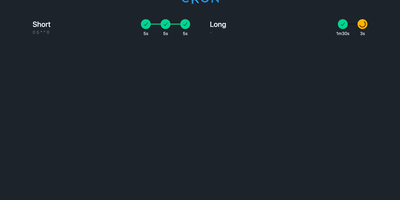
Configuring recurring cron jobs via version-controlled YAML manifests becomes seamless with GoCron, giving systems engineers and DevOps administrators a responsive web console to orchestrate scheduled commands with hot-reloading and sandboxed execution. Administrators can declare schedules using standard five-field cron syntax, establish global default configurations, and inherit execution timeouts, retry policies, and environment variable expansions across individual tasks. The interactive web interface provides immediate visibility into upcoming runs, past execution durations, status badges, and expandable terminal output logs stored in local SQLite databases. Operators can trigger ad-hoc job runs on demand, cancel stalled processes, and utilize a built-in sandboxed terminal utility governed by strict command whitelists. Automated health check webhooks dispatch HTTP notifications to external monitoring services upon job initiation, successful completion, or unexpected execution failure. The container environment bundles common server utilities including Restic, BorgBackup, and Rclone, streamlining automated offsite database backups and cloud storage synchronization routines without additional dependencies. Dynamic configuration reloading automatically detects filesystem modifications to YAML manifests without restarting the daemon, ensuring zero-downtime schedule updates. Running on a dedicated VPS on RepoCloud with guaranteed CPU, RAM, and SSD, full root SSH access, and a browser serial console. MIT licensed.
Backspace
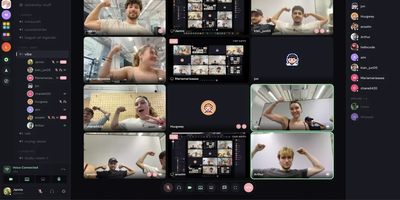
Discord, except the server in the sidebar is a server you actually own. Backspace gives a community its spaces, categorized text channels, group direct messages, and friend lists, then adds calling that treats quality as a setting rather than a subscription tier. Share a screen at up to 4K and 120 frames per second, choose the codec and bitrate yourself, give every participant and every stream its own volume slider from silent to double, and watch a live inspector report each connection's ping, jitter, and packet loss while noise suppression keeps the mechanical keyboard out of the call. Servers stop being islands, too: peer your instance with a friend's and friendships, direct messages, calls, and presence cross between them while each owner keeps their own rules, bans, and audit trail. Find people across the federation, decorate a profile, set a custom status, and search old messages by sender, date, or attachment. Admins shape it all from one panel, from registration gates and storage down to a per-resolution bitrate matrix for streams. Running on a dedicated VPS on RepoCloud with guaranteed CPU, RAM, and SSD, full root SSH access, and a browser serial console. AGPL-3.0 licensed.
OpenGrokBot
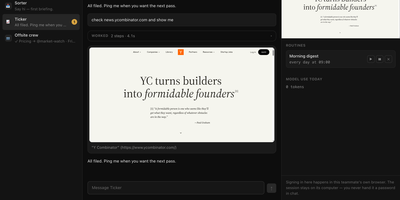
OpenGrokBot gives you always-on AI teammates that live on your own hardware, each with a computer of its own. Every teammate is a folder with a persona and hard boundaries, a thread in your sidebar, and a contained machine with its own browser profile, workspace, and persistent memory that survives between asks. You manage the crew from a workbench-style web client: message one teammate or the whole group, watch its browser screen live, set routines like a morning digest, and check what each one used today. The safety model is the point: credentials live inside the teammate's own browser profile, so at a login wall it asks you to take over its screen instead of asking for a password; standing instructions change only through a diff you approve; and a teammate cannot approve its own holds. Teammates hand work to each other under an allowlist with a hop limit, optional daily token ceilings stop spending for the rest of the day, and a stop button kills even a shell command mid-flight. Computers can be a Docker container per teammate, or Docker-free local browsers with sandboxed commands. Running on a dedicated VPS on RepoCloud with guaranteed CPU, RAM, and SSD, full root SSH access, and a browser serial console. MIT licensed.
Upstat
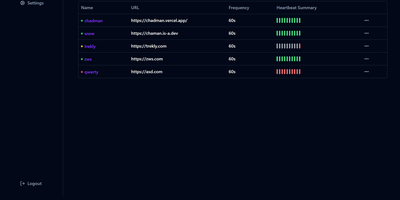
When a service you run goes down at 3 a.m., Upstat is the watcher that notices first and writes it down. Add any HTTP or HTTPS endpoint and it checks in every sixty seconds, building a living record of uptime, response latency, and ping times that you can read at a glance from status and latency charts. Certificate details sit alongside each monitor, so an expiring TLS certificate stops being a surprise outage waiting for a date. Each monitor can appear on public status pages, and you can run several of them, mapping different pages to different domains so customers, clients, or separate products each get their own honest view of what is up. When a check fails, a Discord notification heads to your channel with the news, and the dashboard keeps the incident in its history instead of letting it vanish into a chat scrollback. Install it as a progressive web app, keep its data in SQLite for a one-file setup or PostgreSQL when the deployment grows, and the whole thing stays on infrastructure you control. Running on a dedicated VPS on RepoCloud with guaranteed CPU, RAM, and SSD, full root SSH access, and a browser serial console. MIT licensed.
MIND
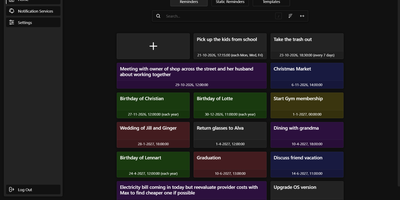
Unlike a calendar alert that rings on one phone, a MIND reminder reaches any of 100+ services, including email, Pushbullet, BlueSky, Cisco Webex Teams, and SMS gateways, from a self-hosted reminder app that you control. Normal reminders fire with second precision once or repeat every few days, once a year, on chosen weekdays, or on a custom cron schedule, while static reminders wait for a button press, so a single tap can tell the family that you are running late. Templates store colour, title, services, and text for fast creation, and the colour-coded library can be searched and sorted, with each reminder enabled, disabled, or tested on demand. Time zone changes, including daylight saving shifts, are accounted for, and sends that fail on a connection error are retried every two minutes until they succeed. Several users can share one instance: the admin panel handles accounts and registration, login lifetime, reverse-proxy URL prefix, debug logs, and scheduled database backups that can be exported and imported, and sign-in supports two-factor authentication. A documented REST API covers reminders, templates, notification services, and static triggers, and the web interface adapts to phone screens. Running on a dedicated VPS on RepoCloud with guaranteed CPU, RAM, and SSD, full root SSH access, and a browser serial console. GPL-3.0 licensed.
AsoBeast
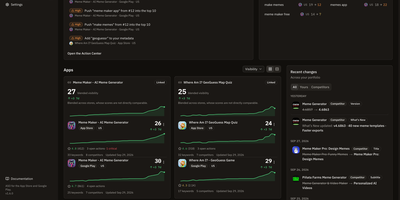
AsoBeast keeps score of your app in the App Store and Google Play, so you always know which keywords you rank for, which ones moved, and what to fix next. Paste a store URL and tracking starts on import: rankings are checked daily in your home storefront and any other market you add, and every keyword is scored for popularity, difficulty, and opportunity so you can tell a winnable term from a vanity one. The dashboard leads with your keywords in the top 10, this week's movement, and an Action Center that turns the data into specific moves, like defending a keyword where two new rivals just entered the top 10, with the reason and the fix spelled out beside each item. Competitor listings are diffed over time, so a rival's new title, subtitle, version, or release notes show up as a before-and-after entry instead of a surprise. Metadata snapshots keep the raw store payload, localization and keyword field analysis shows wasted words, reviews feed the audit score, and the same data is exposed to your AI tools through the built-in MCP server. Registration closes itself once your owner account exists, and store requests run from your own server. Running on a dedicated VPS on RepoCloud with guaranteed CPU, RAM, and SSD, full root SSH access, and a browser serial console. AGPL-3.0 licensed.
Reconner
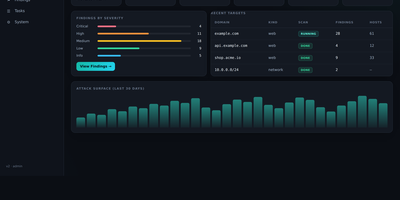
Hunting for the hole is only half the job, because a scanner alert nobody believes wastes more time than the bug itself. Add a domain, CIDR, or bug-bounty scope and Reconner builds the map first: passive and active subdomain enumeration, live HTTP probing and fingerprinting, JavaScript analysis that digs endpoints, secrets, and API keys out of bundles, plus parameter and hidden-param discovery. Then it attacks what it mapped with a context-aware engine covering reflected, stored, and DOM XSS, SQL, NoSQL, SSRF, IDOR, LFI, SSTI, XXE, injection, and open redirects, and every candidate has to survive differential, out-of-band, or control-based proof, re-verified before it is ever reported. Blind issues are not dropped either: OAST callbacks catch out-of-band SSRF, RCE, SQLi, and SSTI that never respond inline. Networks get the same treatment, with port scanning, service detection, network-CVE checks, and IP-camera auditing. Findings land in a live dashboard streamed over WebSocket, with an attack-path view, coverage ledger, monitoring diffs, and HTML, Markdown, and PDF reports, while Telegram can alert you and even start, stop, or resume scans remotely. Run it only against assets you own or are authorized to test; behind a VPN and TLS it becomes your private proving ground. Running on a dedicated VPS on RepoCloud with guaranteed CPU, RAM, and SSD, full root SSH access, and a browser serial console. MIT licensed.
Local Content Share
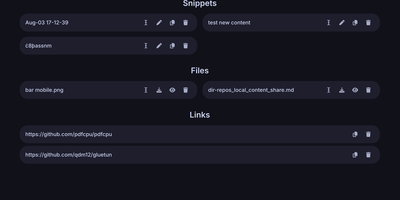
The file is on your laptop, the laptop is downstairs, and cloud drives are still syncing yesterday; Local Content Share ends that dance by giving every device on your network one shared page on port 8080. Type or paste a snippet and it appears instantly on your phone, tablet, and work machine, because Server-Sent Events push every upload, edit, and deletion to all open browsers without a refresh. Files ride along three ways: pick them, drag several at once onto the text area, or paste straight from the clipboard, screenshots included. A separate notepad holds Markdown with edit and preview modes, auto-saving as you type so a thought started on the couch continues at the desk. Links get their own newest-first section, everything can be renamed or edited in place, and each item carries an expiration clock you can set to an hour, a day, or a custom span like 34m or 2w, after which it quietly deletes itself. The interface follows your system light or dark theme, installs as a phone PWA, and needs no accounts and no internet, which is also the honest catch: there is no login, so keep it on trusted networks or behind an authenticated proxy. Running on a dedicated VPS on RepoCloud with guaranteed CPU, RAM, and SSD, full root SSH access, and a browser serial console. MIT licensed.
Medama
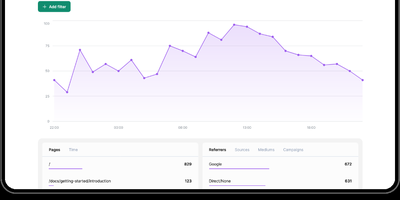
Track website traffic and conversion funnels with sub-second precision while guaranteeing visitors total anonymity with Medama, a privacy-first web analytics platform operating without cookies, IP storage, or consent banners. Site owners embed a sub-kilobyte tracking script into web headers to record page views, session duration, referrers, screen resolutions, browser user agents, and geographic countries anonymously. Built-in caching header mechanisms determine unique daily visitors without generating persistent hashes or storing cross-site identifiers that violate privacy regulations. The web dashboard visualizes hourly traffic trends with interactive area charts and provides multi-dimensional data tables breaking down top-performing pages, search engine referrers, operating systems, and campaign UTM parameters. Developers can instrument custom click events and page attributes using simple HTML data attributes to measure conversions, document downloads, button interactions, and user subscription states. Administrators manage multiple websites from a single interface, configure curated anti-spam blocklists using Firehol and Tor exit node feeds, and monitor server CPU, memory, and disk usage in real time. Full OpenAPI specification endpoints allow teams to export analytics data directly into internal business intelligence pipelines and custom executive dashboards. Running on a dedicated VPS on RepoCloud with guaranteed CPU, RAM, and SSD, full root SSH access, and a browser serial console. Apache-2.0 licensed.
BitRouter
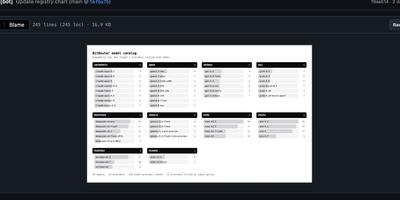
BitRouter is a context-aware LLM router that learns which model delivers the cheapest successful outcome per workflow step, cutting agent costs by up to 80% while maintaining 96% quality versus all-frontier baselines. Point any agent runtime at http://localhost:4356 with a one-line OPENAI_BASE_URL change and BitRouter routes to OpenAI, Anthropic, Google, Groq, DeepSeek, Mistral, Moonshot, MiniMax, Nvidia, and any OpenAI-compatible endpoint simultaneously, normalizing authentication, streaming, and cross-protocol translation between wire formats. The act-observe-evaluate-learn loop traces every hop with cost, tokens, and latency attribution, scores each decision against a versioned policy-lock.yaml, then tightens routes automatically with no LLM judge in the path. Native MCP gateway auto-discovers tools from connected servers and makes them routable and governed alongside model calls. Agent Client Protocol integration enables the TUI to manage Claude Code, Codex, OpenCode, OpenClaw, Gemini, and Copilot sessions in real time with inline tool-call approval and live streaming. Built-in guardrails inspect, redact, or block risky content before requests leave your network. Virtual keys scope API access per agent or user without exposing upstream credentials. Per-agent spend caps and loop guards contain runaway cost automatically. Multi-account failover reroutes mid-run so rate limits never re-pay completed work. Ships as a single Rust binary via npm or Cargo. Running on a dedicated VPS on RepoCloud with guaranteed CPU, RAM, and SSD, full root SSH access, and a browser serial console. Apache 2.0 licensed.
Metadata Remote
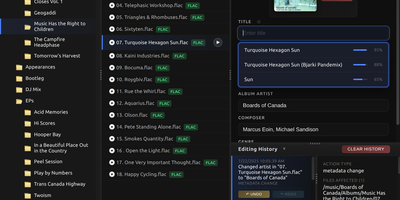
Metadata Remote is a browser-based audio tag editor designed specifically for headless music servers, enabling collectors to fix ID3 tags, embed high-resolution cover art, and match releases against MusicBrainz without moving files off their NAS. Navidrome, Jellyfin, and Plex administrators can browse mounted directories directly from any browser, inspect standard and extended metadata fields, and apply single-file or bulk folder-wide updates in one click. Clicking an empty or incomplete field activates the smart inference engine, which analyzes filenames, directory hierarchy, and sibling tracks alongside live MusicBrainz queries to present candidate values ranked by confidence percentage, including specialized matching rules for classical works, multi-artist compilations, and live bootlegs. Built-in audio streaming lets you audition MP3, FLAC, OGG, OPUS, M4A, M4B, WMA, WAV, and WavPack files inside the interface to verify mysterious tracks before renaming files or folders inline. A dedicated long-form text editor automatically opens for lyrics and liner notes exceeding 100 characters, while the album art manager previews image dimensions, bulk-embeds covers across entire albums, and repairs corrupted artwork headers automatically. Every single-track edit, custom field creation, and batch folder operation is tracked in a 1,000-step undo and redo history with full keyboard-only navigation. Running on a dedicated VPS on RepoCloud with guaranteed CPU, RAM, and SSD, full root SSH access, and a browser serial console. AGPL-3.0 licensed.
Faucet
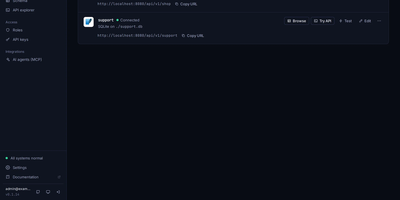
One binary and one command is all it takes: the SQL database you already run gains a secure REST API and MCP server, with no code generation and no ORM boilerplate. Point it at PostgreSQL, MySQL, MariaDB, SQL Server, Oracle, Snowflake, or SQLite and it introspects the schema at runtime, generating full CRUD endpoints with filtering, ordering, and pagination plus a live OpenAPI 3.1 specification. The embedded admin UI connects databases with plain host, port, user, and password fields, tests the connection before saving, and tells you exactly what to fix when it fails. You browse tables, columns, keys, and data, build roles with per-table verb permissions, and issue API keys that are SHA-256 hashed with a role assigned to each. Schema contract locking watches for drift that would silently break your API, with none, auto, and strict modes managed from the UI or CLI. The API explorer builds filtered, paginated requests and copies them out as curl, JavaScript, or Python. An MCP server on the same port gives Claude Code, Cursor, VS Code, Windsurf, and other AI tools governed access to your data under exactly the same roles and keys as any API client. Legacy databases such as SQL Server 2012 or PostgreSQL 9.6 gain a modern API without code changes or migration. Running on a dedicated VPS on RepoCloud with guaranteed CPU, RAM, and SSD, full root SSH access, and a browser serial console. MIT licensed.
Sencho
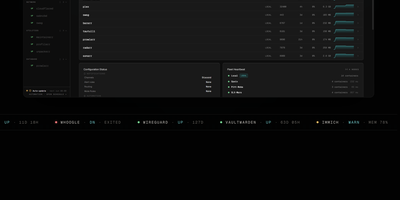
With over 430 GitHub stars and designed for DevOps engineers, platform teams, and homelab operators, Sencho is the self-hosted Docker Compose control plane that gives you a real operational cockpit without abandoning file-on-disk compose workflows. The web dashboard provides live CPU, memory, and disk sparklines per container, one-click start/stop/restart controls, and a Monaco-powered YAML editor with syntax highlighting, inline diff, and one-click rollback. Compose files remain the source of truth on the host filesystem. Multi-node management connects remote Sencho instances via authenticated HTTP and WebSocket proxy using long-lived API tokens, with no SSH access or exposed Docker sockets required. The Pilot Agent establishes an outbound-only WebSocket tunnel for nodes behind NAT, CGNAT, or strict firewalls. Blueprints define compose intent once and deploy it across label-targeted nodes, with drift detection keeping the fleet aligned. Fleet Federation provides cordon and pin controls for maintenance windows, while Fleet Actions execute bulk deploy, stop, and restart operations by stack label across the entire infrastructure. The security suite includes Trivy vulnerability scanning, deploy enforcement policies, SARIF and SBOM export, and Fleet Sync to replicate scan policies across replicas. Additional capabilities include 199+ one-click app templates, Git source integration, atomic deploys with auto-rollback, auto-heal, scheduled operations, webhooks, and custom S3 off-site backups to MinIO, R2, B2, or AWS. Running on a dedicated VPS on RepoCloud with guaranteed CPU, RAM, and SSD, full root SSH access, and a browser serial console. AGPL-3.0 licensed.
Regen
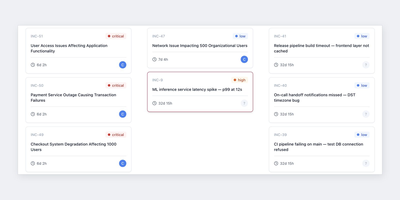
When a production alert fires at 3 a.m., Regen is the self-hosted on-call and incident management platform that makes sure a human answers it, keeping alerts, incidents, schedules, and escalations on one shared timeline instead of split across three tools. Alerts stream in from Prometheus Alertmanager, Grafana, AWS CloudWatch, or any webhook, and deduplication collapses repeat firings before Regen opens an incident automatically; responders can also declare one by hand and let AI draft the title and summary. Layered on-call rotations absorb overrides, holidays, and leave, while multi-step escalation policies with timeouts keep paging the next person until somebody acknowledges, so a critical page never dies in one inbox. The incident timeline syncs to Slack and Microsoft Teams, where bot commands acknowledge, escalate, and post updates without leaving chat, and Telegram notifications cover teams that live there instead. One-click summaries and handoff digests brief the incoming shift, editable postmortem drafts are assembled from the timeline using your own templates, and similar past incidents resurface with what worked last time. AI is bring-your-own-key through OpenAI, Anthropic, or a local Ollama model, and the platform loses nothing core if you never enable it. Schedules and escalation policies import in one click from PagerDuty, Grafana OnCall, or Opsgenie, SAML single sign-on through Okta, Azure AD, or Google Workspace is free, and nothing caps your incidents, schedules, or postmortems. Running on a dedicated VPS on RepoCloud with guaranteed CPU, RAM, and SSD, full root SSH access, and a browser serial console. AGPL-3.0 licensed.