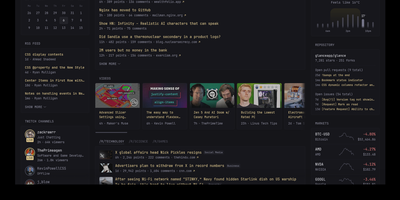
Dynacat
Monitoring dozens of self-hosted containers, RSS feeds, and web services from a single customizable startpage becomes effortless with Dynacat, a dynamic dashboard engine driven by declarative YAML configuration and live data widgets. You can arrange multi-tab layouts in the browser-based visual editor by dragging widgets across columns and picking color themes, and Dynacat automatically writes every adjustment back to your configuration file. Built-in widgets aggregate RSS and Atom feeds, Reddit communities, Hacker News, Lobste.rs, YouTube channel uploads, Twitch streams, weather forecasts, stock and crypto market tickers, and software releases across GitHub, GitLab, Codeberg, and Docker Hub. Homelab operators can inspect and control Docker containers, track server CPU, memory, and disk mountpoints, monitor AdGuard Home or Pi-hole DNS statistics, view Sonarr and Radarr release calendars, and manage torrents across qBittorrent, Deluge, and Transmission from one screen. For custom services, the visual widget builder connects to any JSON endpoint and binds UI blocks to response fields without manual template coding, while the Dynawidgets catalog imports community widgets with a single slug. Every widget refreshes independently on its own schedule and exposes cached data through a local JSON API, with OpenID Connect group rules securing private admin pages. Running on a dedicated VPS on RepoCloud with guaranteed CPU, RAM, and SSD, full root SSH access, and a browser serial console. AGPL-3.0 licensed.
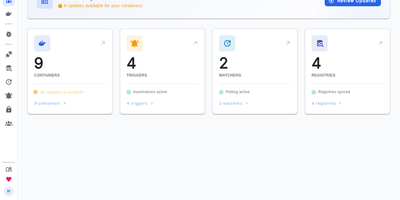
What's Up Docker
Does your container fleet silently fall behind on upstream patches until a critical vulnerability advisory forces an emergency audit? What's Up Docker continuously watches standalone Docker daemons, Compose stacks, Swarm services, Kubernetes workloads, and Nomad jobs to detect new image tags across public and private registries before sending alerts or rolling out updates automatically. Watchers connect over local sockets, TLS-secured TCP endpoints, kubeconfigs, or Nomad APIs to inventory active workloads without invasive sidecars. From there, registry connectors authenticate against Docker Hub, GitHub Container Registry, AWS ECR, Google Artifact Registry, Azure Container Registry, Quay, GitLab, Gitea, Forgejo, and self-hosted OCI registries to compare digests and tags. Flexible filtering rules let you restrict alerts to major, minor, or patch semantic version increments, match custom regular expressions, or pin specific tag patterns per container label. Once an eligible release appears, over thirty built-in triggers can dispatch notifications to Discord, Slack, Telegram, Matrix, Mattermost, Gotify, Ntfy, Pushover, Apprise, PagerDuty, or SMTP, publish events to MQTT, Kafka, RabbitMQ, or NATS, or recreate containers directly on demand. A responsive web dashboard and REST API provide manual update controls, OpenID Connect single sign-on with role-based access control, and Prometheus metrics for Grafana observability. Running on a dedicated VPS on RepoCloud with guaranteed CPU, RAM, and SSD, full root SSH access, and a browser serial console. MIT licensed.

ChronoFrame
Publish high-resolution photography without social media compression using ChronoFrame, a self-hosted portfolio and gallery platform built around EXIF camera telemetry, live motion media, and interactive map exploration. Drop JPEG, PNG, WebP, TIFF, or HEIC images alongside paired MOV clips into the browser uploader, and the background task queue automatically extracts camera bodies, lenses, focal lengths, shutter speeds, and RGB histograms while pairing Apple Live Photos and Motion Photos for hover playback. Visitors browse your work through a responsive masonry grid with instant ThumbHash placeholders, inspect fine details inside a hardware-accelerated WebGL tiled viewer, or explore shooting locations on an interactive MapLibre or Mapbox globe powered by reverse geocoding. Curators can group shots into reordered albums, protect private collections with passwords, edit ratings and metadata in bulk, and generate custom share preview cards. Storage scales across local disks, S3-compatible buckets, and OpenList backends with configurable CDN delivery. Running on a dedicated VPS on RepoCloud with guaranteed CPU, RAM, and SSD, full root SSH access, and a browser serial console. MIT licensed.
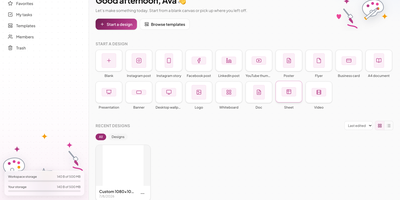
HyCanvas
HyCanvas folds graphics, presentations, videos, whiteboards, documents, and spreadsheets into one self-hosted browser editor, covering work that usually takes several separate design subscriptions. Start from one of 140 templates across social, print, events, business, and presentations, or import a PowerPoint file and keep editing it. The canvas carries shapes, frames, tables, nine chart types, QR codes, image filters, crop and masks, background removal, and Magic Resize for one-click reformatting. Video projects get a multi-track timeline with trims, transitions, keyframes, styled captions, green-screen keying, and screen or webcam recording. Whiteboards add sticky notes, connectors, a shared timer, and dot voting, and a finished board converts straight into a slide deck. Teammates co-edit in realtime with presence cursors, comments with mentions, version history, and approvals, while share links open view-only, comment, or edit access. Brand kits hold your colors, fonts, and logos, and a brand lock warns or blocks off-brand edits before they ship. Connect your own AI provider key to generate decks, documents, images, and charts from a prompt, then export PNG, JPG, PDF, SVG, PPTX, MP4, or GIF with no watermark. Running on a dedicated VPS on RepoCloud with guaranteed CPU, RAM, and SSD, full root SSH access, and a browser serial console. AGPL-3.0 licensed.
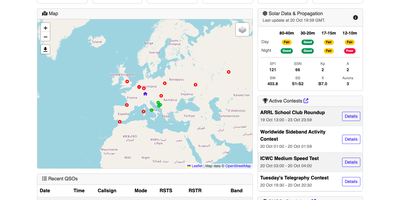
Wavelog
Whether operating from a home shack, a portable Parks on the Air activation, or a multi-operator club station, Wavelog gives amateur radio operators a browser-accessible logbook for recording and confirming QSO contacts from anywhere. Real-time transceiver frequency and mode data flow directly into the Live QSO logging interface from Hamlib, FLRig, and WSJT-X through the companion WavelogGate helper or REST API endpoints. An integrated DX Cluster and visual band waterfall display active spots filtered by continent, band, and DXCC status so operators can click a spot and QSY their rig immediately. Built-in two-way synchronization handles QSL confirmations and log uploads across Logbook of The World (LoTW), eQSL, QRZ.com, HRDLog, ClubLog, and the QO-100 DX Club alongside ADIF 3.1.8 and Cabrillo file imports and exports. Interactive Maidenhead grid maps, satellite pass tracking, and automated progress matrices for over 20 international awards (including DXCC, WAS, WAC, WAZ, IOTA, SOTA, POTA, and WWFF) show exactly which bands and modes still need confirmation. Dedicated contest logging windows and role-based club station permissions let teams work the same event simultaneously without log conflicts. Running on a dedicated VPS on RepoCloud with guaranteed CPU, RAM, and SSD, full root SSH access, and a browser serial console. MIT licensed.
Bitcart
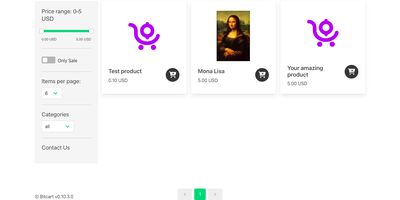
No middleman, no custody, no private keys to hand over: Bitcart is a self-hosted crypto payment processor that settles every payment straight into your own wallet. Connect wallets with just a public key or address; receiving payments never needs a private key. Accept Bitcoin, Litecoin, Bitcoin Cash, Ethereum, Monero, Tron, stablecoin tokens, and Lightning payments, with each store mixing as many wallets as it needs for multi-currency checkout. Issue invoices with custom expiration, promo codes, and per-invoice payment methods, then get status updates through webhooks, Telegram, or email. A ready-made storefront with categories, price filters, discounts, and a cart sells products or digital downloads, while a keypad point-of-sale view with amount, discount, and tip modes covers in-person sales. Approve payouts, issue refunds, export invoices as CSV or JSON, and add extensions from the plugin marketplace in one click. Bring crypto checkout to WooCommerce, Shopify, WHMCS, FOSSBilling, or Odoo, or script your own flow through the REST API. Running on a dedicated VPS on RepoCloud with guaranteed CPU, RAM, and SSD, full root SSH access, and a browser serial console. MIT licensed.
Open Wearables
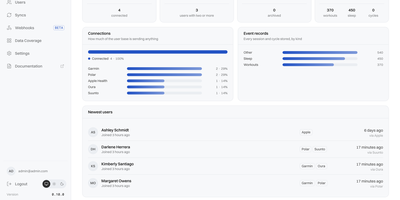
Garmin, Oura, Whoop, and Apple Health each speak a different data dialect, and Open Wearables translates all of them into one consistent REST API that you host yourself. Users authorize through a connection link or the connect widget, history backfills on the first sync, and heart rate, HRV, SpO2, sleep, workouts, and meals land in one normalized schema. When two devices record the same night, configurable data priorities decide which provider and device type wins. Native iOS, Android, Flutter, and React Native SDKs push Apple Health, Samsung Health, and Health Connect data from the phone, and full Apple Health XML exports can be imported too. Outgoing webhooks announce new data with signed payloads, test events, and delivery logs, while a live sync stream shows every pull as it happens. The developer portal adds a dashboard, user profiles with sleep, meals, scores, and women's health tabs, sync history, data coverage, API keys, team invitations, retention policies, and a seed data generator. Sleep and resilience scores ship with open algorithms you can audit and tune. An MCP server lets Claude Desktop or Cursor answer questions such as how a user slept last week. Use it for AI health coaches, fitness coaching apps, healthcare platforms, research cohorts, or a personal health archive with n8n automations on top. Running on a dedicated VPS on RepoCloud with guaranteed CPU, RAM, and SSD, full root SSH access, and a browser serial console. MIT licensed.
degoog
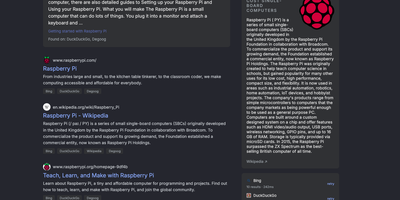
Instead of trusting one search company with every query, degoog is a self-hosted search aggregator that fans each one out to the engines you choose, from your own server, and merges the answers into one deduplicated, ranked list. It installs with no engines at all; a first-run tour then walks you through picking Google, Bing, DuckDuckGo, Brave, Startpage, Reddit, or Wikipedia from the built-in Store. Pages found by several engines collapse into a single row that lists every source, while a sidebar times each engine, explains failures like rate limits or CAPTCHAs, and retries only the one that failed. Tabs appear for each search type your engines serve, and the Images tab adds size, color, layout, and safe-mode filters beside a zoomable preview panel. Bangs target one engine or run commands (!w for Wikipedia, !ip, !speedtest, !uuid), and Store plugins add weather, definitions, QR codes, and search across your own Jellyfin or Meilisearch libraries. Owners can block, rewrite, or score domains, serve a script-free page to text browsers, and turn on an indexer that remembers seen results for later recall. A JSON search API, a SearXNG-compatible response mode for Open WebUI, and an MCP companion feed the same results to scripts and LLM clients. Running on a dedicated VPS on RepoCloud with guaranteed CPU, RAM, and SSD, full root SSH access, and a browser serial console. AGPL-3.0 licensed.
Frappe HR
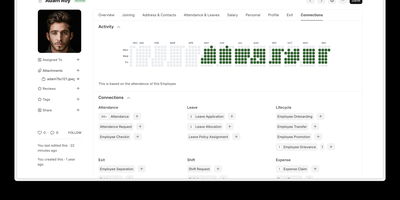
Stitching together separate SaaS subscriptions for applicant tracking, time-off requests, expense approvals, and monthly payroll creates fragmented employee records and costly per-seat bills; Frappe HR consolidates over 13 human resource modules into one self-hosted platform. People operations teams manage the complete employee lifecycle from job openings, interview assessments, and offer letters through structured onboarding, internal transfers, promotions, and exit interviews. Shift planners organize rotational rosters and capture geolocation-verified attendance check-ins, while employees request leave against regional holiday calendars and multi-tier policies. Finance and payroll managers build custom salary structures, configure regional income tax slabs, process regular or off-cycle payslips, and reconcile employee expense claims and cash advances directly with ERPNext accounting ledgers. Goal tracking and appraisal cycles align individual key result areas (KRAs) with self-evaluations and manager feedback scores. A progressive web app interface lets staff submit leave requests, log attendance, and file expense receipts from their phones. Running on a dedicated VPS on RepoCloud with guaranteed CPU, RAM, and SSD, full root SSH access, and a browser serial console. GPL-3.0 licensed.
plMail
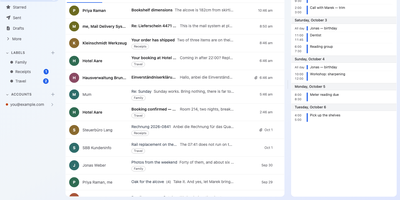
Gmail, Outlook, and every IMAP mailbox you own share one inbox, one search box, and one calendar in plMail, a mail client you host yourself. Accounts sit side by side with sending aliases, and new mail arrives on its own through IMAP IDLE, Gmail and Outlook push, and browser notifications. Credentials are encrypted before storage. Search understands from:, subject:, label:, has:, and before:, completes as you type, and highlights matched words. Filters are nested any, all, or none trees, and each shows how many real messages match before you save it. Drag several conversations at once onto folders, labels, or inbox tabs; a label adds itself without removing the mail from your inbox. A calendar sits beside the mail, with two-way sync for Google, Microsoft, and CalDAV. Move events on the week grid, answer invitations in place, and send share and booking links. An optional language model, pointed at your own Ollama server or any OpenAI-compatible endpoint, searches by meaning, drafts replies, summarizes threads, and sorts mail into tabs once you switch it on. Attach files from and save them to Drive, OneDrive, Dropbox, Nextcloud, Immich, and Paperless-ngx. Sign in through Authentik, Keycloak, or any OpenID Connect provider, and pick from 41 themes. Android and iOS apps connect to your own server. Running on a dedicated VPS on RepoCloud with guaranteed CPU, RAM, and SSD, full root SSH access, and a browser serial console. AGPL-3.0 licensed.
JellyGlance
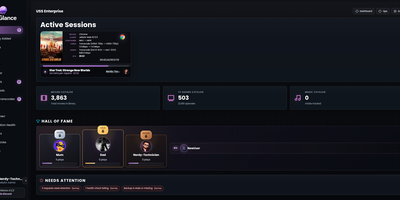
Running a Jellyfin or Emby server usually means a dozen open tabs; JellyGlance folds your whole media server into one screen you can leave open on a wall. Live sessions show who is watching what, from where, on which client, with direct play or transcode state, codec, bitrate, subtitles, and progress for every stream. Playback history accumulates in its own database, so statistics survive even when the media server forgets: top movies, series, libraries, clients, and users, watch-time trends, activity heatmaps, and weekly, monthly, and yearly recaps rendered as shareable cards. The home dashboard arranges by drag and drop, with presets, density controls, themes, kiosk mode for a wall display, and alert rules. Recently added shelves group by library, while library views surface totals and metadata gaps. Jellyseerr and Overseerr requests appear with poster cards, requester context, and admin actions, and the release calendar pulls upcoming titles from your *arr apps beside the queues of your torrent and Usenet clients, stalled items included. Wizarr invites, Tdarr transcodes, and Maintainerr cleanup connect from the same integrations area. Notifications travel by webhook, Discord, Gotify, and email newsletters, backups export to a plain folder, and sign-in spans local accounts, Jellyfin Quick Connect, and OIDC. Running on a dedicated VPS on RepoCloud with guaranteed CPU, RAM, and SSD, full root SSH access, and a browser serial console. MIT licensed.
PotatoMesh
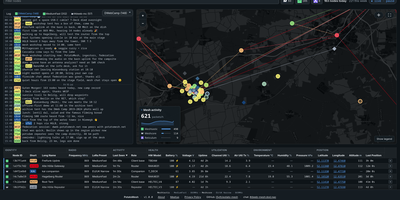
When your community asks what its LoRa mesh is doing right now, PotatoMesh answers with a live map, chat log, and node table built from the traffic your own radios hear. It is a self-hosted dashboard for Meshtastic, Meshcore, and Reticulum networks, with no MQTT clutter. Each node gets a detail page charting battery, voltage, channel utilization, temperature, humidity, and air quality over the past week, plus the neighbors it hears with signal strength and the trace routes it appears in. New nodes and telemetry reports pop up in the chat as they arrive, and a charts page follows telemetry and packets per hour across the whole network. Federation finds other PotatoMesh communities automatically and plots them on a world map with active-node counts per protocol. Ingestors feed the dashboard from radios over serial, TCP, Bluetooth, or passive UDP, and several can report to one instance. Open browsers update live, a Prometheus endpoint exports metrics, and Markdown pages publish your rules, contact details, or legal notice. Add a stop-sign emoji to a node's name to hide it, or switch on private mode to drop the chat entirely. Running on a dedicated VPS on RepoCloud with guaranteed CPU, RAM, and SSD, full root SSH access, and a browser serial console. Apache-2.0 licensed.
OwnPilot
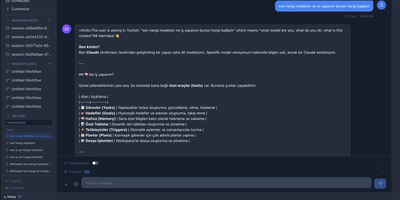
Bridging local hardware and cloud intelligence, OwnPilot orchestrates autonomous multi-channel agent swarms and visual workflow pipelines while keeping sensitive personal records strictly on private infrastructure. Users can trigger autonomous task runs that browse websites using headless browser automation, extract data tables, and summarize research directly into encrypted markdown notebooks. The built-in workflow canvas allows individuals to construct branching automation sequences combining large language models, conditional logic gates, iterative data loops, and human-in-the-loop approvals. Users delegate calendar scheduling, task tracking, expense budgeting, and contact lookups through conversational chats conducted over web portals, Telegram bots, or WhatsApp numbers. Operators can dispatch coding agents to inspect local repositories, execute shell commands in sandboxed environments, and stream live terminal logs as automated patches develop. The platform also enables home automation enthusiasts to monitor MQTT telemetric feeds from microcontrollers, queue device commands, and receive instant alert notifications when sensor thresholds trigger. Advanced security layers inspect all incoming prompts for personal data patterns, enforce strict permission boundaries across file directories, and generate tamper-evident audit logs for every autonomous tool call. Running on a dedicated VPS on RepoCloud with guaranteed CPU, RAM, and SSD, full root SSH access, and a browser serial console. MIT licensed.
Dispatcharr
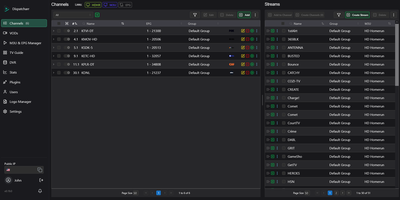
Dispatcharr is a self-hosted IPTV stream proxy, electronic program guide manager, and DVR server that consolidates multiple M3U playlists and Xtream Codes providers into a unified live television and video-on-demand hub. Through its web dashboard, you can import and filter thousands of channels from unlimited upstream sources, automatically match XMLTV or Schedules Direct guide data to your lineup, and organize movies and series enriched with IMDb and TMDB metadata. The proxy streaming engine shares a single upstream provider connection across multiple local clients, switches seamlessly to backup stream URLs when buffering or drops occur, and routes backend traffic through FFmpeg, VLC, or Streamlink profiles with custom fMP4 or MPEG-TS output transcoding. To integrate with home media servers, Dispatcharr exports curated lineups as M3U playlists, XMLTV feeds, Xtream Codes API endpoints, or emulated HDHomeRun network tuners that Plex, Jellyfin, Emby, and Channels DVR discover automatically, while also offering a built-in DVR with series recording rules, Comskip commercial stripping, and timeshift catch-up playback. Running on a dedicated VPS on RepoCloud with guaranteed CPU, RAM, and SSD, full root SSH access, and a browser serial console. AGPL-3.0 licensed.
GoModel
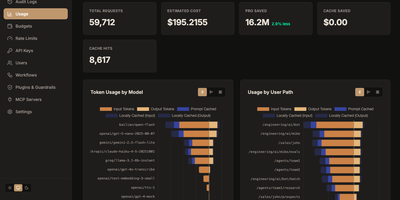
Instead of scattering provider credentials and vendor-specific SDK logic across dozens of microservices, engineering teams route every LLM call through GoModel, an open-source AI gateway that unifies 34 model providers behind OpenAI-compatible and Anthropic-compatible endpoints. Pointing existing OpenAI or Anthropic SDKs at the gateway unlocks chat completions, the Responses API, Anthropic Messages, embeddings, batch jobs, and realtime audio across OpenAI, Anthropic, Gemini, Bedrock, Azure, Groq, DeepSeek, Ollama, and vLLM. Platform operators publish virtual model aliases that distribute traffic via weighted round-robin or lowest-cost routing while rotating multiple API keys per provider and failing over through circuit breakers during upstream outages. Sticky session routing keeps multi-turn agent conversations on the same target to preserve warm prompt caches, while exact-match and vector semantic caching via Qdrant, pgvector, Pinecone, or Weaviate cut duplicate token costs. Versioned workflows and pre-dispatch guardrails enforce prompt injection rules, rate limits, and hard USD spend budgets across hierarchical tenant user paths before requests are dispatched. The built-in admin dashboard offers live audit logs, per-tenant cost analytics, LiteLLM key migration, an interactive request playground, Model Context Protocol tool aggregation, and OpenTelemetry and Prometheus metrics. Running on a dedicated VPS on RepoCloud with guaranteed CPU, RAM, and SSD, full root SSH access, and a browser serial console. MIT licensed.
OpenStock
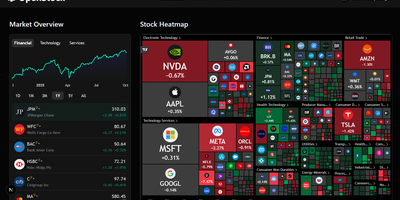
OpenStock delivers a production-ready financial market terminal that unifies real-time equity pricing, technical analysis, and multi-asset watchlists into a personal self-hosted dashboard. Investors can monitor equities across thirty international exchanges, inspect live candlestick charts powered by TradingView, and evaluate technical momentum oscillators without paying recurring platform subscriptions. The global command palette accessible via keyboard shortcuts enables instantaneous ticker discovery across global exchange symbols and economic sectors. Users can organize individual stock watchlists in MongoDB, configure automated price threshold alerts triggered every fifteen seconds, and review cross-platform sentiment scores synthesized from Reddit, X, and financial news feeds. The built-in automation engine schedules weekly digest reports and event-driven notifications dispatched directly to your inbox through Nodemailer transports. Responsive market heatmaps and top-mover widgets surface daily sector performance before the opening bell rings. Deployable via Docker Compose with dedicated MongoDB persistence, the platform scales across multi-key Finnhub rate limits effortlessly. Running on a dedicated VPS on RepoCloud with guaranteed CPU, RAM, and SSD, full root SSH access, and a browser serial console. AGPL-3.0 licensed.

Huntly
Capture every article you read, RSS feed you follow, X/Twitter thread you scroll past, and GitHub repository you star into one searchable, AI-enhanced personal knowledge base with Huntly. Auto-save visited web pages through the companion browser extension, extract distraction-free article text using Mozilla Readability and Defuddle, and highlight passages with inline notes that remain anchored in your library. Reconstruct multi-post X/Twitter threads automatically with embedded media preserved intact. Subscribe to RSS and Atom feeds via OPML import, organize subscriptions into custom folders, and triage unread stories alongside your read-it-later queue and hierarchical collections. Synchronize starred GitHub repositories with their README documentation and repository tags so you can filter tools by topic without leaving your dashboard. Run custom AI shortcuts to summarize long-form essays, translate foreign articles, or query your entire archive from external AI coding agents through the built-in MCP server and Agent Skills integration. Execute boolean, phrase, and bilingual fuzzy queries across every saved document or export your entire library to portable Markdown files. Running on a dedicated VPS on RepoCloud with guaranteed CPU, RAM, and SSD, full root SSH access, and a browser serial console. Apache-2.0 licensed.
Pinchflat
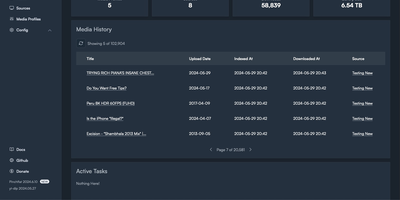
Archiving YouTube channels and playlists into a local media server becomes effortless with Pinchflat, a self-hosted media manager that automates downloading, naming, and organizing online video and audio libraries on disk. Instead of manually copying links into command-line downloaders, you define reusable Media Profiles with presets tailored for Plex, Jellyfin, Kodi, or raw archival storage, and then attach any number of YouTube channels or playlists as monitored sources. Fast Indexing polls RSS feeds or the YouTube API to detect newly published uploads within minutes while falling back to scheduled full scans so back-catalog videos are never missed. Granular source rules let you include or exclude YouTube Shorts and livestreams, filter titles by keyword patterns, enforce earliest upload cutoff dates, and set automatic retention windows that prune older files after a configured number of days. Built-in SponsorBlock integration marks or strips sponsor segments and embeds chapters alongside thumbnails, subtitles, and NFO metadata files so episodes appear cleanly inside your home theater library. You can also schedule Delayed Redownloads a few days after initial publication to capture higher-bitrate transcodes or crowd-sourced SponsorBlock tags, supply browser cookies for private playlists, and subscribe to any archived source in mobile podcast players through generated RSS feeds. Running on a dedicated VPS on RepoCloud with guaranteed CPU, RAM, and SSD, full root SSH access, and a browser serial console. AGPL-3.0 licensed.