Categories
self-hosted mcp-server fitness-tracking quantified-self wearables wearable-api health-data healthcare-aiStars
Forks
Watchers
Developer links
Open Wearables
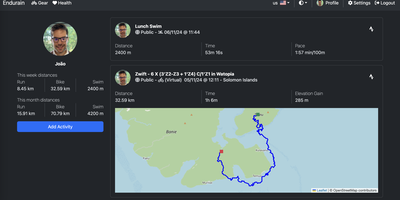
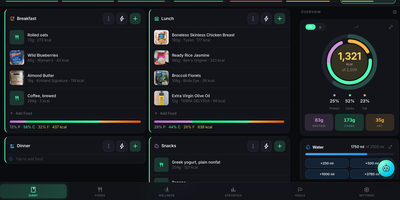
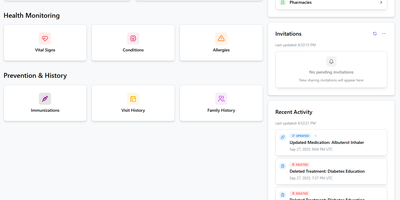
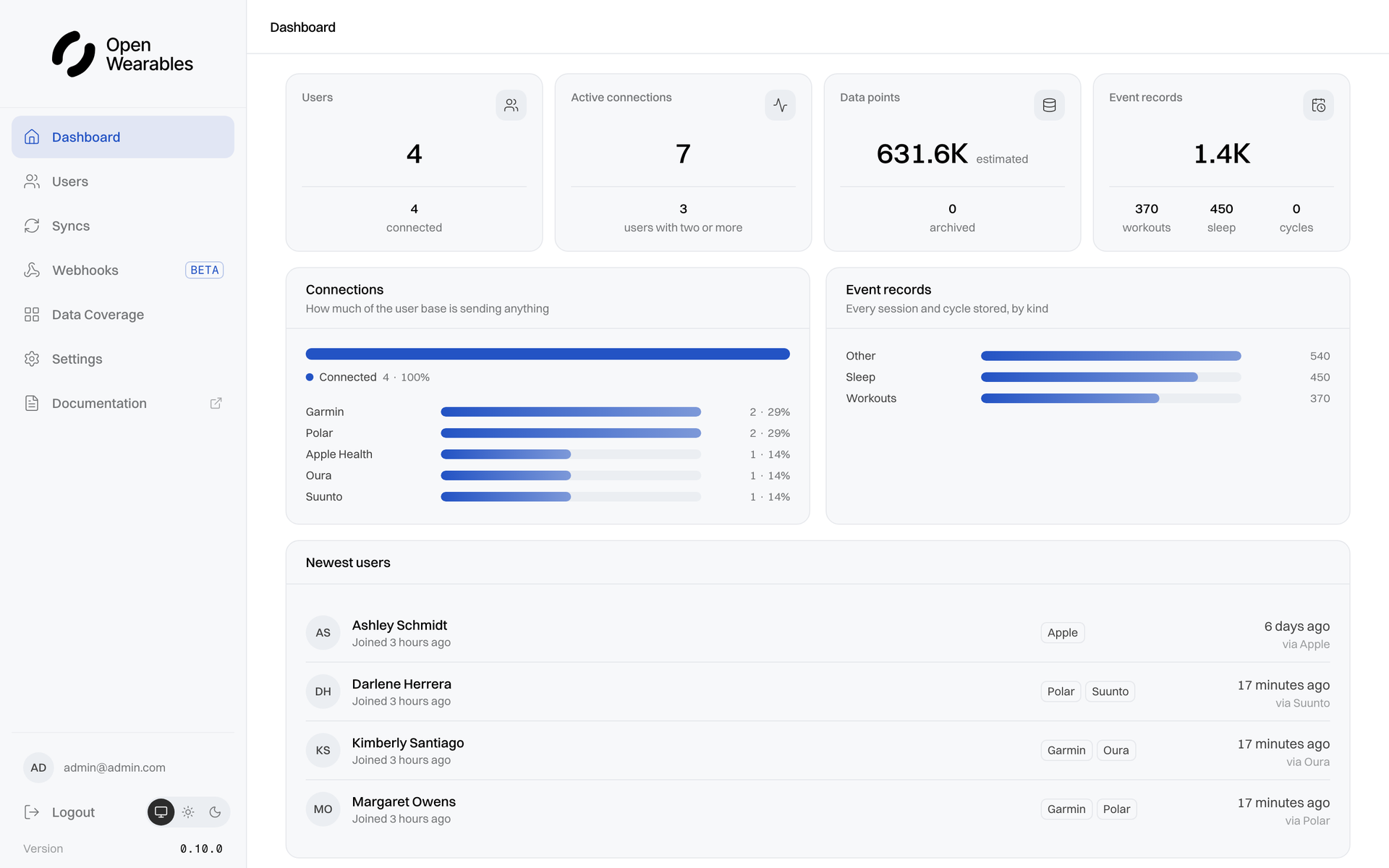
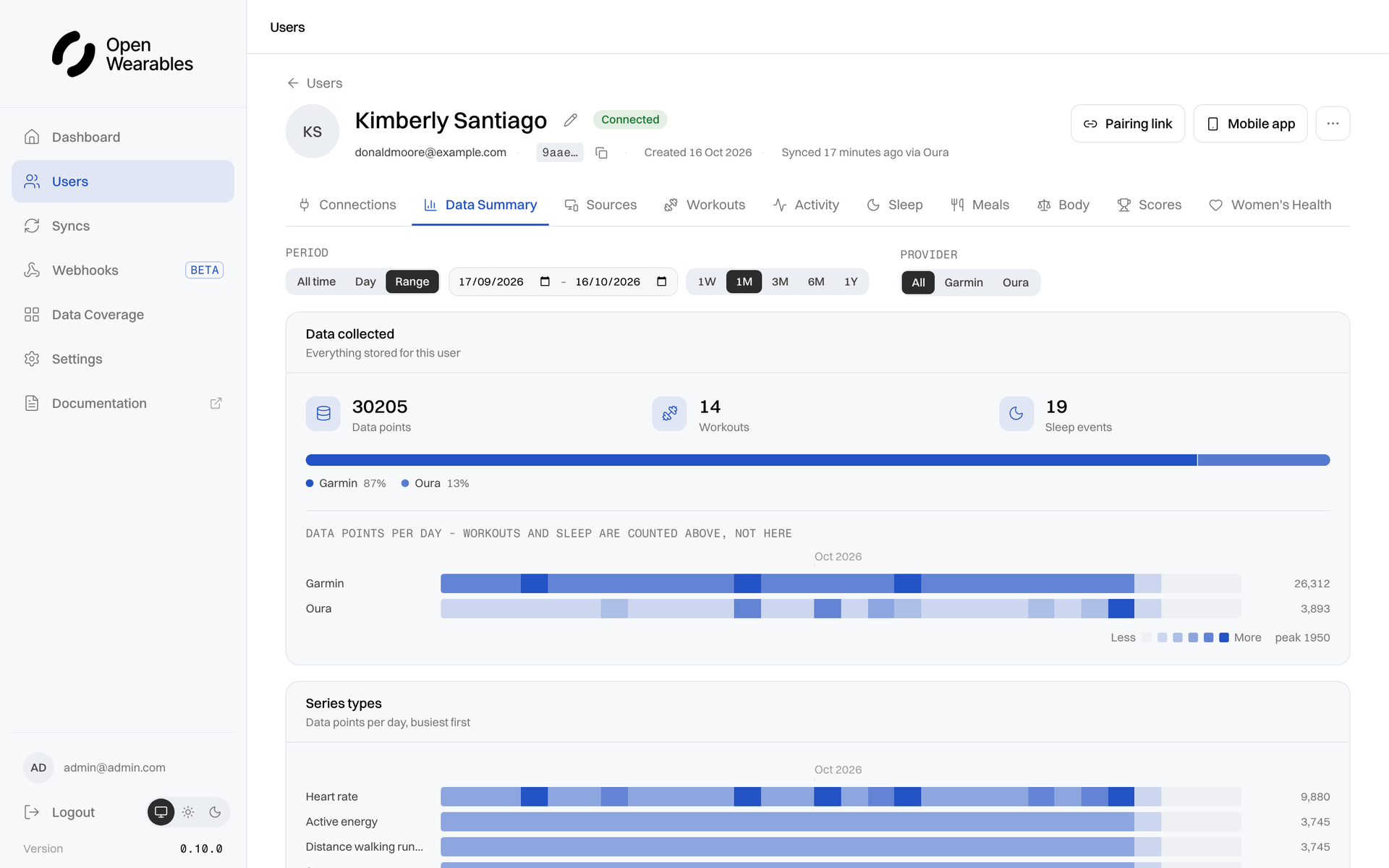
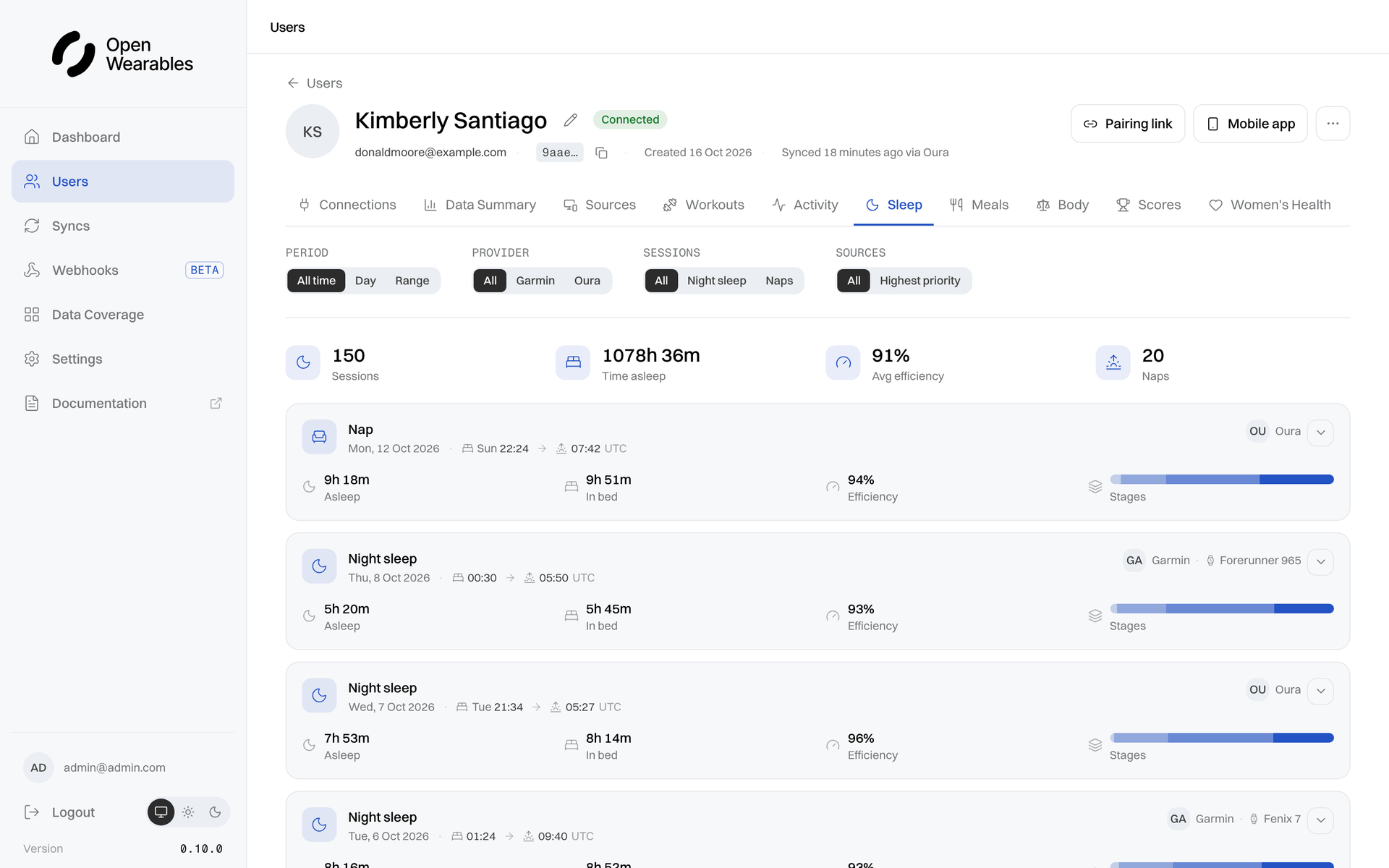
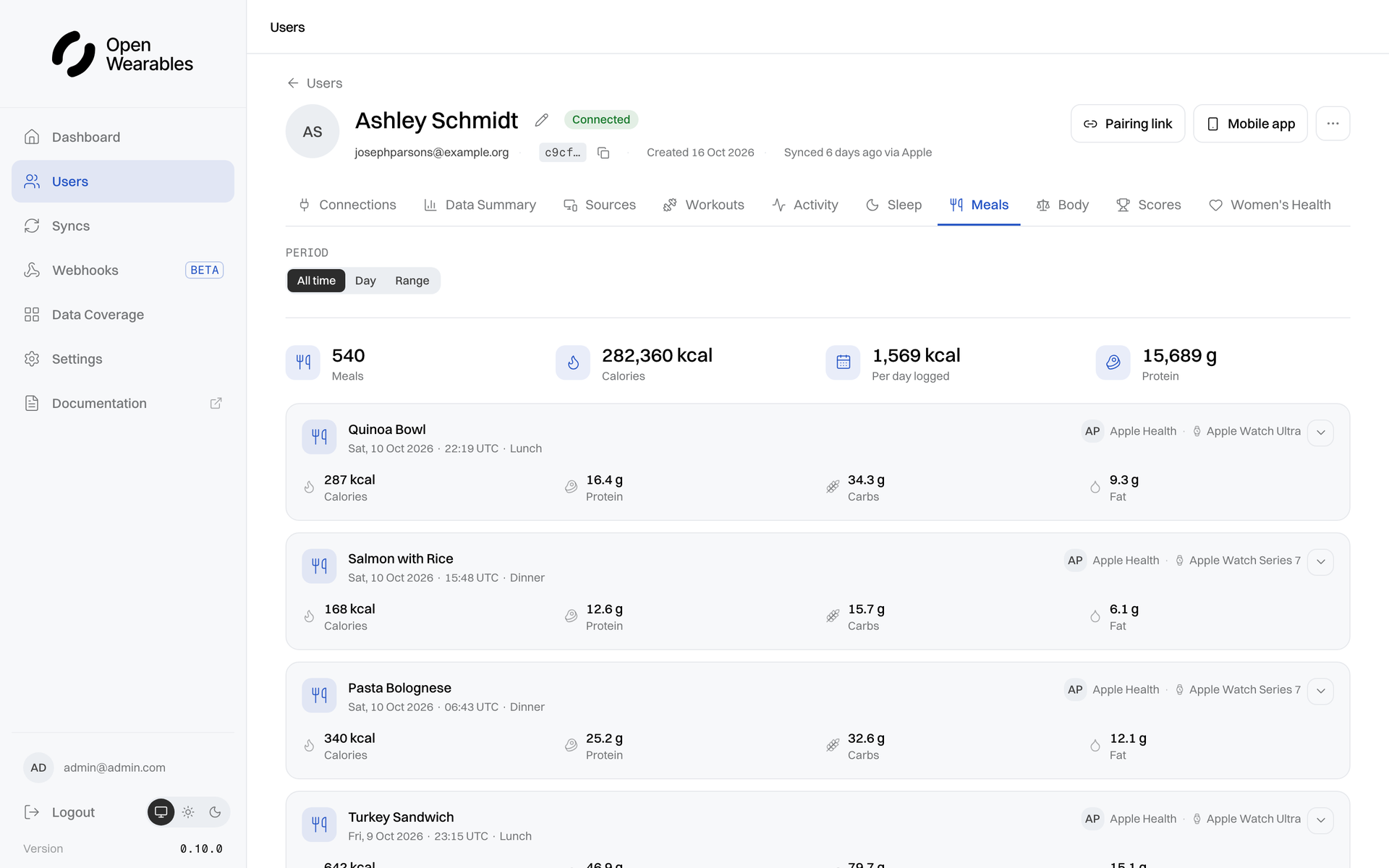
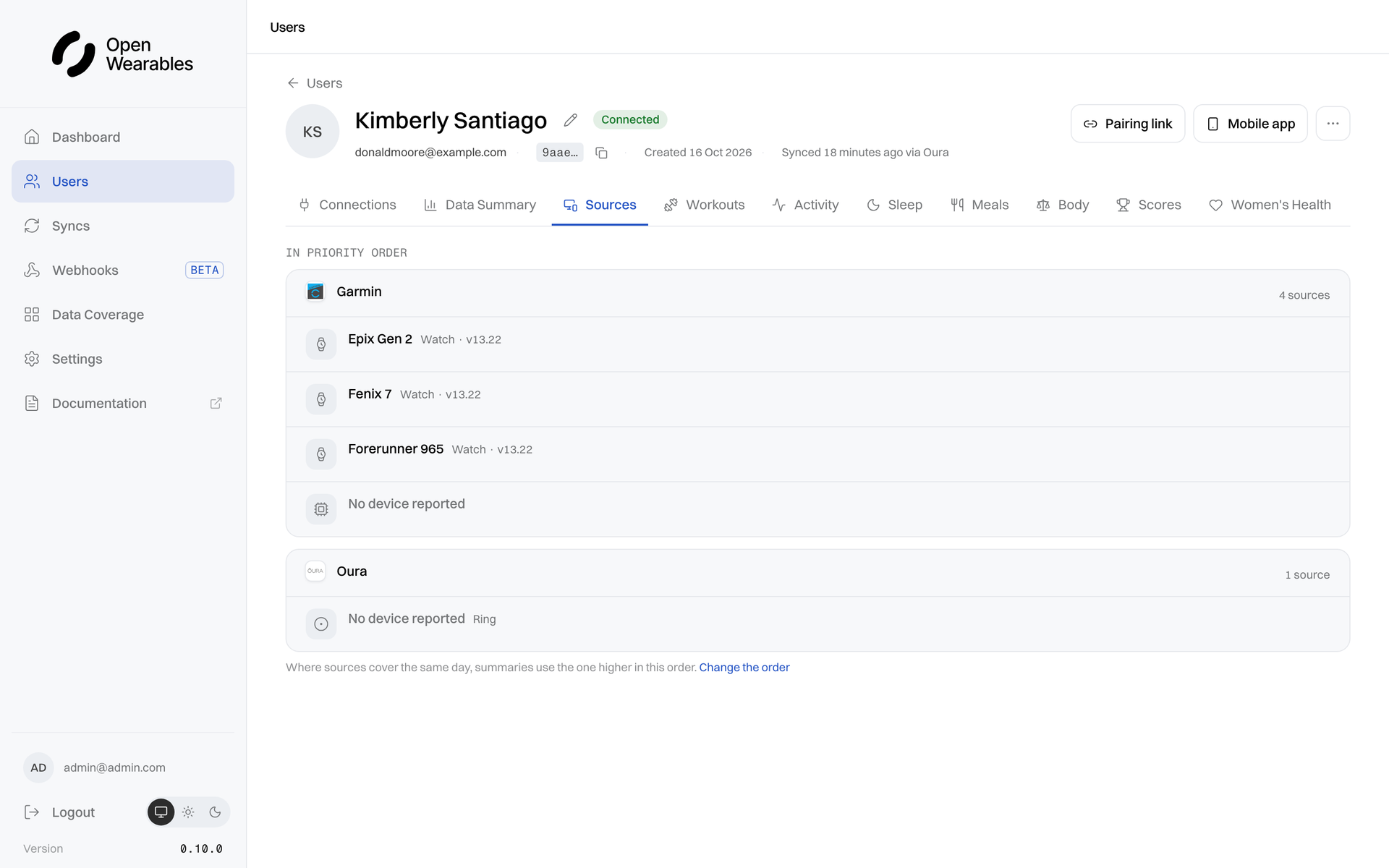
Garmin, Oura, Whoop, and Apple Health each speak a different data dialect, and Open Wearables translates all of them into one consistent REST API that you host yourself. Users authorize through a connection link or the connect widget, history backfills on the first sync, and heart rate, HRV, SpO2, sleep, workouts, and meals land in one normalized schema. When two devices record the same night, configurable data priorities decide which provider and device type wins. Native iOS, Android, Flutter, and React Native SDKs push Apple Health, Samsung Health, and Health Connect data from the phone, and full Apple Health XML exports can be imported too. Outgoing webhooks announce new data with signed payloads, test events, and delivery logs, while a live sync stream shows every pull as it happens. The developer portal adds a dashboard, user profiles with sleep, meals, scores, and women's health tabs, sync history, data coverage, API keys, team invitations, retention policies, and a seed data generator. Sleep and resilience scores ship with open algorithms you can audit and tune. An MCP server lets Claude Desktop or Cursor answer questions such as how a user slept last week. Use it for AI health coaches, fitness coaching apps, healthcare platforms, research cohorts, or a personal health archive with n8n automations on top. Running on a dedicated VPS on RepoCloud with guaranteed CPU, RAM, and SSD, full root SSH access, and a browser serial console. MIT licensed.
Benefits
- One API for every wearable
- Stop rebuilding OAuth flows, data mappings, and sync logic for each vendor. Garmin, Oura, Whoop, Apple Health, and more arrive through one schema and one set of endpoints.
- Sensitive health data stays yours
- Records sync into a PostgreSQL database on your own server, with no external auth service and no third-party processor, so data residency and compliance scope stay under your control.
- Ground AI answers in real data
- The built-in MCP server lets Claude, Cursor, and other agents query real sleep, workout, activity, and heart-rate records in plain language, so coaching advice rests on measured data instead of generic tips.
- Spend time on product, not plumbing
- Webhooks, mobile SDKs, historical backfill, sync monitoring, and a ready-made developer portal cover the integration plumbing, so your team can focus on the experience users actually see.
Features
- Unified Wearable Data Model
- Normalizes daily summaries, time series such as heart rate, HRV, and SpO2, sleep sessions, workouts, and meals into one schema, while data priorities resolve overlapping provider and device sources.
- Provider Connections and Sync
- OAuth connection links and a connect widget link Garmin, Oura, Whoop, Polar, Suunto, Strava, Fitbit, and more, with historical backfill and a live Server-Sent Events sync stream.
- Outgoing Webhooks
- Register HTTPS endpoints, filter by event type or user, verify signatures, send test events, and inspect delivery attempts; Svix handles delivery when outgoing webhooks are enabled.
- Mobile Sync SDKs
- Swift, Kotlin, Flutter, and React Native SDKs sync Apple HealthKit, Samsung Health, and Google Health Connect data in the background; a companion app onboards users with invitation codes.
- MCP Server for AI
- A FastMCP-based Model Context Protocol server lets Claude Desktop, Cursor, and other MCP clients query users, sleep, workouts, and time series in natural language.
- Developer Portal and Scores
- A SvelteKit portal offers a dashboard, user profiles, sync runs, data coverage, API keys, retention settings, team invites, a seed data generator, and open Sleep and Resilience scores.