Categories
self-hosted docker plugins mcp metasearch-engine search-aggregator private-search search-apiStars
Forks
Watchers
Developer links
degoog
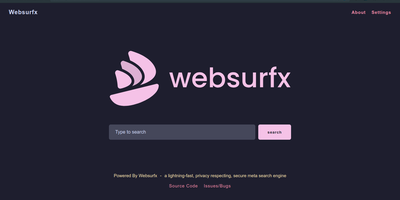
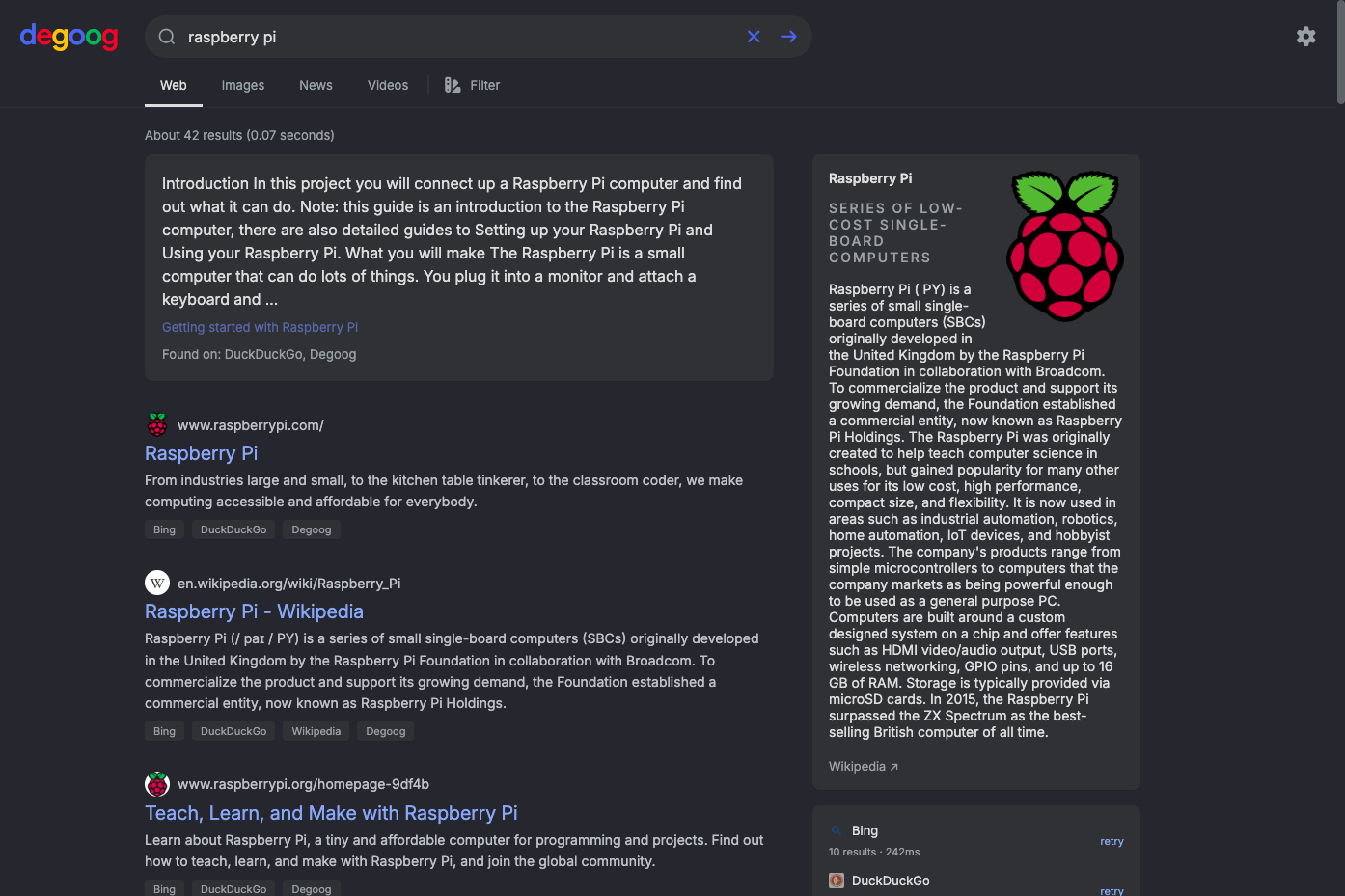
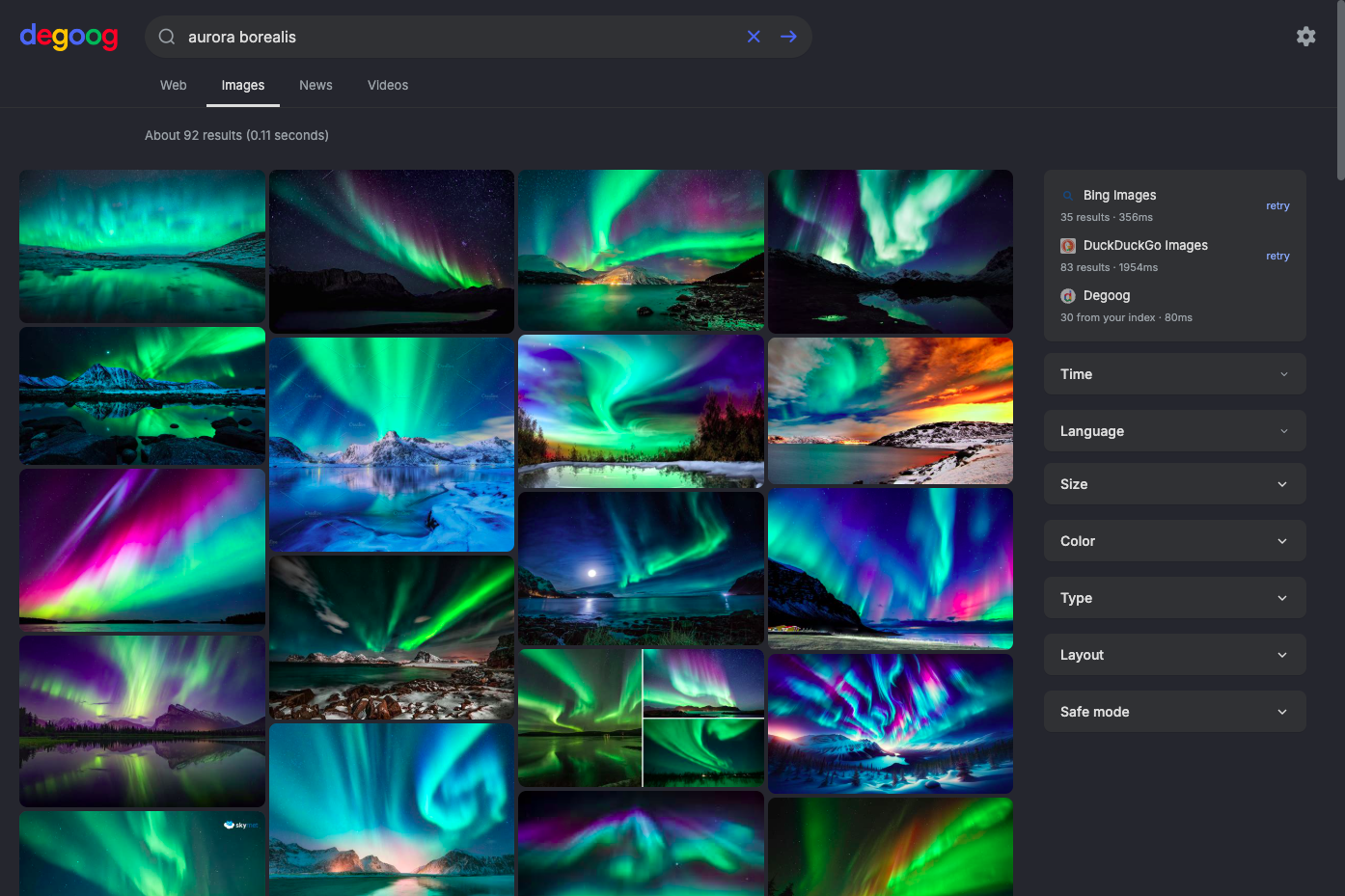
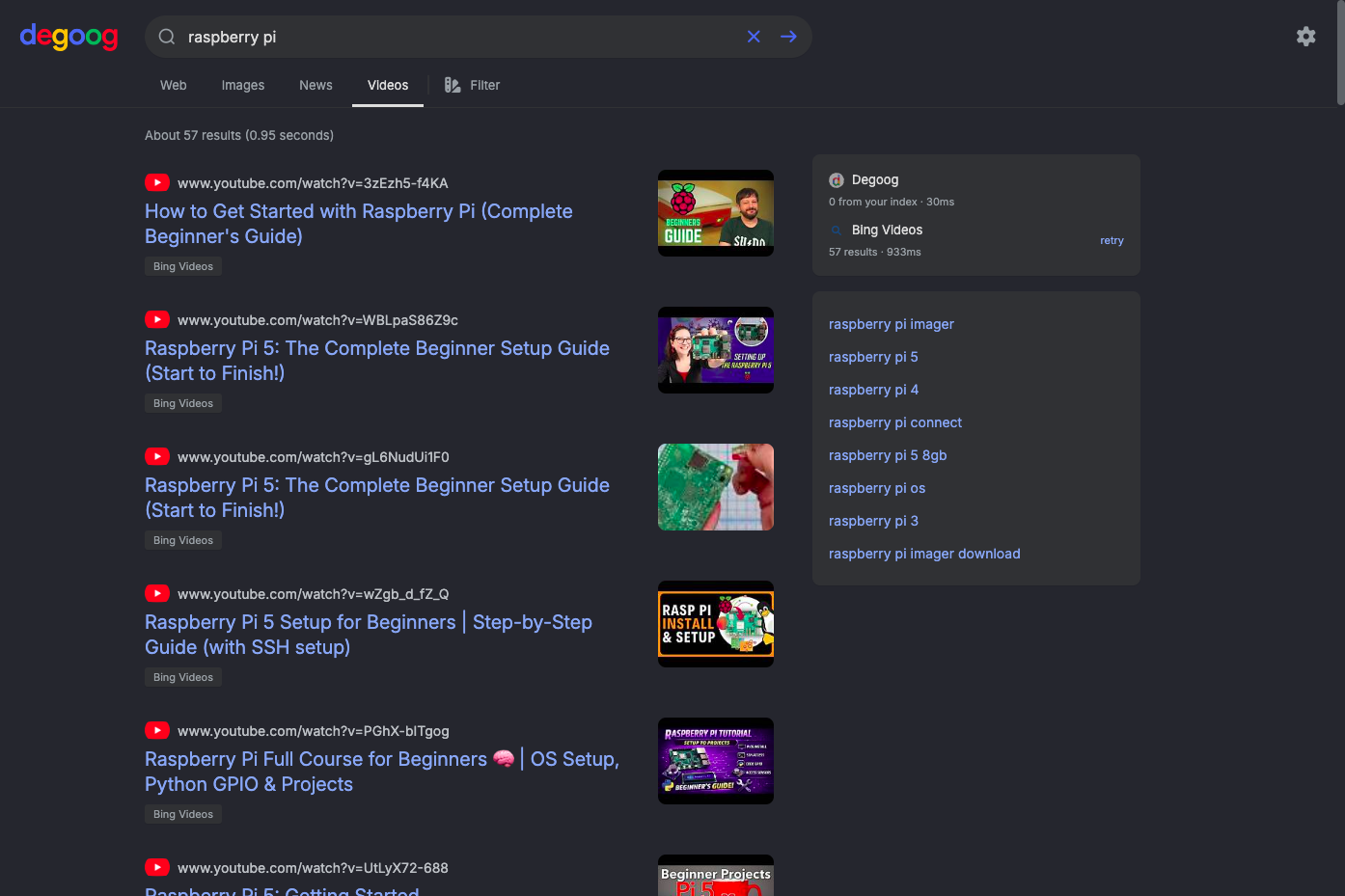
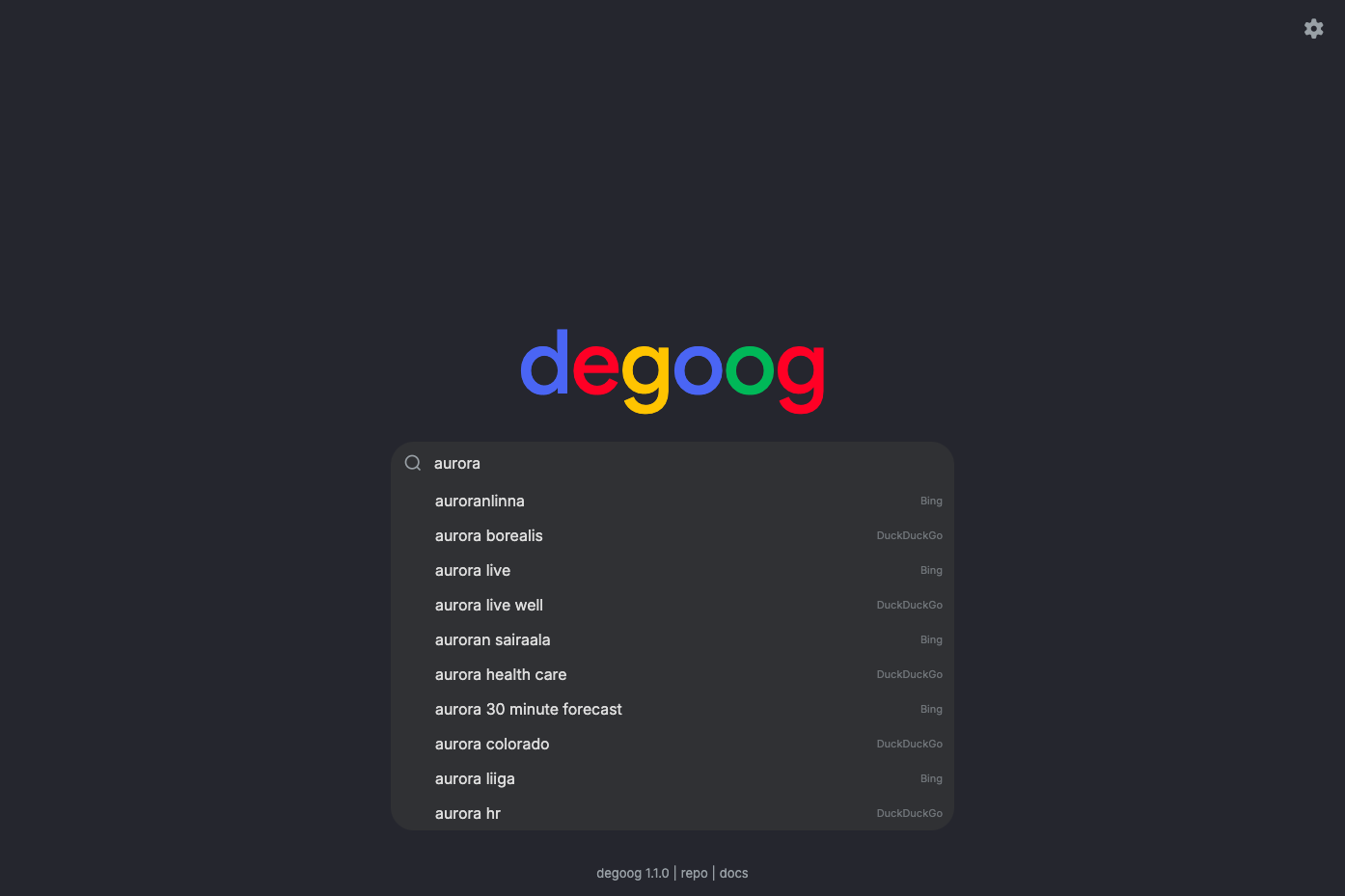
Instead of trusting one search company with every query, degoog is a self-hosted search aggregator that fans each one out to the engines you choose, from your own server, and merges the answers into one deduplicated, ranked list. It installs with no engines at all; a first-run tour then walks you through picking Google, Bing, DuckDuckGo, Brave, Startpage, Reddit, or Wikipedia from the built-in Store. Pages found by several engines collapse into a single row that lists every source, while a sidebar times each engine, explains failures like rate limits or CAPTCHAs, and retries only the one that failed. Tabs appear for each search type your engines serve, and the Images tab adds size, color, layout, and safe-mode filters beside a zoomable preview panel. Bangs target one engine or run commands (!w for Wikipedia, !ip, !speedtest, !uuid), and Store plugins add weather, definitions, QR codes, and search across your own Jellyfin or Meilisearch libraries. Owners can block, rewrite, or score domains, serve a script-free page to text browsers, and turn on an indexer that remembers seen results for later recall. A JSON search API, a SearXNG-compatible response mode for Open WebUI, and an MCP companion feed the same results to scripts and LLM clients. Running on a dedicated VPS on RepoCloud with guaranteed CPU, RAM, and SSD, full root SSH access, and a browser serial console. AGPL-3.0 licensed.

Benefits
- Searches Leave From Your Server
- Queries go from your own server to each engine and thumbnails pass through an image proxy, so browsers do not contact engines or image hosts directly; per-IP limits default to 15 searches per 20 seconds.
- Choose Exactly Which Engines Answer
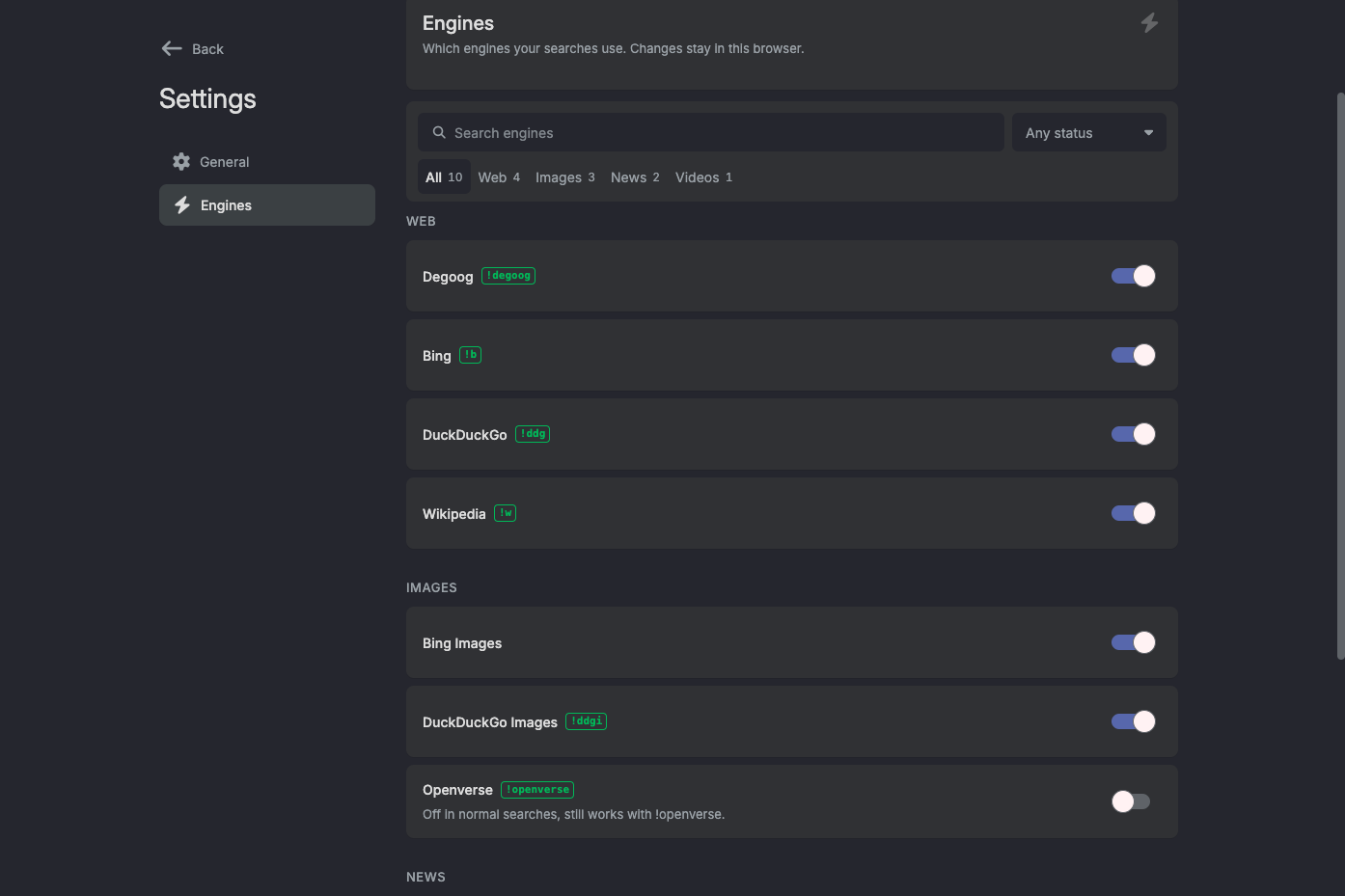
- Nothing is preinstalled. Pick official engines for Google, Bing, DuckDuckGo, Brave, Startpage, Reddit, Hacker News, and Wikipedia, and keep a noisy one switched off but still reachable by its bang.
- Make It Your Browser Default
- An OpenSearch descriptor at /opensearch.xml lets Firefox, Chrome, Edge, and Brave add your instance as a search engine, and over HTTPS it installs as a web app.
- Start Small, Then Scale Up
- Begin with the single-service compose file, then add Valkey caching or PostgreSQL for a large indexer using the valkey, postgres, and full examples, with all data kept in one mounted directory.
Features
- Git-Based Extension Store
- Settings, Store installs and updates engines, plugins, transports, themes, autocomplete, and favicon providers from git repositories, including the official extensions repository and a community list.
- Merged and Scored Results
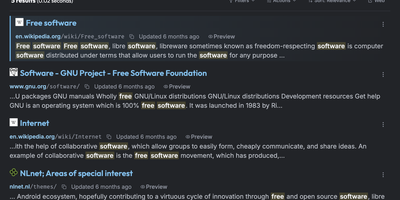
- The same URL from several engines becomes one row with summed scores and a small overlap bonus, then domain block, replace, and score rules apply as a final adjustment.
- Streaming With Diagnostics
- Server-sent events stream each engine's results as it answers, and the sidebar reports timings and failure reasons such as rate limits, CAPTCHAs, and timeouts, with optional automatic retries.
- Bangs and Plugins
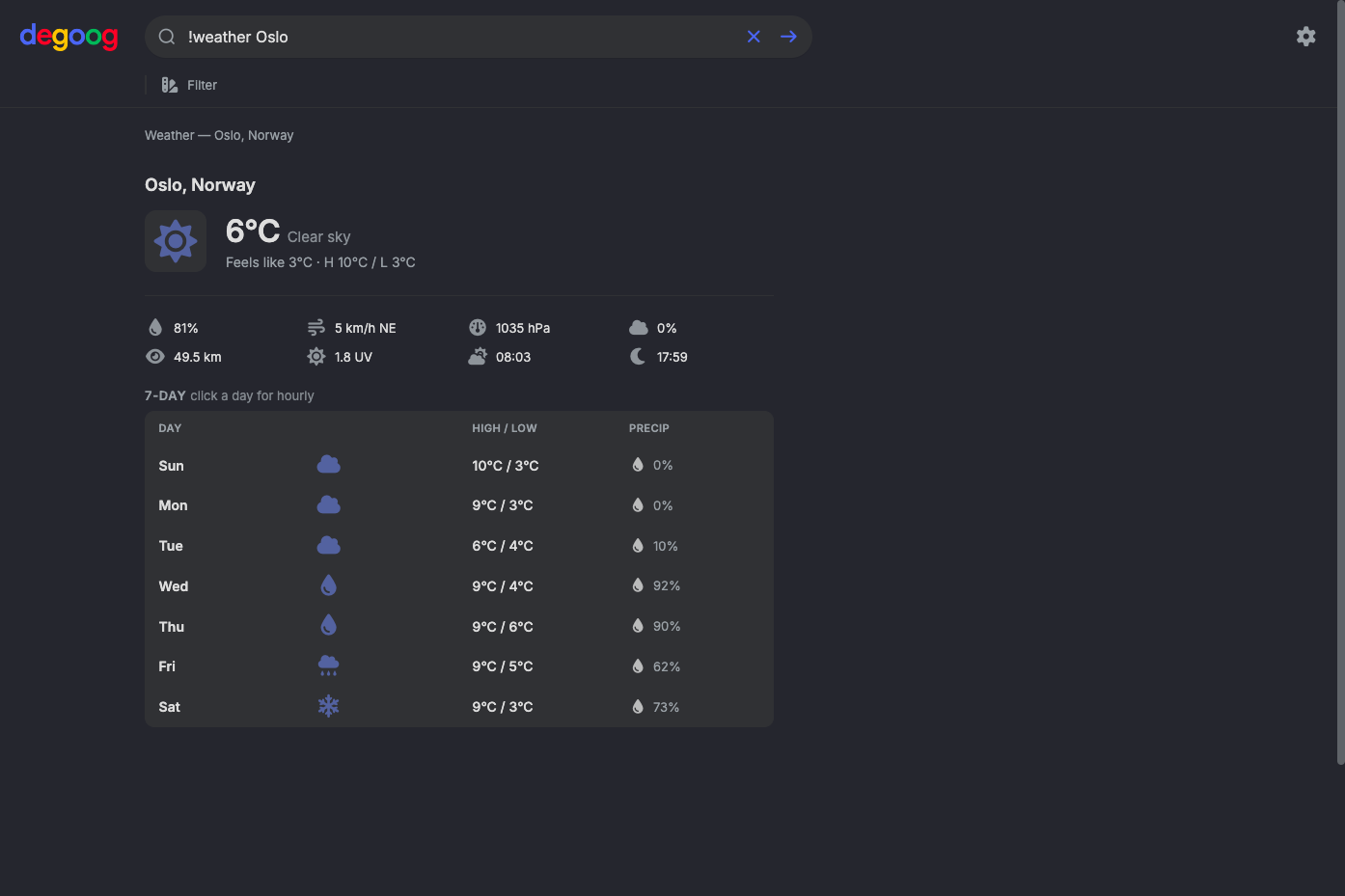
- Built-in !help, !ip, !speedtest, and !uuid commands sit beside Store plugins for weather, definitions, QR codes, passwords, history, Jellyfin, RomM, and Meilisearch, plus custom aliases.
- Optional Local Indexer
- Stores the results you actually saw in SQLite, or PostgreSQL for busy instances, serves them back as the Degoog engine with fuzzy recall, and exports or imports index files.
- JSON API, SearXNG, MCP
- An optionally key-protected JSON search API can answer in SearXNG format for Open WebUI, and a degoog-mcp container exposes search to Model Context Protocol clients.