Radar
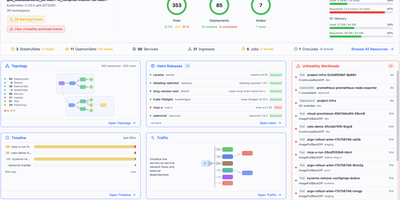
Radar is an open-source Kubernetes management dashboard and Model Context Protocol server that gives engineering teams complete cluster visibility, automated issue diagnosis, and GitOps controls through a unified web interface. Operators explore live interactive cluster topology maps rendered with automated layout engines, grouping workloads by namespace or custom application labels to trace network communication pathways. The unified event timeline retains Kubernetes activity and state change diffs well beyond default one-hour limits, allowing site reliability engineers to diagnose historical CrashLoopBackOff states and investigate failed deployment rollouts. Teams manage Helm releases by inspecting deployed values, comparing manifest revisions side by side, and initiating rollbacks or upgrades with a single click. The built-in GitOps workspace correlates ArgoCD and Flux applications, surfacing synchronization health, field-level configuration drifts, and automated remediation suggestions. Developers inspect container image filesystems directly from pod detail panels without pulling images locally or establishing interactive terminal sessions, browsing permissions and downloading specific files. Native Model Context Protocol endpoints expose cluster telemetry and operational tools to artificial intelligence coding assistants, enabling external agents to diagnose failing pods and inspect access controls securely. Running on a dedicated VPS on RepoCloud with guaranteed CPU, RAM, and SSD, full root SSH access, and a browser serial console. Apache 2.0 licensed.
AgentsView
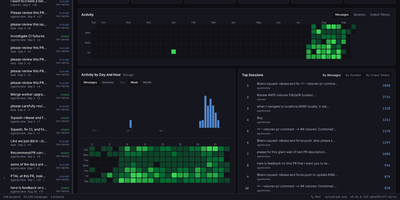
Software developers running Claude Code, Cursor, Codex, and Aider use AgentsView to trace token expenditures, search full session transcripts, and analyze multi-agent concurrency timelines. Engineers can search through historical developer sessions to locate specific code modifications, prompt chains, or debugging rationales across extensive programming workflows. The real-time activity timeline visualizes concurrent agent operations, revealing peak execution windows, task run durations, and automated tool invocations. The usage analytics engine calculates financial costs and token volumes per model by applying live pricing tables while accounting for prompt caching read discounts. Developers inspect granular turn-by-turn session transcripts complete with raw model payloads, file difference diffs, executed shell commands, and syntax errors. The recall browser extracts key technical context from past programming sessions, organizing facts into an indexed reference knowledge corpus for reuse across future project tasks. Administrators can replicate SQLite session tables into DuckDB analytics files or PostgreSQL warehouses to query longitudinal metrics using SQL analytical tools or custom reporting scripts. Running on a dedicated VPS on RepoCloud with guaranteed CPU, RAM, and SSD, full root SSH access, and a browser serial console. MIT licensed.
Tracely
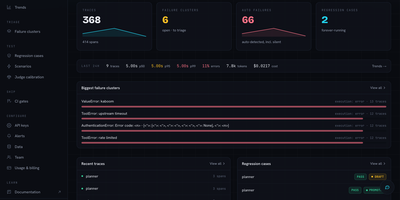
When an AI agent breaks in production, Tracely freezes that exact run into a replayable regression test and blocks the pull request that would ship the bug again. Span soup hides the failure. OTLP/HTTP traces group into conversation threads, and a waterfall marks the failing span in red with its input and output. Nobody knows if an answer was good. Evaluators sit as columns on the trace table, mixing model-free checks with LLM judges at conversation, run, or span level. Thirty-one broken runs, one issue. Clustering turns them into a single counted issue and can suggest the evaluator that would have caught it. A fix nobody can prove. One click promotes a failing trace into a hermetic case with recorded fixtures and a fail-to-pass contract, and scenarios send a red-team model after an adversarial goal. Model bills on every CI run. The suite replays offline with no API keys and no model spend, and tracely gate posts a commit status, comments on the pull request, and blocks regressions. No warning when it breaks again. Alert flows drawn on a canvas react to failed gates, broken conversations, unseen failure modes, or rising failure rates by messaging Slack, sending email, calling a webhook, or prompting an LLM. Coding agents can read traces and write evaluators through an MCP endpoint. Running on a dedicated VPS on RepoCloud with guaranteed CPU, RAM, and SSD, full root SSH access, and a browser serial console. MIT licensed.
Open Wearables
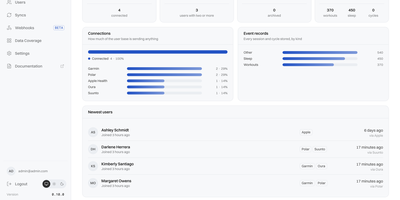
Garmin, Oura, Whoop, and Apple Health each speak a different data dialect, and Open Wearables translates all of them into one consistent REST API that you host yourself. Users authorize through a connection link or the connect widget, history backfills on the first sync, and heart rate, HRV, SpO2, sleep, workouts, and meals land in one normalized schema. When two devices record the same night, configurable data priorities decide which provider and device type wins. Native iOS, Android, Flutter, and React Native SDKs push Apple Health, Samsung Health, and Health Connect data from the phone, and full Apple Health XML exports can be imported too. Outgoing webhooks announce new data with signed payloads, test events, and delivery logs, while a live sync stream shows every pull as it happens. The developer portal adds a dashboard, user profiles with sleep, meals, scores, and women's health tabs, sync history, data coverage, API keys, team invitations, retention policies, and a seed data generator. Sleep and resilience scores ship with open algorithms you can audit and tune. An MCP server lets Claude Desktop or Cursor answer questions such as how a user slept last week. Use it for AI health coaches, fitness coaching apps, healthcare platforms, research cohorts, or a personal health archive with n8n automations on top. Running on a dedicated VPS on RepoCloud with guaranteed CPU, RAM, and SSD, full root SSH access, and a browser serial console. MIT licensed.
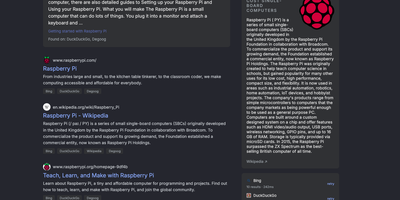
degoog
Instead of trusting one search company with every query, degoog is a self-hosted search aggregator that fans each one out to the engines you choose, from your own server, and merges the answers into one deduplicated, ranked list. It installs with no engines at all; a first-run tour then walks you through picking Google, Bing, DuckDuckGo, Brave, Startpage, Reddit, or Wikipedia from the built-in Store. Pages found by several engines collapse into a single row that lists every source, while a sidebar times each engine, explains failures like rate limits or CAPTCHAs, and retries only the one that failed. Tabs appear for each search type your engines serve, and the Images tab adds size, color, layout, and safe-mode filters beside a zoomable preview panel. Bangs target one engine or run commands (!w for Wikipedia, !ip, !speedtest, !uuid), and Store plugins add weather, definitions, QR codes, and search across your own Jellyfin or Meilisearch libraries. Owners can block, rewrite, or score domains, serve a script-free page to text browsers, and turn on an indexer that remembers seen results for later recall. A JSON search API, a SearXNG-compatible response mode for Open WebUI, and an MCP companion feed the same results to scripts and LLM clients. Running on a dedicated VPS on RepoCloud with guaranteed CPU, RAM, and SSD, full root SSH access, and a browser serial console. AGPL-3.0 licensed.
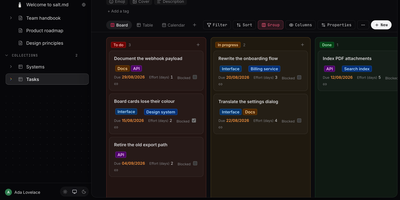
salt.md
salt.md is an open-source, self-hosted workspace where your team and its AI agents work on the same documents and databases, under the same permissions and with the same history. A slash-menu block editor handles checklists, tables, callouts, columns, code, diagrams, and embeds. Page links, backlinks, and a graph view show how pages connect. Any page can become a collection with typed properties like select, date, person, relation, rollup, and formula, shown as a table, board, list, gallery, calendar, timeline, or form. Ctrl+K searches titles, body text, row values, and the text inside uploaded PDFs. Two people can type in the same paragraph at once with live cursors. Comments, page history, and an activity log record who changed what. Publish a page as a read-only link with an optional password and expiry, or hand people without accounts a form that adds rows to a collection. Agents connect over MCP with 33 tools for searching, writing, building databases, and commenting, using tokens scoped to one workspace or read-only. Signed webhooks, iCalendar feeds, and Google or Microsoft sign-in link it to the rest of your stack. Import Markdown, ZIP archives, or a Notion export, and export pages as Markdown, HTML, or PDF. Use it for handbooks, meeting notes, project boards, and a knowledge base your assistants can read. Running on a dedicated VPS on RepoCloud with guaranteed CPU, RAM, and SSD, full root SSH access, and a browser serial console. AGPL-3.0 licensed.
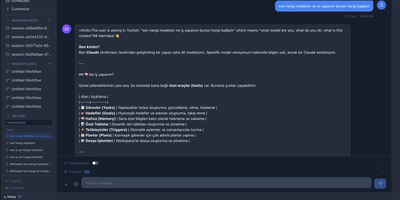
OwnPilot
Bridging local hardware and cloud intelligence, OwnPilot orchestrates autonomous multi-channel agent swarms and visual workflow pipelines while keeping sensitive personal records strictly on private infrastructure. Users can trigger autonomous task runs that browse websites using headless browser automation, extract data tables, and summarize research directly into encrypted markdown notebooks. The built-in workflow canvas allows individuals to construct branching automation sequences combining large language models, conditional logic gates, iterative data loops, and human-in-the-loop approvals. Users delegate calendar scheduling, task tracking, expense budgeting, and contact lookups through conversational chats conducted over web portals, Telegram bots, or WhatsApp numbers. Operators can dispatch coding agents to inspect local repositories, execute shell commands in sandboxed environments, and stream live terminal logs as automated patches develop. The platform also enables home automation enthusiasts to monitor MQTT telemetric feeds from microcontrollers, queue device commands, and receive instant alert notifications when sensor thresholds trigger. Advanced security layers inspect all incoming prompts for personal data patterns, enforce strict permission boundaries across file directories, and generate tamper-evident audit logs for every autonomous tool call. Running on a dedicated VPS on RepoCloud with guaranteed CPU, RAM, and SSD, full root SSH access, and a browser serial console. MIT licensed.
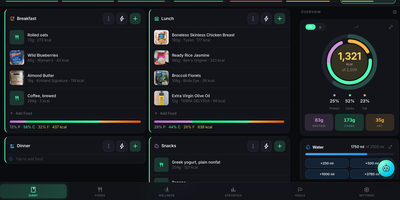
NutriTrace
Stop handing your daily food diary, body weight history, and biometric sleep data to ad-funded fitness clouds: NutriTrace brings complete calorie, macro, micronutrient, and wellness tracking to your own server with an offline-capable web PWA and native Android app. Log meals across customizable slots using live Open Food Facts and USDA FoodData Central lookups, barcode scanning, AI nutrition label OCR, or direct recipe imports from Mealie and CookTrace. Calorie and macro targets adjust automatically through three goal engines, including an inspectable Adaptive TDEE algorithm that regresses 35 days of intake against scale weight at 7,700 kcal per kilogram. Connect Fitbit via Google Health, Garmin, Withings, and Android Health Connect to pull steps, heart rate variability, sleep stages, and body composition into unified Sleep, Readiness, and Resilience scores. An integrated Trace AI assistant and Smart Log let you log meals by voice, text, or meal photo, while the opt-in Model Context Protocol server exposes 20 read, write, and management tools to Claude Desktop, Cursor, and Codex. Multi-user households get OpenID Connect SSO and one-step migration from MyFitnessPal, Cronometer, Lose It, and Waistline. Running on a dedicated VPS on RepoCloud with guaranteed CPU, RAM, and SSD, full root SSH access, and a browser serial console. AGPL-3.0 licensed.