Categories
self-hosted mcp-server ai-agents note-taking knowledge-base wiki team-collaboration document-editorStars
Forks
Watchers
Developer links
salt.md
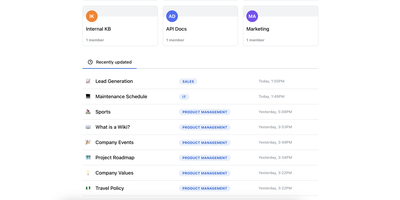
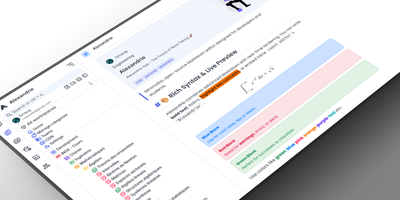
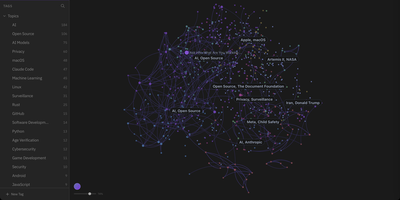
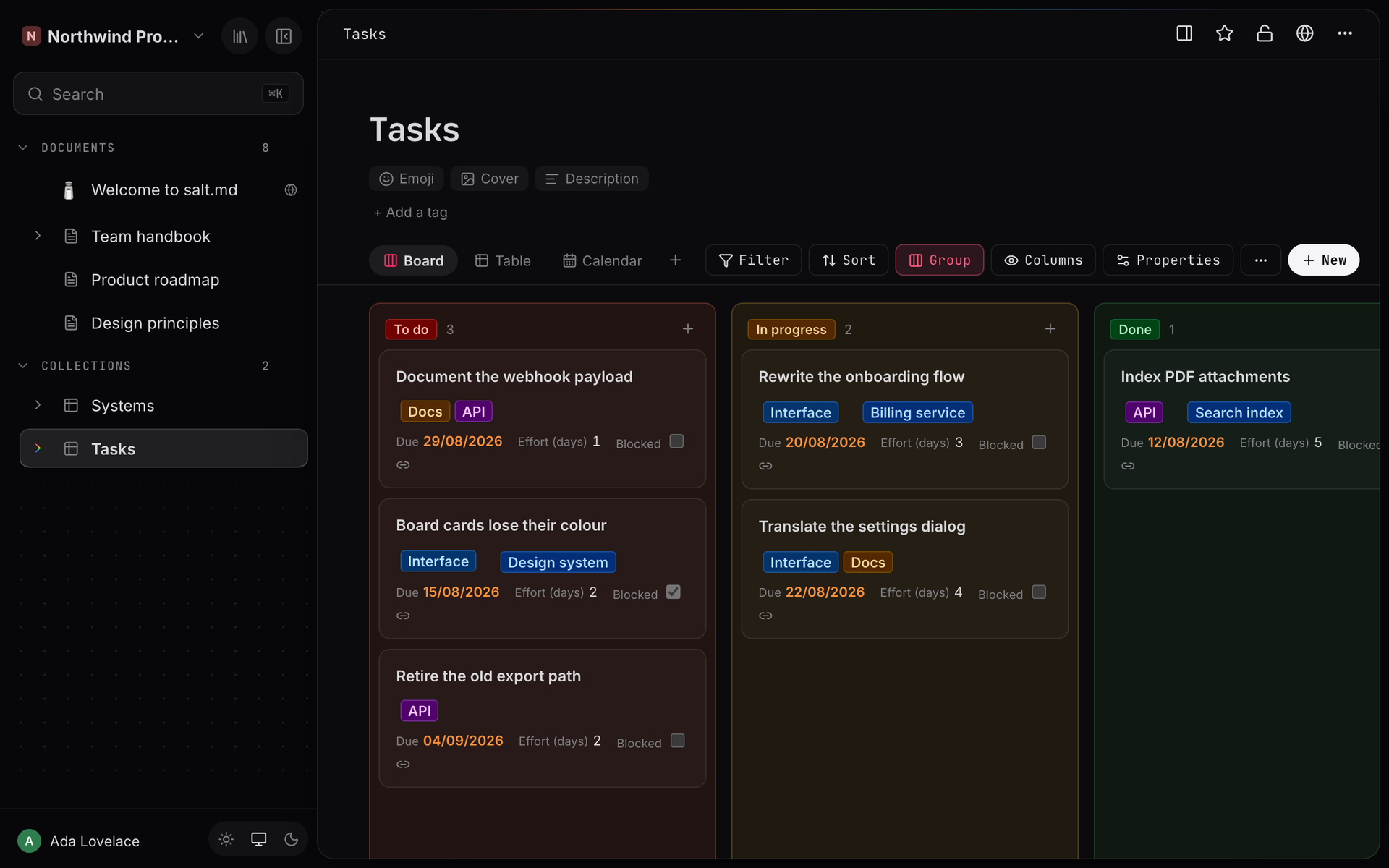
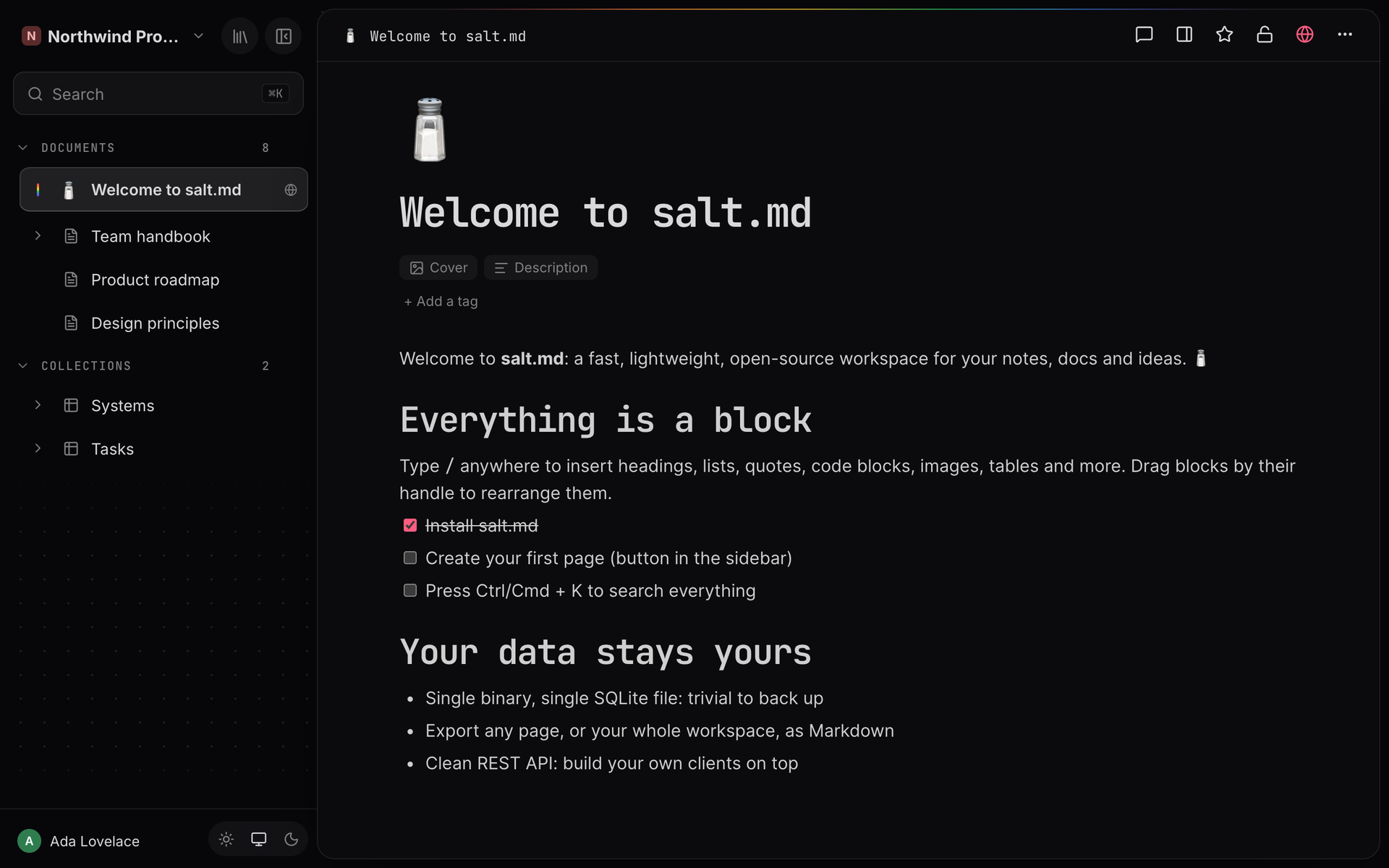
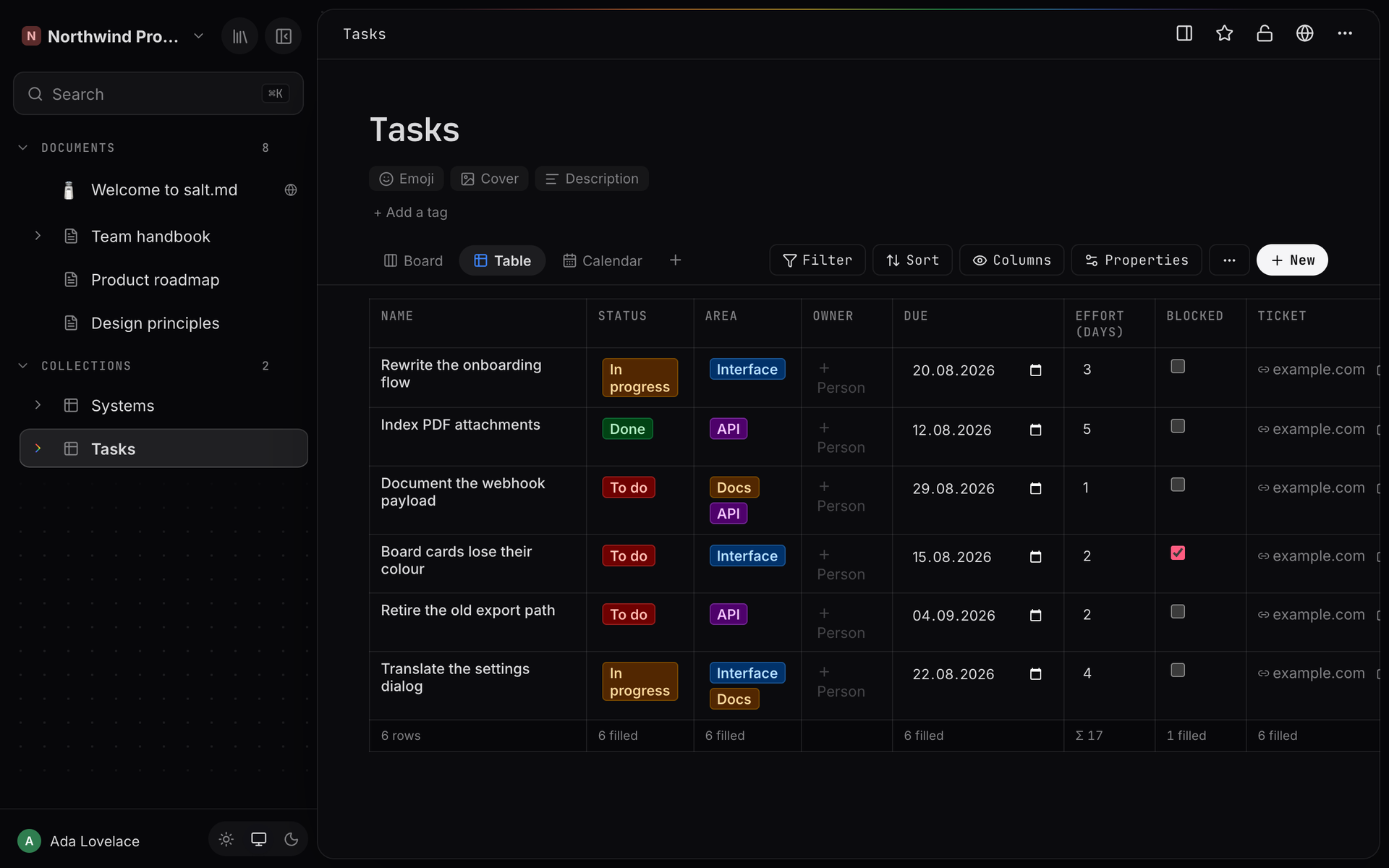
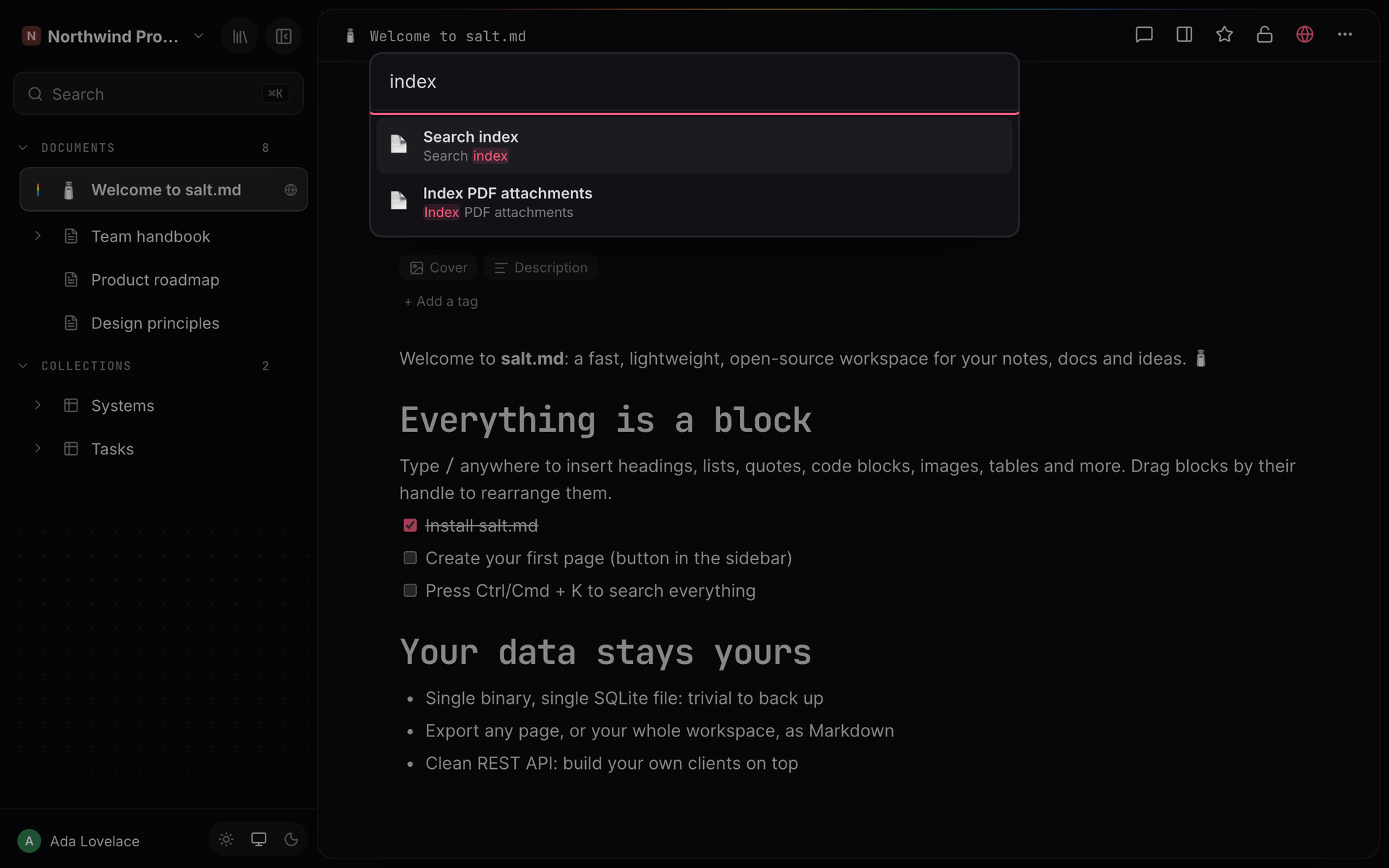
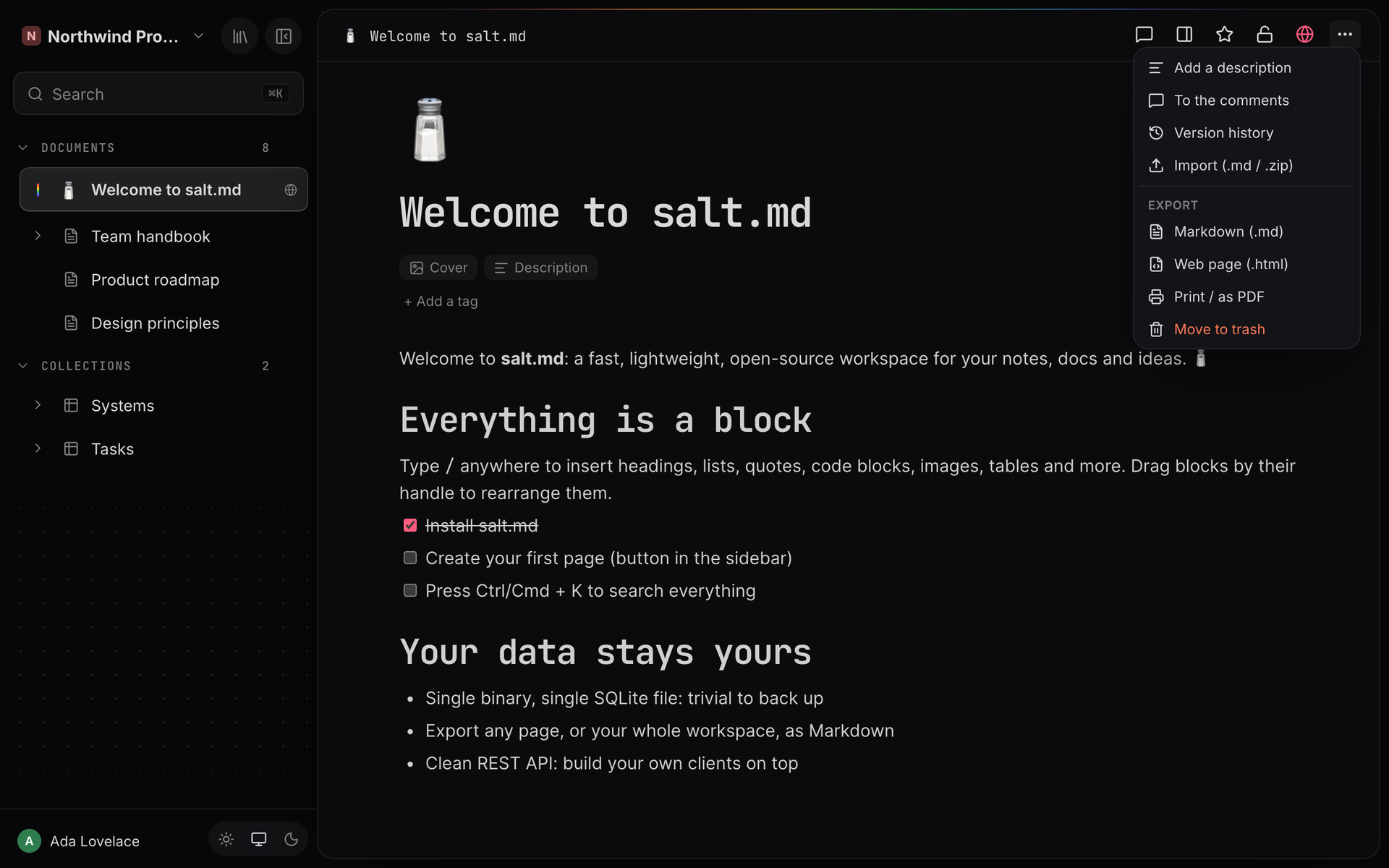
salt.md is an open-source, self-hosted workspace where your team and its AI agents work on the same documents and databases, under the same permissions and with the same history. A slash-menu block editor handles checklists, tables, callouts, columns, code, diagrams, and embeds. Page links, backlinks, and a graph view show how pages connect. Any page can become a collection with typed properties like select, date, person, relation, rollup, and formula, shown as a table, board, list, gallery, calendar, timeline, or form. Ctrl+K searches titles, body text, row values, and the text inside uploaded PDFs. Two people can type in the same paragraph at once with live cursors. Comments, page history, and an activity log record who changed what. Publish a page as a read-only link with an optional password and expiry, or hand people without accounts a form that adds rows to a collection. Agents connect over MCP with 33 tools for searching, writing, building databases, and commenting, using tokens scoped to one workspace or read-only. Signed webhooks, iCalendar feeds, and Google or Microsoft sign-in link it to the rest of your stack. Import Markdown, ZIP archives, or a Notion export, and export pages as Markdown, HTML, or PDF. Use it for handbooks, meeting notes, project boards, and a knowledge base your assistants can read. Running on a dedicated VPS on RepoCloud with guaranteed CPU, RAM, and SSD, full root SSH access, and a browser serial console. AGPL-3.0 licensed.
Benefits
- One process, nothing else to run
- The whole product is a single static binary with the frontend embedded and pure-Go SQLite inside, so there is no database server, cache, or object store to install or babysit.
- Agents work under real permissions
- MCP tokens can be read-only and limited to chosen workspaces, agents cannot touch accounts, tokens, backups, or settings, and the activity log separates their edits from yours.
- Backups are one file copy
- All data lives in one SQLite file plus an uploads folder, and salt backup writes a consistent tar.gz snapshot while the server keeps running, with salt restore to unpack it.
- Bring your Notion and Markdown content along
- Import single Markdown files, ZIP archives of them, or a Notion export from one page menu, and export pages as Markdown, HTML, or PDF whenever you want to leave.
Features
- Block Editor with Slash Menu
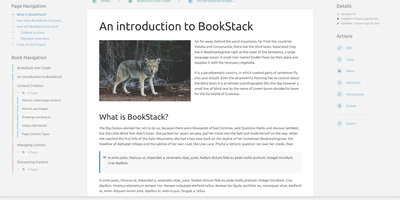
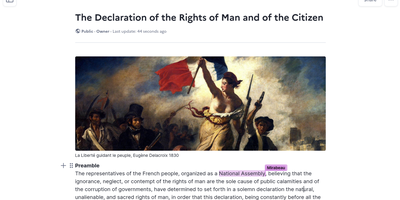
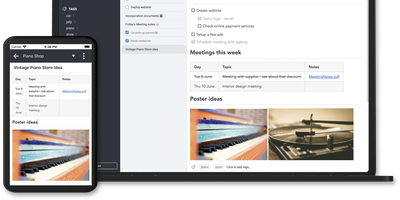
- A BlockNote editor offers headings, checklists, tables, callouts, columns, code, Mermaid diagrams, and embeds, plus Markdown shortcuts, page links, backlinks, covers, and icons on every page.
- Collections with Seven Views
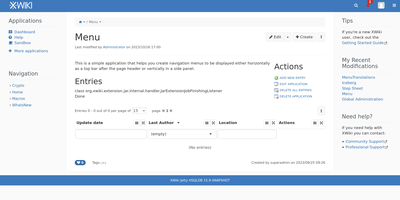
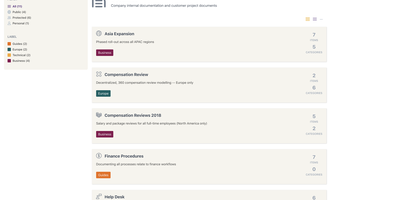
- Any page becomes a collection with typed properties including select, date, person, relation, rollup, and formula, viewable as table, board, list, gallery, calendar, timeline, or form.
- Built-in MCP Server
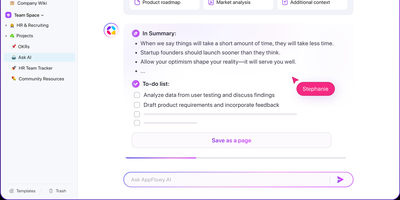
- Streamable HTTP at POST /mcp exposes 33 tools to Claude, ChatGPT, Codex, Cursor, and Gemini CLI, authenticated by scoped API tokens or OAuth sign-in with workspace-level agent rules.
- Full-Text Search with PDFs
- SQLite FTS5 indexes titles, body text, row properties, and text extracted from attached PDFs, so Ctrl+K returns passage results across every page you are allowed to read.
- Realtime Collaboration
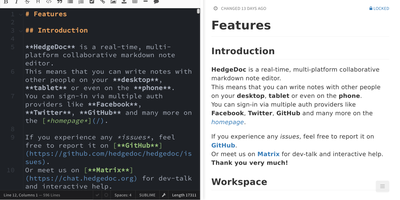
- Yjs merges simultaneous edits with live cursors, no locks, and no save button, while comments, version history, and an activity log record who changed what.
- Sharing, Forms, and Webhooks
- Read-only public links accept a password and expiry, public forms add rows without accounts, and HMAC-SHA256 signed webhooks fire on page created, updated, or trashed events.