Stars
Forks
Watchers
Developer links
Radar
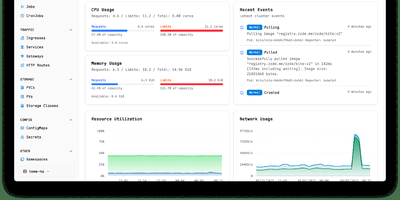
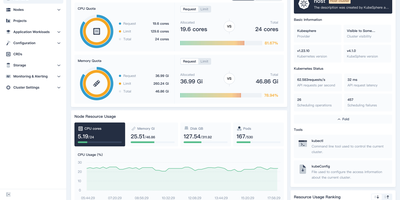
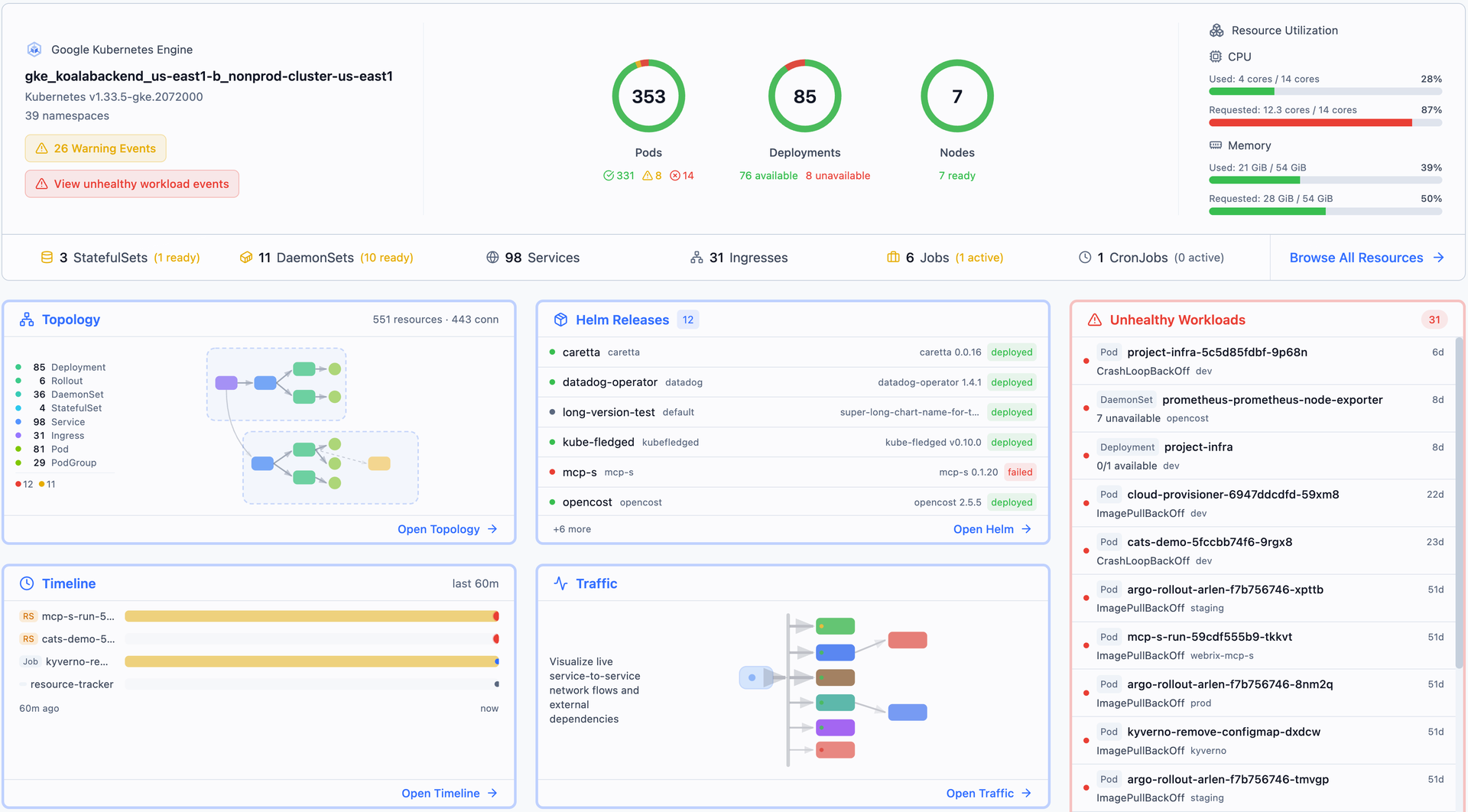
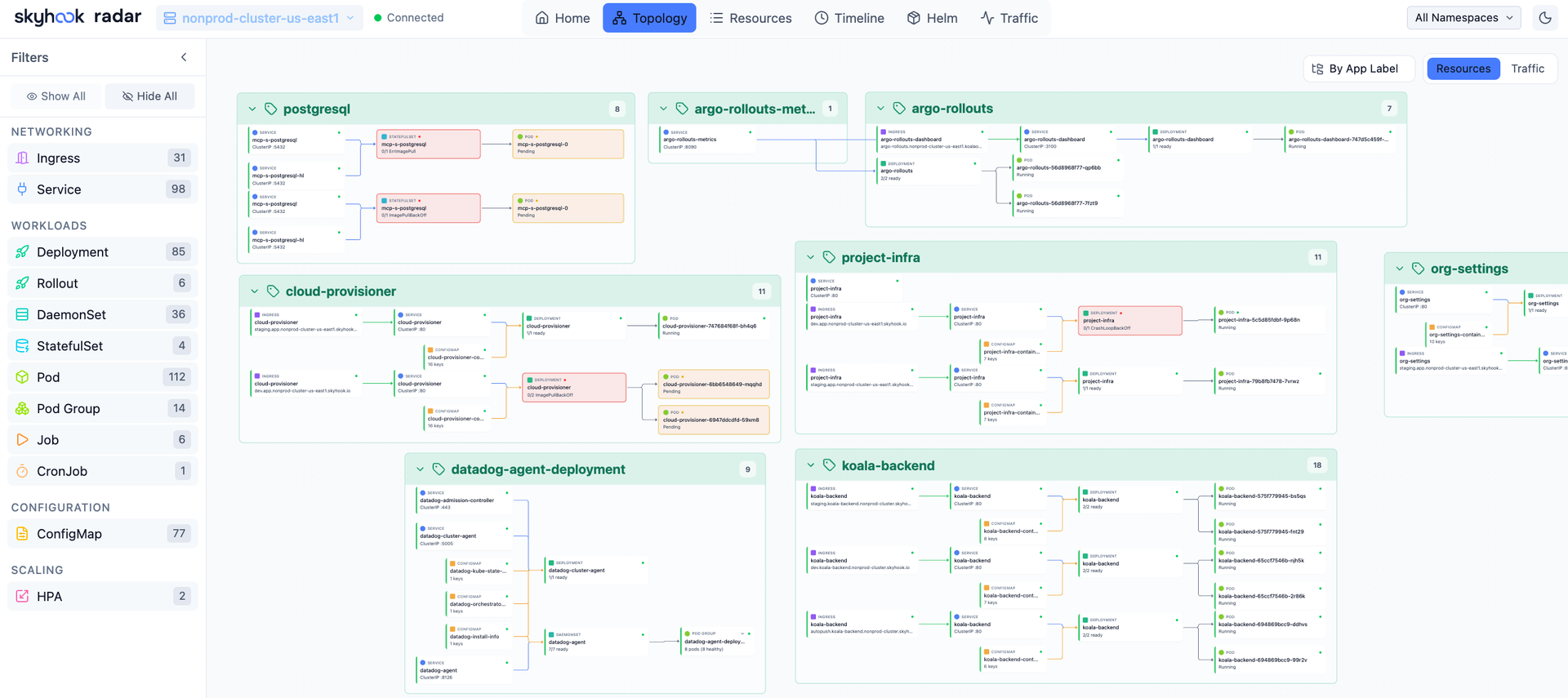
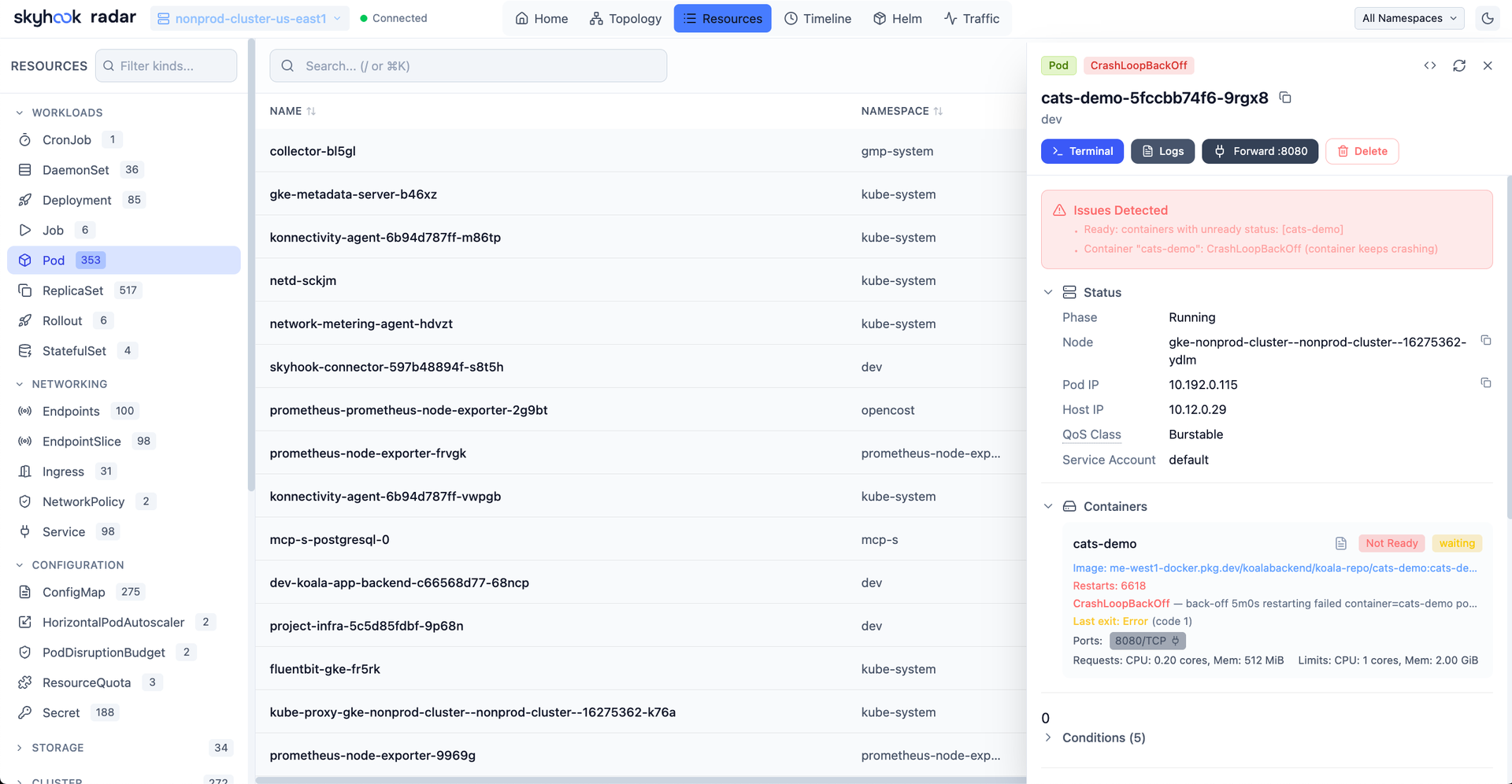
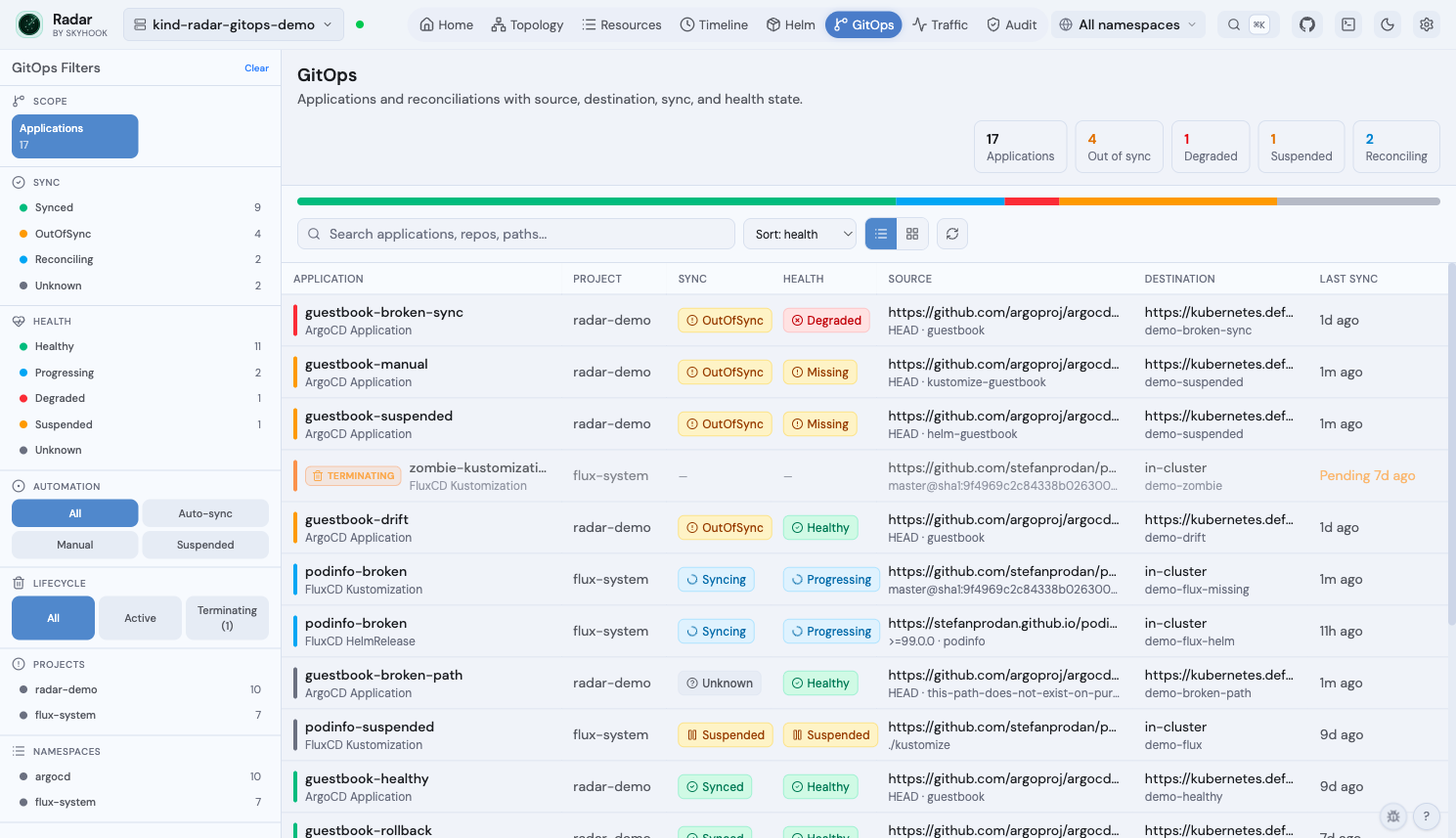
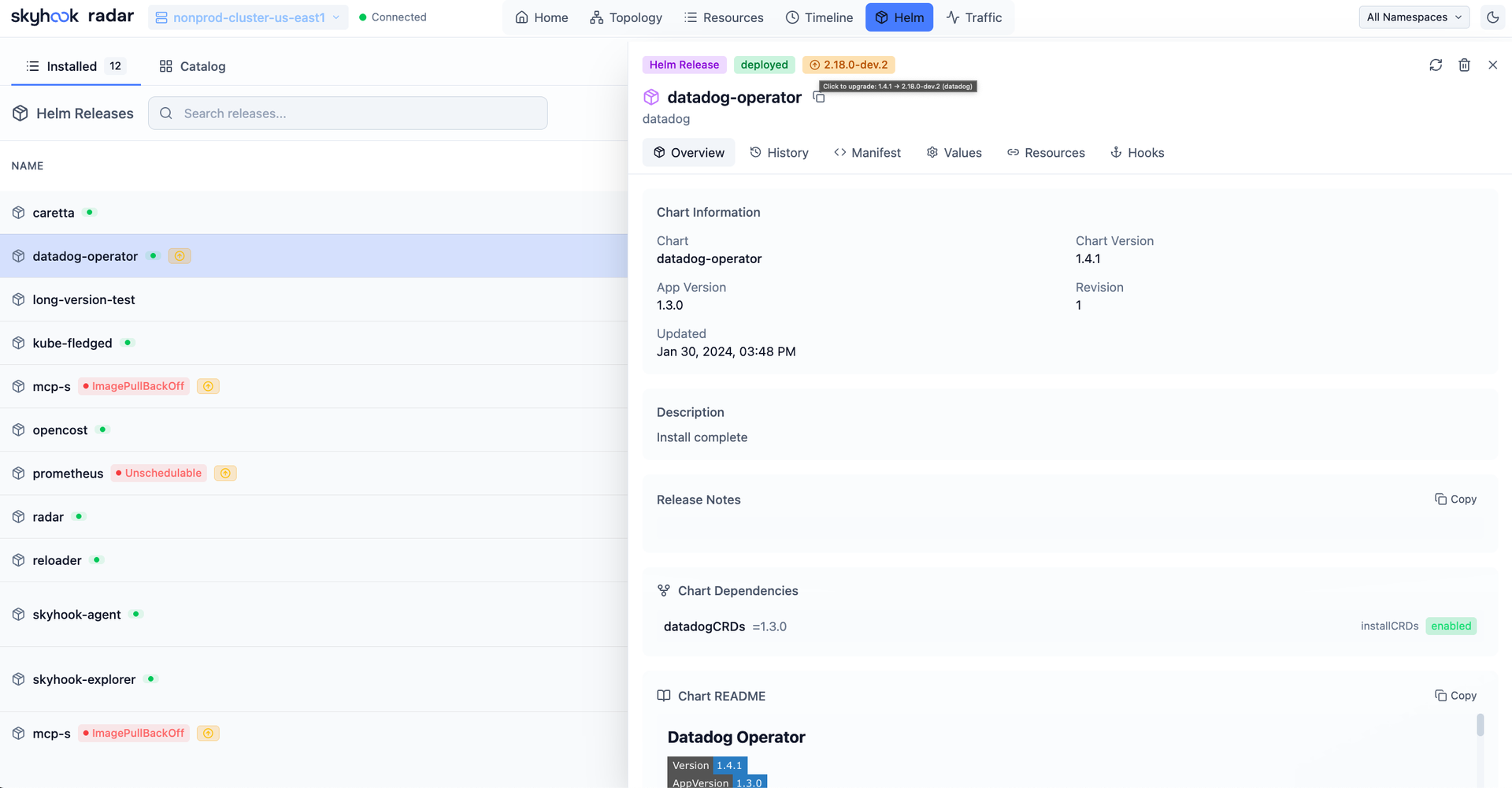
Radar is an open-source Kubernetes management dashboard and Model Context Protocol server that gives engineering teams complete cluster visibility, automated issue diagnosis, and GitOps controls through a unified web interface. Operators explore live interactive cluster topology maps rendered with automated layout engines, grouping workloads by namespace or custom application labels to trace network communication pathways. The unified event timeline retains Kubernetes activity and state change diffs well beyond default one-hour limits, allowing site reliability engineers to diagnose historical CrashLoopBackOff states and investigate failed deployment rollouts. Teams manage Helm releases by inspecting deployed values, comparing manifest revisions side by side, and initiating rollbacks or upgrades with a single click. The built-in GitOps workspace correlates ArgoCD and Flux applications, surfacing synchronization health, field-level configuration drifts, and automated remediation suggestions. Developers inspect container image filesystems directly from pod detail panels without pulling images locally or establishing interactive terminal sessions, browsing permissions and downloading specific files. Native Model Context Protocol endpoints expose cluster telemetry and operational tools to artificial intelligence coding assistants, enabling external agents to diagnose failing pods and inspect access controls securely. Running on a dedicated VPS on RepoCloud with guaranteed CPU, RAM, and SSD, full root SSH access, and a browser serial console. Apache 2.0 licensed.
Benefits
- Agentless Cluster Visibility Without Crds
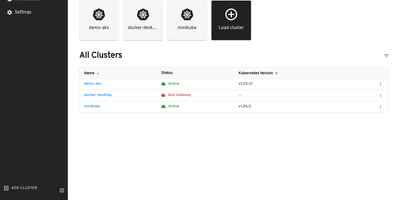
- Connect to any conformant Kubernetes cluster using standard kubeconfig credentials without deploying proprietary daemonsets, background agents, or custom resource definitions that could destabilize mission-critical production environments.
- Unified GitOps And Helm Operations
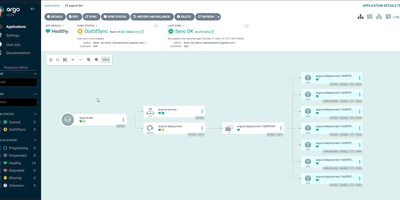
- Inspect ArgoCD applications, Flux resources, and Helm releases side by side, enabling engineers to identify configuration drift, compare historical manifest revisions, and trigger rollbacks directly through an intuitive web console.
- Direct Container Image Filesystem Inspection
- Browse container layers, file trees, symlinks, and permissions within active pods using cluster image pull secrets, eliminating the need to pull multi-gigabyte container images locally or establish privileged exec sessions.
- Native Model Context Protocol Server
- Allow external artificial intelligence assistants to safely query cluster topology, inspect RBAC security posture, and diagnose failing deployments through standard HTTP Model Context Protocol endpoints running on port 9280.
Features
- Interactive Topology Visualization
- Generates real-time hierarchical resource maps and network traffic flow paths powered by ELK.js layout algorithms, streaming live cluster delta updates over Server-Sent Events.
- Persistent Event Timeline
- Captures and stores cluster events and resource configuration diffs in memory or local SQLite databases, preserving historical troubleshooting logs past Kubernetes default TTL limits.
- Side-by-Side Resource Diffing
- Compares two Kubernetes manifests with automated noise filtering, isolating spec differences while stripping noisy server-assigned metadata like resource versions and managed fields.
- Integrated Network Traffic Monitoring
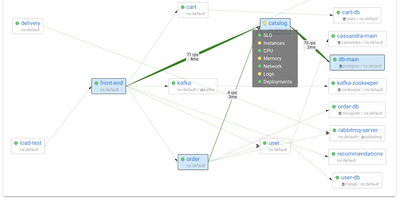
- Visualizes live service-to-service network communications and throughput metrics using telemetry collected from Cilium Hubble, Caretta, Istio service meshes, or Beyla eBPF probes.
- TLS Certificate Lifecycle Auditing
- Parses TLS secrets across all cluster namespaces to display certificate subject names, issuing authorities, and expiration dates, preventing service disruptions caused by expired credentials.
- Built-In AI Tool Integration
- Exposes cluster diagnostic tools and GitOps reconciliation actions to Claude Desktop, Cursor, and custom AI agents through standardized Model Context Protocol endpoints.