Frappe Wiki
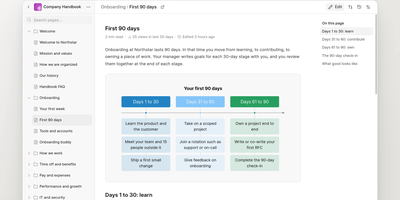
Frappe Wiki is an open-source wiki that turns product guides, help centers, and company handbooks into clean, searchable documentation your whole team enjoys writing. Each space is its own wiki with a separate URL, logo, and access rules, public or limited to chosen roles. The rich text editor handles headings, tables, task lists, code blocks, callouts, images with dark-mode variants, Mermaid diagrams, PDFs, and videos, and stores everything as Markdown. Edits collect in a change request that works like a branch: a reviewer reads a side-by-side diff, then approves, asks for changes, or rejects it, and readers can propose changes too. Every merge adds a version to the page history. Published pages show a page tree, a table of contents, search, PDF download, per-page feedback, and light or dark mode. Analytics report page views, new visitors, top pages, and referrers for the whole wiki, one space, or one page. GitHub Sync keeps a space in step with a folder of Markdown files in a repository. Each page gets meta tags and a generated social card, and the site serves a sitemap, a Markdown copy of every page, and an llms.txt index for AI tools. Running on a dedicated VPS on RepoCloud with guaranteed CPU, RAM, and SSD, full root SSH access, and a browser serial console. MIT licensed.
Observal
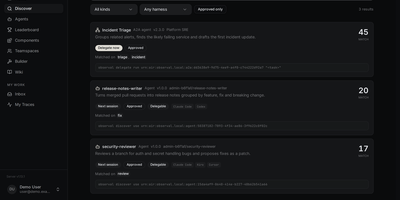
To pull a team's skills, MCP servers, hooks, prompts, and agent files out of scattered Git repositories, Observal keeps them in one reviewed registry and traces real sessions to show which ones help. Build an agent visually, with a live config preview for every harness. Submissions wait in an admin review queue, where reviewers inspect side-by-side version diffs before approving a release. Teamspaces give each team its own namespace, and approved releases can be forked into independent drafts. One pull command then writes the right config for Claude Code, Cursor, Kiro, Codex, Copilot, Pi, OpenCode, Antigravity, or Goose. Every approved resource is discoverable through the open Agentic Resource Discovery standard, and a running agent can hand part of its task to another approved agent or a remote Agent2Agent service. Hooks record each session as a trace of prompts, tool calls, MCP round trips, tokens, and errors, with turn-by-turn replay for debugging and audits. Insight reports, generated through providers such as Anthropic, OpenAI, or Ollama, list what is working, what is hindering, and quick wins. A dashboard follows adoption, cost, and department usage, a leaderboard ranks agents by downloads, and audit logs, SAML single sign-on, and SCIM provisioning are included. Running on a dedicated VPS on RepoCloud with guaranteed CPU, RAM, and SSD, full root SSH access, and a browser serial console. Apache-2.0 licensed.
PandaProbe
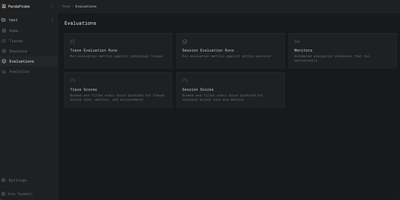
A looping agent burns money quietly until someone can see where it drifted, and PandaProbe is an observability and evaluation platform for AI agents that makes that drift visible step by step. Capture complete executions as sessions, traces, and spans spanning model calls, tool calls, multi-agent handoffs, and custom logic, then follow a looping or failing run back to the decision where it drifted. Score traces and sessions with agent-specific metrics, run asynchronous and sampled evaluations so judge models do not cost more than inference, and use lightweight trajectory signals to catch stalls, bad tool use, and regressions over time. Bring agents built with LangGraph, CrewAI, the Claude Agent SDK, the OpenAI Agents SDK, and other integrations, with MCP tool calls captured automatically where supported. Organize work by user, organization, and project, send data through an SDK or HTTP API with project keys, and query filtered, paginated traces when you need the raw record. Keep sensitive workflows local when that matters: prompts, traces, and evaluation results stay inside the deployment you run, instead of leaving for a hosted console. Running on a dedicated VPS on RepoCloud with guaranteed CPU, RAM, and SSD, full root SSH access, and a browser serial console. Apache-2.0 licensed.
imagor
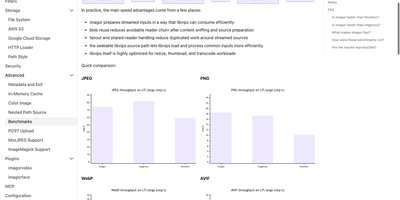
imagor is a self-hosted image server that turns one master photo into every size, crop, and format your site needs, generated on demand from a single URL. You describe the transformation in the address itself: a width and height, a smart crop, then a chain of filters for fill color, format, quality, and watermark. Requests stream through a pipeline built for parallel throughput, so a thumbnail costs milliseconds even when traffic peaks, and the same syntax your team may already know from thumbor works unchanged. Smart cropping keeps the important part of the frame, focal points pin the exact region that must survive, and detection plugins can blur faces automatically for privacy-sensitive publishing. Forty-plus filters cover the daily work of a media pipeline: text overlays with real fonts, image compositing with blend modes, rounded corners, redaction, sharpening, and per-channel color control. Output lands in modern formats including WebP, AVIF, and JPEG XL, with automatic format negotiation and a byte budget that squeezes quality until a file fits your limit. Processed results cache to filesystem, S3, or Google Cloud storage, signed URLs keep strangers from minting their own transformations, and a metadata endpoint returns BlurHash placeholders and average colors for lazy-loading galleries. A companion service adds video thumbnails, and an MCP template layer composes OG cards and product grids. Running on a dedicated VPS on RepoCloud with guaranteed CPU, RAM, and SSD, full root SSH access, and a browser serial console. Apache-2.0 licensed.
MATE
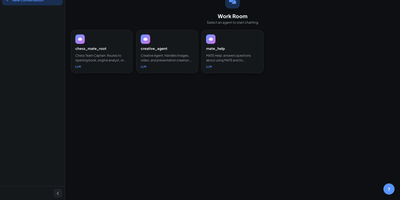
Change an agent's prompt, model, or audience from a dashboard and watch it go live without a single redeploy. MATE opens in a Work Room where any root agent can be picked from a card grid and chatted with directly. The Studio holds the builder: a drag-and-drop canvas draws parent and child agents, attaches tools and MCP servers, and keeps every configuration versioned with one-click rollback. Trace Replay plays a past conversation back across that canvas so each hand-off is visible. A template library imports ready-made agent teams, from research pipelines to support desks. The Control Room covers governance: role-based access per agent, dollar costs per agent and project, budgets that warn or block, guardrails for personal data and prompt injection, and alerts to Slack, Discord, email, or a webhook. Eval suites score replies by exact match, similarity, or an LLM judge, and a Playground compares models or prompts side by side on score, speed, and cost. Agents can be embedded as a chat widget, called through an OpenAI-compatible endpoint, or exposed over MCP and A2A. Agencies running client agents and platform teams juggling dozens of them can manage the lot from one dashboard. Running on a dedicated VPS on RepoCloud with guaranteed CPU, RAM, and SSD, full root SSH access, and a browser serial console. Apache-2.0 licensed.
Muxarr
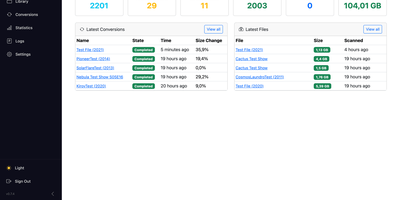
Muxarr cleans up your media library by stripping out the audio and subtitle tracks you will never use, so players stop offering twenty subtitle options and the wrong dub. Tell it which languages you actually watch and read, and it keeps those tracks while dropping commentary, foreign dubs, and redundant subtitles. Nothing is re-encoded: video and audio are copied as they are, so quality is identical and a large film finishes in about a minute instead of hours. Spare audio tracks alone often free ten to thirty percent of a file, which adds up quickly across a big library. Profiles apply different rules per directory, so anime, family films, and western shows can each keep different languages, with priority ordering, per-language limits, and fallback rules like English subtitles only when German ones are missing. Regional variants are understood, distinguishing Quebec French from France French or Latino from Castilian Spanish. When Sonarr or Radarr import something new, a webhook sends it straight to Muxarr, and original language detection makes sure a foreign film keeps its real soundtrack. Track names get cleaned of encoder tags, default and forced flags are fixed, and every output is validated before it replaces the original. Running on a dedicated VPS on RepoCloud with guaranteed CPU, RAM, and SSD, full root SSH access, and a browser serial console. GPL-3.0 licensed.
Myrlin Workbook
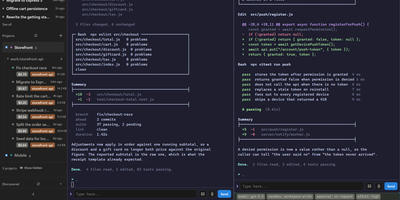
One browser sidebar lists every Claude Code and ChatGPT Codex conversation on your machine, and Myrlin Workbook opens each in a live terminal. Sessions are read, never modified, from the folders both CLIs write to, then grouped by project with a Recent list and Ctrl+K search. Panes tile two or four up and replay their history after a page refresh. Agent CLIs keep no scrollback, so wheeling past a pane's top continues into the recorded conversation, and one drag selects an hour of output. Codex projects and titles match the ChatGPT desktop app, and every Codex session shows its model, reasoning effort, approval policy, and sandbox. Token counts are priced per model where a price exists and totaled per session and project for any day, week, month, or all time. On the five-column task board, each card gets its own branch, worktree, and session, then opens a pull request through the GitHub CLI. A conflict center flags sessions editing the same files. Session templates save a working directory, model, and flags for one-click launches. Each project keeps Notes, Goals, Tasks, Rules, and Roadmap docs in a markdown editor. The phone layout has five tabs, an Attention badge, and a ring for sessions waiting on you. A random password is generated on first launch, and a LAN address or Cloudflare tunnel reaches the server. Running on a dedicated VPS on RepoCloud with guaranteed CPU, RAM, and SSD, full root SSH access, and a browser serial console. AGPL-3.0 licensed.
Enroute
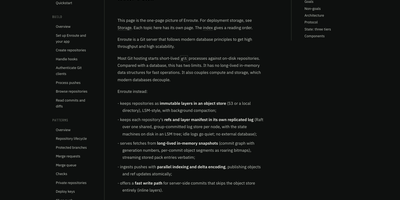
Git servers still think in folders on one machine's disk, and Enroute is the Git server rebuilt like a modern database: your repositories live as immutable layers in object storage, served by compute nodes you can add or replace at will. Point any Git client at it and push; the push creates the repository, gets indexed and validated without locks, and commits once its entry is replicated across the ledger nodes' disks, which is how a single repository absorbs thousands of pushes per second. Clones and fetches always read one consistent snapshot, so readers never block writers, and background layer merging replaces the git repack jobs you used to schedule. The programmable part is hooks: your own code decides who can read or write, which branches a client may see, whether a ref update is allowed, and what happens after a push, from running CI to mirroring elsewhere. A rich gRPC API lets applications create, inspect, and manage repositories programmatically, so you can build your own code-hosting product on top instead of forking a monolith. Start as one node with a local directory, then separate compute from ledger nodes and replicate across three machines without pushing a repository again. Running on a dedicated VPS on RepoCloud with guaranteed CPU, RAM, and SSD, full root SSH access, and a browser serial console. Apache-2.0 licensed.
Moltis
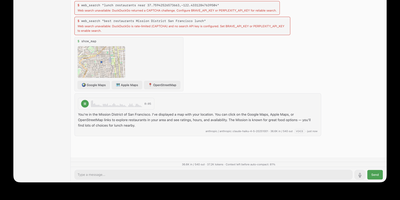
Moltis gives individuals and teams a completely private personal AI agent server that bridges conversational assistants to everyday messaging platforms while executing real-world computing tasks inside secure execution environments. Users can interact with autonomous agents across Telegram, Discord, WhatsApp, Slack, Matrix, and browser interfaces to draft correspondence, automate research, and schedule recurring cron tasks. The system coordinates multi-agent delegation by spinning up specialized sub-agents with dedicated roles for code generation, pull request reviews, quality assurance testing, and technical documentation. Built-in sandboxing isolates tool operations within container boundaries or WebAssembly modules, ensuring shell commands, web scraping routines, and script executions cannot alter underlying operating system files without explicit permission. Native Model Context Protocol integration allows operators to attach external data endpoints, database connectors, and custom command-line utilities without rewriting core routing logic. Persistent memory preserves conversational context and document embeddings across multiple sessions, allowing assistants to recall prior discussions, user preferences, and project guidelines indefinitely. Administrators can configure granular tool approvals, manage WebAuthn passkey authentication, and review real-time WebSocket communication logs through an embedded control panel. Running on a dedicated VPS on RepoCloud with guaranteed CPU, RAM, and SSD, full root SSH access, and a browser serial console. MIT licensed.
Logchef
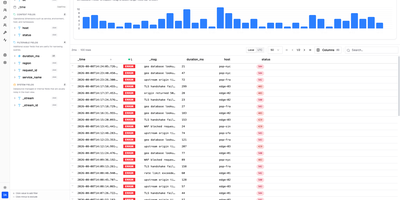
Logchef gives engineering teams a self-hosted workspace to search, live tail, chart, and alert on logs stored in ClickHouse or VictoriaLogs. Queries start in the explorer with LogchefQL or a native SQL or LogsQL editor, beside a field sidebar with value counts, a histogram, and a sortable results table. Live tail streams matching rows as they arrive. Dashboards combine ClickHouse and VictoriaLogs panels on one grid, with time series, stat, breakdown, and table views that can be dragged and resized. Scheduled alerts run a query on a set frequency, compare it with a threshold, then email team members or post JSON to webhooks. An AI assistant turns plain-language questions into queries, and Ask Chef investigates an incident, citing the rows behind each statement and listing what remains unproven. Teams, users, and roles decide who can see each datasource, with OIDC or built-in email and password sign-in. A command-line client queries, explains, and tails logs from the terminal, and a built-in MCP endpoint serves AI assistants. Running on a dedicated VPS on RepoCloud with guaranteed CPU, RAM, and SSD, full root SSH access, and a browser serial console. AGPL-3.0 licensed.
Forem
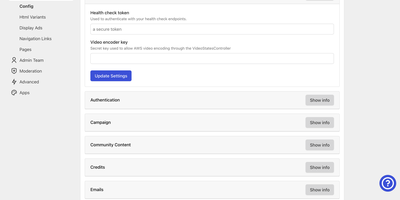
With 22,700 GitHub stars, 4,100+ forks, and proven scale powering dev.to — one of the largest developer communities serving millions of monthly users — Forem provides a complete community platform for building engaged audiences around shared interests, whether for developer documentation, customer communities, fan bases, or professional networks. The Rails backend with Preact frontend delivers article publishing with a rich Markdown editor, threaded discussions, user profiles with portfolio links, tag-based content organization, podcast hosting, classified listings for jobs and events, and social interactions including reactions, bookmarks, and following. AI-powered semantic search using PostgreSQL pgvector embeddings surfaces relevant content across articles and concepts, while scheduled automations enable community bots to create automated roundups, republish curated content, and trigger time-based moderation actions. Score-based content ranking replaces simple reaction counts with nuanced algorithms that resist gaming. The admin dashboard provides user management, content moderation, community settings, analytics, and organization controls. OAuth integration supports GitHub, Twitter, Apple, and configurable OIDC providers for frictionless sign-up. Dynamic open-graph image generation creates branded social cards automatically. Deploy with Kamal 2 to any cloud provider or bare metal server with PostgreSQL and Redis. Running on a dedicated VPS on RepoCloud with guaranteed CPU, RAM, and SSD, full root SSH access, and a browser serial console. AGPLv3 licensed.
JobNavigator
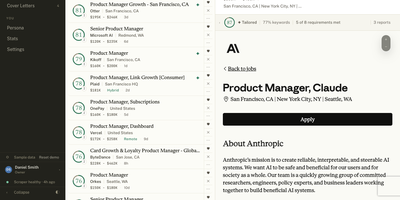
JobNavigator runs your whole job hunt as an automated pipeline, scraping career pages and job boards, scoring every posting against your résumés, and tracking each application to its outcome. Discovery fans out across company career pages through twelve ATS handlers, aggregators like LinkedIn, Indeed, and ZipRecruiter, and a Chrome extension that saves any posting you stumble on. Each new job is scored against your base résumés, lightly for a quick number or in full, with keyword coverage and requirement mapping that show exactly where you match and where you do not. Strong matches get a tailored résumé from eight PDF templates and a cover letter written from your persona, ready for your review before anything is sent. The extension then auto-fills application forms and drafts answers to free-text questions from your stored Q&A bank. Every application moves through stages and interviews in one tracker, while Gmail polling spots replies and updates the status for you, and Telegram delivers new-job alerts and a daily digest. A household can share one install with up to five accounts, each keeping its own jobs, résumés, and PIN, while scraping runs once for everyone. Running on a dedicated VPS on RepoCloud with guaranteed CPU, RAM, and SSD, full root SSH access, and a browser serial console. MIT licensed.
OpenUI
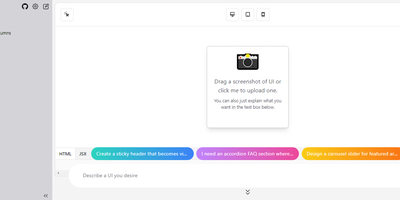
Describe a component in natural language and watch it render: OpenUI, from Weights & Biases, is an open alternative to Vercel's v0. Type a prompt like "a dark-themed dashboard with a sidebar and charts" and the LLM renders working HTML with Tailwind styling live in the browser. You then iterate conversationally, asking for changes until the design is right, and convert the result to React, Svelte, or Web Components for use in a real project. The backend is Python with LiteLLM routing, so it works with OpenAI, Anthropic, Gemini, Groq, and Mistral API keys, or fully offline against local Ollama models, including vision models like LLaVA that can generate UI from screenshot input - feed a screenshot and the model reproduces or riffs on an existing interface. Generated markup is inspectable at any point, with light and dark mode toggles, theme selection, and responsive previews across device sizes. The practical effect is compressing the mockup-review-revise loop from hours to minutes: a described layout renders in seconds and iterates through follow-up prompts, and because output converts to real framework code, prototypes feed directly into production codebases instead of staying trapped in a design tool. Self-hosting keeps unreleased product interfaces and prompts on your own server, and LiteLLM routing lets you pick the model per task - a cheap fast model for rough drafts, a stronger one for final passes, or free local models for unlimited experimentation.
Slashdocs
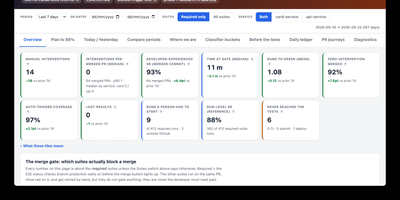
Slashdocs gives AI agents and the people who supervise them one shared home for finished work, replacing reports pasted into chat threads with reviewable HTML documents that live at a permanent address. An agent publishes a single self-contained HTML file, an architecture review, incident postmortem, product spec, data analysis, or QA report, and teammates open it in the browser to read the rendered page rather than raw markup. Reviewers anchor comments to exact words, resolve or reopen threads, and follow links straight to a heading or discussion, while Slack notifications announce new activity with personal mute controls for quieter channels. Every publish creates an immutable version guarded by optimistic concurrency, so an agent can read the feedback and push the next revision without overwriting anyone's copy. Agents connect through a remote MCP endpoint with browser OAuth or service-account keys, and people sign in through OpenID Connect with providers such as Google, Okta, Entra ID, or Keycloak. The companion CLI creates, pulls, pushes, and comments on documents with compact output or JSON for scripts, and folders plus sharing controls keep a growing library organized. Running on a dedicated VPS on RepoCloud with guaranteed CPU, RAM, and SSD, full root SSH access, and a browser serial console. MIT licensed.
AMUX
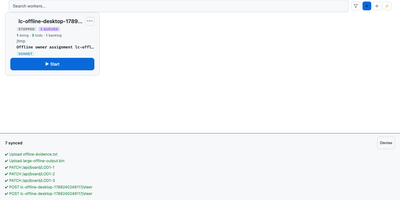
To coordinate swarms of autonomous coding agents across complex software projects, AMUX provides a concurrency-safe kanban workspace with real-time thought stream inspection and live steering controls. Engineers assign development tasks through an interactive board where autonomous worker processes claim cards using compare-and-swap mutexes to eliminate race conditions between parallel sessions. Operators monitor active reasoning streams, inspect streaming terminal outputs, and inject guidance commands mid-turn without interrupting background execution. A cryptographic origin router relays messages between agents, enabling workers to delegate sub-tasks, request automated peer code reviews, and share environment state safely. Built-in schedulers trigger recurring automated maintenance routines, dependency updates, and bug triage sweeps on cron-like timers or autonomous loop cadences. Teams can switch language models dynamically on active sessions to tackle complex architecture challenges with high-capability reasoning engines while conserving resources on routine tasks. An integrated self-healing supervisor watches over agent runtimes, automatically compacting context windows, restarting crashed terminal sessions, and resuming pending instructions seamlessly. Running on a dedicated VPS on RepoCloud with guaranteed CPU, RAM, and SSD, full root SSH access, and a browser serial console. MIT licensed.
Academic Commercialization Agent
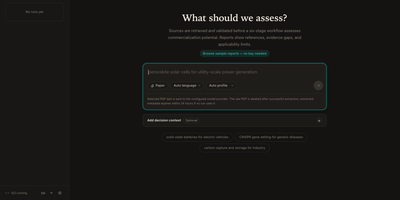
Got a research paper and no idea if anyone would pay for it? Academic Commercialization Agent answers with a cited triage report instead of a hunch. Type a topic or attach a paper PDF, pick a report language and scoring profile, and follow the run as it works through academic, patent, and market evidence. The result opens with a decision brief: an overall readiness score out of 100, the strongest evidence, the biggest risk, and a recommended first step. A scorecard breaks that number into technology readiness, manufacturing readiness, patent position, market accessibility, and evidence confidence, with a short reason behind each bar. The full report adds opportunities, risks, evidence limitations, reviewer notes, and a numbered reference list. Optional decision context captures who is deciding, what they own, and what choice is on the table, so the verdict reads as a license, invest, pilot, or spin-out call. Run history keeps every analysis searchable, interrupted runs resume from their last checkpoint, and two runs can be compared side by side. Reports export to Markdown or PDF and share by link, and a Sources search finds saved excerpts by ID or keyword. Six finished sample reports, one in Chinese, open without any key. A technology transfer office facing a pile of new disclosures can rank them in a first pass before spending expert time. Running on a dedicated VPS on RepoCloud with guaranteed CPU, RAM, and SSD, full root SSH access, and a browser serial console. MIT licensed.
All-In-One Free SEO Tool
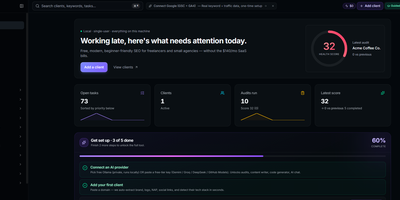
All-In-One Free SEO Tool packs site audits, rank tracking, keyword research, AI-search visibility checks, and client reporting into one self-hosted workspace that stands in for a stack of monthly SEO subscriptions. Every client opens on a ranked to-do list that separates work the agent can finish unattended from decisions that need a person, with time estimates attached. The crawler runs dozens of on-page checks, and over ninety single-purpose tools cover schema, Core Web Vitals, hreflang, robots.txt, redirects, and server logs. Rank tracking follows keywords by device and by city. The AI visibility tools record when ChatGPT, Perplexity, Gemini, or Google AI Overviews cite your domain. Agencies generate every client's white-label PDF in one run, review the drafts, and send only what they approve. An embeddable audit widget collects leads, and proposals are built from real findings. Four autonomy levels range from suggest-only to full autopilot, and every change the agent applies can be undone. Running on a dedicated VPS on RepoCloud with guaranteed CPU, RAM, and SSD, full root SSH access, and a browser serial console. MIT licensed.
ArchiveBox
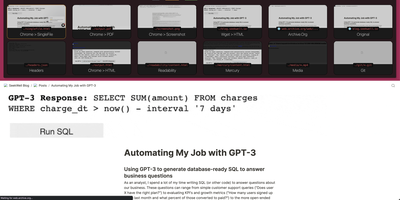
Backed by 27,700+ GitHub stars and actively developed with the v0.9.x architectural overhaul introducing an event-driven plugin ecosystem, ArchiveBox delivers the open-source self-hosted web archiving platform that preserves websites, bookmarks, social posts, media, source code, and research material in durable formats before link rot, platform shutdowns, and censorship erase them permanently. Feed it URLs one at a time or schedule automated imports from browser history, RSS feeds, Pocket, Pinboard, Instapaper, Wallabag, Shaarli, JSON, CSV, HTML bookmark exports, and browser extension captures. Each snapshot stores redundant copies as original HTML, rendered single-file HTML via SingleFile, full-page PDF, screenshot PNG, WARC archive, article text via Readability, favicons, HTTP headers, media files via yt-dlp, git repository clones, and structured metadata in SQLite. The Docker Compose deployment bundles Chrome, wget, curl, yt-dlp, SingleFile, and Readability parsers with automatic dependency management and isolation. Interact through the self-hosted web UI with search, tagging, and admin controls, the comprehensive CLI for batch operations, the REST API for programmatic access, or the Python API for custom integrations. The new abx-plugins system enables community extractors with per-plugin configuration, while the append-only-log architecture provides resumable crawls and audit trails. S3, B2, and Google Cloud storage backends sync archives to remote storage via rclone. Running on a dedicated VPS on RepoCloud with guaranteed CPU, RAM, and SSD, full root SSH access, and a browser serial console. MIT licensed.