Categories
Knowledge Management Team Collaboration MCP Server Document Collaboration AI Agent Tools Document Review Self-Hosted DocsStars
Forks
Watchers
Developer links
Slashdocs
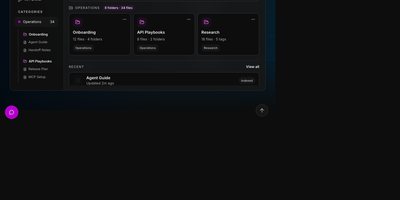
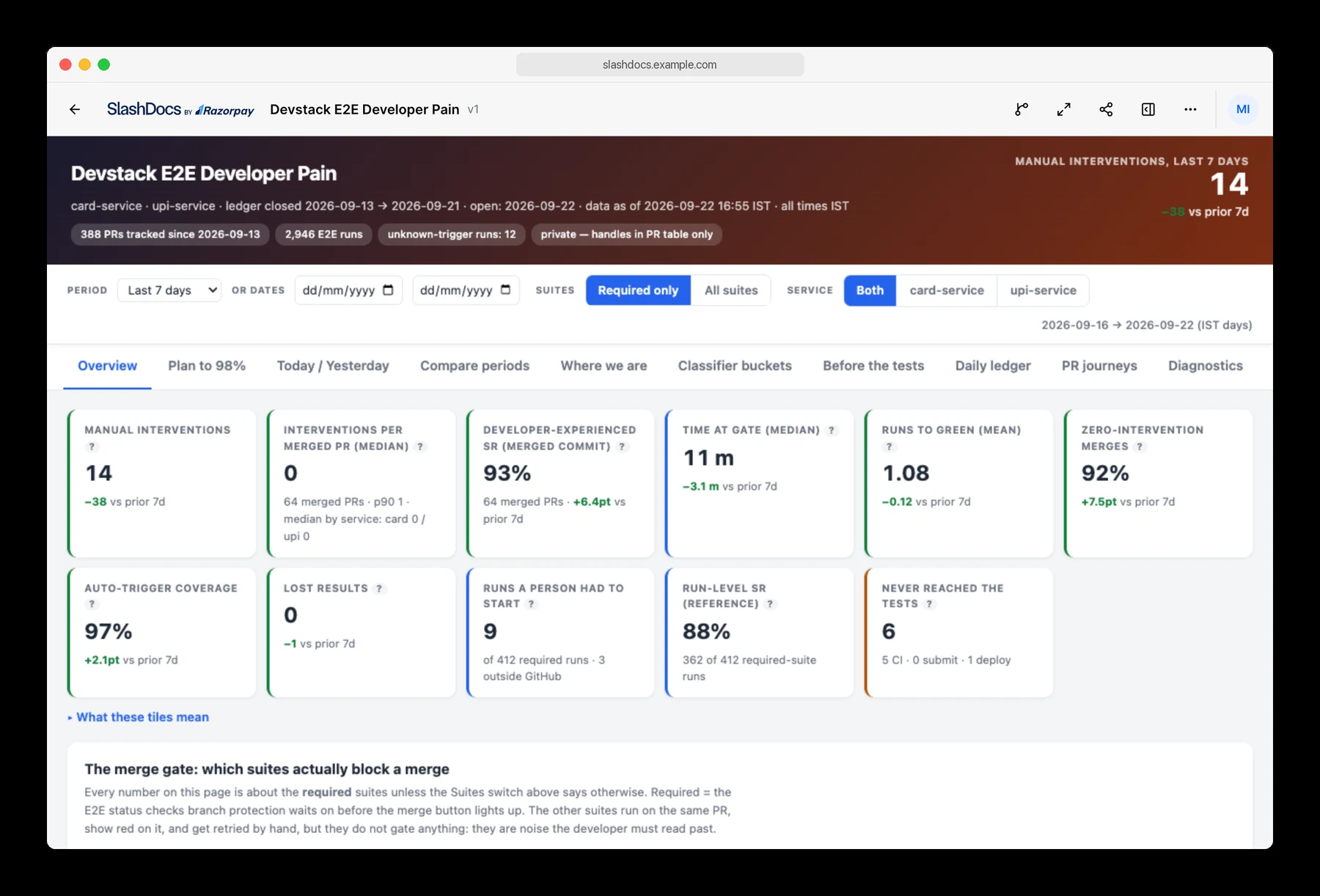
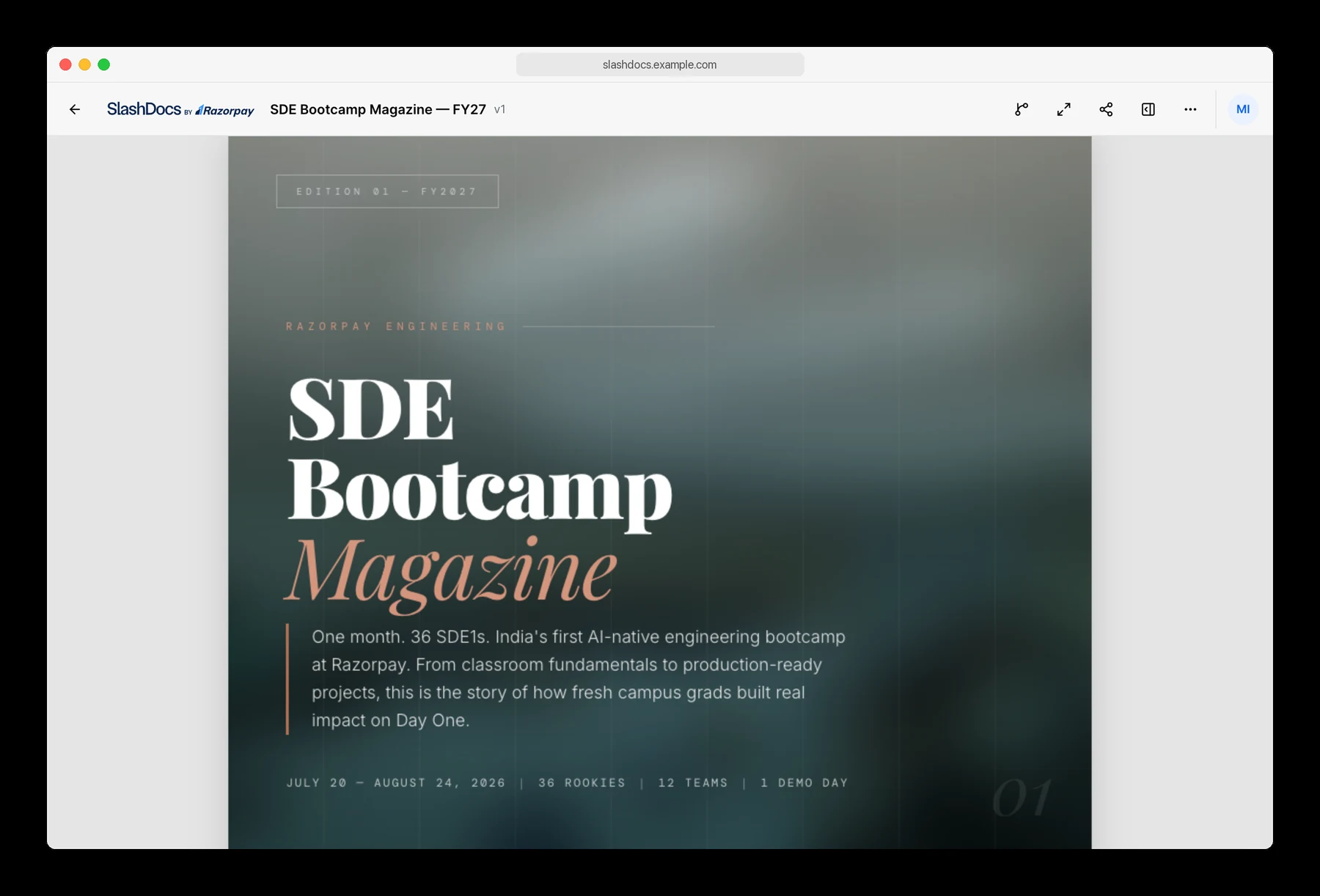
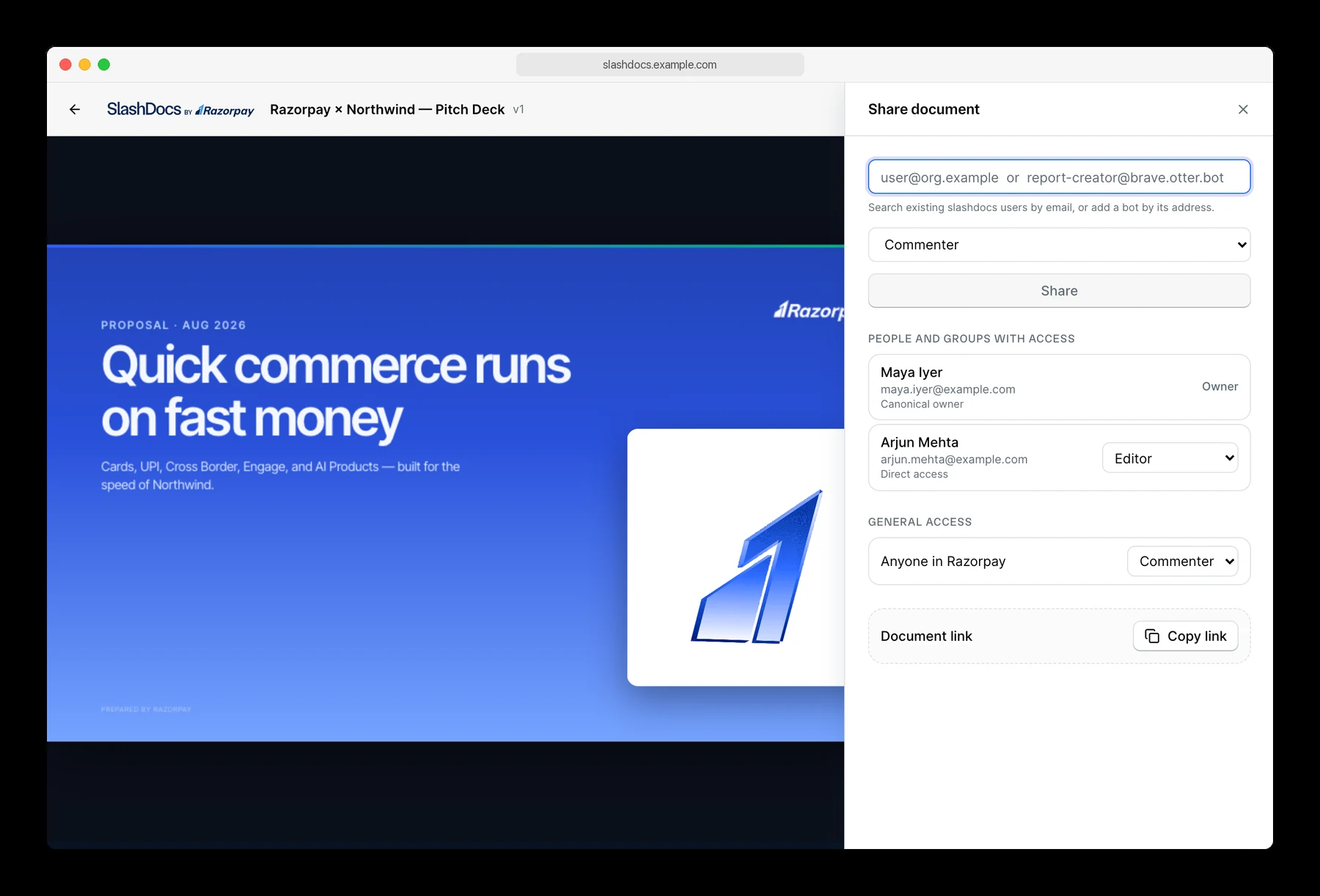
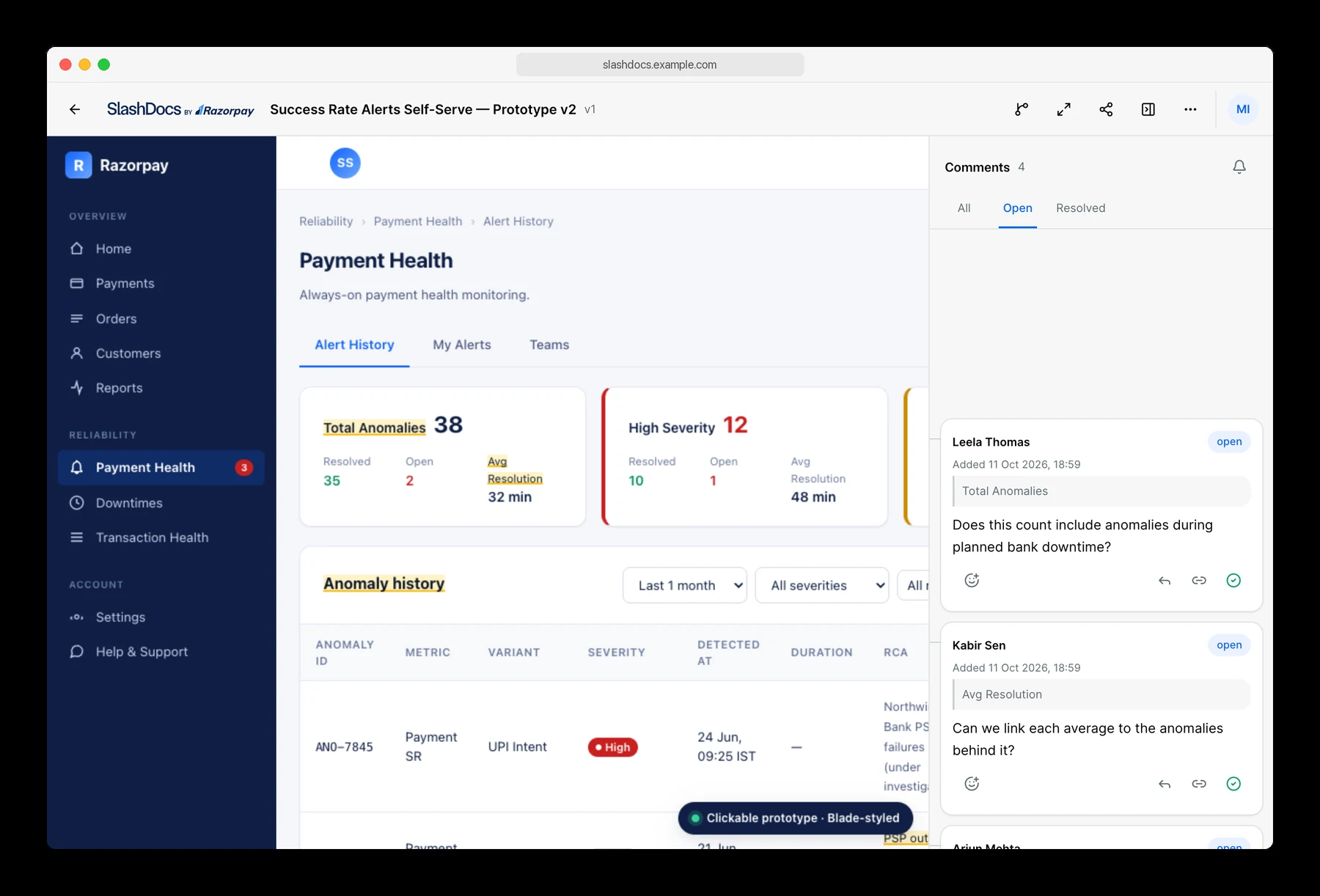
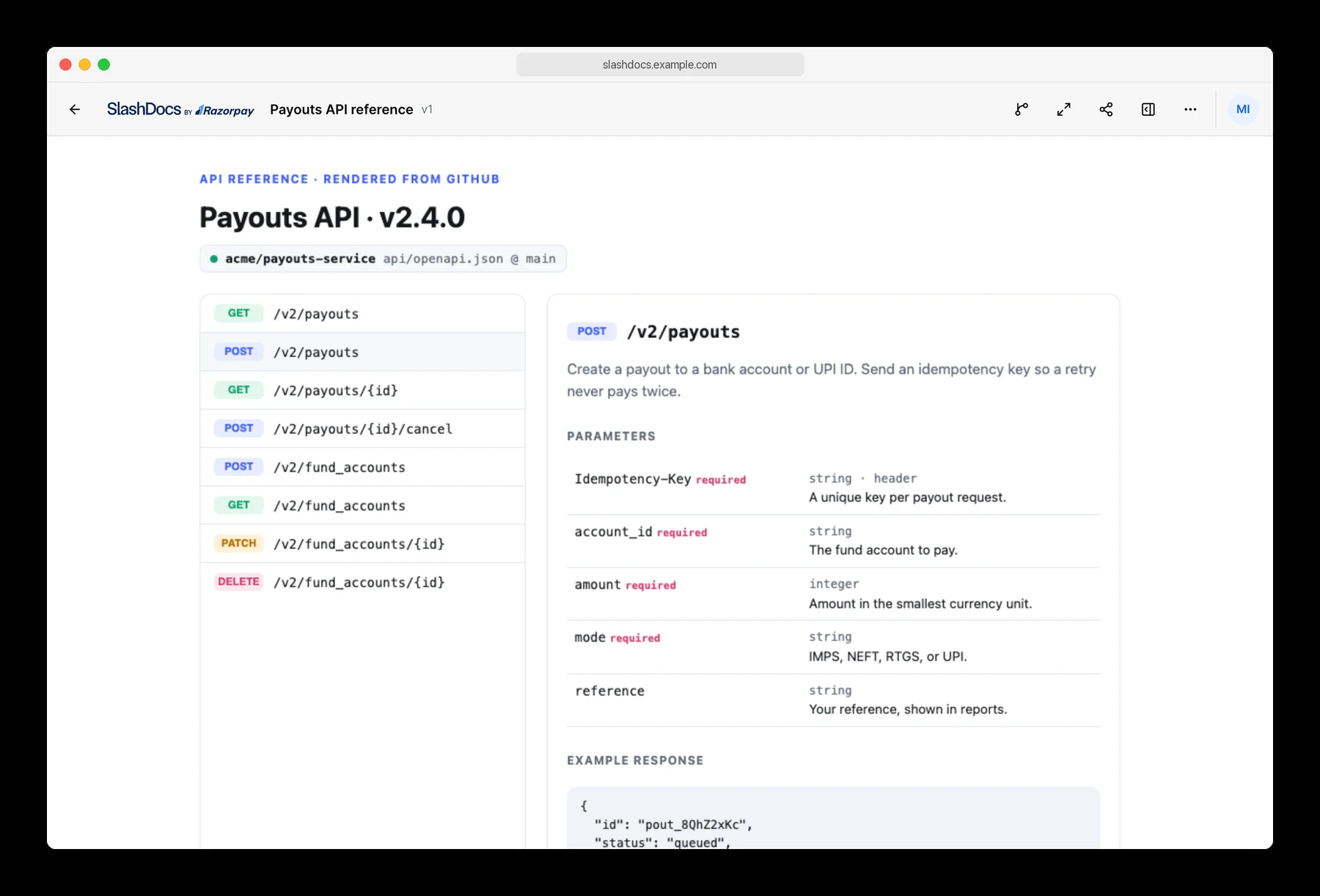
Slashdocs gives AI agents and the people who supervise them one shared home for finished work, replacing reports pasted into chat threads with reviewable HTML documents that live at a permanent address. An agent publishes a single self-contained HTML file, an architecture review, incident postmortem, product spec, data analysis, or QA report, and teammates open it in the browser to read the rendered page rather than raw markup. Reviewers anchor comments to exact words, resolve or reopen threads, and follow links straight to a heading or discussion, while Slack notifications announce new activity with personal mute controls for quieter channels. Every publish creates an immutable version guarded by optimistic concurrency, so an agent can read the feedback and push the next revision without overwriting anyone's copy. Agents connect through a remote MCP endpoint with browser OAuth or service-account keys, and people sign in through OpenID Connect with providers such as Google, Okta, Entra ID, or Keycloak. The companion CLI creates, pulls, pushes, and comments on documents with compact output or JSON for scripts, and folders plus sharing controls keep a growing library organized. Running on a dedicated VPS on RepoCloud with guaranteed CPU, RAM, and SSD, full root SSH access, and a browser serial console. MIT licensed.
Benefits
- Agents Publish, People Review
- Agents push finished HTML reports, specs, and dashboards to a permanent address where teammates read the rendered document, instead of losing long outputs inside scrolling chat threads.
- Comments Anchored To Words
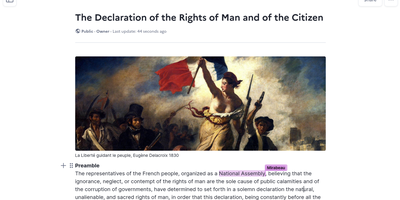
- Reviewers attach comments to exact passages, resolve or reopen threads, and jump from Slack notifications to the precise heading under discussion, so feedback never loses its context.
- Immutable Versions, Safe Concurrency
- Every publish stores a new immutable version guarded by optimistic concurrency, giving agents a safe loop: read the comments, revise the document, and push again without overwriting anyone.
- Enterprise Sign-In And MCP
- People sign in through OpenID Connect providers like Google, Okta, and Keycloak, while agents use service accounts or the remote MCP endpoint with browser OAuth and PKCE.
Features
- Self-Contained HTML Documents
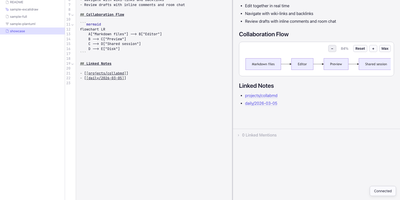
- Each document is one portable HTML file with base64-embedded images and Mermaid or SVG diagrams, rendered sandboxed in the browser review interface.
- Remote MCP Endpoint
- A Streamable HTTP MCP server at /mcp covers documents, versions, comments, sharing, and folders, authenticated by OAuth authorization code with PKCE.
- CLI With JSON Mode
- The Go CLI logs in, creates, lists, pulls, and pushes documents and manages comments, with compact human output by default and JSON for automation.
- OIDC And Service Accounts
- Human sign-in uses OpenID Connect with Google, Okta, Entra ID, Keycloak, or Dex, while native service accounts give headless agents bearer-key access.
- Docker And Helm Deployment
- The Go server with embedded React frontend ships as a multi-arch Docker image and a Helm chart, backed by Postgres and S3-compatible storage.