Mailu
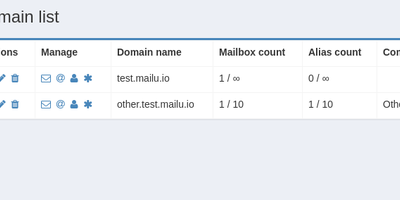
With over 7,100 GitHub stars and 200 contributors since 2016, Mailu has become one of the most popular self-hosted email solutions, delivering a complete production-ready mail server stack as pre-configured Docker containers that eliminate weeks of manual setup. The platform bundles Postfix for SMTP and Submission with auto-configuration profiles for Thunderbird, Outlook, and mobile clients, Dovecot for IMAP and POP3 with full-text search across email attachments, Rspamd for intelligent spam filtering with auto-learn Bayesian classification, greylisting, SPF and DMARC validation, and ClamAV for antivirus scanning of attachments with configurable malicious file blocking. The web administration interface provides global admin controls, per-domain delegation, user quota management, domain aliases, custom routing rules, and announcement capabilities. Users access self-service features including aliases, auto-reply, auto-forward, fetched accounts from external mailboxes via fetchmail, and Sieve filter management through ManageSieve. Security features include enforced TLS on all connections, automatic Let's Encrypt certificate provisioning, outgoing DKIM signing, DANE and MTA-STS support for transport security, and Snuffleupagus PHP hardening for the web interface. The setup wizard at setup.mailu.io generates complete Docker Compose configurations tailored to specific deployment requirements. All components are free and open-source software with zero proprietary dependencies and no tracking. Running on a dedicated VPS on RepoCloud with guaranteed CPU, RAM, and SSD, full root SSH access, and a browser serial console. MIT licensed.
Wizarr
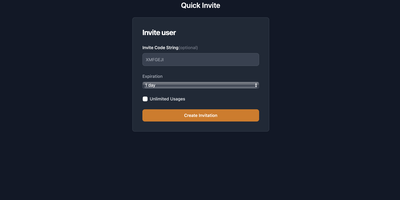
Getting non-technical friends and family onto a media server is its most tedious chore - Wizarr solves it. Instead of manually creating accounts, dictating server addresses, and explaining which app to install, you send one invite link. When the recipient clicks it, Wizarr creates their account on your server automatically - Plex, Jellyfin, Emby, Audiobookshelf, Komga, Kavita, and Romm are all supported - then walks them through a mobile-first, app-like onboarding wizard: download the right client, sign in, and learn how to request movies through your Overseerr or Ombi instance, with an optional Discord server invite along the way. Invitations are genuinely manageable: set expiration dates, usage limits, passphrases, library-scoped access tiers, and time-limited memberships that end access automatically. The wizard itself is fully customizable - Markdown-based steps managed from the admin UI, organized into pre-invite and post-invite phases (terms of service before joining, app setup after), reorderable bundles assignable to specific invitation types, and combined flows for invites spanning multiple servers. Multi-server and multi-admin support manages several backends from one dashboard, SSO support is plug-and-play, and a REST API with OpenAPI/Swagger documentation covers automation. A Flask/HTMX app in a single Docker container.
Rivet
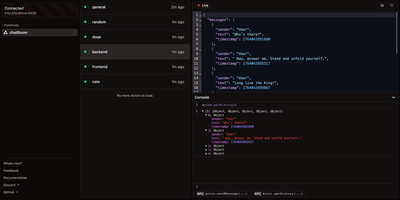
Stateful serverless actors that run indefinitely, sleep when idle, and persist state across restarts without external database round trips. Rivet provides a vendor-neutral alternative to Cloudflare Durable Objects, delivering long-running processes with co-located in-memory state and per-actor SQLite databases on any infrastructure you choose. The Rust engine comprises four packages: Pegboard for actor orchestration, Gasoline for durable execution, Guard for traffic routing via Envoy, and Epoxy implementing multi-region KV storage through EPaxos consensus. Each actor maintains instant-access in-memory state plus a dedicated SQLite database for relational queries, backed by RocksDB on single nodes or PostgreSQL with NATS pub/sub for multi-node clusters. RivetKit SDKs in TypeScript, Rust, and Python support built-in WebSocket connections, task queues, scheduling, and CRDT-based real-time collaboration. The v2.3 rewrite moved the core runtime from JavaScript to native Rust via WebAssembly, eliminating main-thread blocking across Node.js, Bun, Deno, and Cloudflare Workers. A built-in dashboard provides actor inspection with real-time Prometheus metrics. Deploys as a single Docker container on port 6420 with optional PostgreSQL for persistence. Available on RepoCloud with a dedicated VPS under the Apache 2.0 license.
OliveTin
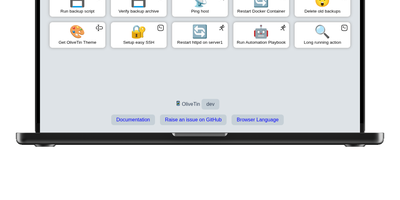
With over 3,600 GitHub stars and a philosophy of deliberate simplicity, OliveTin eliminates the need for SSH sessions, admin panels, and complex automation platforms by letting you define shell commands in a YAML config file and access them as clickable buttons through a clean browser interface. The Go binary consumes only a few megabytes of RAM, running on everything from tiny ARM and RISC-V devices through Linux VMs, containers, macOS, and Windows. Each button executes a predefined shell command with optional typed arguments that render as dropdowns, text fields, and validated inputs, preventing free-form command entry while giving users controlled access to server operations. Access control lists define exactly who can view or run each action — guests, family members, or junior administrators see only the buttons they are permitted to use. Entity templates generate actions dynamically from lists of hosts, containers, or other resources, creating one template that produces many buttons without manual duplication. Flexible triggers extend beyond browser clicks: cron schedules, webhooks, calendar file events, and filesystem watchers run actions automatically when conditions are met. Authentication supports OAuth2, JWT, and header-based methods for integration with reverse proxies and identity providers. Dashboards organize actions into folders and fieldsets for clear navigation across dozens of commands. No plugin system, no extension marketplace, no premium tiers — every feature ships in the single open-source release. Running on a dedicated VPS on RepoCloud with guaranteed CPU, RAM, and SSD, full root SSH access, and a browser serial console. AGPL-3.0 licensed.
Jellyseerr
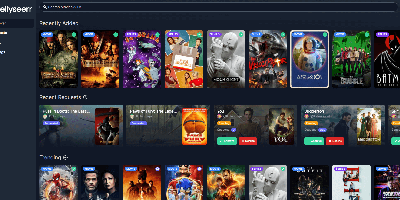
Browse trending titles, search anything, request it in two clicks: Jellyseerr gives Jellyfin, Emby, and Plex users a beautiful storefront for the media library. Born as the Overseerr fork that added Jellyfin and Emby support (the projects have since unified as Seerr), it handles the full request lifecycle - users authenticate with their existing media-server accounts, pick individual seasons or movies in a clean interface, and admins approve or decline from a simple queue, including on mobile. Approved requests flow straight to Sonarr and Radarr, which handle acquisition automatically, with support for separate 4K server instances. Regular library scans keep availability accurate, so users see instantly what already exists instead of requesting duplicates. A granular permission system controls who can request what - auto-approval for trusted users, quotas and limits elsewhere - and override rules adjust request routing by user, tag, or other conditions. Watchlist and blocklist functions curate discovery, notifications reach email, Discord, Telegram, Slack, Pushover, and Pushbullet, and both PostgreSQL and SQLite are supported. Localized into many languages, it turns "can you add this movie?" texts into a self-service system that runs itself.
Mail-in-a-Box
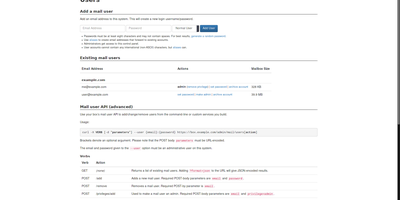
Mail-in-a-Box turns a single Ubuntu server into a fully functional email system with one setup command, installing and configuring Postfix for SMTP, Dovecot for IMAP, Roundcube for webmail, and Z-Push for Exchange ActiveSync push notifications in an automated sequence that would take days to replicate manually. The DNS server auto-configures the full suite of email authentication records: SPF, DKIM, DMARC, DNSSEC with DANE TLSA, MTA-STS, and SSHFP. Getting all of these right is what separates email that lands in inboxes from email that lands in spam, and most manual installations never achieve the complete set. Nextcloud integration adds CardDAV contact sync and CalDAV calendar sharing across devices. Let's Encrypt certificates provision and renew automatically for every hosted domain. The web control panel manages users, aliases, custom DNS records, and automated backups, protected by TOTP two-factor authentication. Daily health checks verify that services run correctly, ports remain open, TLS certificates stay valid, and DNS records resolve properly, alerting you before delivery problems develop. Multiple domains and users operate from one installation with internationalized domain name support. Built-in HTTPS static site hosting uses the TLS infrastructure already in place. Runs on a dedicated RepoCloud VPS with guaranteed resources, root SSH, and browser serial console for complete email sovereignty. CC0 public domain licensed.
Stump
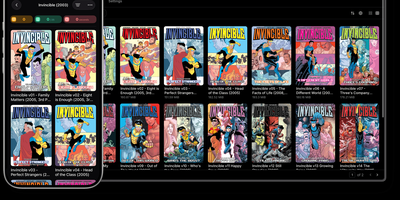
Curating digital comic archives, serialized manga, and electronic book libraries becomes effortless with Stump, a high-performance reading server that streams media collections over OPDS protocols directly to web browsers and e-reader hardware. Readers can organize extensive collections across CBZ, CBR, PDF, and EPUB formats, utilizing automated scanners that extract embedded ComicInfo XML and Calibre metadata tags. The built-in web reader renders high-resolution comic spreads, continuous vertical webtoon scrolls, and reflowable text with customizable color themes, font scaling, and reading direction toggles. Users can highlight passages, create persistent notes inside EPUB editions, and organize complex franchises into custom reading lists, oneshots, and smart filter collections. Bi-directional synchronization integrates with Kobo and KOReader hardware devices, maintaining page progression and bookmark states across handhelds and desktop sessions. Server administrators can configure multi-user access rules, enforce age restriction thresholds, and provision user-scoped API tokens for automated script pipelines and third-party companion tools. GraphQL and REST endpoints expose the entire catalog structure, allowing media collectors to integrate external metadata scrapers and trigger background library indexing tasks. Running on a dedicated VPS on RepoCloud with guaranteed CPU, RAM, and SSD, full root SSH access, and a browser serial console. MIT licensed.
AKB
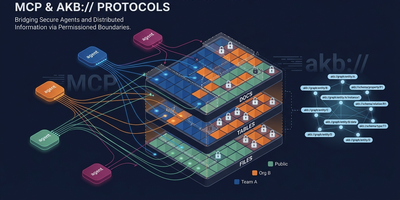
Achieving 98.4% Recall@5 on LongMemEval-S without a reranker, AKB is the agent-native knowledge infrastructure giving Claude Code, Cursor, Windsurf, and any MCP-aware agent persistent organizational memory — a drop-in replacement for Confluence or Notion where AI agents read and write directly rather than scraping human-formatted pages. Documents are stored as Markdown with YAML frontmatter in Git bare repositories (full version history, branching, diff), while PostgreSQL 16 serves as source of truth for chunk text, metadata, and BM25 vocabulary, with dense embeddings handled by a pluggable vector store (pgvector default, Qdrant optional, or managed Seahorse). Agents interact through 20+ MCP tools — akb_put, akb_search, akb_browse, akb_relations, akb_sql, akb_edit, akb_history — performing hybrid dense plus BM25 search fused via Reciprocal Rank Fusion in one call. The URI graph (depends_on, related_to, implements relations) lets agents traverse knowledge connections without external graph databases. Multi-tenant vault isolation is enforced at the PostgreSQL ACL level with per-user roles and SET LOCAL ROLE for SQL sandboxing. Event fanout streams structured events to Redis Streams for external consumers (synthesis bots, digest agents, audit trails), and a hash-chained append-only audit log integrates with enterprise SIEMs. Ships with agent plugins for Claude Code and Codex (session capture, wiki ingest, lifecycle hooks), Kubernetes kustomize manifests, and Open Knowledge Format export. Running on a dedicated VPS on RepoCloud with guaranteed CPU, RAM, and SSD, full root SSH access, and a browser serial console. BSL 1.1 licensed (free under 100 seats, auto-converts to Apache 2.0 after four years).
CaddyUI
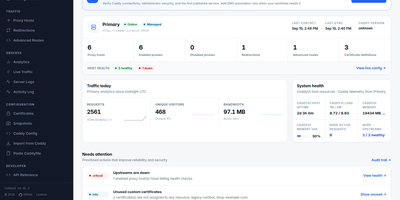
Providing an intuitive control plane for modern reverse proxy infrastructure, CaddyUI enables system administrators to manage proxy hosts, automated TLS certificates, and traffic routing without hand-editing configuration files. Operators can create and adjust reverse proxy destinations, URL path rewrites, custom headers, and redirection rules using structured forms that validate against the proxy engine before saving. The platform coordinates automatic ACME certificate requests and renewals, displaying live certificate expiration timelines, validation stages, and internal self-signed certificate authority options for local network services. Fleet management tools synchronize proxy rules across multiple distributed server instances, preventing configuration drift across staging and production clusters. Automated post-deployment health checks verify upstream endpoint availability, HTTP status codes, and latency thresholds, instantly rolling back to the previous configuration if an expectation fails. An integrated observability suite delivers real-time visitor traffic analytics, geographic maps, HTTP response code breakdowns, and single-click client IP blocking to counter malicious probing attempts. Administrators can schedule automated database backups, configure multi-user access with role permissions, and integrate CrowdSec threat intelligence to protect backends. Running on a dedicated VPS on RepoCloud with guaranteed CPU, RAM, and SSD, full root SSH access, and a browser serial console. Apache 2.0 licensed.
ServerBee
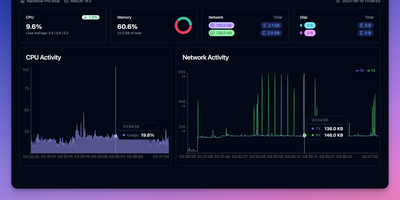
ServerBee delivers complete fleet monitoring from a single Rust binary that embeds both the server and web UI, requiring no external database or heavy runtime. Lightweight agents installed on each node stream CPU, memory, disk, network, load, temperature, GPU, and disk I/O metrics over persistent WebSocket connections to a central server backed by embedded SQLite. The real-time React dashboard presents 17 drag-and-drop widget types across custom layouts, with historical charts spanning one hour to 30 days and monthly traffic statistics with billing-cycle prediction and cost insights including burn rate and per-resource unit cost scoring. Network monitoring covers ICMP, TCP, and HTTP ping probes, service monitors for SSL certificates, DNS records, HTTP keyword matching, TCP ports, and WHOIS expiration, plus network-quality probing across 96 China 3-ISP and international presets with IP-quality and streaming-unlock detection. Remote management features include a web terminal with sandboxed file manager, Docker container stats with logs and events, firewall configuration, and agent auto-update capabilities. Public status pages display 90-day uptime timelines, while alerting supports email and webhook notifications with flexible trigger expressions. A native iOS companion app provides mobile monitoring access. Deploy via Docker or download the single binary for Linux, macOS, or Windows, running on a dedicated VPS on RepoCloud with guaranteed CPU, RAM, and SSD, full root SSH access, and a browser serial console. AGPL-3.0 licensed.
PodFetch
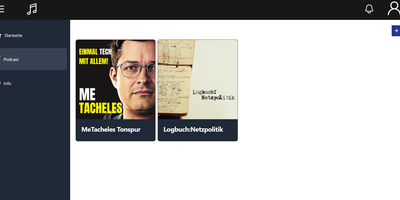
Podcast enthusiasts and homelab archivers automate digital episode preservation and stream personal audio feeds using PodFetch, an open-source self-hosted podcast manager that combines scheduled RSS downloads, Podcasting 2.0 transcript indexing, and browser playback into a modern listening platform. Listeners can subscribe to international podcast channels through direct feed URLs, Apple Podcasts directory searches, or bulk OPML subscription imports, configuring background polling timers to download new releases automatically upon publication. The integrated audio player supports variable speed playback, episode bookmarks, listening histories, and fullscreen visualization modes directly inside responsive desktop and mobile browser sessions. Advanced search capabilities leverage Podcasting 2.0 synchronized transcripts and automated speech-to-text generation via OpenAI-compatible Whisper APIs, allowing collectors to run full-text keyword searches across every spoken phrase in their audio archive. Built-in GPodder API synchronization maintains subscription lists and playback positions across popular smartphone apps like AntennaPod and native companion clients without relying on commercial cloud accounts. Server operators can assign multi-user accounts with private favorites lists, export customized RSS aggregation streams, and route storage paths between fast solid-state drives and large secondary mechanical hard disks. Running on a dedicated VPS on RepoCloud with guaranteed CPU, RAM, and SSD, full root SSH access, and a browser serial console. Apache-2.0 licensed.
Kima
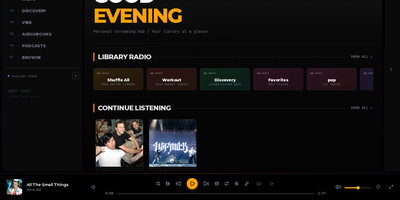
Streaming personal music collections with neural discovery and intelligent playlist curation is what Kima accomplishes as a modern self-hosted audio server that replaces Spotify and Apple Music. Listeners organize their FLAC, MP3, and AAC audio files into responsive grid layouts that scale up to eight columns on ultra-wide displays while automatically fetching album covers, artist biographies, and synchronized line-by-line lyrics. The built-in Vibe System utilizes CLAP neural network audio embeddings to map an entire music collection across two-dimensional clusters and three-dimensional interactive galaxy views, enabling users to explore acoustic relationships or queue smooth sonic paths between distant tracks. Music fans can import playlists directly from Spotify, Deezer, and YouTube using deterministic ISRC matching, while automated Made For You mixes generate era-specific playlists, workout stations, and discovery queues based on individual listening habits. Integrated podcast search pulls subscriptions from iTunes with automatic episode tracking across devices, while native Audiobookshelf connectors synchronize spoken-word chapter positions and playback progress directly into the unified web player. OpenSubsonic API endpoints allow mobile users to stream libraries through native clients like Symfonium and DSub using scoped authentication tokens, while administrators manage multi-user accounts with time-based two-factor authentication. Running on a dedicated VPS on RepoCloud with guaranteed CPU, RAM, and SSD, full root SSH access, and a browser serial console. GPL-3.0 licensed.
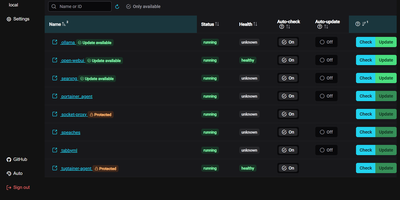
Tugtainer
Tugtainer delivers a visual command center for Docker environments that automates container image updates, monitors registry releases, and manages application lifecycles across multiple servers without command-line intervention. System administrators can inspect running containers across all connected hosts, trigger immediate image pulls, and configure automated cron schedules for recurring health and registry checks. Flexible update policies allow teams to flag production databases as notification-only while automatically updating stateless web applications whenever new image tags publish. When updating linked services, the platform analyzes Docker Compose project definitions and custom dependency labels to stop and restart containers in strict dependency order, preventing broken network links and orphaned volume mounts. Administrators can authenticate private container registries, browse image layers and tags, and view real-time container log streams directly within the browser console. Automated pruning jobs continuously reclaim server disk space by deleting obsolete, untagged images and dangling build layers after successful deployments. Multi-channel alerting integrates with over fifty notification providers, delivering real-time update summaries and error warnings directly to Discord, Telegram, Slack, and email webhooks. Running on a dedicated VPS on RepoCloud with guaranteed CPU, RAM, and SSD, full root SSH access, and a browser serial console. MIT licensed.
Fireshare
The moment after ShadowPlay saves a great clip is what Fireshare was built for: your friends see it now, not after a YouTube upload, processing queue, and platform terms review. Drop videos into a watched folder and this Flask/React application generates a unique shareable URL for each one, complete with Open Graph metadata - so pasting the link into Discord, Twitter, or Slack produces a proper embed with title, description, and video thumbnail instead of a raw URL. Viewers need no account and no app. Visibility is per-file: public (browseable on your feed), private (unlisted, reachable only by direct link), or password protected. For game clips specifically, Fireshare organizes automatically - clips sort by game with cover art pulled from SteamGridDB, no manual tagging - while tags and full-library search cover everything else. Optional transcoding (CPU or GPU) creates lower-quality renditions so viewers on weak connections get automatic quality adaptation, and video cropping trims clips in place. The extras round out a genuinely finished tool: view counters, timestamped share links, a shuffle button, restrictable uploads, Discord notifications for new videos, an RSS feed of the public feed, mobile support, and LDAP for multi-user setups. No storage limits, no watermarks, no platform deciding what stays up. GPL-licensed.
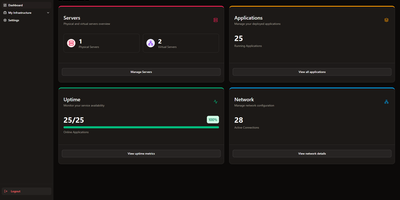
CoreObs
CoreObs delivers a unified self-hosted dashboard that replaces the typical combination of Uptime Kuma, Homer, and separate monitoring tools with a single interface for managing your entire server infrastructure. The Next.js frontend with shadcn components provides a modern dark-themed UI displaying server hardware metrics collected by a lightweight Go agent that leverages Glances for hardware abstraction — streaming real-time per-core CPU load, RAM utilization, NVIDIA GPU statistics, disk usage, system uptime, and load averages via WebSocket connections. The application registry tracks all self-hosted services with configurable uptime monitoring, availability history charts, and instant notifications through Discord, Telegram, Pushover, and email when services go down or recover. Quick-access links provide one-click navigation to each application's management panel directly from the dashboard. The network visualization module built on React Flow enables creating visual topology maps of your infrastructure with drag-and-drop nodes representing servers, switches, and services connected by labeled edges. Server data can be organized with tags, copied between entries, and monitored with configurable pagination and compact view modes. Deploy via Docker Compose with three containers — the Next.js web interface, the Go monitoring agent, and PostgreSQL 17 for persistent storage. Running on a dedicated VPS on RepoCloud with guaranteed CPU, RAM, and SSD, full root SSH access, and a browser serial console. MIT licensed.
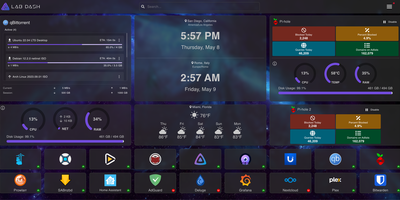
Lab Dash
Every homelab deserves a control center that looks as good as the services it manages. Lab Dash gives you a customizable, drag-and-drop dashboard where every tile earns its spot. Add shortcut widgets linking to your Plex, Grafana, Nextcloud, or any service with automatic health check indicators showing green or red status at a glance. The system monitoring widget displays real-time CPU usage, memory consumption, network throughput, disk utilization, and temperature readings by mounting the host /sys directory as a read-only volume. Integrate Pi-hole stats, qBittorrent download progress, and media server widgets for Jellyfin, Plex, or Emby directly on your grid. Multiple pages let you organize services by category, and the search bar finds any tile instantly. Customize the background image from a local upload or URL, set a custom title and tab name, and choose your preferred search provider including self-hosted options like SearXNG. All sensitive configuration data is encrypted locally with AES-256-CBC, and only administrator accounts can modify the layout. Install Lab Dash as a Progressive Web App on desktop, phone, or tablet for a native app experience with offline capability. Configurations export as backup files for easy migration between instances. On RepoCloud, deploy Lab Dash on a dedicated VPS with root SSH access and Docker socket connectivity under the GPL-3.0 license.
Arkon
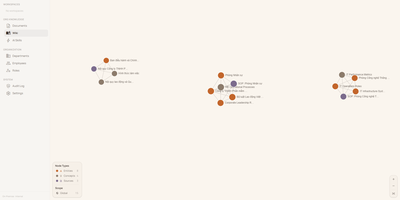
With 1,200+ GitHub stars since its April 2026 launch, Arkon provides an enterprise-grade knowledge management layer that turns scattered organizational documentation into AI-accessible structured context. The platform runs as a centralized MCP server, compiling your SOPs, policies, technical docs, and institutional knowledge into a versioned wiki with draft-approval workflows, then serving that wiki to Claude Desktop, Claude.ai, Cursor, and any MCP-compatible client through a single permission-scoped endpoint. OAuth 2.1 with PKCE authentication eliminates manual token management — employees authenticate through a browser login while the system discovers endpoints automatically via RFC 8414. The RBAC v2 system supports custom roles with granular permissions, department-scoped AI Skills, workspace isolation, and comprehensive audit logging so every query and access event is traceable. RAG retrieval powered by pgvector embeddings enables AI clients to search across all organizational documents with source attribution, while the AI Skills system lets teams define reusable instruction sets scoped to specific departments or roles. The architecture runs seven Docker containers coordinated by Compose: PostgreSQL with pgvector for embeddings and metadata, Redis for caching, MinIO for document storage, a FastAPI backend, two ARQ async workers for embedding generation and document processing, and a Next.js frontend portal accessible on port 3119. API keys are encrypted at rest with Fernet, and no telemetry leaves the deployment. Running on a dedicated VPS on RepoCloud with guaranteed CPU, RAM, and SSD, full root SSH access, and a browser serial console. PolyForm Internal Use licensed.

Piwigo
With over 3,800 GitHub stars and continuous development since 2002 spanning 24 years of active maintenance through version 16.4.0 released in May 2026, Piwigo has proven itself as one of the most battle-tested self-hosted photo gallery platforms available, trusted by professional photographers managing 150,000+ high-resolution images alongside small teams sharing event photos. The PHP backend with MySQL or MariaDB storage serves a responsive web interface that organizes photos into hierarchical albums with nested sub-albums, tag-based categorization, and smart albums generated dynamically from search criteria. Batch management tools handle bulk uploads, metadata editing, tag assignment, and album moves across thousands of images simultaneously. User permission controls define access at the album level with configurable public, private, and group-restricted visibility, while guest access allows public galleries without authentication. Image processing via ImageMagick or PHP GD generates multiple thumbnail sizes, watermarks, and responsive derivatives automatically. The plugin ecosystem with over 200 community-built extensions adds functionality from EXIF metadata display and GPS mapping to social sharing, download controls, and Lightroom synchronization for desktop workflow integration. The REST Web API with personal API key authentication enables programmatic album creation, photo uploads, and metadata queries from external applications. Mobile apps for iOS and Android provide on-the-go upload and browsing capability. Docker deployment via the official container or traditional LAMP installation on any hosting provider. Running on a dedicated VPS on RepoCloud with guaranteed CPU, RAM, and SSD, full root SSH access, and a browser serial console. GPL-2.0 licensed.