Categories
Developer Tools Knowledge Management Documentation RAG AI Infrastructure MCP Server Enterprise WikiStars
Forks
Watchers
Developer links
Arkon
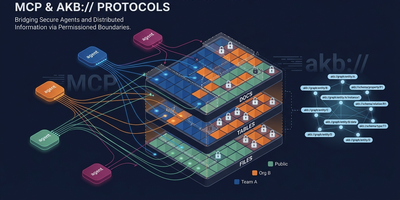
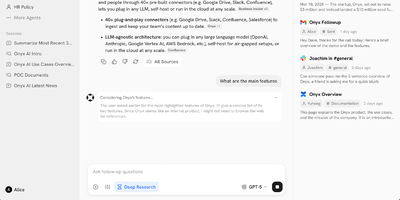
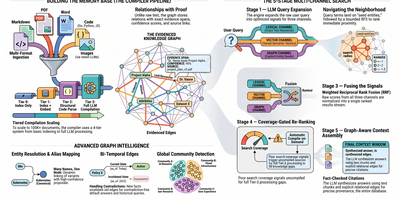
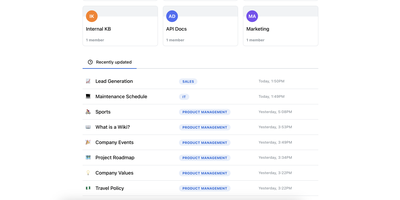
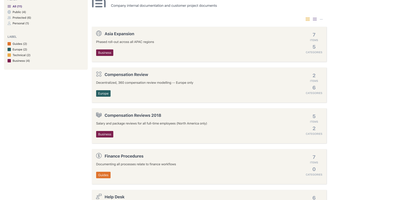
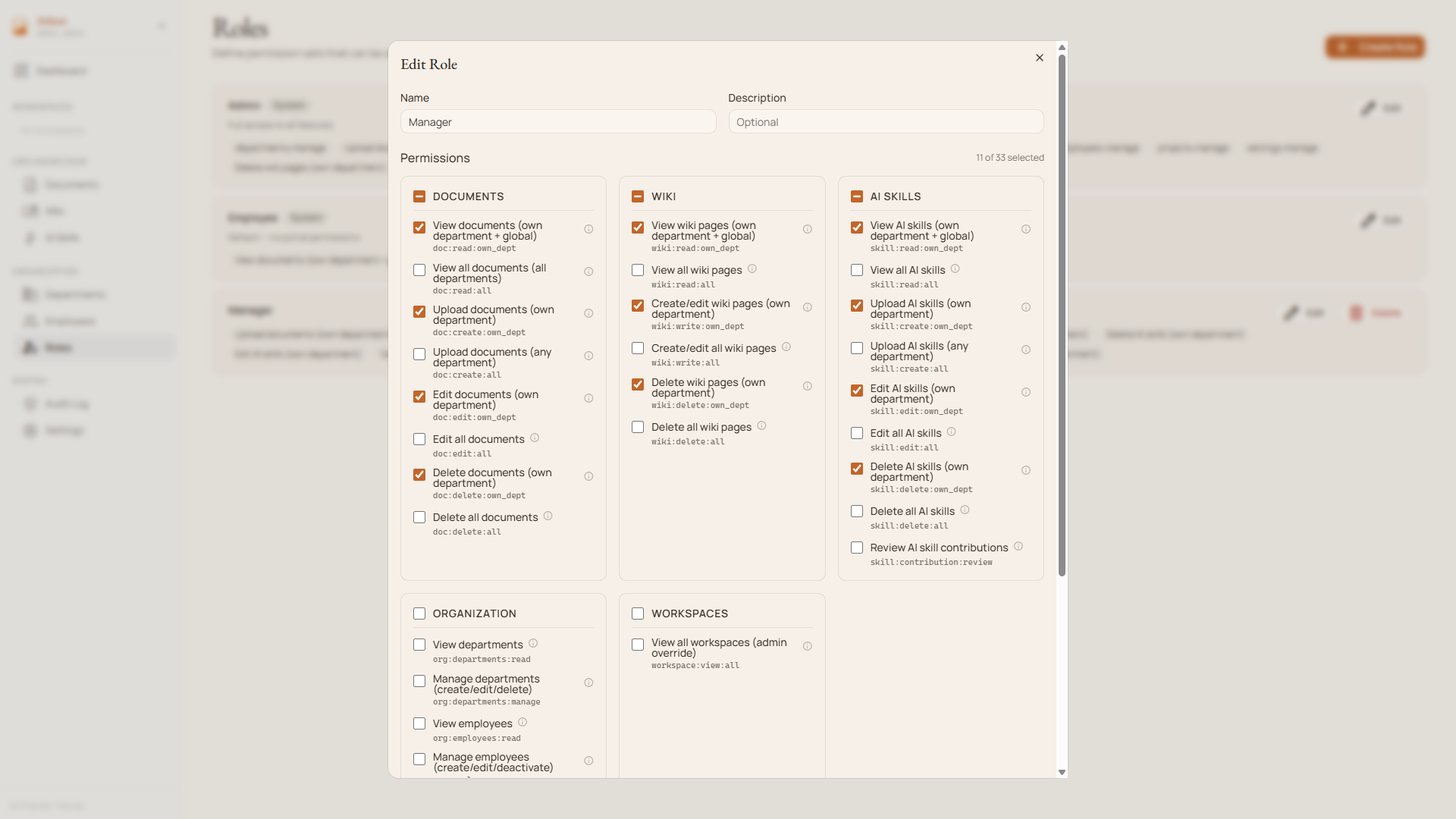
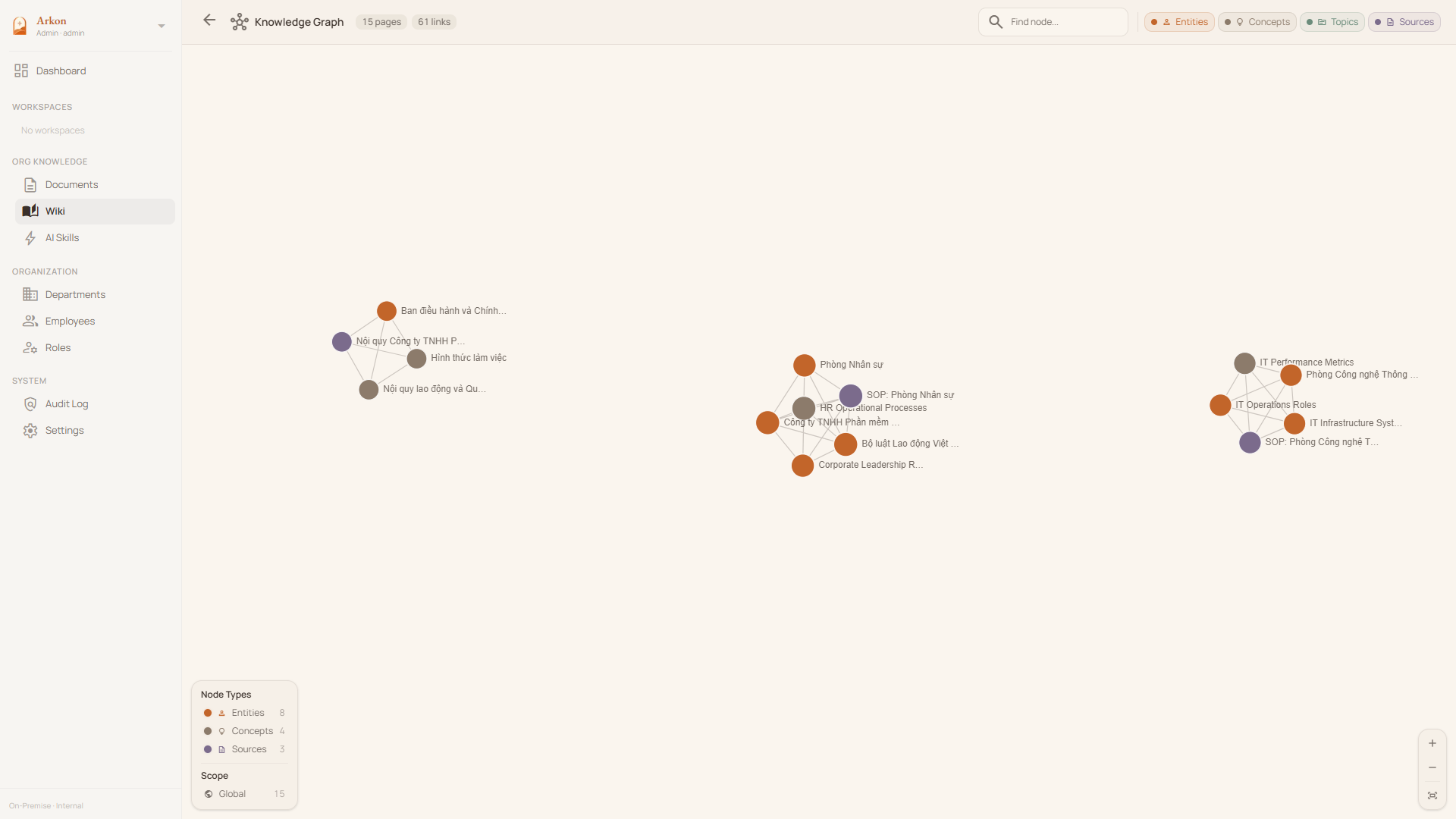
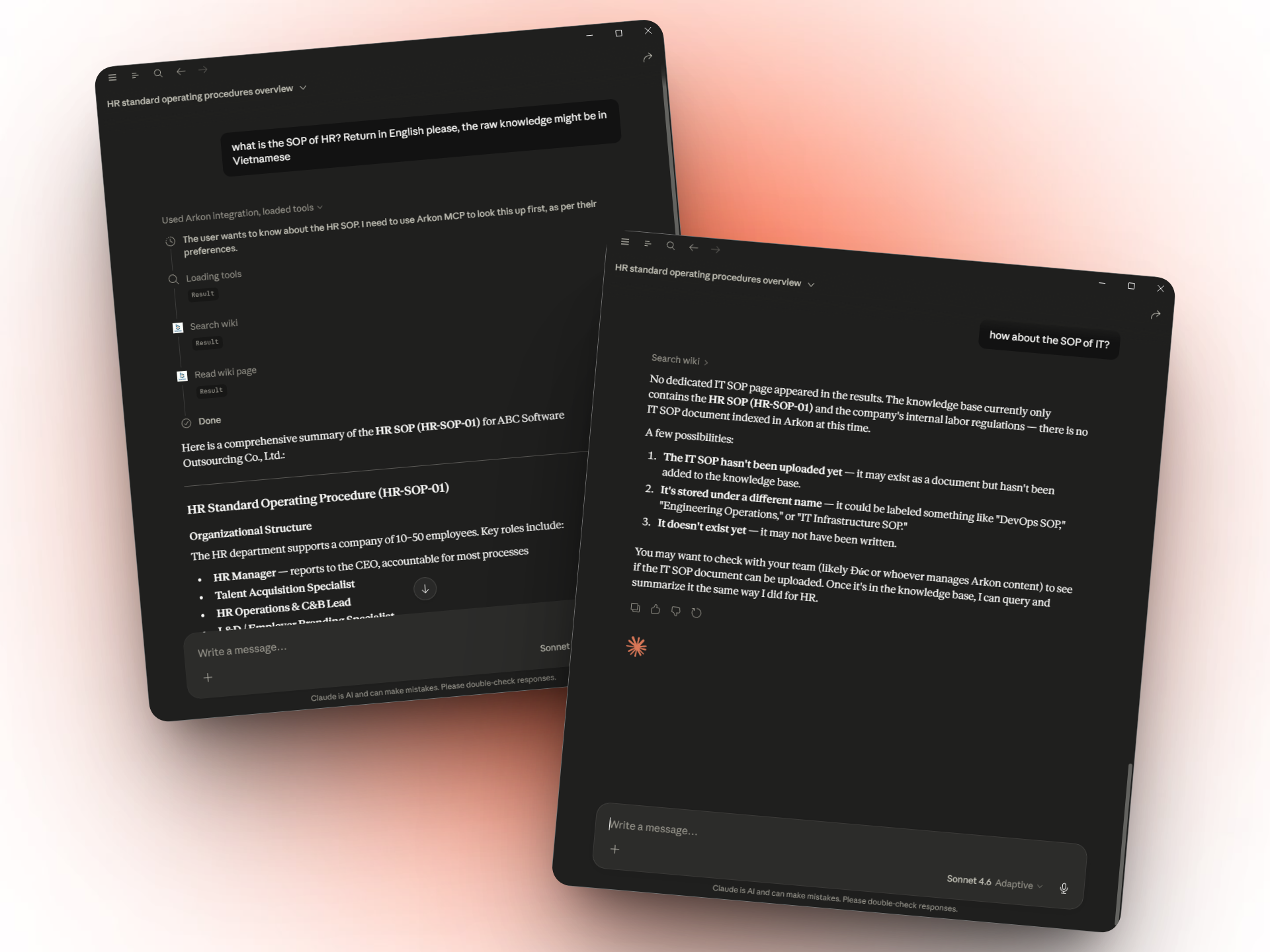
With 1,200+ GitHub stars since its April 2026 launch, Arkon provides an enterprise-grade knowledge management layer that turns scattered organizational documentation into AI-accessible structured context. The platform runs as a centralized MCP server, compiling your SOPs, policies, technical docs, and institutional knowledge into a versioned wiki with draft-approval workflows, then serving that wiki to Claude Desktop, Claude.ai, Cursor, and any MCP-compatible client through a single permission-scoped endpoint. OAuth 2.1 with PKCE authentication eliminates manual token management — employees authenticate through a browser login while the system discovers endpoints automatically via RFC 8414. The RBAC v2 system supports custom roles with granular permissions, department-scoped AI Skills, workspace isolation, and comprehensive audit logging so every query and access event is traceable. RAG retrieval powered by pgvector embeddings enables AI clients to search across all organizational documents with source attribution, while the AI Skills system lets teams define reusable instruction sets scoped to specific departments or roles. The architecture runs seven Docker containers coordinated by Compose: PostgreSQL with pgvector for embeddings and metadata, Redis for caching, MinIO for document storage, a FastAPI backend, two ARQ async workers for embedding generation and document processing, and a Next.js frontend portal accessible on port 3119. API keys are encrypted at rest with Fernet, and no telemetry leaves the deployment. Running on a dedicated VPS on RepoCloud with guaranteed CPU, RAM, and SSD, full root SSH access, and a browser serial console. PolyForm Internal Use licensed.
Benefits
- AI Gets Your Org's Knowledge
- Claude, Cursor, and other MCP clients access your compiled wiki, source documents, and AI Skills through a single authenticated endpoint, receiving contextually relevant organizational knowledge with every query.
- Enterprise Security by Default
- OAuth 2.1 with PKCE authentication, RBAC v2 with custom roles, department-scoped permissions, Fernet-encrypted API keys, comprehensive audit logging, and zero outbound telemetry protect sensitive organizational data.
- Structured Knowledge Governance
- Wiki versioning with draft-approval workflows ensures content accuracy. Department-scoped AI Skills let teams define reusable instruction sets that AI clients invoke within their permission boundaries.
- Self-Contained Docker Deployment
- Seven coordinated containers including PostgreSQL with pgvector, Redis, MinIO, and async workers launch with a single Docker Compose command. No external infrastructure dependencies beyond an AI provider API key.
Features
- MCP Server Endpoint
- Exposes a Model Context Protocol server at /mcp that Claude Desktop, Claude.ai, Cursor, and other MCP-compatible clients discover and authenticate against automatically via OAuth 2.1.
- RAG Document Retrieval
- pgvector embeddings enable semantic search across all organizational documents with source attribution, letting AI clients find relevant context from SOPs, policies, and technical documentation.
- AI Skills System
- Define reusable instruction sets scoped to departments or roles that AI clients can invoke. Skills encode organizational procedures, coding standards, or domain expertise into executable AI capabilities.
- Wiki Versioning and Approval
- Structured wiki with draft-approval workflows, workspace scoping, and full version history ensures content accuracy and provides traceable knowledge governance for regulated environments.
- RBAC and Audit Logging
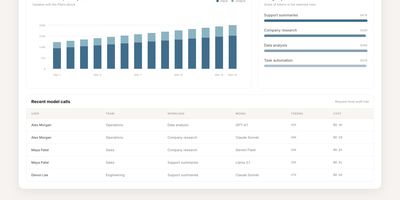
- Custom roles with granular permissions control which employees and AI clients access specific documents, skills, and workspaces. Every query and access event is logged for compliance.